

P0522 on 2019-2021 Chevrolet Silverado 1500: Low Oil Pressure Sensor Voltage Causes & Fixes
On 2019-2021 Silverados, P0522 is most often caused by a faulty oil pressure sensor or a chafed wiring harness. The sensor is very difficult to replace, located at the back of the engine. Always check for wiring damage per TSB 21-NA-149 before replacing parts.
- Do not drive. P0522 could be masking a real low oil pressure condition that can destroy the engine.
- The first diagnostic step is ALWAYS to verify the actual oil pressure with a mechanical gauge.
- A chafed wiring harness is a very common cause on these trucks. Inspect the harness thoroughly per TSB 21-NA-149 before replacing any parts.
- If replacing the sensor, you MUST also replace the small filter screen underneath it.
- This is a very difficult DIY repair due to the sensor's location. It requires special tools and significant time.
What's Unique About the 2019-2021 Chevrolet Silverado 1500
For the 2019-2021 Silverado (T1 platform), this code is frequently linked to a known issue where the main engine wiring harness chafes against sharp edges on the engine or chassis, causing a short circuit. GM issued Technical Service Bulletin 21-NA-149 to address this widespread problem, which can trigger P0522 along with many other unrelated codes. The TSB notes that a harness clip may have been removed during production, leading to an uncontrolled branch that contacts the ECM/TCM bracket, upper control arm, or shock tower. Additionally, these trucks use a variable displacement oil pump that can cause gauge fluctuations, which is considered normal operation and distinct from this fault code.
Symptoms You May Notice
- Check Engine Light illuminated
- Low Oil Pressure warning light on the dashboard
- Oil pressure gauge reading zero or erratically
- In some cases, the engine may run rough or stall if the issue is related to a widespread wiring problem
- Multiple other warning lights (Service ESC, Service Emergency Brake) and seemingly unrelated DTCs if caused by harness chafing.
- Replacing the oil pump without first verifying low mechanical pressure with a gauge.
- Replacing the ECM before thoroughly inspecting the entire wiring harness for chafing as described in TSB 21-NA-149.
- Replacing the oil pressure sensor without also replacing the small filter screen underneath it.
- Assuming the sensor is bad when the root cause is the chafed wiring harness shorting the signal wire to ground.
Most Likely Causes
- Chafed Engine Wiring Harness 🔴 High Probability A known issue documented in GM TSB 21-NA-149. The harness routing makes it susceptible to rubbing against various points on the engine and chassis, causing a short to ground. This TSB supersedes previous bulletins like PIT5677E. Chafe points vary by engine but commonly include the ECM/TCM black bracket, driver's side upper control arm, and the shock tower bolt.
How to confirm: Thoroughly inspect the engine wiring harness for damage, paying close attention to the areas outlined in TSB 21-NA-149, such as near the ECM/TCM bracket, upper control arm, and shock tower. For V8s, the driver's side is the primary area of concern. For the 2.7L L3B, chafe points also include the camshaft carrier cover and generator bracket.
Typical fix: Repair the damaged wires following proper procedures (solder, heat shrink) and add protective conduit (like Tesa tape or a plastic sleeve). Reroute and 🎬 See how to trace and repair a damaged wiring harness. secure the harness with zip ties to prevent future chafing, as detailed in the TSB.
Est. part cost: $10-$50 for wiring repair supplies - Faulty Engine Oil Pressure Sensor 🔴 High Probability The sensor is located in a high-heat, difficult-to-access area at the back of the engine against the firewall, which can contribute to premature failure. Its location often requires removal of the intake manifold for access.
How to confirm: After confirming actual oil pressure is good with a mechanical gauge and that the wiring is intact, the sensor is the most likely culprit. A scan tool will show a voltage reading below the normal range (e.g., <0.2V). You can also test the 3-pin connector for the 5-volt reference, ground, and signal wires.
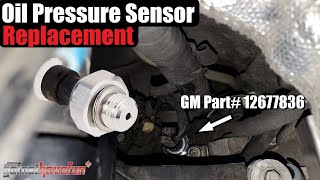
Typical fix: Replace the engine oil pressure sensor. This is a difficult job due to tight access. It is critical to also replace the filter screen underneath the sensor at the same time. A special oil pressure sensor socket (1-1/16" or 27mm deep socket) and a swivel adapter are required. 🎬 Watch: Step-by-step walkthrough for replacing the oil pressure sensor.
Est. part cost: $40-$100 - Clogged Oil Pressure Sensor Filter Screen 🟡 Medium Probability → Shop Engine Oil Pressure Sensor This small, thimble-shaped screen, located in the threaded port under the sensor, can become clogged with sludge or debris, blocking oil from reaching the sensor and causing an inaccurate low reading. This is especially common if oil change intervals are extended.
How to confirm: This is typically found during the sensor replacement. When the old sensor is removed, the screen can be inspected. If it's clogged, it was likely the cause or a major contributing factor. A small pick is needed to pull it out.
Typical fix: Remove and replace the small filter screen. Many technicians recommend doing this whenever the sensor is replaced, regardless of condition. Be careful not to drop the new or old screen into the engine valley during replacement.
Est. part cost: $5-$15
Rare But Worth Checking
- Actual Low Mechanical Oil Pressure: While P0522 is an electrical code, a severe mechanical failure (like a failing oil pump or worn bearings) could potentially cause erratic sensor behavior that triggers the code. This would be accompanied by engine knocking or ticking noises. On 5.3L and 6.2L engines, this could be related to DFM/AFM lifter failure, a separate known issue.
- Faulty Powertrain Control Module (ECM): This is extremely rare. The ECM should only be considered after all other possibilities, including sensor, screen, and the entire wiring circuit, have been exhaustively tested and ruled out. TSB 21-NA-149 explicitly notes that the ECM has been unnecessarily replaced for this concern in many cases.
- Loose or Broken Ground Straps: GM TSB #PIT5689M points to loose or broken engine-to-body ground straps as a potential cause for various electrical faults and DTCs, including sensor circuit codes. A visual inspection of the main ground connections is a worthwhile check.
Diagnosis Steps
- Immediately check the engine oil level and condition using the dipstick. Top off if low.
- CRITICAL: Connect a mechanical oil pressure gauge to the engine. This usually requires removing the existing sensor.
- Start the engine and compare the mechanical gauge reading to the vehicle's dashboard gauge. If mechanical pressure is low (e.g., below 20-25 PSI at idle), stop immediately; the engine has a serious internal problem.
- If mechanical pressure is normal, the fault is electrical. Proceed with diagnosis.
- Connect a scan tool and observe the live data for the oil pressure sensor voltage. A reading below ~0.2V with the engine running confirms the fault the ECM is seeing.
- Thoroughly inspect the engine wiring harness for any signs of chafing, melting, or corrosion, specifically referencing the locations in TSB 21-NA-149. This may require removing the driver's side wheel and wheelhouse liner for full access.
- If the wiring is confirmed to be intact, the next step is to replace the oil pressure sensor and the filter screen beneath it.
- After repair, clear the DTCs and perform a test drive to ensure the code does not return.
Parts You'll Likely Need
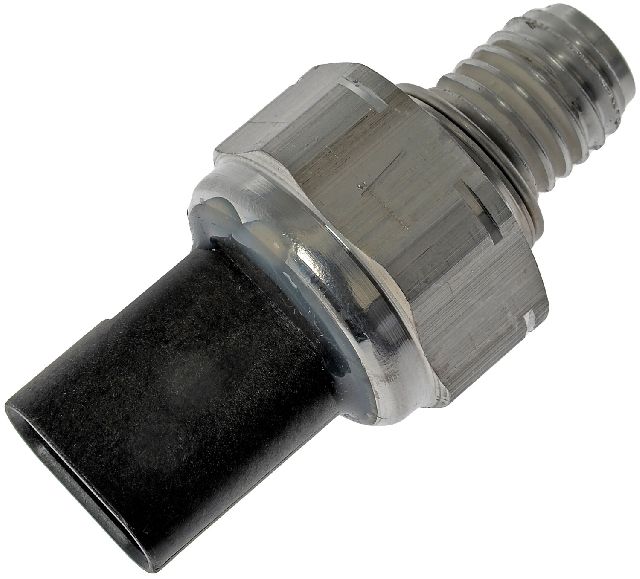
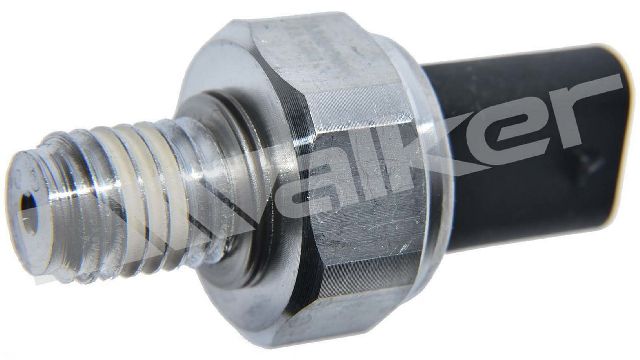
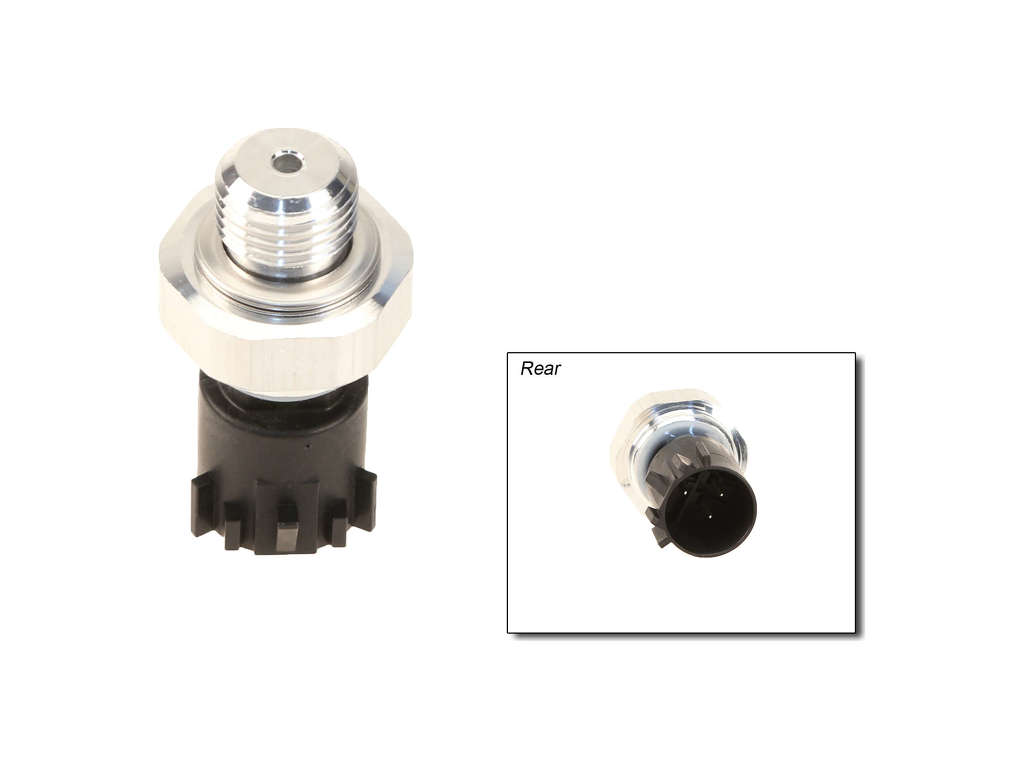
- Engine Oil Pressure Sensor
(OEM #12673134)— This sensor is the most common part to fail, leading directly to the P0522 code when its internal circuit shorts or fails.
Trusted brands: ACDelco, Standard Motor Products
OEM price range: $45-$70
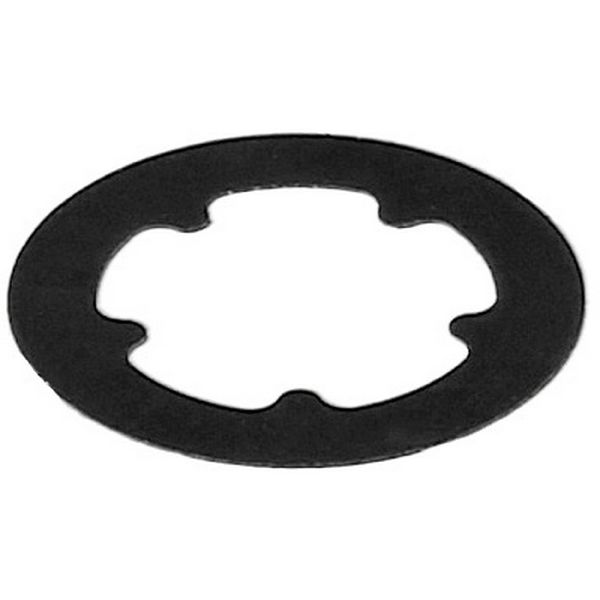
Aftermarket price range: $30-$55 - Engine Oil Pressure Sensor Filter
(OEM #12585328)— This small screen protects the sensor but often becomes clogged with sludge, causing the sensor to read incorrectly. It is considered mandatory to replace this part when replacing the sensor.
Trusted brands: ACDelco, Dorman
OEM price range: $8-$15
Aftermarket price range: $5-$10
Related Codes That Often Appear With This One
- Multiple seemingly unrelated DTCs — If the cause is a chafed wiring harness as described in TSB 21-NA-149, multiple circuits can be shorted to ground, setting a wide variety of codes for different systems. Communication codes like U0073, U0100, and U0101 are common companions.
- P0521 — P0521 indicates an 'Engine Oil Pressure Sensor/Switch Performance' issue. While different, a failing sensor or clogged screen can sometimes trigger P0521 before completely failing and setting P0522.
Technical Service Bulletins (TSBs) & Recalls
- 21-NA-149: Engine Wire Harness Chafing on driver side of engine compartment, causing multiple potential DTCs. This is the primary bulletin for this issue and lists P0522 as a possible result.
- PIT5689M: References loose or broken engine-to-body ground straps as a potential cause for various electrical faults.
- Bulletin #PIT5677E: Notes that a combination of codes including P0522, P0521, and P0107 may be found together due to electrical system concerns.
- Bulletin #PIT5677: A manufacturer service bulletin describing how P0522 may appear in combination with numerous other codes such as P0107, P0340, and P2122.
Platform-Specific Known Issues
- TSB 21-NA-149: Details a widespread issue where the engine wiring harness chafes on various components, causing shorts that can trigger P0522 and many other DTCs. Inspection and repair of the harness are critical.
- Real-world repair story: A user on GM-Trucks.com with a 2020 GMC Sierra (platform mate) experienced P0522 along with other codes. The dealer found the harness had chafed through on the frame, causing a short. The repair involved fixing the wires and adding protective covering, which resolved the issue. This aligns perfectly with TSB 21-NA-149.
Mechanic-Grade Diagnostic Values
- Engine Oil Pressure Sensor Signal Voltage (Scan Tool) — expected: 0.5V - 1.0V at idle; 2.0V - 3.0V at 2,000 RPM. Failure: Voltage remains below 0.2V at all RPMs, indicating a short to ground or sensor failure.
- 5-Volt Reference Circuit (at sensor connector, KOEO) — expected: 5.0 Volts. Failure: Voltage significantly lower than 5.0V indicates a wiring issue or a problem with the ECM's 5V supply circuit.
- Low Reference (Ground) Circuit Resistance (at sensor connector, ignition OFF) — expected: < 1.0 Ohm (measured between low reference pin and chassis ground). Failure: Resistance higher than 1.0 Ohm indicates a poor ground connection or a break in the wire.
- Signal Wire Bypass Test (at sensor connector, KOEO) — expected: Scan tool should show ~5.0 Volts when the 5V reference wire is jumped to the signal wire.. Failure: If the voltage does not jump to ~5.0V on a scan tool, it indicates an open or short in the signal wire between the connector and the ECM.
Scan Tool Commands That Help
- GDS2 (GM Global Diagnostic System 2): Engine Data Display / Live Data — Use this function to monitor the 'Engine Oil Pressure' parameter reported by the sensor in real-time. With Key On, Engine Off, the value should be 0 PSI. P0522 is set when the ECM sees a signal voltage below the threshold (e.g., <0.2V). This helps differentiate between a sensor that is completely dead (stuck low, causing P0522) versus one that is performing erratically (P0521).
Wiring & Ground Locations
- Oil Pressure Sensor Connector — Top rear of the engine block, against the firewall, often tucked behind/under the intake manifold. It is a 3-wire connector.. This is the primary connection point for testing the sensor's 5V reference, ground, and signal circuits. Oil leaking through a failed sensor can contaminate this connector, causing the code.
- Harness Chafe Point 1 — ECM/TCM black bracket on the driver's side frame rail.. TSB 21-NA-149 identifies this as a primary location where the engine harness can rub through, shorting the oil pressure sensor signal wire (and others) to ground.
- Harness Chafe Point 2 — Driver's side upper control arm.. Another key chafe point from TSB 21-NA-149. Engine movement can cause the harness to contact the upper control arm, leading to wire damage.
- Harness Chafe Point 3 — Driver's side shock tower bolt.. The third major chafe point identified in TSB 21-NA-149 for all engines, where the harness can be damaged by vibration against the shock tower hardware.
- G103 (Ground) — Left rear of the engine compartment on the cowl, sometimes near the brake booster.. While not the direct ground for the sensor, a loose or corroded G103 can cause widespread electrical issues and erratic behavior in various modules that could indirectly affect sensor readings or trigger other false codes.
Real Owner Repair Stories
- gm-trucks.com forum user (2019 Silverado 5.3L) — Check engine light with P0522, oil pressure gauge at zero, and a "no oil pressure, shut off engine" message on the dash.
❌ Tried (didn't work) Initially suspected the oil pressure sensor or the filter screen.
✅ What actually fixed it The user found the engine wiring harness had chafed through on the driver's side, near the shock tower, causing a short circuit. After repairing the damaged wires and protecting the harness, the code was resolved. This is a textbook example of the failure described in TSB 21-NA-149.
OEM Part Supersession History
N/A→12585328— This part number is the long-standing OE number for the valve lifter oil filter/screen used across many GM LS and LT engine generations.
Heads up: While aftermarket versions exist, the OEM part is inexpensive and known to fit correctly. Some aftermarket screens have been reported to be slightly different in dimension, potentially causing installation issues.
Model Year Variations Within This Range
- 2019-2021: While the P0522 causes are consistent, the specific engine (L82 vs L84) determines the type of cylinder deactivation system (AFM vs DFM). This can be relevant if low mechanical oil pressure is suspected due to lifter issues, which are a known but separate problem on these engines.
- 2021: Effective March 2021, due to chip shortages, some L84 engines were produced without the Dynamic Fuel Management (DFM) system. This does not directly affect the P0522 diagnosis but is a notable production change within the model year range.
Diagnostic Flowchart
Other Known Issues on This Vehicle
Issues unrelated to this code that are worth knowing about as an owner of this generation:
- V8 Engine Lifter Failure (AFM/DFM) 🔴 High — Common on 5.3L (L84) and 6.2L (L87) V8 engines, can occur at low mileage (under 50k miles). A class-action lawsuit has been filed regarding this issue. (Ref: Multiple TSBs exist, but no universal recall for all years. Dealers often replace lifters and sometimes camshafts under warranty.)
- 8-Speed (8L90) Transmission Shudder/Harsh Shifting 🟠 Medium — Widespread on 2019 models equipped with the 8-speed transmission. Less common on 2020-2021 models that came with updated fluid from the factory. (Ref: TSB 18-NA-355 specifies a procedure to flush the transmission fluid and replace it with Mobil 1 Synthetic LV ATF HP (Blue Label) to resolve the shudder.)
- Infotainment System Black Screen/Glitches 🟡 Low — Frequently reported across the 2019-2021 model years. The screen may randomly go black, freeze, or lose Bluetooth connectivity. (Ref: No recall. Dealers may perform software updates, but owners report mixed results. Some owners temporarily fix the issue by disconnecting the battery to reset the system.)
- 6.2L (L87) V8 Engine Bearing Failure 🔴 High — Affects a range of 2019-2024 models, leading to an NHTSA investigation and a recall for some 2021-2024 vehicles. Can result in sudden, catastrophic engine failure. (Ref: Recall N252494000 issued for a specific production window. NHTSA investigation EA25007 is ongoing for vehicles outside the recall.)
- Rear Sliding Window Leaks 🟡 Low — Commonly reported on 2019-2022 Crew Cab models. Water leaks in from the frame of the sliding rear window during rain or car washes. (Ref: No recall. Dealers may attempt to reseal or replace the window assembly, but some owners report recurring leaks.)
Used vs. New Parts: Buying Guide for This Vehicle
When a used part is the smart pick: For this repair, a used part is almost never a smart choice. The primary replacement parts (sensor and filter screen) are inexpensive and wear items. A used wiring harness could be considered ONLY if a large section of the original is damaged beyond repair (e.g., fire or severe, widespread chafing) and a new harness is prohibitively expensive or unavailable.
Donor-vehicle mileage cap: roughly under 30000 miles for the part to have meaningful remaining life.
What to inspect on the donor part:
- For a wiring harness: Inspect for ANY signs of prior repair (tape, butt connectors).
- Check all connector locking tabs to ensure they are present and not brittle.
- Flex the harness in known chafe areas (near driver shock tower, ECM bracket) to check for stiffness or cracking.
- Verify the part number on the harness tag matches the required part for your vehicle's VIN and options.
OEM-only on this vehicle (don't cheap out):
- Engine Oil Pressure Sensor (ACDelco)
- Engine Oil Pressure Sensor Filter (ACDelco)
Aftermarket brands forum-validated for this vehicle:
- Standard Motor Products (for the sensor, if OEM is unavailable)
Brands owners have reported issues with on this vehicle:
- No-name, unbranded sensors from online marketplaces. For a critical sensor like this, the risk of premature failure or inaccurate readings is too high to justify the small cost savings.
Real Owner Stories
Aggregated from forums and TSBs cited above. Mileages and costs reflect what owners reported in those sources.
2020 GMC Sierra 1500
Symptoms: The Check Engine Light came on with code P0522, along with other codes.
What fixed it: The dealer found the engine wiring harness had chafed through on the frame, causing a short. The repair involved fixing the damaged wires and adding a protective covering, which resolved all the issues.
Source hint: GM-Trucks.com user report cited in vehicle_specific_issues
Related OBD-II Codes
Frequently Asked Questions
I have a P0522 code on my 2020 Silverado 5.3L. Does TSB 21-NA-149 apply to my truck?
Why is replacing the oil pressure sensor on my Silverado so difficult?
The mechanic said I also need to replace a small filter screen with the oil pressure sensor. Is this necessary?
My truck is showing a P0522 code, but also 'Service ESC' and 'Service Emergency Brake' warnings. Are these related?
Are there specific spots to check for the wiring harness issue on my 2.7L L3B engine?
Before I replace any parts for a P0522, what is the most critical first diagnostic step?
Helpful Videos
We Have This Part in Stock


The information in this article is provided for general reference and educational purposes only. Vehicle specifications, procedures, and part compatibility can vary by production date, trim level, and region. Always consult your vehicle's factory service manual and verify part numbers before purchasing or performing repairs. Safety-critical components such as airbags, seat belts, and braking systems should be installed by a qualified professional.
- Chevrolet Silverado 1500:
- 🧭 Diagnostic Flowchart
- 🎬 Helpful Videos
- 🛍️ Shop This Part
- What's Unique About the 2019-2021 Chevrolet Silverado 1500
- Symptoms You May Notice
- Most Likely Causes
- Rare But Worth Checking
- Diagnosis Steps
- Parts You'll Likely Need
- Related Codes That Often Appear With This One
- Technical Service Bulletins (TSBs) & Recalls
- Platform-Specific Known Issues
- Mechanic-Grade Diagnostic Values
- Scan Tool Commands That Help
- Wiring & Ground Locations
- Real Owner Repair Stories
- OEM Part Supersession History
- Model Year Variations Within This Range
- Other Known Issues on This Vehicle
- Used vs. New Parts: Buying Guide for This Vehicle
- Real Owner Stories
- 2020 GMC Sierra 1500
- Related OBD-II Codes
- Frequently Asked Questions
- 🎟️ Get 5% Off