

P0522 on 2020-2021 Ford Escape: Causes, and Fixes for Wiring Harness Faults
On a 2020-2021 Ford Escape, code P0522 is rarely about the oil pressure sensor itself. It's a strong indicator of a known issue where a specific wiring harness chafes against the steering shaft, causing a short circuit, blowing fuse 44, and triggering multiple unrelated fault codes. The fix involves inspecting and repairing the harness.
- On a 2020-2021 Ford Escape, P0522 almost always points to a specific wiring harness issue, not a bad oil pressure sensor.
- The primary diagnostic step is to inspect the 14290 wiring harness above the steering shaft for signs of rubbing or damage.
- Check fuse 44. If it's blown, it's a very strong indicator of the harness short-circuiting.
- Do not replace the oil pressure sensor without first ruling out the harness issue, as this is the most common misdiagnosis.
- The repair involves fixing the damaged wires and securing the harness so it can no longer contact the steering shaft.
- This issue is also prevalent on the 2021+ Ford Bronco Sport and 2020+ Lincoln Corsair, which share the same platform.
What's Unique About the 2020-2021 Ford ESCAPE
For the 2020-2021 Ford Escape, P0522 is a critical clue pointing towards a specific, documented manufacturing issue. Ford issued Technical Service Bulletins (TSBs) highlighting that the engine wiring harness (part number series 14290) can rub against the steering shaft u-joint. This chafing damages wires, causing a short in the Voltage Reference (VREF) circuit which supplies power to numerous sensors. As a result, P0522 appears alongside a host of other seemingly unrelated codes, all stemming from this single point of failure. This issue is also known to affect platform mates like the Ford Bronco Sport and Lincoln Corsair which share the C2 platform and similar wiring architecture.
Diagnostic Flowchart
Tap your situation to follow the diagnostic path that matches what you're seeing on this vehicle.
Symptoms You May Notice
- Check Engine Light (MIL) illuminated
- Engine runs rough or misfires
- Engine may stall or have trouble starting
- Blown fuse (specifically fuse 44 in the engine compartment fuse box)
- Low oil pressure warning light may illuminate on the dash
- Multiple other seemingly unrelated warning lights and DTCs stored
- Loss of power steering assist in some cases, as the VREF circuit can affect various modules 🎬 See how a shorted circuit affects your engine's reference voltage.
- Replacing the engine oil pressure sensor without first inspecting the 14290 wiring harness. This is the most common error and will not fix the issue if the underlying cause is the short circuit. The new sensor may also be damaged by the ongoing circuit fault.
Most Likely Causes
- Chafed 14290 Wiring Harness 🔴 High Probability As documented in Ford TSBs SSM 50245 and SSM 50116, the routing of the 14290 harness places it in close proximity to the rotating steering shaft u-joint, leading to friction and wear as the steering wheel is turned. This is a known design and assembly issue.
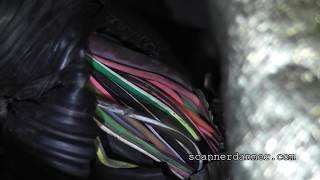
How to confirm: Visually inspect the wiring harness located directly above the steering shaft universal joint, near the upper brake pedal mount. This requires looking up from the driver's side footwell. Look for signs of rubbing, exposed copper wires, 🎬 Watch: How to visually locate a short in a wiring harness. or damage to the black corrugated loom. Check for a blown fuse in location 44 of the under-hood fuse box. The presence of multiple VREF-related codes (see 'often_seen_with_codes') is also a strong indicator.
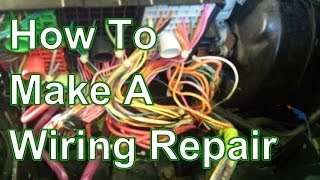
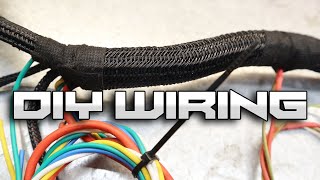
Typical fix: Repair the damaged wires using the solder and heat-shrink method approved by Ford. 🎬 Watch this guide on how to repair automotive wiring harnesses. After repairing, properly secure the harness away from the steering shaft. Ford specifies installing a harness locator over a provided stud to prevent future contact. Using zip ties to secure the harness away from the shaft is also a common field repair.
Est. part cost: $5-$50 for wiring repair supplies (solder, heat shrink, Tesa tape). - Faulty Engine Oil Pressure Sensor ⚪ Low Probability
How to confirm: This should only be investigated after the harness inspection reveals no damage and fuse 44 is intact. Testing involves checking for 5V reference, ground, and signal voltage at the sensor connector with a multimeter. If power and ground are good but the signal is incorrect, the sensor is likely faulty.
Typical fix: Replace the engine oil pressure sensor.
Est. part cost: $30-$90
Rare But Worth Checking
- Faulty Powertrain Control Module (PCM): This is extremely rare. The PCM should only be considered as the cause after all other possibilities, including the entire VREF circuit and all connected sensors, have been exhaustively tested and ruled out. A PCM failure is more likely to be caused by the harness short than to be the root cause itself.
Diagnosis Steps
- Confirm the presence of code P0522 with an OBD-II scanner. Document all other stored codes, as they are crucial clues.
- Check fuse F44 in the under-hood fuse box. If it is blown, this is a very strong indication of a short circuit in the VREF line.
- DO NOT replace the fuse yet. This can cause further damage. Disconnect the negative battery terminal.
- Access the driver's side footwell. Locate the intermediate steering shaft and the universal joint (u-joint).
- Thoroughly inspect the 14290 engine wiring harness directly above the steering shaft u-joint. Use a bright light and a mirror if necessary. Look for a shiny, rubbed-through spot on the harness loom and any visible copper wires.
- If damage is found, carefully separate the damaged wires. Repair each wire individually using solder and heat-shrink tubing for a durable, insulated connection. Staggering the splices can prevent a bulge in the harness.
- Wrap the repaired section with high-quality fabric wiring tape (Tesa tape is often recommended).
- Secure the repaired harness away from the steering shaft. The official fix involves a harness locator on a nearby stud. Alternatively, use several zip ties to firmly anchor the harness to a stationary bracket, ensuring it cannot contact the shaft when the steering wheel is turned lock-to-lock.
- Once the harness is repaired and secured, replace the blown fuse 44 with a fuse of the correct amperage.
- Reconnect the battery, clear the DTCs, and start the vehicle. Turn the steering wheel fully from side to side to confirm the harness is clear of any moving parts.
- If no harness damage was found, proceed with standard electrical diagnostics for a short-to-ground on the sensor's VREF circuit, starting at the oil pressure sensor connector.
Parts You'll Likely Need
- Wiring Repair Supplies — This is the most likely requirement to fix the chafed harness, which is the most common cause. Includes wire, solder, heat shrink tubing, and fabric wiring tape.
Trusted brands: 3M, Tesa
OEM price range: $10-$30
Aftermarket price range: $5-$20 - Engine Oil Pressure Sensor
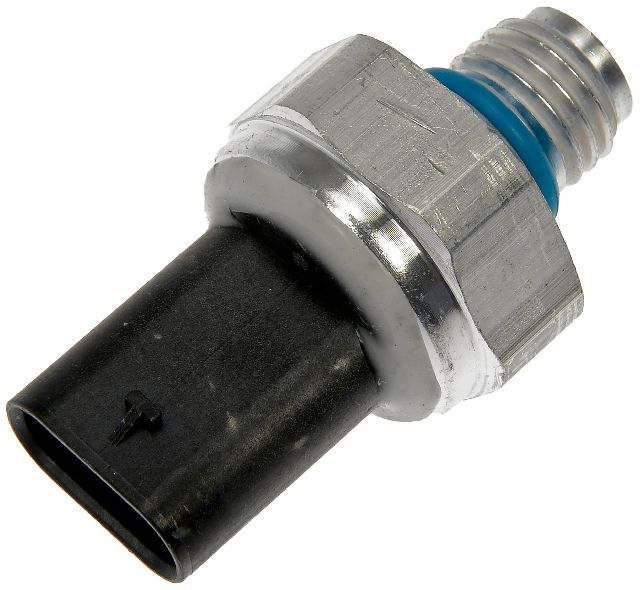
(OEM #GN1Z-9D290-D)— This part is only needed if the common harness issue is ruled out and the sensor itself is diagnosed as faulty. It has been superseded multiple times; this is the latest part number.
Trusted brands: Motorcraft, Dorman, Bosch
OEM price range: $50-$90
Aftermarket price range: $30-$80
Related Codes That Often Appear With This One
- P06A7 — This code, "Sensor Reference Voltage 'B' Circuit Range/Performance", is listed in TSB SSM 50245 as being caused by the same VREF circuit short that triggers P0522.
- P2122 — "Throttle/Pedal Position Sensor/Switch 'D' Circuit Low Input", also listed in TSB SSM 50245 as a common companion code due to the shared VREF circuit.
- P0192 — "Fuel Rail Pressure Sensor 'A' Circuit Low Input", another code listed in TSB SSM 50245 that shares the affected VREF circuit.
- P0340 — "Camshaft Position Sensor 'A' Circuit Malfunction". This sensor is also on the VREF circuit and is frequently triggered by the same harness chafe.
- C0040 — "Brake Pedal Switch 'A' Circuit". This is a chassis code also listed in TSB SSM 50245, demonstrating how the short can affect multiple vehicle systems.
Technical Service Bulletins (TSBs) & Recalls
- SSM 50245: 2020-2021 Escape - Various Symptoms Due To A Loss Of VREF Including Fuse 44 Open And/Or Illuminated MIL
- SSM 50116: 2020 Equipment - Various Symptoms Due To A Loss Of VREF Including Fuse 44 Open And/Or Illuminated MIL
Platform-Specific Known Issues
- TSB SSM 50245 & SSM 50116: Ford has officially documented that on 2020-2021 Escapes, a loss of Voltage Reference (VREF) can occur due to the 14290 harness chafing on the steering shaft u-joint. This can cause a rough run, blow fuse 44, and set a wide variety of DTCs, including P0522. The recommended fix is to inspect, repair, and secure the harness away from the shaft.
- Real-World Repair Story: A user on the broncosportforum.com, a platform mate to the Escape, described their vehicle presenting with a 'powertrain malfunction alert and loss of power' just one week after purchase. After an initial misdiagnosis, Ford engineers identified a faulty engine wiring harness that needed to be rebuilt, a process that took three months due to parts backorder. This highlights the severity and potential repair delays associated with this specific harness issue.
Mechanic-Grade Diagnostic Values
- Sensor Reference Voltage (VREF) at any accessible sensor on the affected circuit — expected: 4.5 - 5.5 Volts with Key On, Engine Off.. Failure: A reading near 0 volts indicates a short to ground. The P0522 code specifically triggers when voltage is below the minimum threshold, often less than 0.2V.
- Oil Pressure Sensor Signal Wire Voltage — expected: Approximately 0.5V at idle, rising towards 4.5V with increased engine RPM/pressure.. Failure: A constant low voltage reading (below 0.5V) that does not change with RPM suggests a faulty sensor or a circuit issue, assuming VREF and ground are good.
Scan Tool Commands That Help
- Professional Scan Tool (e.g., Ford IDS, iCarsoft CR Ultra): Live Data Monitoring of Oil Pressure Sensor Voltage PID — Use this while physically wiggling the 14290 harness near the steering shaft. A sudden drop in voltage or erratic readings when the harness is moved confirms an intermittent connection or short in that area.
Wiring & Ground Locations
- Engine Oil Pressure Sensor Connector — On the engine block, location varies slightly between 1.5L and 2.0L engines but is generally near the oil filter housing area.. This is the starting point for electrical testing if the main harness chafe is not found. It is a 3-wire connector (VREF, Signal, Ground) with part number WPT-1492.
- G203 (example ground point) — On older Escape models, this ground is located on the left side of the dash. A faulty or loose ground in this area could contribute to the electrical issues seen with the harness chafe.. The main 14290 harness is in the driver's footwell/left side of the dash area. Ensuring the main body grounds in this zone are clean and tight is a good practice while performing the harness repair.
Real Owner Repair Stories
- broncosportforum.com user report (2021 Ford Bronco Sport (platform mate with shared wiring architecture)) — Powertrain malfunction alert, loss of power, multiple warning lights, engine running rough.
❌ Tried (didn't work) Initial dealer diagnosis was inconclusive.
✅ What actually fixed it After escalation to Ford engineers, the cause was identified as a faulty engine wiring harness (the same 14290 harness series). The final fix was a complete rebuild of the harness. The repair was delayed for three months due to parts backorder, highlighting the severity.
"I Checked Everything" — The Actual Cause
- A smoke test for EVAP leaks or a visual inspection of easily accessible wiring would yield no results for this code. The root cause is not a vacuum leak and the wiring damage is hidden. Technicians may perform standard circuit tests (e.g., checking for continuity or shorts with the vehicle stationary) and find no fault. The problem is often dynamic, occurring only when the steering wheel is turned, causing the steering shaft to rub against the harness. The actual cause is this specific, hidden mechanical interference with the wiring, which is why the TSBs are critical for diagnosis.
OEM Part Supersession History
GN1A-9D290-AB (and similar variants like GN1Z-9D290-A)→GN1Z-9D290-D— Standard part revision and improvement by the manufacturer.
Heads up: The original part number listed in pass 2, GN1A-9D290-AB, has been superseded multiple times. The current recommended OEM replacement part is GN1Z-9D290-D. Using the most current part number ensures the latest design is installed.
Model Year Variations Within This Range
- 2020-2021: The chafing harness issue and resulting P0522 code are known to affect both the 1.5L 3-Cylinder and 2.0L 4-Cylinder engines available in the Ford Escape.
Helpful Videos
We Have This Part in Stock


The information in this article is provided for general reference and educational purposes only. Vehicle specifications, procedures, and part compatibility can vary by production date, trim level, and region. Always consult your vehicle's factory service manual and verify part numbers before purchasing or performing repairs. Safety-critical components such as airbags, seat belts, and braking systems should be installed by a qualified professional.
- Ford ESCAPE:
- 🧭 Diagnostic Flowchart
- 🎬 Helpful Videos
- 🛍️ Shop This Part
- What's Unique About the 2020-2021 Ford ESCAPE
- Symptoms You May Notice
- Most Likely Causes
- Rare But Worth Checking
- Diagnosis Steps
- Parts You'll Likely Need
- Related Codes That Often Appear With This One
- Technical Service Bulletins (TSBs) & Recalls
- Platform-Specific Known Issues
- Mechanic-Grade Diagnostic Values
- Scan Tool Commands That Help
- Wiring & Ground Locations
- Real Owner Repair Stories
- "I Checked Everything" — The Actual Cause
- OEM Part Supersession History
- Model Year Variations Within This Range
- 🎟️ Get 5% Off