

P0522 on 2012-2018 Mazda 6 SKYACTIV-D 2.2L: Engine Oil Pressure Sensor Circuit Low Fixes
P0522 indicates an electrical fault with the oil pressure sensor circuit. However, on the SKYACTIV-D 2.2L engine, this code is a critical warning that may precede actual low oil pressure caused by leaking injector seals and a clogged oil strainer. Do not just replace the sensor; a full mechanical pressure test is mandatory to avoid catastrophic engine failure.
- P0522 on a SKYACTIV-D 2.2L is a critical warning. Do not assume it's just a bad sensor.
- The absolute first diagnostic step after reading the code is to test the engine's actual oil pressure with a mechanical gauge.
- If mechanical pressure is low, the most likely cause is a clogged oil strainer, which is a symptom of failing injector seals.
- When servicing for this issue, it is highly recommended to also inspect the exhaust camshaft for wear, as it is another common failure point.
- Simply replacing the sensor without verifying mechanical pressure can lead to catastrophic engine failure.
What's Unique About the 2012-2018 Mazda 6
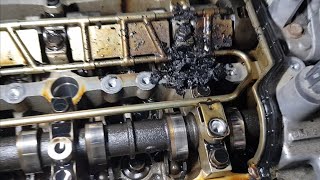
The SKYACTIV-D 2.2L engine has well-documented, widespread issues that can lead to catastrophic failure, and P0522 is often the first warning sign. Unlike many vehicles where this code is a simple sensor swap, on this diesel engine it is frequently linked to failing injector seals. These seals leak combustion gases into the oil, creating hard carbon particulates and sludge that clog the oil pump strainer, leading to oil starvation. This oil starvation can then cause a cascade of other failures, including premature exhaust camshaft wear and vacuum pump failure. Therefore, treating P0522 as just an electrical fault without investigating these known mechanical weaknesses is a major and potentially engine-destroying mistake.
Generation note: The 2012-2018 Mazda 6 covers the third generation (GJ1/GL). The SKYACTIV-D 2.2L engine issues described are prevalent across this entire generation and its platform mates (CX-5, Mazda 3).
Symptoms You May Notice
- Check Engine Light is on
- Red "Low Oil Pressure" warning light on the dashboard
- Message on display: "Low oil pressure, engine damage possible"
- Engine running in a limited power/fail-safe mode
- Engine stalling or cutting out
- Engine ticking, rattling, or knocking noises
- Replacing only the oil pressure sensor without performing a mechanical oil pressure test. If the actual pressure is low due to a clogged strainer, a new sensor will not fix the problem and the engine will fail.
Most Likely Causes
- Leaking Injector Seals (Copper Washers) 🔴 High Probability The original copper injector seals are a known failure point. They fail to seal the combustion chamber, allowing soot and combustion gases to enter the crankcase and mix with engine oil, creating heavy, hard carbon sludge.
How to confirm: Remove the oil pan to inspect the oil strainer for thick, carbonaceous sludge. This is a definitive sign of injector seal failure. A mechanic may also check injector correction values with a diagnostic tool, though this is not always conclusive.
Typical fix: Replace all four injector seals (part number SH01-13-H51) and the valve cover injector seals (SH01-10-508). This must be done in conjunction with dropping the oil pan, replacing the clogged oil strainer 🎬 Watch: Step-by-step guide to removing and replacing the oil strainer., and performing an engine oil and filter change. The valve cover must be removed for this job.
Est. part cost: $20-$50 for seals, plus oil/filter - Clogged Oil Strainer / Pickup Tube 🔴 High Probability → Shop Engine Oil Pump This is a direct consequence of the leaking injector seals. The sludge created circulates through the engine and is caught by the strainer, physically blocking oil flow to the pump.
How to confirm: This is confirmed by visually inspecting the strainer after removing the oil pan. It will be covered in a thick, tar-like substance. This diagnosis is often paired with a mechanical oil pressure test showing low or zero pressure.
Typical fix: The oil strainer (OEM Part # SH01-14-240) must be replaced; cleaning is not sufficient. This repair is only effective if the root cause (leaking injector seals) is fixed simultaneously.
Est. part cost: $40-$80 - Faulty Engine Oil Pressure Sensor / Switch 🟡 Medium Probability
How to confirm: Perform a mechanical oil pressure test. If the mechanical gauge shows normal pressure while the scanner shows a low voltage reading (or the P0522 code is present), the sensor or its wiring is faulty. The sensor is located on the engine block, near the oil filter.
Typical fix: Replace the engine oil pressure sensor and inspect the connector/wiring for damage or oil contamination.
Est. part cost: $75-$120 - Worn Exhaust Camshaft 🟡 Medium Probability This is another known weak point of early SKYACTIV-D 2.2L engines, often caused or accelerated by poor oil quality from injector seal leaks or oil dilution. The lobes on the exhaust camshaft are made of a soft material and can wear down prematurely, sending metal particles through the oil system.
How to confirm: Remove the valve cover and visually inspect the lobes of the exhaust camshaft for visible wear, scoring, or a noticeable 'lip' on the edge of the lobe. A prolonged blue coolant light on startup can also be an indirect symptom.
Typical fix: Replace the exhaust camshaft, rocker arms, and hydraulic lash adjusters (lifters). This is a significant and costly repair.
Est. part cost: $400-$700+
Rare But Worth Checking
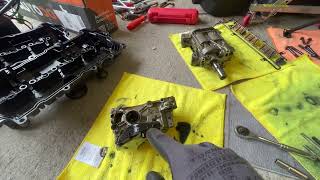
- Broken Oil Pump Chain: → Shop Engine Oil Pump In some cases, the separate chain that drives the oil pump can break, leading to a sudden and complete loss of oil pressure. This is a catastrophic failure.
- Failing Oil Pump: → Shop Engine Oil Pump While the pump itself can fail, the cause of low pressure is far more likely to be the clogged oil strainer starving the pump of oil.
- Damaged Wiring Harness or Connector: A short to ground in the circuit between the sensor and the PCM will cause the low voltage reading and trigger the P0522 code.
- Faulty Powertrain Control Module (PCM): This is extremely rare but listed as a possibility in the service manual. All other possibilities must be exhausted before considering PCM replacement.
Diagnosis Steps
- Check the engine oil level and condition. Note if the level is above the 'X' mark on the dipstick, which indicates oil dilution with diesel fuel from DPF regeneration cycles.
- Connect an OBD-II scanner to confirm the P0522 code and check for any other related codes (e.g., P0524, 🎬 Watch: Diagnosing low oil pressure codes on the 2.2 Skyactiv. P0101, P258B).
- CRITICAL STEP: Connect a mechanical oil pressure gauge to the engine. Start the engine and compare the mechanical reading to the sensor reading on the scan tool.
- If mechanical pressure is GOOD (within spec) but the scanner shows a fault: The problem is electrical. Inspect the oil pressure sensor connector for oil contamination or damage. Test the wiring for a short to ground. If wiring is okay, replace the oil pressure sensor.
- If mechanical pressure is LOW or ZERO: Do not run the engine further. The problem is mechanical. Proceed to the next steps.
- Remove the oil pan and inspect the oil pump strainer for blockage. If it is clogged with black, hard sludge, this confirms the diagnosis.
- Remove the valve cover. Inspect the injector seals for signs of leakage (carbon buildup around the injector base).
- While the valve cover is off, carefully inspect the exhaust camshaft lobes for scoring, pitting, and wear. Feel for a 'lip' on the edge of the lobes.
- Based on findings, perform a complete repair: replace the injector seals (SH01-13-H51), oil strainer (SH01-14-240), and any worn camshaft components as a set. Change oil and filter.
Parts You'll Likely Need
- Injector Seal Kit (Copper Washers)
(OEM #SH01-13-H51)— These are the root cause of the oil sludging issue that leads to actual low oil pressure. They are a mandatory replacement if the oil strainer is found to be clogged.
Trusted brands: Mazda (OEM)
OEM price range: $20-$50
Aftermarket price range: $10-$30 - Oil Strainer / Pickup
(OEM #SH01-14-240)— Becomes clogged by carbon sludge from leaking injector seals, starving the engine of oil. Must be replaced, not cleaned.
Trusted brands: Mazda (OEM)
OEM price range: $40-$80
Aftermarket price range: $25-$50 - Engine Oil Pressure Sensor/Switch
(OEM #PX9R-18-541)— This is the primary electrical component that fails and directly causes the P0522 code when the issue is purely electrical.
Trusted brands: Mazda (OEM), Bosch
OEM price range: $75-$120
Aftermarket price range: $30-$80 - Exhaust Camshaft — A common secondary failure on early SKYACTIV-D engines due to oil contamination. The lobes wear down, causing performance issues and sending metal through the oil system.
Related Codes That Often Appear With This One
- P0524 — Engine Oil Pressure Too Low. This code indicates the PCM has detected an actual low oil pressure condition, which often follows the P0522 electrical fault once the oil strainer becomes sufficiently clogged.
- P06DE — Engine Oil Pressure Control Circuit Stuck On. This code relates to the dual-stage oil pump and can appear with other oil pressure faults, often pointing back to the same root causes of injector seal leaks and oil contamination.
- P0101 — Mass Air Flow (MAF) Circuit Range/Performance. On this engine, a worn camshaft can affect engine breathing and sometimes trigger MAF-related codes before other symptoms are obvious.
- P258B — Vacuum Pump Performance. A failing vacuum pump is a common issue on this engine, often caused by metal debris from a worn camshaft contaminating the oil supply to the pump.
Technical Service Bulletins (TSBs) & Recalls
- While no single, definitive TSB for the Mazda 6 P0522 injector seal issue is widely publicized, Mazda has issued numerous related bulletins and extended warranties for the SKYACTIV-D engine family, particularly for the CX-5. A recall for the vacuum pump on 2012-2016 CX-5s is noted. Owners often reference dealer knowledge and internal service recommendations regarding injector seal replacement as a preventative measure.
Platform-Specific Known Issues
- A known history of premature exhaust camshaft wear.
- A widespread and well-documented problem with injector seals failing, causing combustion byproducts to contaminate the engine oil and form sludge.
- Oil dilution due to frequent DPF regeneration cycles, especially with short-trip driving patterns, which thins the oil and can cause low pressure warnings.
Mechanic-Grade Diagnostic Values
- Oil Pressure Sensor Voltage at PCM — expected: > 0.14 V. Failure: Voltage is less than 0.14 V for 2.5 seconds, triggering P0522.
- Oil Pressure (Mechanical Gauge) — expected: Approx. 180 kPa at 2,000 RPM (engine warm).. Failure: Significantly lower pressure indicates a mechanical fault (clogged strainer, worn pump).
- Oil Pressure Sensor Circuit Continuity (Harness Side) — expected: Below 1 Ω. Failure: High resistance indicates an open circuit in the wiring harness.
- Oil Pressure Sensor Circuit to Ground (Harness Side) — expected: 10 kΩ or higher. Failure: Continuity (low resistance) indicates a short to ground.
Scan Tool Commands That Help
- Mazda M-MDS (or equivalent): PID/DATA Monitor - EOP (Engine Oil Pressure) — To monitor the oil pressure value being reported by the sensor to the PCM in real-time. This is used to compare against a mechanical gauge reading to determine if the sensor is reporting accurately.
Wiring & Ground Locations
- Oil Pressure Sensor Connector — On the engine block, typically near the oil filter housing. Access may require removing the coolant overflow reservoir. The connector has a yellow locking tab.. This is the primary connection point to inspect for corrosion, oil contamination, or damage when diagnosing an electrical fault for P0522.
- PCM Terminal 1DM — At the Powertrain Control Module (PCM) connector.. This is the specific PCM pin that receives the voltage signal from the oil pressure sensor. A short to ground on the wire leading to this pin will cause P0522.
- PCM Terminal 1DN — At the Powertrain Control Module (PCM) connector.. This is the PCM pin for the sensor's reference voltage. An open circuit on the wire from this pin will cause a fault.
Real Owner Repair Stories
- Mazda Forum User (2012 Mazda CX-5 2.2L SKYACTIV-D) — Vacuum pump failure (P258B), which is a known related issue.
❌ Tried (didn't work) The user was aware that simply replacing the vacuum pump would not solve the root cause.
✅ What actually fixed it The root cause was identified as a worn exhaust camshaft, which sent metal filings into the oil, destroying the vacuum pump. The user noted this was a known issue on early models and that a full repair requires inspecting/replacing the camshaft, not just the pump.
OEM Part Supersession History
Original copper injector washers (various)→SH01-13-H51 (Modified silver-colored washers)— The original copper washers were prone to failing, allowing combustion gas leakage. The modified washers have increased durability.
Heads up: It is critical not to mix old and new parts. When replacing, use the full set of modified washers (SH01-13-H51) and new nuts (SHY1-13-148A).
Model Year Variations Within This Range
- 2012-2014 (approx.): Early models had a lower injector tightening torque specification and less durable copper injector seals, making them more prone to the carbon/sludge issue. A recall was issued to update the torque specification.
- 2012-2018: The soft exhaust camshaft material was a known issue across these model years. Some forum users suggest the issue was resolved in models from 2019 onward, but vehicles within the 2012-2018 range are all considered at risk.
Diagnostic Flowchart
Other Known Issues on This Vehicle
Issues unrelated to this code that are worth knowing about as an owner of this generation:
- Premature Turbocharger Failure 🔴 High — Common, especially on earlier models. Often caused by a rivet on the wastegate flap breaking off and damaging the turbine blades.
- Vacuum Pump Failure 🔴 High — A very common failure, often a consequence of the worn exhaust camshaft sending metal particles into the oil that feeds the vacuum pump. This leads to reduced braking assistance and may trigger code P258B. A recall was issued for some 2012-2016 CX-5 models for this issue. (Ref: Recall on some 2012-2016 CX-5 models)
- DPF Regeneration & Oil Dilution 🟠 Medium — Widespread issue, particularly for vehicles used for frequent short trips. Failed DPF regeneration cycles cause diesel fuel to mix with engine oil, raising the oil level (above the 'X' on the dipstick) and thinning the oil, which reduces lubrication and accelerates wear on all engine components.
- Timing Chain Stretch 🟠 Medium — While designed to last the life of the engine, premature stretching has been reported. This is often exacerbated by the oil dilution issue, which compromises lubrication for the chain and tensioners.
Used vs. New Parts: Buying Guide for This Vehicle
When a used part is the smart pick: For this specific vehicle and set of problems, sourcing used parts from the lubrication or valvetrain systems is strongly discouraged. The risk of acquiring a part that is already worn or contaminated is extremely high. Used parts should be limited to external, non-critical components only.
What to inspect on the donor part:
- Not applicable for the core failure components (camshaft, oil pump, strainer, seals).
OEM-only on this vehicle (don't cheap out):
- Injector Seals (SH01-13-H51): The cost is low and the OEM part is a revised design to fix the original problem. Do not use aftermarket.
- Oil Strainer (SH01-14-240): This part is critical for oil flow and inexpensive. Using a used one is not worth the risk of it being partially clogged.
- Exhaust Camshaft: Given the known material issues with the original part, only a new, genuine Mazda replacement should be considered to ensure it's the latest revision.
- Oil Pump: As with the strainer, the risk of installing a used pump that could fail and destroy the engine is too high.
Brands owners have reported issues with on this vehicle:
- Any aftermarket injector seals. The genuine Mazda revised parts are the only proven solution to the root cause.
Real Owner Stories
Aggregated from forums and TSBs cited above. Mileages and costs reflect what owners reported in those sources.
2014 Mazda 6 2.2 Sport
Symptoms: The owner described a failure pattern involving a blocked oil strainer and metal filings found in the oil.
What fixed it: The source implies the failure was known to Mazda, stating that technicians were reportedly instructed to check the oil strainer during service, suggesting a known defect.
Source hint: Honest John Forums - 'mazda 6 2.2 sport - madza 6 engine failure under warranty'
Related OBD-II Codes
Frequently Asked Questions
My mechanic says the oil strainer is clogged on my Mazda 6 diesel. Can it just be cleaned?
What are the part numbers for the injector seals that commonly fail on the 2.2L SKYACTIV-D?
Is the P0522 code on my Mazda 6 always a sign of a major mechanical failure like a clogged oil pickup?
The oil level on my dipstick is above the 'X' mark. What does this indicate?
How can I check for the known exhaust camshaft wear issue on my SKYACTIV-D engine?
Does this low oil pressure problem also affect other Mazda models?
Is there a specific recall or TSB for the injector seal failure on the 2012-2018 Mazda 6?
Helpful Videos


The information in this article is provided for general reference and educational purposes only. Vehicle specifications, procedures, and part compatibility can vary by production date, trim level, and region. Always consult your vehicle's factory service manual and verify part numbers before purchasing or performing repairs. Safety-critical components such as airbags, seat belts, and braking systems should be installed by a qualified professional.
- Mazda 6:
- 🧭 Diagnostic Flowchart
- 🎬 Helpful Videos
- What's Unique About the 2012-2018 Mazda 6
- Symptoms You May Notice
- Most Likely Causes
- Rare But Worth Checking
- Diagnosis Steps
- Parts You'll Likely Need
- Related Codes That Often Appear With This One
- Technical Service Bulletins (TSBs) & Recalls
- Platform-Specific Known Issues
- Mechanic-Grade Diagnostic Values
- Scan Tool Commands That Help
- Wiring & Ground Locations
- Real Owner Repair Stories
- OEM Part Supersession History
- Model Year Variations Within This Range
- Other Known Issues on This Vehicle
- Used vs. New Parts: Buying Guide for This Vehicle
- Real Owner Stories
- 2014 Mazda 6 2.2 Sport
- Related OBD-II Codes
- Frequently Asked Questions
- 🎟️ Get 5% Off