

P0522 on 2006-2011 Saab 9-3 2.8L V6: Engine Oil Pressure Sensor Circuit Low Fixes
This code is almost always caused by a failed engine oil pressure sensor or its wiring. First, confirm your oil level is correct. If it is, the sensor itself is the likely culprit. Expect to pay $20-$60 for an aftermarket sensor or $50-$90 for an OEM part. DIY replacement is possible but access is very tight, often requiring removal of the intake pipe and sometimes the cooling fan assembly.
- Do NOT drive the car with a P0522 code and an oil pressure warning until you have verified the actual engine oil pressure with a mechanical gauge.
- The most likely cause is a faulty oil pressure sensor, which is a common failure item on the 2.8L V6.
- The current OEM part number is 12674782, which supersedes several older numbers.
- Replacement is a difficult DIY job due to extremely tight access. A special oil pressure sensor socket is recommended, and you must transfer the adapter fitting if the new part doesn't have one.
- Always check the wiring and connector for damage or oil contamination before replacing the sensor.
What's Unique About the 2006-2011 Saab 9-3
On the Saab 9-3 with the 2.8L V6 (LP9/B284) engine, the P0522 code is a very common issue, almost always pointing directly to the oil pressure sensor failing. What makes this job platform-specific is the sensor's notoriously difficult location. It is tucked deep on the front of the engine block, below the oil filter housing and partially obstructed by the A/C compressor, its lines, and the cooling fan assembly. This turns what should be a simple sensor swap into a more challenging task due to the very tight access, with many owners and mechanics resorting to removing additional components to reach it.
Symptoms You May Notice
- Check Engine Light illuminated
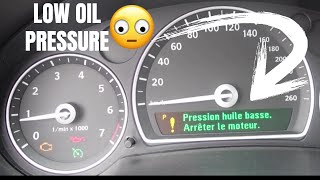
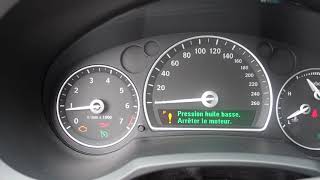
- "Oil pressure low, make safe stop now" message on the driver information display
- Oil pressure gauge (if equipped) reads zero or behaves erratically before failing completely
- In rare cases of actual low pressure, engine ticking, knocking, or rattling noises.
- Replacing the oil pump without first verifying low pressure with a mechanical gauge.
- Replacing the instrument cluster because the oil light is on.
- Replacing the engine due to a low oil pressure reading without confirming if the fault is electrical or mechanical.
Most Likely Causes
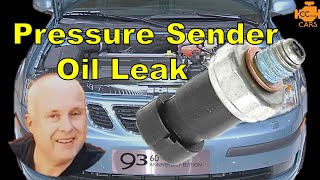
- Failed Engine Oil Pressure Sensor 🔴 High Probability The sensor is a common failure point on this platform. It can fail electrically internally or develop a leak through the sensor body, which contaminates the electrical connector and causes a short. 🎬 Watch: How a leaking sensor causes common oil pressure problems.
How to confirm: After verifying actual oil pressure is normal with a mechanical gauge and checking the wiring, the sensor is confirmed as the fault by process of elimination. A visual inspection may reveal oil weeping from the sensor's plastic connector housing.
Typical fix: Replace the engine oil pressure sensor and its sealing washer. 🎬 Watch: Step-by-step guide to replacing the sensor on the 2.8L V6. It is critical to transfer the metal adapter from the old sensor to the new one if the new sensor does not include it.
Est. part cost: $20-$90 - Wiring Harness or Connector Issue 🟡 Medium Probability The sensor's location exposes the wiring to intense heat and potential oil leaks, which can degrade the insulation or contaminate the connector over time, leading to a short to ground.
How to confirm: Visually inspect the wiring and connector for damage, corrosion, or oil saturation. Unplug the sensor and check for 5V reference and a good ground at the connector with the key on. Perform a continuity test and check for a short to ground on the signal wire.
Typical fix: Repair the damaged section of wiring or clean/replace the pigtail connector. The connector itself can become brittle from heat cycles.
Est. part cost: $15-$30 - Low Engine Oil Level or Incorrect Oil Viscosity ⚪ Low Probability
How to confirm: Check the engine oil dipstick. If the level is low, top it off. If an oil change was recently performed, verify that oil of the correct viscosity (e.g., 0W-40 or 5W-40 full synthetic) was used.
Typical fix: Top up or perform an oil and filter change with the correct grade of oil.
Est. part cost: $60-$100
Rare But Worth Checking
- Failing Oil Pump or Clogged Oil Passages: → Shop Engine Oil Pump This is a serious mechanical issue. If a mechanical gauge test shows genuinely low oil pressure, the engine should not be run. This is the reason you must not drive with the P0522 code until the cause is verified.
- Faulty Engine Control Module (ECM): This is extremely rare. The ECM should only be considered after all other possibilities, including wiring and the sensor itself, have been exhaustively ruled out. A common fault code for a failed ECM on this platform is P0601.
Diagnosis Steps
- Check the engine oil level and condition. Ensure it is full and the correct type of oil is being used.
- Connect an OBD-II scanner to confirm P0522 is the active code.
- CRITICAL STEP: Connect a mechanical oil pressure gauge to the engine. This typically involves removing the original sensor and threading the gauge in its place. Start the engine and compare the mechanical reading to the scanner's data. If mechanical pressure is low, you have a serious internal engine problem that needs immediate professional attention. Stop here.
- If mechanical pressure is normal, the fault is electrical. Turn off the engine.
- Locate the oil pressure sensor on the front of the engine, below and to the side of the oil filter housing. Access is very tight.
- For better access, remove the plastic engine cover and the air intake pipe that runs to the throttle body.
- Inspect the sensor's electrical connector for oil contamination, corrosion, or loose pins. Inspect the visible wiring for any signs of damage, melting, or chafing against the A/C compressor or other components.
- If wiring looks good, the oil pressure sensor is the most likely cause of the problem.
- Using a 24mm open-ended wrench or a special deep oil pressure sensor socket (often 1-1/16" or 27mm), remove the sensor. Be prepared for some oil spillage.
- If the old sensor has a metal adapter fitting, you MUST transfer it to the new sensor. Use PTFE tape on the adapter threads as a precaution.
- Install the new sensor with a new sealing washer. Do not overtighten.
- Reconnect the electrical connector, reinstall the intake pipe, and clear the trouble code with the OBD-II scanner. Start the engine and verify the oil pressure warning is off and the code does not return.
Parts You'll Likely Need
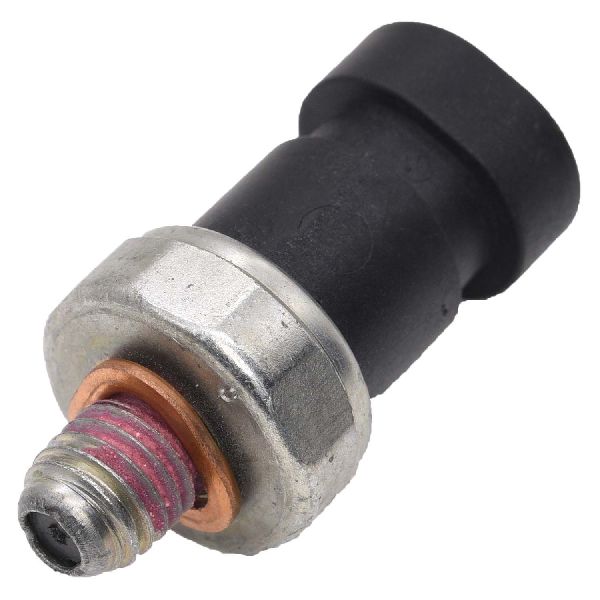
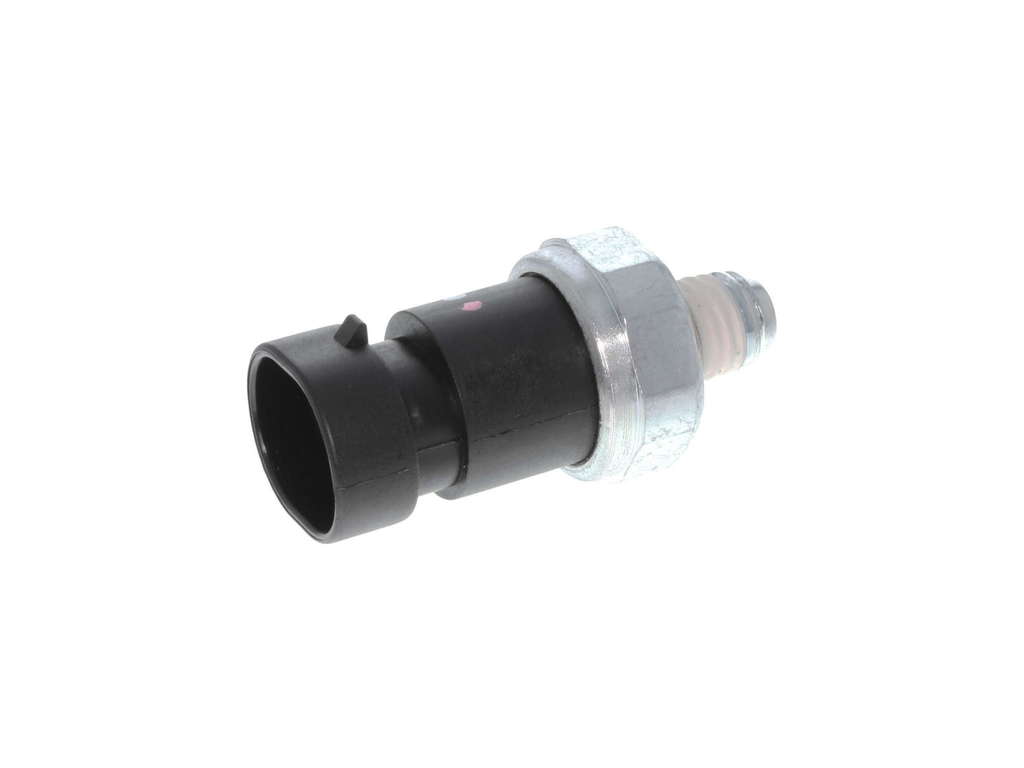
- Engine Oil Pressure Sensor
(OEM #12674782)— This sensor is the most common failure point for code P0522 on this engine. It fails electrically or leaks oil through its housing, triggering the low voltage code.
Trusted brands: ACDelco (GM OE), Bosch, Standard Motor Products (SMP)
OEM price range: $50-$90
Aftermarket price range: $20-$60
Platform-Specific Known Issues
- Access to the sensor is notoriously tight, requiring removal of the throttle body intake pipe. Some mechanics may also remove the cooling fan assembly for better access, which increases labor time. A few owners have even reported success by accessing it from below after removing the passenger side wheel and splash shields.
- An oil pressure sensor deep socket (typically 1-1/16" or 27mm) is highly recommended to navigate the tight space around A/C lines. A 24mm open-ended wrench can also work but is more difficult.
- The original sensor is often installed with a separate metal adapter that screws into the block. This adapter MUST be removed from the old sensor and installed on the new one if the replacement part doesn't include it.
Mechanic-Grade Diagnostic Values
- Mechanical Oil Pressure (Warm Engine) — expected: >4 bar (>58 PSI) at 4000 RPM. Failure: Pressure significantly below 4 bar at 4000 RPM indicates a mechanical engine issue (worn bearings, failing oil pump).
- Sensor Signal Voltage — expected: Typically 0.5V at idle, rising to ~4.5V under load/high RPM.. Failure: A reading below 0.2V for more than 10 seconds with the engine running will trigger P0522. This points to a short to ground or a failed sensor.
- Sensor Connector Voltage (Key On, Engine Off) — expected: One pin should show 5V reference from the ECM, one should have continuity to ground.. Failure: Absence of 5V reference indicates a wiring problem between the ECM and the sensor, or a faulty ECM. Lack of a good ground indicates a broken ground wire.
Scan Tool Commands That Help
- Tech 2: Read Engine Data / Oil Pressure — The Tech 2 scanner can display the oil pressure value being reported by the sensor to the ECM in real-time. This is useful to see if the sensor is reporting a static low value or is fluctuating erratically, which can help differentiate a dead sensor from an intermittent wiring issue.
Wiring & Ground Locations
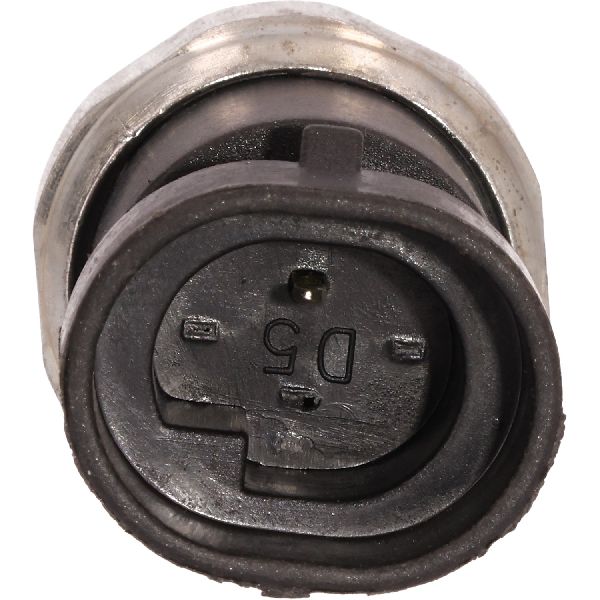
- Oil Pressure Sensor Connector — On the sensor itself, located on the front of the engine block, below the oil filter housing.. This is the primary point of failure for wiring issues. It is a single-terminal oval-shaped connector. Oil leaking through a failed sensor can contaminate this connector, causing a short to ground and triggering P0522.
- G2 / G7 / G25 — The B284 V6 engine has several key grounding points. G2 is on the left-hand structural member, G7 can be on the starter motor bolt, and G25 is on the left-hand engine mounting. An extra ground cable also exists between the cylinder banks.. The sensor grounds through the engine block. A corroded or loose main engine ground strap (G7, G25) can create electrical noise and potential voltage differences, although it's a less common cause for this specific code than a direct sensor/wiring fault.
Real Owner Repair Stories
- Reddit user Mafelcz on r/saab (Saab 9-5 with a custom-built hybrid engine using B204/B234 block and B205/235 head.) — Excellent oil pressure when cold (4 bar), but dropped to 1.1 bar at hot idle and 2 bar at 2000 RPM, which was below specification.
❌ Tried (didn't work) Verified pressure with two separate mechanical gauges., Ensured all O-rings and oil cooling jets were new.
✅ What actually fixed it The root cause was identified as excessive axial clearance in the oil pump (0.1 mm vs. a maximum spec of 0.08 mm). Although a small deviation, it was enough to cause the low oil pressure condition when the oil was hot and thin. This highlights the importance of checking mechanical tolerances on high-mileage or rebuilt engines before chasing electrical faults.
OEM Part Supersession History
12570798, 12621649, 12635992→12674782 (current GM/ACDelco)— Likely improvements in the internal diaphragm and sealing to prevent the common failure modes of internal electrical shorts and oil leakage through the sensor body.
Heads up: All previous part numbers are replaced by 12674782. Using old stock is not recommended as the newer part is more robust.
Diagnostic Flowchart
Other Known Issues on This Vehicle
Issues unrelated to this code that are worth knowing about as an owner of this generation:
- Ignition Coil Failure 🔴 High — Very common, especially on the rear bank (cylinders 1, 3, 5) due to extreme heat. Failure often occurs between 60,000-100,000 miles.
- Timing Chain Stretch 🔴 High — A significant issue, particularly on pre-2010 models, often appearing after 80,000 miles. Caused by a combination of original chain design and long oil change intervals. Leads to rattle on startup and codes like P0016/P0018. (Ref: GM issued an updated timing chain with a smaller pitch in 2007 to reduce noise, but stretch issues persisted in early years.)
- Fuel Level Sender Failure 🟡 Low — Extremely common. The fuel gauge will read empty when full, or behave erratically. It's an annoyance but doesn't affect drivability.
- Cracked Coolant Expansion Tank 🟠 Medium — Common due to heat degradation. The plastic tank is located in a very hot area of the engine bay and becomes brittle, leading to coolant leaks. (Ref: Saab had a voluntary customer satisfaction campaign (#15460) for 2006-2009 models to replace the tank.)
- XWD System Maintenance (AWD Models) 🔴 High — The Haldex AWD system requires fluid and filter changes every 30,000-40,000 miles. Neglect leads to expensive pump or clutch pack failure. The transfer case can also develop leaks or bearing failures.
Used vs. New Parts: Buying Guide for This Vehicle
When a used part is the smart pick: For this repair, using a used part is not recommended for the sensor itself due to its high failure rate and low cost new. However, sourcing a used wiring harness pigtail from a junkyard is a viable option if the original connector is broken or corroded, as new pigtails can sometimes be hard to find for specific models.
Donor-vehicle mileage cap: roughly under 80000 miles for the part to have meaningful remaining life.
What to inspect on the donor part:
- For a wiring pigtail, ensure the plastic is not brittle or cracked.
- Check for any signs of corrosion or oil saturation on the connector pins.
- Ensure there is at least 4-6 inches of wire attached to the pigtail for easier splicing.
OEM-only on this vehicle (don't cheap out):
- While not strictly 'OEM-only', using a reputable OEM supplier like ACDelco for the sensor is highly recommended. Cheap, unbranded sensors have a very high failure rate and are not worth the labor required to access this location.
Aftermarket brands forum-validated for this vehicle:
- ACDelco (GM OE)
- Bosch
- Standard Motor Products (SMP)
Brands owners have reported issues with on this vehicle:
- Unbranded, no-name sensors from online marketplaces should be avoided. The labor to replace this part is significant, so using a poor-quality part that may fail quickly is not cost-effective.
Real Owner Stories
Aggregated from forums and TSBs cited above. Mileages and costs reflect what owners reported in those sources.
Saab 9-3 2.8T
Symptoms: Experienced the common P0522 code, which forum members call a 'rite of passage for 2.8T owners'.
What fixed it: Replaced the oil pressure sensor, making sure to transfer the metal adapter from the old part and removing the intake pipe for access.
Source hint: saabcentral.com: Multiple threads corroborate that P0522 is a common issue, almost always the sensor. Owners share tips on access, including removing the intake pipe and the necessity of transferring the sensor adapter. One user notes, 'It's a rite of passage for 2.8T owners.'
Saab 9-3
Symptoms: Experienced an oil leak from the oil pressure sensor area, which can contaminate the connector and cause a short.
What fixed it: Replaced the oil pressure sensor, which required removing the intake pipe for access and transferring the metal adapter from the old sensor to the new one.
Source hint: YouTube - Cyclone Cyd, 'Saab 9-3 oil pressure sensor change | How to | Saab Oil Leak Problems'
Saab 2.8T
Symptoms: Received a 'Low Oil Pressure!' warning on the driver information display.
What fixed it: Replaced the oil pressure sensor, noting the difficult access which is a common complaint for this job.
Source hint: YouTube - AnotherSAABChannel, 'Saab 2.8T Low Oil Pressure! Sensor Replacement'
Related OBD-II Codes
Frequently Asked Questions
How do I get to the oil pressure sensor on my 2.8T 9-3? It looks impossible to reach.
My new oil pressure sensor looks different from the old one. Am I missing a part?
What special tools do I need to replace the oil pressure sensor on my 2008 Saab 9-3 Aero?
My 9-3 is showing the 'Oil pressure low, make safe stop now' message. Is it safe to drive?
I just got a P0522 code on my 2.8T. Is this a common failure?
While I'm working on my 9-3, are there other common issues with the 2.8L V6 I should look out for?
Helpful Videos
We Have This Part in Stock


The information in this article is provided for general reference and educational purposes only. Vehicle specifications, procedures, and part compatibility can vary by production date, trim level, and region. Always consult your vehicle's factory service manual and verify part numbers before purchasing or performing repairs. Safety-critical components such as airbags, seat belts, and braking systems should be installed by a qualified professional.
- Saab 9-3:
- 🧭 Diagnostic Flowchart
- 🎬 Helpful Videos
- 🛍️ Shop This Part
- What's Unique About the 2006-2011 Saab 9-3
- Symptoms You May Notice
- Most Likely Causes
- Rare But Worth Checking
- Diagnosis Steps
- Parts You'll Likely Need
- Platform-Specific Known Issues
- Mechanic-Grade Diagnostic Values
- Scan Tool Commands That Help
- Wiring & Ground Locations
- Real Owner Repair Stories
- OEM Part Supersession History
- Other Known Issues on This Vehicle
- Used vs. New Parts: Buying Guide for This Vehicle
- Real Owner Stories
- Saab 9-3 2.8T
- Saab 9-3
- Saab 2.8T
- Related OBD-II Codes
- Frequently Asked Questions
- 🎟️ Get 5% Off