

P0524 on 2012-2018 Audi A6 3.0T: Engine Oil Pressure Too Low Causes and Fixes
P0524 on an Audi A6 3.0T indicates critically low oil pressure. STOP DRIVING IMMEDIATELY. While it can mean a major mechanical failure, it's often caused by one of two faulty oil pressure switches hidden under the supercharger. A professional diagnosis using a mechanical gauge is essential to tell the difference. A known TSB also points to a small, inexpensive plug in the oil filter housing as a common culprit.
- P0524 is a critical code. Stop the engine immediately to prevent catastrophic failure.
- The most important diagnostic step is to verify actual oil pressure with a mechanical gauge.
- On the Audi 3.0T, faulty oil pressure switches are a very common cause, but they are extremely difficult to access under the supercharger.
- Before replacing sensors, be aware of TSB 2041093/4, which points to a small, inexpensive part in the oil filter housing as a possible culprit.
- Due to the risk and complexity, this issue is best handled by a professional mechanic familiar with Audi vehicles.
What's Unique About the 2012-2018 Audi A6
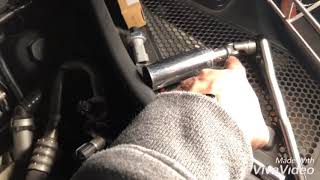
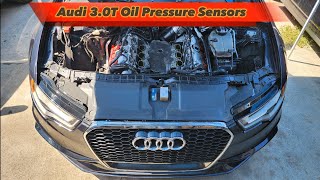
The Audi 3.0T Supercharged V6 (including the CREC variant) uses a two-stage oil pressure system controlled by two separate oil pressure switches (sensors) to optimize efficiency. A failure of either switch can trigger a false P0524 code or a related fault like P164D. These switches are notoriously difficult to access, as they are located in the engine "V" valley, underneath the supercharger, making what could be 🎬 Watch: Locate the hidden oil pressure switches a simple sensor replacement a labor-intensive job.
Generation note: The 2012-2018 model years cover the entire Audi A6 C7 generation, including the mid-cycle facelift (C7.5, starting around 2016) which introduced the CREC engine code. The oil pressure system design and the common issues with the pressure switches and oil filter housing plug are consistent across the 3.0T supercharged engines used in this entire date range.
Symptoms You May Notice
- Red 'oil can' warning light on the instrument cluster, often blinking.
- Audible alarm or chime.
- Dashboard message: 'Oil Pressure Too Low. Switch off engine immediately.'
- Engine power limited, EPC light on, and a message such as 'Do not exceed 4,000 RPM'.
- Abnormal engine noises like ticking, whining, or knocking if the low pressure is genuine.
- For intermittent sensor failures, the warning may appear randomly, especially at idle, and then disappear.
- Replacing the oil pressure switches without first confirming the actual oil pressure with a mechanical gauge. If a real mechanical issue exists, this will not fix the problem and risks destroying the engine.
- Replacing the oil pressure switches when the actual fault is the small rubber plug inside the oil filter housing, as described in TSB 2041093/5. 🎬 See how to diagnose this exact oil filter housing issue
Most Likely Causes
- Faulty Oil Pressure Switch / Sensor 🔴 High Probability → Shop Engine Oil Pressure Switch The two oil pressure switches on the 3.0T engine are a very common failure point. They can fail electronically or leak oil through the sensor body into the electrical connector, causing false readings. The high-pressure switch is the most frequent culprit.
How to confirm: After confirming oil pressure is mechanically good, inspect the sensor connectors for oil contamination. However, due to the extremely difficult access under the supercharger, it's common practice to replace both switches if one is suspected to be faulty.
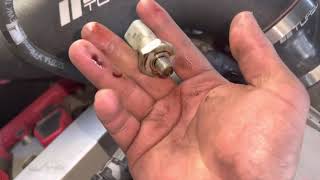
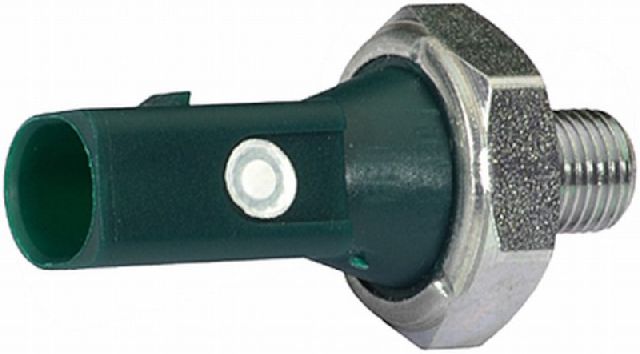
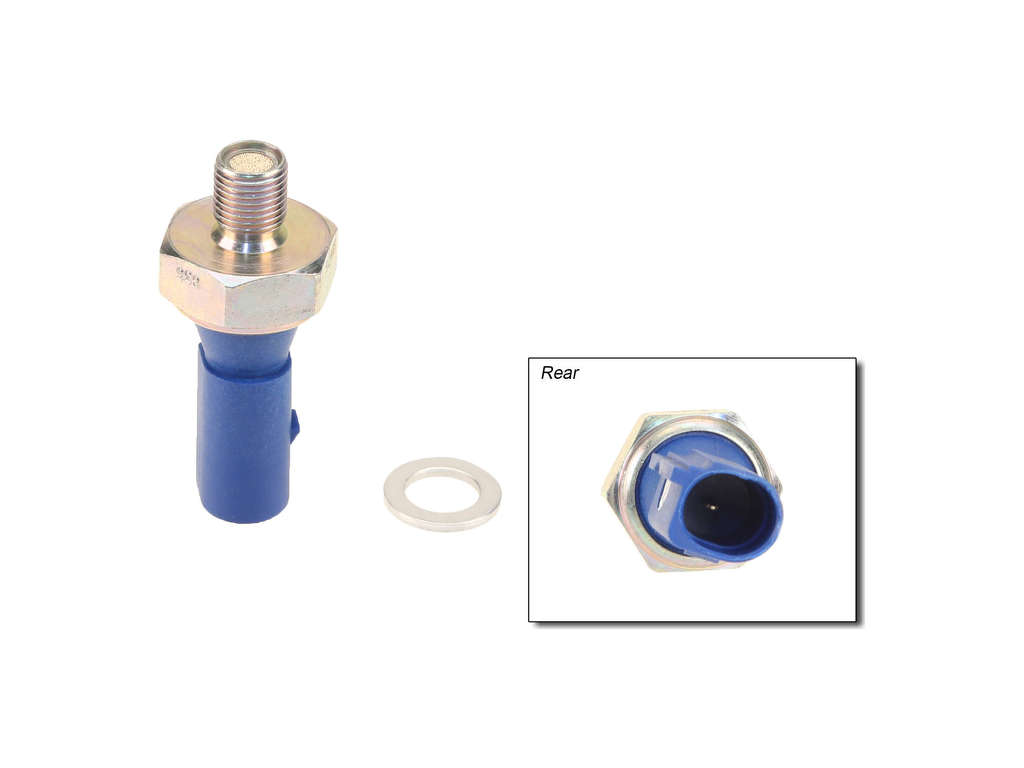
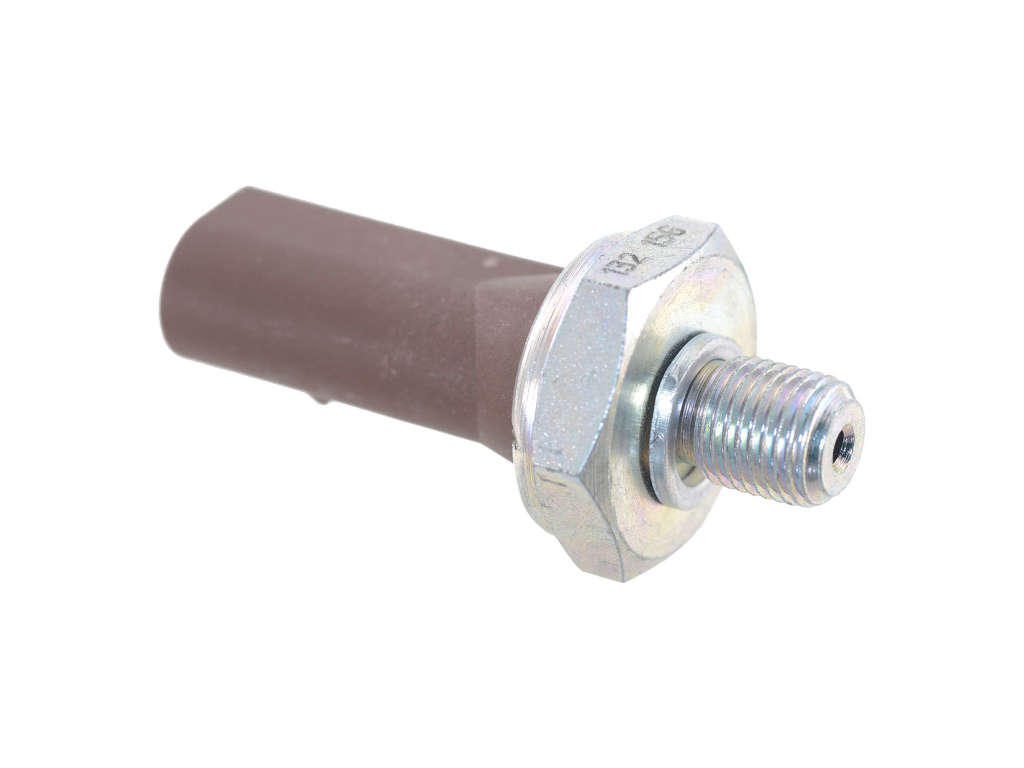
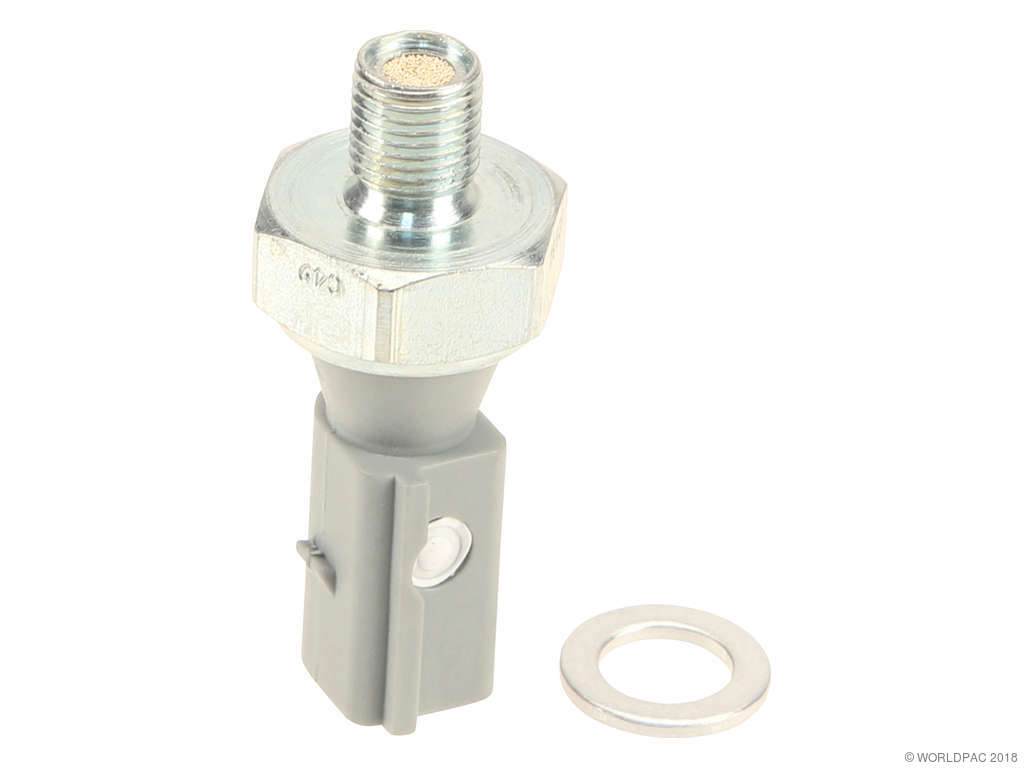
Typical fix: Replace both the low-pressure (F378, 1-pin) and high-pressure (F22, 2-pin) oil pressure switches. The updated high-pressure switch is often violet/purple.
Est. part cost: $50-$150 - Faulty Oil Filter Housing Internal Plug (TSB 2041093/5) 🔴 High Probability → Shop Engine Oil Filter Adapter A specific and widely-documented TSB addresses an issue where a small rubber plug and spring inside the oil filter housing can lose tension or become dislodged. This causes an internal pressure drop that triggers a genuine low-pressure state and the P0524/P164D codes, especially at idle. This is often misdiagnosed as a bad sensor.
How to confirm: This is diagnosed when a mechanical pressure test shows low pressure at idle (e.g., below 1.4 bar). The oil filter housing is opened to inspect the position and condition of the plug and spring.
Typical fix: Replace the small rubber plug (PN: 06E115475) and spring (PN: 06E115489) within the oil filter housing with the updated parts specified in the TSB.
Est. part cost: $10-$30 - Low Engine Oil Level 🟡 Medium Probability While not as prone to consumption as the 2.0T engine, some earlier 3.0T engines (pre-mid-2012) had PCV issues leading to oil consumption. Any engine can consume or leak oil, and a low level is a primary cause for low pressure.
How to confirm: Check the engine oil level using the MMI electronic oil level display. Check for visible oil leaks under the vehicle, particularly from the valve covers, timing covers, and PCV assembly.
Typical fix: Top up the engine oil to the correct level using a manufacturer-approved oil (e.g., VW 502 00 / 504 00). Address any leaks.
Est. part cost: $15-$30
Rare But Worth Checking
- Failing Oil Pump: → Shop Engine Oil Pump If a mechanical gauge confirms low pressure across all RPMs and the pickup tube is clear, the oil pump itself may have failed. This is a major repair, but less common than sensor or filter housing issues on this platform.
- Clogged Oil Pickup Tube Screen: Debris from a failing component (like timing chain guides) or sludge can clog the screen on the oil pump's pickup tube in the oil pan, starving the engine of oil. Forum users have reported finding plastic bits or fine metallic glitter in the pan which resolved the issue upon cleaning.
- Worn Engine Bearings: This is the worst-case scenario. Excessive clearance in the main or connecting rod bearings will cause a loss of oil pressure. This typically requires a complete engine rebuild or replacement and may be preceded by knocking noises.
- Incorrect Oil Filter: → Shop Engine Oil Filter Adapter An Audi TSB (2033379) warns that using an oil filter shorter than the specified 155mm can cause oil pressure malfunctions and trigger related codes. Always use a high-quality, OEM-spec filter from brands like Mann or Mahle.
Diagnosis Steps
- STOP THE ENGINE IMMEDIATELY. Do not restart it until diagnosed.
- Check the engine oil level via the MMI and condition. Top up with manufacturer-specified oil (VW 502 00 / 504 00) if low.
- Scan the vehicle for all DTCs. Note P0524 and any other related codes like P164D or P164B.
- CRITICAL: Connect a mechanical oil pressure gauge to the engine. This is non-negotiable. The port is often where one of the pressure switches is located.
- Start the engine and warm it to operating temperature (80°C). Compare the mechanical gauge readings to the manufacturer's specifications. The CREC engine should have >1.2-1.4 bar at idle and >1.5 bar at 2000 RPM.
- If mechanical pressure is GOOD: The issue is in the sensor circuit. Inspect the sensor wiring for damage or oil contamination. Given the difficult access, the most practical step is to replace both oil pressure switches.
- If mechanical pressure is LOW (especially at idle): The most likely cause is the internal plug in the oil filter housing per TSB 2041093/5. Inspect and replace the rubber plug and spring. If pressure is still low, the engine has a more serious mechanical fault. DO NOT run the engine further. The vehicle needs professional service to inspect the oil pan, pickup tube, oil pump, and potentially internal engine bearings.
Parts You'll Likely Need
- Oil Pressure Switch (High Pressure, F22)
(OEM #06E919081G)— This 2-pin switch (often violet-colored) is the most common failure point on the 3.0T engine, often causing intermittent EPC lights and pressure warnings.
Trusted brands: Genuine Audi/VW, Hella, Vemo
OEM price range: $20-$50
Aftermarket price range: $15-$40 - Oil Pressure Switch (Low Pressure, F378)
(OEM #06H919081A)— This is the second switch (1-pin) in the two-stage system. It is best practice to replace both switches at the same time due to the extreme difficulty in accessing them under the supercharger.
Trusted brands: Genuine Audi/VW, Hella, Bosch
OEM price range: $40-$70
Aftermarket price range: $20-$40 - Oil Filter Housing Plug & Spring Kit
(OEM #Plug: 06E115475, Spring: 06E115489)— Required parts to fix the common issue described in TSB 2041093/5, where a dislodged plug causes a true low oil pressure condition at idle.
Trusted brands: Genuine Audi/VW
OEM price range: $10-$30
Aftermarket price range: $5-$15
Related Codes That Often Appear With This One
- P164D — This Audi-specific code for 'Oil Pressure Switch for reduced Oil Pressure - Malfunction' directly points to an issue with the low-pressure switch (F378) circuit. It is the primary code addressed by TSB 2041093 and almost always appears with or precedes a P0524 related to the filter housing plug issue.
- P164B — This is an Audi-specific code for 'Oil Pressure Switch Malfunction', often pointing directly to a failure of the F22 high-pressure switch.
Technical Service Bulletins (TSBs) & Recalls
- 2041093/5: Addresses MIL on and/or oil pressure warning, often with DTC P164D00, caused by an out-of-position or weak rubber plug and spring in the oil filter housing, not a bad sensor. Specifies pressure should be above 1.4 bar at idle after fix.
- 2033379: Warns that using an oil filter shorter than the specified 155mm can cause oil pressure malfunctions and related DTCs.
Platform-Specific Known Issues
- Access to the oil pressure switches is severely restricted by the supercharger. Replacement is a very challenging DIY job that often requires special tools like a 24mm deep swivel socket and long extensions to avoid removing the supercharger.
- An official Audi TSB (2041093, latest version is /5) points to a potential issue with a rubber plug in the oil filter housing that can cause identical symptoms, leading to misdiagnosis. This should be checked before assuming the sensors are bad if a mechanical test shows low pressure.
Mechanic-Grade Diagnostic Values
- Mechanical Oil Pressure at Hot Idle (approx. 80°C) — expected: > 1.2-1.4 bar (> 17-20 psi). Failure: Pressure below this range indicates a mechanical fault.
- Mechanical Oil Pressure at 2000 RPM (Hot) — expected: > 1.5 bar (> 22 psi). Failure: Pressure does not rise with RPM, indicating a pump, pickup, or internal engine issue.
- High-Pressure Switch (F22) Activation Point — expected: Switches state between 2.5 and 3.2 bar (36 - 46 psi).. Failure: Switch does not change state in this pressure window, confirming a faulty switch.
- Low-Pressure Switch (F378) Activation Point — expected: Switches state between 0.75 and 1.05 bar (11 - 15 psi).. Failure: Switch does not change state in this pressure window.
- Oil Pressure Switch Live Data (VCDS/OBDeleven) — expected: A 2-bit binary value that changes with RPM. '1' (binary 01) is normal at hot idle. '3' (binary 11) is normal at cold start or >3500 RPM.. Failure: Value is '0' (both switches report no pressure) or '2' (conflicting signals), indicating a switch or wiring malfunction.
Hidden / Shadow Codes Worth Checking
- P164D 00: The '00' suffix on the P164D code specifically points to a 'Malfunction' in the reduced pressure switch circuit, suggesting an electrical fault (bad switch, wiring) rather than a confirmed low pressure state, though a mechanical test is still required. (see via VCDS (VAG-COM), OBDeleven, ODIS, or other professional Audi diagnostic tools.)
Scan Tool Commands That Help
- VCDS or OBDeleven: Advanced Measuring Blocks / Live Data — Use this to monitor the status of the oil pressure switches in real-time. Select the measuring blocks for oil pressure. The values should change as RPMs increase past the switch activation points. This can help differentiate a sensor that is electrically dead from one that is simply not seeing pressure.
- VCDS or similar: Instrument Cluster (17) > Measuring Blocks — On some models, the instrument cluster itself processes the switch signals. You can view the status here, which may show 'minimum' or 'ok' pressure rather than a numerical value, confirming what the cluster is seeing from the switches.
Wiring & Ground Locations
- F22 High-Pressure Switch Connector — On the oil filter housing, under the supercharger. It is a 2-pin connector, and the updated switch is violet-colored.. This is the primary connector to check for oil contamination, which is a definitive sign of switch failure. A voltage test can be performed here.
- F378 Low-Pressure Switch Connector — In the engine block, right next to the oil filter housing, under the supercharger. It is a 1-pin connector.. This is the second switch in the system. It grounds through the engine block, so the single pin carries the signal voltage from the ECU. A voltage test here can confirm the circuit is live.
- Engine Block Ground — The oil pressure switches ground through their threads into the engine block/oil filter housing.. A clean, tight installation of the switches is critical for a proper ground path. Corrosion or improper torque could theoretically cause a bad signal.
Real Owner Repair Stories
- Ross-Tech Forums user (2012 Audi S4 3.0T (B8.5)) — Red low oil pressure light at hot idle, P164D code stored.
❌ Tried (didn't work) Initial diagnosis pointed towards common switch failure.
✅ What actually fixed it The user discovered the engine oil had a strong smell of gasoline and the oil level was overfull. The suspected root cause was a failing High-Pressure Fuel Pump (HPFP) leaking fuel into the crankcase, thinning the oil and causing a true low-pressure condition. The user also noted they had recently replaced the oil filter adapter with an aftermarket (Vaico) part and questioned if an internal 'flapper' could be the issue. The thread highlights fuel dilution as a possible cause for these oil pressure codes. - AudiWorld Forums user (Audi 3.0T (year not specified)) — P164D 00 - Malfunction
❌ Tried (didn't work) Assuming the oil pressure was actually low.
✅ What actually fixed it The user was advised to monitor the oil switch status in live data. The discussion clarified that the system uses a 2-bit binary value to report status (0-3). A value of '2' indicates a malfunction of the reduced pressure switch because the high pressure switch reports 'good' while the low pressure switch reports 'no pressure'—a conflicting and impossible state. This confirmed the issue was electrical (a bad switch) and not mechanical low pressure.
OEM Part Supersession History
Unknown, likely gray color→06E919081G— The original high-pressure (F22) switches were prone to internal failure and leaking. The updated part is more durable.
Heads up: The updated switch is violet/purple and has a 2-pin connector. It is the correct part for this application.06H919081 / 06H919081A→04E919081A— Standard part evolution and consolidation across VW/Audi platforms.
Heads up: Part numbers 06H919081A and 04E919081A are both listed as replacements for the low-pressure (F378) switch. Verify fitment with VIN, but they are generally interchangeable for this function.
Model Year Variations Within This Range
- 2012-2015 (Pre-facelift / Gen 1 3.0T): Engines produced before mid-2012 had an earlier design PCV / oil separator with higher crankcase pressure regulation. This made them more susceptible to oil consumption, increasing the likelihood that a P0524 code could be caused by a genuinely low oil level. An updated PCV was released under a TSB.
- 2016-2018 (Facelift / Gen 2 'CREC' 3.0T): These later engines are specifically called out in some versions of the TSB (2041093) regarding the oil filter housing plug, suggesting it may be more prevalent on the updated engine design. The fundamental two-stage oil pressure system remains the same.
Diagnostic Flowchart
Other Known Issues on This Vehicle
Issues unrelated to this code that are worth knowing about as an owner of this generation:
- PCV / Oil Separator Failure 🔴 High — Common failure, especially on pre-CREC engines but still occurs on CREC. Often fails between 60,000-100,000 miles. Leads to high oil consumption and potential seal failure. (Ref: TSB 2027731/8 and 2030197 address oil consumption, often recommending PCV replacement.)
- Thermostat Failure 🟠 Medium — Common failure item. The thermostat can stick, causing overheating or slow warm-up. Replacement is labor-intensive as it is located under the supercharger.
- Water Pump Leak 🟠 Medium — The water pump, driven by the accessory belt, is prone to leaking coolant from its weep hole. On CREC engines, it can sometimes be replaced without removing the supercharger, but on earlier 3.0T engines it's a 'supercharger off' job.
- Engine Mount Failure 🟠 Medium — The fluid-filled electronic engine mounts tend to fail around 80,000-120,000 miles, causing excessive vibration at idle and when starting/stopping the engine.
- Timing Chain Tensioner Wear 🔴 High — More common on pre-CREC engines, but can still occur. A brief rattle on cold start (1-2 seconds) is considered normal, but a persistent rattle indicates worn tensioners, which is an engine-out repair.
Used vs. New Parts: Buying Guide for This Vehicle
When a used part is the smart pick: For this repair, using used parts is generally not recommended due to the high labor cost for access. However, if the entire oil filter housing assembly is confirmed to be cracked, a used assembly from a verified low-mileage (<60,000 miles) donor vehicle could be a cost-effective alternative to a new OEM unit.
Donor-vehicle mileage cap: roughly under 60000 miles for the part to have meaningful remaining life.
What to inspect on the donor part:
- Verify the donor vehicle's mileage and check for any history of overheating or poor maintenance.
- Inspect the plastic housing for any hairline cracks, especially around the filter cap threads and mounting points.
- Ensure all electrical connector sockets are clean, free of corrosion, and not brittle.
- If possible, get the housing from a vehicle that was not in a front-end collision.
OEM-only on this vehicle (don't cheap out):
- Oil Pressure Switches (F22 and F378): The labor to replace these is extensive. The risk of a used or cheap aftermarket switch failing prematurely is not worth the potential savings. Stick to Genuine VW/Audi or a reputable OEM supplier like Hella or Bosch.
- Oil Filter Housing Plug & Spring Kit (TSB parts): These are inexpensive and should always be purchased new from the dealer to ensure you have the latest revision.
Aftermarket brands forum-validated for this vehicle:
- Hella (for sensors)
- Bosch (for sensors)
- Mann (for oil filters)
- Mahle (for oil filters)
Brands owners have reported issues with on this vehicle:
- Unbranded, 'white-box' sensors from online marketplaces. While a specific brand, Vaico, was mentioned in a forum post as a potential source of an issue with an oil filter adapter, this was not definitively proven. It is safest to avoid non-OEM suppliers for critical components like the oil filter housing.
Real Owner Stories
Aggregated from forums and TSBs cited above. Mileages and costs reflect what owners reported in those sources.
Audi A6 3.0T Supercharged
Symptoms: Oil pressure too low warning. The owner spent a year diagnosing the issue and found plastic debris from a previous accident clogging the oil pan and pickup tube, along with a frayed wire to the pressure switch.
What fixed it: Cleaning debris from the oil pan/pickup tube and repairing the frayed sensor wiring.
Source hint: Audi-Sport.net thread titled '[HELP] Oil Pressure is too low! Switch off engine!'
2016 Audi A6 3.0T (C7.5) — ~100000 miles
Symptoms: General reliability concerns at higher mileage including issues with components located under the supercharger like the PCV valve and water pump.
What fixed it: Replacement of PCV valve and related cooling components located under the supercharger.
Source hint: Reddit r/Audi thread about C7.5 reliability
Related OBD-II Codes
Frequently Asked Questions
Does TSB 2041093/5 apply to my 2012-2018 Audi A6 with the 3.0T engine?
Can using the wrong oil filter cause a P0524 or low pressure warning on my A6?
What are the specific oil pressure requirements for the CREC engine at idle?
Is it necessary to remove the supercharger to replace the oil pressure switches?
What color is the updated high-pressure oil switch for the 3.0T engine?
My A6 is showing a 'Do not exceed 4,000 RPM' message; is this related to P0524?
Helpful Videos
We Have This Part in Stock



The information in this article is provided for general reference and educational purposes only. Vehicle specifications, procedures, and part compatibility can vary by production date, trim level, and region. Always consult your vehicle's factory service manual and verify part numbers before purchasing or performing repairs. Safety-critical components such as airbags, seat belts, and braking systems should be installed by a qualified professional.
- Audi A6:
- 🧭 Diagnostic Flowchart
- 🎬 Helpful Videos
- 🛍️ Shop This Part
- What's Unique About the 2012-2018 Audi A6
- Symptoms You May Notice
- Most Likely Causes
- Rare But Worth Checking
- Diagnosis Steps
- Parts You'll Likely Need
- Related Codes That Often Appear With This One
- Technical Service Bulletins (TSBs) & Recalls
- Platform-Specific Known Issues
- Mechanic-Grade Diagnostic Values
- Hidden / Shadow Codes Worth Checking
- Scan Tool Commands That Help
- Wiring & Ground Locations
- Real Owner Repair Stories
- OEM Part Supersession History
- Model Year Variations Within This Range
- Other Known Issues on This Vehicle
- Used vs. New Parts: Buying Guide for This Vehicle
- Real Owner Stories
- Audi A6 3.0T Supercharged
- 2016 Audi A6 3.0T (C7.5) — ~100000 miles
- Related OBD-II Codes
- Frequently Asked Questions
- 🎟️ Get 5% Off