

P0524 on 2011-2017 Chrysler 200 3.6L: Engine Oil Pressure Too Low Causes and Fixes
P0524 on a 3.6L Pentastar V6 is almost always caused by a cracked plastic oil filter housing or a failed oil pressure sensor. Oil pools in the engine's 'V' and can drip down the bell housing, mimicking a rear main seal leak. Since the sensor is located under the intake manifold, the standard, most cost-effective repair is to replace the entire oil filter housing (with an upgraded aluminum unit like the Dorman 926-959), the oil pressure sensor, and all intake gaskets at the same time. Expect a sh
- P0524 is a critical code. Stop the engine immediately to prevent catastrophic damage.
- The first step is always to check the oil level, but the most likely root cause on this engine is a cracked oil filter housing assembly.
- The definitive diagnostic step is to verify the true oil pressure with a mechanical gauge before replacing parts.
- Due to the 4-6 hours of labor required to access the sensor, it is highly recommended to replace the entire oil filter housing assembly (ideally with an aluminum one) and the sensor at the same time.
- Always use high-quality replacement parts, especially for the sensor and gaskets, to avoid having to repeat this labor-intensive repair.
What's Unique About the 2011-2017 Chrysler 200
On the 3.6L Pentastar V6, the P0524 code is frequently linked to two well-known, interconnected failure points. The first is the oil pressure sensor itself, which is prone to failure and was subject to a Technical Service Bulletin (TSB 18-034-14 REV. A) on some models. The second, and more significant issue, is the original equipment plastic oil filter housing and cooler assembly. This assembly sits in the hot 'V' of the engine and is notorious for developing cracks and gasket leaks over time, leading to a loss of oil that directly causes low oil pressure. The leaking oil often saturates the oil pressure sensor and its wiring, causing it to fail. Because the oil pressure sensor is mounted to this housing and replacing it requires extensive labor, both issues are almost always addressed at the same time.
Generation note: The 2011-2017 Chrysler 200 covers two generations: the first (JS, 2011-2014) and the second (UF, 2015-2017). Both generations offered the 3.6L Pentastar V6, and the causes and fixes for code P0524 are identical for both, as the issue is specific to the engine design which is shared across many Chrysler, Dodge, Jeep, and Ram vehicles. However, a key difference exists in the oil filter housing design between 2011-2013 and 2014+ models, requiring different replacement parts.
Symptoms You May Notice
- Red oil pressure warning light illuminated on the dashboard
- Check Engine Light is on
- Engine making unusual noises, such as ticking, knocking, or whining
- Engine running rough, hesitating, or stalling
- Burning oil smell from the engine bay
- Remote start feature is disabled
- Visible oil leak dripping from the transmission bell housing area (leaking from the back of the engine valley)
- Replacing only the oil pressure sensor without replacing the leaking plastic housing. The new sensor will soon be damaged by leaking oil, and the root cause of the oil loss will not be fixed, leading to a repeat repair.
- Assuming the engine is bad without first verifying actual oil pressure with a mechanical gauge. A faulty sensor can mimic the symptoms of a catastrophic failure.
- Mistaking the oil leak at the rear of the engine for a rear main seal leak, when it is actually oil running down from the cracked filter housing in the valley.
Most Likely Causes
- Cracked or Leaking Oil Filter Housing / Cooler Assembly 🔴 High Probability → Shop Engine Oil Filter Adapter The original factory part is made of plastic and is located in the hot engine valley between the cylinder heads. Repeated heat cycles cause the plastic to become brittle, warp, and crack, leading to oil and/or coolant leaks. This is a well-documented failure on millions of Pentastar engines. Overtightening the oil filter cap during an oil change is also a suspected cause of stress fractures.
How to confirm: Visually inspect the engine valley (under the intake manifold) for pooled oil using a flashlight. This is often the primary cause of oil loss leading to P0524. The oil may also run down the back of the engine, appearing as a leak from the transmission bell housing.
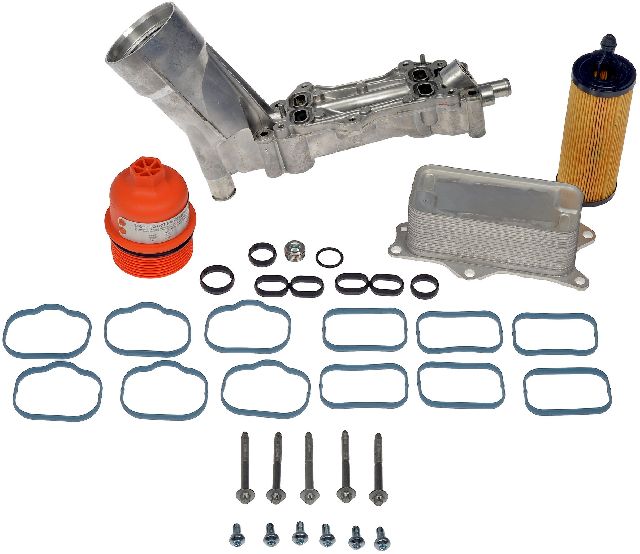
Typical fix: Replace the entire oil filter housing assembly. It is highly recommended to upgrade to a more durable all-aluminum aftermarket unit (e.g., Dorman 926-959) to prevent a repeat failure. 🎬 Watch: How to install the upgraded Dorman aluminum housing
Est. part cost: $100-$350 - Faulty Engine Oil Pressure Sensor 🔴 High Probability The sensor has a high failure rate and is also susceptible to damage from oil leaking from the filter housing above it. It can fail by sending incorrect low-pressure readings even when the actual pressure is fine. A classic symptom of a failed sensor is the oil pressure gauge reading a maxed-out value (like 99-100 PSI) when the ignition is on but the engine is off.
How to confirm: After confirming good oil level, a technician must test actual oil pressure with a mechanical gauge. If the mechanical gauge shows good pressure (e.g., above 6-10 PSI at hot idle) but the code is present, the sensor or its wiring is faulty. With the Key On, Engine Off (KOEO), the sensor voltage should be near zero (approx. 0.27V); a reading near 5V (e.g., 4.89V) indicates a failed sensor.
Typical fix: Replace the oil pressure sensor. Due to its location under the intake manifolds, this is almost always done at the same time as the oil filter housing replacement to save on labor.
Est. part cost: $20-$60 - Low Engine Oil Level 🟡 Medium Probability This is typically a symptom of the leaking oil filter housing, but can also be due to normal oil consumption or other leaks like from the valve covers.
How to confirm: Check the engine oil dipstick. This should be the very first step taken when the oil light or P0524 code appears.
Typical fix: Top off the oil to the correct level and immediately investigate the source of the oil loss, which is most likely the oil filter housing.
Est. part cost: $10-$20 - Clogged or Incorrect Oil Filter / Wrong Oil Viscosity ⚪ Low Probability → Shop Engine Oil Filter Adapter
How to confirm: This usually occurs immediately after an oil change. Verify the part number of the installed filter and the viscosity of the oil used against the manufacturer's specification (typically 5W-20). Using a non-OEM cartridge filter is a known cause of oil pressure issues on this engine, sometimes triggering a P06DD code alongside P0524.
Typical fix: Perform an oil and filter change using the correct, high-quality Mopar-specified filter and correct viscosity oil.
Est. part cost: $50-$100
Rare But Worth Checking
- Failing Oil Pump or Internal Engine Wear: → Shop Engine Oil Pump This is a worst-case scenario. If a mechanical gauge test confirms genuinely low oil pressure and there are no external leaks, it points to a severe internal engine problem like a worn oil pump or worn engine bearings, possibly from debris circulated by a rocker arm failure.
Diagnosis Steps
- IMMEDIATELY turn off the engine to prevent damage.
- Check the engine oil level using the dipstick. If it is low, top it off. Note that this does not fix the problem, but is a critical first step.
- Visually inspect for major oil leaks on the ground beneath the engine.
- Using a flashlight, inspect the engine valley under the intake manifold for pooled oil.
- Have the vehicle towed to a qualified mechanic.
- A technician will connect a mechanical oil pressure gauge to the engine to verify the actual oil pressure. This is the most important diagnostic step. On the Pentastar, this is done by using a special adapter that replaces the oil filter cap, as the sensor port is inaccessible.
- If mechanical pressure is good, the problem is a faulty oil pressure sensor or wiring. The sensor should be replaced, and it is highly advisable to replace the entire oil filter housing assembly at the same time. 🎬 Watch: Replacing the sensor and housing together
- If mechanical pressure is low, the technician will inspect for the source of the pressure loss, which is most commonly the cracked oil filter housing assembly in the engine valley.
- If no external leaks are found and pressure is still low, the oil pan may be removed to inspect the oil pump and pickup tube for blockage or failure.
Parts You'll Likely Need
- Engine Oil Filter and Cooler Housing Assembly (Upgraded Aluminum)
(OEM #OEM Plastic: 68105583AF, 68105583AG. Aftermarket Aluminum: Dorman 926-959 (for 2014+), Dorman 926-876 (for 2011-13).)— The original plastic housing is the most common point of failure leading to oil leaks and P0524. An aluminum replacement prevents future cracking and is considered a permanent fix.
Trusted brands: Dorman (e.g., 926-959), Mopar (OEM - Plastic), SKP
OEM price range: $200-$350
Aftermarket price range: $100-$250 - Engine Oil Pressure Sensor
(OEM #5149062AB (replaces 05149062AA, 68060337AA))— This sensor frequently fails and sends incorrect readings. It is always replaced during an oil filter housing job due to its inaccessible location. Using a high-quality Mopar sensor is recommended to avoid repeat failure.
Trusted brands: Mopar, Standard Motor Products (SMP), NTK
OEM price range: $40-$60
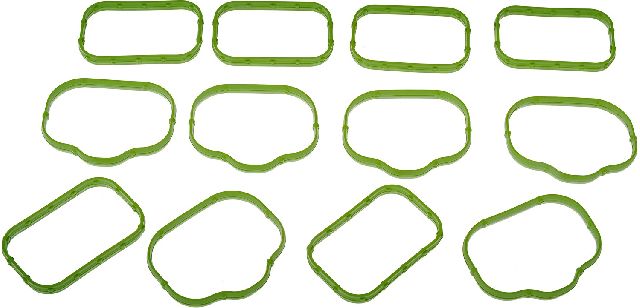
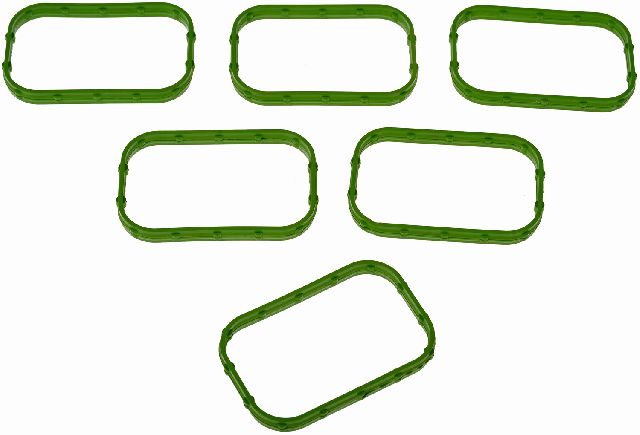
Aftermarket price range: $20-$40 - Upper and Lower Intake Manifold Gaskets — These are single-use gaskets that must be replaced anytime the intake manifolds are removed to access the oil filter housing and sensor.
Trusted brands: Fel-Pro, Mahle, Mopar
OEM price range: $50-$80
Aftermarket price range: $30-$60
Related Codes That Often Appear With This One
- P0520 — P0520 indicates a fault in the oil pressure sensor's electrical circuit. A failing sensor, or one saturated in oil from a leaking housing, can trigger both codes.
- P0522 — P0522 indicates the sensor circuit voltage is low. This is often seen with a shorted or failed sensor.
- P06DD — This code indicates a fault with the dual-stage oil pump, where it's stuck in low-pressure mode. It can be caused by using an incorrect or collapsed aftermarket oil filter that obstructs the oil flow required for the pump to switch to high-pressure mode.
Technical Service Bulletins (TSBs) & Recalls
- TSB 18-034-14 REV. A: Addresses P0520 code on 2013-2014 models by replacing the oil pressure sensor with a revised part.
- TSB 09-002-14 REV. B: Addresses MIL illumination for misfire codes (P0300, P0302, P0304, P0306) on the left cylinder bank of 2011-2013 models due to a known cylinder head defect. This was covered by an extended warranty (X56).
Platform-Specific Known Issues
- The plastic oil filter housing assembly is a well-documented weak point on the 3.6L Pentastar V6 across many Chrysler, Dodge, and Jeep models. It is located in the engine valley and is prone to cracking from constant heat cycles, leading to oil and/or coolant leaks that can cause P0524.
Mechanic-Grade Diagnostic Values
- Engine Oil Pressure (Warmed Up, at Idle) — expected: Minimum 5-6 PSI; typically 28-32 PSI.. Failure: Pressure below 5-6 PSI, which is the trigger threshold for P0524.
- Engine Oil Pressure (Warmed Up, above 3,000-3,500 RPM) — expected: 60-90 PSI (High-pressure stage of dual-stage pump).. Failure: Pressure fails to increase significantly with RPM, which may also set a P06DD code.
- Oil Pressure Sensor Voltage (Key On, Engine Off) — expected: Approx. 0.27V.. Failure: Voltage is stuck high, near the 5V reference (e.g., 4.89V). This often corresponds with a gauge reading of 99-100 PSI with the engine off.
- Oil Pressure Sensor 5V Reference Circuit — expected: 4.8V to 5.0V between the reference wire (Pin 1, Brown/Orange) and ground wire (Pin 3, Dark Blue/Dark Green).. Failure: No voltage or significantly low voltage points to a wiring or PCM issue.
Wiring & Ground Locations
- Oil Pressure Sensor Connector — Screwed into the oil filter/cooler housing, located in the engine 'V' valley, underneath the upper and lower intake manifolds.. This 3-pin connector is the primary test point. Pin 1 is the 5V Reference (Brown/Orange wire), Pin 2 is the Signal Return (Violet/Gray wire), and Pin 3 is the Sensor Ground (Dark Blue/Dark Green wire). Oil leaking from the housing frequently contaminates this connector, causing signal faults and triggering codes P0520, P0522, or incorrect P0524 readings.
- G902a — Located in the left rear of the engine compartment.. This is a primary engine ground point. A poor connection here could potentially cause erratic sensor readings across the engine, including the oil pressure sensor circuit.
OEM Part Supersession History
68105583AA / AB / AC / AD / AE→68105583AF / AG— Represents multiple revisions by Mopar to the 2014+ plastic oil filter housing, likely attempting to address the cracking and leaking issues. Despite these revisions, the part remains plastic and prone to failure.
Heads up: These part numbers are for 2014+ models and are not directly compatible with 2011-2013 models due to design changes.05149062AA, 68060337AA→5149062AB— Revision to the oil pressure sensor. The updated part is the standard replacement for a failed sensor.
Heads up: The sensor design changed with the oil filter housing in 2014. The sensor for a 2011-2013 housing is different from the sensor for a 2014+ housing. Ensure the correct sensor is purchased for the specific housing being used.
Model Year Variations Within This Range
- 2011-2013: Uses the first-generation oil filter housing design. This version includes a prominent central plastic 'tower' or 'cage' inside the filter cavity which contains a bypass valve. The aftermarket aluminum replacement for these years is Dorman 926-876.
- 2014-2017: Uses a redesigned oil filter housing. The internal bypass valve tower was eliminated, the shape of the cooler body was changed slightly, and a different style of oil filter cartridge is used. The aftermarket aluminum replacement for these years is Dorman 926-959. These two housing designs are physically interchangeable but require their corresponding oil filter and sensors.
Diagnostic Flowchart
Other Known Issues on This Vehicle
Issues unrelated to this code that are worth knowing about as an owner of this generation:
- Rocker Arm / Cam Follower Failure ('Pentastar Tick') 🔴 High — Common across all model years, often presenting as a distinct ticking noise from the upper engine. Can occur at various mileages, sometimes as early as 50,000 miles. If ignored, it can lead to camshaft damage and engine misfires. (Ref: Subject of class-action lawsuits, but no universal recall.)
- Left Cylinder Head Defect (Bank 2) 🔴 High → Shop Engine Cylinder Head — Primarily affects early 2011-2013 models. Caused by excessive valve guide wear, leading to misfire codes on cylinders 2, 4, and 6. (Ref: Chrysler TSB 09-002-14 and Extended Warranty X56 (10 years/150,000 miles) were issued to address this.)
- ZF 9-Speed Automatic Transmission Problems 🔴 High — Specific to the second generation (2015-2017). Widespread complaints of harsh/jerky shifting, lurching, hesitation, and unexpectedly shifting into neutral. (Ref: Multiple software updates were released. A recall was issued in 2016 for some 2015 models for a wiring harness issue that could cause shifts to neutral.)
- Engine Stalling While Driving 🔴 High — Reported on both generations. The NHTSA investigated 2011-2013 models for stalling during low-speed deceleration, linked to a defective Powertrain Control Module (PCM).
- Valve Cover Gasket Leaks 🟡 Low — A common pattern failure on the 3.6L Pentastar as it ages. Oil can be seen seeping from the valve cover gaskets.
Used vs. New Parts: Buying Guide for This Vehicle
When a used part is the smart pick: For this specific repair, obtaining a used (junkyard) OEM plastic oil filter housing is NEVER recommended. The part has a near-100% failure rate due to a design flaw (plastic in a high-heat environment), and a used part is likely already cracked or will fail very soon after installation, wasting significant labor costs.
What to inspect on the donor part:
- Do not buy a used OEM plastic housing under any circumstances.
OEM-only on this vehicle (don't cheap out):
- Engine Oil Pressure Sensor: While aftermarket sensors are available, many professional technicians and forum users strongly recommend using a genuine Mopar sensor (P/N 5149062AB) to avoid premature failure and inaccurate readings, which would require repeating the extensive labor to replace it.
Aftermarket brands forum-validated for this vehicle:
- Dorman (Aluminum Oil Filter Housing): The Dorman all-aluminum housings (926-876 for 2011-13, 926-959 for 2014+) are widely considered the definitive, permanent solution to the cracking OEM plastic part.
- Fel-Pro / Mahle (Intake Gaskets): These are trusted brands for the required upper and lower intake manifold gaskets that must be replaced during the job.
Brands owners have reported issues with on this vehicle:
- Unbranded/No-Name Oil Filter Housings: Cheap, unbranded aluminum housings sold on marketplaces may have poor casting quality, incorrect sensor threads, or use low-grade seals that leak, negating the benefit of the repair.
- Non-OEM Oil Filters: Using cheap or incorrect aftermarket oil filter cartridges is known to cause oil pressure problems, including the P06DD code, on the Pentastar engine. Stick to Mopar or other high-quality, vehicle-specific filters.
Real Owner Stories
Aggregated from forums and TSBs cited above. Mileages and costs reflect what owners reported in those sources.
2012 Chrysler 200S 3.6L Pentastar V6
Symptoms: Oil pressure circuit codes appearing on the dashboard.
What fixed it: Replacement of the oil pressure sensor and oil filter housing assembly.
Source hint: Reddit r/MechanicAdvice - 2012 Chrysler 200S oil pressure circuit codes
2014 Chrysler 200 3.6L Pentastar V6
Symptoms: Oil filter housing leaking oil into the engine valley.
What fixed it: Replacement of the oil filter housing assembly.
Cost: $550-$550
Source hint: Reddit r/MechanicAdvice - Is $550 too much for an oil filter housing replacement?
Related OBD-II Codes
Frequently Asked Questions
My 2013 Chrysler 200 is showing an oil pressure code; is there a TSB for this?
I see oil leaking near the transmission bell housing of my 3.6L Pentastar. Is my rear main seal blown?
Why is my remote start disabled on my Chrysler 200?
Should I use a specific oil filter to avoid P0524 or P06DD codes?
Is there a more permanent fix for the plastic oil filter housing that keeps cracking?
My oil pressure gauge shows 99 PSI even when the engine is off. What does this mean?
Helpful Videos
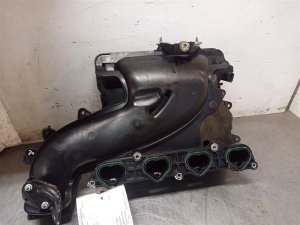
Used OEM Parts in Stock
New Aftermarket Parts Available


The information in this article is provided for general reference and educational purposes only. Vehicle specifications, procedures, and part compatibility can vary by production date, trim level, and region. Always consult your vehicle's factory service manual and verify part numbers before purchasing or performing repairs. Safety-critical components such as airbags, seat belts, and braking systems should be installed by a qualified professional.
- Chrysler 200:
- 🧭 Diagnostic Flowchart
- 🎬 Helpful Videos
- 🛍️ Shop This Part
- What's Unique About the 2011-2017 Chrysler 200
- Symptoms You May Notice
- Most Likely Causes
- Rare But Worth Checking
- Diagnosis Steps
- Parts You'll Likely Need
- Related Codes That Often Appear With This One
- Technical Service Bulletins (TSBs) & Recalls
- Platform-Specific Known Issues
- Mechanic-Grade Diagnostic Values
- Wiring & Ground Locations
- OEM Part Supersession History
- Model Year Variations Within This Range
- Other Known Issues on This Vehicle
- Used vs. New Parts: Buying Guide for This Vehicle
- Real Owner Stories
- 2012 Chrysler 200S 3.6L Pentastar V6
- 2014 Chrysler 200 3.6L Pentastar V6
- Related OBD-II Codes
- Frequently Asked Questions
- 🎟️ Get 5% Off