

P0524 on 2020-2023 Ford Explorer: Engine Oil Pressure Too Low Causes and Fixes
P0524 on a 2020-2023 Explorer or Lincoln Aviator indicates critically low engine oil pressure. Stop driving immediately. While it can be a bad sensor, a known issue highlighted by Ford TSB #SSM 51764 points to a potential internal oil leak from a misaligned gallery tube, a complex and expensive repair. Another owner-reported cause is a disintegrated plastic stem inside the oil filter housing, which can also trigger this code.
- P0524 is a critical alert for your Explorer. Stop the engine immediately to prevent catastrophic damage.
- The first step is always to check the oil level. Do not assume it's just a bad sensor.
- On 2020-2023 models (especially 3.0L), a known issue documented in a Ford TSB points to a possible internal oil leak, which is a major repair.
- Diagnosis requires a mechanical oil pressure test to confirm if the pressure is actually low.
- Due to the risk of severe engine damage and the complexity of potential repairs, professional service is strongly recommended.
What's Unique About the 2020-2023 Ford EXPLORER
For the 2020-2023 Explorer and its platform-mate, the Lincoln Aviator, particularly those with the 3.0L EcoBoost engine, this code is more serious than just a potentially faulty sensor. Ford issued Technical Service Bulletin (TSB) #SSM 51764 specifically for this issue, noting that P0524 (along with P0521) can be caused by an internal oil pressure leak. The bulletin points to a misaligned main oil gallery tube or a failed seal behind the engine's front cover, suggesting a known problem that requires significant engine service beyond simple DIY fixes.
Diagnostic Flowchart
Tap your situation to follow the diagnostic path that matches what you're seeing on this vehicle.
Symptoms You May Notice
- Low oil pressure warning light illuminated on the dashboard. 🎬 See these 9 warning signs of a bad oil pressure sensor.
- Check Engine Light (Malfunction Indicator Lamp) is on.
- Abnormal engine noises like ticking, tapping, or grinding.
- Reduced engine power or the vehicle entering 'limp mode'.
- Engine may stall or shut down automatically to prevent damage.
- In some cases, owners have reported catastrophic engine failure with no prior warning lights at all, highlighting the importance of addressing any oil-related concerns immediately.
- Immediately replacing the oil pressure sensor without first verifying the actual engine oil pressure with a mechanical gauge. If a true low-pressure condition exists, a new sensor will not fix the problem and the engine remains at risk of catastrophic failure.
Most Likely Causes
- Internal Oil Pressure Leak 🔴 High Probability Ford TSB #SSM 51764 specifically calls out this issue for 2020-2023 Explorer/Aviator models with the 3.0L EcoBoost. The bulletin suggests a misaligned main oil gallery tube (Ford part reference 6718) or a failed engine oil gallery seal (Ford part reference 00815) could be the cause.
How to confirm: A technician must perform Pinpoint Test E from the workshop manual, which involves verifying actual oil pressure with a mechanical gauge. If pressure is low, this leads to partial engine disassembly to inspect internal components as guided by the TSB.
Typical fix: Repairing the internal leak, which involves removing the engine front cover and timing components to inspect the oil gallery tube alignment and replace the gallery seal. This is a labor-intensive job with estimated labor costs potentially exceeding $2,000-$3,400.
Est. part cost: $50 - $400 - Faulty Oil Pressure Sensor 🟡 Medium Probability
How to confirm: If a mechanical gauge shows correct oil pressure but the code and warning light persist, the sensor is likely faulty. A scan tool can also monitor the sensor's voltage reading for erratic behavior.
Typical fix: Replace the oil pressure sensor/switch. On the 3.0L EcoBoost, the sensor is located under the oil filter housing and may require removing the air cleaner assembly for access.
Est. part cost: $30 - $125 - Low Engine Oil Level 🟡 Medium Probability
How to confirm: Check the engine oil dipstick. The level should be between the minimum and maximum marks.
Typical fix: Top up the oil to the correct level using the manufacturer-specified viscosity (e.g., SAE 5W-30). Investigate and fix the source of the oil loss (leak or consumption).
Est. part cost: $15 - $50 - Damaged/Broken Oil Filter Housing ⚪ Low Probability → Shop Engine Oil Filter Adapter A documented failure shows the plastic center stem inside the cartridge-style oil filter housing can disintegrate, causing pieces to block oil flow and trigger a P0524 code. Ford also released a related Special Service Message (SSM 47922) for 2.7L and 3.0L EcoBoost engines, warning that a damaged center stem will result in low oil pressure and internal engine damage.
How to confirm: After checking oil level and verifying pressure, inspect the oil filter and inside the oil filter housing for broken plastic pieces. The center stem should be intact.
Typical fix: Replace the entire oil filter housing assembly. The owner who documented this repair purchased an OEM replacement from a dealer.
Est. part cost: $65 - $150 - Incorrect Oil Viscosity or Clogged Oil Filter ⚪ Low Probability → Shop Engine Oil Filter Adapter
How to confirm: Verify the oil used in the last service matches the manufacturer's specification. A clogged filter can be confirmed by checking service history or by replacing it.
Typical fix: Perform an oil and filter change using the correct grade of oil (e.g., Motorcraft) and a high-quality filter.
Est. part cost: $50 - $100
Rare But Worth Checking
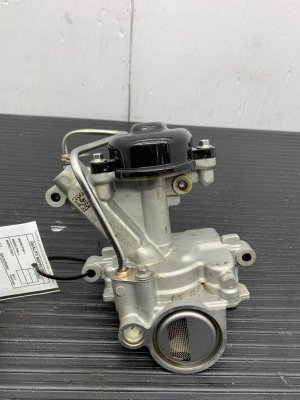
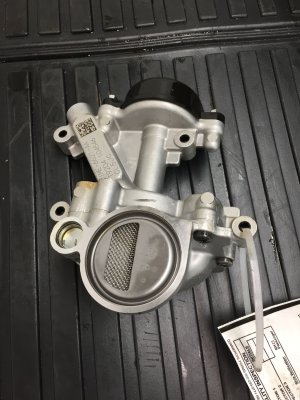
- Failing Oil Pump: → Shop Engine Oil Pump While less common than the internal leak described in the TSB, a worn or failing oil pump can also cause genuine low pressure. Diagnosis would follow the same path of verifying pressure with a mechanical gauge, and replacement is a highly complex job.
- Wiring Harness Issue: Damage or corrosion to the oil pressure sensor's wiring or connector can cause a false low-pressure reading. A visual inspection and continuity test of the circuit is required.
Diagnosis Steps
- Immediately and safely pull over and shut off the engine.
- Check the engine oil level using the dipstick. If it is low, top it off with the correct oil type and check for obvious, major leaks.
- DO NOT continue to run the engine. Have the vehicle towed to a qualified repair shop.
- A technician must connect a mechanical oil pressure gauge to the engine to verify the actual oil pressure. This is the most critical step to differentiate a sensor problem from a real mechanical issue.
- If mechanical pressure is good, inspect the oil pressure sensor, its connector, and wiring. Replace the sensor if it's faulty.
- If mechanical pressure is low, the next step is to inspect the oil filter and housing for debris or damage, such as a broken center stem.
- If no external cause is found for low mechanical pressure, the technician should follow the diagnostic procedures outlined in Ford's TSB #SSM 51764, which includes Pinpoint Test E to locate the source of the internal pressure loss.
- Inspect the oil filter for blockages and ensure the correct oil viscosity is being used.
Parts You'll Likely Need
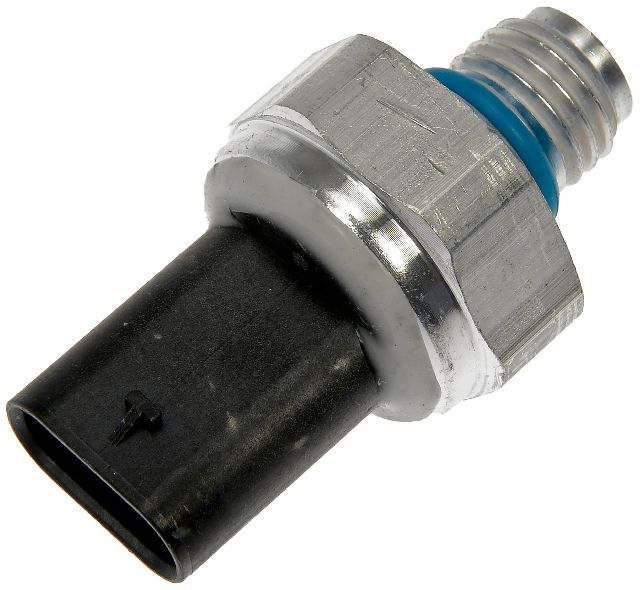
- Engine Oil Pressure Sensor
(OEM #GN1Z-9D290-D)— This is a common failure point that can send false low-pressure signals to the computer. It's often replaced after confirming actual oil pressure is normal.
Trusted brands: Motorcraft, Dorman (926-461)
OEM price range: $50-$80
Aftermarket price range: $20-$40 - Engine Oil Gallery Seal — Specifically required for replacement by TSB #SSM 51764 any time the engine front cover is removed to address the internal oil leak. The TSB gives it the reference number '00815', but a specific orderable part number may only be available as part of a larger front cover gasket kit.
Trusted brands: Motorcraft
OEM price range: $20-$40
Aftermarket price range: $10-$20 - Oil Filter Housing Assembly
(OEM #Partial P/N: 6a832)— A forum member reported their P0524 code was caused by a disintegrated plastic center stem inside the housing, requiring replacement of the entire assembly.
Trusted brands: Motorcraft
OEM price range: $65-$100
Aftermarket price range: $20-$50 - Engine Oil Pump
(OEM #L1MZ-6600-A)— In cases of confirmed low mechanical pressure where an internal leak is diagnosed, the workshop manual may direct the replacement of the oil pump as part of the repair.
Trusted brands: Motorcraft
OEM price range: $150-$250
Aftermarket price range: $75-$150
Related Codes That Often Appear With This One
- P0521 — P0521 indicates an issue with the oil pressure sensor's performance or range. Ford's TSB #SSM 51764 lists both P0521 and P0524 as potential codes resulting from the same internal oil leak issue.
Technical Service Bulletins (TSBs) & Recalls
- SSM 51764: Addresses an illuminated MIL and low oil pressure warning with DTCs P0521 and/or P0524 on 2020-2023 Explorer/Aviator 3.0L EcoBoost, potentially caused by an internal oil pressure leak from a misaligned main oil gallery tube or failed seal.
Platform-Specific Known Issues
- TSB #SSM 51764 for 2020-2023 Explorer/Aviator models with the 3.0L EcoBoost engine points to an internal oil pressure leak as a cause for DTCs P0521 and P0524. The repair is complex and involves inspecting the main oil gallery tube and seal behind the engine's front cover.
- A failure of the plastic center stem within the oil filter housing has been documented by an owner as a cause for P0524, creating an oil flow obstruction.
Mechanic-Grade Diagnostic Values
- Mechanical Engine Oil Pressure at Idle (General) — expected: ~10-25 PSI once warm.. Failure: Pressure significantly below 10 PSI, or pressure that does not rise with engine RPM. The warning light may not trigger until pressure is critically low, around 5 PSI.
- Oil Pressure Sensor Signal Voltage (General) — expected: Typically 0.5V to 1.5V at idle, rising towards 4.5V as pressure increases with RPM.. Failure: A static voltage that doesn't change with RPM, or a voltage that is stuck near 0V or 5V, can indicate a failed sensor or wiring issue.
Scan Tool Commands That Help
- Ford IDS (Integrated Diagnostic System): Datalogger and Service Functions — The dealer-level IDS tool can be used to monitor live oil pressure data (PID) from the PCM, check for related codes in other modules, and access guided diagnostic routines and pinpoint tests referenced in TSBs.
- High-Quality Aftermarket Scanners (e.g., iCarsoft): Live Data & Special Function > Oil Pressure Sensor Test — Used to monitor the real-time pressure reading reported by the sensor to the PCM. This helps determine if the sensor is reporting a low value, which must then be confirmed with a mechanical gauge. Some tools may have a specific function to validate sensor response.
Wiring & Ground Locations
- Oil Pressure Sensor Wiring — The wiring harness leading to the oil pressure sensor, which is located under the oil filter housing on the 3.0L EcoBoost engine.. The sensor is typically a three-wire design: a 5-volt reference from the PCM, a ground wire, and a signal wire that sends a variable voltage back to the PCM. Damage, corrosion, or looseness at the connector or along the harness can cause a false low-pressure reading, triggering P0524.
Model Year Variations Within This Range
- 2020-2023: The issues described in TSB #SSM 51764 are specific to the 3.0L EcoBoost V6 engine. Within the 2020-2023 Explorer lineup, this engine is primarily found in the ST, King Ranch, and Platinum trims, making them the most likely models to experience the internal oil gallery leak.
Helpful Videos
Used OEM Parts in Stock
New Aftermarket Parts Available

The information in this article is provided for general reference and educational purposes only. Vehicle specifications, procedures, and part compatibility can vary by production date, trim level, and region. Always consult your vehicle's factory service manual and verify part numbers before purchasing or performing repairs. Safety-critical components such as airbags, seat belts, and braking systems should be installed by a qualified professional.
- Ford EXPLORER:
- 🧭 Diagnostic Flowchart
- 🎬 Helpful Videos
- 🛍️ Shop This Part
- What's Unique About the 2020-2023 Ford EXPLORER
- Symptoms You May Notice
- Most Likely Causes
- Rare But Worth Checking
- Diagnosis Steps
- Parts You'll Likely Need
- Related Codes That Often Appear With This One
- Technical Service Bulletins (TSBs) & Recalls
- Platform-Specific Known Issues
- Mechanic-Grade Diagnostic Values
- Scan Tool Commands That Help
- Wiring & Ground Locations
- Model Year Variations Within This Range
- 🎟️ Get 5% Off