

P0524 on 2020-2024 Hyundai Palisade: Engine Oil Pressure Too Low Causes and Fixes
P0524 on your Palisade means the engine oil pressure is critically low. Stop driving immediately to prevent catastrophic engine damage. The cause is often a low oil level or a faulty oil pressure sensor, but it could also be a failing oil pump. A professional diagnosis using a mechanical pressure gauge is essential.
- P0524 is a critical code. Stop the engine immediately to prevent severe damage.
- Always check the oil level first; a simple top-off might be the fix.
- The most crucial diagnostic step is using a mechanical gauge to confirm if the oil pressure is actually low or if the sensor is just faulty.
- Do not replace the oil pump unless a mechanical gauge has confirmed a true low-pressure condition.
- Be aware of the unrelated fire-risk recall for the transmission's electric oil pump and ensure it has been addressed for your vehicle.
What's Unique About the 2020-2024 Hyundai Palisade
While some other Hyundai engines, notably the 2.5L Smartstream, have a known history and Technical Service Bulletins (TSBs) related to P0524 caused by manufacturing debris clogging the oil pump, the Lambda II 3.8L GDI V6 in the Palisade does not appear to share this specific widespread issue. For the Palisade and its platform-mate, the Kia Telluride, diagnosis should follow the standard procedure for this code, focusing on oil level, sensor health, and mechanical pressure. Some owners of the 3.8L engine have reported excessive oil consumption, which can lead to a low oil level and trigger P0524 if not monitored closely.
Symptoms You May Notice
- Red oil pressure warning light illuminated on the dashboard.
- Check Engine Light illuminated.
- Engine making unusual ticking, tapping, or knocking noises.
- Reduced engine performance or stalling.
- Engine running rougher than usual.
- Engine producing smoke or smelling of burnt oil.
- Replacing the oil pump without first verifying the actual oil pressure with a mechanical gauge. The problem is very often the much cheaper and easier-to-replace oil pressure sensor. 🎬 Watch: Two quick DIY methods to fix the P0524 code.
Most Likely Causes
- Low Engine Oil Level 🔴 High Probability All engines consume some oil over time, and some owners of the 3.8L V6 in the Palisade and Telluride have reported higher-than-expected oil consumption, which can lead to a low level if not checked regularly. This is the simplest and most common reason for low oil pressure.
How to confirm: Park the vehicle on a level surface, wait for the engine to cool, and check the engine oil dipstick. The oil level should be between the 'F' (Full) and 'L' (Low) marks.
Typical fix: Top up the oil to the correct level using the manufacturer-specified grade (full synthetic 5W-30). If the level was very low, inspect for oil leaks and begin monitoring consumption between oil changes. 🎬 Watch: A real-world example of tracking a Palisade oil leak.
Est. part cost: $10-$50 - Faulty Engine Oil Pressure Sensor 🔴 High Probability Oil pressure sensors are a very common failure point on many vehicles. They can fail electrically, providing false low-pressure readings to the PCM, or they can leak oil through the sensor body itself.
How to confirm: The definitive test is to connect a mechanical oil pressure gauge. If the mechanical gauge shows normal pressure (Hyundai specifies at least 8.5 PSI at warm idle) while the vehicle's computer reports low pressure (P0524), the sensor is bad. Also inspect the sensor and its connector for oil leaks or damage.
Typical fix: Replace the engine oil pressure sensor. The OEM part number is often cited as 94751-3C000 for this application.
Est. part cost: $25-$90 - Incorrect or Clogged Oil Filter 🟡 Medium Probability → Shop Engine Oil Filter Adapter Using a low-quality, incorrect, or severely clogged oil filter can restrict oil flow, causing a drop in pressure. This is especially true if maintenance intervals are exceeded or a non-OEM filter with improper bypass valve specs is used. A Kia TSB for a different code notes that dislodged parts from a damaged filter during shipping can cause P0524 if installed.
How to confirm: Check service records to see what type of filter was used and when it was last changed. If in doubt, replace it with a high-quality or OEM filter.
Typical fix: Perform an oil and filter change using an OEM Hyundai filter and the correct viscosity oil.
Est. part cost: $20-$60 - Failing Oil Pump or Clogged Pickup Screen ⚪ Low Probability → Shop Engine Oil Pump While not a widely reported systemic issue on this engine, an oil pump can fail mechanically with age and mileage. The screen on the oil pickup tube in the pan can also become clogged with sludge or debris (often from extended oil change intervals), starving the pump of oil.
How to confirm: This is confirmed if a mechanical gauge shows true low oil pressure after the oil level, filter, and sensor have been ruled out. Inspection requires removing the oil pan to check the pickup screen and, eventually, the oil pump itself.
Typical fix: Requires removing the oil pan to clean the pickup screen or replace the entire oil pump assembly.
Est. part cost: $200-$500
Rare But Worth Checking
- Worn Internal Engine Components: This is the worst-case scenario. Excessive clearance in engine bearings (rod, main) from high mileage or wear can cause a drop in oil pressure that the pump cannot overcome. This would be confirmed by a mechanical gauge showing low pressure and is often accompanied by engine knocking noises. In some cases on other platforms, failed timing chain galley gaskets have also been known to cause a severe loss of oil pressure.
- Wiring Harness Issue: Damage or corrosion to the wiring or connector for the oil pressure sensor can cause an incorrect signal, triggering the code. This should be inspected when checking the sensor.
Diagnosis Steps
- Immediately and safely pull over and shut off the engine.
- Check the engine oil level using the dipstick. Top off if necessary with the correct oil type (full synthetic 5W-30).
- Visually inspect for any major oil leaks under the vehicle.
- If the oil level is correct, have the vehicle towed to a qualified mechanic. Do not continue to drive it.
- A technician will connect a scan tool to confirm the P0524 code and check for any other related codes.
- The crucial next step is to connect a mechanical oil pressure gauge to the engine to measure the actual oil pressure.
- If the mechanical gauge shows normal pressure (spec is ~8.5 PSI or more at warm idle), the oil pressure sensor is faulty and should be replaced.
- If the mechanical gauge confirms low oil pressure, further diagnosis is required. This includes inspecting the oil filter, dropping the oil pan to check for sludge and a clogged pickup screen, and ultimately inspecting the oil pump.
Parts You'll Likely Need
- Engine Oil Pressure Sensor/Switch
(OEM #94751-3C000)— This sensor is a common failure point and is often the cause of a false P0524 code. It's a critical part of the diagnostic process to rule out a true mechanical failure.
Trusted brands: Hyundai (OEM), Kia (OEM), Duralast (PS524)
OEM price range: $50-$90
Aftermarket price range: $25-$50 - Engine Oil and Filter — A simple oil and filter change is required if the oil is low, old, or the wrong type. Using a high-quality OEM filter is recommended to ensure proper flow and filtration.
Trusted brands: Hyundai (OEM Filter)
OEM price range: $30-$60
Aftermarket price range: $20-$40 - Engine Oil Pump
(OEM #21310-3LAA0)— In the event of a confirmed mechanical failure where a mechanical gauge reads low pressure, the oil pump is the likely component to have failed.
Trusted brands: Hyundai (OEM)
OEM price range: $250-$450
Aftermarket price range: $150-$300
Related Codes That Often Appear With This One
- P0520 — This code for 'Engine Oil Pressure Sensor/Switch Circuit' can appear alongside P0524 if the root cause is an electrical failure within the sensor or its wiring, rather than just a low pressure reading.
Technical Service Bulletins (TSBs) & Recalls
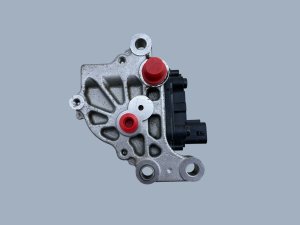
- TSB 23-01-071H-3: This TSB provides the remedy for Hyundai Recall 246, which involves inspecting or replacing the transmission electric oil pump controller on affected Palisades to prevent fire risk. This does not relate to code P0524.
- TSB 21-01-003H: Describes a procedure to fix wind/whistling noises from the door glass area on 2020-2021 Palisades by adding pads and replacing moldings. This is a common owner complaint but is unrelated to P0524.
Platform-Specific Known Issues
- There is a significant recall (NHTSA 23V582, Hyundai Recall 246) for 2023-2024 Palisades concerning the transmission's electric oil pump (EOP) for the Idle Stop & Go system. This pump's controller can short circuit and cause a fire. While this is a critical safety issue, it is unrelated to the main engine oiling system and will NOT cause a P0524 code.
- A separate recall (NHTSA 22V-633, Hyundai Recall 235) affects 2020-2022 Palisades with an accessory tow hitch wiring harness. Moisture can enter the harness module, causing an electrical short and fire risk, even when parked. The interim fix was to remove a fuse, disabling the tow lights. This is unrelated to P0524 but is a major safety concern for affected vehicles.
Mechanic-Grade Diagnostic Values
- Engine Oil Pressure (Mechanical Gauge) — expected: Minimum 8.5 PSI at warm idle. A general rule of thumb is about 10 PSI per 1,000 RPM.. Failure: Pressure reads below 8.5 PSI at warm idle, or pressure does not increase with RPM.
- Oil Pressure Sensor Signal Voltage (Engine Stationary) — expected: Approximately 0.5V.. Failure: Voltage is significantly different, 0V, or 5V.
- Oil Pressure Sensor Reference Voltage — expected: 5V from the PCM.. Failure: No voltage or incorrect voltage indicates a PCM or wiring issue.
- Oil Pressure Switch Continuity (Engine Off) — expected: Continuity (near 0 ohms resistance) between the sensor's signal pin and ground.. Failure: No continuity (Open Line / O.L.) when the engine is off indicates a failed switch.
- Oil Pressure Switch Continuity (Engine Running with Pressure) — expected: No continuity (Open Line / O.L.) between the signal pin and ground when sufficient oil pressure is present.. Failure: Continuity is still present, indicating the switch is stuck in the 'low pressure' state.
Scan Tool Commands That Help
- Hyundai GDS (Global Diagnostic System): Live Data Monitoring (Engine Oil Pressure) — Used to view the oil pressure value being reported by the sensor to the PCM. This value should be compared against a mechanical gauge reading to determine if the sensor is reporting accurately.
- Hyundai GDS (Global Diagnostic System): Wiggle Test — If an intermittent electrical connection is suspected, this function graphs the sensor's signal in real-time, making it easier to see dropouts or spikes while physically wiggling the sensor connector and wiring harness.
Wiring & Ground Locations
- Oil Pressure Sensor Connector — The oil pressure sensor is typically located on the engine block, often near the oil filter housing. On the 3.8L V6, it is accessible after removing the engine cover.. The connector is a primary point of failure. It should be inspected for being loose, corroded, or contaminated with oil, which can seep through a failing sensor and disrupt the signal.
- Engine Ground Points — Multiple ground straps and points connect the engine block to the chassis. Specific diagrams are needed for exact locations on the Palisade.. A poor engine ground can cause erratic voltage readings for various sensors, including the oil pressure sensor, potentially leading to a false P0524 code.
Real Owner Repair Stories
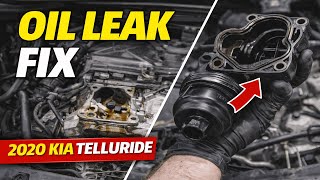
- YouTube - Kevin's Mobile Repair (2020 Kia Telluride 3.8L V6 (platform twin)) — Customer complained of an oil leak after a recent oil change.
✅ What actually fixed it The plastic oil filter housing assembly was found to be leaking from the base and around the main adapter. The entire housing was replaced, not just the o-rings, because the plastic is known to warp from heat cycles. The technician noted the dealer had five of these units on the shelf for other shops, indicating it's a common failure part.
OEM Part Supersession History
94751-3C000→No clear supersession found, this part number appears current.— N/A
Heads up: This part is widely used across many Hyundai, Kia, and Genesis models with V6 engines, but always verify fitment for the specific vehicle.
Model Year Variations Within This Range
- 2023-2024: The Palisade received a significant facelift for the 2023 model year, including revised exterior styling and interior tech updates like a larger standard infotainment screen. However, the core powertrain, the 3.8L V6 engine and 8-speed automatic transmission, remained unchanged. Therefore, the causes and diagnostic procedures for P0524 are identical across the 2020-2024 range.
Diagnostic Flowchart
Other Known Issues on This Vehicle
Issues unrelated to this code that are worth knowing about as an owner of this generation:
- Wind/Whistling Noise from Doors/Mirrors 🟡 Low — Very common on 2020-2022 models. Less frequent on newer models but still reported. (Ref: TSB 21-01-003H, TSB 19-BD-010H)
- Foul Interior Odor ('Smelly Headrests') 🟡 Low — Commonly reported on 2020-2021 Limited and Calligraphy trims with Nappa leather. The cause was traced to a manufacturing flaw in the imitation leather headrests. (Ref: A TSB was issued instructing dealers to treat headrests with an odor neutralizer or replace them if the smell persisted.)
- Tow Hitch Wiring Harness Fire Risk 🔴 High — Affects 2020-2022 models equipped with the genuine Hyundai accessory tow hitch. (Ref: NHTSA Recall 22V-633 / Hyundai Recall 235)
- Excessive Oil Consumption 🟠 Medium — Some owners have reported needing to add oil between scheduled changes. Onset can vary but seems more noted at higher mileage.
- GDI Carbon Buildup on Intake Valves 🟠 Medium — An inherent characteristic of all Gasoline Direct Injection (GDI) engines, including the Lambda II 3.8L. Becomes a potential issue around 80,000-100,000 miles, potentially causing rough idle or misfires. Not a defect, but requires periodic cleaning.
Used vs. New Parts: Buying Guide for This Vehicle
When a used part is the smart pick: For this repair, using used parts is generally not recommended. A used wiring harness pigtail from a reputable salvage yard could be a viable option if only the connector is damaged and a new one is unavailable.
Donor-vehicle mileage cap: roughly under 15000 miles for the part to have meaningful remaining life.
What to inspect on the donor part:
- For a wiring pigtail, ensure the plastic is not brittle, locking tabs are intact, and there is no corrosion on the pins.
- Verify the donor vehicle was not in a front-end collision that could have stressed the engine wiring.
OEM-only on this vehicle (don't cheap out):
- Engine Oil Pressure Sensor: While aftermarket is available, the cost difference is often small, and the OEM sensor is validated for the vehicle's software. A false reading from a poor-quality aftermarket sensor can lead to misdiagnosis or ignoring a real pressure problem.
- Engine Oil Pump: This is a critical, labor-intensive component. The risk of premature failure with a used or low-quality aftermarket pump is too high and could lead to catastrophic engine failure. Stick with OEM.
- Oil Filter Housing: Given the known issue of the plastic warping, installing a used one is risky as it may have already been subjected to numerous heat cycles. A new OEM part is the recommended fix.
Aftermarket brands forum-validated for this vehicle:
- For sensors, brands like NTK or Beck/Arnley are often considered reliable alternatives if OEM is not sourced.
Brands owners have reported issues with on this vehicle:
- Avoid unbranded, 'white-box' sensors from online marketplaces, as their calibration and reliability are unknown.
Real Owner Stories
Aggregated from forums and TSBs cited above. Mileages and costs reflect what owners reported in those sources.
2020 Kia Telluride 3.8L Lambda II GDI V6
Symptoms: The owner reported excessive oil consumption, requiring frequent oil additions between scheduled changes.
What fixed it: The engine required a full replacement under warranty due to the severity of the oil consumption issue.
Source hint: r/KiaTelluride thread titled '2020 Kia Telluride - Engine Replacement Due to Excessive Oil Consumption. Has anyone else experienced this?'
Related OBD-II Codes
Frequently Asked Questions
Does the transmission oil pump recall (Hyundai Recall 246) cause the P0524 code on my 2023 Palisade?
What is the specific oil pressure sensor part number for the 3.8L GDI V6 engine?
Could a whistling noise from my door glass be related to the low oil pressure warning?
What is the minimum oil pressure my Palisade should have at a warm idle?
Can using a non-OEM oil filter cause a P0524 code on my Palisade?
Is the tow hitch wiring harness recall related to my engine oil light?
Helpful Videos
![How to Fix P0524 Engine Code in 4 Minutes [2 DIY Methods / Only $6.99]](https://img.youtube.com/vi/qOfaymDQMXM/mqdefault.jpg)
We Have This Part in Stock

The information in this article is provided for general reference and educational purposes only. Vehicle specifications, procedures, and part compatibility can vary by production date, trim level, and region. Always consult your vehicle's factory service manual and verify part numbers before purchasing or performing repairs. Safety-critical components such as airbags, seat belts, and braking systems should be installed by a qualified professional.
- Hyundai Palisade:
- 🧭 Diagnostic Flowchart
- 🎬 Helpful Videos
- 🛍️ Shop This Part
- What's Unique About the 2020-2024 Hyundai Palisade
- Symptoms You May Notice
- Most Likely Causes
- Rare But Worth Checking
- Diagnosis Steps
- Parts You'll Likely Need
- Related Codes That Often Appear With This One
- Technical Service Bulletins (TSBs) & Recalls
- Platform-Specific Known Issues
- Mechanic-Grade Diagnostic Values
- Scan Tool Commands That Help
- Wiring & Ground Locations
- Real Owner Repair Stories
- OEM Part Supersession History
- Model Year Variations Within This Range
- Other Known Issues on This Vehicle
- Used vs. New Parts: Buying Guide for This Vehicle
- Real Owner Stories
- 2020 Kia Telluride 3.8L Lambda II GDI V6
- Related OBD-II Codes
- Frequently Asked Questions
- 🎟️ Get 5% Off