

P0524 on 2016-2017 Lincoln MKX: Engine Oil Pressure Too Low Causes and Fixes
P0524 indicates critically low engine oil pressure. On the 2.7L EcoBoost engine (built Apr 2016 - Jan 2017), this is a severe warning often linked to a known valve guide defect causing excessive oil consumption, which may require cylinder head or long block replacement per Ford TSBs. On the 3.7L V6, it is more likely a faulty sensor or oil pump, but is still a critical code requiring immediate attention.
- P0524 is a critical code that requires you to stop driving immediately to prevent engine destruction.
- The first step is always to check the engine oil level.
- On the 2.7L EcoBoost V6, this code is a strong indicator of a known, serious internal engine defect related to oil consumption.
- Do not replace the oil pressure sensor without first verifying the actual oil pressure with a mechanical gauge.
- If you have a 2.7L engine and this code appears with misfire codes (P030x), reference the TSBs and prepare for a potentially expensive, major engine repair.
What's Unique About the 2016-2017 Lincoln MKX
For the 2016-2017 Lincoln MKX equipped with the 2.7L EcoBoost V6 built between April 2016 and January 2017, code P0524 is a well-documented symptom of a serious internal engine problem. Ford/Lincoln has issued Technical Service Bulletins (TSBs 19-2243, 17-2235) acknowledging that this code, especially with misfires, often points to excessive oil consumption caused by faulty cylinder head valve guides. This frequently leads to a major repair involving replacing the cylinder heads or, in cases of subsequent damage, the entire long block engine assembly, making it far more serious than a simple sensor swap.
Diagnostic Flowchart
Tap your situation to follow the diagnostic path that matches what you're seeing on this vehicle.
Symptoms You May Notice
- Check Engine Light illuminated
- Low oil pressure warning light on the dashboard, may flash during acceleration
- Engine making knocking, rattling, or grinding noises
- Excessive oil consumption (requiring frequent top-offs, e.g., 1 quart in under 3,000 miles)
- Rough idle, especially when in Park or Neutral
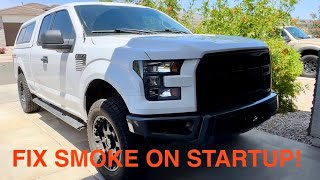
- White or blue smoke from the exhaust, especially after a hot restart 🎬 Watch: How to fix EcoBoost smoke on startup issues.
- Engine hesitates or loses power during acceleration
- Replacing the oil pressure sensor on a 2.7L EcoBoost engine (built 2016-2017) without first verifying the actual mechanical oil pressure and checking for the TSB-related oil consumption. The TSBs make it clear that P0524 is often a symptom of a mechanical fault, not a sensor fault.
Most Likely Causes
- Internal Engine Failure (2.7L EcoBoost V6, built Apr 2016 - Jan 2017) 🔴 High Probability As documented in Lincoln TSB #19-2243 (which supersedes #17-2235), the 2.7L engine in this specific build range is prone to excessive oil consumption due to defective cylinder head valve guides. This leads to low oil levels, which triggers P0524.
How to confirm: Confirm by checking vehicle build date and monitoring for excessive oil consumption (1 quart in < 3,000 miles). The presence of other codes like P0300-P0306 (misfires) and P06DD is a strong indicator. A definitive diagnosis requires an oil consumption test followed by cylinder compression and/or leak-down tests by a qualified technician.
Typical fix: The manufacturer-specified fix is the replacement of both cylinder head assemblies. In severe cases where lower-end damage (bearing wear) has occurred from running with low oil pressure, a complete long block engine replacement is necessary.
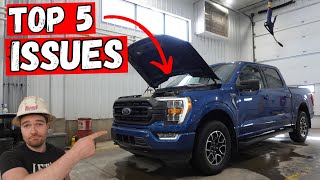
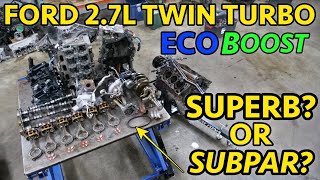
Est. part cost: $2000-$8500+ - Critically Low Engine Oil Level 🔴 High Probability For the 2.7L, this is a direct symptom of the oil consumption issue. For both engines, it can result from normal consumption over time or leaks. The 2.7L is also known to have issues with leaking plastic oil pans. 🎬 Watch: A mechanic's review of common 2.7L EcoBoost engine issues.
How to confirm: Check the engine oil dipstick on a level surface after the engine has been off for several minutes. If the level is below the minimum mark, the oil is low.
Typical fix: Top up the engine oil to the correct level using the manufacturer-specified full synthetic 5W-30 oil. Monitor for consumption or leaks to find the root cause.
Est. part cost: $20-$50 - Faulty Oil Pressure Sensor/Switch 🟡 Medium Probability Sensors can fail electrically or, on the 3.7L, are known to develop physical oil leaks from the sensor body. This is a more likely primary cause on the 3.7L V6, or on a 2.7L V6 only after actual mechanical oil pressure has been verified as normal.
How to confirm: If a mechanical gauge shows normal oil pressure (e.g., >10-15 PSI at hot idle) but the code persists, the sensor or its wiring is the likely culprit. Inspect the sensor and connector for oil contamination, as leaking oil can damage the harness.
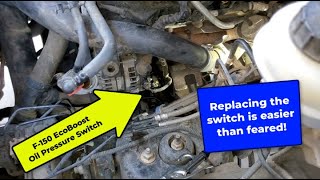
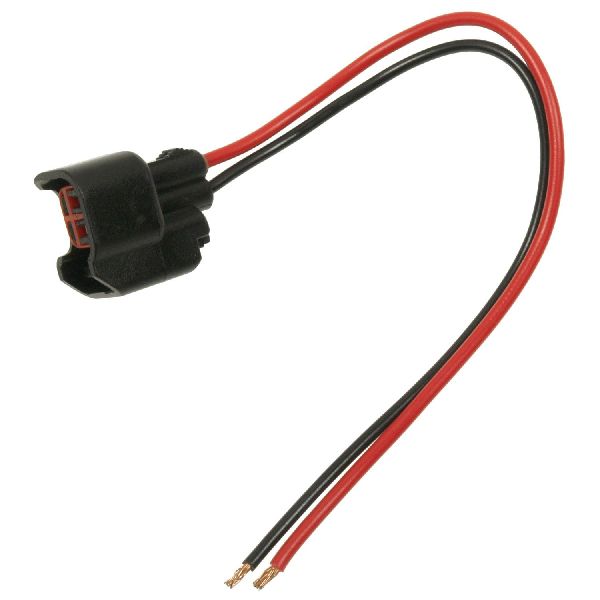
Typical fix: Replace the oil pressure sensor/switch and its pigtail connector if oil-fouled. 🎬 See how to easily replace the oil pressure switch.
Est. part cost: $40-$120 - Failing Oil Pump ⚪ Low Probability → Shop Engine Oil Pump
How to confirm: This is confirmed if a mechanical gauge shows consistently low oil pressure across all RPMs, and the engine is known to be in good mechanical condition with the correct oil level and a clean oil filter.
Typical fix: Replace the engine oil pump. This is an intensive labor job that often requires removal of the oil pan and timing cover.
Est. part cost: $150-$400
Rare But Worth Checking
- Clogged Oil Passages or Pickup Tube: Can be caused by infrequent oil changes leading to sludge buildup. This restricts oil flow and creates a low-pressure condition.
- Incorrect Oil Viscosity or Clogged Oil Filter: → Shop Engine Oil Filter Adapter Using oil that is too thin (e.g., 5W-20 instead of 5W-30) or a poor-quality/clogged filter can lead to a drop in pressure, especially when the engine is hot.
- Leaking Engine Oil Pan Seal (2.7L EcoBoost): The 2.7L EcoBoost engines from this era used a plastic oil pan with an RTV sealant that was prone to leaking, which could contribute to a low oil level condition over time. Ford issued TSB 19-2219 for this issue.
Diagnosis Steps
- DO NOT START THE ENGINE. Check the engine oil level using the dipstick. If it is low, top it off with full synthetic 5W-30 oil.
- If the oil level was correct, the vehicle should not be driven. Tow it to a qualified mechanic.
- A technician will connect a mechanical oil pressure gauge to the engine to verify if the low oil pressure condition is real. A healthy engine should have >10-15 PSI at hot idle, rising with RPM.
- If mechanical pressure is NORMAL, diagnose the oil pressure sensor, its connector, and wiring for faults. The sensor is a likely culprit.
- If mechanical pressure is LOW, the investigation must turn to the root cause. On a 2.7L engine, check the vehicle's build date. If it falls between April 2016 and Jan 2017, investigate for the known TSB-related issues (oil consumption, misfires).
- On a 3.7L engine with confirmed low pressure, the oil pump and potential engine bearing wear would be the primary suspects.
- For the 2.7L, further diagnosis involves performing a formal oil consumption test. If consumption is confirmed (>1qt/3000mi), cylinder compression and leak-down tests are performed to confirm the health of the cylinders and valve seals, leading to the TSB repair path.
Parts You'll Likely Need
- Engine Long Block Assembly (2.7L EcoBoost)
(OEM #FT4Z-6006-B)— This is the fix for severe internal engine damage on the 2.7L EcoBoost, as suggested by early TSBs and required if low pressure caused bearing damage.
Trusted brands: Motorcraft
OEM price range: $6000-$8500
Aftermarket price range: $4500-$6500 - Cylinder Head Assembly (2.7L EcoBoost)
(OEM #FT4Z-6049-E (Right), FT4Z-6049-F (Left))— TSB #19-2243 specifies replacing both cylinder heads to correct the valve guide issue causing oil consumption and code P0524.
Trusted brands: Motorcraft
OEM price range: $1500-$2500
Aftermarket price range: $1000-$1800 - Engine Oil Pressure Sensor/Switch
(OEM #2.7L EcoBoost: Motorcraft OPS-2 (supersedes CM5Z-9D290-B). 3.7L V6: Motorcraft SW-8368.)— If actual oil pressure is confirmed to be normal, a faulty sensor is the cause. This is a more common primary fix for the 3.7L V6.
Trusted brands: Motorcraft, Bosch, Standard Motor Products
OEM price range: $55-$100
Aftermarket price range: $30-$80
Related Codes That Often Appear With This One
- P06DD — This code indicates the oil pressure control circuit is stuck off. TSBs #19-2243 and #SSM 46363 specifically mention it appearing with P0524 when the valve guide/oil consumption problem is the cause.
- P0300, P0301, P0302, P0303, P0304, P0305, P0306 — These are random and specific cylinder misfire codes. The TSBs link them directly to the oil consumption and internal engine issues that also cause P0524, as oil entering the combustion chamber fouls spark plugs.
- P0316 — Misfire Detected on Startup (First 1000 Revolutions). This is another code mentioned in the TSBs related to the same root cause.
Technical Service Bulletins (TSBs) & Recalls
- 19-2243: The primary TSB detailing the oil consumption issue on 2.7L/3.0L engines (built Apr-2016 to Jan-2017) due to valve guides, listing P0524 as a key symptom and specifying cylinder head replacement as the fix.
- 17-2235: An earlier version of the TSB, now superseded by 19-2243, that also detailed the oil consumption, associated codes (P0524, P06DD), and symptoms.
- SSM 54504: Links P0524 with misfire codes, P06DD, and excessive oil consumption, pointing towards the valve guide issue.
- SSM 46363: An early TSB advising to suspect the long block as the cause when P0524 and/or P06DD are present with misfires, underscoring the severity.
Platform-Specific Known Issues
- TSB #19-2243 (supersedes #17-2235) is the key document for 2016-2017 MKX models with the 2.7L engine built from April 1, 2016, through January 1, 2017. It states that P0524, along with misfire codes (P0300-P0306), P06DD, rough idle, and blue smoke after a hot restart, can be caused by excessive oil consumption (1 quart in < 3,000 miles) due to a valve guide issue, requiring cylinder head replacement.
- TSB #SSM 46363 was an earlier bulletin that advised suspecting the entire long block as the cause when P0524 and/or P06DD are present with misfire codes.
Mechanic-Grade Diagnostic Values
- 2.7L EcoBoost Mechanical Oil Pressure — expected: 16-24.7 psi @ 1500 RPM with engine at normal operating temperature (122-176°F). Hot idle can be in the lower teens (12-13 psi).. Failure: Pressure significantly below 16 psi at 1500 RPM, or below 10 psi at hot idle, indicates a mechanical fault.
- 3.7L V6 Mechanical Oil Pressure — expected: Minimum 30 psi @ 1,500 RPM with engine at normal operating temperature. Hot idle is typically around 23 psi.. Failure: Pressure significantly below 30 psi at 1500 RPM indicates a mechanical fault.
- Oil Pressure Sensor Signal Voltage (General Ford) — expected: Approximately 0.5V with the engine stationary, rising towards 4.5V as pressure increases.. Failure: Voltage that is stuck, does not correlate with RPM, or is outside the ~0.5-4.5V range suggests a sensor or wiring fault.
Hidden / Shadow Codes Worth Checking
- P0524 and/or P06DD in combination with P0300-P0306: This is not a single hidden code, but a specific combination of DTCs that Ford Technical Service Bulletins treat as a unique diagnostic instruction. When low oil pressure codes (P0524/P06DD) are present *with* any misfire codes (P030x), the TSB directs technicians to suspect catastrophic internal engine damage and replace the entire long block assembly. (see via Viewable with any standard OBD-II scanner, but the diagnostic importance of the combination is detailed in Ford's TSBs and requires a professional tool like the Ford Integrated Diagnostic System (IDS) to follow the official procedure.)
Scan Tool Commands That Help
- Ford Integrated Diagnostic System (IDS): Datalogger / Live Data Monitoring (PID: EOP_PRESS) — Used to monitor the oil pressure reading from the sensor in real-time to check for erratic behavior. This is the first step before connecting a mechanical gauge.
- Ford Integrated Diagnostic System (IDS): Self-Test (Retrieve DTCs) — This is the primary function used to retrieve all codes, including the critical combination of P0524/P06DD and misfire codes, which dictates the repair path according to TSBs.
- Ford Integrated Diagnostic System (IDS) or FORScan: Power Balance Test — If misfire codes (P030x) are present alongside P0524, this bidirectional test can help identify which specific cylinders are failing to contribute power, confirming the misfire and pointing towards issues like oil-fouled spark plugs.
Wiring & Ground Locations
- Oil Pressure Sensor (2.7L EcoBoost) — On the lower part of the engine block. Access often requires removing the oil filter.. The sensor's location makes it susceptible to damage during oil filter changes. Its connector can also become contaminated with leaking oil, causing faulty readings.
- Oil Pressure Sensor (3.7L V6) — On the front of the engine block, located in a tight space between the alternator and the oil filter.. This sensor is known to develop physical oil leaks from its body, which can cause both a loss of oil and a failure of the sensor itself, triggering P0524.
- PCM Grounds — Located on the firewall. The exact number (one or two) can depend on the model year and engine.. A poor ground connection for the Powertrain Control Module (PCM) can cause incorrect readings from various sensors, including the oil pressure sensor, potentially leading to a false P0524 code.
- Main Body-to-Frame Ground — A cable running from the vehicle body to the frame, often located underneath the passenger or driver door area.. These grounds are notorious for corrosion on Ford trucks and SUVs. A corroded ground can cause widespread electrical issues and communication errors between modules, which could potentially trigger false diagnostic codes.
Real Owner Repair Stories
- BobIsTheOilGuy forum & Reddit user reports (2016 Ford F-150 with 2.7L EcoBoost (engine build date between Apr-2016 and Oct-2016)) — Owner experienced excessive oil consumption (3 quarts before 5,000-mile service), white/blue smoke from exhaust, and intermittent 'Low Oil Pressure' warning on the dash.
❌ Tried (didn't work) Initial dealer assessment dismissed oil consumption as 'normal for these high tolerance, high performance engines'.
✅ What actually fixed it The issue was identified via Ford TSB 17-0007 (the F-150 equivalent of the MKX TSBs). The diagnostic procedure confirmed the presence of P0524 and/or P06DD along with misfire codes, leading to a dealer-performed replacement of the entire engine long block assembly as specified by the TSB.
OEM Part Supersession History
CM5Z-9278-A→CM5Z-9D290-B (also sold as Motorcraft OPS-2)— Standard part revision and update by the manufacturer.
Heads up: The new part number CM5Z-9D290-B is the correct replacement for the 2.7L EcoBoost sensor.
Model Year Variations Within This Range
- 2016-2017 (2.7L EcoBoost): The primary cause of P0524 is highly dependent on the engine's build date. Engines built from April 1, 2016, through January 1, 2017, are subject to TSB 19-2243 for a major internal defect (valve guides), making P0524 a symptom of likely engine failure. For vehicles built outside this window, the cause is more likely a standard fault like a bad sensor or low oil level.
Helpful Videos
We Have This Part in Stock


The information in this article is provided for general reference and educational purposes only. Vehicle specifications, procedures, and part compatibility can vary by production date, trim level, and region. Always consult your vehicle's factory service manual and verify part numbers before purchasing or performing repairs. Safety-critical components such as airbags, seat belts, and braking systems should be installed by a qualified professional.
- Lincoln MKX:
- 🧭 Diagnostic Flowchart
- 🎬 Helpful Videos
- 🛍️ Shop This Part
- What's Unique About the 2016-2017 Lincoln MKX
- Symptoms You May Notice
- Most Likely Causes
- Rare But Worth Checking
- Diagnosis Steps
- Parts You'll Likely Need
- Related Codes That Often Appear With This One
- Technical Service Bulletins (TSBs) & Recalls
- Platform-Specific Known Issues
- Mechanic-Grade Diagnostic Values
- Hidden / Shadow Codes Worth Checking
- Scan Tool Commands That Help
- Wiring & Ground Locations
- Real Owner Repair Stories
- OEM Part Supersession History
- Model Year Variations Within This Range
- 🎟️ Get 5% Off