

P0524 on 2014-2017 Mazda MAZDA6: Engine Oil Pressure Too Low Causes and Fixes
P0524 on a 2014-2017 Mazda6 indicates critically low engine oil pressure. Do NOT drive the vehicle. The most common causes are low oil level or a faulty sensor, but it can also point to a more serious issue like a failing oil pump or debris in the oil passages, a known issue documented in Mazda TSBs. It often appears with code P0015.
- P0524 is a critical code. Stop driving immediately and have your vehicle towed to prevent catastrophic engine damage.
- The first step is always to check the oil level and condition. This simple check can sometimes resolve the issue.
- On this Mazda6, P0524 is frequently paired with P0015. This points to a known issue documented by Mazda, often related to debris in the oil system.
- Diagnosis must include verifying the actual oil pressure with a mechanical gauge to rule out a faulty sensor.
- Do not simply replace the camshaft sensor for the P0015 code; the root cause is almost always the oil pressure problem indicated by P0524.
What's Unique About the 2014-2017 Mazda MAZDA6
The 2014-2017 Mazda6 uses the 2.5L Skyactiv-G engine, which features a sophisticated variable valve timing system that is highly dependent on oil pressure. As documented in multiple superseding Mazda Technical Service Bulletins (TSBs), a drop in oil pressure on this platform often triggers not only P0524 but also P0015 (Exhaust CMP timing over-retarded). This is because the low pressure, often caused by debris temporarily lodging in the Oil Control Valve (OCV) or oil pump relief valve, directly impacts the performance of the OCV, affecting engine timing and causing symptoms like a rough idle.
Diagnostic Flowchart
Tap your situation to follow the diagnostic path that matches what you're seeing on this vehicle.
Symptoms You May Notice
- Check Engine Light (MIL) illuminated
- Low oil pressure warning light on the dashboard (often a red oil can symbol)
- Rough idle (often in conjunction with code P0015)
- Engine noise (knocking, ticking, or grinding)
- Reduced engine performance or limp mode
- In some cases with related issues, the dipstick may not stay in the tube or the oil cap may hiss while running.
- Replacing the camshaft position sensor (CMP) when P0015 is present, without addressing the underlying P0524 low oil pressure issue which is the root cause of the timing problem.
- Clearing the codes and continuing to drive without performing a mechanical oil pressure test. The issue may seem to go away temporarily if debris dislodges, but it will likely return.
Most Likely Causes
- Low Engine Oil Level 🔴 High Probability This is the most common and basic cause for any vehicle, resulting from oil consumption between changes or leaks. Some Skyactiv engines have been noted for oil consumption.
How to confirm: Check the engine oil dipstick (with the engine off and on a level surface). The level should be between the 'min' and 'max' marks.
Typical fix: Top up with the correct specification full synthetic oil (Mazda recommends 0W-20 for the Skyactiv-G engine). Investigate the cause of the oil loss.
Est. part cost: $10-$20 - Incorrect or Degraded Engine Oil 🟡 Medium Probability Using oil with the wrong viscosity (e.g., too thick or too thin) or extending oil change intervals can lead to pressure issues and sludge formation.
How to confirm: Inspect the oil on the dipstick. If it is very dark, thick, or smells of fuel, it needs to be changed. Verify service records for the last oil change.
Typical fix: Perform an oil and filter change using a high-quality full synthetic 0W-20 oil and a new OEM or equivalent oil filter.
Est. part cost: $40-$80 - Faulty Engine Oil Pressure Sensor 🟡 Medium Probability
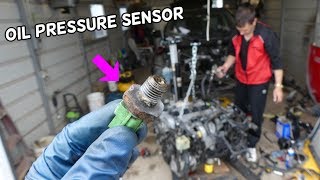
How to confirm: If the oil level and condition are good, the next step is to verify the actual oil pressure with a mechanical gauge. If the mechanical gauge shows good pressure but the scanner shows low pressure, the sensor is likely faulty. The sensor is located on the engine block.
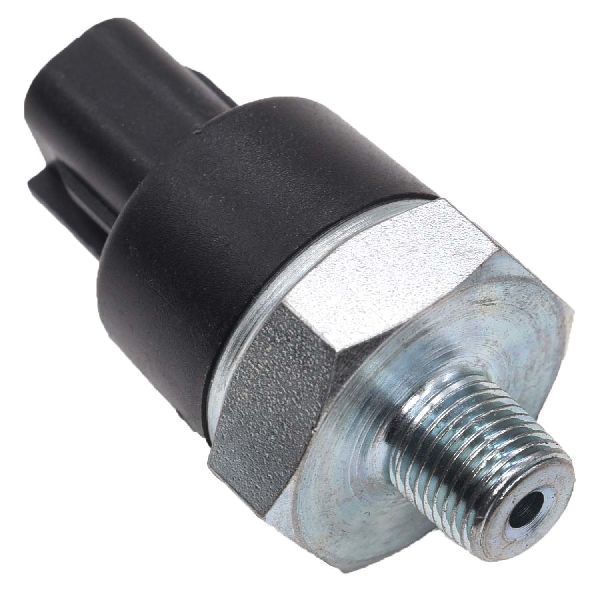
Typical fix: Replace the engine oil pressure sensor. The OEM part number is typically PE01-18-501B, which supersedes PE01-18-501 and PE01-18-501A.
Est. part cost: $30-$100 - Debris in Oil Pump Relief Valve or Oil Control Valve (OCV) 🟡 Medium Probability → Shop Engine Oil Pump This is the primary cause identified in a series of Mazda TSBs (01-016/19, 01-005/18, etc.) for the P0524/P0015 code combination. A small piece of foreign material can get stuck, causing a temporary but significant drop in oil pressure that affects the variable valve timing system.
How to confirm: This is diagnosed after confirming oil level/quality and testing pressure. The TSB provides a specific diagnostic flowchart involving revving the engine and checking pressure at various RPMs to confirm.
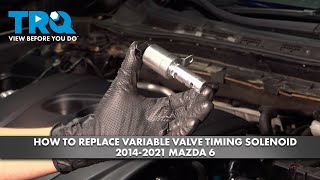
Typical fix: Per the TSB, the fix depends on diagnostic results but often involves replacing the Oil Control Valve (OCV), replacing the oil strainer with a modified part, cleaning the oil pan, and changing the engine oil. The OCV part number is PE01-14-420A. 🎬 See this walkthrough on replacing the variable valve timing solenoid.
Est. part cost: $150-$300
Rare But Worth Checking
- Failing Oil Pump: → Shop Engine Oil Pump While less common than sensor or debris issues, a worn or failing oil pump will directly cause low pressure. This is a major repair. The TSB diagnostic procedure will lead to this conclusion if pressure remains low after other steps are taken.
- Clogged Oil Strainer / Pickup Tube: → Shop Engine Oil Pump Sludge or debris in the oil pan can clog the oil pump's pickup tube, starving the pump of oil. This is often a consequence of poor maintenance or fuel dilution in diesel models. The TSB repair includes replacing the strainer with a modified part.
- Worn Internal Engine Components: On high-mileage engines, worn crankshaft or camshaft bearings can increase clearances to the point where the oil pump can no longer maintain adequate pressure. This is a catastrophic failure requiring an engine rebuild or replacement. In a rare case, even a new vehicle required connecting rod bearing replacement to resolve P0524.
- Oil Leaks from Front/Timing Cover: → Shop Engine Timing Cover A less common cause, but TSB 01-018/18 notes that oil seepage can occur from the joint between the cylinder block and head on the front cover, which could potentially lead to low oil levels if severe enough over time.
Diagnosis Steps
- Immediately turn off the engine. Do not restart it until the oil level is checked.
- Check the engine oil level using the dipstick. If low, top it up and check for obvious, major leaks.
- Inspect the oil's condition. If it's old, dirty, or smells of fuel, an oil change is necessary.
- If oil level and quality are good, have the vehicle towed to a shop. Do not drive it.
- A technician should connect a mechanical oil pressure gauge to the engine to verify the actual oil pressure. This is the most critical step to differentiate a real pressure problem from a sensor fault.
- If mechanical pressure is good, test the oil pressure sensor (Part No. PE01-18-501B) and its wiring harness. Replace the sensor if it's faulty.
- If mechanical pressure is low, follow the diagnosis in Mazda TSB #01-016/19 or a similar superseded bulletin. This involves warming the engine to over 194°F (90°C), revving it to 4,000 RPM ten times, and then measuring pressure at idle (650 RPM), 1,500 RPM, and 4,500 RPM.
- Based on the TSB flowchart, if pressure is still abnormal, the oil pump may need replacement. If pressure is normal after revving, the issue is likely debris, and the fix involves replacing the OCV (Part No. PE01-14-420A) and/or the oil strainer, and cleaning the oil pan.
- If the TSB procedure doesn't resolve the issue, further inspection of the oil pump, pickup tube, and internal engine bearings is required.
Parts You'll Likely Need
- Engine Oil and Filter — This is the first and most basic step, required for both maintenance and as part of more complex repairs like the TSB procedure.
Trusted brands: Mazda Genuine, Mobil 1, Castrol EDGE
OEM price range: $50-$90
Aftermarket price range: $40-$80 - Engine Oil Pressure Sensor/Switch
(OEM #PE01-18-501B)— A common failure point that can falsely trigger a P0524 code when actual oil pressure is normal.
Trusted brands: Mazda OE, Bosch, Standard Motor Products
OEM price range: $35-$50
Aftermarket price range: $25-$60 - Oil Control Valve (OCV)
(OEM #PE01-14-420A)— Specifically called out in Mazda TSBs as a part to replace when P0524 and P0015 are present, due to contamination.
Trusted brands: Mazda OE
OEM price range: $100-$180
Aftermarket price range: $70-$120 - Engine Oil Pump — This is the ultimate cause if all other components check out and mechanical pressure is confirmed to be low. Replacement is labor-intensive.
Trusted brands: Mazda OE, Aisin
OEM price range: $300-$500
Aftermarket price range: $150-$350
Related Codes That Often Appear With This One
- P0015 — As stated in multiple Mazda TSBs, low oil pressure (P0524) directly causes the exhaust camshaft timing to become over-retarded, triggering P0015. They are almost always diagnosed together on this platform.
- P055F — This code for 'Engine Oil Pressure Out of Range' is also mentioned in some TSBs and forum posts alongside P0524, indicating a general oil pressure system malfunction.
Technical Service Bulletins (TSBs) & Recalls
- 01-016/19: ROUGH IDLE WITH CHECK ENGINE LIGHT ON AND DTC P0015 / P0524 (Supersedes previous versions).
- 01-005/18: ROUGH IDLE WITH CHECK ENGINE LIGHT ON AND DTC P0015 / P0524.
- 01-009/16: MULTI-MODEL (WITH SKYACTIV) - ROUGH IDLE WITH CHECK ENGINE LIGHT ON AND DTC P0015 / P0524.
- 01-023-15-3084B: Rough idle with MIL on and DTC P0015 / P0524.
- 01-020/18: CHECK ENGINE LIGHT ON WITH DTC P0524:00 (For 2018 CX-5 with cylinder deactivation, attributes cause to PCM logic).
Platform-Specific Known Issues
- A known issue, documented in a series of superseding TSBs (most recently 01-016/19), involves P0524 appearing with P0015. The cause is often a temporary piece of debris affecting the oil pump relief valve or Oil Control Valve (OCV), leading to a drop in pressure that impacts variable valve timing.
Mechanic-Grade Diagnostic Values
- Engine Oil Pressure at 650 RPM (Idle) — expected: 50 kPa (7 psi) or more. Failure: Pressure below 50 kPa (7 psi)
- Engine Oil Pressure at 1,500 RPM — expected: 110 - 175 kPa (16.0 - 25.3 psi). Failure: Pressure outside of this range
- Engine Oil Pressure at 4,500 RPM — expected: 300 - 430 kPa (43.6 - 62.3 psi). Failure: Pressure outside of this range
Scan Tool Commands That Help
- Mazda IDS (M-MDS): PID Monitoring (ECT, OIL_TEMP, RPM) — Required during the TSB diagnostic procedure to ensure the engine is at the correct operating temperature (over 90°C / 194°F) and to accurately monitor engine speed while measuring mechanical oil pressure.
Wiring & Ground Locations
- Oil Pressure Sensor Harness — The electrical connector attaching to the oil pressure sensor on the engine block.. A short to ground in the wiring harness between the sensor and the PCM can cause a false P0524 code. Technicians diagnose this by disconnecting the sensor and PCM, then checking for continuity between the signal wire terminal (e.g., terminal A or D at the sensor connector) and a body ground. If continuity exists, the harness is shorted.
Real Owner Repair Stories
- Mazdas247 forum user 'ferro_sk' (2018 Mazda CX-5 (KF) G194 2.5L with 1,800 km) — Check Engine Light with P0524. No noticeable running issues.
❌ Tried (didn't work) Initial dealer visit where they just cleared the code and did a test ride; the code returned after 100km.
✅ What actually fixed it After consulting with Mazda support, the dealership performed a comprehensive repair, replacing the oil control solenoid valve, the oil pump, the oil pressure sensor, and the connecting rod bearings. - Reddit user 'OneLonelyBurrito' (Mazda CX-50 (similar Skyactiv engine family)) — Low oil pressure warning light that went away after an engine restart.
✅ What actually fixed it The dealership replaced the oil control valve (OCV), and the warning did not return.
OEM Part Supersession History
PE01-18-501→PE01-18-501A, then PE01-18-501B— Revisions by the manufacturer to improve reliability or address known issues.
Heads up: The newest part, PE01-18-501B, is the correct replacement for all previous versions for the 2014-2017 Mazda6.
Model Year Variations Within This Range
- 2016-2017: The Mazda6 received a significant interior and exterior facelift for the 2016 model year, including a redesigned dashboard and infotainment system. However, the 2.5L Skyactiv-G engine and its core components related to the oiling system remained unchanged from the 2014-2015 models. Therefore, the causes and diagnostic procedures for code P0524 are identical across the 2014-2017 range.
Helpful Videos


We Have This Part in Stock

The information in this article is provided for general reference and educational purposes only. Vehicle specifications, procedures, and part compatibility can vary by production date, trim level, and region. Always consult your vehicle's factory service manual and verify part numbers before purchasing or performing repairs. Safety-critical components such as airbags, seat belts, and braking systems should be installed by a qualified professional.
- Mazda MAZDA6:
- 🧭 Diagnostic Flowchart
- 🎬 Helpful Videos
- 🛍️ Shop This Part
- What's Unique About the 2014-2017 Mazda MAZDA6
- Symptoms You May Notice
- Most Likely Causes
- Rare But Worth Checking
- Diagnosis Steps
- Parts You'll Likely Need
- Related Codes That Often Appear With This One
- Technical Service Bulletins (TSBs) & Recalls
- Platform-Specific Known Issues
- Mechanic-Grade Diagnostic Values
- Scan Tool Commands That Help
- Wiring & Ground Locations
- Real Owner Repair Stories
- OEM Part Supersession History
- Model Year Variations Within This Range
- 🎟️ Get 5% Off