

OBD-II Code P0527: Fan Speed Sensor Circuit Range/Performance
What P0527 means, why it triggers, and how to fix it
- P0527 triggers when the Powertrain Control Module detects the cooling fan spinning outside its expected 0.5V to 5.0V signal range.
- Inspect the fan wiring harness and test the $15 fan relay before replacing the $300+ cooling fan assembly.
- Stop driving immediately if the temperature gauge exceeds 220°F, as overheating destroys a cylinder head in under 10 minutes.
- Use a bidirectional scan tool to command the fan on and off; if it responds, the motor is good and the fault lies in the sensor or wiring.
What Does P0527 Mean?
The Powertrain Control Module (PCM) detected a problem with the cooling fan speed sensor. The sensor reports the fan is spinning at a speed that does not match the computer's request. The PCM expects a specific pulse-width modulated (PWM) signal corresponding to fan speed; if this signal falls outside the expected voltage range (typically 0.5V - 5.0V), is erratic, or contradicts the commanded speed, P0527 triggers.
Technical definition: The official SAE/OBD-II definition is "Fan Speed Sensor Circuit Range/Performance". This indicates the Powertrain Control Module (PCM) detected the actual fan speed signal is outside the expected range or performing erratically compared to the commanded fan speed. The PCM sets this code when the variance between expected and actual fan RPM exceeds a pre-programmed threshold for a set time.
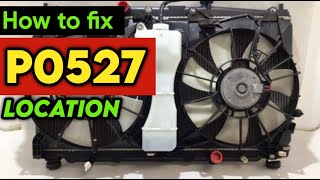
🎬 Watch: A quick breakdown of the P0527 code and its meaning.Can I Drive With P0527?
Yes, But With Caution. Yes, but it carries significant risk and requires immediate attention. If the cooling fan fails, the engine overheats in as little as 5-10 minutes of idling or stop-and-go traffic. Continuing to drive leads to severe engine damage, including a blown head gasket or warped cylinder heads, turning a minor repair into a $2,000+ rebuild. Short highway trips with consistent airflow are possible, but any slowdown increases the risk exponentially.
Common Causes
- Damaged or Corroded Wiring/Connectors (Very Common) — Wires leading to the fan speed sensor or motor fray, short, or corrode over time due to heat and vibration. This physical damage disrupts the signal to the PCM.
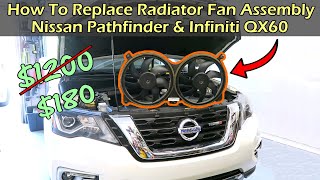
- Failed Cooling Fan Motor or Fan Clutch (Common) — If the fan motor fails or the fan clutch degrades, the fan cannot spin at the commanded speed. A seized or slow-spinning motor creates a direct mismatch with the PCM's request. 🎬 Watch: How to replace a faulty cooling fan on a Nissan.
- Faulty Fan Speed Sensor (Common) — The Hall effect sensor measuring fan rotation fails internally, sending incorrect or zero data to the computer despite the fan operating normally.
- Blown Fuse or Faulty Relay (Less Common) — A blown fuse or bad relay cuts power to the fan circuit, preventing operation. Relays sometimes test fine for continuity but fail to pass voltage under actual electrical load.
- Faulty Engine Coolant Temperature (ECT) Sensor (Less Common) — The PCM uses ECT data to determine required fan speed. Bad ECT data forces the PCM to command an incorrect fan speed, indirectly triggering this code.
- Physical Obstruction or Damaged Fan Blades (Rare) — Road debris physically blocks the fan from spinning freely. Bent blades cause the fan to spin at an incorrect speed or create an imbalance detected as a performance issue.
- Incompatible or Outdated PCM Software (Rare) — After replacing a radiator or fan, the PCM's calibration no longer matches the new hardware's characteristics. An outdated software flash causes the PCM to incorrectly flag a range error.
- Failed Powertrain Control Module (PCM) (Very Rare) — The PCM itself fails to process the signal. This is only considered after thoroughly verifying all wiring, sensors, and mechanical components.
Symptoms
- Check Engine Light is on — The Malfunction Indicator Lamp (MIL) illuminates on the dashboard.
- Engine overheating at idle — The engine overheats at low speeds or in traffic due to a lack of natural airflow through the radiator.
- A/C blows warm air — The PCM shuts down the A/C compressor as a protective measure because the condenser lacks cooling airflow.
- Cooling fan runs constantly or not at all — The fan stays locked on full speed even when cold, or fails to engage when the engine reaches operating temperature.
- Unusual engine bay noises — A failing fan motor, clutch, or physical obstruction causes grinding, whirring, or clicking sounds.
Diagnostic Flowchart
Tap your situation to follow the diagnostic path that matches what you're seeing on this code.
Common Fixes & Costs
- Repairing or replacing damaged wiring/connectors — Parts: $10-$50, Labor: $120-$250, ~1.5 hr book time (Intermediate)
- Replacing the cooling fan assembly (motor and/or sensor) — Parts: $150-$450, Labor: $150-$300, ~2 hr book time (Intermediate)
- Replacing the fan clutch — Parts: $200-$400, Labor: $150-$250, ~1.8 hr book time (Intermediate)
- Replacing a blown fuse or fan relay — Parts: $5-$30, Labor: $50-$100, ~0.5 hr book time (DIY)
- Replacing the Powertrain Control Module (PCM/ECM) — Parts: $600-$1000, Labor: $200-$300, ~2.5 hr book time (Advanced)
Used vs. New Parts: Buying Guide
When a used part is worth it: For a complete fan assembly (shroud, motor, blades), a used part from a low-mileage, accident-damaged vehicle is a cost-effective option. Do not buy a used fan clutch or standalone fan motor.
Donor-vehicle mileage cap: roughly under 60000 miles for the part to have meaningful remaining life.
Donor quality checklist:
- Verify the donor vehicle was not scrapped due to engine overheating or front-end electrical fires.
- Inspect for physical damage, such as cracked fan blades or corrosion on the electrical connector.
- Match the part number exactly, as different trim levels have incompatible fan controllers.
Decision logic:
- If The part is a simple relay or fuse → Buy new; cost savings are negligible and the risk is not worth it.
- If The part is a complete fan assembly and the vehicle is over 10 years old → A used part from a reputable recycler with a warranty is a reasonable choice.
- If The part is a fan clutch for a truck or large SUV → Buy new from an OEM or top-tier aftermarket brand; used clutches are a major gamble.
Warranty tradeoff: Used parts typically come with a 30-90 day warranty covering only the part. New aftermarket parts offer 1-year to limited lifetime warranties. New OEM parts offer the best warranty but at the highest cost.
Worst-case if a used part fails: $300-$600 if a used fan assembly fails after the warranty period, requiring repeat labor and parts costs.
What Happens If You Wait — Timeline
- 0-1 month: Check Engine Light is on. Fan is stuck on high (noisy, inefficient) or fails to engage intermittently. A/C performance suffers on hot days in traffic. (MPG impact: 0-5%% · Added cost: $0)
- 1-3 months: Engine consistently runs hotter than normal. Overheating occurs during prolonged idling. Repeated thermal stress weakens plastic cooling components and seals. (MPG impact: 3-8%% · Added cost: $50-$150 in wasted fuel and potential towing costs.)
- 3-6 months: A significant overheating event occurs. This causes immediate damage like a failed radiator hose, a cracked plastic thermostat housing, or a warped cylinder head. (MPG impact: 5-15%% · Added cost: $300-$1,500 for replacing damaged cooling system parts.)
- 6+ months: Catastrophic engine damage. Severe overheating causes a blown head gasket, allowing coolant and oil to mix. Repair often costs more than the vehicle's value. (MPG impact: 15-25%+% · Added cost: $2,500-$5,000+ for head gasket or engine replacement.)
Cost of Not Fixing It
- Immediate (first occurrence): Engine overheats in traffic, A/C stops working, potential for being stranded. (Added cost: Towing ($100-$250))
- 1-3 months: Repeated overheating incidents cause plastic cooling system components (hoses, reservoir) to become brittle and fail. It damages heat-sensitive seals. (Added cost: $300-$800)
- 3+ months: Catastrophic engine damage. Severe overheating warps cylinder heads or cracks the engine block, leading to a blown head gasket. (Added cost: $2000-$5000+)
Diagnosis Steps
- Scan Codes and Review Live Data
Use a bidirectional OBD-II scanner to read all codes. Access the live data stream to compare 'Commanded Fan Speed' to 'Actual Fan Speed'. Command the fan on at various speeds. A significant discrepancy (e.g., commanded 50% vs. actual 0 RPM) isolates the problem area.
Tools: Bidirectional OBD-II Scanner (Beginner) - Check Fuses and Relays
Locate the cooling fan fuses and relays in the power distribution box. Visually inspect the main fan fuse. Swap the fan relay with an identical non-critical relay (like the horn) to test if the fan operates.
Tools: Owner's manual, fuse puller (Beginner) - Visually Inspect the Fan System
With the engine OFF and cool, inspect the cooling fan, shroud, wiring, and connectors. Look for frayed wires, loose connections, or melted connector pins. Spin the fan blades by hand to ensure they move freely.
Tools: Flashlight, Gloves (Beginner) - Test Fan Motor Operation Directly
Disconnect the fan motor's electrical connector. Use jumper wires to apply 12V battery power directly to the fan motor's power and ground terminals. If it fails to spin at full speed or grinds, replace the fan motor.
Tools: Jumper wires, 12V power source (Intermediate) - [PRO TIP] Test Sensor Power and Ground
Back-probe the 3-wire Hall effect sensor connector with the fan commanded on. Verify the presence of a 5-volt reference wire and a ground wire (close to 0V). Missing voltage indicates a wiring harness or PCM fault.
Tools: Multimeter, Wiring diagram (Advanced) - [PRO TIP] Analyze Sensor Signal
Connect an oscilloscope or multimeter to the sensor's signal wire. With the fan running, an oscilloscope shows a clean square wave proportional to fan speed. A multimeter shows fluctuating DC voltage. A flatline or erratic signal confirms a bad sensor.
Tools: Oscilloscope or Multimeter, Wiring Diagram (Advanced) - Check Circuit Voltage Drop and Continuity
Set a multimeter to DC volts. With the fan ON, measure between the positive battery terminal and the fan's positive terminal. A reading above 0.5V indicates excessive resistance (corrosion). Repeat for the ground side (max 0.2V). If voltage drops are high, test wire continuity end-to-end.
Tools: Multimeter, Wiring diagram (Advanced) - Check for PCM Software Updates
If mechanical and electrical tests pass, check a TSB database. The PCM may have overly sensitive parameters for setting P0527, requiring a dealership software reflash.
Tools: Access to TSB database, Professional scan tool (Professional)
When This Code Triggers (Freeze-Frame Conditions)
- Engine Coolant Temp: 195-220°F (Engine at full operating temperature.)
- RPM: 650-800 (Idling in traffic or after a drive.)
- Engine Load: 20-40% (A/C compressor is on, placing load on the system.)
- Vehicle Speed: 0-5 mph (Vehicle is stationary or in stop-and-go traffic.)
Related Codes
- P0526 — P0526 ('Fan Speed Sensor Circuit') is a general circuit fault, while P0527 is a 'Range/Performance' fault. P0526 points to a broken wire or bad connection, whereas P0527 suggests the sensor provides a signal, but it is irrational.
- P0528 — P0528 ('Fan Speed Sensor Circuit No Signal') indicates a complete loss of communication. P0527 implies a signal is received but incorrect. P0528 diagnosis focuses on finding a completely severed wire or unplugged sensor.
- P0480 — P0480 ('Fan 1 Control Circuit Malfunction') points to the PCM's command to the relay, while P0527 points to the sensor's feedback. Diagnose P0480 first, as a control circuit issue prevents the fan from running, triggering P0527.
- P0483 — P0483 ('Fan Rationality Check Malfunction') triggers when the PCM commands the fan on but sees no drop in coolant temperature. P0527 is triggered specifically by the fan speed sensor's electrical signal being out of range.
Climate & Environmental Factors
- High Ambient Temperature / Hot Climates: Hot climates force the fan to run more often and at higher speeds. This increased workload accelerates the failure of weak fan motors, clutches, or control modules.
- High Humidity: Humidity accelerates corrosion on electrical connectors and wiring. This corrosion increases resistance in the fan speed sensor circuit, pushing the signal out of the expected range.
- Cold Climates: In sub-zero weather, grease in the fan motor or clutch bearing thickens, causing the fan to spin slower than commanded on initial startup, triggering a temporary P0527.
- High Altitude: Less dense air at high altitudes reduces radiator cooling efficiency. The PCM compensates by commanding higher fan speeds more frequently, accelerating wear on marginal components.
How to Talk to a Mechanic About This Code
Say this: "I have a P0527 code and need a diagnostic. Please test the fan relay, fuses, and wiring harness for voltage drops before quoting a full fan assembly replacement."
This signals that you are aware of the common misdiagnosis of replacing the entire fan assembly unnecessarily. It directs the mechanic to follow a logical diagnostic path, saving you money.
Avoid saying:
- 'My car is overheating, just fix it.'
- 'My check engine light is on, can you look at it?'
- 'I think I need a new radiator fan.'
Questions to ask before authorizing the repair:
- Did you test the fan motor directly by applying 12-volt power?
- Did you check the live data to compare the commanded fan speed versus the actual fan speed?
- Did you inspect the wiring and connector for corrosion or damage?
- Is the speed sensor available separately, or is it integrated with the fan motor/clutch on my specific vehicle?
- What is the warranty on the recommended parts and labor?
Where to Take It: Dealer vs Independent vs Chain
- Dealer:
Recommended if your car has a known TSB or is under warranty. Otherwise, an independent shop is more cost-effective.
Best for: Vehicles still under powertrain warranty., Known manufacturer-specific issues requiring a software update (TSB), common for this code on Ford models., Complex electrical issues on newer European vehicles.
Downsides: Significantly higher labor rates and parts costs., More likely to replace an entire assembly rather than repair a simpler wiring fault. (Typical cost: +50% vs. baseline) - Independent Shop:
Best fit for most situations. An experienced independent mechanic effectively diagnoses the root cause of P0527 at a much lower cost than a dealer.
Best for: Out-of-warranty vehicles where cost is a primary concern., Diagnosing and repairing common electrical faults like wiring, relays, or straightforward component replacement., Getting a second opinion on a costly dealer estimate.
Downsides: Diagnostic skill varies greatly; look for ASE-certified technicians., May lack access to the latest manufacturer software updates. (Typical cost: +0% vs. baseline) - Chain Shop:
Use with caution. Acceptable for a pre-diagnosed parts swap. AVOID for initial diagnosis of a P0527 code due to high misdiagnosis risk.
Best for: Simple, clear-cut repairs like replacing a fuse or relay if you have already diagnosed the problem yourself.
Downsides: Technician skill varies dramatically and is often unsuited for complex electrical diagnosis., Business model pressures technicians to upsell, leading to recommendations for unnecessary, expensive parts. (Typical cost: -10% vs. baseline)
When to Walk Away From the Repair
If the estimated repair cost exceeds 40-50% of the car's private-party value, consider selling or trading it in.
- Car worth $4000, fix is $750: Fix it. This repair is well below the threshold and is critical for engine health.
- Car worth $3000, fix is $1600: Walk away. The repair cost is over 50% of the car's value. This is a classic 'money pit' scenario.
- Car worth $15000, fix is $1200: Fix it. The cost is a small fraction of the vehicle's value and prevents catastrophic engine damage.
What Scan Tool You Need for This Code
Minimum: A scanner that reads live data PIDs, specifically 'Commanded Fan Speed' and 'Actual Fan Speed'.
A basic $20 code reader only tells you the P0527 code is present. It cannot show the live data needed to see if the computer is commanding the fan on and if the fan is responding.
Budget: BlueDriver Pro (~$100) — Connects to your smartphone and provides access to live data, including fan speed PIDs. It is an excellent tool for DIY diagnosis.
Mid-range: Foxwell NT510 Elite / Autel MaxiCOM MK808S (~$180) — Offers bidirectional control, allowing you to directly command the cooling fan to turn on at different speeds, instantly testing the entire control circuit, relay, and fan motor.
Professional: Autel MaxiCOM MK906BT / Launch X431 Series (~$500-1200) — Provides full professional-level bidirectional control, advanced coding functions, and access to wiring diagrams and TSBs directly on the tool.
Rent vs buy: Auto parts stores lend basic scanners for free, but they lack live data functions. Buying a tool like the BlueDriver is a worthwhile investment for future DIY diagnostics.
How to Clear the Code After You Fix It
- Use an OBD-II scan tool to clear the P0527 code.
- Start the engine and let it idle with the A/C on max to command the fan on.
- Perform a drive cycle to allow the readiness monitors to set.
Drive cycle (~20 minutes): Cold start, idle for 2-3 minutes. Drive in stop-and-go traffic for 10-15 minutes. Drive at a steady highway speed (55-60 mph) for 5-10 minutes. Let the vehicle cool down completely.
Readiness monitors affected: Comprehensive Component Monitor, Catalyst Monitor, Evaporative System Monitor
Before emissions retest: drive at least 50 miles to fully set monitors.
Watch out for:
- Clearing the code with a scanner erases freeze-frame data, which is valuable for diagnosis.
- Disconnecting the battery clears the code but resets all readiness monitors, causing an automatic emissions test failure.
- The code returns immediately if the underlying mechanical or electrical fault is not repaired.
Will This Fail Emissions / State Inspection?
Yes — this code typically fails an OBD-II emissions inspection.
- California: An illuminated Check Engine Light is an automatic failure of the smog inspection. After repairs, the vehicle must complete a drive cycle to set readiness monitors.
- New York: A vehicle with an active P0527 code automatically fails the OBDII portion of the state inspection. Clearing the code just before the test results in a failure due to 'Not Ready' monitors.
- Texas: In the 17 counties requiring emissions testing, an active P0527 code causes an OBDII scan failure. While safety inspections end for non-commercial vehicles in 2025, emissions tests remain mandatory.
Most Commonly Affected Vehicles
- Ford F-150, Explorer (2004-2014) — Often related to fan clutch failure or wiring issues. TSB 14-0096 addresses false P0527 codes on F-150s by reflashing the PCM.
- Chevrolet / GMC Silverado, Sierra, Tahoe, Suburban (2007-2013) — Commonly caused by a faulty fan clutch containing the integrated speed sensor. Replacement of the entire fan clutch assembly is required.
- Dodge / Ram Ram 1500, Grand Caravan, Durango (2008-2016) — Issues with the integrated fan control module or fan clutch are frequent. Recall 67C/B3C/C9C (NHTSA 25V720) addresses overheating fan circuits on ProMaster vans.
- Jeep Grand Cherokee (2005-2015) — The hydraulic cooling fan relay and the fan assembly itself are known points of failure. The power steering pressure sensor also affects hydraulic fan operation.
- Nissan Navara (D40), Patrol (Y62) (2005-2015) — Wiring faults between the ECU and the electronically controlled viscous fan are a known issue. The harness becomes brittle from engine heat.
- BMW 3-Series (E90), 5-Series (E60), X5 (E70) (2006-2013) — Caused by failure of the electric fan assembly's integrated control module. The fan relay control module is a common replacement item.
- Hyundai / Kia Sonata, Santa Fe, Sorento, Optima (2011-2017) — Traced to the fan motor resistor or fan control module failing, leading to incorrect fan speeds. The resistor is often sold separately.
- Subaru Outback, Forester (2010-2018) — The cooling fan relay is a frequent point of failure, causing intermittent operation. Models utilize two relays (Main and Sub), and either can fail.
Manufacturer-Specific Notes
- General Motors (GM): On 2007-2013 GM trucks, the fan speed sensor is integrated into the fan clutch. A P0527 code almost always requires replacing the entire fan clutch assembly. Aftermarket clutches have high failure rates; OEM ACDelco parts are strongly recommended.
- Ford: A PCM software update is frequently required to correct overly sensitive fan speed parameters, especially after replacing cooling components. TSB 14-0096 for F-150s addresses this exact issue to resolve false P0527 codes.
- Chrysler/Dodge/Jeep: These vehicles use a separate pulse-width modulated (PWM) fan control module that fails frequently, causing the fan to run constantly. A recall (NHTSA 25V720) was issued for 2018-2026 Ram ProMaster vans due to this module overheating and posing a fire risk.
- Hyundai/Kia: On 2011-2017 models, a failed cooling fan resistor causes the fan to operate only on high speed or not at all. Because the PCM cannot vary the speed, it triggers P0527. The resistor is a separate, inexpensive replaceable part.
Real Owner Stories
2014 Chevy Silverado at 110K miles
Check Engine Light came on, but the truck was not overheating. A/C worked fine. The cooling fans were not turning on at all.
What they tried:
- The owner suspected a bad fan control module or fan motors.
- A mechanic found 12V at the fan control module, but the PWM command signal from the ECM was missing.
Outcome: The mechanic discovered a bad spot in the command wire between the ECM and the fan control module. Running a new wire fixed the problem, saving the cost of a new fan assembly.
Lesson: Don't assume the most expensive part failed. A wiring issue prevents the fan from receiving the command to turn on. Proper electrical diagnosis is key.
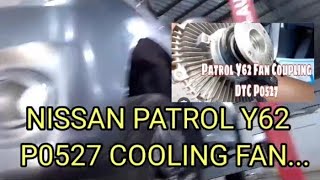
2011 Nissan Patrol (Y62) with overheating issues
The vehicle overheated in traffic with a P0527 code. The fan was visibly not spinning fast enough.
What they tried:
- The owner took the vehicle to a shop for diagnosis.
Outcome: The shop diagnosed a failed fan coupling assembly (fan clutch), which contains the integrated speed sensor. Replacing the entire fan clutch assembly resolved the overheating.
Lesson: On many trucks and large SUVs, the fan speed sensor is part of the fan clutch. If the clutch fails mechanically, it triggers P0527. Replacing the entire clutch is the correct fix.
2016 GMC Sierra with fans running constantly
The cooling fans immediately went to full speed upon startup and stayed on after the truck was turned off. The temperature gauge did not move.
What they tried:
- The owner replaced the coolant temperature sensor, which did not fix the issue.
- Forum advice suggested disconnecting the battery, which worked temporarily.
Outcome: Scanning for codes revealed a stored P0128 code (Thermostat Rationality). This code causes the PCM to default to a fail-safe mode, running fans at maximum. Replacing the thermostat fixed the fan issue.
Lesson: A fan speed issue is sometimes a fail-safe symptom of a different problem. Always scan for all codes, as a related code like P0128 could be the true root cause.
2019 Ram 1500 with poor A/C performance
In ambient temperatures over 100°F, the truck's A/C blew warm air. This related to overall cooling system performance.
What they tried:
- The owner discovered a Technical Service Bulletin (TSB) related to the issue.
- Owners on forums suggested a $20 aftermarket valve kit as a fix.
Outcome: The issue was a design flaw where hot coolant circulated too close to A/C components. The official fix is a dealer TSB service, while a popular DIY fix adds a valve to block coolant flow to the heater core during summer.
Lesson: Symptoms appearing related to a fan issue are sometimes due to a known manufacturer design flaw. Always search for TSBs related to your vehicle's specific symptoms.
How to Prevent This Code From Triggering
- Keep fan shroud and radiator fins clean (Annually or after off-road use) — Debris and bugs block airflow, forcing the fan to work harder and run longer. A clean radiator allows for efficient cooling at lower fan speeds, reducing wear on the motor.
- Perform regular cooling system flushes (Every 3-5 years or as per owner's manual) — Degraded coolant leads to corrosion and sediment buildup inside the radiator. This reduces cooling efficiency, placing a higher demand on the fan system.
- Apply dielectric grease to electrical connectors (During any cooling system repair) — Applying dielectric grease to the fan harness and control module connectors seals out moisture and prevents corrosion that causes high resistance.
- Inspect wiring harnesses for security and condition (During every oil change) — Visually check that the fan wiring harness is secured and not rubbing against engine components. Heat and vibration cause wires to chafe, leading to shorts.
Frequently Asked Questions
What is a fan speed sensor and where is it located?
The fan speed sensor measures how fast the engine's cooling fan spins. It is usually located on or inside the cooling fan assembly, attached directly to the fan motor, or integrated into the fan clutch.
What is the most common misdiagnosis for P0527?
The most common mistake is replacing the entire cooling fan assembly without testing the circuit. Technicians and DIYers often overlook simpler causes like a blown fuse, a faulty relay, or a corroded wire. Always test fuses, relays, and wiring for power, ground, and signal before condemning the fan.
Can a weak battery or alternator cause a P0527 code?
Yes. The fan control module and motor draw significant current. Low or unstable system voltage from a failing battery or alternator causes erratic fan behavior or incorrect speeds, triggering the code.
Can I fix P0527 myself?
Replacing a blown fuse or visibly damaged wire is a simple DIY repair. However, diagnosing the sensor, motor, or control module requires a multimeter, wiring diagram, and a bidirectional scan tool, making it an intermediate-to-advanced job.
Will my engine definitely overheat with a P0527 code?
Not definitely, but the risk is extremely high. If the fan is stuck off or running too slow, overheating is almost guaranteed in traffic or hot climates. If stuck on high, the engine runs cool but inefficiently.
Why did my A/C stop working when I got this code?
The A/C system requires the cooling fan to blow air over the condenser to dissipate heat. The PCM automatically disables the A/C compressor when it detects a fan problem to prevent dangerously high system pressure.
How much does it cost to diagnose a P0527 code?
Most repair shops charge a diagnostic fee ranging from $125 to $185 to pinpoint the exact cause. This fee covers the initial hour of testing and is typically credited toward the final repair cost.
Key Takeaways
- P0527 triggers when the Powertrain Control Module detects the cooling fan spinning outside its expected 0.5V to 5.0V signal range.
- Inspect the fan wiring harness and test the $15 fan relay before replacing the $300+ cooling fan assembly.
- Stop driving immediately if the temperature gauge exceeds 220°F, as overheating destroys a cylinder head in under 10 minutes.
- Use a bidirectional scan tool to command the fan on and off; if it responds, the motor is good and the fault lies in the sensor or wiring.
Helpful Videos
Shop the Parts Behind P0527
Below are the parts most often responsible for code P0527, ranked by how frequently each one is the actual culprit (per the diagnosis above). Tap any to see what we have for your vehicle.




The information in this article is provided for general reference and educational purposes only. Vehicle specifications, procedures, and part compatibility can vary by production date, trim level, and region. Always consult your vehicle's factory service manual and verify part numbers before purchasing or performing repairs. Safety-critical components such as airbags, seat belts, and braking systems should be installed by a qualified professional.
- 🧭 Diagnostic Flowchart
- 🎬 Helpful Videos
- 🛍️ Shop This Part
- What Does P0527 Mean?
- Can I Drive With P0527?
- Common Causes
- Symptoms
- Common Fixes & Costs
- Used vs. New Parts: Buying Guide
- What Happens If You Wait — Timeline
- Cost of Not Fixing It
- Diagnosis Steps
- When This Code Triggers (Freeze-Frame Conditions)
- Related Codes
- Climate & Environmental Factors
- How to Talk to a Mechanic About This Code
- Where to Take It: Dealer vs Independent vs Chain
- When to Walk Away From the Repair
- What Scan Tool You Need for This Code
- How to Clear the Code After You Fix It
- Will This Fail Emissions / State Inspection?
- Most Commonly Affected Vehicles
- Manufacturer-Specific Notes
- Real Owner Stories
- 2014 Chevy Silverado at 110K miles
- 2011 Nissan Patrol (Y62) with overheating issues
- 2016 GMC Sierra with fans running constantly
- 2019 Ram 1500 with poor A/C performance
- How to Prevent This Code From Triggering
- Frequently Asked Questions
- What is a fan speed sensor and where is it located?
- What is the most common misdiagnosis for P0527?
- Can a weak battery or alternator cause a P0527 code?
- Can I fix P0527 myself?
- Will my engine definitely overheat with a P0527 code?
- Why did my A/C stop working when I got this code?
- How much does it cost to diagnose a P0527 code?
- Key Takeaways
- 🎟️ Get 5% Off