

P0534 on 2017-2021 Chevrolet Bolt EV: A/C Refrigerant Loss Causes and Fixes
On a 2017-2021 Chevy Bolt EV, code P0534 almost always means there is a refrigerant leak in the A/C system. A known issue is a leaking A/C compressor, documented in GM Technical Service Bulletin PIC6436. This is a critical repair, as the A/C system is essential for cooling the high-voltage battery, and failure can lead to reduced performance and charging speeds.
- P0534 means your Bolt EV's A/C system has lost refrigerant, which is critical for both cabin comfort and battery cooling.
- The most likely cause is a leaking A/C compressor, a known issue documented by GM in TSB PIC6436.
- This is a serious issue. Driving without a functional A/C system can reduce vehicle performance and charging speeds, and potentially harm the battery long-term.
- Repair is not a DIY job due to high-voltage components and specialized refrigerant handling. Expect a professional repair to cost over $1,000 if the compressor needs replacement.
- Check with your dealer about warranty coverage, as some owners argue this should be covered under the 8-year/100,000-mile EV propulsion warranty.
What's Unique About the 2017-2021 Chevrolet BOLT EV
Unlike a conventional car where A/C is only for cabin comfort, the A/C system in a Bolt EV is critical for thermal management of the high-voltage battery pack. A failure in the A/C system, as indicated by P0534, can lead to reduced charging speeds and decreased vehicle performance as the car tries to protect the battery from overheating. The system uses a high-voltage electric compressor (sometimes called the ACCM) that requires special non-conductive POE refrigerant oil, making professional service essential.
Diagnostic Flowchart
Tap your situation to follow the diagnostic path that matches what you're seeing on this vehicle.
Symptoms You May Notice
- Air conditioning does not blow cold air
- "Service Vehicle Soon" or Check Engine light is on
- On-screen message about A/C system malfunction
- Reduced DC fast charging speed
- Reduced vehicle performance in hot weather
- "Unable to charge" error message in some cases
- Adding refrigerant without fixing the leak. This is a temporary fix at best; the code will return as the new refrigerant leaks out. Using a 'stop leak' additive is strongly discouraged as it can clog the high-voltage compressor and other sensitive A/C components, potentially causing conductive pathways in the non-conductive oil.
- Replacing the entire A/C compressor when only the attached DC filter assembly has failed. A simple resistance check on the filter assembly could save hundreds of dollars.
Most Likely Causes
- Leaking A/C Compressor 🔴 High Probability → Shop A/C Compressor General Motors issued Technical Service Bulletin #PIC6436 specifically for low-mileage Bolt EVs with code P0534, identifying a leaking A/C compressor as a primary cause. The bulletin notes that the leak often occurs from an internal seal, with POE oil visible near the high-voltage connector or a case bolt.
How to confirm: A certified technician can inspect the A/C compressor (ACCM) for traces of refrigerant oil, specifically around the HV electrical connector, before adding any dye, as per TSB PIC6436. If no leak is obvious, UV dye can be added to the system and a blacklight used to visually inspect the compressor body and seals.
Typical fix: The A/C compressor must be replaced. 🎬 See this step-by-step guide on replacing a high-voltage compressor. The system must then be evacuated and recharged to the correct specification with the proper non-conductive oil. Owners have reported dealer repair costs in the range of $1,300 to $1,400 for this service. 🎬 Watch: One owner's experience with repair costs and dealer service.
Est. part cost: $400-$800 - A/C System Leak (Other than Compressor) 🟡 Medium Probability Leaks can occur at hose connections, O-rings, service ports (Schrader valves), or from the condenser due to road debris impact.
How to confirm: An inspection with UV dye and a blacklight can reveal leaks at fittings, hoses, or the condenser. An electronic refrigerant 'sniffer' can also be used to pinpoint the source of the leak.
Typical fix: The leaking component (hose, O-ring, or condenser) is replaced, followed by a system evacuation and recharge.
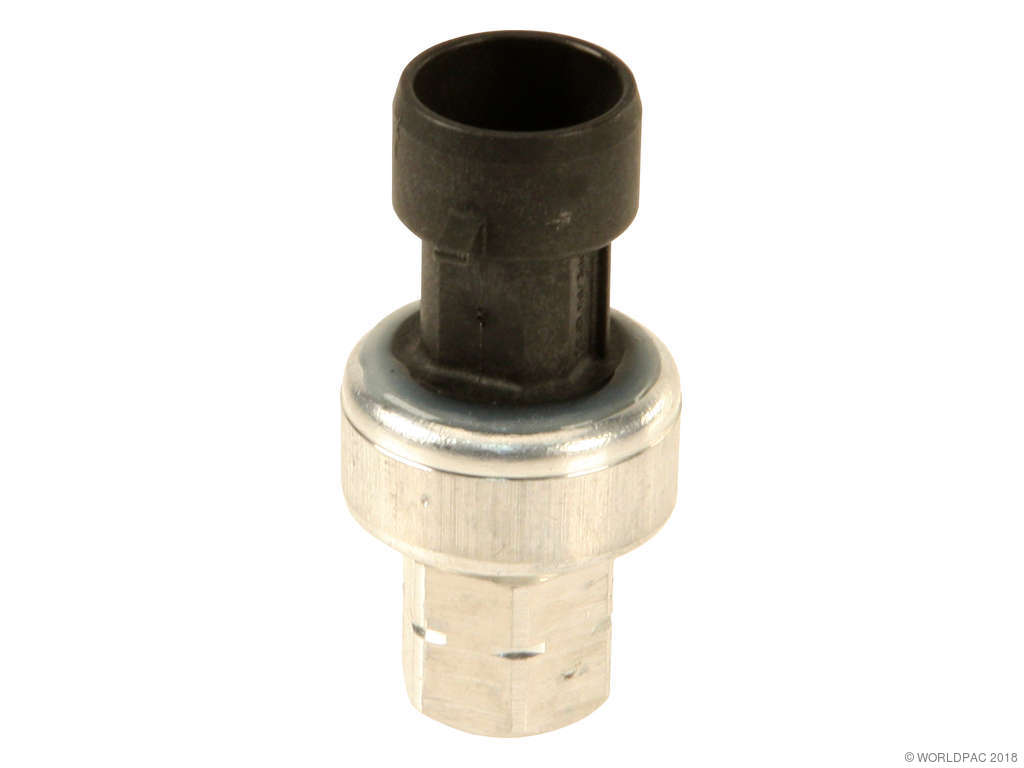
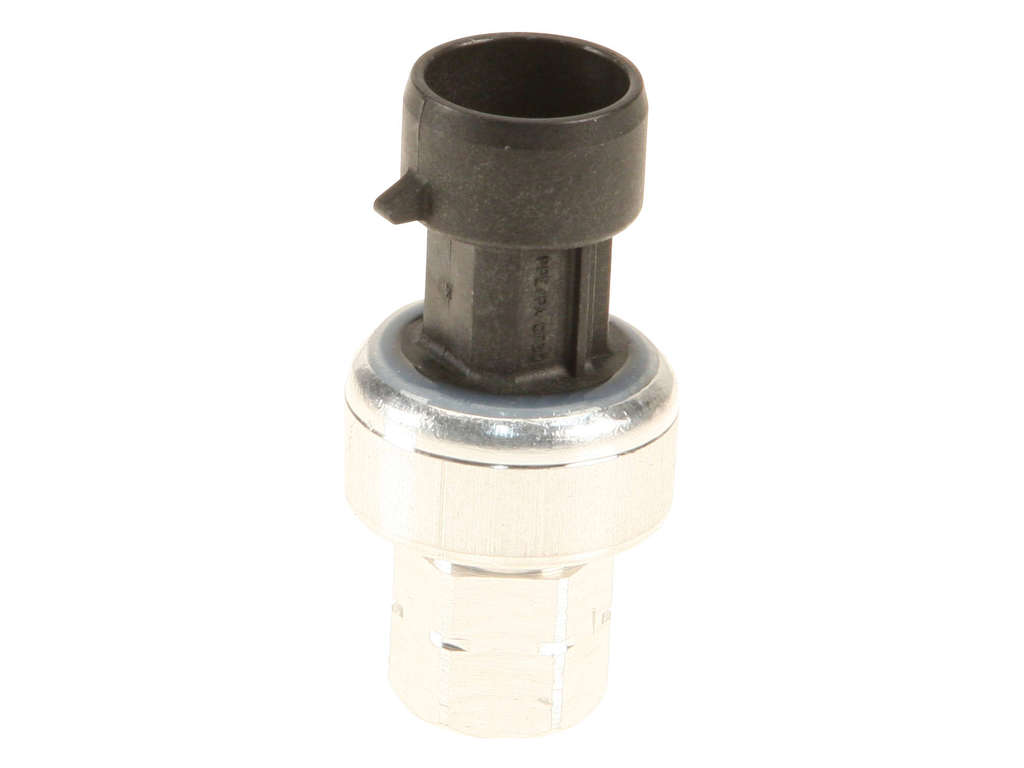
Est. part cost: $50-$500 - Faulty A/C Refrigerant Pressure Sensor ⚪ Low Probability → Shop Refrigerant
How to confirm: A technician can use a scan tool to monitor the pressure readings from the sensor. If the readings are erratic, incorrect, or do not change when system pressure changes, the sensor is likely faulty. Checking the sensor's wiring and connector for damage is also necessary.
Typical fix: Replace the A/C refrigerant pressure sensor. This may require recovering the refrigerant before replacement, though some sensor mounts have a self-closing valve.
Est. part cost: $40-$100
Rare But Worth Checking
- Wiring Harness Issue: Damage to the wiring or a loose connection at the A/C pressure sensor can cause false readings, leading to a P0534 code even if the refrigerant level is correct.
- Failed A/C Compressor DC Filter Assembly: → Shop A/C Compressor A DIY repair video for a 2017 Bolt showed that the compressor itself was functional, but an attached component called the 'DC filter assembly' had failed, showing infinite resistance with an ohmmeter. Replacing only this sub-component could potentially avoid a full compressor replacement.
Diagnosis Steps
- Confirm the 'Service Vehicle Soon' light is on and retrieve codes with an OBD-II scanner to verify P0534 is present.
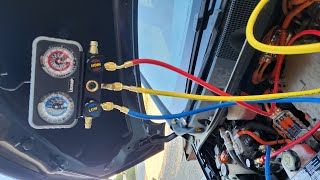
- Check the A/C system's static and operating pressures using a manifold gauge set. Very low or zero pressure confirms a significant refrigerant loss.
- Following TSB PIC6436, place the vehicle on a hoist, remove the aero panel, and inspect the A/C compressor (ACCM) for visible POE oil leaks around the high-voltage connector and case bolts *before* adding dye.
- If no leak is visible, add UV dye to the A/C system.
- Run the A/C and meticulously inspect all components with a UV blacklight, paying close attention to the A/C compressor body, hose fittings, and the front-facing condenser.
- If no visual leak is found, use an electronic refrigerant leak detector ('sniffer') around all joints and components.
- If the compressor is suspected, consider checking the resistance of the DC filter assembly attached to the compressor to rule out a cheaper, simpler failure point.
- Once the leak is identified, replace the faulty component.
- Evacuate the entire A/C system using a vacuum pump to remove all air and moisture.
- Recharge the system with the manufacturer-specified amount of refrigerant and the correct type of non-conductive POE oil. 🎬 Watch: How to properly evacuate and recharge the A/C system.
- Clear the trouble code and verify that the A/C operates correctly and the code does not return.
Parts You'll Likely Need
- A/C Compressor
(OEM #ACDelco 42733159 (Kit))— This is the most common failure point for this code on the Bolt EV, as identified by GM's own service bulletin (PIC6436).
Trusted brands: ACDelco
OEM price range: $500-$900
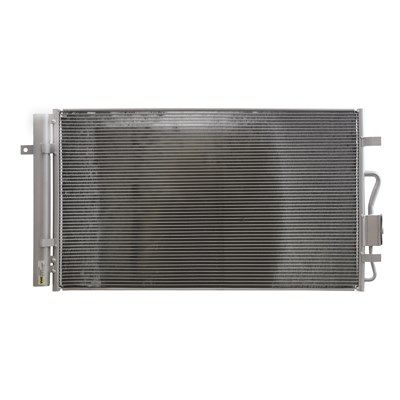
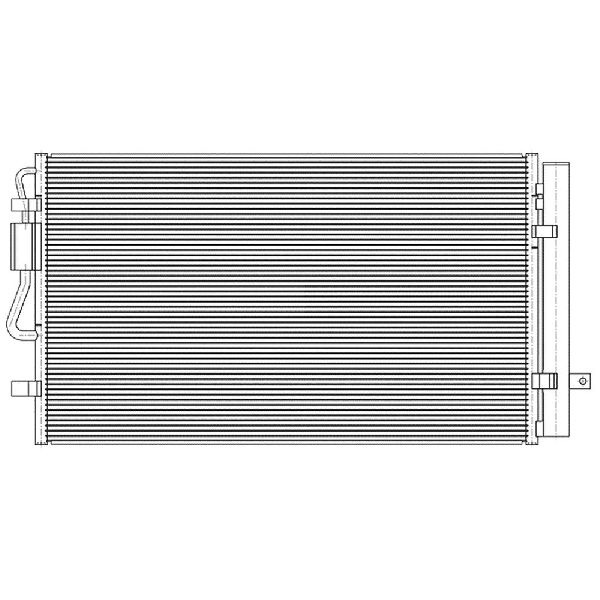
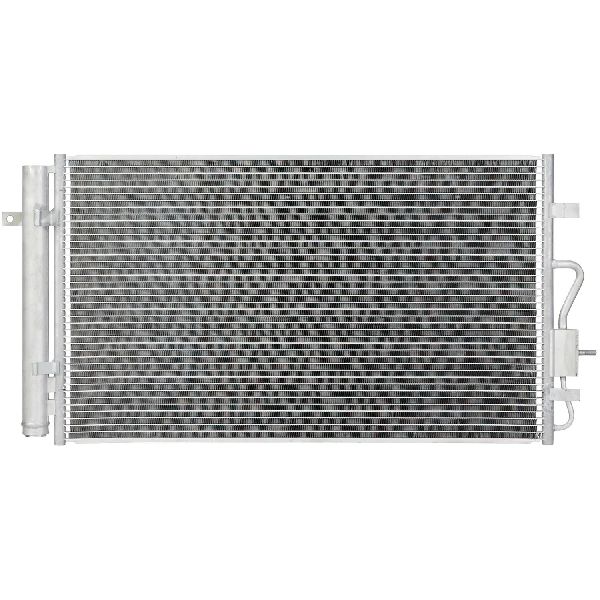
Aftermarket price range: $400-$700 - A/C Condenser — Located at the front of the vehicle, the condenser is susceptible to damage from road debris, causing leaks.
Trusted brands: ACDelco
OEM price range: $250-$400
Aftermarket price range: $150-$300 - A/C Refrigerant Pressure Sensor
(OEM #GM 13587668, ACDelco 15-51343)— Though less common, a faulty sensor can incorrectly report low pressure, triggering the code.
Trusted brands: ACDelco
OEM price range: $60-$100
Aftermarket price range: $40-$80
Technical Service Bulletins (TSBs) & Recalls
- PIC6436: Instructs technicians to inspect the A/C compressor for leaks on low-mileage vehicles that have an inoperative A/C and code P0534. It specifies looking for POE oil near the HV connector and case half before adding dye.
- 20NA173: Provides a service procedure to correct a 'Service Vehicle Soon' light with DTC P0534 set.
Platform-Specific Known Issues
- A known issue documented in TSB #PIC6436 points to the A/C compressor leaking on low-mileage vehicles, making it the primary suspect for code P0534. The bulletin specifically directs technicians to look for oil leakage near the high-voltage connector.
- The A/C system is integral to the battery's thermal management. Ignoring this code can negatively impact battery health and performance, especially during charging or in hot weather.
- There is ongoing debate among owners whether a failed A/C compressor should be covered under the 8-year/100,000-mile electric propulsion warranty, given its critical role in battery cooling. Some dealers may initially classify it as a standard A/C repair with shorter warranty coverage.
Mechanic-Grade Diagnostic Values
- A/C Refrigerant Pressure Sensor 5V Reference Wire Voltage — expected: ~5.0 Volts (with connector unplugged, key in service mode). Failure: A voltage near 0V (e.g., 0.2V) suggests a short to ground or a fault in the control module. A voltage near 12V indicates a short to power.
- A/C Refrigerant Pressure Sensor Signal Wire Voltage — expected: Varies with pressure, typically between 0.5V and 4.5V.. Failure: A voltage that is static, erratic, or outside the range of ~0.1V to 4.9V may indicate a faulty sensor or wiring, which can trigger a DTC.
- 5V Reference Circuit Resistance to Ground — expected: Greater than 1000 Ohms (with control module disconnected). Failure: A low resistance reading indicates a short to ground in the wiring harness or one of the sensors on the circuit.
Scan Tool Commands That Help
- GDS2: Vehicle DTC Information / Display DTC Information — This is the initial step to perform a full vehicle scan to see which modules are reporting faults and to view freeze frame/failure record data associated with the P0534 code.
- GDS2: Module Diagnostics -> K118 Electric A/C Compressor Control Module -> Data Display — To view live data from the A/C system, including refrigerant pressure readings, sensor voltages, and compressor command status. This helps determine if the sensor is reading incorrectly or if the module is seeing a legitimate low-pressure condition.
- GM Service Programming System (SPS): Replace and Program ECU — This function is required after replacing a major control module, such as the K118 A/C Compressor Control Module, to load the correct vehicle-specific software and VIN, ensuring it communicates properly with the rest of the car.
Wiring & Ground Locations
- A/C Refrigerant Pressure Sensor Connector — On one of the A/C lines, typically on the high-pressure side near the front of the vehicle.. This 3-wire connector provides the 5V reference, signal, and ground to the pressure sensor. Corrosion or damage to its pins or wires can cause incorrect pressure readings, triggering P0534 even with a full refrigerant charge. A replacement pigtail is available (e.g., WPT-1376).
- Chassis Grounds (e.g., G101/G102) — Typically located on the frame rail or inner fender in the engine bay, connecting the 12V battery negative terminal to the chassis.. While not specific to the A/C circuit, a poor main chassis ground can cause a wide range of unpredictable electrical issues and faulty sensor readings across the vehicle. Verifying the main grounds are clean and tight is a fundamental step in any electrical diagnosis.
- Body Ground Stud — A known ground stud exists on the vehicle body below the instrument panel fuse box, accessible from the driver's footwell.. Control modules rely on clean body grounds. While this specific ground is not directly tied to the A/C module in documentation, a loose or corroded ground in this area could affect various interior electronic systems that communicate with the A/C.
Real Owner Repair Stories
- Reddit user Crolin43 (2017 Chevrolet Volt) — Check engine light with code P0534.
✅ What actually fixed it The A/C compressor was replaced by the dealer. The repair cost $1,400 and was not covered by warranty.
OEM Part Supersession History
42502600, 42628294, 42664213→42733159— Part has been updated or consolidated by the manufacturer.
Heads up: This part number is for the 2017-2021 Bolt EV. The 2022+ Bolt EV/EUV uses a different compressor (PN 42793782) which is likely not backward compatible.
Model Year Variations Within This Range
- 2017-2021 vs 2022+: The A/C compressor assembly part number changed with the vehicle refresh in 2022. The kit for 2017-2021 models is PN 42733159, while the kit for 2022-2023 models is PN 42793782, indicating a design change that makes them non-interchangeable.
Helpful Videos
We Have This Part in Stock

The information in this article is provided for general reference and educational purposes only. Vehicle specifications, procedures, and part compatibility can vary by production date, trim level, and region. Always consult your vehicle's factory service manual and verify part numbers before purchasing or performing repairs. Safety-critical components such as airbags, seat belts, and braking systems should be installed by a qualified professional.
- Chevrolet BOLT EV:
- 🧭 Diagnostic Flowchart
- 🎬 Helpful Videos
- 🛍️ Shop This Part
- What's Unique About the 2017-2021 Chevrolet BOLT EV
- Symptoms You May Notice
- Most Likely Causes
- Rare But Worth Checking
- Diagnosis Steps
- Parts You'll Likely Need
- Technical Service Bulletins (TSBs) & Recalls
- Platform-Specific Known Issues
- Mechanic-Grade Diagnostic Values
- Scan Tool Commands That Help
- Wiring & Ground Locations
- Real Owner Repair Stories
- OEM Part Supersession History
- Model Year Variations Within This Range
- 🎟️ Get 5% Off