

P0534 on 2020 Ram 1500: A/C Refrigerant Charge Loss Causes and Fixes
This code means your truck's computer has detected a loss of refrigerant in the A/C system. The most common cause is a physical leak, followed by a faulty A/C refrigerant pressure sensor. Expect to pay a professional for diagnosis and repair, as handling refrigerant requires special equipment and the 2020 Ram 1500 uses R-1234yf, which is more expensive than older types.
- P0534 on a 2020 Ram 1500 means the A/C system is low on refrigerant or has a faulty pressure sensor.
- The most likely cause is a physical leak in a hose, seal, or the A/C condenser.
- Do not simply add more refrigerant; the leak must be found and repaired first.
- A faulty A/C pressure sensor can also trigger this code and is a common secondary cause.
- This is not a DIY-friendly repair. A/C service requires specialized, expensive equipment and should be performed by a qualified professional.
What's Unique About the 2020-2020 Ram 1500
For the 5th generation Ram 1500 (2019+), the A/C system performance has been a topic of discussion among owners, with some reporting less-than-optimal cooling even on properly functioning systems. This has led to some owners installing aftermarket 'hacks' like heater core bypass valves 🎬 See how owners are using bypass valves to improve cooling. to improve cooling performance. While P0534 specifically points to a charge loss, it's important to ensure the system is diagnosed correctly. The TSBs mentioning this code are specific to the 3.0L V6 Turbo Diesel (Sales Code EXH) and suggest that a PCM software update can resolve a group of electrical faults, including a false P0534. This indicates that for EcoDiesel models, the cause may not be a physical leak but a software anomaly.
Diagnostic Flowchart
Tap your situation to follow the diagnostic path that matches what you're seeing on this vehicle.
Symptoms You May Notice
- A/C system blowing warm or hot air
- A/C compressor does not turn on (no 'click' when A/C is activated)
- Check Engine Light is illuminated
- A/C compressor clutch cycles on and off frequently
- Unusual noises from the compressor due to overworking with low refrigerant
- Adding refrigerant without finding the leak. This is a temporary fix at best; the refrigerant will leak out again, and overcharging a system can cause further damage.
- Replacing the A/C compressor when the issue is simply a leak, a bad sensor, or a wiring fault preventing the compressor clutch from engaging.
- On 3.0L EcoDiesel models, performing expensive leak detection and parts replacement before checking for applicable PCM software updates that are known to fix false P0534 codes.
Most Likely Causes
- Refrigerant Leak 🔴 High Probability Leaks are the most common failure point for any vehicle's A/C system. Components like the condenser are exposed to road debris, and seals/O-rings can degrade over time. Some owners have reported condenser leaks on the 5th Gen platform.
How to confirm: A technician will use a set of A/C manifold gauges to check the static pressure. If low, they will inject UV dye or use an electronic leak detector ('sniffer') to find the source of the leak. Oily residue around A/C line connections, the compressor body, or on the face of the condenser is also a visual sign of a leak, as the refrigerant carries oil with it.
Typical fix: Repair or replace the leaking component (condenser, hose, O-ring, etc.), then evacuate and recharge the system to the correct specification.
Est. part cost: $20 - $400 - Faulty A/C Refrigerant Pressure Sensor 🟡 Medium Probability → Shop Refrigerant
How to confirm: If the A/C system pressure is verified to be correct with gauges, the sensor is the next suspect. A technician can check the sensor's voltage output with a multimeter or scan tool to see if it accurately reflects the measured pressure. A visual inspection for damage to the sensor or its connector is also necessary.
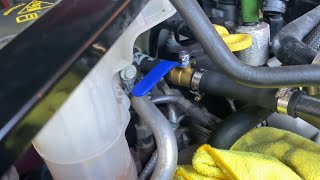
Typical fix: Replace the A/C refrigerant pressure sensor. On many Ram trucks, this sensor is located on one of the A/C lines near the front of the engine bay and can be replaced without discharging the entire system 🎬 Watch: How to change the A/C pressure sensor in 15 minutes., as it has a Schrader valve behind it.
Est. part cost: $40 - $100 - Wiring or Connector Issue ⚪ Low Probability
How to confirm: Visually inspect the wiring harness and connector at the A/C pressure sensor for any signs of damage, corrosion, or looseness. A multimeter can be used to check for proper voltage, ground, and signal continuity at the connector.
Typical fix: Repair the damaged wiring or clean/replace the connector.
Est. part cost: $5 - $50
Rare But Worth Checking
- Faulty Powertrain Control Module (PCM): This is very rare, but the existence of TSBs for the 3.0L EcoDiesel that include P0534 as part of a software update indicates that the PCM can sometimes be the source of the fault. This should only be considered after all other possibilities have been exhausted, especially on diesel models.
Diagnosis Steps
- Verify the code is present using an OBD-II scanner.
- For 3.0L EcoDiesel models, check for vehicle eligibility for TSBs #18-002-23 or #18-008-21 before proceeding with physical diagnosis. A PCM flash may be the only required repair.
- Connect a set of A/C manifold gauges to the high and low-side service ports to measure the static refrigerant pressure. Compare this to the ambient temperature/pressure chart for the vehicle's refrigerant type (R-1234yf for the 2020 Ram 1500).
- If pressure is low, a leak is present. Add UV dye to the system and run the A/C. Use a UV light to inspect all lines, the condenser (in front of the radiator), the compressor, and service ports for the source of the leak. An electronic 'sniffer' can also be used.
- If system pressure is normal, inspect the electrical connector and wiring for the A/C pressure sensor for any damage or corrosion.
- Using a scan tool or multimeter, check the signal from the A/C pressure sensor. If the signal indicates low pressure but the gauges show good pressure, the sensor is likely faulty.
- If the sensor, wiring, and charge are all good, investigate other potential electrical issues, such as the HVAC control module or PCM, though these are less common causes.
- After any repair involving opening the system, it must be properly evacuated with a vacuum pump to remove air and moisture before being recharged with the precise weight of refrigerant specified for the vehicle.
Parts You'll Likely Need
- A/C Refrigerant Pressure Sensor (Transducer)
(OEM #68448532AA)— This sensor can fail and send an incorrect low-pressure signal to the PCM, triggering the code even with a full charge. It is a common point of failure across many vehicles.
Trusted brands: Mopar, Standard Motor Products (SMP), Four Seasons
OEM price range: $70-$120
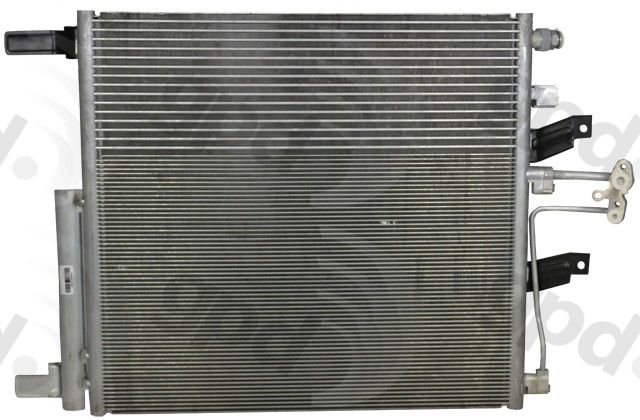
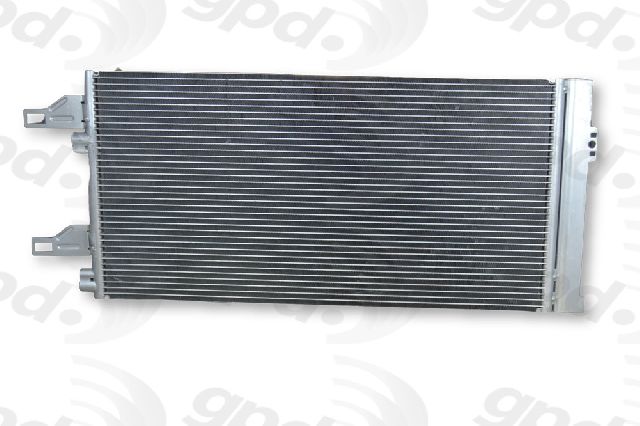
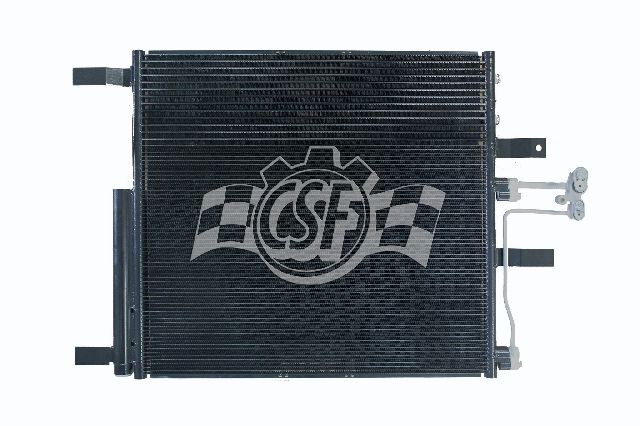
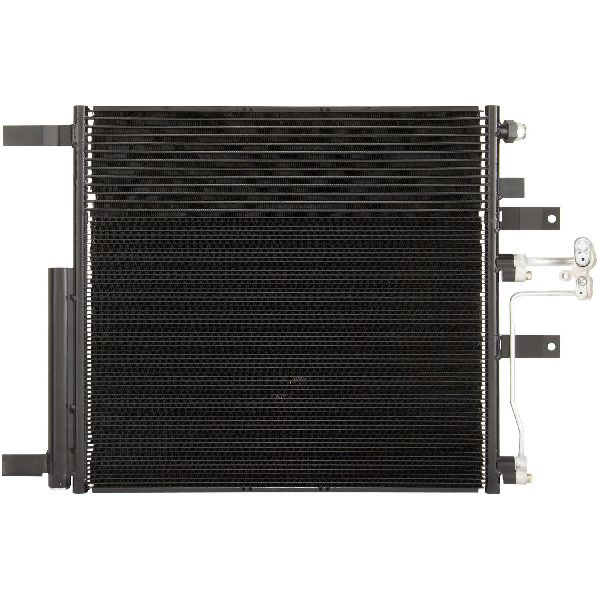
Aftermarket price range: $40-$80 - A/C Condenser — Located at the front of the truck, the condenser is vulnerable to damage from rocks and road debris, making it a common source for refrigerant leaks. Forum discussions mention condenser leaks being an issue on this platform.
Trusted brands: Mopar, Denso, Spectra Premium
OEM price range: $300-$450
Aftermarket price range: $150-$250 - A/C System O-rings and Seals — O-rings at line connections can become hard and brittle over time, leading to slow leaks. They are inexpensive and should be replaced anytime a line is disconnected.
Trusted brands: Mopar, Santech
OEM price range: $10-$30 (kit)
Aftermarket price range: $5-$20 (kit)
Related Codes That Often Appear With This One
- P2610 — Listed in the same TSB (#18-002-23) for the 3.0L EcoDiesel, suggesting a potential software issue that can trigger multiple, seemingly unrelated codes.
- P015E — Listed in the same TSBs (#18-002-23, #18-008-21) for the 3.0L EcoDiesel, pointing to a possible PCM software calibration issue.
- P04DB-00 — Mentioned alongside P0534 in TSBs #18-002-23 and #18-008-21 for the 3.0L EcoDiesel, indicating a group of codes that may be resolved with a single software update.
Technical Service Bulletins (TSBs) & Recalls
- 18-002-23: For 2020 Ram 1500 with 3.0L EcoDiesel, lists P0534-00 as one of several DTCs that may be addressed by a PCM software update.
- 18-008-21: Also for the 3.0L EcoDiesel, this TSB supersedes a previous version and lists P0534-00 among a set of DTCs, indicating a software fix.
Platform-Specific Known Issues
- PCM Software Glitch on 3.0L EcoDiesel: TSBs 18-002-23 and 18-008-21 apply specifically to 2020 Ram 1500s with the 3.0L EcoDiesel engine. They state that a PCM software update can resolve a false P0534 code, among many others. This should be the first check for any owner of this specific configuration before attempting physical repairs.
- General Poor A/C Performance Complaints: Separate from the P0534 code, many 5th Gen Ram owners complain about generally weak A/C performance. This has led to some owners installing aftermarket heater core bypass valves (e.g., 'Muzzy's AC hack') to prevent hot coolant from radiating heat into the HVAC box, thereby improving cooling output. This is a workaround for a design issue, not a direct fix for a P0534 leak.
Mechanic-Grade Diagnostic Values
- A/C System Static Pressure (Engine Off) — expected: Pressure should correlate with ambient air temperature. For R-1234yf: ~74 psig @ 70°F, ~89 psig @ 80°F, ~106 psig @ 90°F.. Failure: Pressure significantly lower than the chart value for a given temperature indicates a refrigerant leak. A minimum of ~43 psi may be required for the compressor to engage at all.
- A/C Pressure Transducer Voltage (3-wire sensor) — expected: With the key on, one wire should have 5V (reference), one should have 0V (ground), and the third is the signal wire. The signal wire voltage should vary as system pressure changes (e.g., when the compressor engages or engine RPM increases).. Failure: If reference voltage or ground is missing, there is a wiring issue. If the signal voltage is stuck at 0V or 5V, or does not change when system pressure changes, the sensor is likely faulty.
Scan Tool Commands That Help
- wiTECH (OEM Dealer Tool): HVAC Actuator Calibration Test — After replacing an HVAC module or related component, or to verify the function of blend doors and other actuators. This is found under the 'Systems Test' tab for the HVAC module.
- wiTECH (OEM Dealer Tool): View All HVAC Actuators/Bidirectional Controls — To individually command components like the A/C compressor clutch on and off to verify its electrical circuit and mechanical function, bypassing the pressure sensor inputs.
- Manual / Physical Test: Jump A/C Clutch Relay (K02) — To manually force the A/C compressor clutch to engage when the system is empty and won't turn on, allowing it to accept an initial refrigerant charge. This is done by jumping pins 30 and 87 at the relay socket in the under-hood fuse box. This should be done with caution to avoid damaging the compressor by running it without oil.
Wiring & Ground Locations
- A/C Pressure Transducer — Located on the high-pressure A/C line. On the 5th Gen Ram, this is typically on the smaller diameter aluminum line near the front right of the engine bay, often close to the air filter housing.. This 3-wire sensor provides the primary pressure reading to the PCM. A faulty sensor or damaged wiring/connector will directly cause a P0534 or similar pressure-related codes.
- A/C Pressure Transducer Service Valve — The pressure transducer screws onto a service port that contains a Schrader valve, similar to a tire valve.. This is a critical labor-saving detail. It means the sensor can be unscrewed and replaced without recovering the entire refrigerant charge from the A/C system. Only a very small amount of refrigerant will escape when the sensor is removed.
"I Checked Everything" — The Actual Cause
- On 2020 Ram 1500 models equipped with the 3.0L EcoDiesel engine, it is possible to have a persistent P0534 code even when the A/C system is fully charged and has no leaks. Technicians have found that after extensive and fruitless leak detection, the root cause was a software calibration issue within the Powertrain Control Module (PCM). The official fix is not a physical repair but a software update performed by a dealer, as detailed in TSBs 18-002-23 and 18-008-21.
OEM Part Supersession History
68141376AA, 68156982AA→68308727AA— Part revision and consolidation by the manufacturer.4799758AD→4799758AF— Part revision by the manufacturer.
Heads up: Multiple part numbers may be in use depending on the specific A/C line configuration. Always verify the correct part number with the vehicle's VIN.
Model Year Variations Within This Range
- 2020: The most significant variation is engine-dependent. Models with the 3.0L V6 EcoDiesel engine are subject to TSBs #18-002-23 and #18-008-21, which indicate a software update can resolve a false P0534 code. This does not apply to models with the 5.7L HEMI or 3.6L Pentastar engines.
Helpful Videos




We Have This Part in Stock


The information in this article is provided for general reference and educational purposes only. Vehicle specifications, procedures, and part compatibility can vary by production date, trim level, and region. Always consult your vehicle's factory service manual and verify part numbers before purchasing or performing repairs. Safety-critical components such as airbags, seat belts, and braking systems should be installed by a qualified professional.
- Ram 1500:
- 🧭 Diagnostic Flowchart
- 🎬 Helpful Videos
- 🛍️ Shop This Part
- What's Unique About the 2020-2020 Ram 1500
- Symptoms You May Notice
- Most Likely Causes
- Rare But Worth Checking
- Diagnosis Steps
- Parts You'll Likely Need
- Related Codes That Often Appear With This One
- Technical Service Bulletins (TSBs) & Recalls
- Platform-Specific Known Issues
- Mechanic-Grade Diagnostic Values
- Scan Tool Commands That Help
- Wiring & Ground Locations
- "I Checked Everything" — The Actual Cause
- OEM Part Supersession History
- Model Year Variations Within This Range
- 🎟️ Get 5% Off