

OBD-II Code P0534: A/C Refrigerant Charge Loss
The Ultimate Guide to What P0534 Means, Why It Triggers, and How to Fix It
- Code P0534 triggers when A/C system pressure drops below a critical threshold, almost always indicating a physical refrigerant leak.
- The PCM disables the A/C compressor to prevent catastrophic internal damage from oil starvation, which is why your vents blow warm air.
- Never use a $30 DIY 'A/C recharge in a can' to fix P0534; proper repair requires recovering the remaining refrigerant and pulling a deep vacuum.
- For EVs like the Chevy Volt, fixing P0534 is critical because the A/C system cools the high-voltage battery pack, and ignoring it causes permanent battery degradation.
What Does P0534 Mean?
Your car's Powertrain Control Module (PCM) detected that the air conditioning (A/C) system pressure is too low. This almost always means there is a leak and the system lost its refrigerant. To protect the A/C compressor from running without lubricating oil, the computer shuts it down, stopping cold air production.
Technical definition: The official SAE/OBD-II definition is "Air Conditioner Refrigerant Charge Loss." The PCM sets this code when the A/C refrigerant pressure sensor signal drops below a specific threshold. For example, on a Chevrolet Volt, the code sets if low-side pressure drops below 21.75 PSI when ambient temperature is above 68°F (20°C). It also triggers if the PCM detects the A/C compressor clutch cycling on and off too frequently—a classic symptom of low refrigerant.
Can I Drive With P0534?
Yes, But With Caution. For most gasoline-powered vehicles, you can drive, but the air conditioning will not work. Continuing to run the A/C system starves the compressor of lubricating oil, leading to premature failure—a repair costing over $1,000. For electric or hybrid models like the Chevy Volt, driving is not recommended for long periods in hot weather. The A/C system cools the high-voltage battery; without it, the vehicle reduces propulsion power to prevent overheating, and prolonged high temperatures shorten the battery's lifespan.
🎬 Watch: How to recharge the A/C on a Chevy Volt.Common Causes
- Refrigerant Leak (Condenser, Hoses, or Seals) (Very Common) — This is the primary cause. Leaks occur in rubber hoses, O-ring seals, Schrader valves, the compressor shaft seal, or the condenser. The condenser, positioned in front of the radiator, is highly susceptible to punctures from rocks and road debris.
- Faulty A/C Refrigerant Pressure Sensor (Common) — The sensor measuring refrigerant pressure fails, sending incorrect low-pressure readings to the computer even if the refrigerant level is correct. This tricks the PCM into believing a leak exists.
- Inoperable Radiator/Condenser Cooling Fans (Less Common) — Cooling fans must run to dissipate heat from the condenser. If they fail, system pressure becomes abnormally high, and some vehicle systems interpret this erratic pressure behavior as a fault, setting a P0534 code.
- Faulty A/C Compressor (Less Common) — The compressor develops leaks from its internal seals (especially the shaft seal) or housing. A slow leak from the compressor body directly causes a loss of charge.
- Refrigerant Overcharge (Less Common) — If the system was recently serviced incorrectly, it is likely overcharged. This creates excessively high pressure, causing the system to shut down and trigger a fault code because pressure readings fall outside the expected range.
- Wiring or Connector Issues (Rare) — The wiring or electrical connector for the A/C pressure sensor becomes corroded, loose, or damaged. This causes a loss of signal or an incorrect voltage reading.
- Faulty Climate Control or Powertrain Control Module (PCM) (Rare) — The climate control module or the PCM fails, preventing it from correctly interpreting sensor data or controlling the A/C system. This requires a software update or module replacement.
Symptoms
- A/C blows warm or hot air — With low refrigerant, the system cannot absorb heat from the cabin to cool the air.
- A/C compressor does not turn on — You will not hear the typical 'click' of the A/C compressor clutch engaging. This is a built-in safety measure to prevent the compressor from being destroyed by running without lubrication.
- Check Engine Light or Service Vehicle Soon light is on — The PCM illuminates the malfunction indicator lamp (MIL) to alert you that a fault code, like P0534, is stored.
- Oily residue on A/C components — Refrigerant oil circulates with the refrigerant. When a leak occurs, this oil escapes and attracts dirt, leaving a greasy spot on hoses, the condenser, or the compressor.
- Hissing noises from the engine bay or dash — A distinct hissing sound indicates high-pressure refrigerant gas escaping from a leak in the system.
- A/C system light is flashing — Some vehicles feature a separate indicator light for the A/C system on the climate control panel that flashes to indicate a fault.
Diagnostic Flowchart
Tap your situation to follow the diagnostic path that matches what you're seeing on this code.
Common Fixes & Costs
- Initial Diagnosis — Parts: $0, Labor: $120-$180, ~1.5 hr book time (Professional)
- A/C System Leak Repair and Recharge — Parts: $20-$100 (seals, dye, refrigerant), Labor: $250-$800, ~2.5 hr book time (Professional)
- Replace A/C Condenser — Parts: $100-$400, Labor: $300-$600, ~3 hr book time (Professional)
- Replace A/C Refrigerant Pressure Sensor — Parts: $40-$120, Labor: $100-$200, ~1.2 hr book time (Intermediate)
- Replace A/C Compressor — Parts: $350-$850, Labor: $600-$1500, ~4.5 hr book time (Professional)
- A/C System Flush & Decontamination — Parts: $50-$100, Labor: $200-$400, ~2 hr book time (Professional)
DIY vs Professional
- Initial Diagnosis 🟢 Beginner
Tools: OBD-II Scanner - A/C System Leak Repair and Recharge 🟢 Beginner
Tools: A/C Recovery/Recycling/Recharge Machine, Refrigerant Identifier, Vacuum Pump, Manifold Gauge Set - Replace A/C Condenser 🟢 Beginner
Tools: Full A/C Service Equipment, Hand Tools - Replace A/C Refrigerant Pressure Sensor 🟢 Beginner
Tools: Wrenches, Socket Set - Replace A/C Compressor 🟢 Beginner
Tools: Full A/C Service Equipment, Serpentine Belt Tool, Hand Tools
Used vs. New Parts: Buying Guide
When a used part is worth it: For major components like an A/C compressor or condenser, buying used is risky and generally not recommended by professionals. A used part makes sense for a high-mileage vehicle where the budget is extremely tight and the owner accepts the risk of a shorter lifespan and no warranty.
Donor-vehicle mileage cap: roughly under 60000 miles for the part to have meaningful remaining life.
Donor quality checklist:
- Verify the exact part number matches; A/C components are often vehicle-specific.
- Inspect the part for physical damage, corrosion, or signs of leaks (oily residue).
- Purchase from a reputable salvage yard that offers at least a 30-day warranty.
Decision logic:
- If The part is an A/C compressor → Strongly favor a new or remanufactured unit. A used compressor's history is unknown, and it may have been contaminated by a previous system failure.
- If The part is an A/C condenser → A used part from a low-mileage, front-end collision vehicle is acceptable, but new aftermarket options are often affordable enough to justify buying new.
- If Vehicle is less than 10 years old → Buy new to ensure longevity and get a warranty. The cost of labor to replace a failed used part negates any initial savings.
Warranty tradeoff: Used parts typically have a 30-90 day warranty at best, which only covers the part itself, not the expensive labor or refrigerant for re-installation. New aftermarket parts usually carry a 1-year or longer warranty.
Worst-case if a used part fails: $600-$1500 if a used compressor or condenser fails after installation, requiring repeat labor, a new part, and another system recharge.
What Happens If You Wait — Timeline
- 0-1 month (Slow Leak): Code P0534 is set, MIL is on. A/C still blows cool but takes longer to cool the cabin. Compressor cycles more frequently. On EVs, battery cooling is slightly less efficient. (MPG impact: 0-2%% · Added cost: $0)
- 1-4 months (Significant Leak): A/C blows only warm air as the PCM disables the compressor to protect it. The system is low on both refrigerant and the lubricating oil it carries. (MPG impact: 0%% · Added cost: $50-$150 in wasted fuel if attempts are made to keep running the A/C, plus the cost of the initial leak repair.)
- 4-8 months (Running Compressor Dry): If the low-pressure switch is faulty or bypassed and the compressor is forced to run, it operates without sufficient lubrication. Internal components wear, overheat, and create metal shavings. (MPG impact: N/A% · Added cost: $800-$1500 (Compressor replacement is now required in addition to fixing the original leak).)
- 8+ months (Catastrophic Failure): The compressor seizes completely. Metal debris circulates throughout the entire A/C system, contaminating the condenser, evaporator, and lines. The repair requires replacing almost all major A/C components and a thorough system flush. (MPG impact: N/A% · Added cost: $1500-$3000+)
Cost of Not Fixing It
- Immediate: No air conditioning. On EVs/hybrids, this leads to reduced battery performance and longevity, especially in hot weather. (Added cost: $0)
- 1-6 months: Attempting to run the A/C causes the compressor to run without sufficient lubricating oil, leading to internal damage. (Added cost: $0)
- 6+ months: Catastrophic failure of the A/C compressor due to oil starvation. When a compressor fails, it sends metal debris throughout the system, requiring a much more expensive repair that includes flushing the system and replacing multiple components. (Added cost: $800-$2800)
Diagnosis Steps
- Read the Code and Freeze Frame Data
Use an OBD-II scanner to confirm P0534 is the active code. Analyze the freeze-frame data, which provides a snapshot of the vehicle's operating conditions (engine RPM, temperature, etc.) at the exact moment the code was set. Do not clear the code.
Tools: OBD-II Scanner (Beginner) - Perform a Thorough Visual Inspection
Visually inspect all accessible A/C components: compressor, condenser, hoses, and lines. Look for oily, grimy residue, which is a tell-tale sign of a refrigerant leak. Check the A/C pressure sensor's electrical connector for damage or corrosion.
Tools: Flashlight, Inspection Mirror (Beginner) - Check Static A/C System Pressure
With the engine off, connect an A/C manifold gauge set to the high and low-side service ports. A healthy, equalized system has a static pressure roughly matching the ambient air temperature in Fahrenheit (e.g., 80°F outside ≈ 80 PSI). If the pressure is below 40 PSI or at zero, you have confirmed a significant refrigerant loss.
Tools: A/C Manifold Gauge Set, Safety Glasses (Intermediate) - Locate the Leak
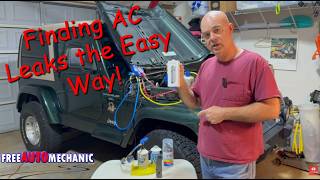
If a leak is confirmed, add UV dye to the A/C system, run the A/C for a few minutes, and use a UV blacklight to find the glowing dye at the leak source. 🎬 See this guide on finding leaks with UV dye. An electronic refrigerant gas detector is also highly effective for pinpointing leaks.
Tools: UV Dye Injector Kit, UV Light, Electronic Leak Detector (Advanced) - Check Dynamic A/C System Pressure
With the engine running, A/C on MAX, and doors open, observe the gauge pressures. At an ambient temperature of 80-90°F, a properly charged R-134a system shows a low-side pressure of 40-55 PSI and a high-side pressure of 150-170 PSI at idle. Readings significantly below this confirm a low charge state.
Tools: A/C Manifold Gauge Set, Thermometer (Advanced) - Verify Cooling Fan Operation
Turn the A/C on and ensure the radiator/condenser cooling fans are running. If they are not, the high-side pressure rises excessively, causing the system to shut down and trigger a pressure-related code.
Tools: Visual Inspection (Beginner) - Analyze Scan Tool Live Data (Pro Tip)
Use an advanced scan tool to monitor the A/C pressure sensor PID directly. Compare the scanner's pressure reading to the reading from a manual gauge set. They must be within a few PSI of each other. A sensor that reads low compared to a manual gauge is faulty.
Tools: Advanced OBD-II Scanner, A/C Manifold Gauge Set (Advanced) - Test the A/C Pressure Sensor Circuit (Pro Tip)
If system pressure is normal but the code persists, test the sensor's electrical circuit. Disconnect the sensor and use a multimeter. Check for a 5-volt reference from the PCM, a good ground (less than 100mV), and a signal wire. The signal wire voltage must vary with system pressure, typically ranging from 0.5V at low pressure to 4.5V at high pressure.
Tools: Multimeter, Advanced OBD-II Scanner, Wiring Diagram (Advanced) - Check for Technical Service Bulletins (TSBs)
Before replacing parts, check for TSBs for your specific vehicle. Manufacturers release bulletins for known issues, including software glitches that falsely trigger a P0534 code. A dealership must reprogram the PCM to fix this.
Tools: Google Search, ALLDATA/Mitchell1 Subscription (Intermediate) - Analyze the Sensor Signal with an Oscilloscope (Pro Tip)
For intermittent issues, connect an oscilloscope to the sensor's signal wire and ground. A good sensor produces a clean, stable line that rises and falls smoothly as system pressure changes. Dropouts or excessive noise indicate an internal sensor failure.
Tools: Automotive Oscilloscope (Scope), Wiring Diagram (Expert)
When This Code Triggers (Freeze-Frame Conditions)
- Engine Coolant Temp: 180-210°F (Engine at normal operating temperature.)
- RPM: 700-1500 (Idle or low-speed city driving, shortly after A/C was requested.)
- Ambient Air Temperature: >50°F (Warm enough for the A/C system to be activated.)
- A/C Request Signal: On (Driver has turned on the air conditioning.)
Related Codes
- P0530 — This code points directly to an electrical fault in the A/C refrigerant pressure sensor 'A' circuit itself (e.g., open, short to ground). P0530 is an electrical code, whereas P0534 is triggered by a plausible but low pressure reading from a working sensor reporting an actual leak.
- P0531 — This code specifies that the A/C pressure sensor 'A' circuit performance is out of range. P0531 suggests the sensor's signal is irrational or stuck. P0534 is directly related to the pressure being too low, which is the logical result of a leak.
- P0645 — This code indicates a fault in the A/C Clutch Relay Control Circuit. With P0645, the PCM cannot control the relay that engages the compressor. With P0534, the PCM actively chooses not to engage the relay to protect the compressor from low refrigerant.
- P1E00 — On GM vehicles like the Chevy Volt, this is a generic code indicating that the main hybrid computer requested the check engine light. It is almost always present alongside a specific code like P0534 that identifies the actual problem.
Climate & Environmental Factors
- High Humidity: High humidity significantly increases the load on the A/C system. The system must first remove moisture from the air before it can cool it, requiring more energy. This makes a marginally performing system feel much weaker.
- High Ambient Temperature: Hot weather forces the A/C system to work harder and reduces the efficiency of the condenser in dissipating heat. This leads to higher system pressures and increased strain on all components, accelerating the failure of weak seals.
- Cold Weather: P0534 is less common in cold weather as the A/C is used less. However, a leak remains present, and the code triggers if the A/C is activated for defrosting. Some vehicles have specific cold-weather pressure thresholds.
- High Altitude: Higher altitude results in less dense air, which slightly reduces the heat-exchange efficiency of the condenser. This effect is minimal and is not a primary cause for triggering a P0534 code.
How to Clear the Code After You Fix It
- Use an OBD-II scan tool to clear the P0534 code.
- Perform a complete A/C system performance test to verify the repair.
- Complete a full OBD-II drive cycle to allow readiness monitors to run.
Drive cycle (~30 minutes): A general drive cycle involves a cold start (engine off for 8+ hours), 2-3 minutes of idling, followed by mixed city and highway driving (including steady speeds of 55-60 mph for several minutes) to allow all system monitors to run their self-tests. Some manufacturers require the A/C to be on during part of the cycle.
Readiness monitors affected: Comprehensive Component Monitor, Catalyst Monitor, EVAP System Monitor
Before emissions retest: drive at least 50 miles to fully set monitors.
Watch out for:
- Clearing the code with a scanner resets all readiness monitors to 'Not Ready', causing an immediate emissions test failure.
- The code returns if the underlying leak or fault is not properly repaired.
- Not allowing the vehicle to sit for a true cold start prevents certain monitors from running.
Will This Fail Emissions / State Inspection?
Yes — this code typically fails an OBD-II emissions inspection.
- California: An illuminated Check Engine Light is an automatic failure. After repair, a full drive cycle must be completed to set readiness monitors before a re-test is possible.
- New York: A vehicle automatically fails the emissions portion of the NYS inspection if the Check Engine Light is on. Clearing the code right before the test results in a rejection due to 'Not Ready' monitors.
- Texas: In counties requiring emissions testing, an active P0534 code causes an automatic failure. Texas allows for one readiness monitor to be 'Not Ready', but clearing codes resets more than that.
Most Commonly Affected Vehicles
- Chevrolet Volt (2011-2015) — The A/C is critical for battery cooling. Leaks are common. TSB #PIC5769A addresses false P0534 codes fixed by a software update for the HPCM2 on 2011-2013 models. TSB #PIC5903C points to a defective battery cooler on some 2013 models. Service requires special non-conductive oil.
- Chevrolet Spark EV (2014-2016) — Like the Volt, the A/C is essential for battery cooling. TSB #PIC5903C identifies a known defect in the battery cooler (RESS cooler) for vehicles built between 1/15/2013 and 9/15/2013. The OEM pressure sensor part number is 13587668.
- Ram 1500 (2020-2021) — Prone to condenser leaks. On 3.0L EcoDiesel models, TSBs 18-002-23 and 18-008-21 address a software glitch causing a false P0534 code, requiring a PCM update. These trucks use expensive R-1234yf refrigerant, increasing service costs.
- Jeep Wrangler (JL) (2018-2022) — The condenser is highly vulnerable to road debris damage due to the open grille design, making it the most common leak point. These use R-1234yf refrigerant. A condenser replacement typically costs between $590 and $670.
- Ford Focus (2012-2018) — Owners frequently report this code due to leaks from the A/C compressor shaft seal. The seal fails, allowing refrigerant and oil to leak out, which goes unnoticed until the A/C stops working.
- Hyundai Elantra (2011-2016) — This model suffers from leaks at the evaporator core, which is a labor-intensive repair requiring dashboard removal. Leaks at the condenser or hose connections are also prevalent.
- Volkswagen Jetta, GTI, Golf (2010-2015) — These models are known for A/C compressor failures. When the compressor fails, it sends metal debris throughout the entire system, requiring a full system flush and replacement of the condenser and expansion valve.
- Chevrolet Bolt EV (2017-2021) — A leaking A/C compressor is a known issue, documented in GM TSB PIC6436. This is a critical repair as the A/C system is essential for cooling the high-voltage battery. A compressor replacement costs upwards of $1,400.
Manufacturer-Specific Notes
- General Motors (Chevrolet/Opel): On EVs and hybrids (Volt, Bolt, Spark EV, Ampera), the A/C system is integral to cooling the high-voltage battery. A P0534 code risks reduced performance, slower charging, and long-term battery degradation. Service requires special non-conductive refrigerant oil to prevent high-voltage electrical shorts.
- Ram / Jeep (Stellantis): On newer models like the Ram 1500 and Jeep Wrangler, the A/C condenser is highly susceptible to road debris damage. Many of these vehicles use R-1234yf refrigerant, which is significantly more expensive and requires special service equipment.
- Ford: On many Ford models, particularly the Focus, a common and misdiagnosed leak source is the A/C compressor shaft seal. The system holds a vacuum and passes an initial leak test, but refrigerant leaks out slowly when the compressor runs.
- Subaru: Subaru issued an extended warranty for A/C condensers on certain models, such as the 2017-2018 Forester, due to a high rate of failure from leaks. Intermittent A/C operation is also caused by a failing A/C compressor relay, which is easily misdiagnosed as a leak.
Real Owner Stories
2014 Chevy Volt at 95k miles
Check Engine Light came on with code P0534 in hot desert weather. However, the A/C was still blowing cold air and no leaks were visible.
What they tried:
- The code would clear and then return intermittently over several months.
Outcome: A local mechanic diagnosed a slow leak in one of the A/C pipes. The owner was weighing the cost of a major repair against the car's value.
Lesson: Even if the A/C still feels cold, P0534 indicates a problem. On a Volt, the A/C is critical for battery cooling, so ignoring the code leads to more severe issues. An intermittent code points to a very small leak or a failing sensor.
2020 Ram 1500 3.0L EcoDiesel
P0534 code was present, but the A/C system was confirmed to be fully charged with no physical leaks after extensive professional diagnosis.
What they tried:
- Multiple, fruitless leak detection tests were performed by technicians.
Outcome: The root cause was identified as a software calibration issue in the Powertrain Control Module (PCM). The official fix was a software update performed by a dealership, as detailed in TSBs 18-002-23 and 18-008-21.
Lesson: Always check for Technical Service Bulletins (TSBs) before authorizing expensive part replacements. A software glitch mimics a hardware failure, and the fix is a simple reflash of the computer.
Chevy Volt with recurring P0534
Owner had a P0534 code despite having no leak. The A/C system was professionally evacuated, vacuum tested, and recharged to the exact specification, but the Check Engine Light returned.
What they tried:
- Replaced the low-pressure sensor.
- Verified refrigerant charge was correct.
- Tested other pressure sensors with a voltmeter.
Outcome: The issue persisted, leading to suspicion of a bad A/C control module or a poor electrical ground for the sensor circuit.
Lesson: If a new sensor and a correct refrigerant charge do not fix the code, the problem is in the electrical circuit or a control module. This requires advanced electrical diagnosis beyond simple part swapping.
How to Prevent This Code From Triggering
- Run the A/C system for 10-15 minutes at least once a month, even in winter. (Monthly) — This circulates the refrigerant and oil, which lubricates seals and O-rings, preventing them from drying out, cracking, and causing leaks.
- Clean the A/C condenser at the front of the vehicle. (Annually (e.g., in the spring)) — Gently washing away bugs, leaves, and road grime with a soft brush and low-pressure water improves airflow and heat exchange efficiency, reducing strain on the compressor.
- Install a mesh guard in front of the condenser. (Once) — On vehicles with open lower grilles (like many Hondas, Jeeps, and Rams), the condenser is vulnerable to punctures from rocks and road debris. A simple, inexpensive mesh screen prevents costly damage.
- Wash the vehicle's undercarriage after winter storms. (After driving on salted/brined roads) — Road salt and de-icing chemicals are highly corrosive to the aluminum components of the A/C system, including the condenser and lines, accelerating the formation of pinhole leaks.
- Replace the cabin air filter. (Every 12-15k miles or as recommended) — A clogged cabin air filter restricts airflow across the evaporator, leading to reduced performance and potential icing issues that put stress on the system.
Frequently Asked Questions
Can I just add a can of refrigerant to fix P0534?
No. This code indicates a leak or other system fault, so adding refrigerant is a temporary fix at best. Overcharging the system with a DIY can causes further compressor damage. The root cause must be professionally diagnosed and repaired.
Is it safe to drive with code P0534?
For most gas-powered cars, it is safe to drive, but you will not have A/C. For electric and hybrid vehicles that use the A/C to cool the battery, driving in hot weather is not recommended. It causes reduced vehicle performance and potential battery damage.
Why is the repair so expensive?
A/C work requires expensive, specialized equipment to safely recover and recharge refrigerant according to EPA regulations. The cost stems from the labor to find the leak, the replacement parts, and the cost of the refrigerant itself. Newer R-1234yf refrigerant is significantly more expensive than older R-134a.
My A/C is still cold, but I have a P0534 code. What's wrong?
This happens if the leak is very small and the code is intermittent, or if the A/C pressure sensor is beginning to fail. Your vehicle may also have a known software glitch that triggers a false code. A dealership can update the PCM to resolve software issues.
What is the difference between R-134a and R-1234yf refrigerant?
R-134a is the older standard refrigerant, while R-1234yf is a newer, environmentally friendly alternative used in most cars made after 2015. R-1234yf has a much lower Global Warming Potential but is significantly more expensive. It also requires different, costlier service equipment, increasing total repair bills.
What are the most common misdiagnoses for P0534?
A common mistake is replacing the A/C pressure sensor without verifying the actual system pressure with a manual gauge set. Another is assuming the code only means a refrigerant leak exists. An overcharged system also causes pressure-related faults that trigger P0534.
Can a bad 12V battery cause a P0534 code?
While not a direct cause, a weak 12V battery causes a wide range of seemingly unrelated electrical issues and fault codes. Vehicle control modules rely on stable voltage to operate correctly. If you have P0534 accompanied by other electrical symptoms, test the battery and charging system first.
Will my car pass an emissions test with a P0534 code?
No. In most jurisdictions, an active Check Engine Light results in an automatic failure of a state emissions inspection. This applies regardless of the code's direct impact on tailpipe emissions.
Key Takeaways
- Code P0534 triggers when A/C system pressure drops below a critical threshold, almost always indicating a physical refrigerant leak.
- The PCM disables the A/C compressor to prevent catastrophic internal damage from oil starvation, which is why your vents blow warm air.
- Never use a $30 DIY 'A/C recharge in a can' to fix P0534; proper repair requires recovering the remaining refrigerant and pulling a deep vacuum.
- For EVs like the Chevy Volt, fixing P0534 is critical because the A/C system cools the high-voltage battery pack, and ignoring it causes permanent battery degradation.
Helpful Videos

![What is P0534 Engine Code [Quick Guide]](https://img.youtube.com/vi/RCU6o-sQJik/mqdefault.jpg)

Shop the Parts Behind P0534
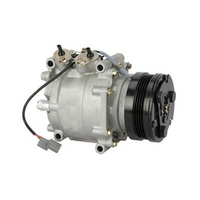
Below are the parts most often responsible for code P0534, ranked by how frequently each one is the actual culprit (per the diagnosis above). Tap any to see what we have for your vehicle.




The information in this article is provided for general reference and educational purposes only. Vehicle specifications, procedures, and part compatibility can vary by production date, trim level, and region. Always consult your vehicle's factory service manual and verify part numbers before purchasing or performing repairs. Safety-critical components such as airbags, seat belts, and braking systems should be installed by a qualified professional.
- 🧭 Diagnostic Flowchart
- 🎬 Helpful Videos
- 🛍️ Shop This Part
- What Does P0534 Mean?
- Can I Drive With P0534?
- Common Causes
- Symptoms
- Common Fixes & Costs
- DIY vs Professional
- Used vs. New Parts: Buying Guide
- What Happens If You Wait — Timeline
- Cost of Not Fixing It
- Diagnosis Steps
- When This Code Triggers (Freeze-Frame Conditions)
- Related Codes
- Climate & Environmental Factors
- How to Clear the Code After You Fix It
- Will This Fail Emissions / State Inspection?
- Most Commonly Affected Vehicles
- Manufacturer-Specific Notes
- Real Owner Stories
- 2014 Chevy Volt at 95k miles
- 2020 Ram 1500 3.0L EcoDiesel
- Chevy Volt with recurring P0534
- How to Prevent This Code From Triggering
- Frequently Asked Questions
- Can I just add a can of refrigerant to fix P0534?
- Is it safe to drive with code P0534?
- Why is the repair so expensive?
- My A/C is still cold, but I have a P0534 code. What's wrong?
- What is the difference between R-134a and R-1234yf refrigerant?
- What are the most common misdiagnoses for P0534?
- Can a bad 12V battery cause a P0534 code?
- Will my car pass an emissions test with a P0534 code?
- Key Takeaways
- 🎟️ Get 5% Off