

P0544 on 2015-2019 Ford Transit 3.2L: EGT Sensor Circuit Causes and Fixes
This code almost always points to a failed Exhaust Gas Temperature (EGT) sensor, specifically Bank 1 Sensor 1, located in the exhaust manifold before the turbo. It's a very common failure item due to extreme heat cycles. Ford has acknowledged this issue via Customer Satisfaction Program 23N04, which may cover the repair. Expect to pay $70-$120 for a new sensor; it's a straightforward but potentially difficult DIY replacement due to the sensor seizing in the manifold.
- P0544 on a 3.2L Transit almost certainly means the EGT sensor in the exhaust manifold has failed.
- Do not ignore this code. Driving with a faulty EGT sensor will prevent DPF regeneration and can lead to a very costly DPF failure.
- The repair is straightforward for a DIYer. The most difficult part is often removing the old sensor from the manifold without damaging the threads.
- Ensure you are replacing the correct sensor (Bank 1, Sensor 1). This engine has multiple EGT sensors in different locations.
What's Unique About the 2015-2019 Ford Transit
On the 3.2L Power Stroke engine used in the Transit, the EGT sensors are known failure points due to the high-heat environment they operate in. The P0544 code specifically refers to the sensor located right in the exhaust manifold, which is subjected to the highest temperatures and vibrations, making it the most likely of the several EGT sensors to fail. Ford has acknowledged this high failure rate by issuing Customer Satisfaction Program 23N04, which extends the warranty for this specific sensor to 11 years or 120,000 miles for affected vehicles. TSB 15-0125 also groups P0544 with other EGT codes, recommending sensor replacement for the 2015 model year.
🎬 Watch: Understanding P0544 and troubleshooting EGT sensor issuesSymptoms You May Notice
- Check Engine Light (Malfunction Indicator Lamp) is on
- Reduced engine performance or "limp mode"
- Failure of the Diesel Particulate Filter (DPF) to regenerate
- "Service Exhaust Filter" message on the dashboard display
- Decreased fuel economy
- Potential for black or white smoke from the exhaust
- Failing a state emissions test
- Replacing the wrong EGT sensor. The 3.2L Power Stroke has multiple EGT sensors. P0544 specifically refers to Bank 1 Sensor 1, which is the one before the DPF system, located in the exhaust manifold.
- Replacing an Oxygen (O2) sensor. EGT sensors and O2 sensors look similar but serve different functions. Ensure you are replacing the correct component.
Most Likely Causes
- Failed EGT Sensor (Bank 1, Sensor 1) 🔴 High Probability The sensor operates in an extremely hot environment (over 1000°F) and is subject to constant thermal stress and vibration, leading to internal failure over time. This is a well-documented issue, leading Ford to issue a customer satisfaction program (23N04) to cover replacements for up to 11 years/120,000 miles.
How to confirm: With a diagnostic scan tool, observe the live data for EGT Sensor 1. If the reading is stuck at a default low value (e.g., -40°F) or a default high value and does not change with engine temperature, the sensor has failed. You can also test the sensor's internal resistance with a multimeter when it's disconnected; an open circuit (infinite resistance) or a short to ground indicates failure.
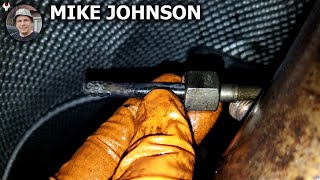
Typical fix: Replace the EGT sensor located in the exhaust manifold. Due to the high heat, the sensor often seizes in the manifold. It is highly recommended to soak the sensor's threads in penetrating oil for several hours or overnight before attempting removal to avoid damaging the manifold.
Est. part cost: $70-$120 - Damaged Wiring or Connector 🟡 Medium Probability The sensor's wiring is routed near hot exhaust components. Over time, the protective loom can degrade, exposing wires to heat that can cause them to melt, short to ground, or break. The connector itself can also become brittle and fail. On the related Ford Ranger 3.2L platform, broken wires right at the connector are a known cause for EGT sensor codes.
How to confirm: Visually inspect the entire wiring harness leading to the EGT sensor for any signs of melting, chafing, or corrosion. Disconnect the sensor and check for corrosion or damage on the connector pins. Wiggle the harness while observing live data on a scan tool; if the reading fluctuates wildly, there is a break in the wire. Perform a continuity test on the wires between the sensor connector and the PCM.
Typical fix: Repair the damaged section of the wiring harness or replace the connector pigtail.
Est. part cost: $15-$40
Rare But Worth Checking
- Powertrain Control Module (PCM) Fault: → Shop Engine Control Module (ECM) This is extremely rare. The PCM should only be considered after definitively ruling out the sensor and its entire circuit. A PCM failure would likely present with multiple other unrelated trouble codes.
- Exhaust Leaks: A significant exhaust leak before the EGT sensor could allow cooler ambient air to enter, causing an inaccurate reading. This would typically be accompanied by loud exhaust noise and potentially soot stains near the leak.
Diagnosis Steps
- Connect an OBD-II scanner and confirm P0544 is the active code. Check for any other related EGT codes.
- Check for applicable warranty extensions. Enter your VIN into the Ford owner website or call a dealer to see if your vehicle is covered under Customer Satisfaction Program 23N04 for this specific sensor.
- Access the live data stream on the scanner. View the reading for 'EGT B1S1'.
- Start the engine from a cold state and monitor the EGT temperature reading. It should rise steadily as the engine warms up. If the reading is stuck (e.g., at -40°F or over 1800°F) or doesn't change, the sensor or circuit is faulty.
- Turn off the engine and allow the exhaust to cool completely.
- Locate the EGT Bank 1 Sensor 1. On the 3.2L Transit, it is screwed into the exhaust manifold before the turbocharger.
- Visually inspect the sensor's wiring harness and connector for any signs of melting, burning, chafing, or corrosion.
- If the wiring appears okay, disconnect the sensor. Use a multimeter to check the resistance across the two pins of the sensor. Compare this reading to the manufacturer's specification. An open circuit (infinite resistance) confirms a bad sensor.
- If the sensor tests good, check for 5V reference voltage at the connector coming from the PCM with the key on.
- If voltage and ground are present, the issue is most likely the sensor itself. If they are not, you will need to trace the wiring back to the PCM to find the break or short.
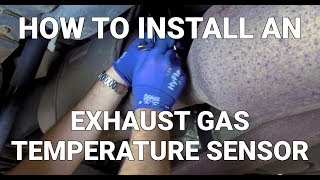
- Before replacing the sensor, spray the threads liberally with a high-quality penetrating oil and let it soak for several hours or overnight. This is critical to prevent stripping the threads in the exhaust manifold. 🎬 Watch: Step-by-step guide to installing a new EGT sensor
Parts You'll Likely Need
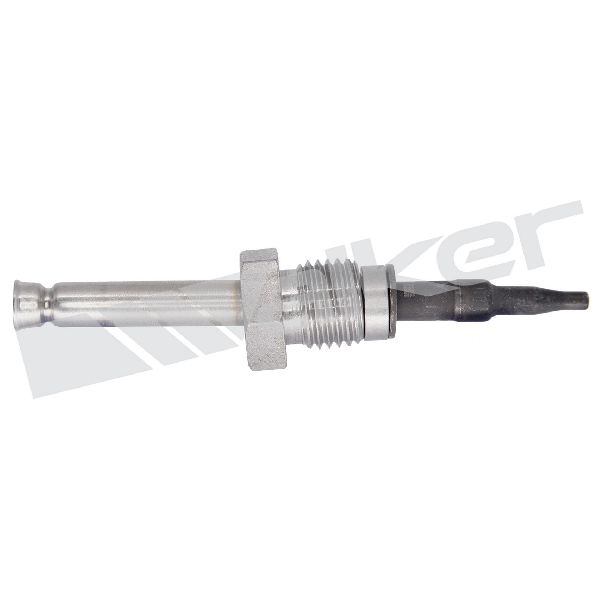
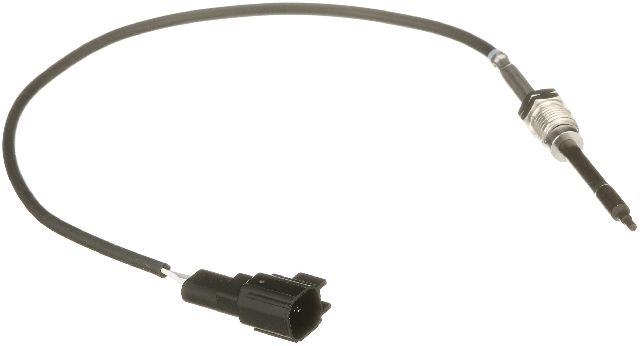
- Exhaust Gas Temperature (EGT) Sensor (Bank 1 Sensor 1)
(OEM #CC1Z-12B591-E)— This is the component that fails in the vast majority of P0544 cases on this engine due to extreme heat and vibration. This part number supersedes CC1Z-12B591-A and CC1Z-12B591-D.
Trusted brands: Motorcraft, Dorman, Walker Products, Bosch, Standard Motor Products (SMP)
OEM price range: $100-$140
Aftermarket price range: $70-$110
Related Codes That Often Appear With This One
- P2080 — This code for 'EGT Sensor Circuit Range/Performance Bank 1 Sensor 1' points to a performance issue with the same sensor. TSB 15-0125 groups P0544 and P2080 together, recommending the replacement of the same sensor for both codes.
- P0545 — This code indicates 'EGT Sensor Circuit Low Bank 1 Sensor 1', suggesting a short to ground in the same circuit, which can be caused by the same wiring or sensor failures.
- P0546 — This code indicates 'EGT Sensor Circuit High Bank 1 Sensor 1', suggesting an open circuit, which is a common failure mode for the EGT sensor itself or its wiring.
- P246C — This code indicates 'Diesel Particulate Filter Restriction - Forced Limited Power'. It can be a direct consequence of ignoring P0544, as the faulty EGT sensor data prevents the DPF from regenerating, leading to it becoming clogged. 🎬 See how a faulty EGT sensor triggers DPF faults
Technical Service Bulletins (TSBs) & Recalls
- TSB 15-0125: While for a different EGT code (P2080), this TSB for the 2015 Transit 3.2L acknowledges issues with EGT sensors on this platform and groups P0544 with other EGT codes, recommending sensor replacement.
- TSB 15-0054: Issued for 6.7L Power Stroke engines, this TSB addresses a wide range of EGT codes, including P0544, indicating a known pattern of EGT sensor issues across the Ford Power Stroke family.
Platform-Specific Known Issues
- Ford Customer Satisfaction Program 23N04: In February 2024, Ford initiated this program specifically for the EGT Bank 1 Sensor 1 on 2015-2019 Transits with the 3.2L engine. It provides a one-time repair for this sensor if it fails within 11 years or 120,000 miles of the vehicle's warranty start date. Owners should check with a Ford dealer to see if their vehicle is eligible before paying for a repair.
Diagnostic Flowchart
Other Known Issues on This Vehicle
Issues unrelated to this code that are worth knowing about as an owner of this generation:
- Cracked Driveshaft Flexible Coupling 🔴 High — Widespread enough to trigger a major recall (NHTSA #19V766, Ford #19S38) affecting 2015-2017 models. Couplings could fail prematurely, potentially before 40,000 miles. (Ref: Recall 19S38)
- Internal EGR Cooler Leakage 🔴 High — A known issue on 2015-2019 models where the EGR cooler leaks coolant internally into the exhaust, causing coolant loss without external signs, white smoke, and potential for engine overheating. Ford issued a Customer Satisfaction Program (21M03) to extend warranty coverage for this part. (Ref: SSM 48543, Customer Satisfaction Program 21M03)
- Turbocharger Failure 🔴 High — Failures can occur, often signaled by a loss of power, whistling noises, and excessive blue or black exhaust smoke. Causes can range from oil lubrication issues to normal wear and tear, especially under heavy use.
- Transmission Problems 🟠 Medium — Owners report issues with the 6R80 transmission, including delayed shifts, slipping gears, or unusual noises.
- Wiring Harness Chafing 🟠 Medium — Multiple owners have documented instances where wiring harnesses are poorly routed from the factory, leading to chafing against engine or chassis components. This can cause various electrical issues, from cut battery cables to coolant hose damage.
Real Owner Stories
Aggregated from forums and TSBs cited above. Mileages and costs reflect what owners reported in those sources.
2015-2019 Ford Transit 3.2L Power Stroke
Symptoms: Check engine light on with P0544 and P2080 codes; discussion regarding the pre-turbo location and difficulty of removal.
What fixed it: Replacement of the EGT sensor using penetrating oil and specific tools like a crow's foot wrench.
Source hint: FordTransitUSAForum.com threads discussing EGT sensor failure on the 3.2L Power Stroke
2011-2022 Ford Ranger 3.2L Duratorq
Symptoms: EGT fault code triggered by electrical failure at the sensor site.
What fixed it: Repairing a wire that had broken right at the sensor connector.
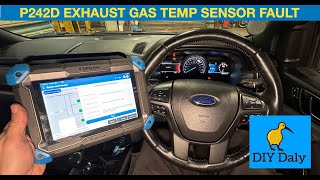
Source hint: YouTube video regarding P242D/EGT faults on the 3.2L Ranger platform
2015 Ford Transit 3.2L Power Stroke
Symptoms: Active P0544 code along with other EGT-related fault codes.
What fixed it: Sensor replacement as per manufacturer guidelines for EGT sensor patterns.
Source hint: TSB 15-0125
Related OBD-II Codes
Frequently Asked Questions
Is there a warranty extension for the EGT sensor on my 2015-2019 Ford Transit 3.2L?
Where is the EGT Bank 1 Sensor 1 located on the 3.2L Power Stroke engine?
Does TSB 15-0125 apply to my P0544 code?
Why is my Transit in 'limp mode' with a P0544 code?
Can I just clean the sensor to fix the 'Service Exhaust Filter' message?
What should I do before trying to remove the EGT sensor from the manifold?
Helpful Videos
We Have This Part in Stock



The information in this article is provided for general reference and educational purposes only. Vehicle specifications, procedures, and part compatibility can vary by production date, trim level, and region. Always consult your vehicle's factory service manual and verify part numbers before purchasing or performing repairs. Safety-critical components such as airbags, seat belts, and braking systems should be installed by a qualified professional.
- Ford Transit:
- 🧭 Diagnostic Flowchart
- 🎬 Helpful Videos
- 🛍️ Shop This Part
- What's Unique About the 2015-2019 Ford Transit
- Symptoms You May Notice
- Most Likely Causes
- Rare But Worth Checking
- Diagnosis Steps
- Parts You'll Likely Need
- Related Codes That Often Appear With This One
- Technical Service Bulletins (TSBs) & Recalls
- Platform-Specific Known Issues
- Other Known Issues on This Vehicle
- Real Owner Stories
- 2015-2019 Ford Transit 3.2L Power Stroke
- 2011-2022 Ford Ranger 3.2L Duratorq
- 2015 Ford Transit 3.2L Power Stroke
- Related OBD-II Codes
- Frequently Asked Questions
- 🎟️ Get 5% Off