

OBD-II Code P0552: Power Steering Pressure Sensor Circuit Low
What P0552 means, why it triggers, and how to fix it
- A failed power steering pressure sensor causes over 70% of P0552 codes, usually due to internal failure or fluid leaking into the connector.
- Engine stalling during low-speed parking maneuvers is the most definitive symptom, as the PCM fails to increase idle RPM to handle the steering load.
- Driving with a P0552 code risks sudden loss of steering assist and accelerates power steering pump wear, potentially adding $900 to your repair bill.
- Check the power steering fluid level and inspect the sensor's wiring harness for chafing before buying replacement parts.
What Does P0552 Mean?
Code P0552 means the Powertrain Control Module (PCM) detects a voltage signal from the power steering pressure sensor below 0.5 volts. This sensor tells the engine to increase idle speed slightly during turns, preventing stalls under the power steering pump's load. When the signal stays below the manufacturer's threshold, the computer logs the fault.
Technical definition: Power Steering Pressure Sensor/Switch Circuit Low Input. The PCM sets this code when the power steering pressure sensor voltage falls below a specified threshold for a set period. For example, Hyundai systems trigger the code if voltage remains below 0.05V for over 1.25 seconds. This indicates a short to ground, a failed sensor, or a circuit integrity issue.
Can I Drive With P0552?
Yes, But With Caution. Yes, but only for short trips. Steering suddenly becomes stiff at low speeds, creating a significant safety hazard. Driving with this fault accelerates wear on the power steering pump or electric steering motor, adding $300-$1,200 to the final repair cost.
Common Causes
- Faulty Power Steering Pressure Sensor (Very Common) — The sensor fails internally from heat and vibration, or leaks power steering fluid through the electrical connector, causing a short circuit.
- Damaged Wiring or Corroded Connectors (Common) — Wires fray, break, or short to ground from engine vibration and heat. Connector pins corrode from moisture or leaking fluid, blocking the signal.
- Low or Leaking Power Steering Fluid (Common) — Low fluid prevents the system from building hydraulic pressure. The sensor correctly reports this low pressure, which the PCM interprets as a circuit fault.
- Failing Power Steering Pump (Less Common) — A weak pump cannot generate sufficient hydraulic pressure at low RPM, causing the sensor to send a legitimate low voltage signal.
- Incorrect/Low-Quality Aftermarket Sensor (Less Common) — Vehicles from Toyota and Chrysler are sensitive to OEM sensor calibration. Cheap aftermarket sensors often fail to resolve the code.
- Blown Fuse or Power Supply Issue (Rare) — The sensor requires a 5-volt reference signal. A blown fuse or PCM power supply issue deprives the sensor of operating voltage.
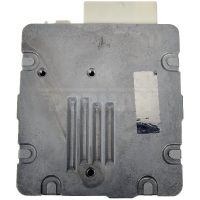
- Faulty Power Steering Control Module (PSCM) (Rare) — Internal board damage or software corruption causes the dedicated steering module to misread a valid signal.
- Faulty Powertrain Control Module (PCM) (Very Rare) — The main computer suffers an internal fault and cannot process the signal. Consider this only after exhaustively eliminating wiring and sensor issues.
Symptoms
- Check Engine Light is On — The primary and often first indicator of the fault.
- Engine Stalls When Turning at Low Speeds — The engine stalls or idles roughly during slow maneuvers, like parking, because the PCM fails to increase RPM to handle the steering load.
- Stiff, Heavy, or Intermittent Steering — The steering wheel becomes difficult to turn, or power assist cuts in and out unexpectedly.
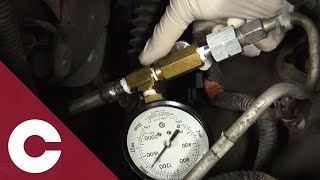
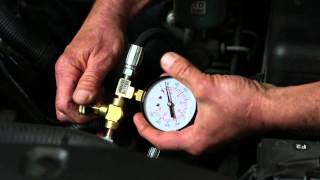
- Whining or Groaning Noise When Turning 🎬 See how to perform a professional power steering pressure test. — The power steering pump whines loudly during turns, indicating low fluid or a failing pump.
- Power Steering Warning on Dash — The instrument cluster displays a 'Power Steering Fault' or 'Steering Assist Reduced' message.
- Reduced Fuel Efficiency — Incorrect idle control during turns causes a minor decrease in overall fuel efficiency.
Diagnostic Flowchart
Tap your situation to follow the diagnostic path that matches what you're seeing on this code.
Common Fixes & Costs
- Replace Power Steering Pressure Sensor/Switch — Parts: $40-$150, Labor: $80-$150, ~1.0 hr book time (DIY)
- Repair Damaged Wiring or Connector — Parts: $10-$50, Labor: $100-$200, ~1.5 hr book time (Intermediate)
- Power Steering Fluid Flush and Leak Repair — Parts: $20-$60, Labor: $100-$250, ~1.0 hr book time (DIY)
- Replace Power Steering Pump — Parts: $150-$400, Labor: $200-$500, ~2.5 hr book time (Professional)
- Replace Power Steering Control Module (PSCM) — Parts: $400-$800, Labor: $150-$300, ~2.0 hr book time (Professional)
DIY vs Professional
- Replace Power Steering Pressure Sensor — Beginner: No, intermediate DIYer required.
Tools: Socket set, flare nut wrenches, catch pan, new fluid, shop towels. - Repair Damaged Wiring or Connector — Beginner: No, intermediate to advanced DIYer required.
Tools: Multimeter, wire strippers, heat shrink tubing, soldering iron, wiring diagram. - Power Steering Fluid Flush — Beginner: Yes, beginner-friendly.
Tools: Fluid pump/turkey baster, catch pan, new fluid, funnel. - Replace Power Steering Pump — Beginner: No, advanced DIYer or professional required.
Tools: Serpentine belt tool, pulley puller/installer kit, socket set, flare nut wrenches, catch pan.
Used vs. New Parts: Buying Guide
When a used part is worth it: Buying a used power steering pressure sensor rarely makes sense. It is a low-cost electronic part with a high failure rate.
Donor-vehicle mileage cap: roughly under 20000 miles for the part to have meaningful remaining life.
Donor quality checklist:
- Only consider sensors from wrecked, very low-mileage vehicles.
- Ensure the part number is an exact match.
- Avoid parts from rust-belt regions due to connector corrosion.
Decision logic:
- If The new OEM or quality aftermarket sensor costs less than $150 → Always buy new. The risk of a used part failing is not worth the savings.
- If The vehicle is very old and budget is the absolute top priority → A used part is a high-risk gamble; accept that it may fail quickly.
Warranty tradeoff: Salvage yard parts have a 30-90 day warranty. New aftermarket sensors offer 1-year to lifetime warranties.
Worst-case if a used part fails: $150-$300 if a used sensor fails, covering repeat labor and a new part.
What Happens If You Wait — Timeline
- 0-1 month: Check Engine Light illuminates. Engine occasionally hesitates when parking. (MPG impact: 0-2%% · Added cost: $0)
- 1-4 months: Stalling during low-speed turns becomes predictable. Steering feels intermittently heavy. Pump begins whining. (MPG impact: 1-3%% · Added cost: $50)
- 4-8 months: Power steering pump wears prematurely from constant strain. Steering assist cuts out frequently. (MPG impact: 2-5%% · Added cost: $400)
- 8+ months: Catastrophic pump failure sends metal fragments through the hydraulic system, destroying the steering rack. (MPG impact: N/A% · Added cost: $1500)
Cost of Not Fixing It
- Immediate: Unpredictable steering creates a safety hazard. Engine stalls in dangerous situations like intersections. (Added cost: Potential accident costs.)
- 1-6 months: Continuous strain on the power steering pump causes accelerated wear and eventual failure. (Added cost: $350-$950)
- 6+ months: Catastrophic pump failure sends metal debris through the system, destroying the steering rack. (Added cost: $1,200-$2,500+)
Diagnosis Steps
- Check Power Steering Fluid and Scan for Codes
Verify the power steering fluid is between the 'MIN' and 'MAX' marks and appears reddish or clear, not dark brown. Use an OBD-II scanner to confirm P0552 and record freeze frame data.
Tools: OBD-II Scanner, Flashlight (Beginner) - Visually Inspect the Sensor and Wiring
Locate the sensor on the high-pressure hose or pump. Check for fluid leaks from the sensor body or connector. Inspect the wiring harness for melting, chafing, or corrosion.
Tools: Flashlight (Beginner) - Analyze Live Sensor Data
View the live data stream for the sensor PID. Voltage should sit between 0.5V and 4.5V. Have a helper turn the steering wheel lock-to-lock. Voltage must rise and fall smoothly. A steady 0V indicates a fault.
Tools: Advanced OBD-II Scanner (Intermediate) - Test the Sensor's Electrical Connector
Unplug the sensor with the key on (engine off). Use a multimeter to verify a 5-volt reference signal on one pin and a solid ground (near 0.0V) on another.
Tools: Multimeter (Intermediate) - Test the Sensor's Signal Wire Voltage
Reconnect the sensor. Backprobe the signal wire. With the engine running and a helper turning the wheel, voltage must change smoothly (~0.5V to ~4.5V). If stuck near zero, replace the sensor.
Tools: Multimeter, backprobe kit (Intermediate) - Perform a 'Wiggle Test'
While monitoring live data or the backprobed signal wire, gently wiggle the sensor harness. Voltage jumps indicate an intermittent connection or broken wire insulation.
Tools: Advanced OBD-II Scanner or Multimeter (Intermediate) - Check for a Short to Ground
Turn the ignition off. Disconnect the sensor and PCM connectors. Measure resistance between the signal wire pin and chassis ground. Continuity (near 0 Ω) confirms a short in the wire.
Tools: Multimeter, vehicle-specific wiring diagram (Advanced) - Perform a System Pressure Test
Connect a hydraulic pressure gauge between the pump and high-pressure line. Warm idle pressure should be 125-200 PSI. Briefly closing the shutoff valve should spike pressure to 1,100-1,500 PSI. Low pressure confirms a failing pump.
Tools: Power steering pressure gauge kit, safety glasses (Advanced) - Analyze the Sensor's Waveform
Connect an oscilloscope to the signal wire. Turning the steering wheel should produce a clean analog voltage sweep. A flat line near zero volts confirms a failed sensor or shorted circuit.
Tools: Oscilloscope, backprobe kit (Advanced)
When This Code Triggers (Freeze-Frame Conditions)
- Engine Coolant Temp: 175-205°F (80-96°C) (Engine at full operating temperature.)
- RPM: 550-800 RPM (At or near idle speed, often during a low-speed turn like parking.)
- Engine Load: 25-50% (Increased load from the power steering pump engaging during a turn.)
- Vehicle Speed: 0-5 mph (0-8 km/h) (Vehicle is stationary or moving at very low speed.)
Related Codes
- P0551 — Indicates the sensor's signal is irrational or not changing during a turn, whereas P0552 means the voltage is stuck low.
- P0553 — The opposite of P0552, indicating 'Circuit High Input'. Typically caused by an open circuit or a short to power.
- P0550 — A generic code for 'Circuit Malfunction' pointing to a general electrical problem in the same circuit.
- P0554 — Indicates the sensor signal is dropping out intermittently rather than being consistently low.
Climate & Environmental Factors
- Cold Weather: Low temperatures thicken power steering fluid, increasing strain on the pump during cold starts. This exposes weaknesses in aging sensors and pumps, triggering faults.
- High Humidity / Moisture: Moisture penetrates non-sealed connectors, corroding electrical pins. This creates high resistance or a short to ground, directly causing P0552.
- Road Salt / Corrosion: Road salt accelerates degradation of the sensor's metal body, wiring harnesses, and power steering lines, leading to fluid leaks and electrical failures.
How to Talk to a Mechanic About This Code
Say this: "I have an OBD-II code P0552 and my car stalls during low-speed turns. I need a diagnostic to test the power steering pressure sensor and its circuit. Please verify the 5V reference and ground at the connector, and inspect for wiring damage before recommending a part replacement."
Directs the mechanic to perform a specific electrical diagnosis rather than guessing or replacing the expensive power steering pump. It avoids misdiagnosing the stall as a throttle body problem.
Avoid saying:
- 'My car is stalling, can you fix it?'
- 'My check engine light is on, just fix whatever's wrong.'
- 'I think I need a new power steering pump.'
Questions to ask before authorizing the repair:
- What was the voltage reading from the sensor's signal wire when turning the wheel?
- Did you confirm the sensor receives a 5-volt reference and has a good ground?
- Did you perform a 'wiggle test' on the wiring harness?
- If recommending a pump replacement, what were the hydraulic pressure test results?
Where to Take It: Dealer vs Independent vs Chain
- Dealer:
Recommended only for warranty work or known TSBs.
Best for: Vehicles under warranty, Known manufacturer-specific issues covered by a TSB, Complex electrical issues involving the PCM
Downsides: Highest labor rates, May recommend replacing entire assemblies (Typical cost: +50% vs. baseline) - Independent Shop:
Best fit. P0552 is a common code that competent independent mechanics handle efficiently.
Best for: Out-of-warranty vehicles, Straightforward electrical diagnosis and part replacement
Downsides: Quality varies; look for ASE-certified technicians. (Typical cost: +0% vs. baseline) - Chain Shop:
Use with caution. Acceptable for simple part replacement, but avoid for initial diagnosis.
Best for: Simple jobs like a fluid flush after ruling out other issues.
Downsides: High pressure to upsell unnecessary pumps or flushes. (Typical cost: -10% vs. baseline)
When to Walk Away From the Repair
If the estimated repair cost exceeds 40-50% of the car's private-party value, consider selling or trading it in.
- Car worth $4000, fix is $1500: Borderline. This repair represents 38% of the car's value. Get a second opinion before authorizing a pump and rack replacement.
- Car worth $12000, fix is $250: Fix it. A simple sensor replacement is well below the threshold.
- Car worth $2500, fix is $1500: Walk away. The repair cost is 60% of the car's value.
What Scan Tool You Need for This Code
Minimum: An OBD-II scanner that displays live sensor data (PID stream).
A basic $20 code reader cannot show live voltage from the sensor, which is essential to determine if the sensor is faulty, the wiring is bad, or the pump is weak.
Budget: BlueDriver Pro Scan Tool (~$120) — Connects to your smartphone via Bluetooth to view and graph the sensor's live voltage data.
Mid-range: Foxwell NT510 Elite / Autel MaxiCOM MK808S (~$150-350) — Offers robust live data graphing and manufacturer-specific codes to rule out broader electrical issues.
Professional: Autel MaxiSys Series (~$900-2000+) — Provides full bidirectional control and built-in oscilloscopes for definitive circuit testing.
Rent vs buy: For a one-time repair, use a 'Loan-A-Tool' program at auto parts stores to rent a capable mid-range scanner for free.
How to Clear the Code After You Fix It
- Use an OBD-II scan tool to erase the P0552 code.
- Start the engine and turn the steering wheel lock-to-lock several times to verify the repair and check for leaks.
- Perform a complete OBD-II drive cycle to allow readiness monitors to run.
Drive cycle (~20 minutes): Cold start and idle for 3 minutes. Drive in stop-and-go traffic for 10 minutes, including several turns. Drive at a steady 55-60 mph for 10 minutes. Allow the vehicle to cool down.
Readiness monitors affected: Comprehensive Component Monitor (CCM), Catalyst (CAT) Monitor, Evaporative (EVAP) System Monitor
Before emissions retest: drive at least 50 miles to fully set monitors.
Watch out for:
- Disconnecting the battery erases readiness monitors, guaranteeing an emissions test failure.
- The code returns immediately if a short in the wiring was not fully repaired.
- Failing to bleed the power steering system introduces air, causing pump noise.
Will This Fail Emissions / State Inspection?
Yes — this code typically fails an OBD-II emissions inspection.
- California: An illuminated Check Engine Light results in an automatic smog check failure.
- New York: The NYS DMV emissions inspection includes an OBD-II scan. P0552 causes an automatic failure.
- Texas: Vehicles with an active P0552 code fail the OBD portion of the inspection.
Most Commonly Affected Vehicles
- Dodge Grand Caravan (2008-2020) — Frequently associated with stalling at low speeds when turning. The sensor is a highly common failure point.
- Chrysler Town & Country (2008-2016) — Shares the powertrain with the Grand Caravan and suffers identical stalling issues caused by this sensor.
- Jeep Wrangler (JK) (2012-2018) — The 3.6L Pentastar engine experiences power steering pressure sensor failures, triggering P0552.
- Ford F-150 (2011-2018) — Code appears due to low fluid from minor leaks. Often stored as 'pending' before becoming active.
- Nissan Altima (2007-2013) — Commonly experiences failure of the power steering pressure switch.
- Toyota Tundra (2007-2008) — Sets P0552 due to a faulty original sensor. Toyota released updated part P/N 89448-34020 per TSB EG053-07.
- Hyundai Sonata (2006-2010) — PCM sets the code if voltage drops below 0.05V for more than 1.25 seconds.
Manufacturer-Specific Notes
- Chrysler/Dodge/Jeep: Mopar 'Maximum Care' extended warranties often cover steering system components, offsetting repair costs.
- Ford: The PCM requires multiple failure cycles before storing a permanent P0552 code and illuminating the Check Engine Light.
- Toyota: TSB EG053-07 acknowledges P0552 is set by a faulty original sensor on 2007-2008 Tundras, requiring updated part 89448-34020.
- Hyundai/Kia: The PCM requires precise diagnostic measurements, setting P0552 only if it sees a signal below 0.05V for more than 1.25 seconds.
Real Owner Stories
2008 Toyota Tundra with P0552/P0553
Check Engine Light illuminated with codes P0552 and P0553.
What they tried:
- Replaced the sensor with a $40 aftermarket part.
- The P0552 code immediately returned after clearing.
Outcome: The aftermarket part failed to solve the issue. The owner purchased the $160 OEM dealership part (which included the pressure hose), permanently resolving the code.
Lesson: Toyota vehicles require specific OEM sensor calibration. Cheap aftermarket sensors cause misdiagnosis. Use the updated OEM part (P/N 89448-34020) per TSB EG053-07.
Chrysler Minivan Stalling While Parking
Vehicle stalled consistently when turning the steering wheel at low speeds. P0552 code present.
What they tried:
- Replaced the Idle Air Control (IAC) valve and throttle body, assuming an idle issue.
- Stalling continued.
Outcome: Replacing the power steering pressure sensor resolved both the code and the stalling. The sensor's failure to signal the PCM to increase idle RPM caused the stalls.
Lesson: Engine stalling during low-speed turns is a classic P0552 symptom. Do not misdiagnose it as a throttle body problem; check the steering pressure sensor first.
How to Prevent This Code From Triggering
- Change Power Steering Fluid (Every 50,000 miles.) — Fresh fluid reduces wear on the pump and steering rack seals, preventing leaks that damage the sensor.
- Use Manufacturer-Specified Fluid (Every time fluid is added.) — Incorrect fluid degrades seals, causing leaks that contaminate the sensor's electrical connector.
- Inspect Hoses and Belts (Every oil change.) — Catches power steering hose leaks before they drain the system and trigger pressure codes.
- Protect Wiring Harnesses (During under-hood maintenance.) — Securing harnesses away from hot exhaust manifolds prevents chafing and heat damage.
Frequently Asked Questions
My car stalls when I park, but the steering feels fine. Could it still be P0552?
Yes, absolutely. A common misdiagnosis is to blame the idle air control (IAC) system for stalling at low speeds. However, the P0552 fault directly prevents the engine from increasing idle speed to handle the load of the power steering pump during turns, which is often the true root cause of the stall.
Should I use a cheaper aftermarket sensor or pay for the OEM part?
While many aftermarket parts work well, some vehicles are very sensitive to the exact voltage output of the power steering pressure sensor. There are documented cases where using a non-OEM sensor did not fix the P0552 code, and the problem was only resolved by installing the official dealer part. If the cost difference is manageable, the OEM sensor is the safer and often cheaper long-term solution.
Can I just unplug the power steering pressure sensor to fix the problem?
No. Unplugging the sensor guarantees a fault code (often P0553, Circuit High) and causes the engine to idle poorly and the power steering to feel heavy. The system requires an operational sensor to function correctly.
Will replacing the power steering fluid fix a P0552 code?
Only if the code triggered due to a very low fluid level that prevented the system from building proper pressure. If the sensor, wiring, or pump is faulty, changing the fluid will not fix the underlying electrical or mechanical issue.
Will the P0552 code clear itself?
Rarely. This code relates to a hard fault in the circuit that does not resolve on its own. The code remains stored until you properly diagnose and repair the underlying issue, after which you must clear it with a scanner.
Is the power steering pressure sensor the same as the oil pressure sensor?
No, they are completely different sensors in different systems. The power steering pressure sensor (P0550-P0554) monitors the steering hydraulic system. The engine oil pressure sensor (P0522) monitors the engine's lubrication system.
Why does my car only stall when I'm parking?
Parking requires sharp, low-speed turns, putting maximum load on the power steering pump. The P0552 fault prevents the PCM from receiving the signal to bump the idle speed up to handle this extra load. Consequently, the engine RPM drops too low and stalls.
Key Takeaways
- A failed power steering pressure sensor causes over 70% of P0552 codes, usually due to internal failure or fluid leaking into the connector.
- Engine stalling during low-speed parking maneuvers is the most definitive symptom, as the PCM fails to increase idle RPM to handle the steering load.
- Driving with a P0552 code risks sudden loss of steering assist and accelerates power steering pump wear, potentially adding $900 to your repair bill.
- Check the power steering fluid level and inspect the sensor's wiring harness for chafing before buying replacement parts.
Helpful Videos
Shop the Parts Behind P0552
Below are the parts most often responsible for code P0552, ranked by how frequently each one is the actual culprit (per the diagnosis above). Tap any to see what we have for your vehicle.



The information in this article is provided for general reference and educational purposes only. Vehicle specifications, procedures, and part compatibility can vary by production date, trim level, and region. Always consult your vehicle's factory service manual and verify part numbers before purchasing or performing repairs. Safety-critical components such as airbags, seat belts, and braking systems should be installed by a qualified professional.
- 🧭 Diagnostic Flowchart
- 🎬 Helpful Videos
- 🛍️ Shop This Part
- What Does P0552 Mean?
- Can I Drive With P0552?
- Common Causes
- Symptoms
- Common Fixes & Costs
- DIY vs Professional
- Used vs. New Parts: Buying Guide
- What Happens If You Wait — Timeline
- Cost of Not Fixing It
- Diagnosis Steps
- When This Code Triggers (Freeze-Frame Conditions)
- Related Codes
- Climate & Environmental Factors
- How to Talk to a Mechanic About This Code
- Where to Take It: Dealer vs Independent vs Chain
- When to Walk Away From the Repair
- What Scan Tool You Need for This Code
- How to Clear the Code After You Fix It
- Will This Fail Emissions / State Inspection?
- Most Commonly Affected Vehicles
- Manufacturer-Specific Notes
- Real Owner Stories
- 2008 Toyota Tundra with P0552/P0553
- Chrysler Minivan Stalling While Parking
- How to Prevent This Code From Triggering
- Frequently Asked Questions
- My car stalls when I park, but the steering feels fine. Could it still be P0552?
- Should I use a cheaper aftermarket sensor or pay for the OEM part?
- Can I just unplug the power steering pressure sensor to fix the problem?
- Will replacing the power steering fluid fix a P0552 code?
- Will the P0552 code clear itself?
- Is the power steering pressure sensor the same as the oil pressure sensor?
- Why does my car only stall when I'm parking?
- Key Takeaways
- 🎟️ Get 5% Off