

P0556 on 2016-2019 Chevrolet Cruze 1.4L: Hard Brake Pedal Causes and Fixes
On the 2016-2019 Cruze 1.4L, code P0556 with a hard brake pedal and a 'Service Brake Assist' message is almost always caused by a failed engine-driven vacuum pump. This is a well-documented, widespread failure on this engine and its relatives. Expect to pay $150-$400 for a replacement pump, with DIY difficulty at 3/5.
- For a 2016-2019 Cruze 1.4L, P0556 + a hard brake pedal almost always means the vacuum pump has failed.
- DO NOT replace the brake booster sensor until you have physically confirmed the vacuum pump is creating strong suction.
- This is a critical safety failure. Do not drive the vehicle until it is repaired.
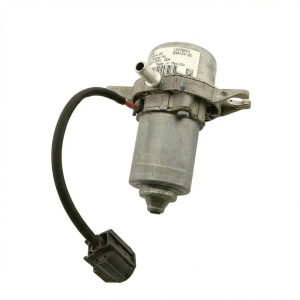
- The correct OEM replacement vacuum pump is GM part number 25204337.
- Using high-quality engine oil and maintaining the correct oil level may help prolong the life of the replacement pump.
What's Unique About the 2016-2019 Chevrolet Cruze
Unlike many vehicles where this code points to a simple sensor or vacuum line leak, the 1.4L LE2 Ecotec engine in the second-generation Cruze has a well-documented, high-failure-rate item: the mechanical, camshaft-driven vacuum pump. This pump is necessary because small turbocharged engines don't always produce sufficient intake manifold vacuum for power brakes. The pump is known to fail catastrophically due to oil starvation, causing it to seize, and the internal components to shatter. 🎬 Watch: How the vacuum pump works and why it fails. This results in an immediate and total loss of vacuum, a hard brake pedal, and the P0556 code.
Symptoms You May Notice
- Extremely hard brake pedal, requiring significant leg strength to press.
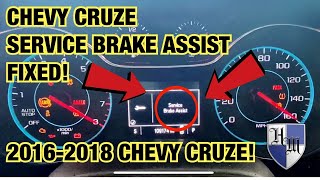
- "Service Brake Assist" message displayed on the instrument cluster.
- Check Engine Light illuminated.
- Significantly increased stopping distances.
- A crunchy or stiff feeling in the brake pedal.
- In some cases, a rough running engine or stalling if the pump failure affects camshaft timing.
- Replacing the brake booster pressure sensor without first confirming the vacuum pump is producing suction. Many owners and shops replace the sensor only to find the hard pedal and code persist because the root cause is the failed pump.
Most Likely Causes
- Failed Engine Vacuum Pump 🔴 High Probability → Shop Vacuum Pump The camshaft-driven vacuum pump on the 1.4L/1.5L GM SGE engine family is a notorious failure point. It is prone to seizing from lack of lubrication, often due to extended oil change intervals or low oil levels. When it seizes, the drive tang or internal components can shatter, leading to a total and immediate loss of vacuum generation.
How to confirm: With the engine running, carefully disconnect the main vacuum hose coming from the pump's outlet port. There should be very strong suction, enough to hold your finger firmly to the port. If there is little to no suction, the pump has failed. Visually inspecting the old pump upon removal often reveals shattered internal components.
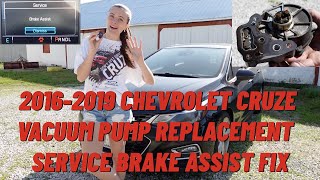
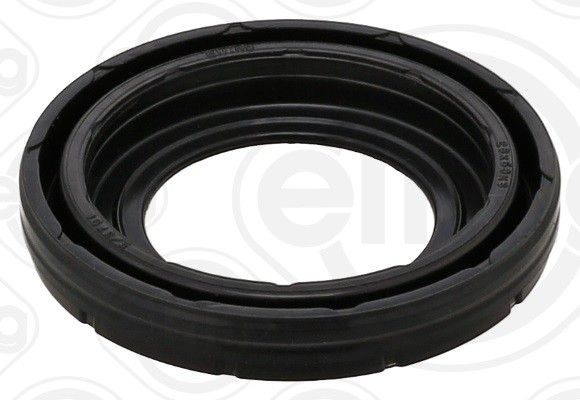
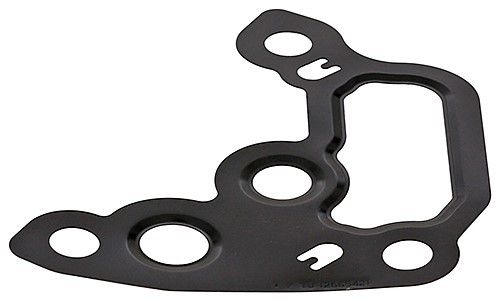
Typical fix: Replace the engine vacuum pump and its associated gasket. It is critical 🎬 See this step-by-step vacuum pump replacement walkthrough. to clean any debris from the oil passages and camshaft area during replacement. An oil change is highly recommended at the same time.
Est. part cost: $150-$450 - Faulty Brake Booster Pressure Sensor ⚪ Low Probability → Shop Power Brake Booster
How to confirm: This should only be considered if the vacuum pump is confirmed to be working correctly. Test the sensor's signal using a scan tool that can display live data. The sensor's voltage or pressure reading should change in response to vacuum changes. If the signal is stuck or erratic with good vacuum present, the sensor is likely faulty.
Typical fix: Replace the brake booster pressure sensor.
Est. part cost: $35-$70 - Leaking or Disconnected Vacuum Hoses ⚪ Low Probability → Shop Vacuum Hose While less common than pump failure, the plastic lines can become brittle over time.
How to confirm: Visually inspect all vacuum lines between the vacuum pump, the sensor, and the brake booster for cracks, brittleness, or loose connections. A hissing sound near the booster or lines can also indicate a leak. TSB 21-NA-045 addresses issues with vacuum pipe routing on other GM models, indicating potential for hose-related issues.
Typical fix: Replace the damaged section of vacuum hose or the entire assembly.
Est. part cost: $20-$150
Rare But Worth Checking
- Damaged Wiring or Connector: The wiring to the pressure sensor can become chafed or corroded. This is worth checking if both the pump and sensor test good. NHTSA ODI #11505962 notes that P0556 is stored when the PCM detects a problem with the brake booster pressure sensor circuit because of abnormal readings.
- Damaged Camshaft: In severe cases, the failure of the vacuum pump can damage the slot on the end of the exhaust camshaft that drives it. If a new pump is installed and still doesn't generate vacuum, the camshaft itself may need inspection or replacement.
Diagnosis Steps
- Read the trouble codes with an OBD-II scanner to confirm P0556 and any other related codes like C0299.
- Confirm the primary symptoms: an extremely hard brake pedal and a 'Service Brake Assist' message on the dash.
- Perform a functional test of the vacuum supply. With the engine running, carefully disconnect the main vacuum hose from the mechanical vacuum pump's outlet port.
- Check for strong suction at the pump's outlet. If there is no suction, the vacuum pump has failed and must be replaced. This is the most common diagnosis for this specific vehicle.
- If strong suction is present, the issue lies elsewhere. Reconnect the hose and investigate for leaks in the vacuum lines or a faulty brake booster pressure sensor.
- Visually inspect all vacuum lines and connections between the pump, sensor, and brake booster for any visible cracks, damage, or disconnections.
- Using a scan tool with live data, monitor the Brake Booster Pressure Sensor reading. Verify the reading is within specification at idle and that it changes appropriately when the brake pedal is applied and released.
- If the sensor reading is stuck, erratic, or does not change (and vacuum supply is confirmed good), inspect the sensor's wiring and connector for damage. If the wiring is good, replace the sensor.
Parts You'll Likely Need
- Engine Vacuum Pump
(OEM #25204337)— This is the most common failure point on the 1.4L LE2 engine that causes a P0556 code and a hard brake pedal. This part number supersedes (replaces) numerous older part numbers including 12662789, 12665188, 12673123, 12673203, 12673905, 12684050, 12695523, and 12704586, indicating multiple revisions by the manufacturer.
Trusted brands: ACDelco / GM Genuine (OEM), Dorman, Pierburg
OEM price range: $250-$450
Aftermarket price range: $100-$250 - Brake Booster Pressure Sensor
(OEM #20876799)— This sensor can fail, but it should only be replaced after confirming the vacuum pump is functioning correctly.
Trusted brands: ACDelco (OEM), Duralast, Standard Motor Products
OEM price range: $35-$50
Aftermarket price range: $30-$60
Related Codes That Often Appear With This One
- C0299 — This code for 'Brake Booster Performance' is set by the Electronic Brake Control Module (EBCM) / ABS module when it detects a large vacuum leak or lack of assist. It directly corroborates the physical symptom and the P0556 code set by the ECM.
Technical Service Bulletins (TSBs) & Recalls
- TSB 21-NA-045: Addresses a range of vacuum-related DTCs including P0556 on 2014-2019 Impala and Malibu models. The fix involves replacing a vacuum pipe and cap due to improper routing from the factory, showing a history of vacuum system issues on similar GM platforms.
- TSB 18-NA-160: While not for P0556, this is a critical TSB for 2016-2018 Cruze and Trax with the 1.4L LE2 engine. It addresses cracked pistons causing misfires (P0300) and includes an ECM update to help prevent the issue, which is another major known problem for this engine.
Platform-Specific Known Issues
- A class-action lawsuit has been filed regarding premature failure of the vacuum pump on these and similar GM engines (e.g., Equinox, Malibu), alleging the component is defective and poses a safety risk.
- Failure of the vacuum pump can cause plastic or metal debris to enter the engine's oiling system or damage the end of the camshaft that drives it. This can potentially lead to more severe engine problems, including affecting camshaft timing and setting other codes like P0014 or P0017.
Documented NHTSA Reports
- An owner reported in NHTSA ODI #11471869 that after a near-collision, the check engine light reported P0556, which a mechanic confirmed relates to the brake booster vacuum pump.
- NHTSA ODI #11659123 describes a terrifying incident where an owner had to manually lower gears to avoid a head-on collision after brake failure; diagnostic codes P0014, P0017, and P0556 were subsequently pulled.
- According to NHTSA ODI #11222466, an owner performed diagnostic testing and retrieved failure code P0556 for the brake booster pressure after experiencing a failure, even though the VIN was not included in a recall.
- In a cross-manufacturer report, NHTSA ODI #11682297 notes that after an engine light appeared, an AutoZone scan showed code P0556 for the brake booster pressure sensor, leading to a dealership tow.
Mechanic-Grade Diagnostic Values
- Brake Booster Pressure Sensor Signal Voltage (Key On, Engine Off) — expected: ~4.5V (at atmospheric pressure). Failure: Voltage significantly different from 4.5V indicates a sensor or wiring issue.
- Brake Booster Pressure Sensor Signal Voltage (Engine at Idle) — expected: 0.5V - 1.0V (high vacuum). Failure: Voltage does not drop to this range at idle, suggesting a lack of vacuum (likely pump failure) or a faulty sensor.
- Brake Booster Pressure Sensor Reference Voltage — expected: 5V. Failure: Absence of 5V at the reference wire points to a wiring or ECM issue.
- Brake Booster Pressure Sensor Ground Circuit — expected: Near 0 Ohms to chassis ground. Failure: High resistance indicates a bad ground connection, which can cause erratic sensor readings.
Wiring & Ground Locations
- Brake Booster Pressure Sensor Connector — Typically mounted on the brake booster itself or in the vacuum line running from the vacuum pump to the booster.. This is the primary connection point for testing sensor voltages (5V reference, ground, and signal). Corrosion or damage here is a potential cause of the code if the pump is good.
- Sensor Pin 1 (Signal) — Pin 1 on the brake booster pressure sensor connector.. This is the signal wire that sends the variable voltage reading to the ECM. It should read ~4.5V with engine off and drop to ~0.5-1.0V at idle.
- Sensor Pin 2 (Ground) — Pin 2 on the brake booster pressure sensor connector.. This is the sensor's ground connection. A bad ground here will cause incorrect signal readings.
- Sensor Pin 3 (Reference) — Pin 3 on the brake booster pressure sensor connector.. This wire supplies the 5V reference voltage from the ECM to the sensor. Without it, the sensor cannot function.
- Engine Control Module (ECM) — Located on the left side of the engine compartment.. The ECM receives the signal from the sensor and sets code P0556. All sensor wiring terminates here, making it a central point for advanced circuit tracing if a wiring fault is suspected.
Real Owner Repair Stories
- YouTube channel 'Saige's Garage' (2016 Chevrolet Cruze Premier RS 1.4L Turbo) — Service Brake Assist message on the dash and an extremely hard brake pedal that was nearly impossible to press fully.
❌ Tried (didn't work) The owner immediately suspected the known vacuum pump issue based on research.
✅ What actually fixed it The owner confirmed there was zero suction from the vacuum pump outlet with the engine running. Replacing the engine vacuum pump completely resolved the hard brake pedal and the 'Service Brake Assist' message. The check engine light turned off on its own after a few drive cycles. - YouTube channel 'CHEVY DIY' (2016 Chevrolet Cruze) — 'Service Brake Assist' message and a very hard brake pedal.
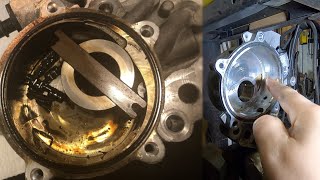
✅ What actually fixed it Diagnosis confirmed no vacuum was being produced by the vacuum pump. The video shows the old pump being opened, revealing the internal components were completely destroyed. Replacing the vacuum pump fixed the issue.
OEM Part Supersession History
12662789, 12665188, 12673123, 12673203, 12673905, 12684050, 12695523, 12704586→25204337— Multiple revisions by GM to address the high failure rate of the camshaft-driven vacuum pump.
Heads up: The newest part number (25204337) is the recommended replacement for all previous versions. Using an older, new-old-stock part is not advised as it will likely have the original design flaw.
Diagnostic Flowchart
Other Known Issues on This Vehicle
Issues unrelated to this code that are worth knowing about as an owner of this generation:
- Cracked Pistons (Cylinder Misfire) 🔴 High — Common, especially on 2016-2018 models, sometimes at low mileage (under 60k miles). Often presents as a P0300-P0304 misfire code. (Ref: TSB 18-NA-160: Addresses diagnosis and replacement of damaged pistons for this condition and provides an updated ECM calibration to help prevent it.)
- Plugged PCV Orifice in Cam Cover 🟠 Medium — A common cause for code P1101 and can lead to high crankcase pressure, causing oil leaks from main seals. (Ref: TSB 20-NA-047: Details the diagnosis of high crankcase pressure due to a plugged PCV orifice and the replacement procedure.)
- Cooling System Leaks 🟡 Low — Plastic cooling system components like the water outlet housing and coolant expansion tank can become brittle and develop leaks over time.
- Transmission Shudder/Hesitation 🟡 Low — Some owners report shuddering or hesitation from the 6-speed automatic transmission. A fluid change is often recommended to improve shift quality.
Used vs. New Parts: Buying Guide for This Vehicle
When a used part is the smart pick: For this specific repair, obtaining a used part is NEVER a smart choice. The engine vacuum pump is a widely documented, high-failure-rate component. A used pump from a donor vehicle is highly likely to have significant wear and could fail shortly after installation, repeating the dangerous loss of brake assist.
What to inspect on the donor part:
- Not applicable. Do not purchase a used vacuum pump for this repair.
OEM-only on this vehicle (don't cheap out):
- Engine Vacuum Pump - While reputable aftermarket options exist, the safest bet is a new GM Genuine / ACDelco pump (part number 25204337) as it represents the latest design revision intended to address the original flaws.
Aftermarket brands forum-validated for this vehicle:
- Pierburg (often the OEM supplier for European applications, known for quality)
- Dorman (offers a redesigned version, but owner reviews can be mixed)
Brands owners have reported issues with on this vehicle:
- Avoid unbranded, low-cost options from online marketplaces. The safety risk associated with brake system failure is too high to justify using a part of unknown quality.
Real Owner Stories
Aggregated from forums and TSBs cited above. Mileages and costs reflect what owners reported in those sources.
2016-2019 Chevrolet Cruze 1.4L LE2 Ecotec
Symptoms: The 'Service Brake Assist' message appeared and the brake pedal became very hard to press.
What fixed it: The issue was the vacuum pump. The owner had tried replacing the brake booster pressure sensor first, but that did not fix the problem.
Source hint: CruzeTalk.com / Reddit r/cruze
Chevrolet Cruze / Malibu (1.4L/1.5L Engine)
Symptoms: A hard brake pedal, and in some cases a hard start or no start condition.
What fixed it: Diagnosis showed oil starvation had led to a destroyed vacuum pump, which was then replaced.
Source hint: YouTube - Hayes Mobile Auto Repair: 'p0556 malibu, spark, cruze ect... hard break pedal, hard start or no start.'
GMC Terrain (1.5L Engine)
Symptoms: The vehicle set code P0556 and had a hard brake pedal.
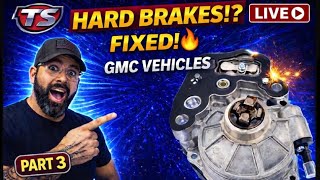
What fixed it: The entire diagnostic and repair process was documented, culminating in the replacement of the engine vacuum pump, which confirmed the fix.
Source hint: YouTube - TS Mobile Mechanic: multi-part series on a GMC Terrain with the related 1.5L engine
Related OBD-II Codes
Frequently Asked Questions
My 2017 Cruze has a very hard brake pedal and a 'Service Brake Assist' message. Is this the vacuum pump?
I heard there was a lawsuit about this brake problem. Is that true for my Chevrolet Cruze?
If the vacuum pump fails, can it cause other damage to my engine?
Should I try replacing the cheaper brake booster pressure sensor first to fix P0556?
Could a simple vacuum leak cause this code instead of the whole pump?
Does TSB 18-NA-160 apply to the P0556 code?
Helpful Videos
Used OEM Parts in Stock
New Aftermarket Parts Available


The information in this article is provided for general reference and educational purposes only. Vehicle specifications, procedures, and part compatibility can vary by production date, trim level, and region. Always consult your vehicle's factory service manual and verify part numbers before purchasing or performing repairs. Safety-critical components such as airbags, seat belts, and braking systems should be installed by a qualified professional.
- Chevrolet Cruze:
- 🧭 Diagnostic Flowchart
- 🎬 Helpful Videos
- 🛍️ Shop This Part
- What's Unique About the 2016-2019 Chevrolet Cruze
- Symptoms You May Notice
- Most Likely Causes
- Rare But Worth Checking
- Diagnosis Steps
- Parts You'll Likely Need
- Related Codes That Often Appear With This One
- Technical Service Bulletins (TSBs) & Recalls
- Platform-Specific Known Issues
- Documented NHTSA Reports
- Mechanic-Grade Diagnostic Values
- Wiring & Ground Locations
- Real Owner Repair Stories
- OEM Part Supersession History
- Other Known Issues on This Vehicle
- Used vs. New Parts: Buying Guide for This Vehicle
- Real Owner Stories
- 2016-2019 Chevrolet Cruze 1.4L LE2 Ecotec
- Chevrolet Cruze / Malibu (1.4L/1.5L Engine)
- GMC Terrain (1.5L Engine)
- Related OBD-II Codes
- Frequently Asked Questions
- 🎟️ Get 5% Off