

P0556 on 2016-2024 Chevrolet Malibu: Brake Booster Pressure Sensor Causes and Fixes
On a 2016-2024 Malibu with the 1.5L engine, code P0556 is most often caused by a failed engine-driven brake vacuum pump. This failure can sometimes cause severe internal engine damage. Expect to pay $150-$300 for an OEM replacement pump, with DIY being moderately difficult.
- P0556 on a 2016-2024 Malibu 1.5L indicates a serious problem with the power brake system, making the vehicle unsafe to drive.
- The most likely cause is a failed mechanical brake vacuum pump, a known weak point on this engine.
- When this pump fails, it can break apart and send metal into the engine, potentially requiring camshaft replacement in addition to the pump itself.
- Diagnosis must include inspecting for vacuum pump output and checking for physical damage to the pump and camshaft.
- Using the correct OEM oil and filter and performing regular oil changes may help prolong the life of the vacuum pump.
What's Unique About the 2016-2024 Chevrolet Malibu
Unlike many vehicles that draw brake booster vacuum directly from the intake manifold, the 1.5L LFV Ecotec engine uses a mechanical, camshaft-driven vacuum pump to ensure consistent brake assist. A very common and serious issue on this platform is the catastrophic failure of this pump, which can seize and break apart, sending metal debris into the engine's top end and potentially damaging the exhaust camshaft. This turns a simple brake-assist problem into a potentially major engine repair.
Symptoms You May Notice
- Check Engine Light is on.
- Hard brake pedal that requires significantly more effort to press.
- Increased stopping distance.
- Brake warning light may be illuminated on the dashboard.
- Engine may have a rough idle or stall when the brakes are applied.
- Crank-no-start or extended crank condition if camshaft is damaged.
- Replacing the brake booster itself when the issue is a lack of vacuum from the pump.
- Replacing camshaft position sensors when timing codes (P0014/P0017) appear, without realizing the root cause is a failed vacuum pump that damaged the camshaft.
Most Likely Causes
- Failed Brake Vacuum Pump 🔴 High Probability → Shop Vacuum Pump The camshaft-driven vacuum pump on the 1.5L Ecotec is a well-documented, high-failure-rate component. It can seize due to internal wear or, more commonly, oil starvation. When it fails, the drive tangs that connect to the exhaust camshaft can shear off, sometimes shattering and sending metal into the cylinder head.
How to confirm: With the engine off, remove the vacuum hose from the pump and connect a vacuum gauge. Start the engine; a healthy pump should generate strong vacuum (typically 18-22 inHg). A lack of any suction is a definitive sign of failure. For a more thorough inspection, remove the battery and tray to access the pump. Upon removal, inspect the pump's drive tangs and the corresponding slot on the exhaust camshaft for shearing, breakage, or metal shavings.
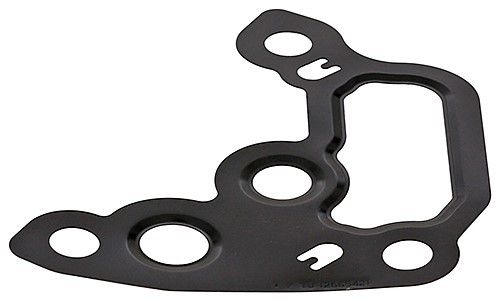
Typical fix: Replace the brake vacuum pump and its gasket. 🎬 Watch: Step-by-step guide to replacing the vacuum pump on a 1.5L Malibu. It is critical to inspect for and remove any metal debris from the cylinder head using a magnet or borescope. If the camshaft is damaged, it must also be replaced.
Est. part cost: $150-$300 for an OEM pump. - Faulty Brake Booster Pressure Sensor 🟡 Medium Probability → Shop Power Brake Booster
How to confirm: The sensor is typically located on the brake booster or on the vacuum line. Check the sensor's wiring and connector for damage. Use a scan tool to monitor the sensor's pressure reading or a multimeter to test its voltage output against manufacturer specifications. If vacuum supply from the pump is confirmed to be good, the sensor is the next likely culprit. NHTSA ODI #11496472 describes a case where a mechanic retrieved P0556 and determined the brake vacuum booster pump needed replacement alongside the sensor.
Typical fix: Replace the brake booster pressure sensor.
Est. part cost: $40-$80 - Leaking/Damaged Vacuum Hoses ⚪ Low Probability → Shop Vacuum Hose
How to confirm: Visually inspect all vacuum hoses between the vacuum pump, the sensor, and the brake booster for cracks, brittleness, or loose connections. A smoke test can be used to pinpoint hard-to-see leaks. TSB 21-NA-045 notes that misrouting of the vacuum pipe can also cause this code.
Typical fix: Replace the damaged vacuum hose or line.
Est. part cost: $20-$50
Rare But Worth Checking
- Damaged Exhaust Camshaft: This is almost always a consequence of a failed vacuum pump. The pump's drive tang breaks, damaging the slot on the end of the exhaust camshaft. This can also cause the camshaft's reluctor ring to spin out of position, causing camshaft timing codes like P0014 or P0017 to appear alongside P0556, as detailed in TSB 21-NA-268. 🎬 Watch: How a failed pump causes P0014 and P0017 timing codes.
- Wiring or Connector Issue: The wiring to the brake booster pressure sensor could be frayed, shorted, or have a corroded connector, leading to an out-of-range signal.
Diagnosis Steps
- Scan the vehicle for all stored trouble codes. Note any other codes that appear with P0556, especially timing-related codes (P0014, P0017) or brake system codes (C0299).
- Check the engine oil level and condition. Low or sludgy oil is a primary contributor to vacuum pump failure.
- Visually inspect the vacuum hoses running from the engine-mounted vacuum pump to the brake booster for any cracks, leaks, or disconnections.
- Test the vacuum pump's output. Disconnect the main hose from the pump and connect a vacuum gauge. Start the engine. A healthy pump should generate 18-22 inHg of vacuum. If output is low or zero, the pump has failed. 🎬 See how to confirm a failed pump with a vacuum gauge test.
- If vacuum output is low or zero, the next step is to remove the battery and battery tray to access the vacuum pump, which is mounted on the rear of the cylinder head on the exhaust camshaft side.
- Carefully remove the vacuum pump. Inspect the pump's drive tang and the corresponding slot on the exhaust camshaft. Look for any signs of shearing, breakage, or metal shavings.
- If the pump has failed and disintegrated, use a magnet and a borescope to inspect the cylinder head for metal debris and remove all of it. This is a critical step to prevent further engine damage.
- If the pump and camshaft are intact, test the brake booster pressure sensor's electrical circuit. Check for proper voltage and ground at the sensor connector and test the sensor's output signal.
- If the sensor and wiring test good, the issue may be an internal leak in the brake booster itself, though this is less common.
Parts You'll Likely Need
- Brake Vacuum Pump
(OEM #12704586 (supersedes 12684050, 12673203, 12665188, 12662789, and others))— This is the most frequent point of failure on the 1.5L Ecotec engine that causes code P0556. The original pump is prone to seizing and breaking.
Trusted brands: ACDelco, GM Genuine
OEM price range: $200-$300
Aftermarket price range: $120-$200 - Brake Booster Pressure Sensor
(OEM #23434447 (unverified, check by VIN))— If the vacuum pump is working correctly, the sensor itself may have failed electronically, sending incorrect data to the ECM.
Trusted brands: ACDelco, Bosch
OEM price range: $50-$90
Aftermarket price range: $30-$60
Related Codes That Often Appear With This One
- P0014 — Exhaust Camshaft Position System Performance. This code can appear if the failed vacuum pump damages the exhaust camshaft or causes its reluctor wheel to spin, affecting its timing, as noted in TSB 21-NA-268.
- P0017 — Crankshaft Position - Camshaft Position Correlation. Similar to P0014, this indicates a timing issue that can be triggered by camshaft damage from the vacuum pump failure.
- C0299 — Brake Booster Performance. This is a chassis code that often accompanies P0556, directly indicating insufficient vacuum in the brake booster system. TSB 21-NA-045 lists this as a related code.
- P050F — Brake Assist Vacuum Too Low. Another code that directly points to a lack of vacuum, often caused by the failed pump.
Technical Service Bulletins (TSBs) & Recalls
- 21-NA-268: Information on Crank No Start or Extended Crank, MIL Illuminated - DTC P0014, P0017, P0365 and/or P0366 Set. This TSB is highly relevant because it directly links timing codes to vacuum pump damage, a common cause of P0556. It instructs technicians to inspect the vacuum pump drive lugs if these codes are present.
- 21-NA-045: Power Brake Booster Vacuum Pipe Replacement, DTCs... P0556... Set. Mentions P0556 possibly being caused by vacuum pipe routing and requires replacing a cap and connector when installing a revised pipe.
Platform-Specific Known Issues
- A known issue involves the camshaft-driven vacuum pump failing catastrophically, sending metal fragments into the cylinder head and potentially damaging the exhaust camshaft. This is a significant design flaw that elevates the severity of this code.
- GM issued Technical Service Bulletin (TSB) 21-NA-268 for related timing codes (P0014, P0017) that can result from this vacuum pump failure damaging the camshaft reluctor. It explicitly advises inspecting the vacuum pump drive lugs during diagnosis.
- TSB 21-NA-045 addresses P0556 on some Malibu models, related to the routing of the power brake booster vacuum pipe, which can cause a leak or restriction.
Mechanic-Grade Diagnostic Values
- Brake Booster Pressure Sensor Signal Voltage (Key On, Engine Off) — expected: ~4.5 V. Failure: Voltage significantly lower than 4.5V indicates a sensor or wiring issue.
- Brake Booster Pressure Sensor Signal Voltage (Engine at Idle) — expected: 0.5 V to 1.0 V. Failure: Voltage that is stuck high (near 4.5V) or does not drop when the engine is running points to a lack of vacuum (bad pump/leak) or a faulty sensor.
- Brake Booster Pressure Sensor Reference Voltage — expected: 5.0 V. Failure: A reading of 0V or a fluctuating voltage indicates a wiring issue or a fault within the Engine Control Module (ECM).
- Brake Booster Pressure Sensor Ground Circuit Resistance — expected: Near 0 Ohms. Failure: A reading of more than a few ohms indicates a poor ground connection, which can cause incorrect sensor readings.
Wiring & Ground Locations
- G103 — At the left rear of the engine compartment on the cowl, located above the brake booster.. This is a major ground point for the Body Control Module (BCM), Instrument Panel Cluster (IPC), and the Data Link Connector (DLC). A poor connection here can cause a wide range of communication and sensor reading errors, potentially affecting how the P0556 code is interpreted or displayed.
- ECM Ground — On the back of the cylinder head, held by a 10mm bolt.. This is a primary ground for the Engine Control Module (ECM). A loose or corroded connection here can cause the ECM to malfunction, potentially leading to false sensor codes or other electrical issues. One technician found an internal short in the ECM between the power input and this ground pin.
- Brake Booster Pressure Sensor Connector — Plugged into the brake booster pressure sensor, which is typically located on the brake booster itself or on the main vacuum line leading to it.. This 3-pin connector provides the sensor with its 5V reference, ground, and returns the signal voltage to the ECM. It is the primary point for electrical testing with a multimeter.
Real Owner Repair Stories
- Reddit user in r/mechanic (2019 VW Jetta 1.4L (Note: Different vehicle, but illustrates a critical parts lesson)) — Check Engine Light with code P0556.
❌ Tried (didn't work) A local mechanic replaced the brake booster vacuum pump with an aftermarket part, but the code returned.
✅ What actually fixed it The aftermarket pump reportedly fried the control module. The dealership had to replace the sensor, the aftermarket pump with an OEM one, and the control module. The owner discovered a warranty existed but was voided by the installation of the aftermarket part. - NHTSA ODI #11471869 — An owner reported that their check engine light came on right after a near-collision, with testing revealing code P0556. A mechanic indicated the issue involved the Brake Booster Vacuum Pump.
- NHTSA ODI #11659123 — One owner described a terrifying incident where they had to manually lower gears to avoid a head-on collision because the brakes failed. Diagnostic codes P0014, P0017, and P0556 were pulled, and the car would not start after being parked.
- NHTSA ODI #11431145 — A driver reported the P0556 code appearing at 40,016 miles, noting that the brakes became very hard to stop.
- NHTSA ODI #11222466 — An owner performed their own diagnostic testing and retrieved failure code P0556 (Brake Booster Pressure) after experiencing a failure, noting that their VIN was not included in a recall.
OEM Part Supersession History
12662789, 12665188, 12673203, 12684050→12704586— The original vacuum pump designs were prone to premature seizure and catastrophic failure. The superseding part numbers represent revisions intended to improve durability.
Heads up: While all versions are physically interchangeable, it is critical to use the latest available part number (12704586 or newer) for replacement to get the most updated design. Some sources also list 25204337 as an interchangeable or superseding number.
Model Year Variations Within This Range
- 2016-2018: Models in this range with the 1.5L LFV engine were paired with a 6-speed automatic transmission.
- 2019-2024: For the 2019 model year refresh, Chevrolet paired the 1.5L LFV engine with a Continuously Variable Transmission (CVT). This does not change the diagnosis for P0556, as the engine and brake vacuum system remained the same.
Diagnostic Flowchart
Other Known Issues on This Vehicle
Issues unrelated to this code that are worth knowing about as an owner of this generation:
- Cracked Pistons due to Low-Speed Pre-Ignition (LSPI) 🔴 High — Common on 2016-2018 models. Can occur at relatively low mileage (under 100k). Causes misfires (P0300-P0304) and excessive oil consumption. (Ref: Customer Satisfaction Program N182195660 (formerly 17019); TSB 19-NA-122 (supersedes PIP5421G).)
- 'Shift to Park' Message / Inability to Shut Off Vehicle 🟠 Medium — Very common on 2016-2019 models. The vehicle fails to recognize it is in Park, preventing it from being turned off and potentially draining the battery. (Ref: TSB 23-NA-119; TSB PIT5616A. A class-action lawsuit has also been filed.)
- Clogged PCV Orifice in Camshaft Cover 🟠 Medium — A known high-failure item on the 1.5L LFV engine, causing increased crankcase pressure, oil leaks, and codes like P1101. (Ref: TSB 20-NA-047.)
- Charge Air Cooler (CAC) Outlet Pipe Disconnection 🟡 Low — The outlet pipe from the intercooler to the throttle body can pop off, causing a sudden loss of power, loud whooshing sound, and codes like P1101 or P0299. (Ref: TSB 22-NA-224.)
Used vs. New Parts: Buying Guide for This Vehicle
When a used part is the smart pick: For this specific repair, obtaining a used part from a junkyard is NOT recommended for the primary cause (the vacuum pump). Given the extremely high failure rate of this component, a used pump carries a significant risk of failing again shortly after installation, potentially causing the same catastrophic engine damage.
Donor-vehicle mileage cap: roughly under 15000 miles for the part to have meaningful remaining life.
What to inspect on the donor part:
- If considering a used vacuum pump despite the risk, only select one from a very low-mileage (under 15,000 miles) front-end collision wreck.
- Verify the part number on the used pump is the latest superseded version (12704586 or newer). Do not install an older part number.
- Inspect the drive tangs for any signs of wear, twisting, or stress marks.
OEM-only on this vehicle (don't cheap out):
- Brake Vacuum Pump
Aftermarket brands forum-validated for this vehicle:
- ACDelco (GM's OEM parts division) is the most recommended brand.
Brands owners have reported issues with on this vehicle:
- Unnamed/generic aftermarket brands. Forum and anecdotal evidence suggests that some aftermarket pumps may not meet OEM specifications and can cause further electrical issues, such as frying a control module, or may fail prematurely.
Real Owner Stories
Aggregated from forums and TSBs cited above. Mileages and costs reflect what owners reported in those sources.
2018 GMC Terrain 1.5L
Symptoms: Owner experienced a sudden hard brake pedal while driving on the highway, which was followed by a no-crank condition. The vehicle stored codes P0556, P0017, and P0700.
What fixed it: The typical fix for this combination of symptoms is to replace the failed brake vacuum pump and inspect the exhaust camshaft for damage. If the camshaft drive tangs are sheared, the camshaft must also be replaced, and any metal debris must be cleaned from the cylinder head.
Source hint: Reddit r/MechanicAdvice: 'Stiff brakes won't crank'
Related OBD-II Codes
Frequently Asked Questions
My Malibu has a P0556 code and also a P0017 timing code. Are these related?
Is the vacuum pump failure a common problem on the 1.5L Ecotec engine?
If my vacuum pump failed, what is the most critical step during the repair?
I have a hard brake pedal and now the engine won't start. Is this connected to P0556?
I was told the issue might be a vacuum hose. Is that likely?
Does this vacuum pump problem affect other GM vehicles?
Helpful Videos
Used OEM Parts in Stock
New Aftermarket Parts Available

The information in this article is provided for general reference and educational purposes only. Vehicle specifications, procedures, and part compatibility can vary by production date, trim level, and region. Always consult your vehicle's factory service manual and verify part numbers before purchasing or performing repairs. Safety-critical components such as airbags, seat belts, and braking systems should be installed by a qualified professional.
- Chevrolet Malibu:
- 🧭 Diagnostic Flowchart
- 🎬 Helpful Videos
- 🛍️ Shop This Part
- What's Unique About the 2016-2024 Chevrolet Malibu
- Symptoms You May Notice
- Most Likely Causes
- Rare But Worth Checking
- Diagnosis Steps
- Parts You'll Likely Need
- Related Codes That Often Appear With This One
- Technical Service Bulletins (TSBs) & Recalls
- Platform-Specific Known Issues
- Mechanic-Grade Diagnostic Values
- Wiring & Ground Locations
- Real Owner Repair Stories
- OEM Part Supersession History
- Model Year Variations Within This Range
- Other Known Issues on This Vehicle
- Used vs. New Parts: Buying Guide for This Vehicle
- Real Owner Stories
- 2018 GMC Terrain 1.5L
- Related OBD-II Codes
- Frequently Asked Questions
- 🎟️ Get 5% Off