

P0557 on 2018-2021 GMC Terrain: Brake Booster Pressure Sensor Circuit Low Causes and Fixes
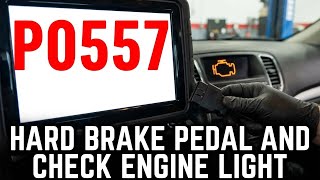
On a 2018-2021 GMC Terrain, code P0557 is most often caused by a known issue with the brake system. GM TSB #21-NA-107 points to an overly sensitive brake booster pressure sensor, especially during auto start/stop events. The official fix is to replace the power brake booster vacuum pipe, which contains an updated sensor. A failing engine-driven vacuum pump is another serious and common cause, which has led to a class-action lawsuit due to its tendency to shatter and cause sudden brake failure.
- P0557 on a 2018-2021 GMC Terrain is a critical safety code that should be addressed immediately.
- Do not drive the vehicle. A hard brake pedal and increased stopping distance create a significant crash risk.
- The most likely cause is a known issue covered by GM Technical Service Bulletin #21-NA-107, which requires replacing the entire brake booster vacuum pipe assembly.
- Another common, and very serious, cause is the failure of the engine-driven vacuum pump, which can shatter and cause engine damage.
- This is not a simple DIY fix. Due to the safety-critical nature of the braking system, professional diagnosis and repair are strongly recommended.
What's Unique About the 2018-2021 Gmc TERRAIN
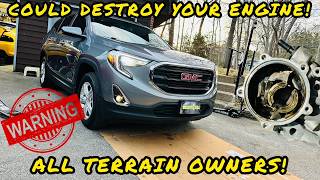
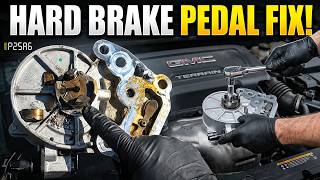
The 2018-2021 GMC Terrain and its platform mates (like the Chevy Equinox) are known for two specific, serious issues that trigger P0557. First, GM issued Technical Service Bulletin (TSB) #21-NA-107 because the original brake booster pressure sensor was too sensitive to voltage changes during engine auto start/stop events, requiring an updated part. Second, these vehicles are the subject of a class-action lawsuit (Thieme et al v. General Motors, LLC, case number 2:26-cv-10570) for failures of the engine-driven brake vacuum pump. This pump can shatter without warning, causing a sudden loss of brake assist and potentially sending metal debris into the engine, leading to catastrophic engine damage. 🎬 Watch: Why this vacuum pump fails and how to install a new one. This makes P0557 on a Terrain a more urgent issue than on many other vehicles.
Diagnostic Flowchart
Tap your situation to follow the diagnostic path that matches what you're seeing on this vehicle.
Symptoms You May Notice
- "Service Brake Assist" message on the instrument cluster.
- Check Engine Light (Service Engine Soon lamp) is on.
- Brake pedal is hard to press or feels like pushing against a rock.
- Increased stopping distance.
- Hissing noise from the engine bay, particularly around the brake booster.
- Loud bang or pop from the engine bay at the moment of failure.
- In case of vacuum pump failure, the engine may stall or fail to start.
- Replacing only the brake booster pressure sensor without using the updated vacuum pipe assembly specified in TSB #21-NA-107.
- Replacing the brake booster when the actual fault is with the vacuum pump or a vacuum leak.
- Replacing the vacuum pump without checking for and cleaning out metal debris from the engine, leading to repeat or new engine problems.
Most Likely Causes
- Faulty Brake Booster Pressure Sensor (Per TSB #21-NA-107) 🔴 High Probability → Shop Power Brake Booster GM identified that inconsistent in-rush current from the 5V reference during auto start/stop engine cranking can cause the original sensor to send a signal below the calibrated threshold, falsely setting DTC P0557.
How to confirm: A technician will confirm the code and check service bulletins. The diagnosis is confirmed if the vehicle's VIN falls under the scope of TSB #21-NA-107 and other causes are ruled out.
Typical fix: Replace the entire power brake booster vacuum pipe assembly with the updated version, which contains a more robust sensor designed to withstand voltage variations.
Est. part cost: $80-$150 - Failed Engine-Driven Brake Vacuum Pump 🔴 High Probability → Shop Vacuum Pump This is a widely reported failure on this platform, leading to a class-action lawsuit. The camshaft-driven pump can fail internally, sometimes catastrophically, shattering and sending metal fragments into the engine, which can damage the camshaft.
How to confirm: A visual inspection may reveal a physically broken or leaking pump. A technician can test the vacuum output of the pump with a gauge; it should pull over 18-20 in-Hg at idle. In cases of catastrophic failure, metal debris may be found in the engine oil, cylinder head, or visible on the camshaft upon removing the oil filler cap.
Typical fix: Replace the brake vacuum pump and its gasket. If the pump has disintegrated, extensive engine cleaning or repair is necessary to remove all metal fragments. This can involve flushing the oil system multiple times and inspecting the camshaft for damage.
Est. part cost: $150-$400 - Damaged Wiring or Poor Connection 🟡 Medium Probability TSB #20-NA-071, for platform mates like the Acadia, points to issues with electrical interference (EMI) and poor terminal tension in the engine wiring harness affecting the sensor's signal. This condition can also affect the Terrain.
How to confirm: Visually inspect the wiring harness and connector at the brake booster pressure sensor for damage, corrosion, or loose pins. A multimeter can be used to check for proper voltage, ground, and signal continuity. A voltage drop greater than 0.2V can be enough to trigger the code.
Typical fix: Repair the damaged section of the wiring harness or clean/replace the connector. TSB #20-NA-071 specifies installing a new, separate external wiring harness (p/n 84733328 for Acadia) to shield the sensor signal from EMI.
Est. part cost: $20-$100 - Vacuum Leak ⚪ Low Probability
How to confirm: Inspect all vacuum hoses connected to the brake booster and vacuum pump for cracks, brittleness, or loose connections. A smoke machine test can definitively identify hard-to-see leaks. Listen for a hissing sound with the engine running.
Typical fix: Replace the cracked or leaking vacuum hose.
Est. part cost: $15-$50
Rare But Worth Checking
- Failed Brake Booster: → Shop Power Brake Booster While less common than the sensor or pump, the booster's internal diaphragm can tear, causing a large vacuum leak. This is often accompanied by a loud hissing sound when the brake pedal is pressed and the pedal may feel spongy.
- Faulty Powertrain Control Module (PCM): This is extremely rare. The PCM should only be considered after all other possibilities, including sensors, pumps, and wiring, have been exhaustively tested and ruled out.
Diagnosis Steps
- Scan the vehicle's computer system to confirm P0557 is the active code and check for any other related DTCs.
- Check for applicable Technical Service Bulletins (TSBs), specifically #21-NA-107 and #20-NA-071, for the vehicle's VIN.
- Perform a thorough visual inspection of the engine-driven brake vacuum pump for any signs of oil leaks or physical damage. If possible, remove the oil filler cap and inspect the area around the camshaft for metal debris.
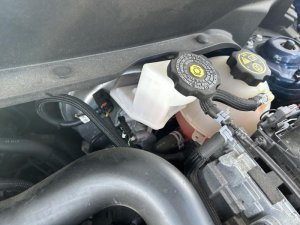
- Inspect all vacuum lines and hoses between the pump, brake booster, and sensor for cracks, splits, or loose connections.
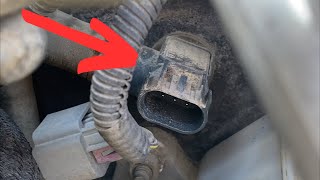
- Inspect the electrical connector and wiring at the brake booster pressure sensor for corrosion, damage, or loose pins.
- With a scan tool, monitor the live data from the brake booster pressure sensor. The voltage should typically be between 0.5V and 4.9V and change in response to brake pedal application. A reading stuck low (under 1.0V) indicates a fault.
- If a vacuum pump failure is suspected, test its output using a vacuum gauge to ensure it is producing sufficient vacuum according to manufacturer specifications (typically should pull over 18-20 in-Hg at idle).
- If a leak is suspected but not visible, use a smoke machine to pressurize the vacuum system and identify the source of the leak.
Parts You'll Likely Need
- Power Brake Booster Vacuum Pipe Assembly
(OEM #84974393 (for 2.0L LTG engine), 84974392 (for 1.5L LYX engine))— This is the official GM-recommended fix per TSB #21-NA-107. It includes the updated, more robust pressure sensor needed to resolve the fault caused by voltage fluctuations during start/stop.
Trusted brands: ACDelco, GM Genuine
OEM price range: $80-$150
Aftermarket price range: $60-$120 - Brake Vacuum Pump
(OEM #25204337 (supercedes 12704586, 12684050 for 1.5L engine); 12686657 (for 2.0L engine))— This is a common failure point on the 2018-2021 Terrain that can cause a complete loss of brake assist. Failure can be catastrophic, requiring immediate replacement.
Trusted brands: ACDelco, Dorman, Standard Motor Products
OEM price range: $200-$400
Aftermarket price range: $70-$250
Technical Service Bulletins (TSBs) & Recalls
- 21-NA-107: Addresses DTC P0557 caused by inconsistent in-rush current during start/stop events. The fix is to replace the power brake booster vacuum pipe with a revised part containing a more robust sensor. Part numbers vary by engine.
- 20-NA-071: While for platform mates (Acadia/Traverse), it addresses P0557 caused by EMI and poor terminal tension. The fix involves installing a new external wiring harness, which may be a relevant repair strategy for the Terrain if the primary TSB doesn't resolve the issue.
Platform-Specific Known Issues
- TSB #21-NA-107 was issued by GM specifically to address DTC P0557 on these vehicles, caused by an overly sensitive brake booster pressure sensor reacting to voltage changes during auto start/stop events.
- A class-action lawsuit (Thieme et al v. General Motors, LLC) was filed against GM for defective engine-driven brake vacuum pumps in 2018-2022 Terrains and Equinoxes. These pumps can fail suddenly, causing a hard brake pedal and, in some cases, shatter and contaminate the engine with metal debris.
Mechanic-Grade Diagnostic Values
- Brake Booster Pressure Sensor 5V Reference — expected: 4.9V to 5.1V with key on, engine off.. Failure: Voltage significantly below 4.9V suggests an issue with the ECM or the wiring from the ECM.
- Brake Booster Pressure Sensor Signal Voltage (KOEO) — expected: ~5.0V (representing atmospheric pressure, no vacuum).. Failure: A constant low reading under 1.0V points to a circuit low fault, a short to ground, or a faulty sensor.
- Brake Booster Pressure Sensor Signal Voltage (Engine Running) — expected: Voltage should drop towards ~0.5V at idle (high vacuum).. Failure: Voltage does not drop, or remains stuck low regardless of engine state.
- Sensor Circuit Continuity (Ground and Signal wires) — expected: Less than 1.0 ohm of resistance between the sensor connector and the ECM connector.. Failure: Resistance greater than 1,000 ohms (1 kΩ) suggests a broken wire or high resistance in the circuit.
- Vacuum Pump Output — expected: Steady vacuum of 18 in-Hg or more at idle.. Failure: Little to no vacuum reading at the hose leading to the brake booster.
Scan Tool Commands That Help
- GDS2 / Professional Scan Tool: Bidirectional control to read sensor input from ECM/BCM. — Use this to verify if the voltage value the ECM is reporting matches the actual voltage measured at the sensor with a multimeter. A discrepancy points towards a problem with the module or the wiring, rather than the sensor itself.
- GDS2 / Professional Scan Tool: Brake Pedal Position Sensor Learn — This may be required after replacing brake system components or disconnecting the BCM/ECM to ensure the modules have the correct baseline for brake pedal status.
Wiring & Ground Locations
- G103 — Typically located in the engine bay, on the engine block or chassis frame rail.. A corroded or loose G103 ground, which may serve the sensor circuit, can cause the signal voltage to be low or erratic, directly triggering a P0557 code.
- ECM Connector X1 — The Engine Control Module is typically located in the engine bay. X1 is one of its main connectors.. The sensor's signal, reference, and ground wires terminate at the ECM. A related TSB for other GM vehicles identifies poor pin tension at the ECM connector (specifically pins 44, 45, 65 in that case) as a cause for this fault, making the ECM connector a key inspection point.
Real Owner Repair Stories
- NHTSA ODI #11519724 (2018 GMC Terrain) — Sudden loss of brakes, scared occupants.
✅ What actually fixed it The owner ran a scan and found DTC P0557. The cause was the engine-driven vacuum pump, which had broken internally inside the valve cover. Replacing the vacuum pump resolved the issue. - YouTube user 'Just Rob' (2018-2024 Chevy Equinox/GMC Terrain 1.5L) — Hard brake pedal, engine running rough.
✅ What actually fixed it The drive tang on the original vacuum pump broke off. The owner had to fish metal pieces out from inside the engine head (without removing the valve cover). Replacing the vacuum pump with a new one fixed the problem. - YouTube user 'J Automotive' (2018 Chevrolet Equinox 1.5L) — Hard brake pedal, brakes not working.
✅ What actually fixed it The gear on the vacuum pump broke and the pump locked up. The fix was to replace the vacuum pump and, critically, to inspect the end of the camshaft for damage and clean all broken metal fragments out of the engine, which may require removing the valve cover. - Reddit user BigGift4127 (Chevy Equinox (year not specified, but same platform)) — Brake trouble, diagnosed as vacuum pump failure.
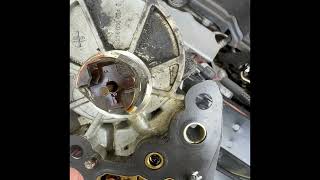
✅ What actually fixed it Confirmed that when the pump housing shatters, metal pieces end up in the engine under the valve cover. The user pulled 8 pieces out with a magnet but noted more were still inside, confirming the necessity of removing the valve cover to clean out debris to prevent further engine damage.
"I Checked Everything" — The Actual Cause
- The issue described in TSB #21-NA-107 is a primary example. A technician could perform a smoke test and find no vacuum leaks, because the system is mechanically sealed. The root cause is not a leak, but rather the brake booster pressure sensor being too sensitive to voltage drops that occur during engine auto start/stop events, which is an electrical/component design issue.
OEM Part Supersession History
12684050 (and others)→25204337— This is the latest revision for the 1.5L engine's brake vacuum pump. The new part is a revised design; one notable change is the removal of a mesh screen that was present on older versions and could become clogged.
Heads up: Part number 25204337 supersedes a long list of previous part numbers, including 12662789, 12665188, 12673123, 12673203, 12673905, 12684050, 12695523, and 12704586.
Helpful Videos
We Have This Part in Stock

The information in this article is provided for general reference and educational purposes only. Vehicle specifications, procedures, and part compatibility can vary by production date, trim level, and region. Always consult your vehicle's factory service manual and verify part numbers before purchasing or performing repairs. Safety-critical components such as airbags, seat belts, and braking systems should be installed by a qualified professional.
- Gmc TERRAIN:
- 🧭 Diagnostic Flowchart
- 🎬 Helpful Videos
- 🛍️ Shop This Part
- What's Unique About the 2018-2021 Gmc TERRAIN
- Symptoms You May Notice
- Most Likely Causes
- Rare But Worth Checking
- Diagnosis Steps
- Parts You'll Likely Need
- Technical Service Bulletins (TSBs) & Recalls
- Platform-Specific Known Issues
- Mechanic-Grade Diagnostic Values
- Scan Tool Commands That Help
- Wiring & Ground Locations
- Real Owner Repair Stories
- "I Checked Everything" — The Actual Cause
- OEM Part Supersession History
- 🎟️ Get 5% Off