

P0562 on 2011-2017 Chrysler 200 3.6L: System Voltage Low Causes and Fixes
P0562 means the vehicle's electrical system voltage is too low. On the Chrysler 200, this is most often caused by a failing battery or a bad alternator. Expect to spend $150-$300 for a new battery or $400-$700 for a replacement alternator.
- P0562 means system voltage is critically low and should be addressed immediately.
- Do not drive the vehicle, as it can stall at any time, creating a dangerous situation.
- The most likely causes are a bad battery or a failing alternator.
- Start your diagnosis with the simplest things: check that battery terminals are clean and tight.
- Use a multimeter to test the battery (engine off) and alternator (engine on) to quickly identify the faulty component.
What's Unique About the 2011-2017 Chrysler 200
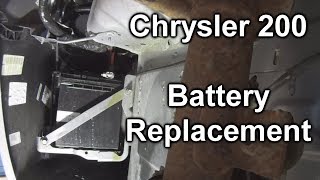
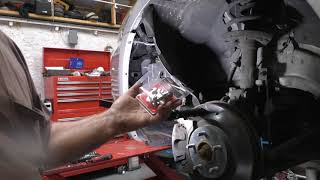
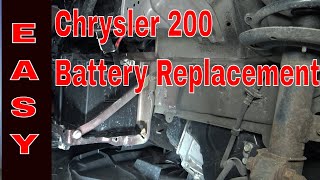
The Chrysler 200, particularly models with the 3.6L Pentastar engine, can be sensitive to voltage fluctuations. While the primary causes (battery, alternator) are common across most vehicles, some owners report that a failing alternator on this platform might still provide enough power to run the engine but not enough to properly charge the battery, leading to a slow drain and the eventual P0562 code. Additionally, the alternators feature an Overrunning Alternator Decoupler (OAD) pulley, which can be a failure point causing noise or charging problems. The battery location on first-generation models (2011-2014) is in the driver's side front wheel well, making access difficult and increasing 🎬 See this step-by-step wheel well battery replacement the chance of poor connections if not serviced carefully.
Generation note: The 2011-2017 range covers two generations of the Chrysler 200: the first generation (2011-2014) and the second generation (2015-2017). The causes and diagnostic procedures for P0562 are largely the same for both generations as they share the 3.6L Pentastar engine and similar electrical system architecture. However, the battery is located in the engine bay on 2nd-gen models, whereas it is in the driver's side wheel well on 1st-gen models. Early models (2011-2014) were also part of recalls for alternator failure.
Symptoms You May Notice
- Check Engine Light is on
- Battery or charging system warning light is on
- Engine stalls or dies while driving, especially at idle
- Difficulty starting the engine or a no-start condition
- Dimming or flickering headlights and interior lights
- Erratic behavior from electrical components like the radio or power windows
- Rough idle
- Transmission shifting problems or inconsistent shifts
- Replacing the alternator when the battery was the actual problem.
- Replacing the battery when the alternator was not charging it properly.
- Replacing the PCM without thoroughly testing the battery, alternator, and all related wiring first.
Most Likely Causes
- Failing or Weak Battery 🔴 High Probability → Shop Vehicle Battery Batteries have a finite lifespan (typically 3-5 years). A battery that can no longer hold a full charge is the most common trigger for a low voltage code, especially if the vehicle is not driven frequently.
How to confirm: Test the battery voltage with a multimeter when the engine is off. A healthy, fully charged battery should read around 12.6 volts. A reading below 12.4V suggests a weak battery. Most auto parts stores can perform a load test to confirm its health.
Typical fix: Replace the battery.
Est. part cost: $150 - $300 - Failing Alternator 🔴 High Probability → Shop Alternator The alternator recharges the battery and powers the electrical system while the engine is running. Alternators on the Pentastar engine can fail, sometimes exhibiting a unique symptom where they run the car but don't adequately charge the battery. Some 2011-2014 models were recalled for alternator diode failure that could cause stalling.
How to confirm: With the engine running, test the voltage at the battery terminals. A healthy alternator should produce a voltage between 13.7 and 14.7 volts. A reading below this range indicates the alternator is not charging properly. If the car starts with a jump but dies when put into gear, it's a classic sign of a failed alternator.
Typical fix: Replace the alternator.
Est. part cost: $200 - $500 - Loose or Corroded Battery Terminals/Cables 🟡 Medium Probability → Shop Vehicle Battery Corrosion (a white or greenish powder) can build up on the battery terminals, creating resistance and preventing a solid electrical connection. Given the battery's location in the wheel well on 1st-gen models, connections can be exposed to more moisture and dirt.
How to confirm: Visually inspect the battery terminals and cable ends for corrosion or looseness. Try to wiggle the cable connections by hand; they should not move.
Typical fix: Clean the battery terminals and cable ends with a wire brush and baking soda solution. Ensure the connections are tight.
Est. part cost: $5 - $20 - Bad Ground Connection ⚪ Low Probability The main ground straps from the battery to the chassis and from the engine to the chassis can corrode or become loose over time, creating high resistance in the charging circuit. Some owners add a supplementary ground wire on first-generation models to improve reliability.
How to confirm: Inspect the main ground cables for tightness and corrosion at both ends. You can perform a voltage drop test on the ground side to check for high resistance.
Typical fix: Clean the connection points with a wire brush and re-secure the ground cable. Consider adding a redundant ground wire from the battery negative area to the chassis or transmission mount.
Est. part cost: $0 - $20
Rare But Worth Checking
- Worn Spark Plugs: In one documented case on a 2012 Chrysler 200, extremely worn spark plugs with a large gap caused a rough idle that was severe enough to make the engine RPMs dip, causing a momentary voltage drop that triggered P0562 without a misfire code. 🎬 Watch: How worn spark plugs caused a P0562 code
- Faulty Totally Integrated Power Module (TIPM): → Shop Fuse Box The TIPM (main fuse/relay box) is a known failure point on many Chrysler products of this era. An internal fault can cause parasitic drains or fail to properly command the alternator, leading to P0562. This should be considered after ruling out the battery, alternator, and wiring.
- Faulty Powertrain Control Module (PCM): This is very rare. The PCM itself could be failing and incorrectly reading the system voltage. This should only be considered after all other possibilities have been exhaustively ruled out.
Diagnosis Steps
- Read all stored codes with an OBD-II scanner to see if other codes are present.
- Visually inspect the battery terminals, battery cables, and ground straps for any signs of corrosion, damage, or looseness. Clean and tighten as necessary.
- With the engine off, use a multimeter to measure the battery's static voltage. It should be approximately 12.6 volts. If it's below 12.4V, charge the battery and re-test. If it doesn't hold a charge, it likely needs replacement.
- Start the engine. Measure the voltage at the battery terminals again. The reading should be between 13.7 and 14.7 volts.
- If the voltage is below 13.7V, the alternator is likely faulty.
- If the voltage is above 15.0V, the voltage regulator (which is controlled by the PCM) may be faulty, often pointing to a bad alternator or PCM.
- If charging voltage is normal, perform a load test on the system by turning on all major electrical accessories (headlights, A/C, rear defroster). The voltage should remain stable and above 13.5V. A significant drop indicates a weak alternator.
- If the battery and alternator test good, inspect the wiring between the alternator and the battery for damage or high resistance. Check for voltage drop on both the positive and ground circuits.
- Check the two-wire field control circuit at the alternator. The PCM sends a power-side switched signal to control the alternator field; a break in this harness will prevent charging.
- If the battery keeps dying, check for a parasitic drain with the vehicle off using a multimeter set to measure amps. A normal draw after all modules go to sleep should be under 50mA.
Parts You'll Likely Need
- Battery — The battery is the most common failure point for a P0562 code, as it has a limited service life and is responsible for maintaining static voltage.
Trusted brands: Mopar, Interstate, DieHard
OEM price range: $200-$300
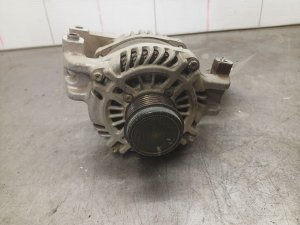
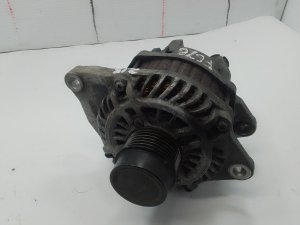
Aftermarket price range: $150-$250 - Alternator
(OEM #4801778AF (superseded by 4801778AI))— The second most common cause. The alternator fails to recharge the battery and supply power to the vehicle while it's running.
Trusted brands: Mopar, Denso, Bosch, bproauto
OEM price range: $400-$600
Aftermarket price range: $200-$450
Related Codes That Often Appear With This One
- P0300-P0306 — Low voltage can affect the ignition system, leading to insufficient spark and causing random or specific cylinder misfires.
- U-codes (e.g., U0100, U0141) — Low system voltage can cause communication failures between various control modules on the vehicle's data network.
Technical Service Bulletins (TSBs) & Recalls
- NHTSA Recalls 14V-634 & 17V-435: These recalls were issued for 2011-2014 models due to alternators that could fail without warning, causing the vehicle to stall and increasing the risk of a crash.
Platform-Specific Known Issues
- On 2011-2014 models, the battery is located inside the front driver's side wheel well, requiring removal of the wheel and liner for access. This can make inspection and replacement more difficult.
- Early model year Pentastar engines (2011-2014) were subject to recalls (NHTSA 14V-634, 17V-435) for alternator failure that could lead to stalling or a fire risk.
Mechanic-Grade Diagnostic Values
- Battery Cranking Voltage — expected: Should stay above 10.0V. Failure: A momentary drop to or below 10.4V during cranking can be enough to trigger P0562, even if the engine starts.
- Voltage Drop: Alternator B+ post to Battery Positive Terminal — expected: Less than 0.5V with engine running and electrical loads on.. Failure: A reading higher than 0.5V indicates high resistance in the main charging cable or connections.
- Voltage Drop: Alternator Case to Battery Negative Terminal — expected: Less than 0.2V with engine running and electrical loads on.. Failure: A reading higher than 0.2V indicates a poor ground connection for the alternator.
- Parasitic Draw (Amperage) — expected: Less than 50 milliamperes (0.050A) after all modules enter sleep mode (approx. 20-30 mins).. Failure: A sustained reading above 50mA indicates a module or component is not shutting down and is draining the battery.
Scan Tool Commands That Help
- wiTECH or equivalent professional scan tool: Alternator Field Control State (Toggle) or Generator Field Driver — This bidirectional command is used to verify the integrity of the control circuit from the PCM to the alternator. With the engine off and a test light connected to the field control wire, this command should make the test light flash. If it doesn't, the problem is in the wiring or the PCM itself, not the alternator.
Wiring & Ground Locations
- Main Engine/Trans Ground (Gen 1) — A common weak point is the factory ground. Some owners add a supplementary 4-gauge ground wire from the battery negative terminal area to a 16mm bolt on the transmission mount.. A poor ground connection increases resistance in the entire electrical system, which can lower the voltage seen by the PCM and trigger P0562.
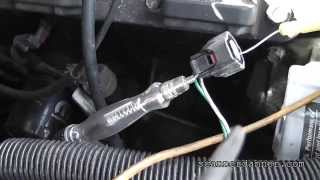
- Alternator Field Control Connector — The 2-pin electrical connector on the back of the alternator.. This connector carries the command and monitor signals between the PCM and alternator. Damage or corrosion here directly prevents the alternator from charging correctly.
- PCM Connector C4 (Gray) — One of the main connectors at the Powertrain Control Module (PCM).. On related 3.6L Pentastar applications, the alternator field control wire (often Brown/Dark Green) runs to Pin 17 of this connector. This is a key point for testing circuit continuity back to the PCM.
- Engine Harness Chafe Point — The main engine wiring harness can rub against the back of the cylinder head or metal A/C lines near the top-rear of the engine.. While more commonly associated with sensor codes, a chafe in this area could potentially short the alternator control wiring, leading to charging system faults.
Real Owner Repair Stories
- Reddit user on r/AskAMechanic (2011 Dodge Grand Caravan 3.6L (Sibling vehicle with identical powertrain), 167k miles) — P0562 (System Voltage Low), P0507 (High Idle), ABS/Traction lights, red throttle body light.
❌ Tried (didn't work) Replacing the throttle body, Jumping the battery
✅ What actually fixed it A combination of two separate issues fixed the P0562 and idle problem: 1) A vacuum leak in the PCV hose was fixed. 2) The 3.5-year-old battery, which dropped to only 10.4V during cranking, was replaced. This momentary drop was enough to set the P0562 code. - YouTube video by 'CarboNs DIy Garage' (2011-2016 Chrysler Town & Country 3.6L (Sibling vehicle)) — P0562 code appeared, but no other typical alternator failure symptoms like a battery light or stalling.
❌ Tried (didn't work) Initial assumption was a battery issue.
✅ What actually fixed it The alternator had failed in a way that it could still power the vehicle but could not properly charge the battery. Replacing the alternator resolved the P0562 code. - YouTube video by 'Fix It All' (2012 Chrysler 200 (2.4L engine)) — Rough idle, vibration, and P0562 code. No misfire codes were present.
❌ Tried (didn't work) Initial diagnosis would point to battery or alternator.
✅ What actually fixed it The spark plugs were extremely worn with a gap of nearly .060" (spec is .043"). The excessive gap caused a rough idle, which made the engine RPMs dip low enough to drop system voltage momentarily, triggering P0562. New spark plugs smoothed the idle and fixed the code. - NHTSA ODI #11684440 (Chrysler Sebring / Sibling Platform) — An owner reported that their transmission became stuck in park (P). Upon using a code reader, they retrieved DTCs P2004, P0700, and P0562.
When the Usual Fixes Don't Work
- In a case involving a sibling vehicle (Chrysler Town & Country), a repair shop diagnosed both a bad alternator and a bad battery, quoting a $1500 repair. The owner opted to replace only the alternator himself, which fully resolved the issue. The original battery, less than two years old, was found to be perfectly fine after the new alternator was installed, indicating the shop's battery diagnosis was incorrect and likely an attempted upsell.
OEM Part Supersession History
4801778AF→4801778AI— Standard part revision and update by the manufacturer.
Model Year Variations Within This Range
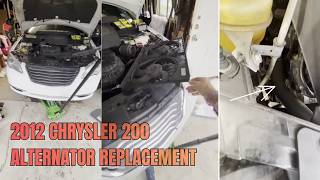
- 2011-2014 (First Generation): The battery is located in the driver's side front wheel well, requiring wheel removal for access. The alternator is typically accessed from the top after removing the coolant reservoir and fan assembly.
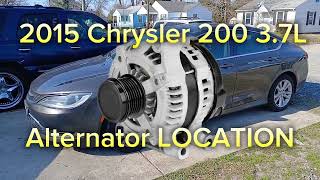
- 2015-2017 (Second Generation): The battery is in a more traditional location in the engine bay under a cover. The alternator is located low on the engine, and the recommended replacement procedure is from underneath the vehicle, which requires removing the A/C compressor (without discharging it) to gain access.
Diagnostic Flowchart
Other Known Issues on This Vehicle
Issues unrelated to this code that are worth knowing about as an owner of this generation:
- Cracked Oil Filter / Cooler Housing 🔴 High — Very common across all model years. The plastic housing becomes brittle from heat cycles and cracks, causing significant oil and/or coolant leaks into the engine valley. (Ref: TSB 09-008-15 and others address leak diagnosis, cautioning against unnecessary replacement and verifying leaks with dye.)
- Rocker Arm / Lifter Failure ('Pentastar Tick') 🔴 High — Common across all years, often appearing after 60,000 miles. Needle bearings in the rocker arms fail, causing a distinct ticking sound and shedding metal debris into the oil, which can lead to further engine damage. (Ref: A class-action lawsuit was filed regarding this issue, alleging a known defect.)
- ZF 9-Speed Automatic Transmission Problems (2015-2017) 🔴 High — Widespread on second-generation models. Symptoms include harsh shifting, lurching, hesitation, and unexpected shifts into neutral. (Ref: Multiple software updates were released, and a recall (R08) was issued for some 2015 models for a rollaway risk due to transmission issues.)
- Left Cylinder Head Failure (2011-2013) 🔴 High — Primarily affected early 2011-2013 Pentastar engines. Premature valve guide wear on the left-side head (Bank 2) would cause misfires (especially on cylinder #2) and require cylinder head replacement. (Ref: Chrysler issued an extended warranty (X56) and TSB 09-002-14 to address this known problem.)
Used vs. New Parts: Buying Guide for This Vehicle
When a used part is the smart pick: For this repair, sourcing a used part is generally not recommended for the primary culprits (battery, alternator). However, a used Totally Integrated Power Module (TIPM) from a reputable salvage yard can be a cost-effective option if it has been diagnosed as the fault, as new units are expensive. A used wiring harness could also be a viable option if a specific section is damaged.
Donor-vehicle mileage cap: roughly under 80000 miles for the part to have meaningful remaining life.
What to inspect on the donor part:
- For a TIPM: Ensure no signs of water intrusion or corrosion on the connectors. Check the donor vehicle's history for electrical problems if possible.
- For a wiring harness: Inspect thoroughly for any cuts, abrasions, or previous repairs. Ensure all connector locking tabs are intact.
- Avoid parts from vehicles with flood or fire damage.
OEM-only on this vehicle (don't cheap out):
- Powertrain Control Module (PCM): Due to VIN programming requirements, a new or professionally refurbished and programmed unit is essential.
- Alternator: While not strictly 'OEM-only', using an OEM (Mopar) or the original manufacturer (Denso) part is very strongly recommended to avoid performance and longevity issues.
Aftermarket brands forum-validated for this vehicle:
- Denso (often the OEM supplier)
- Bosch (New, not remanufactured)
Brands owners have reported issues with on this vehicle:
- Generic 'white-box' or unbranded parts store alternators have a higher reported failure rate and potential fitment issues.
Real Owner Stories
Aggregated from forums and TSBs cited above. Mileages and costs reflect what owners reported in those sources.
2012-2018 Jeep Wrangler (JK) 3.6L
Symptoms: The P0562 code kept returning on a vehicle equipped with a 4-year-old Yellow Top battery.
What fixed it: Replacement of the 4-year-old battery.
Source hint: jk-forum.com
2012-2018 Jeep Wrangler (JK) 3.6L
Symptoms: The battery read only 10.5V even after being left on a charger for a full night.
What fixed it: Confirmed bad battery and replaced it.
Source hint: jeepforum.com thread titled 'Error P0562 - Low Voltage'
Related OBD-II Codes
Frequently Asked Questions
Where is the battery located on my 2011-2014 Chrysler 200, and does it make P0562 harder to diagnose?
Is there a recall for the alternator on my 2011-2014 Chrysler 200 3.6L?
My Chrysler 200 starts with a jump but dies as soon as I put it in gear. Is this P0562?
Can a bad ground cause P0562 on the Pentastar 3.6L?
How can I tell if my alternator is failing versus just a dead battery?
Helpful Videos
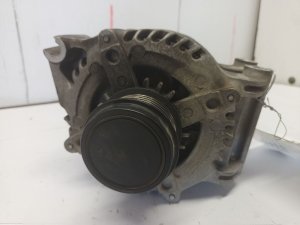
Used OEM Parts in Stock
New Aftermarket Parts Available

The information in this article is provided for general reference and educational purposes only. Vehicle specifications, procedures, and part compatibility can vary by production date, trim level, and region. Always consult your vehicle's factory service manual and verify part numbers before purchasing or performing repairs. Safety-critical components such as airbags, seat belts, and braking systems should be installed by a qualified professional.
- Chrysler 200:
- 🧭 Diagnostic Flowchart
- 🎬 Helpful Videos
- 🛍️ Shop This Part
- What's Unique About the 2011-2017 Chrysler 200
- Symptoms You May Notice
- Most Likely Causes
- Rare But Worth Checking
- Diagnosis Steps
- Parts You'll Likely Need
- Related Codes That Often Appear With This One
- Technical Service Bulletins (TSBs) & Recalls
- Platform-Specific Known Issues
- Mechanic-Grade Diagnostic Values
- Scan Tool Commands That Help
- Wiring & Ground Locations
- Real Owner Repair Stories
- When the Usual Fixes Don't Work
- OEM Part Supersession History
- Model Year Variations Within This Range
- Other Known Issues on This Vehicle
- Used vs. New Parts: Buying Guide for This Vehicle
- Real Owner Stories
- 2012-2018 Jeep Wrangler (JK) 3.6L
- 2012-2018 Jeep Wrangler (JK) 3.6L
- Related OBD-II Codes
- Frequently Asked Questions
- 🎟️ Get 5% Off