

P0562 on 2013-2017 Honda Accord 2.4L: Charging System Low Voltage Causes and Fixes
On a 2013-2017 Honda Accord, P0562 almost always points to a failing alternator. Before replacing it, check that your battery is healthy and all battery and alternator connections are clean and tight. A faulty battery sensor, subject to a major recall, is also a known issue on these cars that can cause charging system problems.
- P0562 means your car's electrical system voltage is too low, and you should not drive the vehicle until it is fixed.
- The most likely culprit is a failed alternator. The easiest way to check is to measure the voltage at the battery with the engine running; it should be over 13.5V.
- Always check the simple things first: ensure your battery terminals are clean and tight.
- Be aware of the recall on the battery sensor for 2013-2016 models, as a faulty sensor can cause this code.
What's Unique About the 2013-2017 Honda Accord
The 9th generation Accord uses a PCM-controlled charging system where the alternator's output is managed via a Local Interconnect Network (LIN) bus to optimize fuel economy. This system also relies on a Battery Management Sensor located on the negative battery terminal. This specific sensor was subject to a major safety recall (17-069) for 2013-2016 models because moisture and road salt could enter the sensor housing, cause an electrical short, and in some cases, lead to an engine compartment fire. While a bad sensor often sets its own code (P154A) 🎬 Watch: How to replace a faulty battery management sensor., its failure can contribute to general low voltage problems.
Symptoms You May Notice
- Battery or Charging System warning light on the dashboard.
- Check Engine Light is on.
- Dimming or flickering headlights and interior lights.
- Engine has difficulty starting or fails to start.
- Engine stalls, especially at idle or when shifting into gear.
- Erratic operation of electrical accessories like the radio or power windows.
- Whining noise from the alternator that changes pitch with engine RPM.
- Replacing the battery when the alternator is the actual cause. If the new battery isn't being charged, the problem will return quickly.
- Replacing the alternator when a faulty or recalled battery sensor is misreporting the battery's state of charge, causing the PCM to command incorrect alternator output.
Most Likely Causes
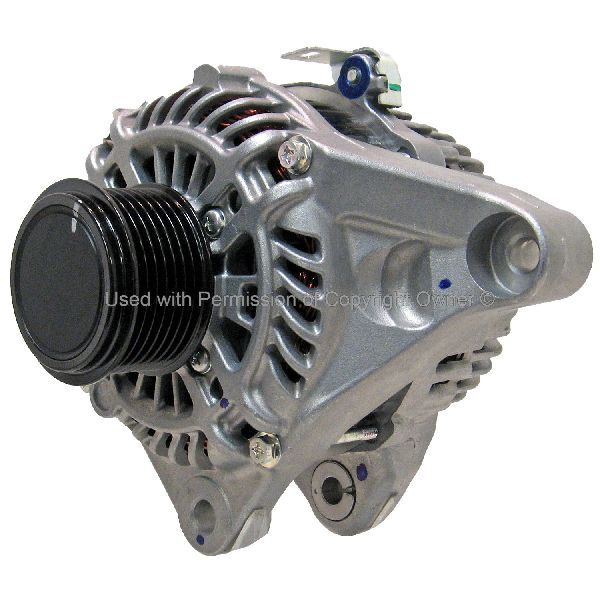
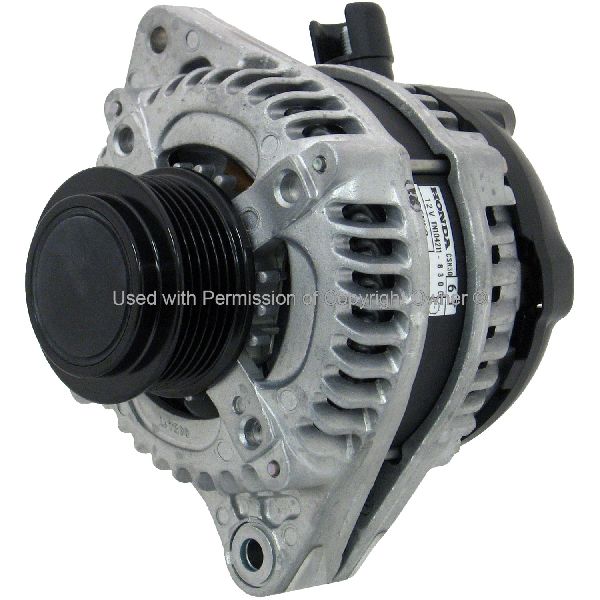
- Failing Alternator 🔴 High Probability → Shop Alternator The alternator is the primary component responsible for generating voltage. Its internal voltage regulator is a common failure point that leads directly to low output, and the bearings can also wear out causing noise and eventual seizure.
How to confirm: With the engine running, use a multimeter to measure the voltage at the battery terminals. A healthy alternator should produce 13.5 to 14.8 volts. If the voltage is below 13.0V or near battery voltage (~12.5V), the alternator is likely bad. Many auto parts stores can test your alternator for free if you remove it. The alternator is located at the front of the engine and is relatively easy to access. 🎬 Watch: Step-by-step guide to replacing your Honda Accord alternator.
Typical fix: Replace the alternator.
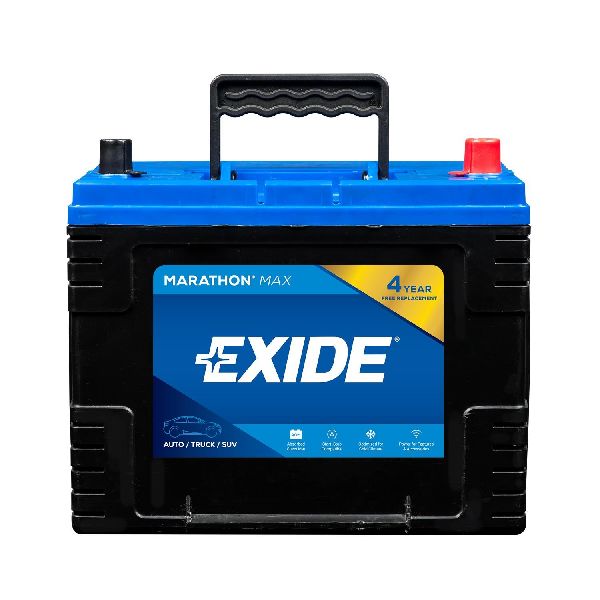
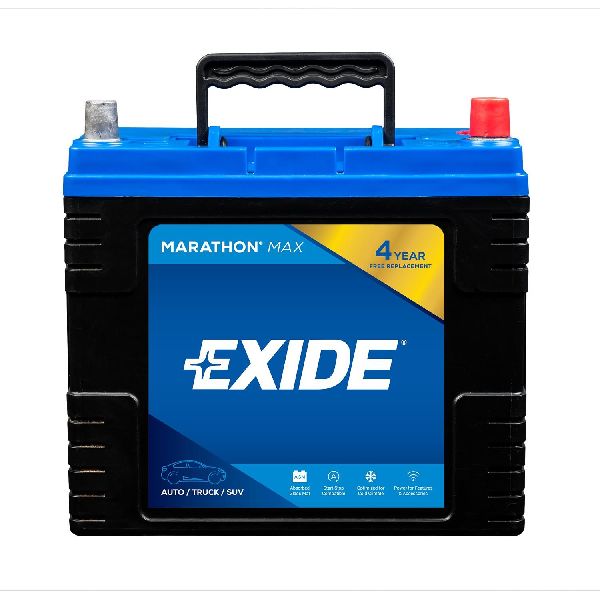
Est. part cost: $250-$500 - Weak or Defective Battery 🟡 Medium Probability → Shop Vehicle Battery A battery with a dead cell or one that is simply old (4+ years) cannot hold a proper charge, placing a constant, heavy load on the alternator and pulling down system voltage. The 4-cylinder models are noted for having a relatively small, undersized battery which can have a shorter lifespan.
How to confirm: With the engine off, measure battery voltage with a multimeter. A reading below 12.4 volts indicates a discharged or weak battery. For a definitive test, have the battery load-tested at an auto parts store.
Typical fix: Replace the 12-volt battery.
Est. part cost: $150-$250 - Faulty Battery Management Sensor 🟡 Medium Probability → Shop Vehicle Battery A recall (NHTSA #17V-418, Honda #17-069) was issued for 1.15 million 2013-2016 models because the sensor case was not properly sealed. Moisture and road salt can enter, shorting the sensor, which can disrupt charging and pose a fire risk. This is especially common in 'salt belt' states.
How to confirm: This is difficult to confirm without a Honda-specific scan tool (HDS). Often, this fault will be accompanied by code P154A. Check your VIN on Honda's recall website to see if the recall was performed. The recall involved replacing the sensor with an updated part.
Typical fix: Replace the battery sensor located on the negative battery terminal with the updated part.
Est. part cost: $80-$150 - Loose or Corroded Connections ⚪ Low Probability Corrosion on battery terminals or loose main power/ground cables create high resistance, preventing the alternator's current from properly charging the battery and powering the vehicle. The negative terminal where the battery sensor is located is a key inspection point.
How to confirm: Visually inspect the battery terminals for white or blue-green corrosion. Wiggle the battery cables to ensure they are tight. Check the main power cable on the alternator (+B terminal) and the main engine/chassis ground straps for tightness and corrosion.
Typical fix: Clean the battery terminals and cable ends with a wire brush. Tighten all loose connections. Apply multipurpose grease to the terminals to prevent future corrosion. Replace corroded cable ends if necessary.
Est. part cost: $5-$30
Rare But Worth Checking
- Blown Fuse: The charging system has several related fuses in the under-hood fuse box. A blown main fuse (e.g., 100A) can interrupt the alternator's ability to charge, though this is uncommon without another underlying electrical issue like a short circuit.
- Damaged Wiring: Check the wiring harness to the alternator, especially the small 4-pin connector that carries control signals from the PCM. Damage to these wires from chafing or rodents can prevent the PCM from commanding the alternator to charge.
- Faulty Powertrain Control Module (PCM): This is extremely rare, but the PCM is the final component in the system. It should only be considered after all other possibilities have been exhaustively ruled out.
Diagnosis Steps
- Check for other DTCs. If codes like P154A are present, investigate them first as per TSB 16-026.
- Check your VIN on the NHTSA or Honda recall website to confirm Safety Recall 17-069 for the battery sensor has been completed.
- Visually inspect the battery terminals, positive alternator terminal, and main ground straps for looseness or corrosion. Clean and tighten as needed.
- With the engine off, use a multimeter to measure the battery voltage. It should be approximately 12.4-12.6 volts. If it's lower, the battery is discharged or faulty.
- Start the engine. Measure the voltage at the battery terminals again. It should rise to between 13.5 and 14.8 volts.
- If voltage does not rise, the alternator is the primary suspect. Before replacing, verify the serpentine belt is tight and not slipping.
- If voltage does rise, but the code persists, the battery may be weak and unable to hold a charge. Have the battery professionally load-tested.
- If both the alternator and battery test good, the battery sensor is the next likely culprit, even without a P154A code. Inspect its connector and consider replacement, especially if the recall status is unknown.
- As a final, rare check, inspect the alternator's 4-pin control connector and wiring for damage.
Parts You'll Likely Need
- Alternator
(OEM #31100-5A2-A02 (for automatic transmission), 31100-5B0-Y02 (for manual transmission))— This is the most common cause of P0562, as its internal voltage regulator fails, preventing it from producing adequate voltage.
Trusted brands: Denso (OEM supplier), Bosch, Honda (Remanufactured)
OEM price range: $425-$640
Aftermarket price range: $250-$450 - Battery Sensor
(OEM #38920-T2A-A04 (supersedes 38920-T2A-A03 and 38920-T2A-A02))— A known failure point on 2013-2016 models, subject to a recall. A faulty sensor can disrupt the entire charging strategy. The -A04 part is the final countermeasure part.
Trusted brands: Honda (OEM)
OEM price range: $90-$130
Aftermarket price range: $50-$90 - Battery — An old or faulty battery cannot hold a charge, leading to persistent low system voltage even with a good alternator. The stock battery is noted to be undersized.
Trusted brands: Interstate, DieHard, Duralast
OEM price range: $200-$300
Aftermarket price range: $150-$250
Related Codes That Often Appear With This One
- P154A — This code specifically indicates a 'Battery Sensor Internal Failure' and is often the root cause if the battery sensor is faulty. TSB 16-026 directly addresses this.
- P0620 — This code means 'Generator Control Circuit Malfunction' and points directly to a problem with the alternator or the wiring that controls it.
Technical Service Bulletins (TSBs) & Recalls
- 17-069: Safety Recall: 2013–16 Accord Battery Sensor
- 16-026: MIL Comes On With DTC P154A
- TSB Bulletin #A16-026: Notes that DTC P0562 may appear as "battery condition monitor module power source circuit unexpected voltage" or "generator motor control module system low voltage" even when the MIL is off and there are no apparent symptoms.
Platform-Specific Known Issues
- Safety Recall 17-069 (NHTSA #17V-418): Affects 2013-2016 Accord models for a faulty Battery Management Sensor. The sensor case was not sealed properly, allowing moisture and road salt to enter, which can cause an electrical short and potentially a fire. The final fix involves replacing the sensor with part number 38920-T2A-A04.
- TSB 16-026: Addresses the charging system light being on with DTC P154A due to an internal failure of the battery sensor, requiring its replacement with part 38920-T2A-A03 (now superseded).
Mechanic-Grade Diagnostic Values
- PCM Target Voltage (Engine Running) — expected: 12.5V to 14.5V. Failure: Voltage below 12.5V or consistently at battery voltage (~12.6V). Code sets if voltage is <= 11.0V for 60 seconds.
- Battery Voltage (Engine Off) — expected: 12.4V to 12.6V. Failure: Below 12.4V indicates a discharged or weak battery.
- Alternator Output Under Load — expected: Voltage should remain stable above 13.5V with headlights, blower fan, and rear defroster on.. Failure: A significant voltage drop under load indicates a failing alternator or slipping belt.
- Battery Sensor Resistance — expected: < 0.5 Ω across pins 1 and 3 of the sensor connector.. Failure: A reading over 2.0 Ω indicates internal corrosion or a broken circuit.
Scan Tool Commands That Help
- Honda HDS or compatible advanced scanner: Battery Management System (BMS) Reset — This is a required procedure after replacing the 12V battery. The PCM adjusts its charging strategy based on battery age; failing to reset this can cause the new battery to be overcharged and damaged, leading to premature failure.
- Manual Procedure: Battery Cable Reset — When diagnosing persistent or strange electrical issues. Disconnecting both battery cables and shorting them together with a jumper wire for 10 minutes forces a hard reset of all control modules' volatile memory. This can sometimes clear erroneous fault conditions.
Wiring & Ground Locations
- G101 — Main engine harness ground, located on the left rear of the engine block for the 2014 model year. On similar Honda engines, it is often found on the intake manifold or thermostat housing.. This is a primary ground for the engine's sensors and the ECU/PCM. High resistance at this point can cause incorrect sensor readings and poor PCM performance, potentially affecting charging system commands.
- G201 — Located at the right front corner of the engine compartment.. Provides a key chassis ground in the engine bay. Corrosion or looseness here can contribute to overall system voltage drop and charging problems.
- Alternator 4-Pin Connector — The smaller of the two connectors on the alternator.. This connector contains the LIN bus wire through which the PCM commands the alternator's voltage output. Damage to this connector or its wiring will prevent the alternator from charging correctly, even if the alternator itself is good.
- Alternator +B Terminal — The large post on the alternator secured with a nut, with a heavy gauge wire running to the under-hood fuse box/battery.. This is the main charging output wire. Corrosion or looseness at this terminal creates high resistance, preventing the alternator's full output from reaching the battery and the rest of the vehicle.
Real Owner Repair Stories
- Reddit user in r/accord (2017 Honda Accord Sport, 135k miles) — Check charge system light came on.
❌ Tried (didn't work) Replaced the alternator with a new aftermarket unit; light came back on., Replaced the negative battery terminal connector; light came back on again.
✅ What actually fixed it Replacing the new aftermarket alternator with a genuine OEM Honda (Denso) alternator finally resolved the issue. - YouTube user (2013 Honda Accord EX-L V6) — "CHECK CHARGING SYSTEM" message on the dashboard; multimeter showed only 12V with engine running.
❌ Tried (didn't work) N/A, went straight to component-level repair.
✅ What actually fixed it Instead of replacing the entire alternator, the owner replaced only the worn alternator brushes (Honda P/N 31105-RAA-A01) for approximately $20, which restored proper charging function.
"I Checked Everything" — The Actual Cause
- In the context of this electrical code, the equivalent of a 'clean smoke test' is when both the battery and alternator pass standard bench/load tests. In these cases, the root cause is often an aftermarket alternator that is not fully compatible with the Honda PCM's LIN bus control, leading to intermittent charging commands and a persistent P0562 code. Another common cause is the recalled Battery Management Sensor failing in a way that disrupts charging logic without setting its own specific P154A code.
When the Usual Fixes Don't Work
- A common assumption is that a new alternator will fix a P0562 code. However, a documented case on a 2017 Accord showed that a new aftermarket alternator failed to resolve the issue, and the 'Check Charge System' light persisted. The problem was only solved by replacing the aftermarket unit with a genuine OEM Denso alternator. This indicates the Honda PCM can be sensitive to the specific electronics within the alternator, and a part that is merely dimensionally correct may not be functionally compatible with the LIN bus control system.
OEM Part Supersession History
38920-T2A-A02, 38920-T2A-A03→38920-T2A-A04— The original sensor housings were not properly sealed, allowing moisture ingress that could cause an electrical short and fire risk. The -A04 part is the final, updated design with improved sealing.
Heads up: While earlier versions will physically fit, they carry the original design defect and should not be used. Always install the latest revision, 38920-T2A-A04.
Model Year Variations Within This Range
- 2013-2016: These model years were subject to Safety Recall 17-069 for the faulty battery management sensor.
- 2017: The 2017 model was not included in the battery sensor recall, suggesting it was likely equipped from the factory with the updated, properly sealed sensor (38920-T2A-A04) or a revised design, making it less prone to this specific failure mode.
Diagnostic Flowchart
Other Known Issues on This Vehicle
Issues unrelated to this code that are worth knowing about as an owner of this generation:
- Starter Motor Failure / Grinding Noise 🔴 High — Very common, often occurs between 50,000 and 100,000 miles. Affects both 4-cyl and V6, but V6 has a specific TSB. (Ref: TSB 16-002 (for V6 models, describes clearance issue with torque converter))
- VTC Actuator Rattle on Cold Start 🟠 Medium — Common issue causing a brief, loud rattle for 1-2 seconds on cold startup. More of a nuisance than a critical failure, but indicates a failing part. (Ref: TSB 16-088 (describes replacing the defective VTC actuator))
- Excessive Oil Consumption 🟠 Medium — A known issue with early 'Earth Dreams' direct-injection engines. Caused by carbon buildup on oil control rings. Frequency varies, often linked to oil change intervals.
- CVT Judder / Hesitation 🟡 Low — Some owners of 2013-2014 models reported a judder or hesitation when accelerating from a stop or at low speeds (20-60 mph). (Ref: TSB 15-079 (addresses the issue by flushing the transmission fluid and later, a software update))
- LED Daytime Running Light Failure 🟡 Low — The LED strips in the headlights on 2016-2017 models are known to fail. It's a cosmetic issue but can be expensive to fix out of warranty. (Ref: Honda issued a warranty extension for this specific problem.)
Used vs. New Parts: Buying Guide for This Vehicle
When a used part is the smart pick: A used alternator can be a cost-effective choice if it is a genuine OEM Denso part sourced from a low-mileage donor vehicle. It is often more reliable than a cheap, new, no-name aftermarket unit.
Donor-vehicle mileage cap: roughly under 80000 miles for the part to have meaningful remaining life.
What to inspect on the donor part:
- Confirm it is a Denso-branded unit.
- Spin the pulley by hand; it should be smooth with no grinding or roughness.
- Inspect the casing for signs of extreme heat (discoloration) or fluid leaks.
- Ensure the electrical connectors and the main +B power stud are clean and undamaged.
OEM-only on this vehicle (don't cheap out):
- Battery Management Sensor: Due to the high failure rate and fire risk associated with the original part, only a new OEM part (38920-T2A-A04) should be used to guarantee you have the corrected, sealed design.
Aftermarket brands forum-validated for this vehicle:
- Denso (New or Remanufactured): As the Original Equipment supplier, Denso offers the highest compatibility and reliability.
Brands owners have reported issues with on this vehicle:
- Unspecified/generic aftermarket alternators: Forum and owner reports indicate that some non-OEM alternators, even when new, can cause persistent charging system errors on this platform, likely due to incompatibility with the PCM's control signals.
Real Owner Stories
Aggregated from forums and TSBs cited above. Mileages and costs reflect what owners reported in those sources.
2014 Honda Accord Sport 2.4L
Symptoms: P0562 low voltage code triggered; initial confusion over whether the battery or alternator was the culprit.
What fixed it: Replacement of the alternator.
Source hint: Reddit r/mechanicadvice thread titled '2014 honda accord sport p0562 low voltage code'
2013 Honda Accord LX 2.4L
Symptoms: Charging system problem indicated by DTC P0562.
What fixed it: The owner traced the failure to the alternator after testing both the battery and the battery sensor.
Source hint: driveaccord.net thread titled '2013 accord lx charging system problem dtc p0562'
2013-2016 Honda Accord 2.4L
Symptoms: Battery light on, but both the alternator and battery tested good during standard diagnostics.
What fixed it: Replacement of the battery management sensor on the negative terminal.
Source hint: driveaccord.net thread titled 'battery light on alternator and battery test good'
Related OBD-II Codes
Frequently Asked Questions
Is there a recall for the battery sensor on my 2013-2016 Honda Accord?
What is the specific replacement part number for the updated battery sensor under the recall?
My charging system light is on and I have code P154A. Is this related to P0562?
Why does my 2.4L Accord seem to have battery issues more often than other cars?
Can I test the alternator myself on my 2013-2017 Accord?
Could a cold start rattle be related to my charging system issues?
Helpful Videos

We Have This Part in Stock


The information in this article is provided for general reference and educational purposes only. Vehicle specifications, procedures, and part compatibility can vary by production date, trim level, and region. Always consult your vehicle's factory service manual and verify part numbers before purchasing or performing repairs. Safety-critical components such as airbags, seat belts, and braking systems should be installed by a qualified professional.
- Honda Accord:
- 🧭 Diagnostic Flowchart
- 🎬 Helpful Videos
- 🛍️ Shop This Part
- What's Unique About the 2013-2017 Honda Accord
- Symptoms You May Notice
- Most Likely Causes
- Rare But Worth Checking
- Diagnosis Steps
- Parts You'll Likely Need
- Related Codes That Often Appear With This One
- Technical Service Bulletins (TSBs) & Recalls
- Platform-Specific Known Issues
- Mechanic-Grade Diagnostic Values
- Scan Tool Commands That Help
- Wiring & Ground Locations
- Real Owner Repair Stories
- "I Checked Everything" — The Actual Cause
- When the Usual Fixes Don't Work
- OEM Part Supersession History
- Model Year Variations Within This Range
- Other Known Issues on This Vehicle
- Used vs. New Parts: Buying Guide for This Vehicle
- Real Owner Stories
- 2014 Honda Accord Sport 2.4L
- 2013 Honda Accord LX 2.4L
- 2013-2016 Honda Accord 2.4L
- Related OBD-II Codes
- Frequently Asked Questions
- 🎟️ Get 5% Off