

P0562 on 2006-2011 Honda Civic: System Voltage Low Causes and Fixes
For a 2006-2011 Honda Civic, code P0562 most often points to a failing alternator. Other likely causes are a weak battery, corroded terminals, or a loose serpentine belt. Expect to pay $250-$600 for a professionally installed alternator.
- P0562 means your car's electrical system voltage is too low, most likely due to a failing alternator.
- Before buying parts, perform basic voltage tests on the battery and charging system with a multimeter. A running voltage below 13.2V points strongly to the alternator.
- Always check the simple things first: clean and tighten your battery terminals and check the main ground connections.
- Driving with this code is risky as the car could stall at any time and may not restart.
- If the alternator and battery test good, the issue could be the Honda-specific Electronic Load Detector (ELD) or a bad connection you've overlooked.
What's Unique About the 2006-2011 Honda Civic
On this generation of Honda Civic, the charging system is relatively straightforward. Unlike some newer vehicles with complex battery management systems, the 2006-2011 Civic uses a more traditional setup. However, it does incorporate an Electronic Load Detector (ELD) in the under-hood fuse box. The ELD measures the vehicle's electrical draw and signals the PCM to adjust the alternator's output. This results in a dual-mode charging system; under light load, the system may only charge at 12.4V-12.9V, which is normal for this car and can be confusing during diagnosis. Under heavy load (headlights on, etc.), it should charge at 14.4V-14.9V. While a failing alternator is the most common cause for P0562, a faulty ELD can sometimes send incorrect signals, causing the alternator to reduce its output and trigger the code. This is a known, though less common, issue on this platform.
Symptoms You May Notice
- Check Engine Light is on
- Battery warning light is illuminated on the dashboard
- Dimming or flickering headlights and interior lights
- Difficulty starting the engine, or a slow crank
- Engine stalling, especially when electrical accessories are used
- Erratic behavior from electrical components like the radio, power windows, or dashboard gauges
- Whining or squealing noise from the engine bay, which could be the alternator bearings failing
- Transmission shifting problems in automatic models
- Replacing the battery when the alternator is the actual cause. A new battery will quickly be drained by a faulty alternator, and the problem will return.
- Replacing the alternator when the actual issue is a simple, high-resistance connection due to corroded battery terminals or a bad ground wire.
- Misdiagnosing a faulty alternator due to the dual-mode charging system. Testing the voltage without electrical loads (headlights, AC) on may show a reading of ~12.5V, which is normal for this system in low-output mode.
Most Likely Causes
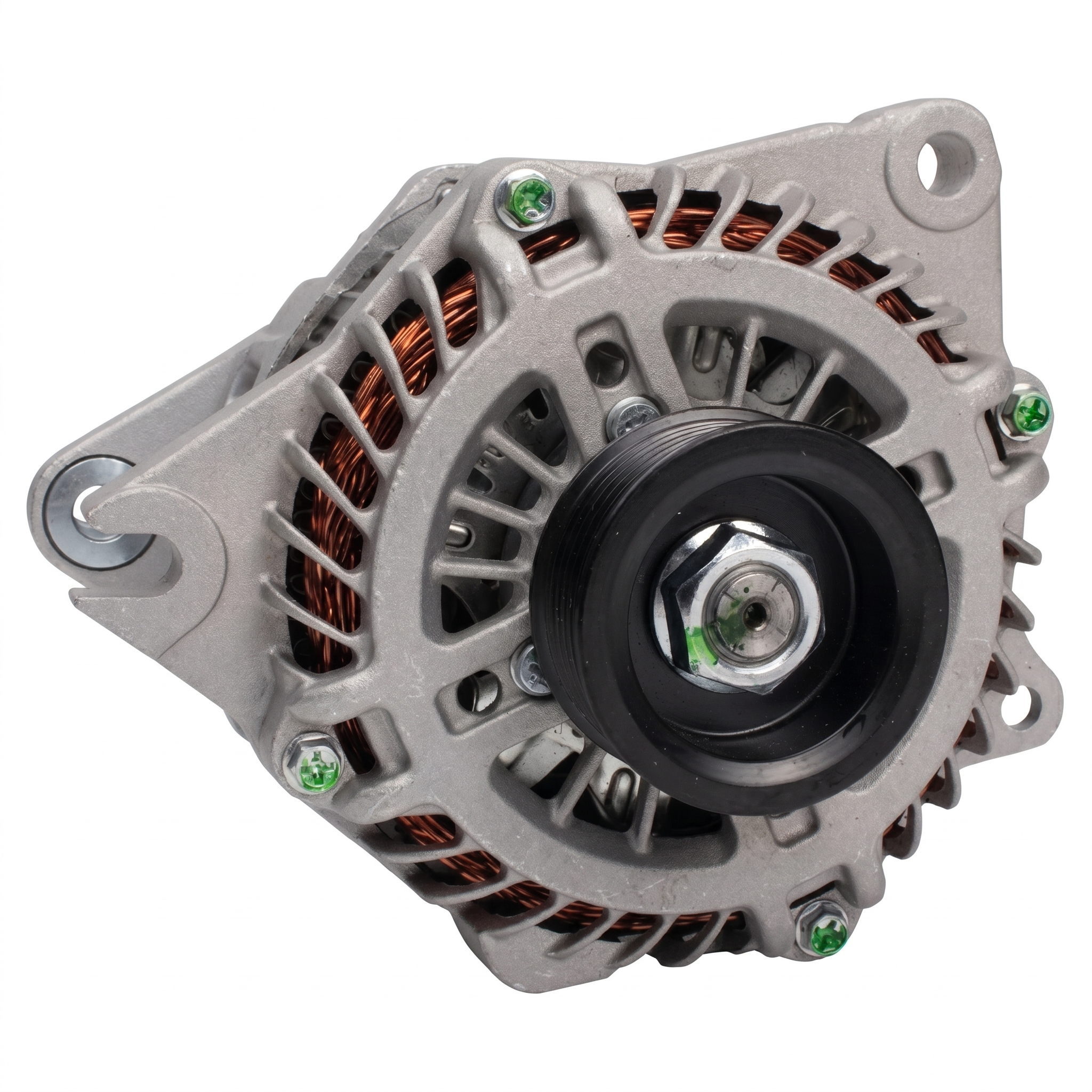
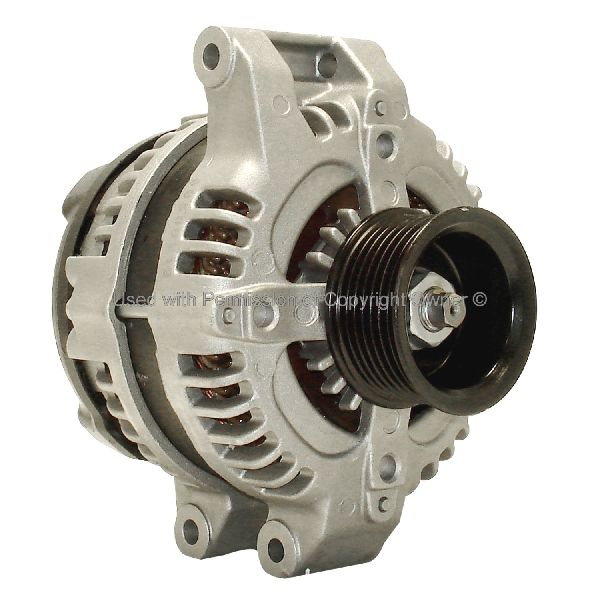
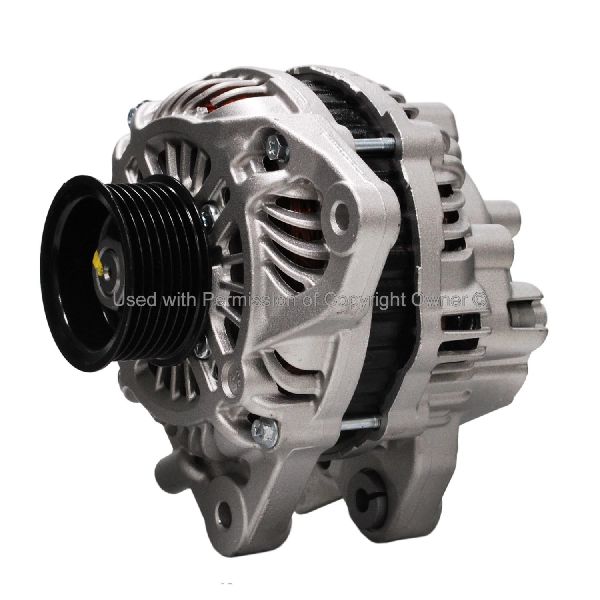
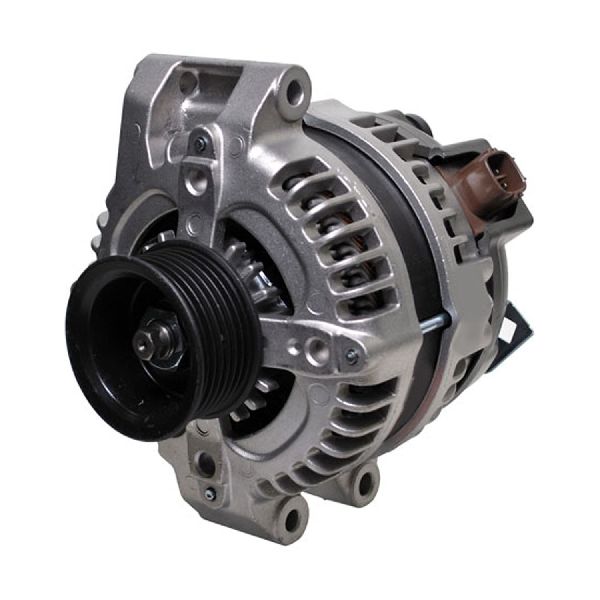
- Failing Alternator 🔴 High Probability → Shop Alternator Alternators are wear-and-tear components with a finite lifespan, and are a very common failure point on most vehicles of this age. The internal voltage regulator or bearings can fail, leading to insufficient charging.
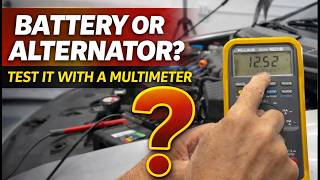
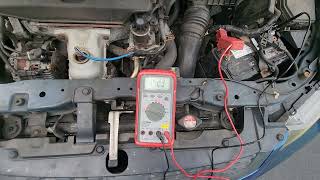
How to confirm: With the engine running and electrical loads ON (headlights, blower fan), use a multimeter to test the voltage at the battery terminals. 🎬 Watch: How to test your battery and alternator with a multimeter A healthy alternator should produce a voltage between 13.5 and 14.7 volts. If the voltage is below 13.2V or is not rising from the battery's resting voltage (approx. 12.6V), the alternator is the primary suspect. Most auto parts stores will test an alternator for free if you bring it in.
Typical fix: Replace the alternator.
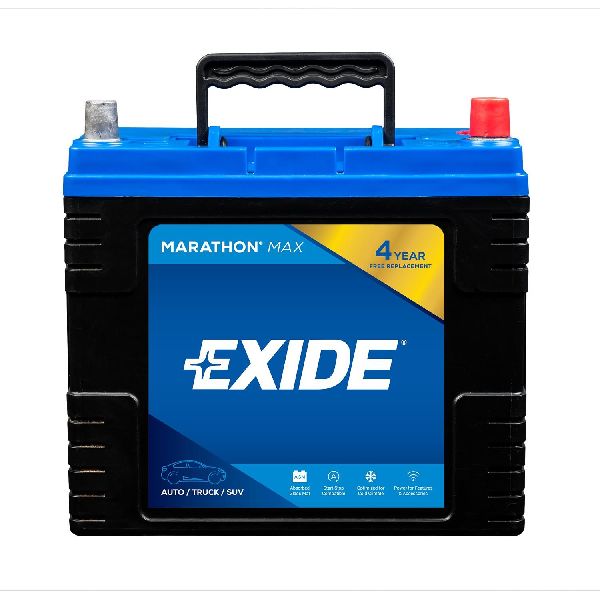
Est. part cost: $150-$300 - Weak or Dead Battery 🟡 Medium Probability → Shop Vehicle Battery Car batteries typically last 3-5 years. An old battery that can no longer hold a sufficient charge, or has a dead cell, can trigger this code, especially during engine startup when voltage drop is highest.
How to confirm: With the engine off, test the battery voltage with a multimeter. A fully charged battery should read around 12.6 volts. If it's below 12.4V, the battery is weak. A load test, which can be performed at most auto parts stores, is the most definitive way to confirm a bad battery.
Typical fix: Replace the battery.
Est. part cost: $100-$250 - Loose or Corroded Battery Terminals/Cables 🟡 Medium Probability → Shop Vehicle Battery Corrosion is common on battery terminals and can create high resistance, preventing the alternator from properly charging the battery and powering the vehicle. This also applies to the main ground connections to the chassis and engine block.
How to confirm: Visually inspect the battery terminals, cable ends, and ground straps for any white or greenish buildup, rust, or looseness. Wiggle the cables to ensure they are tight. Perform a voltage drop test on the positive and negative cables to check for hidden resistance. A reading of more than 0.2V on the ground side or 0.5V on the positive side indicates a problem.
Typical fix: Clean the battery terminals and cable ends with a wire brush. Ensure all connections are tight and secure. Replace cables if corrosion is severe.
Est. part cost: $5-$20
Rare But Worth Checking
- Faulty Electronic Load Detector (ELD): The ELD is a Honda-specific component located in the under-hood fuse box. If it fails, it can incorrectly tell the PCM that electrical demand is low, causing the alternator to reduce its output and trigger P0562. This is less common than an alternator failure but is a known issue on Hondas of this era. A short to ground on the 'C' wire from the alternator can also lock the system in low-output mode.
- Blown Fuse: The charging system has fuses. Check the main alternator fuse (often a high-amperage fuse bolted in the under-hood fuse box) and other related fuses like the 'ALT/SP SENSOR' fuse (Fuse 15 in many Hondas). A blown fuse can cut off the alternator's output entirely.
- Loose or Worn Serpentine Belt: → Shop Serpentine Belt The serpentine belt drives the alternator. If the belt is slipping due to wear, damage, or a faulty tensioner, it cannot spin the alternator pulley at the correct speed to generate adequate voltage.
- Faulty Powertrain Control Module (PCM): This is extremely rare. The PCM is the car's main computer and controls the charging system. Before condemning the PCM, all other possibilities (alternator, battery, wiring, ELD) must be exhaustively ruled out.
Diagnosis Steps
- Scan for any other stored trouble codes. Address those first if they are present.
- Visually inspect the battery terminals and cables for corrosion or damage. Clean and tighten as necessary.
- Inspect the main ground connections to the chassis and engine block for tightness and corrosion. Pay special attention to ground G101 on the thermostat housing.
- With the engine off, use a multimeter to measure the battery voltage. It should be approximately 12.6 volts. If it's low, charge the battery before proceeding.
- Start the engine. Turn on headlights to high beam and the blower fan to high to force the system into high-output mode.
- Measure the voltage at the battery terminals again. It should rise to between 13.5 and 14.7 volts.
- If voltage is below 13.2V with the engine running under load, the alternator is the primary suspect.
- If the voltage is correct, the battery may be weak and unable to hold a charge. Have the battery load-tested at an auto parts store.
- Inspect the serpentine belt that drives the alternator. Ensure it is in good condition and has proper tension.
- If the alternator and battery test good, investigate the wiring between the alternator, battery, and fuse box for any damage. Check the main alternator fuse and the ALT/SP SENSOR fuse (Fuse 15).
- As a final, less common step, consider testing the Electronic Load Detector (ELD) circuit. 🎬 Watch: How to test a Honda Civic charging system
Parts You'll Likely Need
- Alternator
(OEM #31100-RNA-A01)— This is the most common component to fail and cause a P0562 code on a vehicle of this age.
Trusted brands: Denso (OEM supplier), Bosch, Duralast Gold
OEM price range: $615-$650
Aftermarket price range: $150-$300 - Battery — An old battery that cannot hold a proper charge is the second most likely cause. The correct size for most 8th gen Civics is Group 51R.
Trusted brands: Interstate, DieHard, Duralast
OEM price range: $150-$250
Aftermarket price range: $100-$200 - Electronic Load Detector (ELD)
(OEM #38255-SNA-003)— If the alternator and battery are good, this Honda-specific part can fail and cause incorrect charging voltage. The part number was updated from the older 38255-S5A-003.
Trusted brands: Honda (OEM)
OEM price range: $5-$10
Aftermarket price range: $20-$40
Platform-Specific Known Issues
- Real Owner Experience: Alternator Failure: → Shop Alternator An owner on AcuraZine (a related Honda platform) with a P0562 code experienced a whining noise from the engine that wouldn't go away. The car eventually needed a jump start. Testing revealed the alternator was not providing an adequate charge. This highlights that an audible whine can be a precursor to complete alternator failure.
- Forum Discussion on Reddit: A user on r/MechanicAdvice reported a P0562 code after installing a new subwoofer. The community advised that the increased electrical load from the sound system likely exposed a weak alternator that could no longer keep up with demand, a common scenario.
Technical Service Bulletins (TSBs) & Recalls
- TSB Bulletin #A16-026: A manufacturer service bulletin for related Honda models notes that P0562 can be triggered by the battery condition monitor module power source circuit having unexpected voltage or the generator motor control module system experiencing low voltage. In some cases, this DTC may be present even if the MIL is off and there are no apparent symptoms.
Mechanic-Grade Diagnostic Values
- Charging System Voltage (Low Output Mode) — expected: 12.4V - 12.9V. Failure: This is a normal reading under light electrical load (e.g., no headlights, A/C off). It can be mistaken for a fault.
- Charging System Voltage (High Output Mode) — expected: 14.4V - 14.9V. Failure: If voltage is below this range with heavy electrical loads on (headlights, blower fan), it indicates a charging system problem.
- ELD Signal Voltage (Low Load) — expected: 2.0V - 4.0V. Failure: Readings outside this range suggest a faulty ELD or wiring issue.
- ELD Signal Voltage (High Load) — expected: 1.0V - 2.0V. Failure: Readings outside this range suggest a faulty ELD or wiring issue.
- Voltage Drop Test (Alternator B+ post to Battery+ post) — expected: Less than 0.2V. Failure: A reading higher than 0.2V indicates high resistance in the main charging wire or connections.
- Alternator AC Leakage Test — expected: No more than 0.5V AC. Failure: A reading higher than 0.5V AC indicates a faulty diode within the alternator's rectifier.
Wiring & Ground Locations
- G101 — On the thermostat housing.. This is a primary ground point for the PCM and multiple sensors. A poor connection here can cause a wide range of issues, including erratic sensor readings that could indirectly affect charging system operation.
- Alternator 4-Pin Connector — Plugged into the side of the alternator.. This connector carries the critical communication signals between the alternator's voltage regulator and the PCM. The wires are Black/Yellow (IG - Ignition Power), White/Blue (L - Lamp), White/Green (C - PCM Control), and White/Red (FR - Field Monitor). Testing voltages and continuity at these pins is essential for advanced diagnosis.
- G1 / G2 — G1 is on the transmission housing, G2 is on the engine block.. These are the main battery and engine block grounds. High resistance at these points can impede the entire electrical system, including the alternator's ability to charge the battery effectively.
Real Owner Repair Stories
- Reddit user u/PercentageUnique5530 (2009 Honda Civic EX) — Car would not start without a jump. Battery light came on and off randomly. Dash lights would sometimes flicker.
❌ Tried (didn't work) Replaced the alternator with a new aftermarket unit from Amazon., Replaced the battery ground cable., Checked all connections and grounds visually.
✅ What actually fixed it The aftermarket alternator was faulty. The problem was solved by replacing the aftermarket alternator with a used OEM alternator. - Honda-Tech forum user (1999 Honda Civic (similar charging system principles)) — Stalling, no-start unless revving the engine.
❌ Tried (didn't work) Cleaning and repositioning the G101 ground terminal multiple times.
✅ What actually fixed it The user suspected a frayed wire within the loom for the G101 ground. Another user suggested running a new, temporary ground wire from the ECU ground pin directly to the chassis to confirm the fault, then making a permanent repair.
OEM Part Supersession History
31100-RNA-A01→06311-RNA-505RM (Remanufactured Option)— Honda offers a remanufactured version of the original part.
Heads up: The OEM new part is 31100-RNA-A01 (made by Mitsubishi, designated AHGA67). The remanufactured part is a direct replacement.
Model Year Variations Within This Range
- 2009-2011: The 2009 model year introduced a mid-cycle refresh with cosmetic updates (bumper, grille, lights) and new interior tech options like Bluetooth and USB audio. However, the core powertrain, including the 1.8L engine and its charging system, remained unchanged from the 2006-2008 models.
Diagnostic Flowchart
Other Known Issues on This Vehicle
Issues unrelated to this code that are worth knowing about as an owner of this generation:
- Cracked Engine Block (R18 Engine) 🔴 High — Affects mainly 2006-2008 models and some early 2009s. A coolant leak develops on the front or back of the engine block. Honda issued a warranty extension to 10 years/unlimited miles, which has now expired for all affected vehicles. (Ref: Honda TSB 10-048)
- Premature/Uneven Rear Tire Wear 🟠 Medium — Common on 2006-2008 models due to faulty rear upper control arms causing incorrect camber. Leads to 'cupped' tires and a roaring noise. (Ref: Honda TSB 08-001)
- Failing Clear Coat / Peeling Paint 🟡 Low — Widespread across this generation, especially on dark colors like Fiji Blue Pearl and Nighthawk Black Pearl. The clear coat fails and peels, typically on the roof, hood, and trunk. Honda offered a 7-year warranty extension, which is now expired. (Ref: Honda TSB 12-049)
- Failing Passenger Side Engine Mount 🟠 Medium — The hydraulic passenger-side engine mount is prone to leaking and collapsing, causing excessive engine vibration to be felt in the cabin, especially at idle and in reverse. (Ref: Honda TSB 06-060)
- Cracked Sun Visors 🟡 Low — Very common for the plastic on the sun visors to crack near the pivot point, causing them to droop and not stay in place.
Used vs. New Parts: Buying Guide for This Vehicle
When a used part is the smart pick: A used OEM alternator from a reputable salvage yard can be a smarter choice than a new, cheap aftermarket alternator. As seen in owner forums, new aftermarket units for this car have a high failure rate, whereas a used Denso (OEM) part is often more reliable. A used ELD is also a very low-risk purchase.
Donor-vehicle mileage cap: roughly under 100000 miles for the part to have meaningful remaining life.
What to inspect on the donor part:
- For an alternator, check the pulley. It should spin smoothly by hand with no grinding, roughness, or excessive side-to-side play.
- Inspect the alternator housing for signs of heavy corrosion, oil saturation, or physical damage.
- Ask for the donor vehicle's mileage; lower is always better.
- Ensure the electrical connector and the main B+ terminal stud are not damaged or corroded.
OEM-only on this vehicle (don't cheap out):
- While not strictly 'OEM-only', the alternator is a part where choosing a Denso (OEM supplier) or a trusted used OEM unit is strongly recommended over generic, unbranded aftermarket options to avoid immediate failure.
Aftermarket brands forum-validated for this vehicle:
- Denso (Remanufactured)
- Bosch (Remanufactured)
- Some users report success with Duralast Gold from AutoZone due to the lifetime warranty, despite fitment sometimes being tight.
Brands owners have reported issues with on this vehicle:
- Unbranded, cheap alternators from online marketplaces like Amazon or eBay are frequently reported as being faulty out of the box or failing shortly after installation.
Real Owner Stories
Aggregated from forums and TSBs cited above. Mileages and costs reflect what owners reported in those sources.
2007 Acura RDX (Honda Platform Mate)
Symptoms: The owner experienced a persistent whining noise from the engine bay, dimming lights when accessories were turned on, and the car eventually required a jump start.
What fixed it: Replacement of the alternator after testing confirmed it was not providing an adequate charge.
Source hint: AcuraZine - 'Charging system error P0562'
2006-2011 Honda Civic
Symptoms: The vehicle struggled to start and would stall out after the owner installed a new subwoofer and sound system.
What fixed it: The community identified that the increased electrical load exposed a weak alternator that could no longer meet the vehicle's demands.
Source hint: Reddit r/MechanicAdvice - 'Code p0562'
Related OBD-II Codes
Frequently Asked Questions
I hear a whining noise from my engine bay along with the P0562 code; is this common for the 8th Gen Civic?
Could my P0562 code be related to the cracked engine block issue on my 2007 Civic?
Is there a specific fuse I should check for charging issues on this model?
My Civic is stalling when I use the power windows and radio; is this linked to P0562?
What is the Electronic Load Detector (ELD) mentioned in forum discussions for this car?
Does the P0562 code affect the automatic transmission in the 2006-2011 Civic?
Helpful Videos
Used OEM Parts in Stock
New Aftermarket Parts Available

The information in this article is provided for general reference and educational purposes only. Vehicle specifications, procedures, and part compatibility can vary by production date, trim level, and region. Always consult your vehicle's factory service manual and verify part numbers before purchasing or performing repairs. Safety-critical components such as airbags, seat belts, and braking systems should be installed by a qualified professional.
- Honda Civic:
- 🧭 Diagnostic Flowchart
- 🎬 Helpful Videos
- 🛍️ Shop This Part
- What's Unique About the 2006-2011 Honda Civic
- Symptoms You May Notice
- Most Likely Causes
- Rare But Worth Checking
- Diagnosis Steps
- Parts You'll Likely Need
- Platform-Specific Known Issues
- Technical Service Bulletins (TSBs) & Recalls
- Mechanic-Grade Diagnostic Values
- Wiring & Ground Locations
- Real Owner Repair Stories
- OEM Part Supersession History
- Model Year Variations Within This Range
- Other Known Issues on This Vehicle
- Used vs. New Parts: Buying Guide for This Vehicle
- Real Owner Stories
- 2007 Acura RDX (Honda Platform Mate)
- 2006-2011 Honda Civic
- Related OBD-II Codes
- Frequently Asked Questions
- 🎟️ Get 5% Off