

P0562 on 2023 Honda CR-V Hybrid: Charging System Low Voltage Causes and Fixes
P0562 on a 2023 Honda CR-V Hybrid indicates low voltage in the 12V charging system. The most common causes are a weak 12V battery or a failing DC-DC converter, which functions as the alternator in this hybrid system. Start by testing the 12V battery. In some cases, the issue can be intermittent or related to wiring from the high-voltage system.
- P0562 means your 2023 CR-V Hybrid's 12V battery is not being charged properly.
- Before suspecting major components, always check that the 12V battery is healthy and its terminals are clean and tight.
- The component that charges the battery is the DC-DC converter, not a traditional alternator.
- Due to the high-voltage system, diagnosis beyond basic battery checks should be left to a qualified professional.
- Do not continue driving, as the vehicle could shut down unexpectedly or enter a low-power limp mode.
What's Unique About the 2023-2023 Honda CR-V Hybrid
Unlike a conventional car with an alternator, your CR-V Hybrid uses a DC-DC converter to step down high voltage from the main hybrid battery to charge the 12V accessory battery. Therefore, a P0562 code points to a problem with the 12V battery itself, its connections, the DC-DC converter, or the wiring connecting these components. Diagnosis can be more complex due to the involvement of the high-voltage system, and in some owner experiences, has been traced back to faulty cables connected to the high-voltage battery.
Symptoms You May Notice
- Check Engine Light is on
- "Check Charging System" or "12-volt battery charging system problem" warning message on the dashboard
- Dimming or flickering interior and exterior lights
- Difficulty starting the vehicle or a dead 12V battery
- Erratic operation of electrical accessories like the radio or power windows
- Vehicle enters a reduced power 'limp mode'
- Inability to unlock doors with key fob or emergency key if 12V battery is completely dead
- Potential for the vehicle to stall or shut down while driving
- Replacing the alternator. This vehicle does not have a traditional alternator; the charging function is performed by the DC-DC converter.
Most Likely Causes
- Failing 12V Battery 🔴 High Probability → Shop Vehicle Battery Even on a new vehicle, a 12V battery can have a manufacturing defect or a dead cell. Some owners report premature battery failure or significant drain after leaving the vehicle parked for extended periods. An incorrect, non-AGM battery may also have been installed by a third party, which can fail quickly.
How to confirm: Measure the battery voltage with the vehicle off; it should be ~12.4-12.6V. A reading of 12.1V or lower suggests a discharged or faulty battery. Perform a load test on the battery. Most auto parts stores can do this for free.
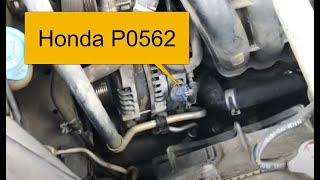
Typical fix: Replace the 12V battery with the correct AGM type. 🎬 Watch: How to diagnose and fix P0562 low voltage codes.
Est. part cost: $200-$400 - Loose or Corroded Battery Terminals or Ground Wires 🟡 Medium Probability → Shop Vehicle Battery Connections can loosen over time. The 12V battery has a sensor on the negative terminal that monitors its condition; a poor connection here can cause faults.
How to confirm: Visually inspect the 12V battery terminals for white or blue-green corrosion. Check that the terminal clamps are tight and cannot be moved by hand. Inspect the main chassis ground strap for tightness and corrosion.
Typical fix: Clean the terminals and cable ends with a wire brush and ensure all connections are secure.
Est. part cost: $5-$20 - Faulty DC-DC Converter 🟡 Medium Probability The DC-DC converter is the sole component for charging the 12V battery. As a complex electronic module, it can fail internally, leading to a no-charge condition.
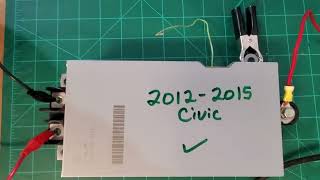
How to confirm: With the vehicle in 'Ready' mode, use a multimeter to measure the voltage at the 12V battery terminals. If the voltage is not above 13.5V (e.g., 14.5V is common), the DC-DC converter is likely not charging. This test should be performed by a qualified technician. 🎬 See how a technician bench tests a Honda DC-DC converter.
Typical fix: Replace the DC-DC converter.
Est. part cost: $800-$1500
Rare But Worth Checking
- Wiring Harness Issue: A short or open in the wiring between the DC-DC converter and the 12V battery can prevent proper charging. In one documented case, a CR-V Hybrid owner with recurring charging issues had the problem traced to a faulty cable connected to the high-voltage battery.
- PCM (Powertrain Control Module) Fault: In rare cases, the PCM may malfunction and incorrectly report a low voltage condition or fail to command the DC-DC converter to charge.
- Faulty Battery Sensor or Fuse: → Shop Vehicle Battery Some Honda models use a battery sensor fuse. While not confirmed on the CR-V Hybrid, a Reddit user with a '23 CR-V Sport suspected this based on an Accord repair video, though they could not locate the fuse. A faulty battery monitoring sensor on the negative terminal could also be a cause.
Diagnosis Steps
- Scan the vehicle's computer for P0562 and any other related trouble codes like P0A94.
- With the vehicle off, measure the voltage of the 12V battery using a multimeter. A healthy battery should read approximately 12.4-12.6 volts. A reading below 12.2V indicates a discharged or faulty battery.
- Have the 12V battery professionally load-tested to check for internal defects like a bad cell.
- Inspect the 12V battery terminals and main chassis ground connections for any signs of corrosion or looseness. Pay close attention to the battery sensor on the negative terminal. Clean and tighten as necessary.
- If the battery and connections are good, start the vehicle (put it in 'Ready' mode) and measure the voltage at the battery terminals again. The reading should rise to between 13.5 and 14.7 volts. One owner noted a healthy reading of 14.5V.
- If the voltage does not rise, the 12V battery is not being charged. Check fuses related to the charging system and DC-DC converter.
- If fuses are intact, the issue likely lies with the DC-DC converter, its wiring, or the PCM. A Reddit user with persistent issues had the problem resolved by replacing a cable connected to the high-voltage battery. This level of diagnosis should be handled by a professional service technician due to the high-voltage components involved.
Parts You'll Likely Need
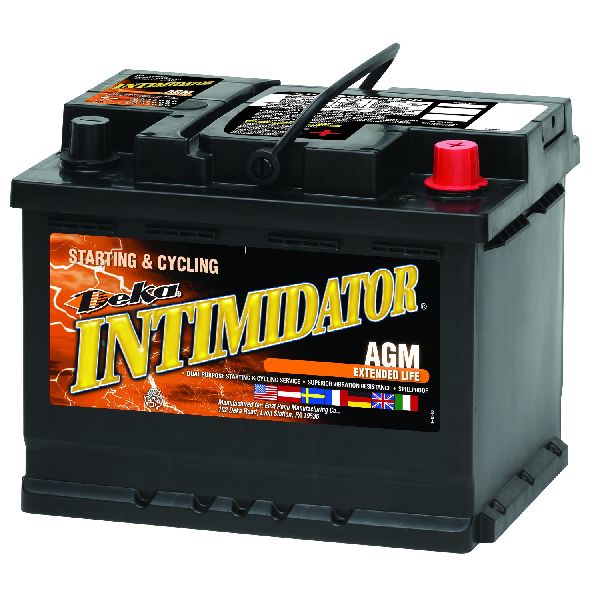
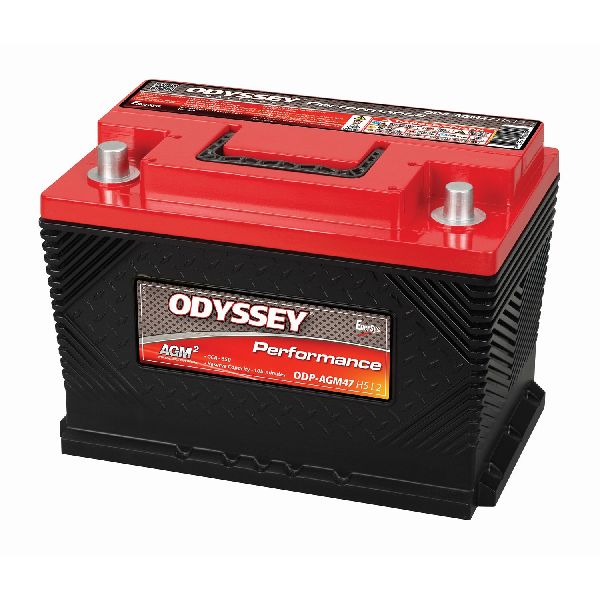
- 12V AGM Battery
(OEM #31500-TBA-A11 (superseded by 31500-TGG-100M))— The 12V battery is a common failure point and the first component to test for any low voltage code. It must be an an AGM type battery.
Trusted brands: Honda (OEM), Yuasa, Deka
OEM price range: $250-$400
Aftermarket price range: $200-$350 - DC-DC Converter — If the 12V battery and its connections are good, the DC-DC converter is the next most likely cause, as it is responsible for charging the battery.
Trusted brands: Honda (OEM)
OEM price range: $800-$1500
Related Codes That Often Appear With This One
- P0A94 — This code directly relates to DC-DC Converter Performance problems and may appear if the converter is the root cause of the low voltage condition.
- P16BB — This code for 'Alternator B Terminal Circuit Low Voltage' can be triggered alongside P0562 on some Honda platforms, pointing to an issue in the charging circuit.
Platform-Specific Known Issues
- A small number of 2023 CR-V Hybrid vehicles were recalled (NHTSA ID: 23V782000, Honda recall: HJR) for an issue with the high-voltage battery module. The cause was insufficient copper cladding on the negative terminals of the battery cells, which could fracture and lead to a loss of power or a spark, increasing fire risk. While this may not directly cause P0562, a fault in the high-voltage system that powers the DC-DC converter could be a related factor.
Technical Service Bulletins (TSBs) & Recalls
- TSB Bulletin #A16-026: While originally issued for other Honda models, this bulletin notes that P0562 can be triggered by the battery condition monitor module power source circuit having unexpected voltage or the generator motor control module system experiencing low voltage. It specifically highlights that these codes may appear even if the MIL (Check Engine Light) is off and there are no apparent symptoms.
Mechanic-Grade Diagnostic Values
- 12V Battery Voltage (Vehicle Off) — expected: ~12.4V to 12.6V. Failure: A reading of 12.1V or lower indicates a discharged or faulty battery.
- 12V Charging Voltage (Vehicle in 'Ready' Mode) — expected: 13.5V to 14.7V. Failure: Voltage does not rise from the static battery voltage, or stays below 13.5V, indicating a lack of charging from the DC-DC converter.
- Battery Sensor Temperature Plausibility Check — expected: The temperature measured at the 12V battery with a thermometer should be within 23°C (41°F) of the 'estimated battery temperature' value displayed on the Honda Diagnostic System (HDS).. Failure: A difference greater than 23°C (41°F) indicates a faulty 12V battery sensor.
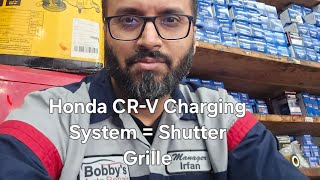
- Active Grille Shutter LIN Bus 🎬 Watch: How a faulty active grille shutter causes charging problems. Signal Voltage — expected: Over 10.2V with the connector disconnected.. Failure: When the connector is plugged in, if the signal voltage drops to ground (0V), it indicates an internal short in the grille shutter assembly is pulling down the LIN bus.
Hidden / Shadow Codes Worth Checking
- P154B: Battery Sensor Characteristic Abnormal. This code indicates the measured value from the 12V battery sensor does not match values from other sensors monitored by the PCM. It often points to a faulty sensor, its wiring, or a LIN bus communication issue. (see via Professional scan tool or Honda Diagnostic System (HDS).)
- U-code for LIN Communication Error: A technician found a 'LIN communication error' for both the 12V battery sensor and the active grille shutter. This points to a fault on the shared communication wire rather than the charging components themselves. (see via Professional scan tool capable of reading Body/Chassis codes (B-codes, U-codes).)
Scan Tool Commands That Help
- Honda Diagnostic System (HDS): ECM RESET — This command is used after performing repairs, such as replacing a relay or fixing a wiring issue, to clear learned values and reset the system before re-testing to confirm the fix.
- Honda Diagnostic System (HDS): DTC CLEAR — Used at the beginning of the diagnostic procedure to clear existing codes and see if P0562 returns as a 'Temporary DTC' during a test drive, confirming it's an active fault.
Wiring & Ground Locations
- LIN Bus Signal Wire — Runs between the PCM, the 12V battery sensor (on the negative terminal), and the active grille shutter connector (located in the middle of the grille). The wire color is light green.. A short to ground on this shared communication wire, for example inside the active grille shutter assembly, can disrupt the battery sensor's signal to the PCM, triggering a false 'Check Charging System' warning and potentially P0562 or P154B.
- PGM-FI Main Relay 1 — Located in the under-dash fuse/relay box.. Official Honda troubleshooting procedures for P0562 on some models point to checking for poor connections or loose terminals at this relay, as it is critical for powering the ECM.
Real Owner Repair Stories
- Reddit user on r/crv (2023 Honda CR-V Hybrid Sport Touring) — Recurring '12 volt battery charging system problem' warning light. Eventually escalated to 'critical failure detected' message, vehicle entering limp mode (slowing from 50 to 20 mph), and then completely dying in a parking lot.
❌ Tried (didn't work) First dealer visit: Replaced 12V battery under warranty., Second dealer visit: Cleared codes and sent home (light returned)., Third dealer visit: Replaced 12V battery again under warranty (light returned hours later).
✅ What actually fixed it The dealer finally diagnosed and replaced a faulty cable connected to the high-voltage battery. The repair cost was quoted at ~$600. - YouTube video by a mechanic (2023 Honda CR-V) — 'Check charging system' message on the dashboard.
❌ Tried (didn't work) Initial diagnosis might point towards the battery or DC-DC converter, but the mechanic immediately checked for related communication codes.
✅ What actually fixed it Diagnosed an internal short-to-ground within the active grille shutter assembly. The shutter shares a LIN bus communication wire with the 12V battery sensor. Disconnecting the shutter's electrical connector caused the signal voltage to return to normal (over 10V) and the charging system warning to disappear, confirming the shutter was the source of the fault. The part was back-ordered, but the diagnosis was definitive.
OEM Part Supersession History
1F110-69F-A01→1F110-69F-A02— Unknown revision by manufacturer.
Heads up: This is the 'DC high voltage cable' which was the point of failure in a documented repair story.1B000-69F-A05→1B000-69F-A06— Unknown revision by manufacturer. Part numbers must be matched exactly when replacing.
Heads up: This is the Power Control Unit (PCU) / Inverter which contains the DC-DC converter. Part numbers are not interchangeable with previous generations.
Diagnostic Flowchart
Other Known Issues on This Vehicle
Issues unrelated to this code that are worth knowing about as an owner of this generation:
- Sticky or Catching Steering Feel 🟠 Medium — A widely reported issue, particularly at highway speeds. Honda has issued TSB 23-037 recommending EPS (Electronic Power Steering) gearbox replacement for some vehicles. (Ref: TSB 23-037)
- Sudden/Phantom Automatic Braking 🔴 High — Owners report the vehicle braking suddenly without obstacles, sometimes with the collision mitigation system turned off. This poses a risk of being rear-ended.
- High-Voltage Battery Module Failure 🔴 High → Shop Vehicle Battery — Affects a small batch of vehicles manufactured between Oct 2022 and Jan 2023. Can cause a loss of power and risk of fire. (Ref: NHTSA ID: 23V782000, Honda Recall: HJR)
- Remote Start Failure in Extreme Cold 🟡 Low — Some owners report the remote start feature fails to operate in very cold temperatures (e.g., below -10°C), even when other vehicles work fine.
- Parasitic 12V Battery Drain 🟠 Medium → Shop Vehicle Battery — Some owners report the 12V battery dying after the vehicle sits for an extended period (e.g., a few weeks), which can be problematic as the electronic door locks may fail, preventing entry.
Used vs. New Parts: Buying Guide for This Vehicle
When a used part is the smart pick: For high-cost electronic items like the DC-DC Converter (part of the Power Control Unit/Inverter), a used part from a reputable salvage yard can be a significant cost savings. However, this is only recommended for experienced technicians or shops.
Donor-vehicle mileage cap: roughly under 50000 miles for the part to have meaningful remaining life.
What to inspect on the donor part:
- Verify the part number EXACTLY. Part numbers for the 2023+ CR-V Hybrid (e.g., 1B000-69F-A06) are not interchangeable with older models.
- Obtain the VIN of the donor vehicle to check its history.
- NEVER purchase a PCU/Inverter from a flood-damaged vehicle, as internal corrosion is a major risk.
- Inspect all connectors for bent pins, corrosion, or damage to the housing.
OEM-only on this vehicle (don't cheap out):
- DC-DC Converter (Power Control Unit): While a used OEM part is an option, aftermarket versions are not available and should be avoided if they ever appear. The complexity and integration with the high-voltage system demand OEM quality.
- High-Voltage Battery Cables: Given the safety implications and a documented failure story, only new OEM cables should be used for replacement.
Aftermarket brands forum-validated for this vehicle:
- For the 12V battery, brands like Yuasa (often an OEM supplier) and Deka are considered reliable AGM replacements.
Brands owners have reported issues with on this vehicle:
- Avoid any non-AGM (Absorbent Glass Mat) 12V batteries, as they are not designed for the charge/discharge cycles of a hybrid vehicle and will fail prematurely.
Real Owner Stories
Aggregated from forums and TSBs cited above. Mileages and costs reflect what owners reported in those sources.
2023 Honda CR-V Hybrid Sport
Symptoms: The 'Charging System Problem' warning light appeared after the car sat for a week. The owner measured 12.1V at the battery while off, but 14.5V while the car was running.
What fixed it: Manually charging the battery made the light go away temporarily.
Source hint: Reddit r/crv - 'Charging System Problem (or not??) on '23 CRV Sport'
2023 Honda CR-V Hybrid Sport Touring
Symptoms: Recurring '12 volt battery charging system problem' messages. The vehicle eventually entered a limp mode and died completely. The owner went through multiple battery replacements without success.
What fixed it: Replacing a cable connected to the high-voltage battery.
Source hint: Reddit r/crv - 'Issue with 2023 CRV Hybrid Sport Touring'
2023 Honda CR-V Hybrid
Symptoms: The 12V battery died completely while parked. The owner discovered the emergency key would not work because the door locks are fully electronic.
What fixed it: The owner had to jack up the car to access the hood release from underneath to jump-start or charge the battery.
Source hint: Reddit r/crv - 'Unable to access the car with a flat 12v battery. Honda gives the answer.'
Related OBD-II Codes
Frequently Asked Questions
My 2023 CR-V Hybrid won't unlock with the key fob or the emergency key. Is this related to the P0562 code?
Could the recent Honda recall HJR for the high-voltage battery be causing my charging system problem?
What should the voltage reading be when my CR-V Hybrid is in 'Ready' mode?
I left my CR-V Hybrid parked for two weeks and now it has a 'Check Charging System' message. Is this a known issue?
Can I replace the 12V battery with any standard battery from an auto parts store?
Is there a specific sensor I should check if my battery terminals look clean?
Helpful Videos
We Have This Part in Stock


The information in this article is provided for general reference and educational purposes only. Vehicle specifications, procedures, and part compatibility can vary by production date, trim level, and region. Always consult your vehicle's factory service manual and verify part numbers before purchasing or performing repairs. Safety-critical components such as airbags, seat belts, and braking systems should be installed by a qualified professional.
- Honda CR-V Hybrid:
- 🧭 Diagnostic Flowchart
- 🎬 Helpful Videos
- 🛍️ Shop This Part
- What's Unique About the 2023-2023 Honda CR-V Hybrid
- Symptoms You May Notice
- Most Likely Causes
- Rare But Worth Checking
- Diagnosis Steps
- Parts You'll Likely Need
- Related Codes That Often Appear With This One
- Platform-Specific Known Issues
- Technical Service Bulletins (TSBs) & Recalls
- Mechanic-Grade Diagnostic Values
- Hidden / Shadow Codes Worth Checking
- Scan Tool Commands That Help
- Wiring & Ground Locations
- Real Owner Repair Stories
- OEM Part Supersession History
- Other Known Issues on This Vehicle
- Used vs. New Parts: Buying Guide for This Vehicle
- Real Owner Stories
- 2023 Honda CR-V Hybrid Sport
- 2023 Honda CR-V Hybrid Sport Touring
- 2023 Honda CR-V Hybrid
- Related OBD-II Codes
- Frequently Asked Questions
- 🎟️ Get 5% Off