

P0562 on 2006-2010 Hyundai Sonata: System Voltage Low Causes and Fixes
P0562 on a 2006-2010 Sonata almost always means the alternator is failing or the battery is dead. Test the charging system; a new alternator is the most common fix, costing around $200-$400 for the part.
- P0562 means your car's electrical system voltage is dangerously low.
- Do not drive the vehicle, as it can stall or lose power to critical safety systems like power steering and ABS.
- The most likely cause is a failed alternator, followed by a dead battery or bad connections.
- A simple voltage test with a multimeter can quickly diagnose whether the battery or alternator is at fault.
- Always check and clean battery terminals and the main alternator connection at the fuse box before replacing parts, as corrosion can mimic a component failure.
What's Unique About the 2006-2010 Hyundai Sonata
The 2006-2010 Hyundai Sonata (NF generation) does not have a widely documented, unique design flaw that makes it prone to P0562. The causes are typical for most vehicles of this era: aging components. The alternator and battery are the primary suspects, as they have a finite lifespan of about 5-8 years, which aligns with the current age of these vehicles. The OEM alternator is a Valeo unit, and owners often report failure after 100,000 miles.
Symptoms You May Notice
- Check Engine Light is on
- Battery warning light is illuminated
- Dimming or flickering headlights and interior lights
- Slow or difficult engine starting
- Engine stalling, especially when electrical load increases
- Erratic behavior from electrical accessories like the radio, power windows, or dashboard gauges
- A clicking sound when trying to start the engine
- Automatic transmission may not shift properly or feel jerky
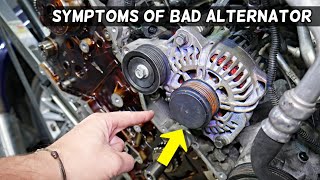
- ESC (Electronic Stability Control) light may illuminate 🎬 Watch: See these bad alternator symptoms demonstrated on a Sonata.
- Replacing the battery when the alternator is the actual cause. If the new battery also dies quickly, the alternator is almost certainly the culprit.
- Replacing the alternator when the issue is a high-resistance connection, such as a corroded battery terminal or a bad ground strap.
Most Likely Causes
- Failing Alternator 🔴 High Probability → Shop Alternator The original alternator may be at the end of its typical 8-year service life. It is the most common cause for a P0562 code.
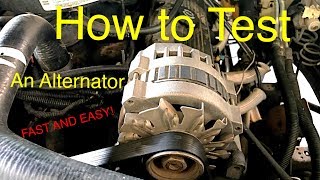
How to confirm: With the engine running, use a multimeter to test the voltage at the battery terminals. A healthy alternator should produce between 13.5 and 14.7 volts. If the voltage is below 13.2V or near battery voltage (12.6V), the alternator is likely faulty. Perform a load test by turning on headlights, A/C, and rear defrost; voltage should not drop below 13.0V. 🎬 Watch: A fast and simple way to test your alternator.
Typical fix: Replace the alternator.
Est. part cost: $200-$400 - Bad Battery 🟡 Medium Probability → Shop Vehicle Battery Car batteries typically last 3-5 years. An old battery may not be able to hold a charge, even with a good alternator. The correct size for most Sonatas of this generation is a Group Size 124R.
How to confirm: With the engine off, test the battery voltage with a multimeter. A reading below 12.4V indicates a weak battery. Most auto parts stores can perform a free load test to confirm the battery's health.
Typical fix: Replace the battery.
Est. part cost: $150-$250 - Loose or Corroded Battery Terminals/Cables 🟡 Medium Probability → Shop Vehicle Battery
How to confirm: Visually inspect the battery terminals for a white or greenish-blue powdery substance (corrosion). Check that the cable clamps are tight and do not move when wiggled. Also inspect the main chassis ground strap (from battery negative to the body) and the engine ground strap for corrosion and tightness.
Typical fix: Disconnect the battery (negative first), clean the terminals and clamps with a wire brush and a mixture of baking soda and water, then reconnect securely (positive first). Apply dielectric grease to prevent future corrosion.
Est. part cost: $5-$10 for a cleaning kit - Worn or Damaged Alternator Belt (Serpentine Belt) ⚪ Low Probability → Shop Alternator
How to confirm: Visually inspect the belt for cracks, fraying, or a glazed appearance. Check for proper tension; it should not have excessive slack. A slipping belt may produce a squealing noise on startup or when under load.
Typical fix: Replace the serpentine belt.
Est. part cost: $20-$40
Rare But Worth Checking
- Damaged Wiring: Check the main power wire from the alternator to the battery and the ground connections for any signs of corrosion, melting, or physical damage. A poor connection can cause a significant voltage drop. Specifically, check the connection at the main fuse box where the alternator's output cable bolts on; this point can corrode and create high resistance.
- Parasitic Draw: An electrical component may be staying on after the car is turned off, draining the battery overnight. This can cause a low voltage condition upon startup, triggering the P0562 code. Common culprits can be aftermarket stereos or a faulty body control module.
- Faulty Powertrain Control Module (PCM): In rare cases, the internal voltage regulator within the PCM itself can fail, causing it to incorrectly read the system voltage and set the P0562 code even if the charging system is healthy. This is a last-resort diagnosis after all other possibilities have been eliminated.
Diagnosis Steps
- Read the code: Use an OBD-II scanner to confirm the P0562 code and check for any other stored codes.
- Inspect Battery Terminals: Check for and clean any corrosion on the battery posts and cable ends. Ensure connections are tight.
- Test Battery Voltage (Engine Off): Use a multimeter to measure the battery's static voltage. A healthy battery should read approximately 12.6 volts. If it's below 12.4V, the battery is discharged or weak and should be charged and load tested.
- Test Charging System Voltage (Engine On): Start the engine. Measure the voltage across the battery terminals again. The reading should be between 13.5V and 14.7V. If the voltage is low, the alternator is not charging properly.
- Load Test the System: With the engine still running, turn on all major electrical accessories (headlights, A/C blower on high, rear defroster). The voltage should remain stable and above 13.0V. If it drops significantly, the alternator is failing under load.
- Perform Voltage Drop Test: Check for high resistance in the charging circuit. Measure the voltage between the alternator's positive post and the battery's positive post (should be < 0.5V). Then measure between the alternator's case and the battery's negative post (should be < 0.2V). High readings indicate a bad cable or connection.
- Inspect the Alternator Belt: Check the condition and tension of the serpentine belt that drives the alternator.
- Inspect Wiring: Check the main wire from the alternator to the fuse box and battery, and the main ground straps for damage or corrosion. Pay close attention to the bolt-on connection at the fuse box.
Parts You'll Likely Need
- Alternator
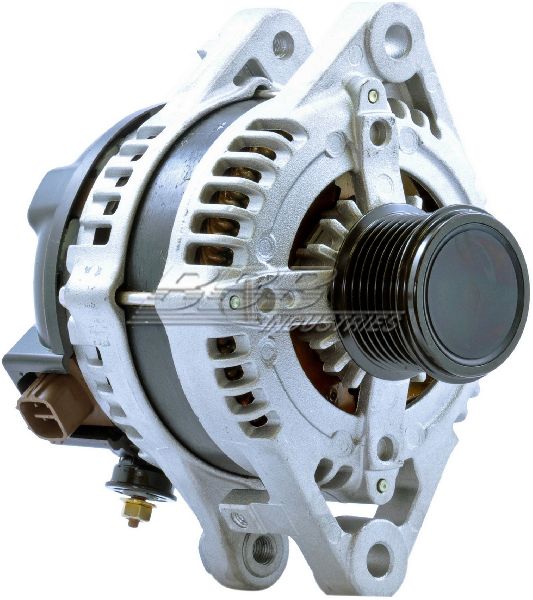
(OEM #37300-2G100 (for 2.4L engine). Replaces: 37300-25201, 37300-25301, 37300-25310, 37300-25400.)— This is the most common failure point that leads to a P0562 code, as it is responsible for generating power and maintaining system voltage while the engine runs.
Trusted brands: Denso, Valeo (OEM supplier), Bosch
OEM price range: $550-$800
Aftermarket price range: $200-$400 - Battery
(OEM #Group Size 124R)— An old or failing battery cannot hold a sufficient charge, leading to low system voltage, especially during startup.
Trusted brands: Interstate, DieHard, Duralast
OEM price range: $200-$300
Aftermarket price range: $150-$250
Technical Service Bulletins (TSBs) & Recalls
- TSB 10-FL-002: For 2006-2010 Sonata with the 3.3L V6, this TSB involves an ECM update to address hard starting and rough idle issues. While not directly for P0562, electrical system stability and ECM logic are related, making this relevant for V6 owners experiencing electrical gremlins.
Platform-Specific Known Issues
- The main power cable from the alternator connects to the under-hood fuse box via a stud and nut. This connection is known to sometimes develop corrosion, creating high resistance and causing a voltage drop that can trigger P0562 even with a good alternator. This should be inspected and cleaned as part of the diagnosis.
Mechanic-Grade Diagnostic Values
- Voltage Drop: Alternator 'B+' post to Battery Positive Terminal — expected: < 0.5 Volts. Failure: A reading greater than 0.5V indicates high resistance in the positive-side charging cable or connections.
- Voltage Drop: Alternator Case to Battery Negative Terminal — expected: < 0.2 Volts. Failure: A reading greater than 0.2V indicates high resistance in the ground circuit (e.g., bad engine ground strap, corroded connections).
- Resistance: Alternator power wire to positive battery terminal — expected: ~1-2 Ohms. Failure: A significantly higher reading indicates a problem with the cable itself.
Scan Tool Commands That Help
- Hyundai GDS (Global Diagnostic System): Data and DTC Analysis — The GDS is the OEM dealer tool. It can provide more detailed information than a generic scanner, including access to manufacturer-specific data PIDs and guided troubleshooting procedures for codes like P0562.
- Hyundai GDS (Global Diagnostic System): Flight Record — For intermittent voltage drops, the GDS 'Flight Record' function can be used to capture live data while driving to pinpoint when and under what conditions the voltage drops below the threshold.
Wiring & Ground Locations
- Main Engine Ground — There are three main engine grounds on the 2009 Sonata. One is typically located from the negative battery terminal to the chassis/frame rail near the battery. Another key ground strap connects the engine block or transmission to the vehicle's frame to ensure the alternator is properly grounded.. A corroded or loose engine-to-chassis ground strap is a common cause of high resistance in the charging circuit, which can lead to low voltage and trigger a P0562 code even if the alternator itself is good.
- Alternator 'B+' Terminal — This is the main threaded post on the back of the alternator where the thick power cable connects. This cable runs to the under-hood fuse box and eventually to the battery positive terminal.. This is the primary output of the alternator. Corrosion or a loose nut at this terminal, or at the other end of the cable (fuse box), will cause a significant voltage drop and prevent the battery from charging correctly.
Real Owner Repair Stories
- hyundai-forums.com user (2006 Hyundai Sonata) — Battery light was on.
❌ Tried (didn't work) Took car to a parts store where the alternator and battery both tested 'good' on a bench tester.
✅ What actually fixed it Replacing the alternator. The user concluded that the parts store's bench test was not accurate for a failing-under-load scenario and the alternator was indeed the root cause.
OEM Part Supersession History
37300-25201→37300-2G100— Part number consolidation and potential design revision for the 2.4L engine alternator.
Heads up: While the parts are generally interchangeable as the new number replaces the old, always verify fitment with the vehicle's VIN. The supersession indicates an updated part is available.37300-25301, 37300-25310, 37300-25400→37300-2G100— These are additional older part numbers that have all been superseded by 37300-2G100 for the 2.4L engine.
Model Year Variations Within This Range
- 2006-2010: The 2.4L 4-cylinder engine and the 3.3L V6 engine use different alternators that are not interchangeable. The 2.4L typically uses a 110-amp alternator, while the 3.3L V6 uses a higher output 120-amp or 130-amp unit. They have different pulley designs.
- 2008-2009: The 2009 model year was a facelift for the Sonata (NF generation). While many core components remained, there were cosmetic and some minor mechanical changes. However, for the P0562 code, the charging system architecture and common causes remain consistent between the pre-facelift (2006-2008) and post-facelift (2009-2010) models within this generation.
Diagnostic Flowchart
Other Known Issues on This Vehicle
Issues unrelated to this code that are worth knowing about as an owner of this generation:
- Subframe Corrosion and Recall 🔴 High — Widespread in regions using road salt. A recall (13V354000) was issued for inspection and repair/replacement. (Ref: NHTSA Recall 13V354000)
- Peeling Steering Wheel and Interior Trim 🟡 Low — Very common across all trim levels as the vehicle ages. The top layer of the steering wheel and other plastic surfaces delaminates.
- Faulty Accelerator Pedal Position Sensor (APPS) 🟠 Medium — Reported in some 2007 and 2009 models, can cause the ESC light to illuminate and limit engine power.
- Clunking from Front Suspension 🟡 Low — Commonly occurs over bumps. Usually caused by worn sway bar end links, which are a relatively simple and inexpensive repair.
- ABS Module Electrical Short 🔴 High — A recall was issued for potential water entry into the ABS module, which could cause an electrical short, increasing fire risk. (Ref: NHTSA Recall 18V026000)
Used vs. New Parts: Buying Guide for This Vehicle
When a used part is the smart pick: A used alternator from a reputable salvage yard can be a cost-effective option, especially if the budget for a new OEM or high-quality aftermarket part is not available. It is a moderately complex part, but failures are usually total, so a working used part is likely to function correctly.
Donor-vehicle mileage cap: roughly under 80000 miles for the part to have meaningful remaining life.
What to inspect on the donor part:
- Check the donor vehicle's mileage; lower is always better.
- Inspect the alternator pulley. It should spin freely and smoothly with no grinding or excessive noise.
- Look for any signs of physical damage, such as cracks in the casing or bent mounting points.
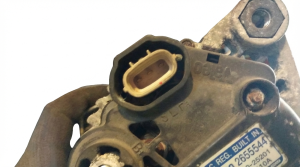
- Examine the electrical connector and the 'B+' terminal post for corrosion, melting, or damage.
- Ask for a short warranty (e.g., 30-90 days) from the salvage yard if possible.
Aftermarket brands forum-validated for this vehicle:
- Valeo (often the Original Equipment supplier)
- Denso
- Bosch
Brands owners have reported issues with on this vehicle:
- Generic, unbranded 'white box' alternators from online marketplaces often have a high failure rate and may not meet OEM charging specifications, leading to recurring issues.
Real Owner Stories
Aggregated from forums and TSBs cited above. Mileages and costs reflect what owners reported in those sources.
2006 Hyundai Sonata
Symptoms: The battery light was illuminated on the dashboard.
What fixed it: Replacing the alternator resolved the issue, even though the original unit had tested 'good' during a bench test at an auto parts store.
Source hint: hyundai-forums.com thread titled '2006-sonata-battery-light-on-alternator-and-battery-test-good.673899/'
2009 Hyundai Sonata 2.4L
Symptoms: The owner needed to replace a failing alternator and noted the complexity of the physical access.
What fixed it: Replacement of the alternator by accessing it through the passenger side wheel well.
Source hint: sonataforums.com thread titled '2009-sonata-gls-4-cyl-alternator-replacement.1819/'
2009 Hyundai Sonata
Symptoms: Flickering battery light and dimming headlights.
What fixed it: Alternator replacement.
Source hint: Reddit (r/MechanicAdvice) thread titled '2009_hyundai_sonata_alternator_replacement/'
Related OBD-II Codes
Frequently Asked Questions
My 2006 Sonata 3.3L V6 has a rough idle and hard starting; is there a specific update for this?
I tested my alternator at a parts store and it passed, but my battery light is still on. What should I check next?
What is the correct battery size for my 2006-2010 Hyundai Sonata?
Why is my ESC light on at the same time as the P0562 code?
Is there a specific wiring issue I should look for on the Sonata NF platform?
How difficult is it to replace the alternator on a 2009 Sonata 2.4L myself?
Helpful Videos
Used OEM Parts in Stock
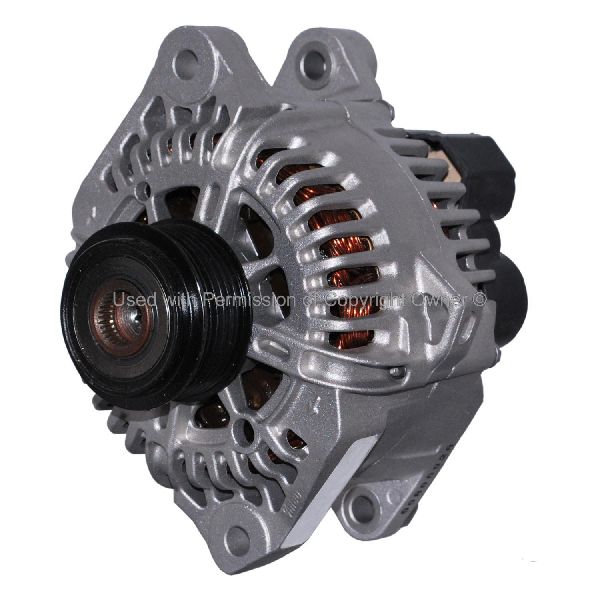
New Aftermarket Parts Available


The information in this article is provided for general reference and educational purposes only. Vehicle specifications, procedures, and part compatibility can vary by production date, trim level, and region. Always consult your vehicle's factory service manual and verify part numbers before purchasing or performing repairs. Safety-critical components such as airbags, seat belts, and braking systems should be installed by a qualified professional.
- Hyundai Sonata:
- 🧭 Diagnostic Flowchart
- 🎬 Helpful Videos
- 🛍️ Shop This Part
- What's Unique About the 2006-2010 Hyundai Sonata
- Symptoms You May Notice
- Most Likely Causes
- Rare But Worth Checking
- Diagnosis Steps
- Parts You'll Likely Need
- Technical Service Bulletins (TSBs) & Recalls
- Platform-Specific Known Issues
- Mechanic-Grade Diagnostic Values
- Scan Tool Commands That Help
- Wiring & Ground Locations
- Real Owner Repair Stories
- OEM Part Supersession History
- Model Year Variations Within This Range
- Other Known Issues on This Vehicle
- Used vs. New Parts: Buying Guide for This Vehicle
- Real Owner Stories
- 2006 Hyundai Sonata
- 2009 Hyundai Sonata 2.4L
- 2009 Hyundai Sonata
- Related OBD-II Codes
- Frequently Asked Questions
- 🎟️ Get 5% Off