

P0562 on 2015-2019 Hyundai Sonata: System Voltage Low Causes and Fixes
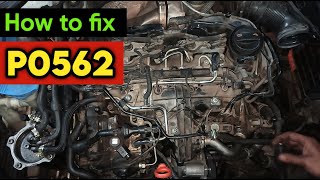
On a 2015-2019 Hyundai Sonata, code P0562 most often points to a failing alternator or a weak battery. However, before replacing expensive parts, check for a blown 'AMS' fuse in the engine bay fuse box and inspect the main engine-to-chassis ground strap for corrosion, as both are known, less obvious failure points on this platform.
- P0562 on a 2015-2019 Sonata means the electrical system voltage is dangerously low.
- Do not drive the vehicle, as it can stall and lose power to critical safety systems.
- The most common causes are a bad alternator or a failing battery.
- Before replacing parts, ALWAYS check the simple things first: inspect the 'AMS' fuse in the engine fuse box and clean and tighten all battery and ground connections.
- If replacing the alternator, verify the correct amperage (90A vs. 150A) for your specific vehicle to avoid part mismatch.
What's Unique About the 2015-2019 Hyundai Sonata
While P0562 is a generic code, the 2015-2019 (LF) Sonata has specific vulnerabilities. This platform is known for having main ground straps that can corrode, creating high resistance and causing intermittent low voltage issues. Furthermore, a critical but often overlooked cause is a blown Alternator Management System (AMS) fuse, which prevents the ECM from commanding the alternator to charge the battery, leading directly to this code. An owner could mistakenly replace a good alternator when the true fault is a simple fuse. The charging system is computer-controlled, and this fuse is a key part of that control loop. For models with Idle Stop & Go (ISG), the charging strategy is more complex, relying heavily on the battery current sensor (part of the AMS) on the negative terminal to maintain the battery's state of charge, typically around 80-83% to allow for regenerative charging.
Symptoms You May Notice
- Check Engine Light is on
- Battery or charging system warning light is illuminated on the dashboard
- Dimming or flickering headlights and interior lights
- Engine has difficulty starting, cranks slowly, or does not start at all
- Engine stalls while driving, especially at idle or when shifting into gear after a jump-start
- Erratic behavior from electrical accessories like the radio, power windows, or door locks
- Loss of power steering, causing the steering wheel to become very difficult to turn
- Multiple, seemingly unrelated warning lights appearing on the dashboard over time
- Replacing the alternator when the actual problem is a blown AMS fuse, a bad ground strap, or corroded battery cables.
- Replacing the battery when the alternator is not charging it properly, leading to the new battery failing quickly.
Most Likely Causes
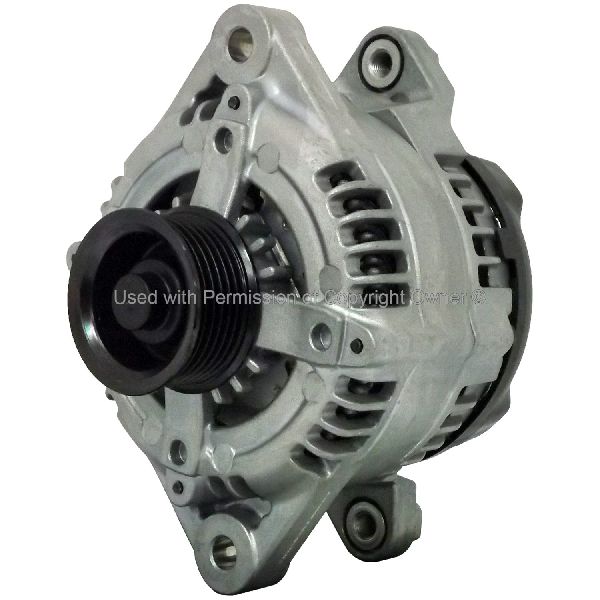
- Failing Alternator 🔴 High Probability → Shop Alternator The alternator is the primary component responsible for charging the battery and powering the car while running. It is a common wear-and-tear item. Note that Sonatas can be equipped with different amperage alternators which may have different mounting points, so physical verification before ordering a replacement is crucial.
How to confirm: With the engine running, use a multimeter to measure the voltage at the battery terminals. A healthy alternator should produce between 13.5 and 14.7 volts. A reading below 13 volts indicates a weak or failing alternator. Perform a load test by turning on headlights, A/C, and the rear defroster; the voltage should remain stable. If it drops significantly, the alternator is likely failing. Many auto parts stores can also bench-test an alternator for free if it's removed from the vehicle.
Typical fix: Replace the alternator.
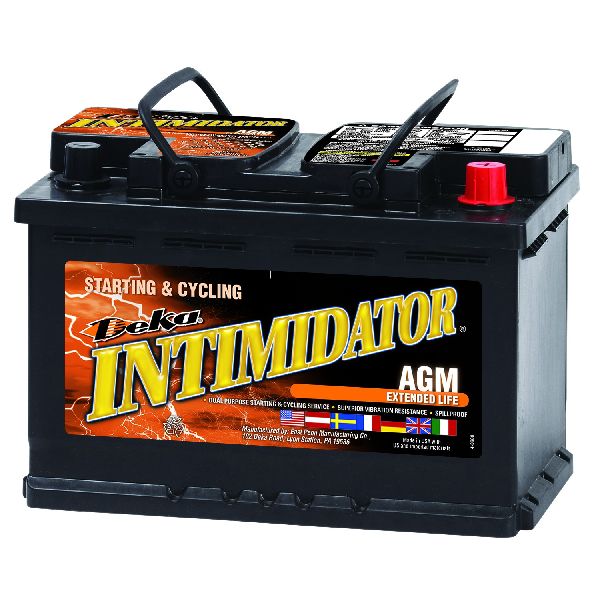
Est. part cost: $200-$450 - Weak or Defective 12V Battery 🔴 High Probability → Shop Vehicle Battery Car batteries have a finite lifespan, typically 3-5 years. The LF Sonata uses an AGM (Absorbed Glass Mat) battery, especially on models with Idle Stop & Go (ISG), which can be more sensitive to deep discharge cycles that can shorten its life.
How to confirm: With the engine off, measure the battery voltage with a multimeter. A healthy, fully charged battery should read approximately 12.6 volts. A reading below 12.4V indicates a discharged battery, and below 12.0V suggests it may be failing. A simple voltage test is not enough; the battery must be load-tested with a dedicated tester to confirm its health, as a battery can show good voltage but fail under load. A failed load test is indicated if voltage drops below 9.0V during the test.
Typical fix: Replace the 12V AGM battery. On ISG models, the battery sensor may need to be recalibrated after replacement.
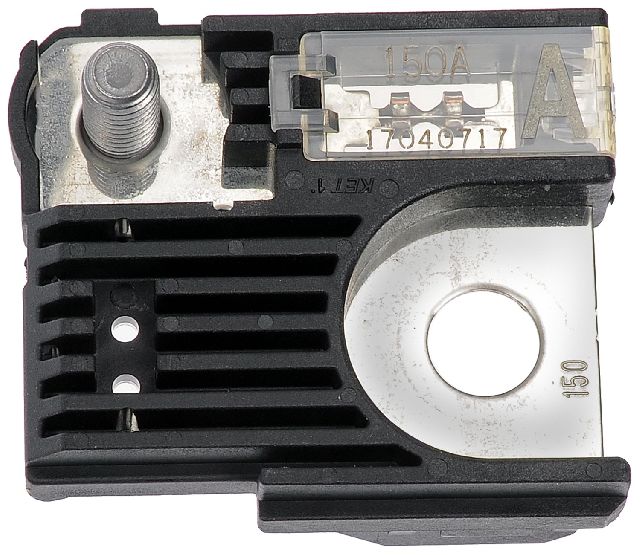
Est. part cost: $150-$250 - Blown Alternator Management System (AMS) Fuse 🟡 Medium Probability → Shop Alternator The AMS sensor tells the PCM to command charging. A specific owner account for a 2017 Sonata showed that a blown AMS fuse in the engine bay junction block was the root cause of a persistent P0562 after multiple alternators were needlessly replaced. 🎬 See how a blown AMS fuse causes battery drain issues This is a platform-specific 'gotcha' that is easy to overlook. Some reports indicate this is a 10A mini fuse located on the positive battery terminal assembly itself.
How to confirm: Locate the fuse box in the engine bay and also inspect the positive battery terminal assembly. Refer to the owner's manual or the fuse box diagram for the fuse labeled 'AMS' or 'ALT'. Visually inspect for a break in the filament or use a multimeter to test for continuity.
Typical fix: Replace the blown fuse. If it blows again, further diagnosis is needed to find the short circuit causing the overload.
Est. part cost: $1-$15 (may be part of a multi-fuse block) - Corroded or Loose Ground Straps 🟡 Medium Probability → Shop Engine Ground Strap This generation of Sonata is noted for having issues with the main engine-to-chassis ground strap corroding, which creates high resistance in the electrical system. The ground connection is critical for the PCM to accurately measure system voltage.
How to confirm: Visually inspect the main ground connections. One runs from the negative battery terminal to the chassis, and another typically runs from the engine block or transmission to the frame. Look for green/white corrosion, fraying, or looseness. Perform a voltage drop test between the alternator case and the negative battery post with the engine running; a reading above 0.2-0.5 volts indicates a bad ground.
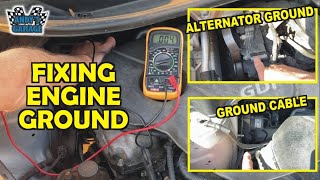
Typical fix: Disconnect, clean all contact points (strap and chassis) to bare metal, and securely re-tighten the ground straps. Apply dielectric grease to prevent future corrosion. 🎬 Watch: How to find and fix bad engine ground connections Replace the strap if it is frayed or damaged.
Est. part cost: $15-$40 - Corroded or Loose Battery Terminals/Cables 🟡 Medium Probability → Shop Vehicle Battery
How to confirm: Visually inspect the battery terminals for white or greenish corrosion. Wiggle the cable clamps to ensure they are tight and cannot be moved by hand. A poor connection here can prevent the alternator from effectively charging the battery.
Typical fix: Disconnect the battery (negative first, then positive). Clean the terminals and cable ends with a wire brush and a baking soda/water solution. Reconnect and tighten securely (positive first, then negative).
Est. part cost: $0-$10 (for cleaning tools)
Rare But Worth Checking
- Parasitic Battery Drain: → Shop Vehicle Battery A module or component, such as the radio, amplifier, or a faulty aftermarket accessory, may not be shutting down correctly when the car is off, slowly draining the battery. This can lead to a low voltage condition on startup, triggering P0562. Diagnosing this requires an ammeter and pulling fuses one by one to isolate the faulty circuit.
- Faulty Engine Control Module (ECM/PCM): This is extremely rare. The ECM itself can fail or its internal voltage regulator can malfunction, but all other possibilities (alternator, battery, wiring, grounds, fuses) should be exhaustively ruled out before considering ECM replacement. In some documented cases, internal components like capacitors on the ECM board have failed, causing this code.
- Slipping or Worn Serpentine Belt: → Shop Serpentine Belt A serpentine belt that is loose, glazed, or worn can slip on the alternator pulley, preventing the alternator from spinning at the correct speed to generate adequate voltage. This is often accompanied by a squealing noise from the engine bay.
Diagnosis Steps
- Read the codes with an OBD-II scanner and note any other codes that are present.
- Visually inspect the battery terminals and clamps for corrosion and tightness. Clean and tighten as needed.
- With the engine OFF, use a multimeter to test the battery's static voltage. It should be ~12.6V. If it's low, charge the battery and have it professionally load-tested to confirm its health.
- Start the engine. Measure the charging voltage at the battery terminals. The reading should be between 13.5V and 14.7V.
- If charging voltage is low (below 13.5V), locate and inspect the 'AMS' fuse in the engine bay fuse box and on the positive battery terminal before proceeding. This is a crucial, often-missed step for this vehicle. Replace if blown.
- Inspect the Battery Current Sensor (part of the negative battery terminal) for damage or corrosion. Ensure no aftermarket accessories are connected to the negative battery post, bypassing the sensor.
- Inspect the main ground strap from the engine/transmission to the chassis for corrosion or damage.
- Perform a voltage drop test on both the positive and negative circuits. On the ground side, test between the alternator case and the negative battery post. On the positive side, test between the alternator's B+ stud and the positive battery post. A reading over 0.5V on either test indicates high resistance that needs to be fixed.
- If grounds, fuses, and wiring are good but charging voltage is still low, the alternator is the most likely culprit. Remove it and have it tested or replace it.
- If a parasitic drain is suspected, perform a parasitic draw test with a multimeter set to measure amps.
- After repairs are complete, clear the code with the scanner and test drive to ensure the P0562 code does not return.
Parts You'll Likely Need
- Alternator
(OEM #37300-C1100 (Verify by VIN, multiple options exist))— This is the most common part to fail that causes a low charging system voltage.
Trusted brands: Denso, Valeo (OEM supplier), Mando
OEM price range: $400-$600
Aftermarket price range: $200-$450 - AGM Battery
(OEM #37110-C8450 (Group Size H6/L3/48, verify by VIN))— A battery that can no longer hold a sufficient charge is a primary cause of low system voltage.
Trusted brands: Interstate, DieHard, Duralast
OEM price range: $250-$350
Aftermarket price range: $150-$250
Technical Service Bulletins (TSBs) & Recalls
- While no TSB directly addresses P0562, TSB 19-EE-003H discusses official dealer procedures for battery testing and maintenance, underlining the importance of proper battery health in preventing voltage-related issues.
- Owners may also encounter TSBs related to software updates for various control modules (like the CCU or SJB) that can cause battery drain if not performed, indirectly leading to low voltage conditions.
Platform-Specific Known Issues
- The main engine-to-chassis ground strap is a known weak point that is prone to corrosion, leading to intermittent and hard-to-diagnose electrical faults.
- A blown 'AMS' (Alternator Management System) fuse in the engine bay fuse box can prevent the alternator from charging, directly causing a P0562 code. This should be checked before replacing the alternator.
Mechanic-Grade Diagnostic Values
- System Voltage (Engine Running) — expected: 13.5V - 14.7V. Failure: Below 13.2V indicates a charging problem. Code P0562 may set if voltage is below 11V.
- Battery State of Charge (SOC) via Scan Tool — expected: Maintained at ~80-83% on ISG models during normal operation.. Failure: Not applicable as a direct failure, but understanding this target prevents misdiagnosis of 'undercharging'. The system lowers charge to allow for regenerative braking.
- Battery Load Test — expected: Voltage stays above 9.0V during a 15-second, 200-amp load.. Failure: Voltage dropping below 9.0V indicates a bad battery that cannot hold a charge under load.
- Ground Circuit Voltage Drop — expected: Less than 0.2V. Failure: A reading above 0.2V - 0.5V indicates high resistance in the ground path (e.g., corroded ground strap).
- Battery Sensor Stabilization Time — expected: Approximately 4 hours.. Failure: If the battery is disconnected or replaced, the sensor needs ~4 hours of continuous connection to provide stable SOC and SOH data to the ECM. ISG may not function during this time.
Hidden / Shadow Codes Worth Checking
- Historical Faults / Flight Record Data: The Hyundai GDS can access a 'Flight Record' which stores historical diagnostic data, including past fault codes and freeze frame data, even if no codes are currently active. This can reveal intermittent voltage drops that a generic scanner would miss. (see via Hyundai GDS (Global Diagnostic System) VCI diagnostic tool.)
Scan Tool Commands That Help
- Hyundai GDS (Global Diagnostic System): Resetting Adaptive Values — After replacing a major component like the ECM or sometimes after resolving a persistent electrical fault, resetting the ECM's learned values can resolve lingering issues.
- Hyundai GDS (Global Diagnostic System): Battery Sensor Recalibration — Required after replacing the AGM battery or disconnecting the battery sensor on vehicles with Idle Stop & Go (ISG) to ensure the system correctly reads the new battery's state of charge and health.
- Hyundai GDS (Global Diagnostic System): Data Analysis (SOC, SOH) — To monitor the live State of Charge (SOC) and State of Health (SOH) of the battery as reported by the battery sensor. If the tool shows 'Checking' for an extended period, it indicates a problem with the sensor or that it needs recalibration.
Wiring & Ground Locations
- AMS / Battery Current Sensor — Integrated into the negative battery terminal clamp.. This sensor provides the primary data (current, voltage, temperature) that the ECM uses to control the alternator's output. A faulty sensor or bypassed connection (e.g., an accessory grounded directly to the battery post) can cause the ECM to command an incorrect charging rate, leading to P0562.
- Engine Harness Chafe Points — General areas of concern are where the main engine harness passes near sharp metal edges. Inspect harness routing near the ECM/TCM mounting bracket, near the driver's side upper control arm, and by the shock tower bolts.. Vibration can cause the harness to rub through on these components, potentially shorting power or sensor wires to ground and causing intermittent voltage drops or other electrical faults.
- Main Engine Ground — Typically a braided strap running from the engine block or transmission housing to the vehicle's frame/chassis in the engine bay.. Corrosion or looseness at this point creates high resistance for the entire electrical system's return path, which can cause low voltage readings and charging system problems.
- AMS Fuse — Check the main engine compartment fuse block for a fuse labeled 'AMS' or 'ALT'. It may also be a 10A mini fuse located directly on the positive battery terminal assembly.. This fuse powers the Alternator Management System circuit. If it blows, the ECM cannot control the alternator, preventing it from charging the battery.
Real Owner Repair Stories
- Reddit user post (Hyundai Sonata (year not specified, but LF generation)) — Persistent weird charging problems, P0562 code. Scan tool showed State of Charge (SOC) hovering around 80-83% and low charge current (0.5-2 amps).
❌ Tried (didn't work) Initial new alternator replacement., New battery replacement.
✅ What actually fixed it The user diagnosed that the charging behavior was intentional by the Alternator Management System (AMS). The resolution involved replacing the negative battery terminal, which contains the intelligent battery sensor, with a newer, superseded OEM part number that had updated firmware. This implies the original sensor's logic was flawed or failed. The user also noted the existence of a 10A 'AMS' fuse on the positive terminal.
OEM Part Supersession History
Unknown→Unknown— Updated firmware/software to correct charging logic.
Heads up: A user reported that the negative battery terminal containing the intelligent battery sensor (AMS) has a superseded OEM part number. Using an older version or an aftermarket equivalent may not resolve incorrect charging behavior controlled by the ECM.
Model Year Variations Within This Range
- 2015-2019: The presence of an Idle Stop & Go (ISG) system is the most significant variation. Models with ISG use a more complex charging strategy controlled by the Alternator Management System (AMS) and require an AGM battery. Battery replacement on ISG vehicles necessitates a battery sensor recalibration procedure, which is not required on non-ISG models with conventional charging systems.
Diagnostic Flowchart
Other Known Issues on This Vehicle
Issues unrelated to this code that are worth knowing about as an owner of this generation:
- Theta II Engine Failure (Rod Bearing Wear) 🔴 High — Widespread issue affecting 2.0L and 2.4L GDI engines, leading to engine seizure, stalling, and potential fires. Onset can occur at various mileages. (Ref: Subject of multiple recalls (e.g., NHTSA 17V226000) and a major class-action lawsuit settlement (Hyundai Theta Engine Settlement) which extended the powertrain warranty to a lifetime warranty for qualifying repairs after a Knock Sensor Detection System (KSDS) software update.)
- Excessive Oil Consumption 🟠 Medium — Common on the 2.4L GDI engine, can lead to engine damage if oil levels are not frequently monitored and topped off. (Ref: Related to the overall Theta II engine issues, but often treated as a separate problem. Dealers may perform an oil consumption test under warranty.)
- Peeling Exterior Paint 🟡 Low — Particularly common on white and other light-colored Sonatas of this generation. The paint can delaminate and peel in large sheets. (Ref: Hyundai extended the paint warranty for this issue for some owners, but it is not a formal recall.)
- Failing Steering Coupler 🟠 Medium — The flexible rubber coupler in the steering column can disintegrate, causing a noticeable 'clunk' or play in the steering wheel when turning. (Ref: A common DIY repair and a known issue, but not typically covered by a recall for this generation.)
- Turn Signal Malfunction (Smart Junction Box) 🟠 Medium — The turn signal may activate in the opposite direction of what the driver intends. (Ref: NHTSA Recall 21V796000; fixed with a software update to the Smart Junction Box (SJB).)
Used vs. New Parts: Buying Guide for This Vehicle
When a used part is the smart pick: For major electrical assemblies that are not wear items, like an engine bay fuse block, if the original is physically damaged (e.g., from an accident). A used alternator can be a budget-friendly option if from a low-mileage donor.
Donor-vehicle mileage cap: roughly under 75000 miles for the part to have meaningful remaining life.
What to inspect on the donor part:
- For an alternator, spin the pulley by hand to check for smooth bearing operation (no grinding or roughness).
- Inspect the alternator's electrical connectors and the B+ power stud for any signs of corrosion, melting, or damage.
- For any used electrical part, check for signs of water intrusion, heavy corrosion, or heat damage (discoloration, melted plastic).
OEM-only on this vehicle (don't cheap out):
- Battery Current Sensor / Negative Battery Terminal Assembly: It is strongly recommended to use a new OEM part. There are reports of superseded part numbers with updated firmware that are critical for correct charging logic, especially on ISG models.
Aftermarket brands forum-validated for this vehicle:
- Alternator: Valeo (OEM supplier), Denso, Mando.
- AGM Battery: Interstate, DieHard, Duralast.
Real Owner Stories
Aggregated from forums and TSBs cited above. Mileages and costs reflect what owners reported in those sources.
2017 Hyundai Sonata
Symptoms: Persistent P0562 code even after multiple alternators were replaced.
What fixed it: Replacing a blown AMS fuse in the engine bay junction block.
Source hint: vehicle_specific_issues
2018 Kia Optima
Symptoms: Classic P0562 symptoms including a gradual loss of electrical systems and power steering failure as the system voltage dropped.
What fixed it: Diagnosis and repair of the low system voltage condition (P0562).
Source hint: Reddit r/AskMechanics thread titled '2018 kia optima code p0562'
Related OBD-II Codes
Frequently Asked Questions
Is there a specific fuse I should check on my 2017 Sonata before replacing the alternator for a P0562 code?
My 2015-2019 Sonata has Idle Stop & Go (ISG); does this affect which battery I need?
Does Hyundai have an official procedure for testing the battery on this generation of Sonata?
Why is my steering suddenly hard to turn along with the P0562 code?
Can a software update fix my low voltage issues?
I've heard the ground straps are an issue on this car. Where should I look?
Helpful Videos
Used OEM Parts in Stock
New Aftermarket Parts Available



The information in this article is provided for general reference and educational purposes only. Vehicle specifications, procedures, and part compatibility can vary by production date, trim level, and region. Always consult your vehicle's factory service manual and verify part numbers before purchasing or performing repairs. Safety-critical components such as airbags, seat belts, and braking systems should be installed by a qualified professional.
- Hyundai Sonata:
- 🧭 Diagnostic Flowchart
- 🎬 Helpful Videos
- 🛍️ Shop This Part
- What's Unique About the 2015-2019 Hyundai Sonata
- Symptoms You May Notice
- Most Likely Causes
- Rare But Worth Checking
- Diagnosis Steps
- Parts You'll Likely Need
- Technical Service Bulletins (TSBs) & Recalls
- Platform-Specific Known Issues
- Mechanic-Grade Diagnostic Values
- Hidden / Shadow Codes Worth Checking
- Scan Tool Commands That Help
- Wiring & Ground Locations
- Real Owner Repair Stories
- OEM Part Supersession History
- Model Year Variations Within This Range
- Other Known Issues on This Vehicle
- Used vs. New Parts: Buying Guide for This Vehicle
- Real Owner Stories
- 2017 Hyundai Sonata
- 2018 Kia Optima
- Related OBD-II Codes
- Frequently Asked Questions
- 🎟️ Get 5% Off