

P0562 on 1994-1998 Saab 900: System Voltage Low Causes and Fixes
On a 1994-1998 Saab 900, code P0562 almost always points to a failing alternator or a weak battery. Start by testing the battery and checking the charging voltage with the engine running; it should be 13.8-14.4V. A new alternator is the most common fix. Also, pay close attention to the main ground straps and the positive cable connection at the starter motor for corrosion.
- P0562 on your Saab 900 means the electrical system voltage has been critically low (under 10V for 60 seconds).
- Do not immediately replace the battery without testing the alternator. The most likely cause is a failing alternator that is no longer charging the battery properly.
- A simple multimeter test is your most powerful diagnostic tool. Check the battery voltage with the engine off (should be ~12.6V) and with the engine running (should be 13.8-14.4V).
- Before replacing parts, always inspect and clean the battery terminals and the main engine/chassis ground connections (G2 and G25). Corrosion here is a common and cheap-to-fix problem.
What's Unique About the 1994-1998 Saab 900
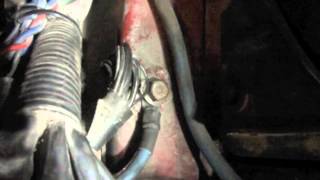
The 1994-1998 Saab 900, known as the 'New Generation' (NG900), was the first Saab built on a General Motors platform (the Opel Vectra chassis). While the charging system is conventional, Saab's documentation is very specific about the grounding scheme, which is a common trouble spot. The system uses two primary ground cables from the battery: one (25 mm²) to the gearbox (grounding point G25) and another (16 mm²) 🎬 Watch: A helpful overview of the critical ground points on this chassis. to the left wheel housing (grounding point G2). Owners often find that corrosion at these points or on the main power cable from the alternator (which often routes via the starter motor) can cause voltage drops that trigger a P0562 code.
Symptoms You May Notice
- Battery/charging warning light illuminated on the dashboard
- Dimming or flickering headlights and interior lights, especially at idle or when using accessories
- Slow or labored engine cranking
- Engine stalling, especially when coming to a stop or when electrical load is applied (e.g., turning the steering wheel, using power windows)
- Erratic behavior from electrical accessories like the radio, climate control, or instrument cluster
- Whining noise from the engine bay, indicating a failing alternator bearing
- Multiple, seemingly unrelated fault codes stored in other modules
- Replacing the battery when the alternator is the actual cause of the problem. A new battery will quickly be drained by a faulty alternator, leading to the same symptoms returning within a day or two.
- Overlooking high resistance in the main power or ground cables. A visual inspection is not enough; a voltage drop test is required to confirm the cables are capable of carrying the required current.
Most Likely Causes
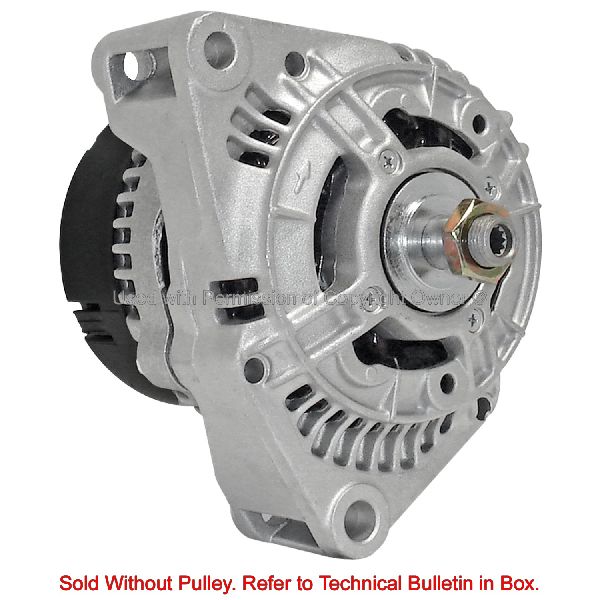
- Failing Alternator 🔴 High Probability → Shop Alternator The internal voltage regulator is a common point of failure. After many years and heat cycles, the alternator's diodes or regulator can fail, leading to insufficient or no charging output. Remanufactured units of poor quality are also known to fail prematurely.
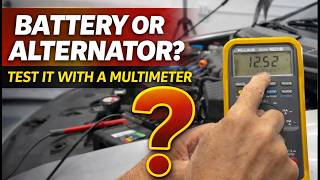
How to confirm: With the engine running at around 1500 RPM, use a multimeter to measure the voltage at the battery terminals. 🎬 See how to use a multimeter to test your battery and alternator. A healthy alternator should produce between 13.8 and 14.4 volts. A reading below 13.5V indicates a weak alternator. Load the system by turning on the headlights, A/C, and rear defroster; the voltage should not drop below 13.2V.
Typical fix: Replace the alternator. It is highly recommended to use a quality OEM brand like Bosch to ensure longevity and proper performance. The original alternators were typically 90 Amp or 120 Amp models.
Est. part cost: $150-$300 - Weak or Defective Battery 🟡 Medium Probability → Shop Vehicle Battery Batteries have a finite lifespan (typically 3-5 years). An old battery may not be able to hold a full charge or may have an internal short, causing it to self-discharge or fail under load, even if the alternator is working correctly.
How to confirm: With the engine off, measure the battery voltage with a multimeter. A fully charged battery should read approximately 12.6 volts. If the reading is below 12.4V, the battery is discharged. Have the battery load-tested at an auto parts store to determine if it can still hold a charge under load. A load test is the definitive way to confirm a bad battery.
Typical fix: Replace the battery.
Est. part cost: $100-$200 - Corroded or Loose Battery Terminals and Cables 🟡 Medium Probability → Shop Vehicle Battery Over time, battery terminals and cable ends can develop corrosion (white or greenish powder), which creates high resistance. On the NG900, pay special attention to the main ground straps at the gearbox (G25) and wheel housing (G2), and the positive cable connection at the starter motor solenoid post.
How to confirm: Visually inspect the battery terminals, the main power cable from the alternator to the starter and battery, and the main ground straps for corrosion or looseness. Perform a voltage drop test across the cables to check for hidden resistance; a drop of more than 0.2-0.3 volts is a sign of a problem.
Typical fix: Clean the terminals and cable ends thoroughly with a wire brush and baking soda solution. If the cables are severely corroded internally (stiff, swollen), they must be replaced.
Est. part cost: $10-$50 - Worn or Slipping Serpentine Belt ⚪ Low Probability → Shop Serpentine Belt Oil leaks, particularly from the crankcase ventilation system (a known issue covered by TSB 210-2418), can contaminate the serpentine belt, causing it to slip on the alternator pulley or degrade prematurely. A worn belt tensioner can also cause slippage.
How to confirm: Visually inspect the serpentine belt for cracks, glazing, or contamination with oil. With the engine running, listen for a squealing sound, which indicates belt slippage, especially when electrical loads are turned on.
Typical fix: Replace the serpentine belt and clean the pulleys. If an oil leak is present, it must be addressed to prevent future belt failures. The crankcase ventilation update kit (Part No. 55 561 200) is a common repair.
Est. part cost: $20-$40
Rare But Worth Checking
- Faulty Ignition Switch:
Diagnosis Steps
- Visually inspect the battery terminals and main power/ground cables for obvious corrosion or damage. Pay close attention to the ground points G2 (wheel housing) and G25 (gearbox). Clean and tighten as necessary.
- With the engine off, use a multimeter to check the battery's static voltage. It should be ~12.6V. If it's low, charge the battery and have it load-tested. A battery that fails a load test must be replaced regardless of other issues.
- Start the engine and let it idle. Measure the voltage at the battery terminals. It should be between 13.8V and 14.4V. If the voltage is low (below 13.5V), the alternator is the primary suspect.
- If the voltage is in the correct range at idle, turn on all electrical accessories (headlights, A/C, rear defroster) to load the system. The voltage should remain above 13.2V. If it drops significantly, the alternator is failing under load.
- If the charging system appears to be working, check for a parasitic drain that could be discharging the battery when the car is off. A normal draw should be under 50mA after all modules have gone to sleep (wait up to 30 minutes).
- Perform a voltage drop test on the positive cable (from alternator B+ post to positive battery terminal) and the negative cable (from alternator case to negative battery terminal). A voltage drop greater than 0.2V on either side indicates high resistance in the wiring that needs to be found and fixed.
- Inspect the serpentine belt for condition and proper tension. Check for oil contamination from common leak points like the valve cover or crankcase ventilation system.
Parts You'll Likely Need
- Alternator
(OEM #Bosch AL0780X (120A Reman), Bosch 0123510003 (120A), Bosch AL0822X (90A Reman))— This is the most common cause of undercharging and the P0562 code on the NG900.
Trusted brands: Bosch (OEM), Denso, Remy
OEM price range: $250-$400
Aftermarket price range: $150-$250 - Battery — An old battery that can no longer hold a proper charge is a frequent cause of low system voltage.
Trusted brands: Interstate, ACDelco, DieHard
OEM price range: $150-$250
Aftermarket price range: $100-$200 - Battery Terminal Ends / Cables — Corrosion on the terminals or internal corrosion in the cables creates resistance that prevents proper charging and power delivery. The main ground straps are particularly important.
OEM price range: $50-$150
Aftermarket price range: $10-$50
Technical Service Bulletins (TSBs) & Recalls
- TSB 210-2418: Details issues with the crankcase ventilation system on B205/B235 engines (found in the successor 9-3, but the problem and engine architecture are highly relevant to the NG900's B204/B234) leading to oil leaks that can damage the serpentine belt.
Platform-Specific Known Issues
- Grounding Points: The NG900 relies heavily on two main grounds from the battery: G2 on the driver's side wheel housing and G25 on the transmission case. Both are known to corrode and cause intermittent electrical issues, including P0562. They must be removed, cleaned to bare metal, and re-secured.
- Positive Cable Routing: The main positive cable runs from the alternator to the starter motor solenoid, and then another cable runs from the starter to the battery. The connection at the starter is exposed to the elements and can corrode, creating a high-resistance point that is often overlooked.
Mechanic-Grade Diagnostic Values
- Trionic T5 ECU Power Supply Pins — expected: Battery Voltage (~12.6V KOEO, ~14.0V Engine Running). Failure: Voltage significantly lower than battery voltage indicates a wiring or main relay issue.
- Trionic T5 ECU Ground Pins — expected: < 0.1V (Voltage drop to chassis ground). Failure: Voltage reading higher than 0.1V indicates a poor ground connection.
- Alternator D+ (Exciter) Wire — expected: Should have battery voltage with key on, engine off. This wire provides the initial field current to start the alternator charging.. Failure: 0V at this wire will prevent the alternator from starting to charge.
- Resistance of Battery Cable Terminal to Post — expected: < 0.5 ohms. Failure: Resistance greater than 0.5 ohms indicates corrosion or a poor connection that needs to be cleaned or replaced.
Scan Tool Commands That Help
- Saab ISAT / Tech 2: Read all DTCs from all modules — The Saab P0562 is often a 'consequential fault' code. Using a dealer-level tool to check for other, more specific codes in modules like the ABS or SRS can provide clues to the root cause of the voltage drop that other scanners might miss.
- Saab ISAT / Tech 2: Jiggle Test / Wiring Check Observation — The official Saab diagnostic procedure for P0562 suggests wiggling wiring harnesses and connectors while observing live data on the scan tool to pinpoint intermittent breaks or shorts that cause voltage fluctuations.
Wiring & Ground Locations
- Trionic T5 ECU Pins 1 & 48 — On the 70-pin connector for the Trionic T5 ECU, located in the cabin on the right-hand side behind the trim under the A-pillar.. These are the main +30 (constant power) supply pins for the ECU. Verifying battery voltage here confirms the ECU itself is receiving proper power.
- Trionic T5 ECU Pins 24 & 25 — On the 70-pin connector for the Trionic T5 ECU.. These are the main ground pins for the ECU. A voltage drop test on these pins is critical to rule out a bad ground connection as the cause of the low voltage reading.
- Alternator D+ Terminal — Small terminal on the back of the alternator, typically a blue or yellow wire.. This is the exciter wire that gets a signal from the ignition/charge lamp. If this wire is broken or has no voltage, the alternator will not 'turn on' and begin charging, directly causing a P0562.
- Alternator B+ Terminal — Large post on the back of the alternator with a thick red cable.. This is the main charging output. A voltage drop test between this post and the positive battery terminal should be less than 0.2V. Higher readings indicate corrosion or damage on the main power cable, often at the starter solenoid connection.
Real Owner Repair Stories
- YouTube user 'Fix It All' (Vehicle year not specified, but symptoms and repair are common for NG900.) — Check engine light with code P0562, flickering dash lights, intermittent stalling, and hard starting.
❌ Tried (didn't work) Tightening the existing battery terminal, which would loosen again over time.
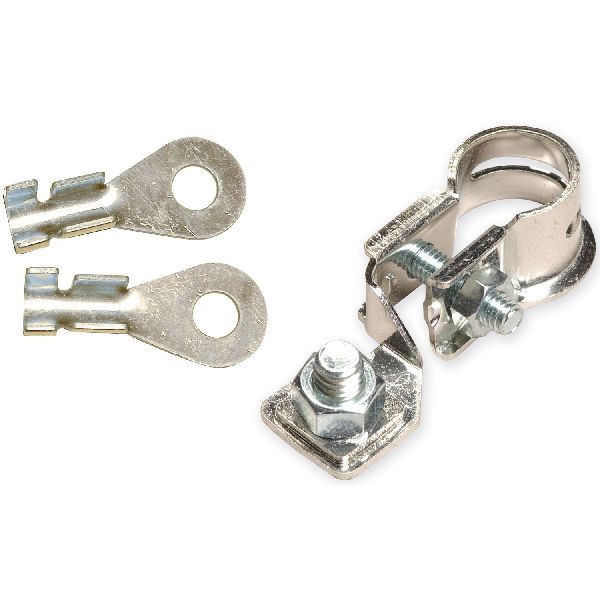
✅ What actually fixed it The positive battery cable terminal end was worn and could no longer clamp tightly. The old terminal was cut off, and a new universal clamp-on terminal was installed, resolving the poor connection and the P0562 code. - Reddit user @motorstereo on r/Saab900 (Saab 900 (NG900 implied by context)) — Charging system failure.
❌ Tried (didn't work) Initially considered replacing just the voltage regulator, assuming the brushes were worn.
✅ What actually fixed it Upon inspection, the brushes on the voltage regulator were fine, but the commutator rings on the alternator's rotor were excessively worn out. The entire alternator had to be replaced with a new Bosch unit.
OEM Part Supersession History
Saab 8548935 (70A), Saab 8548943 (90A), Saab 8548950 (120A)→Bosch AL0822X (90A Reman), Bosch AL0780X (120A Reman)— Original parts are no longer in production; superseded by remanufactured units from the OEM supplier (Bosch).
Heads up: The NG900 came with 70A, 90A, or 120A alternators depending on the trim and options. While a higher amperage unit can be fitted as an upgrade, ensure the main power cable (B+ cable) is in excellent condition to handle the potentially higher current.
Model Year Variations Within This Range
- 1998: The clutch system was changed from a cable-actuated system to a hydraulic system in 1998, which was then carried over to the Saab 9-3. This does not directly affect the P0562 code but is a key identifier for late-model NG900s.
- 1996-1998: Saab began fitting larger brakes to the NG900 starting in 1996. This has no impact on the P0562 code but is another mid-cycle update to be aware of when sourcing parts.
Diagnostic Flowchart
Used vs. New Parts: Buying Guide for This Vehicle
When a used part is the smart pick: For this repair, a used alternator from a reputable salvage yard is a viable budget option, especially if it's a verified low-mileage OEM Bosch unit. Used battery cables and ground straps are also good candidates if they are visually inspected for corrosion and flexibility.
Donor-vehicle mileage cap: roughly under 80000 miles for the part to have meaningful remaining life.
What to inspect on the donor part:
- For an alternator, check the pulley for smooth rotation with no grinding or roughness, which would indicate bad bearings.
- Inspect the alternator's commutator rings (if visible) for excessive grooving or wear.
- Check the date code on the donor vehicle's battery; if it's more than 2-3 years old, don't bother.
- For cables, bend them along their length. Any stiffness or crunching sounds indicate internal corrosion, and the cable should be rejected.
OEM-only on this vehicle (don't cheap out):
- While not strictly 'OEM-only', using a Bosch (OEM) alternator, whether new or remanufactured, is highly recommended for longevity and correct performance. Cheap, no-name aftermarket alternators are a common source of repeat failures.
Aftermarket brands forum-validated for this vehicle:
- Bosch (OEM supplier)
- Denso
- Remy (Remanufactured)
Brands owners have reported issues with on this vehicle:
- Unbranded or 'white-box' alternators from online marketplaces often have high failure rates and may not meet the vehicle's electrical demands, leading to persistent issues.
Real Owner Stories
Aggregated from forums and TSBs cited above. Mileages and costs reflect what owners reported in those sources.
Unspecified vehicle
Symptoms: A cascade of warning lights appeared on the dashboard along with erratic throttle behavior.
What fixed it: The root cause was a failing alternator; replacing it resolved the issues.
Source hint: Reddit r/MechanicAdvice thread titled 'Alternator issues causing throttle control problems Code P0562'
Mazda RX-8
Symptoms: System voltage was low at idle, especially when electrical accessories were turned on. This problem persisted even after replacing the alternator.
What fixed it: The symptoms pointed to a problem beyond the alternator itself, suggesting the actual cause was high resistance in the wiring or a poor ground connection.
Source hint: Reddit r/RX8 thread titled 'P0562 System voltage low? (New Alternator, battery at 12.5 volts with car off, 13.7~ with car on)'
Related OBD-II Codes
Frequently Asked Questions
What are the most important ground points to check on my 1994-1998 Saab 900 for a P0562 code?
I'm replacing the alternator on my NG900. What kind should I get?
My serpentine belt looks oily. Could this be related to the P0562 charging code?
Besides the alternator and battery, what's a common but overlooked cause for P0562 on these Saabs?
What voltage should I see when testing the charging system on my Saab 900?
I saw TSB 210-2418 mentioned. Does that apply to my NG900?
Helpful Videos
We Have This Part in Stock


The information in this article is provided for general reference and educational purposes only. Vehicle specifications, procedures, and part compatibility can vary by production date, trim level, and region. Always consult your vehicle's factory service manual and verify part numbers before purchasing or performing repairs. Safety-critical components such as airbags, seat belts, and braking systems should be installed by a qualified professional.
- Saab 900:
- 🧭 Diagnostic Flowchart
- 🎬 Helpful Videos
- 🛍️ Shop This Part
- What's Unique About the 1994-1998 Saab 900
- Symptoms You May Notice
- Most Likely Causes
- Rare But Worth Checking
- Diagnosis Steps
- Parts You'll Likely Need
- Technical Service Bulletins (TSBs) & Recalls
- Platform-Specific Known Issues
- Mechanic-Grade Diagnostic Values
- Scan Tool Commands That Help
- Wiring & Ground Locations
- Real Owner Repair Stories
- OEM Part Supersession History
- Model Year Variations Within This Range
- Used vs. New Parts: Buying Guide for This Vehicle
- Real Owner Stories
- Unspecified vehicle
- Mazda RX-8
- Related OBD-II Codes
- Frequently Asked Questions
- 🎟️ Get 5% Off