

P0562 on 2013-2020 Subaru BRZ: System Voltage Low Causes and Fixes
P0562 on a Subaru BRZ means the electrical system voltage is dangerously low. This is almost always caused by a failing alternator or a weak battery. A key symptom on this platform is the loss of electric power steering. Expect to spend $150-$300 for a battery or $450-$800 for an alternator replacement.
- P0562 indicates a serious low voltage problem that should be addressed immediately to avoid stalling or being stranded.
- The most likely causes are a failed alternator or a bad battery.
- Diagnosis is straightforward with a multimeter: check battery voltage with the engine off (~12.6V) and with the engine running (13.5-14.7V).
- Before replacing expensive parts, always check that battery terminals and ground connections are clean and tight.
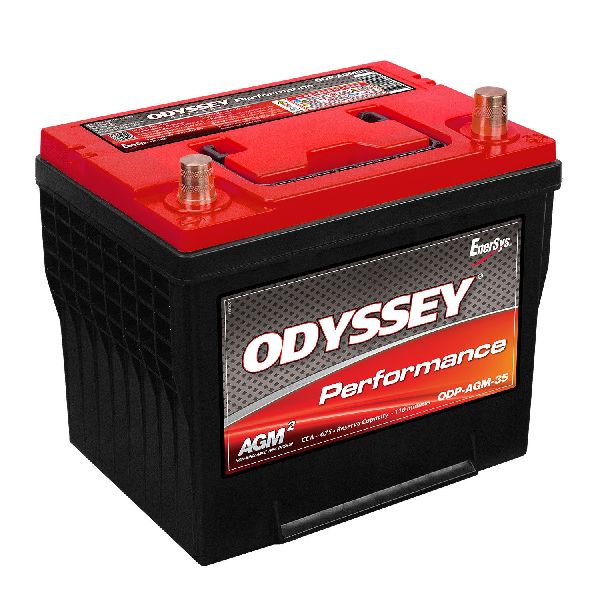
- The correct battery size for most 2013-2020 BRZs is Group Size 35.
What's Unique About the 2013-2020 Subaru BRZ
The Subaru BRZ, and its Toyota 86/Scion FR-S siblings, have a conventional charging system on 2013-2016 models. A notable characteristic is that the electric power steering (EPS) system is highly sensitive to low voltage and is often one of the first major systems to fail when the alternator can no longer support the vehicle's electrical load. Owners on forums frequently report that the loss of power steering was the final, most dramatic symptom before the car stalled. For the 2017+ refresh, Subaru implemented a 'smart charging' system where the ECM actively varies the voltage to improve fuel economy, which can show readings near 12V during acceleration and over 14V during deceleration; this is normal operation for the later models.
Symptoms You May Notice
- Check Engine Light is on
- Battery or charging system warning light is on
- Loss of electric power steering (EPS), often accompanied by a blinking power steering light
- Dimming or flickering headlights, dashboard, and interior lights
- Engine is slow to crank or won't start
- Engine stalling, especially at idle or after a period of driving
- Erratic behavior from electronics like the radio or power windows
- Poor or hesitant automatic transmission shifting
- Slower than normal operation of windows or wipers
- Replacing the battery when the alternator is the actual cause. A new battery will quickly be drained by a bad alternator, leaving the driver stranded again.
- Replacing the alternator when a simple bad connection, corroded terminal, or poor ground was the issue.
- Misdiagnosing a healthy 2017+ 'smart charging' alternator as faulty because the voltage fluctuates. Technicians expecting a constant 14V+ may be misled by the normal voltage drop during acceleration.
Most Likely Causes
- Failing Alternator 🔴 High Probability → Shop Alternator Alternators are a wear-and-tear item. The internal voltage regulator is a common failure point. On the BRZ/FR-S/86 platform, a failing alternator often manifests as the car running fine for a short period before multiple dash lights appear, followed by the loss of power steering and eventual stalling as the battery is drained.
How to confirm: With the engine running, use a multimeter to test the voltage at the battery terminals. A healthy alternator should produce between 13.5 and 14.7 volts (on 2013-2016 models). If the voltage is at battery level (~12V) or dropping while the engine runs, the alternator is not charging. For 2017+ models, voltage will fluctuate by design; test under electrical load (lights, AC on) where it should hold above 13.2V. Auto parts stores can test the alternator for free, but it must be removed from the vehicle.
Typical fix: Replace the alternator. Many owners opt for a remanufactured Denso or Bosch unit or a new OEM unit.
Est. part cost: $200-$500 - Weak or Dead Battery 🔴 High Probability → Shop Vehicle Battery Car batteries typically only last 3-5 years. The OEM battery in the BRZ is not known for exceptional longevity, and many owners on forums report replacing it within this timeframe. A battery that can no longer hold a charge will cause low voltage, especially on startup.
How to confirm: With the engine off, check the battery voltage with a multimeter. A healthy battery should read ~12.6 volts. Below 12.2V indicates it's discharged. The best confirmation is a load test, which most auto parts stores can perform for free. This test determines if the battery can still deliver the necessary cranking amps. During cranking, voltage should not drop below 9.0V.
Typical fix: Replace the battery. The correct size is Group 35. 🎬 See this step-by-step battery replacement walkthrough
Est. part cost: $150-$300 - Corroded or Loose Battery Terminals/Cables 🟡 Medium Probability → Shop Vehicle Battery Corrosion (white or greenish powder) builds up over time, creating resistance that prevents proper charging and electrical flow. This is a universal issue, not specific to the BRZ.
How to confirm: Visually inspect the battery terminals, posts, and cable ends for corrosion or looseness. Wiggle the terminals to ensure they are tight. Check the main ground connection to the chassis as well.
Typical fix: Disconnect the battery (negative first), clean the terminals and posts with a wire brush and a baking soda/water solution, and securely re-tighten the connections.
Est. part cost: $0-$10 - Damaged or Loose Serpentine Belt ⚪ Low Probability → Shop Serpentine Belt The serpentine belt drives the alternator. If it's slipping due to wear, glazing, or a failing tensioner, it cannot spin the alternator effectively, leading to no or low charge.
How to confirm: Visually inspect the serpentine belt for cracks, fraying, or a shiny, glazed appearance. Check for proper tension; it should be taut. If the belt is loose or missing, the alternator will not charge.
Typical fix: Replace the serpentine belt and/or the belt tensioner.
Est. part cost: $20-$50
Rare But Worth Checking
- Damaged Wiring or Poor Ground Connection: The main power cable from the alternator to the fuse box, or a main engine/chassis ground strap, can become corroded or damaged. This creates high resistance and prevents the system from receiving adequate voltage. A diagnostic test involves checking for voltage drop between the alternator output post and the positive battery terminal.
- Parasitic Battery Drain: → Shop Vehicle Battery An electrical component that stays on after the car is turned off can drain the battery overnight, causing a P0562 code on startup. This can be diagnosed by performing a parasitic draw test with a multimeter in series with the negative battery cable after the car has entered its 'sleep mode'.
- Faulty Powertrain Control Module (PCM): This is extremely rare. The PCM itself can fail and misinterpret the voltage reading, but all other possibilities (alternator, battery, wiring, grounds) should be exhaustively ruled out before considering this.
- Failed Main Fuse: The BRZ has a main, high-amperage fuse (e.g., 140A) that is often integrated into the positive battery terminal assembly. If this fuse blows, the alternator cannot charge the battery, leading to a P0562 code. It can be overlooked as it's not in the main fuse box.
Diagnosis Steps
- Scan for any other stored trouble codes. Address other codes first if they are present.
- Visually inspect the battery terminals and cables for corrosion, damage, or looseness. Clean and tighten as necessary.
- With the engine OFF, use a multimeter to measure the battery's static voltage. It should be around 12.6V. If it's below 12.2V, charge the battery and have it load-tested at an auto parts store.
- Start the engine. Measure the voltage at the battery terminals again. For 2013-2016 models, the reading should be between 13.5V and 14.7V. If it's around 12V or less and dropping, the alternator has likely failed.
- For 2017+ models, note that voltage will fluctuate. It may be low (~12.5V) under acceleration and high (14.5V+) on deceleration. To test, turn on all major electrical accessories (headlights on high beam, A/C, rear defroster). A healthy alternator should maintain voltage above 13.2V even under load.
- If the charging voltage is low, perform a quick check on the main alternator fuse (a high-amperage fuse like 140A, often part of the positive battery terminal connector).
- If the battery and alternator test good, check for a voltage drop between the alternator output post and the positive battery terminal, and between the negative battery terminal and the chassis/engine block. A drop of more than 0.2-0.5V indicates high resistance in the cables or connections.
- If the battery dies overnight, perform a parasitic draw test to find the circuit causing the drain. Wait for the vehicle's modules to enter sleep mode (up to 30 minutes), then measure the current draw. A reading above 50-85mA indicates an issue.
Parts You'll Likely Need
- Battery (Group Size 35) — Batteries are a common failure item with a 3-5 year lifespan. A weak battery is a primary cause of low system voltage, especially at startup.
Trusted brands: DieHard, Duralast, Optima (RedTop is a popular AGM upgrade)
OEM price range: $200-$350
Aftermarket price range: $150-$250 - Alternator (2013-2016)
(OEM #23700AA751)— The alternator is responsible for charging the battery and powering the car's electronics. If it fails, system voltage will drop and trigger P0562. This part number supersedes 23700AA750.
Trusted brands: Denso (OEM Manufacturer), Bosch (Remanufactured), ACDelco
OEM price range: $430-$650
Aftermarket price range: $200-$400 - Alternator (2017-2020)
(OEM #23700AA990)— The alternator is responsible for charging the battery and powering the car's electronics. The 2017+ models use a different alternator due to a 'smart charging' system. The corresponding Toyota part number is SU003-06464.
Trusted brands: Denso (OEM Manufacturer), Bosch, ACDelco
OEM price range: $460-$710
Aftermarket price range: $250-$450
Technical Service Bulletins (TSBs) & Recalls
- TSB 11-136-14: While not directly for P0562, this TSB provides an ECM reprogramming file to address idle instability and extended cranking on 2013-14 models. It emphasizes the importance of using a stable power supply during reprogramming, highlighting the system's sensitivity to voltage.
- Subaru strongly recommends using a high-quality battery charger (like a Midtronics DCA-8000) in 'Power Supply Mode' during any ECU reprogramming to prevent failures due to voltage drops, which underscores the importance of stable voltage for this platform's electronics.
Platform-Specific Known Issues
- Alternator Failure Leading to Power Steering Loss: → Shop Alternator A common failure story on FT86Club forums involves the battery light coming on, followed by multiple dash lights, and then a sudden loss of electric power steering while driving. This sequence almost always points to a failed alternator that can no longer power the car's systems, forcing the car to run off the battery until it is depleted.
- Premature OEM Battery Failure: → Shop Vehicle Battery Multiple owners on forums like FT86Club have reported their original factory battery failing in as little as 2-3 years, much shorter than the typical 3-5 year lifespan. This often presents as a no-start condition without prior warning.
Mechanic-Grade Diagnostic Values
- Normal Parasitic Draw — expected: < 50-85 mA. Failure: A sustained reading > 100 mA after all modules have gone to sleep (wait up to 30 mins).
- Charging Voltage (2013-2016) — expected: 13.5V - 14.7V. Failure: Voltage at or below battery static voltage (~12.6V) while running, or not increasing from static voltage.
- Charging Voltage (2017-2020) — expected: Fluctuates: ~12.5V under acceleration, up to 14.7V+ on deceleration.. Failure: Voltage does not rise above 13.2V when under heavy electrical load (all accessories on), regardless of engine RPM or condition.
- Battery Cranking Voltage — expected: > 9.0V. Failure: Voltage drops below 9.0V while the starter motor is engaged.
Wiring & Ground Locations
- Main Alternator Fuse — Integrated into the positive battery terminal connector in the engine bay, not in the main fuse box.. This is a 140A 'slow blow' fuse (P/N 82211CA010) that protects the main charging circuit. If it fails, the alternator is completely disconnected from the battery, causing a rapid voltage drop and a P0562 code. It can be easily missed if only checking the under-hood fuse panel.
- Alternator Connector (A43) — The 3-pin plug on the alternator housing.. This connector provides the voltage sensing and warning light signals. A loose or corroded connection here can cause the alternator to charge incorrectly or not at all. Wires are typically for Sense (S), Lamp (L), and Ignition (IG).
- Engine Ground Straps — Key grounds are typically located from the engine block/head to the chassis frame rail, and from the negative battery terminal to the chassis.. A corroded or broken main engine ground strap creates high resistance in the charging circuit, preventing the alternator from effectively charging the battery and powering the vehicle's electronics, leading to low system voltage.
Real Owner Repair Stories
- Reddit user trio3224 on r/ft86 (2017 Toyota 86) — Suspected failing alternator.
❌ Tried (didn't work) Searching for reputable aftermarket brands like Denso and finding only store-brands or unknown names.
✅ What actually fixed it The community recommended getting a new OEM alternator. A key piece of advice was to check prices for the same part from both Toyota (P/N SU003-06464) and Subaru (P/N 23700AA990) dealers, as one is often significantly cheaper than the other. In this case, the Toyota part was nearly half the price of the Subaru part.
OEM Part Supersession History
23700AA750→23700AA751— Standard part revision/update by the manufacturer.
Heads up: These parts are for 2013-2016 models only and are not compatible with 2017+ models due to charging system differences.
Model Year Variations Within This Range
- 2017-2020: The 2017 refresh introduced a 'smart charging' system controlled by the ECM to improve fuel efficiency. The alternator's output voltage is actively varied based on driving conditions (load, acceleration, deceleration). This is a fundamental change from the 2013-2016 models' conventional, constant-voltage system and requires a different alternator (P/N 23700AA990).
Diagnostic Flowchart
Other Known Issues on This Vehicle
Issues unrelated to this code that are worth knowing about as an owner of this generation:
- Engine Valve Spring Fracture (2013 Models) 🔴 High — Common enough to trigger a major recall (NHTSA #18V772, Subaru #WTY-84) affecting all 2013 model year BRZs. (Ref: Recall WTY-84 / 18V-772)
- High-Pressure Fuel Pump 'Crickets' 🟡 Low — A very common chirping or squeaking noise from the high-pressure fuel pump at warm idle. It is widely considered non-detrimental but annoying. Subaru released updated parts to address it. (Ref: TSB 11-163-16)
- Rough Idle / Idle Dip 🟠 Medium — Early models often exhibited rough idle or a dip in RPM, especially when the A/C cycles. Subaru released several ECU updates to improve idle stability. (Ref: TSB 11-136-14)
- Leaking Direct Injector Seals 🟠 Medium — The seals for the direct injectors can fail, leading to fuel or compression leaks, causing a distinct knocking or tapping sound.
- Condensation in Taillights 🟡 Low — A common complaint is moisture and condensation building up inside the rear taillight assemblies, particularly after rain or car washes.
- Throw-Out Bearing / Clutch Fork Failure 🟠 Medium — Premature wear of the clutch release (throw-out) bearing is common on manual transmission models, which can lead to noise and eventual failure of the clutch fork.
Used vs. New Parts: Buying Guide for This Vehicle
When a used part is the smart pick: A used OEM alternator from a low-mileage wrecked vehicle can be a cost-effective option if you are on a tight budget. However, it carries the risk of a shorter lifespan compared to a new or professionally remanufactured unit.
Donor-vehicle mileage cap: roughly under 60000 miles for the part to have meaningful remaining life.
What to inspect on the donor part:
- Check for physical damage, cracks in the housing, or a bent pulley.
- Spin the pulley by hand; it should feel smooth with no grinding, roughness, or excessive noise.
- Inspect the electrical connector and main output stud for corrosion or damage.
- If possible, verify the mileage and year of the donor vehicle.
OEM-only on this vehicle (don't cheap out):
- Alternator: While not strictly 'OEM-only', it is highly recommended to use either a new OEM unit or a high-quality remanufactured unit from the original manufacturer (Denso) or a reputable brand like Bosch. Avoid cheap, unbranded 'white-box' alternators as they have a high failure rate.
Aftermarket brands forum-validated for this vehicle:
- Denso (New or Remanufactured - OEM supplier)
- Bosch (Remanufactured)
Brands owners have reported issues with on this vehicle:
- Generic, unbranded, or 'white-box' alternators from online marketplaces and some local parts stores have a poor reputation for reliability in forum discussions.
Real Owner Stories
Aggregated from forums and TSBs cited above. Mileages and costs reflect what owners reported in those sources.
2013-2020 Subaru BRZ FA20
Symptoms: The battery light came on, followed by multiple dashboard lights, and then a sudden loss of electric power steering while driving.
What fixed it: Replacement of the failed alternator.
Source hint: vehicle_specific_issues: Alternator Failure Leading to Power Steering Loss
2014 Subaru BRZ FA20
Symptoms: The car keeps dying; owner needed to differentiate between a bad battery and a failing alternator using a multimeter.
What fixed it: Replacement of the OEM battery which suffered from premature failure.
Source hint: ft86club.com thread titled 'Bad battery or bad alternator?'
2013-2020 Subaru BRZ FA20
Symptoms: Battery light illuminated, followed by every dash light turning on, loss of power steering, and the car eventually dying.
What fixed it: Alternator replacement.
Source hint: ft86club.com thread titled 'Alternator or Battery problem?'
2013-2020 Subaru BRZ FA20
Symptoms: Charging circuit issue persisted even after replacing the alternator with a used unit.
What fixed it: Repairing an open circuit found in the alternator's rotor assembly after diagnosing the 3-pin connector and fuses.
Source hint: ft86club.com thread titled 'Alternator / Charging Circuit Issue'
Related OBD-II Codes
Frequently Asked Questions
Why did my BRZ lose power steering and show a blinking steering light before stalling?
My 2017 BRZ shows voltage as low as 12.5V while driving; is my alternator bad?
Does TSB 11-136-14 apply to my P0562 code?
What battery size should I buy for my 2013-2020 Subaru BRZ?
How long does the original factory battery usually last in these cars?
Can I test the BRZ alternator myself with a multimeter?
Helpful Videos
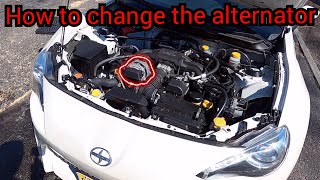
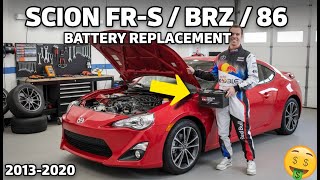
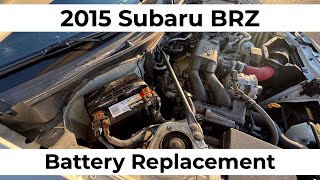
Used OEM Parts in Stock
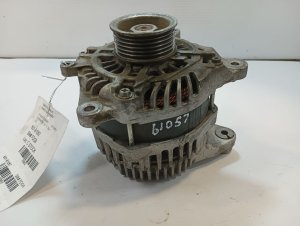
New Aftermarket Parts Available



The information in this article is provided for general reference and educational purposes only. Vehicle specifications, procedures, and part compatibility can vary by production date, trim level, and region. Always consult your vehicle's factory service manual and verify part numbers before purchasing or performing repairs. Safety-critical components such as airbags, seat belts, and braking systems should be installed by a qualified professional.
- Subaru BRZ:
- 🧭 Diagnostic Flowchart
- 🎬 Helpful Videos
- 🛍️ Shop This Part
- What's Unique About the 2013-2020 Subaru BRZ
- Symptoms You May Notice
- Most Likely Causes
- Rare But Worth Checking
- Diagnosis Steps
- Parts You'll Likely Need
- Technical Service Bulletins (TSBs) & Recalls
- Platform-Specific Known Issues
- Mechanic-Grade Diagnostic Values
- Wiring & Ground Locations
- Real Owner Repair Stories
- OEM Part Supersession History
- Model Year Variations Within This Range
- Other Known Issues on This Vehicle
- Used vs. New Parts: Buying Guide for This Vehicle
- Real Owner Stories
- 2013-2020 Subaru BRZ FA20
- 2014 Subaru BRZ FA20
- 2013-2020 Subaru BRZ FA20
- 2013-2020 Subaru BRZ FA20
- Related OBD-II Codes
- Frequently Asked Questions
- 🎟️ Get 5% Off