

P0563 on 2004-2012 Chevrolet Colorado: System Voltage High Causes and Fixes
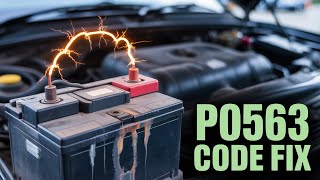
On a 2004-2012 Colorado, code P0563 almost always means the alternator is failing and overcharging the system. The internal voltage regulator is the culprit. A replacement alternator is the typical fix, costing between $150 and $350 for the part. Before replacing, verify the battery terminals and ground splice packs are clean and tight, as they are known weak points.
- P0563 means your truck's electrical system is being subjected to excessive voltage, which can damage electronics.
- The most likely cause by far is a failed internal voltage regulator, which requires replacing the entire alternator.
- Confirm the problem with a multimeter. If you see over 15 volts at the battery with the engine running, the alternator is bad.
- Before buying an alternator, ALWAYS check that your battery terminals are clean/tight and that the main ground splice packs (SP105/SP106) are secure and corrosion-free, as these are known weak points on the Colorado.
What's Unique About the 2004-2012 Chevrolet Colorado
For the first-generation Chevrolet Colorado and its platform mates (GMC Canyon, Isuzu i-Series), the P0563 code does not point to an unusual platform-specific design flaw in the charging components themselves. The causes are typical of most vehicles from this era, with the most common failure being the alternator's internal voltage regulator. However, a significant platform-specific issue is the factory ground splice packs (SP105 and SP106) and battery terminal connectors. These components are known to corrode and create high resistance, leading to a host of bizarre electrical issues that can mimic a failing alternator. It is critical to inspect and often remediate these grounds before condemning an expensive component like the alternator.
Symptoms You May Notice
- Check Engine Light is on
- Battery or charging system warning light is illuminated on the dashboard.
- Headlights and interior lights are unusually bright or flickering.
- Erratic behavior from electrical components like the radio, power windows, or HVAC blower fan.
- A whining noise from the engine bay that changes pitch with engine RPM.
- The battery may feel hot to the touch or emit a sulfur (rotten egg) smell, indicating it is being overcharged and boiling the electrolyte.
- In some cases, the engine may stall if control modules reboot due to voltage spikes.
- Transmission may exhibit harsh shifting or enter a limp mode.
- Replacing the battery. A new battery will not fix an overcharging alternator and will likely be damaged by the high voltage condition.
- Replacing the PCM without proper diagnosis. This is an expensive part that is rarely the cause of a P0563 code.
- Replacing individual electrical components (like the radio or blower motor) that are acting erratically, without first diagnosing the root charging system or grounding problem.
Most Likely Causes
- Failing Alternator / Internal Voltage Regulator 🔴 High Probability → Shop Voltage Regulator The voltage regulator is an internal component of the alternator. When it fails, it typically defaults to a full-field state, causing the alternator to produce maximum voltage. This is a common failure mode for alternators on many vehicles of this age.
How to confirm: With the engine running, use a multimeter to measure the DC voltage across the battery terminals. A reading that is consistently above 15.0 volts confirms an overcharging condition, pointing directly to a faulty alternator. Many auto parts stores will test your charging system for free.
Typical fix: Replace the entire alternator assembly. 🎬 See this step-by-step alternator replacement walkthrough The voltage regulator is not typically serviced separately.
Est. part cost: $150-$350 - Corroded or Loose Battery Terminals/Cables 🟡 Medium Probability → Shop Vehicle Battery The factory battery terminals on the Colorado use a clamp-and-nut design that can be prone to corrosion or loosening over time, creating high resistance. This poor connection can cause the alternator to overwork to compensate.
How to confirm: Visually inspect the battery terminals for white or green corrosion. Physically try to twist the terminals on the battery posts; they should not move. Check where the main ground cable attaches to the chassis and engine block for corrosion or looseness.
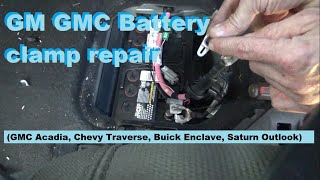
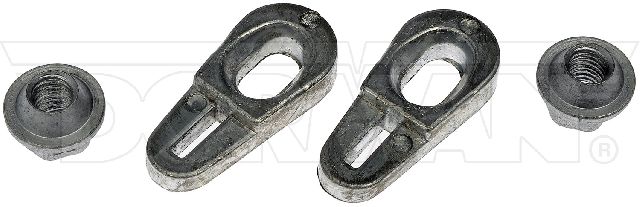
Typical fix: Clean the battery posts and terminals thoroughly with a wire brush. If the terminals are damaged or won't tighten securely, replace them. Dorman offers 🎬 Watch: How to repair loose battery clamps OE FIX replacement nuts and clamps (Part #926-877) or full terminal ends (#926-879).
Est. part cost: $10-$50 - Poor Ground Splice Packs (SP105 & SP106) 🟡 Medium Probability A well-documented issue on the GMT355 platform is the use of unsealed ground splice packs under the hood. SP105 (driver's side) and SP106 (passenger's side) bundle multiple ground wires into a single point that is prone to corrosion, causing erratic electrical behavior.
How to confirm: Locate SP105 near the battery/ABS module and SP106 behind the airbox. Inspect for corrosion. Symptoms like a flickering fuel gauge, faulty door locks, or intermittent blower motor operation often point to these grounds. A voltage drop test from the pack to the negative battery terminal can confirm high resistance.
Typical fix: The proper fix is to cut the wires out of the splice pack, crimp them together into a single ring terminal, and bolt it directly to a clean chassis ground. There are numerous owner tutorials on YouTube and forums detailing this repair. 🎬 Watch: How to fix these corroded ground splice packs
Est. part cost: $5-$20
Rare But Worth Checking
- Faulty Powertrain Control Module (PCM): → Shop Engine Control Module (ECM) This is very rare. The PCM's voltage sensing circuit can fail, causing it to misread the system voltage. All other possibilities, especially the alternator and all wiring/grounds, should be exhaustively ruled out before condemning the PCM.
Diagnosis Steps
- Scan for any other stored trouble codes. Address those first if they are present.
- Visually inspect the battery, its terminals, and the main power and ground cables. Look for corrosion, swelling of the battery case, or loose connections.
- With the engine OFF, measure the battery voltage with a multimeter. A healthy, fully charged battery should read approximately 12.6 volts.
- Start the engine. Measure the voltage at the battery terminals again. The normal charging voltage should be between 13.2 and 14.8 volts.
- If the voltage reads above 15.0 volts, the alternator's voltage regulator has almost certainly failed.
- If the voltage is high, turn on electrical loads like the headlights, blower fan, and rear defroster. If the voltage remains high or spikes, this further confirms a faulty regulator.
- If the voltage reading is normal, the issue might be intermittent. Thoroughly inspect the ground splice packs (SP105 and SP106) for corrosion. Check the wiring harness to the alternator for any signs of damage or corrosion. Wiggle the harness while monitoring voltage to see if it spikes.
Parts You'll Likely Need
- Alternator
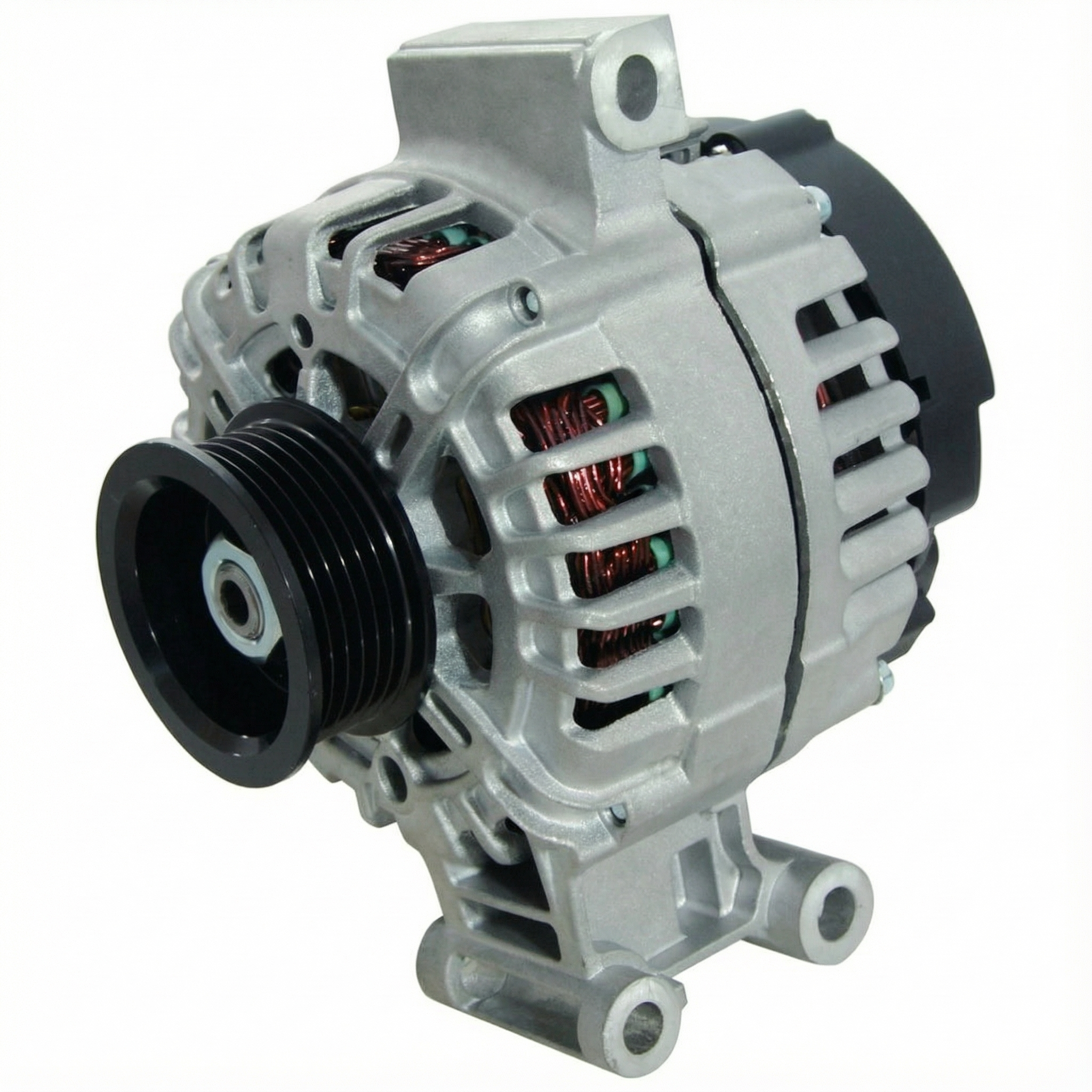
(OEM #ACDelco 25925948 (Example for 2.9L/3.7L))— This is the most common cause of P0563, as the internal voltage regulator fails and causes the system to overcharge.
Trusted brands: ACDelco, Bosch, Denso, Remy
OEM price range: $250-$400
Aftermarket price range: $150-$280 - Battery Terminal Repair Kit
(OEM #Dorman 926-877 (Nuts/Clamps), Dorman 926-879 (Terminal End))— The original terminals can corrode or fail, causing poor connections that can lead to various electrical faults. It's a common maintenance item on these trucks.
Trusted brands: Dorman, Standard Motor Products, ACDelco
OEM price range: $20-$40
Aftermarket price range: $10-$25
Platform-Specific Known Issues
- Corroding Ground Splice Packs: The most notable electrical weak point on this platform. Unsealed ground packs SP105 and SP106 under the hood corrode, causing high resistance and a wide array of phantom electrical problems. The fix is to bypass the packs entirely by consolidating the wires into a ring terminal bolted to the chassis.
Technical Service Bulletins (TSBs) & Recalls
- TSB Bulletin #24-NA-050: While issued for other Chevrolet truck models, this bulletin highlights that P0563 can sometimes be set in conjunction with DTC P0606, requiring specific diagnostic procedures to correct the electrical system concern.
Mechanic-Grade Diagnostic Values
- Battery Voltage (Engine Off) — expected: ~12.6 Volts. Failure: Below 12.0V may indicate a weak battery that can't accept a proper charge, though this doesn't directly cause P0563.
- Charging System Voltage (Engine Idling, No Load) — expected: 13.2 - 14.8 Volts. Failure: Consistently above 15.0 Volts. The TCM may set the code if it sees >18V for 10 seconds.
- Charging System Voltage (Engine Idling, High Load) — expected: 13.2 - 14.8 Volts. Failure: Voltage remains above 15.0 Volts or spikes erratically. A healthy system should maintain voltage within the specified range even with accessories on.
- Voltage Drop (Alternator B+ post to Battery Positive post) — expected: < 0.2 Volts. Failure: > 0.2 Volts indicates high resistance in the main charging cable or connections, which can cause charging issues.
Wiring & Ground Locations
- SP105 — Driver's side of the engine compartment, near the battery and Electronic Brake Control Module (EBCM).. This splice pack grounds numerous components including the fuel pump, headlamps, and wipers. Corrosion here can cause widespread, erratic electrical behavior that can be confused with a charging system fault.
- SP106 — Passenger's side of the engine compartment, typically behind the engine airbox.. This splice pack grounds the HVAC controls, Data Link Connector (DLC), and transfer case module (on 4WD models). Corrosion can cause communication and module errors.
- G103 — Located at the left rear of the engine compartment on the cowl, above the brake booster.. This is a critical ground point for the Body Control Module (BCM), Instrument Panel Cluster (IPC), and Data Link Connector (DLC). A poor connection here can cause false readings and communication errors between modules.
- G105 — Located at the left front of the engine compartment, sometimes near the cooling fan relays.. Grounds the cooling fan, horn, and various exterior lights. While less likely to cause P0563 directly, a bad ground here contributes to overall electrical system instability.
- Alternator Connector — Plugged into the rear of the alternator.. The two-wire connector (on most models) contains the 'L' terminal (charge indicator lamp) and the 'F' or 'I' terminal (field/ignition). The PCM uses the field duty cycle wire to control the alternator's output. Damage to this wiring can cause the alternator to default to maximum output, triggering P0563.
Model Year Variations Within This Range
- 2004-2012: Alternator amperage varies based on engine size and options. The 4-cylinder (2.8L/2.9L) and 5-cylinder (3.5L/3.7L) engines typically used a 100-amp or 125-amp alternator (e.g., ACDelco 25925948). The V8 (5.3L) introduced in 2009 used a higher output 145-amp alternator. While the parts differ, the diagnostic process for P0563 is identical across all versions.
Diagnostic Flowchart
Other Known Issues on This Vehicle
Issues unrelated to this code that are worth knowing about as an owner of this generation:
- Premature Valve Seat Wear (3.5L L52 I5) 🔴 High — Common on 2004-2006 models with the 3.5L engine. Can cause misfires (P0300) and requires cylinder head replacement or repair.
- PassLock II Anti-Theft System Failure 🟠 Medium — Widespread across all years. The system can fail to recognize the key, resulting in a 'crank-no-start' condition that requires a 10-minute wait/relearn procedure.
- Failing Blower Motor Resistor 🟡 Low — Very common. Results in the HVAC fan only working on the highest setting. Often caused by the blower motor drawing too much current, so both should be checked.
- Corroding Ground Splice Packs (SP105/SP106) 🟠 Medium — Extremely common across all years. Causes a wide variety of difficult-to-diagnose electrical gremlins affecting everything from lights to door locks to fuel gauges.
- EVAP System Faults (Vent/Purge Solenoids) 🟡 Low — Common failure item, usually triggering a check engine light (e.g., P0446, P0449) but not affecting drivability. The vent solenoid is located near the spare tire and is prone to dirt intrusion.
- Inaccurate Fuel Level Sensor 🟡 Low — Fairly common. The fuel gauge may read empty when the tank is not, or vice-versa. The sensor is part of the fuel pump module inside the tank.
Used vs. New Parts: Buying Guide for This Vehicle
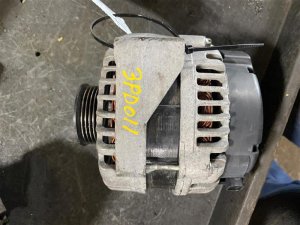
When a used part is the smart pick: For a P0563 repair, the main component is the alternator. A used alternator from a reputable auto recycler can be a cost-effective option, especially for a budget-conscious repair on an older vehicle. It is a common, easily accessible part.
Donor-vehicle mileage cap: roughly under 80000 miles for the part to have meaningful remaining life.
What to inspect on the donor part:
- Check the date code on the alternator if possible; newer is better.
- Spin the pulley by hand. It should spin smoothly with minimal noise. Any grinding or roughness indicates bad bearings.
- Inspect the electrical connector and the main B+ terminal stud for corrosion, melting, or damage.
- Look for signs of excessive dirt or oil saturation, which can indicate a hard life and potential internal contamination.
Aftermarket brands forum-validated for this vehicle:
- ACDelco (GM Genuine or Gold/Professional lines)
- Denso
- Bosch
- Remy
- WAI Global
Brands owners have reported issues with on this vehicle:
- Unnamed 'white box' or no-name brands from online marketplaces are a gamble. They often have lower quality internal components (regulators, diodes) and may fail prematurely or not regulate voltage correctly out of the box.
Real Owner Stories
Aggregated from forums and TSBs cited above. Mileages and costs reflect what owners reported in those sources.
2004-2012 Chevrolet Colorado
Symptoms: Flickering fuel gauge, faulty door locks, and intermittent blower motor operation along with electrical gremlins.
What fixed it: Cut the wires out of the unsealed ground splice packs (SP105 and SP106), crimped them together into a single ring terminal, and bolted it directly to a clean chassis ground.
Source hint: YouTube - "Chevy Colorado ground issues and how to fix them." by Philos Garage
2004-2012 Chevrolet Colorado
Symptoms: Charging system issues and voltage-related codes; forum members noted the alternator often fails by defaulting to a full-field state.
What fixed it: Replacement of the alternator assembly due to a failed internal voltage regulator.
Source hint: 355nation.net
Related OBD-II Codes
Frequently Asked Questions
My 2004-2012 Colorado has a flickering fuel gauge and erratic door locks along with the P0563 code; are these related?
Can I just replace the voltage regulator on my Colorado's alternator to fix P0563?
Are there specific replacement parts recommended for the battery terminal issues on this truck?
Where exactly are the ground splice packs located on a first-generation Colorado?
Does the GMC Canyon or Hummer H3 suffer from the same P0563 issues as the Colorado?
Helpful Videos
Used OEM Parts in Stock
New Aftermarket Parts Available

The information in this article is provided for general reference and educational purposes only. Vehicle specifications, procedures, and part compatibility can vary by production date, trim level, and region. Always consult your vehicle's factory service manual and verify part numbers before purchasing or performing repairs. Safety-critical components such as airbags, seat belts, and braking systems should be installed by a qualified professional.
- Chevrolet Colorado:
- 🧭 Diagnostic Flowchart
- 🎬 Helpful Videos
- 🛍️ Shop This Part
- What's Unique About the 2004-2012 Chevrolet Colorado
- Symptoms You May Notice
- Most Likely Causes
- Rare But Worth Checking
- Diagnosis Steps
- Parts You'll Likely Need
- Platform-Specific Known Issues
- Technical Service Bulletins (TSBs) & Recalls
- Mechanic-Grade Diagnostic Values
- Wiring & Ground Locations
- Model Year Variations Within This Range
- Other Known Issues on This Vehicle
- Used vs. New Parts: Buying Guide for This Vehicle
- Real Owner Stories
- 2004-2012 Chevrolet Colorado
- 2004-2012 Chevrolet Colorado
- Related OBD-II Codes
- Frequently Asked Questions
- 🎟️ Get 5% Off