

P0563 on 2008-2020 Dodge Grand Caravan: System Voltage High Causes and Fixes
P0563 means your Grand Caravan's charging system is producing dangerously high voltage, almost always due to a failed internal voltage regulator in the alternator. Expect to replace the alternator, which costs $250-$500 for the part and is a moderately difficult DIY job. In rare cases, a wiring issue or a faulty TIPM could be the cause.
- P0563 means your van's voltage is dangerously high, and you should stop driving immediately to prevent damage to other electronics.
- The most likely cause, in over 90% of cases, is a failed internal voltage regulator, which requires replacing the entire alternator.
- Before buying parts, confirm the overcharge condition by testing the voltage at the battery with the engine running. A reading above 15V confirms the fault.
- Always inspect the alternator's electrical connector for melting or damage, as this is a known weak point and may need to be replaced along with the alternator.
What's Unique About the 2008-2020 Dodge Grand Caravan
On the 2008-2020 Grand Caravan (RT platform), the voltage regulator is located inside the alternator but is controlled by the Powertrain Control Module (PCM). The PCM sends a command signal via a dedicated circuit to the alternator, telling it how much voltage to produce based on the vehicle's electrical load and temperature. A P0563 code usually means 🎬 Watch: Understanding the P0563 high voltage code the alternator's internal regulator has failed and is no longer obeying the PCM's commands, causing it to default to maximum output and overcharge the system. While the alternator is the most common point of failure, this design means a wiring fault in the control circuit or, more rarely, a PCM or TIPM issue can also cause the code.
Symptoms You May Notice
- Check Engine Light illuminated
- Red battery or charging system warning light on the dash
- Transmission shifting erratically or entering 'limp mode'
- Intermittent loss of electric power steering
- Headlights appearing unusually bright, dimming, or flickering
- Radio, climate controls, or other interior electronics behaving erratically or shutting down
- Engine stalling or having difficulty starting
- A faint burning smell or visible acid leakage from the battery being overcharged
- Gauges on the instrument cluster sweeping or behaving erratically
- Replacing the battery. A new battery will not fix an overcharging problem and will likely be damaged by the high voltage from the faulty charging system.
- Replacing the PCM first. The PCM is rarely the cause of this code; the alternator and its wiring should always be diagnosed first to avoid unnecessary expense.
Most Likely Causes
- Faulty Alternator 🔴 High Probability → Shop Alternator The internal voltage regulator is the most common component to fail within the charging system. When it fails, it defaults to a full-field, maximum charging state, causing the high voltage condition. This is a well-documented failure on the 3.6L Pentastar platform.
How to confirm: With the engine running, use a multimeter to measure the DC voltage across the battery terminals. A reading consistently above 15.0V points to a faulty alternator. Many auto parts stores can also bench-test the alternator for free if you remove it.
Typical fix: Replace the entire alternator assembly. The voltage regulator is not typically serviced separately.
Est. part cost: $250-$500 - Damaged Wiring or Connector 🟡 Medium Probability The two-wire connector for the alternator's field control circuit is located in a high-heat area and can become brittle, corroded, or even melt, causing a short or open circuit that leads to uncontrolled charging. This prevents the PCM from regulating the voltage.
How to confirm: Visually inspect the wiring harness and the plastic connector going into the back of the alternator. Look for any signs of melting, charring, corrosion, or broken wires. A user on dodgejourneyforum.com reported fixing a P0563 and P063A by addressing wiring issues.
Typical fix: If the connector is damaged, replace it with a new pigtail connector, which involves cutting the old one off and splicing the new one in.
Est. part cost: $15-$40 - Loose or Corroded Battery Terminals / Ground Wires ⚪ Low Probability → Shop Vehicle Battery Corrosion is common on all vehicle batteries. High resistance from a poor connection can confuse the PCM's voltage sensing, causing the charging system to work harder and potentially leading to voltage spikes.
How to confirm: Visually inspect the battery terminals for white or greenish corrosion. Check that the main power and ground cables are tight and secure at the battery, chassis, and engine block.
Typical fix: Disconnect the battery terminals and clean them thoroughly with a wire brush. Clean the battery posts as well. Ensure all ground connections are clean and tight.
Est. part cost: $1-$10 for cleaning tools
Rare But Worth Checking
- Failed Powertrain Control Module (PCM): → Shop Engine Control Module (ECM) This is an unlikely cause. The PCM's internal voltage-sensing circuit or the driver that controls the alternator can fail. You should only suspect the PCM after definitively ruling out the alternator and all related wiring.
- Failed Totally Integrated Power Module (TIPM): → Shop Fuse Box The TIPM is the main electrical hub and is a known weak point on this platform, responsible for many electrical gremlins. A failure within the TIPM can disrupt power distribution and potentially contribute to voltage regulation problems, though it's less common for P0563 than a bad alternator.
Diagnosis Steps
- Read all stored fault codes with an OBD-II scanner.
- With the engine running, use a multimeter set to DC volts to measure the voltage directly at the battery terminals. Normal is 13.5-14.7V. If it reads consistently above 15.0V, an overcharge condition is confirmed.
- Turn the vehicle off and disconnect the battery.
- Thoroughly inspect the battery terminals, positive and negative cables, and all major ground straps (battery-to-chassis, engine-to-chassis) for corrosion, damage, or looseness. Clean and tighten as needed.
- Carefully inspect the wiring harness and the electrical connector at the back of the alternator. Look for any signs of melting, charring, or corrosion, especially on the two-pin field control connector.
- Inspect the main fuse box (TIPM) for any signs of corrosion, water intrusion, or burnt fuses/relays.
- If all wiring and connections appear to be in good condition, the alternator is the primary suspect.
- Replace the alternator. After replacement, reconnect the battery, clear the codes, and re-test the voltage at the battery terminals to ensure it is within the normal range.
Parts You'll Likely Need
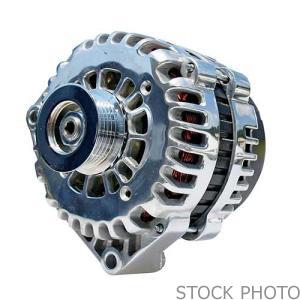
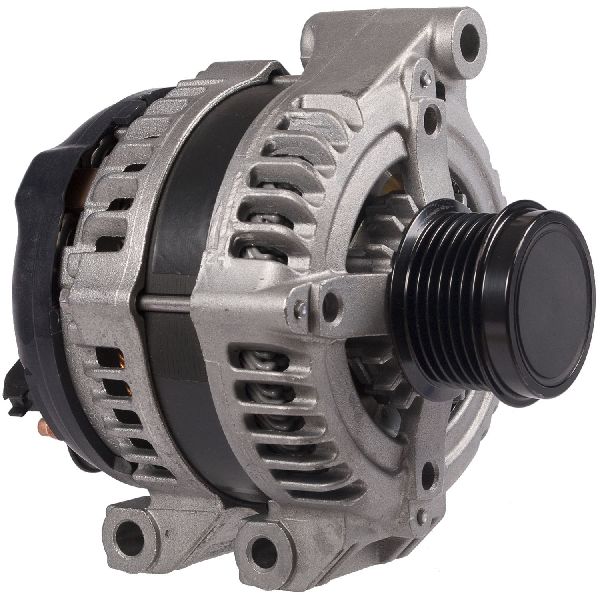
- Alternator
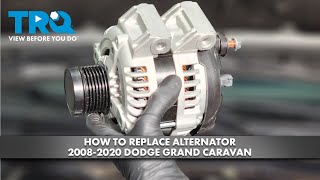
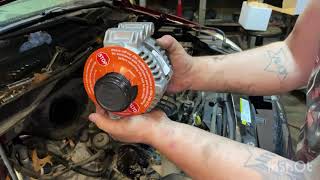
(OEM #4801778AI (supersedes 4801778AF))— This is the most common cause of P0563, as the internal voltage regulator fails and causes the overcharging condition. The 3.6L engine typically uses a 160 Amp alternator. 🎬 See this 3.6L Pentastar alternator replacement walkthrough
Trusted brands: Mopar, Denso, Bosch, Carquest
OEM price range: $400-$700
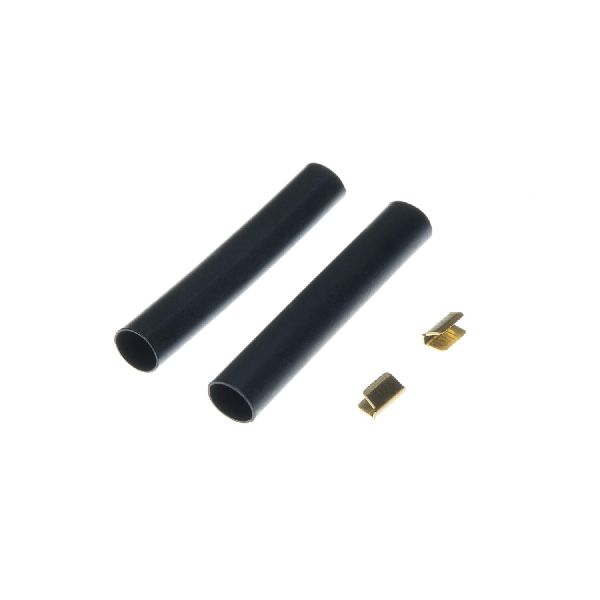
Aftermarket price range: $250-$450 - Alternator Connector Pigtail — If the original connector shows signs of melting or heat damage during diagnosis, it must be replaced to ensure a good connection to the new alternator. Dorman 645-505 is a commonly cited aftermarket part for similar Chrysler applications, but fitment should be verified.
Trusted brands: Dorman, Standard Motor Products (SMP)
OEM price range: $25-$50
Aftermarket price range: $15-$40
Related Codes That Often Appear With This One
- P0622 — This code for 'Generator Field 'F' Control Circuit Malfunction' is often stored alongside P0563 because both relate to the communication and control circuit between the PCM and the alternator.
- P0700 — This is a general transmission fault code. The high voltage from the P0563 condition can cause the Transmission Control Module (TCM) to malfunction, lose communication, and set this code.
- P063A — Stands for 'Generator Voltage Sense Circuit'. This code often appears with P0563, indicating a problem in the circuit the PCM uses to monitor the alternator's output, reinforcing that the issue lies with the alternator or its wiring.
Technical Service Bulletins (TSBs) & Recalls
- While no TSB directly addresses P0563 on the Grand Caravan, related bulletins like TSB 08-022-14 for other Chrysler vehicles address software flashes for battery messages, showing the sensitivity of the electrical system monitoring.
Platform-Specific Known Issues
- The Totally Integrated Power Module (TIPM) is a notorious failure point on this platform and can cause a vast array of difficult-to-diagnose electrical problems. While not the most common cause for P0563, its health should be considered if an alternator replacement does not solve the issue.
Mechanic-Grade Diagnostic Values
- System Voltage (Engine Running) — expected: 13.5V - 14.7V DC. Failure: Consistently >15.0V. Code sets when voltage is >15.75V for more than 10 seconds.
- Scan Tool Live Data: Generator Field Driver Duty Cycle — expected: 5% - 95% (varies with load). Failure: PCM commands a low duty cycle (<20%) but system voltage remains high (>15V), confirming the alternator's internal regulator is ignoring PCM commands.
- Scan Tool Live Data: Target vs. Actual Voltage — expected: Actual voltage should closely track target voltage (e.g., both around 14.2V).. Failure: If 'Target Charging Voltage' PID is normal (~14.2V) but 'Battery Voltage' PID is high (>15.5V), the alternator is at fault.
- Ground Circuit Voltage Drop — expected: < 0.2 Volts. Failure: A reading >0.2V indicates high resistance in the ground path, which can cause charging issues.
Scan Tool Commands That Help
- wiTECH or equivalent professional scanner: Generator Field Control Actuator Test — With the engine off and ignition on, use this command to test the integrity of the PCM driver and wiring. Connect a test light to ground and probe the K20 (field control) wire at the alternator; the light should flash when the test is activated. If it flashes, the PCM and wiring are good, pointing to the alternator as the fault.
Wiring & Ground Locations
- Engine Ground Strap (3.6L Engine) — A braided strap connecting from a stud on the upper passenger-side engine mount to the frame rail.. This ground is known to corrode and break. A poor engine ground can cause unstable voltage readings and a variety of electrical issues, potentially contributing to charging system faults.
- Alternator Field Control Connector — The 2-pin electrical connector on the back of the alternator.. This connector carries the PCM's command signal. The K20 wire within this connector is the specific field control circuit. Damage or corrosion here directly prevents the PCM from regulating voltage, causing P0563.
- G300 / G301 — G300 is at the base of the driver's side 'B' pillar. G301 is at the base of the passenger side 'B' pillar.. These are major interior body ground points. While less likely to cause P0563 than engine grounds, high resistance here can cause widespread electrical issues that could affect module voltage sensing.
Real Owner Repair Stories
- Reddit user in r/MechanicAdvice (2015 Dodge Grand Caravan) — Battery light and check engine light on. Car stalls when negative battery cable is removed while running.
❌ Tried (didn't work) Replacing the alternator with a new aftermarket unit, which failed. The warranty replacement aftermarket unit also failed.
✅ What actually fixed it The user was advised that the repeat failures were likely due to poor quality of non-OEM aftermarket alternators for this platform. The final resolution was not posted, but the story serves as a strong caution against using cheap parts. - CarComplaints.com user (2012 Dodge Grand Caravan 3.6L, 51,000 miles) — Alternator went bad.
❌ Tried (didn't work) Contacting Dodge about the issue.
✅ What actually fixed it The owner had to replace the alternator out of pocket. The key takeaway is the owner's observation that the Grand Caravan was not included in Chrysler's massive P60 alternator recall, despite having the same 3.6L engine and experiencing the same type of premature failure. - DodgeForum.com user (2003 Dodge Grand Caravan Sport 3.8L (older generation, but relevant principle)) — Hard shifting, erratic power doors/liftgate, fluttering serpentine belt, and jumping speedometer after alternator replacement.
❌ Tried (didn't work) Replacing the alternator with a used unit.
✅ What actually fixed it Forum members diagnosed that the owner likely installed the wrong amperage alternator. Vans with power accessories require a 160 Amp unit, and installing a base 136 Amp alternator can cause widespread electrical problems. The fix is to install the correct, higher-amperage alternator.
OEM Part Supersession History
4801778AF→4801778AI— Standard revision and improvement by the manufacturer for the 160 Amp alternator used on the 3.6L engine.
Model Year Variations Within This Range
- 2011-2020 (3.6L Pentastar Engine): The voltage regulator is internal to the alternator but is fully controlled by the PCM via a two-wire digital signal. Diagnosis must verify if the PCM is sending the correct signal and if the alternator is obeying it.
- 2008-2010 (3.3L, 3.8L, 4.0L Engines): These models use a more traditional charging system where the voltage regulator is also internal to the alternator, but it is not as directly controlled by the PCM as in the later 3.6L engines. The regulator can often be replaced as part of an alternator rebuild kit, which is not a common practice for the 2011+ models. Diagnosis is more focused on the alternator's self-regulation rather than PCM commands.
Diagnostic Flowchart
Other Known Issues on This Vehicle
Issues unrelated to this code that are worth knowing about as an owner of this generation:
- Totally Integrated Power Module (TIPM) Failure 🔴 High → Shop Fuse Box — Common across the entire generation. Can cause a wide array of random electrical issues like fuel pump not engaging, horn blaring, wipers activating, or engine stalling. (Ref: While no specific recall for all years, numerous TSBs and a class-action lawsuit have addressed TIPM issues on Chrysler platforms.)
- 3.6L Pentastar Oil Filter/Cooler Housing Leak 🔴 High — Extremely common, typically occurring after 60,000 miles. The original plastic housing cracks from heat cycles, causing a significant oil leak down the back of the engine, often mistaken for a rear main seal leak. (Ref: Chrysler Service Bulletin #09-008-15 addresses this for some 2014 models, but the problem is widespread across all years with the 3.6L engine.)
- 62TE Transmission Solenoid Pack Failure 🟠 Medium — Common, especially in higher mileage vehicles. Leads to harsh shifting, getting stuck in gear (limp mode), or delayed engagement.
- Premature Brake Wear 🟡 Low — Frequently reported by owners. The vehicle's weight combined with potentially undersized brake components can lead to faster-than-average wear of pads and rotors.
- Sliding Door Lock Actuator / Wiring Harness Failure 🟡 Low — Common issue where the wiring harness for the power sliding doors flexes and breaks over time, or the lock actuator fails, causing the doors to become inoperable or make a buzzing noise.
Used vs. New Parts: Buying Guide for This Vehicle
When a used part is the smart pick: For the alternator on this platform, a used part from a salvage yard is strongly discouraged. Multiple owner accounts report premature and repeated failures of used units, leading to repeated repairs.
Donor-vehicle mileage cap: roughly under 40000 miles for the part to have meaningful remaining life.
What to inspect on the donor part:
- Verify the amperage rating (typically 160A) matches the original unit, especially on vans with power options.
- Inspect the pulley for smoothness and lack of play.
- Check the electrical connector for any signs of melting, corrosion, or broken plastic.
- If possible, ask the salvage yard if they can bench test the unit before purchase.
OEM-only on this vehicle (don't cheap out):
- While not strictly 'OEM-only', the alternator is a component where sticking to Mopar (OEM) or a premium remanufactured unit from the original supplier (Denso) is highly recommended to avoid premature failure.
Aftermarket brands forum-validated for this vehicle:
- Denso (Original Equipment Manufacturer)
- Bosch (Remanufactured)
- ACDelco (Gold/Professional Series)
Brands owners have reported issues with on this vehicle:
- Unbranded or 'white-box' new alternators from online marketplaces or budget parts stores have a high reported failure rate on this platform according to owner forums.
Real Owner Stories
Aggregated from forums and TSBs cited above. Mileages and costs reflect what owners reported in those sources.
2011-2020 Dodge Journey (3.6L V6)
Symptoms: The owner described getting P0563 and P063A codes simultaneously, with discussions regarding whether the TIPM or PCM was at fault.
What fixed it: Addressing wiring issues or replacing the alternator (noting that even aftermarket units can fail prematurely).
Source hint: dodgejourneyforum.com - Thread titled 'TIPM or PCM ?'
2008-2020 Dodge Grand Caravan (5th Generation)
Symptoms: General charging system issues and high voltage symptoms common to the RT platform.
What fixed it: Replacement of the alternator assembly.
Source hint: chryslerminivan.net
Related OBD-II Codes
Frequently Asked Questions
Is there a TSB for the P0563 high voltage issue on my Dodge Grand Caravan?
Can a faulty TIPM cause the P0563 code on this vehicle?
Why is the 3.6L Pentastar engine prone to this high voltage condition?
Could the oil leak from my oil filter housing be related to my charging system issues?
I see a two-wire connector on my alternator; could that be the problem?
Will a P0563 code affect how my Grand Caravan shifts?
Helpful Videos
Used OEM Parts in Stock
New Aftermarket Parts Available


The information in this article is provided for general reference and educational purposes only. Vehicle specifications, procedures, and part compatibility can vary by production date, trim level, and region. Always consult your vehicle's factory service manual and verify part numbers before purchasing or performing repairs. Safety-critical components such as airbags, seat belts, and braking systems should be installed by a qualified professional.
- Dodge Grand Caravan:
- 🧭 Diagnostic Flowchart
- 🎬 Helpful Videos
- 🛍️ Shop This Part
- What's Unique About the 2008-2020 Dodge Grand Caravan
- Symptoms You May Notice
- Most Likely Causes
- Rare But Worth Checking
- Diagnosis Steps
- Parts You'll Likely Need
- Related Codes That Often Appear With This One
- Technical Service Bulletins (TSBs) & Recalls
- Platform-Specific Known Issues
- Mechanic-Grade Diagnostic Values
- Scan Tool Commands That Help
- Wiring & Ground Locations
- Real Owner Repair Stories
- OEM Part Supersession History
- Model Year Variations Within This Range
- Other Known Issues on This Vehicle
- Used vs. New Parts: Buying Guide for This Vehicle
- Real Owner Stories
- 2011-2020 Dodge Journey (3.6L V6)
- 2008-2020 Dodge Grand Caravan (5th Generation)
- Related OBD-II Codes
- Frequently Asked Questions
- 🎟️ Get 5% Off