

P0563 on 2022-2023 Ford Maverick: High System Voltage Causes and Fixes
On a 2022-2023 Ford Maverick, especially the Hybrid model, P0563 indicates high system voltage. While this can be a failing alternator or DC/DC converter, it is frequently linked to a weak 12V battery causing system errors or a failing High Voltage Battery Junction Box (HVBJB). Checking and load-testing the 12V battery first is the most common and cheapest starting point before suspecting more complex high-voltage components.
- For a 2022-2023 Maverick Hybrid, P0563 should first lead to a professional load test of the 12V battery, as its failure is a common cause of this code.
- Do not drive the vehicle extensively with this code active, as sustained high voltage can cause expensive damage to other electronic modules.
- This code can also indicate a serious issue with the High Voltage Battery Junction Box (HVBJB), a known issue that requires professional diagnosis and repair.
- On non-hybrid (EcoBoost) models, the most likely cause is a standard failing alternator with a bad internal voltage regulator.
What's Unique About the 2022-2023 Ford Maverick
For the Ford Maverick Hybrid, this code is more complex than on a traditional gasoline vehicle. While a faulty alternator (or DC/DC converter on the hybrid) is possible, P0563 is often a symptom of other issues. Owners have reported that a weak or failing 12-volt battery can trigger a cascade of high-voltage system errors. Furthermore, this code is specifically cited in documents related to a failing High Voltage Battery Junction Box (HVBJB), a critical component in the hybrid system that is subject to Ford's customer satisfaction programs on related vehicles. The Maverick's Body Control Module (BCM) is particularly sensitive to the 12V battery's state of charge, and low voltage can cause erroneous high-voltage warnings.
🎬 Watch: Understanding Maverick battery drain and deep sleep issuesSymptoms You May Notice
- Check Engine Light illuminated
- Red battery warning light on the dashboard
- "Stop Safely Now" message on the instrument cluster
- "High-Voltage System Error" message
- Vehicle enters a reduced power or "limp" mode
- Engine may stall or fail to start
- Harsh or improper automatic transmission shifting
- Electrical accessories (like the radio) may malfunction
- Engine shuddering on shutdown
- Immediately replacing the expensive High Voltage Battery Junction Box or DC/DC converter without first load-testing the 12V battery, which is a more common and much cheaper failure point.
Most Likely Causes
- Failing 12-Volt Battery (Hybrid Models) 🔴 High Probability → Shop Vehicle Battery The Maverick Hybrid's complex electronic systems are highly sensitive to the state of the 12V battery. A weak 12V battery can cause communication errors and false warnings from the high-voltage system. Ford has issued Customer Satisfaction Program 23B50 for related vehicles which includes a Body Control Module (BCM) software update to address 12V battery drain issues.
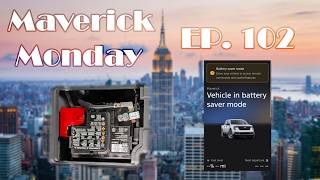
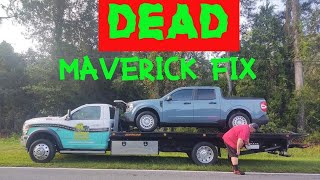
How to confirm: Perform a load test on the 12V battery. A simple voltage check is not enough. Many auto parts stores can do this for free. The battery should hold a charge under load. Also, check for TSB 22-2340, which addresses a no-start condition due to a loose battery cable connection on Hybrid models built before May 13, 2022. 🎬 See this video on the Maverick Hybrid dead truck TSB
Typical fix: Replace the 12V AGM battery and ensure the BCM software is up to date.
Est. part cost: $200 - $350 - Failing High Voltage Battery Junction Box (HVBJB) 🟡 Medium Probability → Shop Vehicle Battery The HVBJB is a known issue on some Ford electric and hybrid vehicles from this era, including the Maverick. It contains contactors that can fail (specifically, stick closed), leading to a variety of charging and system faults, including P0563. This issue is common enough that Ford has issued customer satisfaction programs and recalls for the same component on platform-mates like the Mustang Mach-E.
How to confirm: This requires advanced diagnostics with a Ford-specific scan tool to check for related DTCs (like P0ADA, P0ADE, P0AA1) stored in the Battery Energy Control Module (BECM). This is best left to a qualified technician.
Typical fix: Replace the High Voltage Battery Junction Box. This is a job for a dealership or a certified EV/hybrid technician.
Est. part cost: $500 - $1000+ - Failing Alternator or DC/DC Converter 🟡 Medium Probability → Shop Alternator On any vehicle, the component responsible for charging the 12V battery can fail. On EcoBoost models, this is a traditional alternator. On Hybrid models, it's a DC/DC converter. An internal voltage regulator failure is the most common cause of overcharging.
How to confirm: With the vehicle running, use a multimeter to measure the voltage at the 12V battery terminals. A reading consistently above 15.0 volts (and especially above 16.0 volts) indicates an overcharge condition.
Typical fix: Replace the faulty alternator or DC/DC converter.
Est. part cost: $400 - $800 - Corroded or Damaged Wiring/Grounds ⚪ Low Probability While not specific to the Maverick, poor connections at the battery terminals, alternator/converter, or main chassis grounds can cause voltage fluctuations and trigger this code. TSB 22-2340 specifically points to a potentially loose or detached eyelet solder connection from the battery cable assembly on some hybrid models.
How to confirm: Visually inspect all battery cables, ground straps, and the main wiring harness to the alternator/converter for corrosion, looseness, or physical damage.
Typical fix: Clean battery terminals and cable ends, or repair/replace damaged wiring sections.
Est. part cost: $10 - $200
Rare But Worth Checking
- Powertrain Control Module (PCM) Fault: → Shop Engine Control Module (ECM) A PCM failure is very rare but possible. All other potential causes, especially the battery and charging system components, should be exhaustively tested before considering PCM replacement.
Diagnosis Steps
- Scan for all codes in all modules, not just the PCM. Pay close attention to any codes stored in the BECM (Battery Energy Control Module) and SOBDMC (Secondary On-Board Diagnostic Module C).
- With the vehicle off, check the voltage of the 12V battery. It should be around 12.4-12.6V.
- Start the engine and measure the voltage at the 12V battery terminals. If it is consistently above 15.0V, the alternator (EcoBoost) or DC/DC converter (Hybrid) is likely overcharging.
- If the charging voltage is normal, turn the vehicle off and have the 12V battery professionally load-tested. A weak battery is a very common cause of electrical issues on the Maverick Hybrid.
- If the battery and charging voltage are good, inspect all power and ground connections. Check the battery terminals for corrosion and ensure the main chassis grounds are clean and tight. Specifically check the battery cable eyelet connection mentioned in TSB 22-2340 for Hybrid models.
- Inspect visible wiring harnesses for damage, particularly the high-voltage harness on Hybrid models, which is subject to a recall for chafing issues.
- If the above steps do not identify the issue, especially if other high-voltage codes like P0AA1 are present, the problem is likely with the High Voltage Battery Junction Box (HVBJB). This requires professional diagnosis.
Parts You'll Likely Need
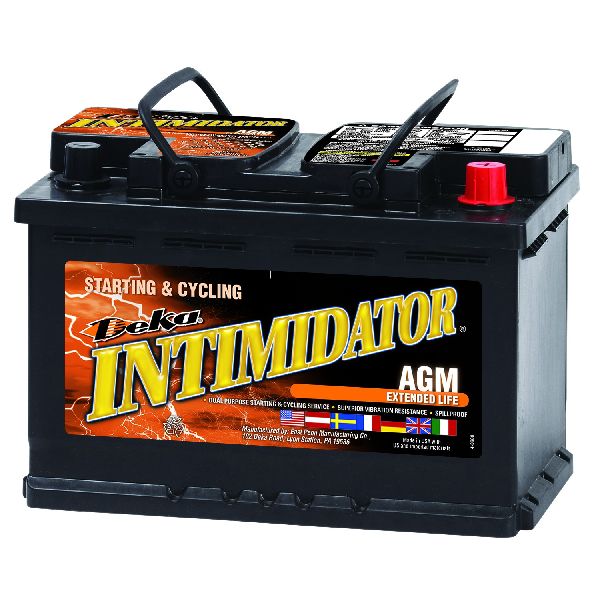
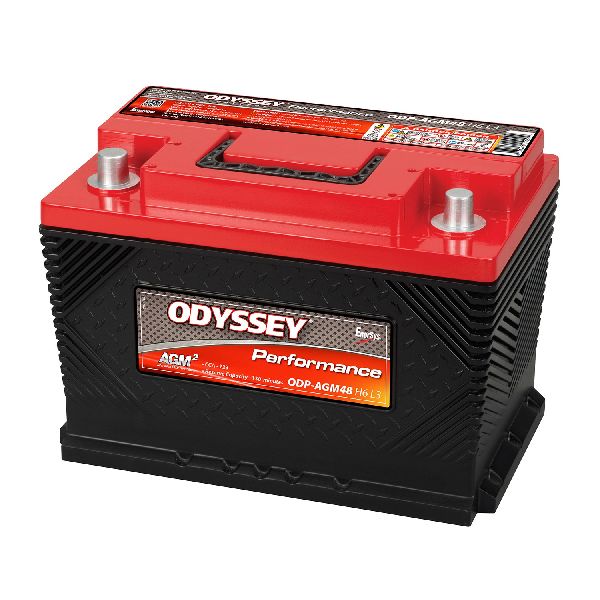
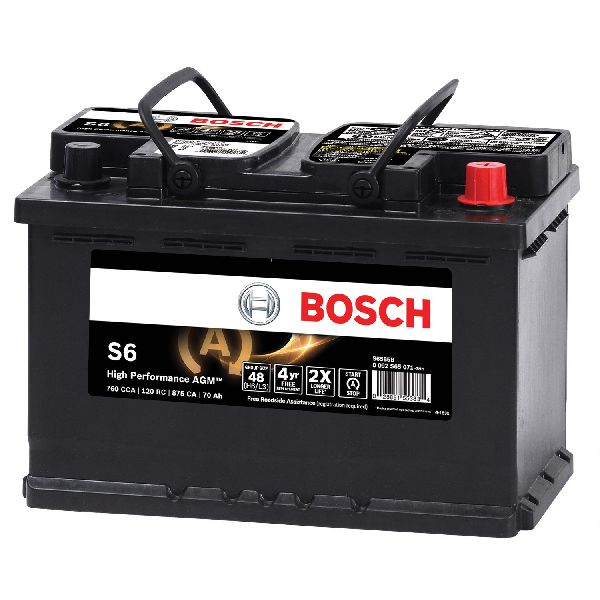
- 12-Volt AGM Battery
(OEM #BAGM-48H6-760 (Motorcraft))— A weak 12V battery is a frequent cause of various electrical and high-voltage system warnings on the Maverick Hybrid.
Trusted brands: Motorcraft
OEM price range: $250-$350
Aftermarket price range: $200-$300 - Alternator — For EcoBoost models, a failed internal voltage regulator in the alternator is the most common cause of a P0563 overcharging condition.
Trusted brands: Motorcraft
OEM price range: $500-$700
Aftermarket price range: $300-$500 - High Voltage Battery Junction Box (HVBJB)
(OEM #NK4Z-10C666-E (or superseding part number))— This component is a known failure point on Ford's hybrid/EV platform and is directly associated with P0563 and other related codes.
Trusted brands: Motorcraft
OEM price range: $500-$1000+
Aftermarket price range: Not available
Related Codes That Often Appear With This One
- P0ADA, P0ADE, P0AA1 — These and other similar codes are often stored in the Battery Energy Control Module (BECM) and point specifically to a failure within the High Voltage Battery Junction Box (HVBJB), such as a stuck contactor.
- P0620 — Stands for 'Generator Control Circuit Malfunction' and often appears with P0563 because it indicates a general fault in the communication between the PCM and the alternator/converter.
Technical Service Bulletins (TSBs) & Recalls
- TSB 22-2178 (Mustang Mach-E): While not for the Maverick directly, it details the link between a faulty HVBJB and DTC P0563, which owners have found relevant.
- TSB 22-2340: Addresses a no-crank/no-start condition on 2022 Maverick Hybrids due to a loose 12-volt battery cable assembly connection.
- Customer Satisfaction Program 23B50: Involves a software update for the Body Control Module on related Ford vehicles to address issues that can cause the 12V battery to drain, leading to various electrical faults.
Platform-Specific Known Issues
- A TSB for the 2021-2022 Mustang Mach-E (TSB 22-2178) mentions DTC P0563 in conjunction with a faulty High Voltage Battery Junction Box (HVBJB). Forum discussions indicate this issue and its associated codes also affect the Maverick Hybrid, which shares a similar electrical architecture.
- Ford Customer Satisfaction Program 23B50 addresses issues with the Body Control Module software that can lead to excessive 12V battery drain, which can indirectly trigger a cascade of electrical fault codes.
- TSB 22-2340 was issued for 2022 Maverick Hybrids built on or before May 13, 2022, for a no-start condition caused by a loose or detached battery cable eyelet, which can cause various electrical faults.
Mechanic-Grade Diagnostic Values
- Normal Charging Voltage at 12V Battery Terminals (Engine Running) — expected: 13.2 - 14.8 Volts. Failure: A consistent reading above 15.5 Volts indicates an overcharging condition, which triggers P0563.
- DTC P0563 Trigger Threshold (Ford Specific) — expected: Below 16 Volts. Failure: The code sets when a module detects voltage greater than 16 volts for 5 seconds or more.
- 12V Battery State of Charge (Hybrid Models, Engine Off) — expected: 12.4 - 12.6 Volts (resting). Failure: Maverick Hybrid owners report that resting voltages of 12.1 - 12.3V are common due to BCM programming, but a voltage dropping below 12.0V after resting indicates a weak battery that can cause cascading electrical faults.
Scan Tool Commands That Help
- Ford Diagnosis and Repair System (FDRS): BECM Reprogramming — This is a required step after replacing the High Voltage Battery Junction Box (HVBJB) to ensure the new component communicates correctly with the Battery Energy Control Module (BECM).
- Ford Diagnosis and Repair System (FDRS): PCM and other module software updates (SOBDM, ABS, etc.) — After an HVBJB replacement, Ford's procedure requires checking for and applying updates to multiple related modules to ensure system stability and clear persistent faults.
- Ford Diagnosis and Repair System (FDRS) or equivalent: On-Demand Self Test / Retrieve All CMDTCs — Used at the beginning of diagnosis to confirm if P0563 is active and to pull codes from all modules, which is critical for identifying related BECM codes that point towards an HVBJB failure.
Wiring & Ground Locations
- BCM Ground Studs — In the passenger footwell, on the firewall just under and to the left of the BCM and fuse box. There are typically two threaded bolts providing a direct ground.. The Body Control Module (BCM) is highly sensitive to voltage and ground integrity. A poor ground at this location can cause the BCM to misinterpret system voltage or behave erratically, potentially contributing to or causing false electrical warnings.
- Chassis Ground near Passenger Fuse Box — A stud with a nut located to the bottom right of the passenger-side interior fuse box can be used as a chassis ground.. General electrical system health relies on clean, tight grounds. Verifying this easily accessible ground point is a good practice when diagnosing any electrical fault code.
Real Owner Repair Stories
- MaverickTruckClub.com Forum User (2022 Ford Maverick Hybrid) — Vehicle would not start, displayed "Stop Safely Now" message, and multiple warning lights. DTCs P0AA1 (Hybrid/EV Battery Positive Contactor Circuit Stuck Closed) and P0563 (System Voltage High) were stored.
❌ Tried (didn't work) Attempting to restart the vehicle multiple times.
✅ What actually fixed it The dealership's master mechanic diagnosed the issue as a failure of the High Voltage Battery Junction Box (HVBJB). The HVBJB was replaced, which resolved all symptoms and cleared the codes.
OEM Part Supersession History
NK4Z-10C666-C, NK4Z-10C666-D→NK4Z-10C666-E— Component revision and improvement to address failures in the High Voltage Battery Junction Box (HVBJB), specifically related to contactor issues.
Heads up: The part number is specific to the vehicle's drivetrain (AWD vs RWD) and battery size. Using the incorrect HVBJB will result in connection or communication failures. NK4Z-10C666-E is listed for AWD models and supersedes several previous versions.
Model Year Variations Within This Range
- 2022-2023: There are no significant changes to the core electrical or hybrid charging systems between the 2022 and 2023 model years that would alter the diagnosis for P0563. The primary causes (12V battery, HVBJB, DC/DC converter) remain consistent across both years.
Diagnostic Flowchart
Other Known Issues on This Vehicle
Issues unrelated to this code that are worth knowing about as an owner of this generation:
- Underhood Fire Risk from Engine Failure (Hybrid) 🔴 High — Affects a significant number of 2022-2023 Hybrid models, leading to a major recall. (Ref: Recall 23S27 / NHTSA 23V380)
- Improperly Secured Side Impact Sensors / Airbags 🔴 High — Affects certain 2022-2023 models, leading to a recall. (Ref: Recall 22S77 / NHTSA 22V928)
- Faulty Trailer Lighting Module/Wiring 🟠 Medium — A common issue leading to a recall; can cause trailer lights to remain on or not function at all. (Ref: Recall 23S27 (related to trailer module software))
- Fuel Tank May Be Drilled During Bedliner Installation 🔴 High — A manufacturing defect affecting a specific batch of vehicles, leading to a recall. (Ref: Recall 22S27 / NHTSA 22V255)
- 12V Battery Degradation and Sudden Failure 🟠 Medium → Shop Vehicle Battery — Affects some 2022-2023 models, can cause a no-start condition. Addressed by recalls and software updates. (Ref: Recall 24V-267)
- Instrument Panel Cluster Fails to Illuminate 🟠 Medium — Affects certain 2022-2023 Hybrid models, creating a safety issue due to lack of visible warnings or gauges. (Ref: Recall 24V223000)
Used vs. New Parts: Buying Guide for This Vehicle
When a used part is the smart pick: For this specific code, using used parts is generally not recommended. The most common failure components are wear items or known-defect parts. A used 12V battery is never a good idea. A used alternator or DC/DC converter carries risk with no warranty. A used HVBJB is highly inadvisable as it is a known failure point, and you may be buying a part that is close to failing.
Donor-vehicle mileage cap: roughly under 15000 miles for the part to have meaningful remaining life.
What to inspect on the donor part:
- For an alternator or DC/DC converter, check for signs of corrosion, physical damage to the casing or pulley, and ensure the connector pins are clean and straight.
- Verify the part number from the donor vehicle exactly matches the required part for the recipient vehicle.
OEM-only on this vehicle (don't cheap out):
- High Voltage Battery Junction Box (HVBJB)
- 12-Volt AGM Battery (OEM or high-quality equivalent is critical)
Brands owners have reported issues with on this vehicle:
- For critical electrical components like the alternator/DC-DC converter and especially the HVBJB, unproven or 'white-box' aftermarket brands should be avoided due to the sensitivity of the Maverick's electrical system.
Real Owner Stories
Aggregated from forums and TSBs cited above. Mileages and costs reflect what owners reported in those sources.
2022 Ford Maverick Hybrid
Symptoms: During a cross-country trip, the vehicle displayed 'Stop Safely Now' and 'High Voltage System Error' messages, followed by a no-start condition that left the owner stranded.
What fixed it: Replacement of the High Voltage Battery Junction Box (HVBJB).
Source hint: MaverickTruckClub.com - Thread: 'High Voltage Junction Box Failure. Stop Safely Now. No Start.'
2022 Ford Maverick Hybrid
Symptoms: The vehicle became 'dead' and displayed the 'Stop Safely Now' message, mirroring symptoms described in Mustang Mach-E technical bulletins.
What fixed it: Diagnosis linked the failure to the High Voltage Battery Junction Box (HVBJB) based on TSB 22-2178 architecture similarities.
Source hint: MaverickTruckClub.com - Thread: 'Dead Maverick hybrid & Mach-E similar electrical problem?? New Mach-E TSB 22-2178 issued.'
Related OBD-II Codes
Frequently Asked Questions
My 2022 Maverick Hybrid won't start and shows a 'Stop Safely Now' message. Could this be related to TSB 22-2340?
I'm seeing P0563 and P0AA1 on my Maverick Hybrid. Is this a known issue?
Can a weak 12V battery cause a 'High-Voltage System Error' on a Maverick Hybrid?
How can I tell if my Maverick's P0563 code is caused by the DC/DC converter or the alternator?
Is there a recall for the wiring that might cause electrical faults like P0563?
What is Customer Satisfaction Program 23B50 for the Maverick?
Helpful Videos
Used OEM Parts in Stock
New Aftermarket Parts Available


The information in this article is provided for general reference and educational purposes only. Vehicle specifications, procedures, and part compatibility can vary by production date, trim level, and region. Always consult your vehicle's factory service manual and verify part numbers before purchasing or performing repairs. Safety-critical components such as airbags, seat belts, and braking systems should be installed by a qualified professional.
- Ford Maverick:
- 🧭 Diagnostic Flowchart
- 🎬 Helpful Videos
- 🛍️ Shop This Part
- What's Unique About the 2022-2023 Ford Maverick
- Symptoms You May Notice
- Most Likely Causes
- Rare But Worth Checking
- Diagnosis Steps
- Parts You'll Likely Need
- Related Codes That Often Appear With This One
- Technical Service Bulletins (TSBs) & Recalls
- Platform-Specific Known Issues
- Mechanic-Grade Diagnostic Values
- Scan Tool Commands That Help
- Wiring & Ground Locations
- Real Owner Repair Stories
- OEM Part Supersession History
- Model Year Variations Within This Range
- Other Known Issues on This Vehicle
- Used vs. New Parts: Buying Guide for This Vehicle
- Real Owner Stories
- 2022 Ford Maverick Hybrid
- 2022 Ford Maverick Hybrid
- Related OBD-II Codes
- Frequently Asked Questions
- 🎟️ Get 5% Off