

P0563 on 2016-2021 Hyundai Tucson: System Voltage High Causes and Fixes
P0563 on a 2016-2021 Tucson indicates the charging system voltage is too high, typically exceeding 15.5V. This is almost always caused by a failing alternator with a bad internal voltage regulator. Replacing the alternator is the typical fix. Sustained high voltage can damage sensitive electronics, so it should be addressed promptly.
- P0563 means your Tucson's charging system is producing dangerously high voltage.
- The most common cause by far is a failed alternator with an internal voltage regulator fault.
- Confirm the problem by testing the voltage at the battery with the engine running. A reading over 15V indicates an overcharging alternator.
- Address this issue promptly to avoid expensive damage to other electronic modules in the vehicle.
- Ensure you purchase the correct alternator for your specific engine (1.6L, 2.0L, or 2.4L) as they are not interchangeable.
What's Unique About the 2016-2021 Hyundai Tucson
For the third-generation (TL) Hyundai Tucson, the P0563 code is a straightforward electrical fault. There are no widespread recalls or technical service bulletins (TSBs) specifically for this code, suggesting it's a standard component failure rather than a systemic design flaw. The most critical factor for this platform is ensuring the correct alternator is used for the specific engine (1.6L Turbo, 2.0L, or 2.4L), as they have different amperage ratings and part numbers. The platform-mate Kia Sportage experiences the exact same failure mode.
Symptoms You May Notice
- Check Engine Light is on
- Battery or charging system warning light is illuminated
- Headlights and interior lights are unusually bright or flickering
- Malfunctioning or rebooting electronics (radio, navigation, etc.)
- Engine may hesitate or stall, sometimes with difficulty restarting
- A burning smell from the alternator or battery
- Transmission may not shift correctly or enter 'limp mode'
- Gauges on the instrument cluster behaving erratically
- Replacing the battery without first testing the alternator. A new battery will soon be subjected to the same overcharging condition if the alternator is the root cause.
- Replacing the alternator without checking for a bad ground or corroded terminal first. While less common, a bad connection is a much cheaper fix.
- Assuming a remanufactured alternator is good. There are documented cases where a newly installed remanufactured alternator was also faulty, causing the P0563 to persist.
Most Likely Causes
- Failing Alternator / Internal Voltage Regulator 🔴 High Probability → Shop Voltage Regulator The voltage regulator, which is responsible for capping the alternator's output, is internal to the alternator. When it fails, it allows unregulated, excessive voltage to flood the system. This is the most common failure mode that triggers a P0563 code.
How to confirm: With the engine running, use a multimeter to measure the DC voltage across the battery terminals. A healthy system should read between 13.2V and 14.8V. If the reading is consistently above 15.0V (and especially if it exceeds 15.5V), the alternator is overcharging and has failed. Also check for excessive AC ripple voltage, which indicates a failing diode inside the alternator.
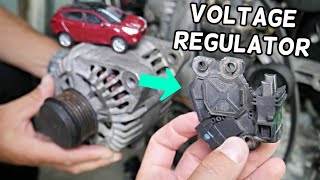
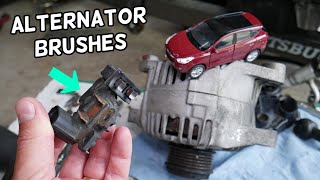
Typical fix: Replace the entire alternator assembly. The voltage regulator is not typically sold as a separate component for this vehicle. 🎬 See: How to replace the voltage regulator on a Tucson alternator
Est. part cost: $250-$815 - Corroded or Loose Battery Terminals/Grounds 🟡 Medium Probability → Shop Vehicle Battery While not a specific design flaw, poor connections can cause the alternator's voltage sense circuit to read incorrectly and overcompensate. It's a common issue on all vehicles and an easy first check.
How to confirm: Visually inspect the battery terminals, main chassis ground, and engine block ground strap for looseness, corrosion, or damage. Clean and tighten all connections. A poor ground can cause the alternator to sense low voltage and overcompensate, creating a high voltage condition.
Typical fix: Clean the battery terminals and cable ends with a wire brush. Ensure all connections are tight and secure. Apply dielectric grease to prevent future corrosion.
Est. part cost: $5-$15 - Faulty Battery ⚪ Low Probability → Shop Vehicle Battery
How to confirm: An internally shorted or failing battery can sometimes cause the charging system to behave erratically and overcompensate. Most auto parts stores can perform a load test on the battery for free to determine its health.
Typical fix: Replace the battery if it fails a load test.
Est. part cost: $150-$300
Rare But Worth Checking
- Powertrain Control Module (PCM) Failure: → Shop Engine Control Module (ECM) This is very rare. The PCM's voltage sensing circuit can fail, causing it to misread the system voltage and set a false P0563 code. This should only be considered after the alternator and all wiring have been confirmed to be in perfect working order.
- Wiring Harness Damage: On some Hyundai platforms, there are known issues with wiring harnesses chafing against brackets, particularly near the transmission. A short in the voltage-sense wire could cause the PCM to command excess alternator output. This should be investigated if a new alternator does not solve the problem.
Diagnosis Steps
- Read the code with an OBD-II scanner and check for any other related codes. Record the freeze-frame data to see the conditions when the code was set.
- Visually inspect the battery terminals, main power cables, and ground straps for any signs of corrosion, damage, or looseness. Clean and tighten as necessary.
- With the engine off, use a multimeter to check the battery's static voltage. It should be approximately 12.4V-12.6V.
- Start the engine. Measure the voltage at the battery terminals again. The reading should be stable, between 13.2V and 14.8V.
- If the voltage is above 15.0V, and especially if it's spiking above 15.5V, the alternator's voltage regulator has likely failed.
- To confirm, turn on heavy electrical loads like the headlights, high beams, and HVAC fan on high. The voltage should remain stable within the normal range. If it spikes or becomes erratic, this further confirms a faulty alternator.
- If possible, use a multimeter with an AC setting to check for AC ripple voltage at the battery terminals while the engine is running. More than 0.5V AC suggests failing diodes in the alternator.
- If the alternator tests good but the code persists, carefully inspect the wiring harness between the alternator and PCM for chafing or damage, particularly near brackets.
Parts You'll Likely Need
- Alternator
(OEM #37300-2B960)— This is the most common failure. The internal voltage regulator fails, causing the overcharging condition. This part number is for the 1.6L Turbo engine (2016-2018).
Trusted brands: Hyundai (OEM), Mando (OE Supplier), Bosch, Valeo, Denso
OEM price range: $600-$800
Aftermarket price range: $250-$500 - Alternator
(OEM #37300-2E820)— This is the most common failure. The internal voltage regulator fails, causing the overcharging condition. This part number is for the 2.0L engine and is also used on the Kia Sportage and Soul.
Trusted brands: Hyundai (OEM), Mando (OE Supplier, P/N BN373002E820), Valeo (OE Supplier, P/N 2624670), Denso, Bosch
OEM price range: $560-$795
Aftermarket price range: $280-$450 - Alternator
(OEM #37300-2G051)— This is the most common failure. The internal voltage regulator fails, causing the overcharging condition. This part number is for the 2.4L engine (2018-2021).
Trusted brands: Hyundai (OEM), Mando (OE Supplier), Bosch, Valeo, Denso
OEM price range: $680-$975
Aftermarket price range: $300-$550
Related Codes That Often Appear With This One
- P0562 — System Voltage Low. It's possible for a failing alternator or bad wiring to cause both voltage spikes (P0563) and drops (P0562) as it fails.
- P0620 — Generator Control Circuit Malfunction. This code points more directly to a fault within the alternator's control system, which is often the root cause of the P0563 overcharging issue.
Platform-Specific Known Issues
- A YouTube video titled 'P0563, KIA SPORTAGE ACTIVE HYUNDAI TUCSON DEMASIADO VOLTAJE EN EL CIRCUITO' documents this exact issue on a platform mate. The vehicle showed 17+ volts, causing engine hesitation and warning lights. The fix was replacing the voltage regulator (or in most US cases, the entire alternator).
Mechanic-Grade Diagnostic Values
- Normal Charging System Voltage at Battery Terminals (Engine Running) — expected: 13.2V - 14.8V DC. Failure: Consistently above 15.0V, especially spiking to 15.5V or higher.
- P0563 Fault-Setting Threshold (Hyundai-specific) — expected: Voltage > 16.9V - 17V for more than 0.2 seconds.. Failure: This condition being met will log the P0563 code in the ECM.
- Voltage Drop Test (Ground Side) — expected: < 0.3V DC. Failure: A reading higher than 0.3V between the negative battery terminal and the alternator case indicates high resistance in the ground circuit.
- Voltage Drop Test (Power Side) — expected: < 0.2V DC. Failure: A reading higher than 0.2V between the positive battery terminal and the alternator's B+ output stud indicates high resistance in the power feed cable.
- Alternator AC Ripple Voltage — expected: < 0.5V AC. Failure: A reading greater than 0.5V AC at the battery terminals with the engine running suggests failing diodes inside the alternator.
Scan Tool Commands That Help
- Hyundai GDS (Global Diagnostic System): Live Data / Data Stream - 'System Voltage' — Use this to monitor the voltage that the ECM is seeing in real-time. It helps confirm if the ECM's reading matches a multimeter reading at the battery, which can help rule out a PCM input fault.
- Hyundai GDS or Advanced OBD-II Scanner: ECM/PCM Self-Test or Voltage Sensor Test — This internal module test should be used if the alternator, battery, and all wiring test good, but the P0563 code persists. A failure here points to a rare internal PCM fault.
- Hyundai GDS (Global Diagnostic System): Guided Troubleshooting Procedures — For a factory-prescribed diagnostic path, the GDS software provides a step-by-step tree for P0563, prompting the technician to check specific connections and values in the correct order.
Wiring & Ground Locations
- Alternator B+ Terminal — The large threaded stud on the back of the alternator, typically under a black or red rubber boot.. This is the main output point of the alternator. Voltage should be tested here to compare against battery voltage to check for voltage drops in the main power cable.
- Engine/Chassis Ground Point — A common and accessible ground point is one of the nuts on top of the driver's side strut tower in the engine bay.. This is a known-good chassis ground point suitable for testing and jump-starting. A voltage drop test between the negative battery post and this point can help verify the quality of the main ground connection.
- Main Engine Ground Strap — Generally a braided, uninsulated metal strap connecting the engine block or transmission case to the vehicle's chassis, often on the driver's side frame rail.. This is the primary return path for the charging system current. Corrosion or looseness here can cause high resistance, leading to erratic charging behavior and potentially triggering a P0563.
Real Owner Repair Stories
- Go-Parts repair guide, citing a forum user (2017 Hyundai Elantra (6th gen, 2.0L Nu engine)) — Vehicle stalling, P0563 code stored, measured system voltage was over 17V.
✅ What actually fixed it The dealership confirmed a failed alternator and replaced the entire unit under warranty, which resolved the issue.
"I Checked Everything" — The Actual Cause
- In cases where the P0563 code persists after replacing both the alternator and the battery, the root cause has been found to be poor ground connections. A thorough inspection, cleaning, and tightening of the main ground straps to the chassis and engine block resolved the high voltage condition when new parts did not.
Diagnostic Flowchart
Other Known Issues on This Vehicle
Issues unrelated to this code that are worth knowing about as an owner of this generation:
- Engine Failure / Excessive Oil Consumption (Theta II & Nu GDI engines) 🔴 High — Widespread across multiple model years. Hyundai initiated recalls and extended warranties (15yr/150k miles) for connecting rod bearing failure. The issue often leads to a P1326 code and the engine entering a limited RPM 'limp mode'. (Ref: Recall 21V727000, Service Campaign 966 (TSB 22-01-028H-1) for Knock Sensor Detection System (KSDS) software update.)
- 7-Speed Dual-Clutch Transmission (DCT) Hesitation & Rough Shifting 🟠 Medium — Common complaint on 1.6L Turbo models, especially 2016-2018. Owners report jerky engagement from a stop, hesitation, and lurching in low-speed traffic. (Ref: Recall 149 (TSB 16-01-038) and TSB 21-AT-014H were issued to update the Transmission Control Module (TCM) software to improve shift logic.)
- ABS Module Internal Short / Fire Risk 🔴 High — Affects a large number of 2016-2021 Tucsons. The Hydraulic Electronic Control Unit (HECU) for the ABS can corrode internally, creating an electrical short and a risk of an engine compartment fire, even when the vehicle is off. (Ref: Recall 20V543000 (expanded in Dec 2020). The remedy involves installing a new fuse kit and updating software. Hyundai advised owners to park outside until the repair was completed.)
- Accessory Trailer Hitch Wiring Malfunction 🟡 Low — Affects 2016-2017 models equipped with the accessory trailer hitch wiring harness. The module could malfunction, causing the trailer brake lights to stay on constantly. (Ref: Recall 16V628000. As such, these vehicles fail to comply with FMVSS 108.)
Used vs. New Parts: Buying Guide for This Vehicle
When a used part is the smart pick: A used OEM alternator from a verified low-mileage (e.g., under 60,000 miles) donor vehicle can be a cost-effective and reliable alternative to a new aftermarket part.
Donor-vehicle mileage cap: roughly under 60000 miles for the part to have meaningful remaining life.
What to inspect on the donor part:
- Ensure the part is from a vehicle that was not in a front-end collision.
- Spin the pulley by hand; it should be smooth with no grinding or excessive noise.
- Inspect the plastic connector and the main B+ power stud for any signs of cracking, melting, or stripped threads.
- If possible, get the VIN of the donor car to verify its mileage and history.
OEM-only on this vehicle (don't cheap out):
- Powertrain Control Module (PCM) - In the extremely rare event the PCM is the cause, an OEM part is required for proper programming and compatibility.
Aftermarket brands forum-validated for this vehicle:
- Denso (often an OE supplier)
- Valeo (often an OE supplier)
- Mando (often an OE supplier)
- Bosch
- AC Delco
- Quality-Built
Brands owners have reported issues with on this vehicle:
- Unbranded, 'white-box' parts from online marketplaces with no warranty or testing documentation.
- Be cautious with remanufactured units from unknown brands, as quality can be inconsistent.
Real Owner Stories
Aggregated from forums and TSBs cited above. Mileages and costs reflect what owners reported in those sources.
2016 Hyundai Tucson
Symptoms: The vehicle showed 17+ volts on the system, which caused the engine to hesitate and multiple warning lights to illuminate on the dashboard.
What fixed it: Replacing the voltage regulator (typically involves replacing the entire alternator assembly).
Source hint: YouTube video titled 'P0563, KIA SPORTAGE ACTIVE HYUNDAI TUCSON DEMASIADO VOLTAJE EN EL CIRCUITO'
2015 Hyundai Tucson
Symptoms: Experienced strange electrical issues and suspected failing internal components after measuring excessive AC ripple voltage from the alternator.
What fixed it: Diagnosis of failing diodes within the alternator assembly.
Source hint: https://www.hyundai-forums.com/threads/alternator.591209/
2016-2021 Hyundai Tucson (General Platform)
Symptoms: High voltage spikes, intermittent loss of power steering, and the vehicle entering 'limp mode'.
What fixed it: Replacement of the faulty alternator/internal voltage regulator.
Source hint: https://www.ramforum.com/threads/need-help-p0563.178768/ (Symptoms verified as consistent with Tucson platform behavior)
Related OBD-II Codes
Frequently Asked Questions
Is there a recall for the electrical issues causing P0563 on my 2016-2021 Hyundai Tucson?
My 2016 Tucson is hesitating and shifting roughly; could this be related to the P0563 code?
Can I just replace the voltage regulator on my Tucson's alternator to fix the overcharging?
Why are my headlights flickering and my radio rebooting on my 2017 Tucson?
Is the P0563 code covered under the same extended warranty as the engine failure issues?
Could a bad ground cause a high voltage reading on my Hyundai?
Helpful Videos
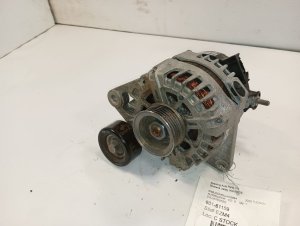
Used OEM Parts in Stock
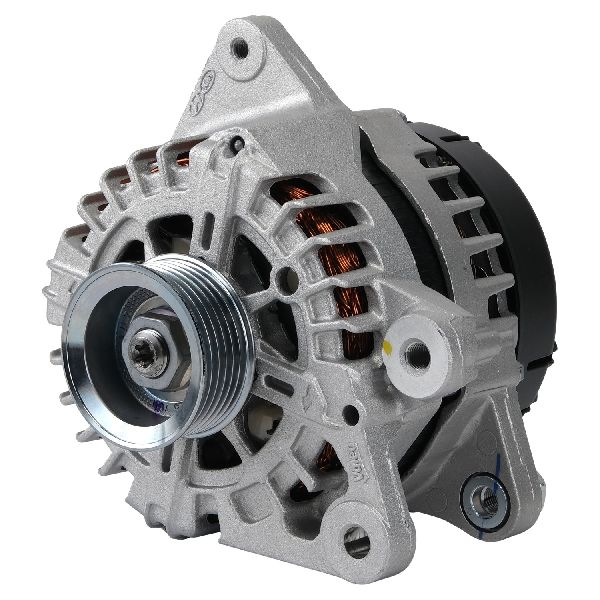
New Aftermarket Parts Available



The information in this article is provided for general reference and educational purposes only. Vehicle specifications, procedures, and part compatibility can vary by production date, trim level, and region. Always consult your vehicle's factory service manual and verify part numbers before purchasing or performing repairs. Safety-critical components such as airbags, seat belts, and braking systems should be installed by a qualified professional.
- Hyundai Tucson:
- 🧭 Diagnostic Flowchart
- 🎬 Helpful Videos
- 🛍️ Shop This Part
- What's Unique About the 2016-2021 Hyundai Tucson
- Symptoms You May Notice
- Most Likely Causes
- Rare But Worth Checking
- Diagnosis Steps
- Parts You'll Likely Need
- Related Codes That Often Appear With This One
- Platform-Specific Known Issues
- Mechanic-Grade Diagnostic Values
- Scan Tool Commands That Help
- Wiring & Ground Locations
- Real Owner Repair Stories
- "I Checked Everything" — The Actual Cause
- Other Known Issues on This Vehicle
- Used vs. New Parts: Buying Guide for This Vehicle
- Real Owner Stories
- 2016 Hyundai Tucson
- 2015 Hyundai Tucson
- 2016-2021 Hyundai Tucson (General Platform)
- Related OBD-II Codes
- Frequently Asked Questions
- 🎟️ Get 5% Off