

P0563 on 2007-2017 Lincoln Navigator: System High Voltage Causes & Fixes
P0563 means your Navigator's electrical system voltage is dangerously high. It's most often a failing alternator with a bad voltage regulator. However, before replacing parts, check for a specific blown fuse that powers the PCM, as this is a known issue on these vehicles that can mimic alternator failure.
- P0563 indicates a serious over-voltage condition that can damage your Navigator's electronics.
- The most common cause is a failed alternator with an internal voltage regulator.
- CRITICAL: Before replacing the alternator, check Fuse #29 (10A) in the passenger footwell fuse box. A simple blown fuse is a known issue on this platform that can falsely trigger a P0563 code.
- Confirm the high voltage condition with a multimeter at the battery before purchasing parts.
What's Unique About the 2007-2017 Lincoln Navigator
While a faulty alternator is a common cause for P0563 on any vehicle, the 2007-2017 Navigator and its platform-mate, the Ford Expedition, have a specific, documented quirk. A blown fuse that supplies 'Keep Alive Power' to the PCM can cause the computer to lose its stable voltage reference, misread system voltage, and incorrectly set a P0563 code. This makes it appear as if the alternator is failing when it is not. Specifically, on the 2007-2014 Navigator, this has been traced to Fuse #29 (a 10A fuse) in the passenger compartment fuse panel. On the 2015-2017 models, this function is served by Fuse #41 (10A) in the engine compartment fuse box. Diagnosing this simple fuse issue first can save you from a costly and unnecessary alternator replacement.
Symptoms You May Notice
- Check Engine Light illuminated
- Battery or Charging System warning light on the dashboard message center
- Erratic behavior of electrical components like radio or interior lights
- Gauges flickering or behaving strangely, especially the voltage gauge reading high
- Harsh or improper transmission shifting 🎬 Watch: How a blown fuse causes harsh shifting and P0563
- Engine may stall, especially at idle
- Headlights appearing excessively bright or flickering
- Replacing the battery. While a weak battery can cause other electrical issues, it is not a primary cause of a high voltage condition. The P0563 code points to overcharging, not a lack of charge.
- Replacing the PCM immediately. As noted in a vehicle-specific diagnosis, a simple blown fuse can make the PCM appear faulty. The PCM should be the last item considered for replacement.
Most Likely Causes
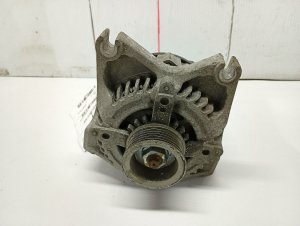
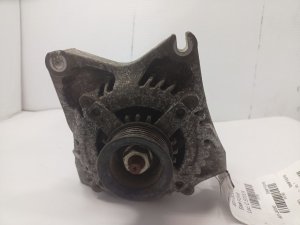
- Failing Alternator / Internal Voltage Regulator 🔴 High Probability → Shop Voltage Regulator The voltage regulator is internal to the alternator and is a common failure point on high-mileage vehicles. When it fails, it can no longer control the alternator's output, leading to overcharging. This is the most common cause of P0563 on most vehicles.
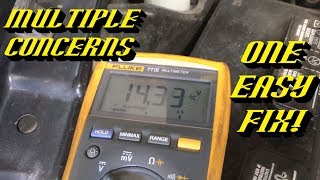
How to confirm: With the engine running, use a multimeter to measure the voltage directly at the battery terminals. A reading consistently above 15.0 volts (and especially over 15.5V) points to a faulty alternator.
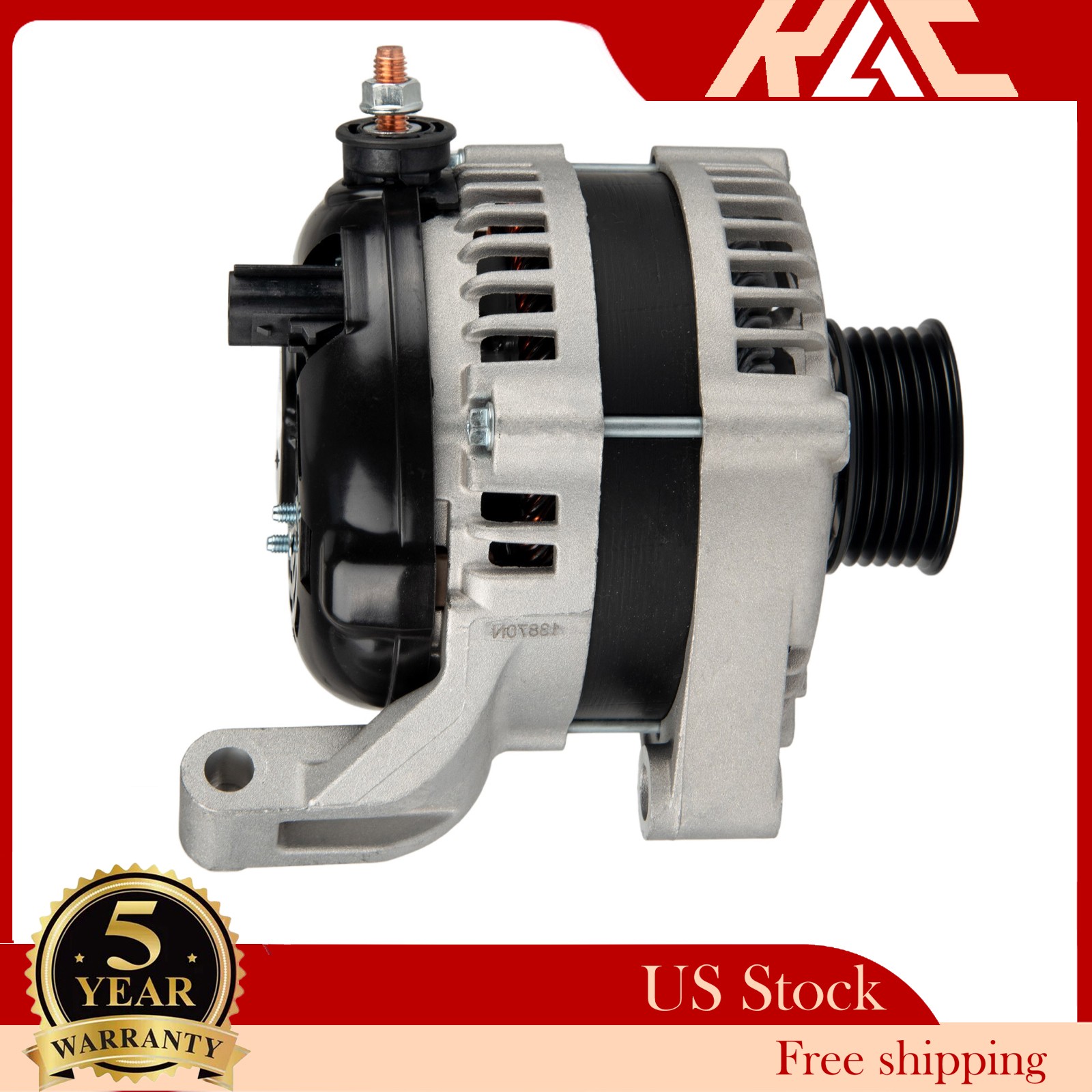
Typical fix: Replace the alternator. It is recommended to use a high-quality OEM (Motorcraft) or equivalent replacement to ensure compatibility with the PCM's 'Smart Charge' system.
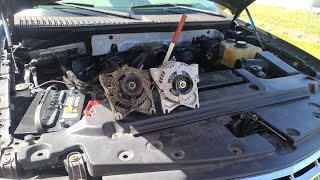
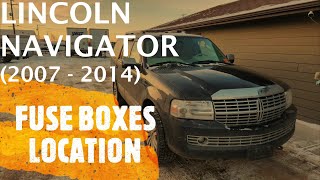
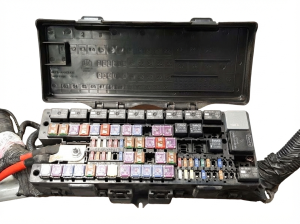
Est. part cost: $250-$500 - Blown PCM Power Supply Fuse 🔴 High Probability A well-documented issue on the 2007-2014 Navigator involves a blown fuse causing a loss of stable 'Keep Alive Power' to the PCM, which makes the PCM misread the actual system voltage. This has been specifically identified as Fuse #29 (10A) in the passenger compartment fuse panel (located in the passenger footwell/kick panel area). 🎬 Watch: How to locate the passenger fuse box For 2015-2017 models, the equivalent is Fuse #41 (10A) in the engine compartment fuse box.
How to confirm: Check the vehicle's fuse boxes for any blown fuses related to the PCM. Specifically, locate and inspect the correct fuse for your model year. If the fuse is blown, this is the most likely cause of the code, even if voltage tests appear normal.
Typical fix: Identify the cause of the blown fuse (e.g., a short circuit in the associated wiring) and replace the fuse with one of the same amperage.
Est. part cost: $1-$5 - Corroded or Loose Battery Terminals / Grounds ⚪ Low Probability → Shop Vehicle Battery Over time, battery acid and weather can cause corrosion on terminals and ground points, creating high resistance in the charging circuit which can confuse the voltage sensing circuits.
How to confirm: Visually inspect the battery terminals, main chassis ground (G101), and engine block ground strap (G100/G102) for looseness, corrosion, or damage.
Typical fix: Clean the battery terminals and posts thoroughly with a wire brush. Ensure all connections are tight and secure. Replace damaged cables if necessary.
Est. part cost: $5-$50
Rare But Worth Checking
- Faulty Powertrain Control Module (PCM): → Shop Engine Control Module (ECM) This is very rare. Before condemning the PCM, all other possibilities, especially the specific PCM fuse issue and alternator, must be exhaustively ruled out.
- Damaged Wiring Harness: The wiring harness connecting the alternator to the PCM (specifically the 3-wire connector) can become chafed, corroded, or damaged, causing a short to voltage or an open in the sense circuit. This is a known issue on many Ford platforms.
Diagnosis Steps
- Read the trouble codes with an OBD-II scanner and note any other codes present.
- With the engine running, use the scanner's live data function or a multimeter to check the system voltage at the battery. Normal is 13.8-14.8V.
- IF VOLTAGE IS NORMAL (but code is present): Immediately suspect a PCM reading error. The primary suspect is the PCM Keep-Alive fuse. For 2007-2014, inspect Fuse #29 (10A) in the passenger compartment fuse panel. For 2015-2017, inspect Fuse #41 (10A) in the engine compartment fuse box. If it is blown, find the source of the short and replace the fuse.
- IF VOLTAGE IS CONFIRMED HIGH (>15.0V): Turn off the engine. Disconnect the 3-pin electrical connector from the alternator. Start the engine and briefly rev to 1500-2500 RPM. The alternator should default to a non-smart-charge mode, producing ~13.7V. If voltage is still high, the alternator's internal regulator is bad. If voltage is now normal, the issue is in the control circuit (wiring or PCM).
- Visually inspect the battery terminals, cables, and main ground connections (G100, G101, G102) for corrosion or looseness. Clean and tighten as needed.
- Inspect the 3-wire pigtail connector (C102A) and wiring harness to the alternator for any signs of melting, chafing, or damage.
- If all wiring and fuses are good, but the voltage is confirmed to be high when running, the alternator's internal voltage regulator has most likely failed.
- Replace the alternator, clear the codes, and perform a drive cycle to ensure the repair was successful.
Parts You'll Likely Need
- Alternator
(OEM #BL1Z-10346-A (2011-2014 5.4L, 175A), FL1Z-10346-A / FL1Z-10346-B (2015-2017 3.5L, 250A), 6L7Z-10346-B (2007-2008 5.4L, 150A))— The internal voltage regulator is the most common failure point that leads to the overcharging condition indicated by P0563.
Trusted brands: Motorcraft
OEM price range: $400-$600
Aftermarket price range: $250-$450 - Automotive Fuse
(OEM #Fuse #29, 10 Amp (2007-14) or Fuse #41, 10 Amp (2015-17))— A specific issue on this platform is a blown PCM power fuse, which can cause the computer to misread system voltage and set this code.
Trusted brands: Littlefuse, Bussmann
OEM price range: $1-$5
Aftermarket price range: $1-$5
Related Codes That Often Appear With This One
- P0620 — Stands for 'Generator Control Circuit Malfunction'. It often appears with P0563 because it indicates a general fault in the communication between the PCM and the alternator.
- P0625 — Stands for 'Generator Field 'F' Terminal Circuit Low'. This code points directly to a problem in the alternator's control circuit, reinforcing the likelihood of an alternator or wiring fault.
- P065B — Stands for 'Generator Control Circuit Range/Performance'. Like other related codes, it indicates the PCM is detecting an issue with its ability to control the alternator's output.
Platform-Specific Known Issues
- A known, but not widely documented, issue is a blown fuse for the PCM's power supply causing the P0563 code. A technician diagnosed this on a 2007 Navigator where the PCM was not receiving proper power on pins 51, 52, and 53, leading to an incorrect high voltage reading. This was traced to a blown 10A Fuse #29 in the passenger compartment fuse panel. On 2015-2017 models, the equivalent fuse is #41 in the underhood fuse box.
Mechanic-Grade Diagnostic Values
- Alternator 3-pin connector unplugged, engine running at ~1500 RPM — expected: ~13.7 - 13.8 Volts. Failure: If voltage is still >15V, the alternator's internal regulator is faulty. If voltage is now normal, the fault is in the control circuit/PCM.
- Voltage at Pin 3 (Sense/Reference) of alternator 3-pin connector, Key On Engine Off — expected: Should match battery voltage (e.g., 12.6V). Failure: A significant voltage drop on this pin indicates high resistance in the sense circuit or its fuse contacts, which can confuse the PCM.
- GENMON (Generator Monitor) Signal on Scan Tool or Oscilloscope — expected: A square wave at ~128 Hz, with a duty cycle of 5-95% that changes with electrical load.. Failure: No signal, or a signal that does not change with load, points to a fault within the alternator or its communication circuit.
- GENCOM (Generator Command) Signal on Scan Tool or Oscilloscope — expected: A square wave from the PCM requesting output. On many Ford systems, this signal may only be present when a change in output is needed.. Failure: No signal from the PCM when loads are applied may indicate a PCM or wiring issue.
Scan Tool Commands That Help
- Ford IDS or FORScan: Datalogger - Monitor PIDs: GENMON, GENCOM, GENFDC% — This is the primary method for diagnosing the Smart Charge system. It allows you to see the PCM's command (GENCOM), the alternator's response and load (GENMON), and the field duty cycle (GENFDC%) in real-time to determine if the fault is with the PCM, wiring, or alternator.
- Ford IDS or FORScan: Bidirectional Control - Command Charging Voltage — This active test allows a technician to command a specific voltage setpoint (e.g., 13.5V, 14.5V) and watch the live data PIDs to see if the alternator responds accordingly. This helps isolate a non-responsive alternator from a PCM that isn't sending commands.
Wiring & Ground Locations
- Fuse #29 (2007-2014) or #41 (2015-2017) — For 07-14, in the passenger compartment fuse panel (SJB) behind the right kick panel. For 15-17, in the underhood Power Distribution Box.. This is the 'Keep-Alive Power' fuse for the PCM. If it blows, the PCM can lose its voltage reference and falsely set a P0563 code.
- G102 — Right rear of the engine compartment.. This is a primary ground point for the Powertrain Control Module (PCM). A poor connection here can cause a wide range of PCM-related issues, including incorrect voltage readings.
- G100 / G101 — G100 is on the right side of the engine compartment; G101 is near the right side of the radiator.. These are major chassis and engine ground points. High resistance at these locations can affect the entire charging system's performance and sensor readings.
- C102A — The 3-pin electrical connector on the alternator itself.. This connector carries the critical GENMON and GENCOM communication signals between the PCM and alternator. Damage or corrosion here is a common point of failure.
Real Owner Repair Stories
- FordTechMakuloco YouTube Channel (2007 Lincoln Navigator) — P0563, harsh shifting, battery light on.
❌ Tried (didn't work) Initial assumption was a failed alternator.
✅ What actually fixed it The root cause was a blown 10A Fuse #29 in the passenger compartment fuse panel, which supplies keep-alive power to the PCM. This caused the PCM to misread system voltage. Replacing the fuse and identifying the short that caused it to blow resolved the issue without replacing the alternator. - Multiple forum threads (BobIsTheOilGuy, Reddit r/mechanics) (Various Ford vehicles with Smart Charge systems, including Navigators.) — Charging system light on, intermittent charging issues, codes returning after alternator replacement.
❌ Tried (didn't work) Replacing the alternator with a generic aftermarket or store-brand remanufactured unit.
✅ What actually fixed it The problem was only resolved after installing a genuine Motorcraft new or remanufactured alternator. The PCM is very sensitive and often rejects the electronic signals from non-OEM voltage regulators.
Model Year Variations Within This Range
- 2007-2014 vs 2015-2017: The location of the critical PCM Keep-Alive power fuse changes. For 2007-2014 (5.4L V8), it is Fuse #29 (10A) in the passenger compartment fuse panel. For 2015-2017 (3.5L V6), it is Fuse #41 (10A) in the engine compartment Power Distribution Box.
- 2007-2014 vs 2015-2017: The engine was changed from a 5.4L V8 to a 3.5L EcoBoost V6 in 2015. This resulted in different alternator part numbers, amperage ratings, and physical mounting. The fundamental Smart Charge system principles remain, but the components are not interchangeable.
Diagnostic Flowchart
Other Known Issues on This Vehicle
Issues unrelated to this code that are worth knowing about as an owner of this generation:
- Ford 5.4L 3V V8 Cam Phaser Failure 🔴 High — Very common, especially on engines over 80,000 miles. Presents as a diesel-like ticking or knocking sound at idle that may quiet at higher RPMs. (Ref: While no direct recall exists, numerous TSBs have been issued over the years. The issue is widely documented in the mechanic community.)
- Rear Air Suspension Leaks/Failure 🟠 Medium — Common after 5-10 years. Rubber air springs develop dry rot and leak, causing the rear of the vehicle to sag and the compressor to burn out from overuse.
- Power Deployable Running Board Motor Failure 🟠 Medium — Frequent failure item, as the motors and hinge mechanisms are exposed to weather and road debris, leading to seizure or burnout.
- Ford 5.4L 3V V8 Spark Plug Breakage 🔴 High — A notorious issue on 2004-2008 5.4L 3V engines. The original two-piece spark plug design can cause the lower portion to seize in the cylinder head and break off during removal, requiring a special extraction tool. (Ref: Ford issued TSB 08-7-6 with a revised procedure, but the design flaw remains on original plugs.)
- Warped/Cracked Exhaust Manifolds (5.4L V8) 🟠 Medium — Common on the 5.4L engine, causing an exhaust leak tick that is most noticeable when the engine is cold and may quiet down as the metal expands with heat.
Used vs. New Parts: Buying Guide for This Vehicle
When a used part is the smart pick: A used alternator is NOT recommended for this repair. The internal voltage regulator is the most common failure point and is an electronic wear item. The risk of receiving a part that is already faulty or will fail shortly is very high.
Donor-vehicle mileage cap: roughly under 50000 miles for the part to have meaningful remaining life.
What to inspect on the donor part:
- Confirm it is a genuine Motorcraft part.
- Inspect for a clean, uncorroded case and an intact, damage-free electrical connector.
- Pulley should spin freely without noise or grinding.
- Even with these checks, the electronic health of the internal regulator cannot be verified visually.
OEM-only on this vehicle (don't cheap out):
- Alternator
Aftermarket brands forum-validated for this vehicle:
- Denso (if a new unit is available, as they are often an OEM supplier)
Brands owners have reported issues with on this vehicle:
- Generic 'white-box' or store-brand remanufactured alternators are frequently reported to cause compatibility issues with the Ford Smart Charge system, leading to repeat failures or persistent codes.
Real Owner Stories
Aggregated from forums and TSBs cited above. Mileages and costs reflect what owners reported in those sources.
2007 Lincoln Navigator
Symptoms: The vehicle was throwing a battery light for a charging system fault repeatedly while driving. The scan tool showed the PCM was throwing a P0563 code for system high voltage.
What fixed it: The technician found the PCM was not receiving proper power on pins 51, 52, and 53 due to a blown 10A Fuse #29 in the passenger compartment fuse panel.
Source hint: FordTechMakuloco on YouTube: 'Ford Vehicles P0563 System High Voltage Harsh Shifting Concerns'
2007 Ford Expedition
Symptoms: Experienced a high voltage spike on the dash gauge at startup along with a weird battery drain and codes P0563 and P0625.
What fixed it: Identified as a classic fault pattern related to the charging system and voltage regulation issues shared with the Navigator platform.
Source hint: Ford Expedition Forum: 'Weird Battery Drain'
Related OBD-II Codes
Frequently Asked Questions
My 2007 Navigator is showing a battery light and P0563, but my alternator tests fine. What else could it be?
Where is the PCM power supply fuse located on a 2016 Lincoln Navigator?
Is there a specific alternator recommended for the Navigator's 'Smart Charge' system?
My headlights are excessively bright and my voltage gauge is reading high. Is this dangerous?
Does the Navigator share this high voltage issue with the Ford Expedition?
Are there any known issues with the 5.4L 3V V8 engine I should watch for while fixing this code?
Helpful Videos

Used OEM Parts in Stock
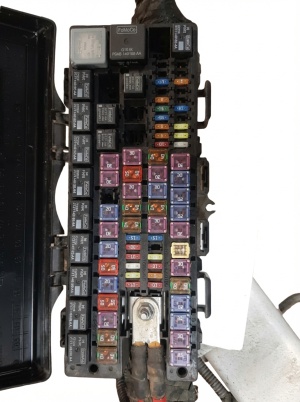
New Aftermarket Parts Available

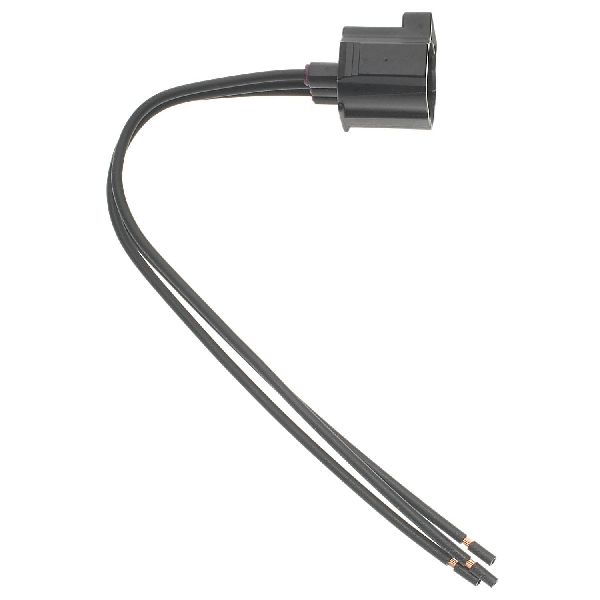

The information in this article is provided for general reference and educational purposes only. Vehicle specifications, procedures, and part compatibility can vary by production date, trim level, and region. Always consult your vehicle's factory service manual and verify part numbers before purchasing or performing repairs. Safety-critical components such as airbags, seat belts, and braking systems should be installed by a qualified professional.
- Lincoln Navigator:
- 🧭 Diagnostic Flowchart
- 🎬 Helpful Videos
- 🛍️ Shop This Part
- What's Unique About the 2007-2017 Lincoln Navigator
- Symptoms You May Notice
- Most Likely Causes
- Rare But Worth Checking
- Diagnosis Steps
- Parts You'll Likely Need
- Related Codes That Often Appear With This One
- Platform-Specific Known Issues
- Mechanic-Grade Diagnostic Values
- Scan Tool Commands That Help
- Wiring & Ground Locations
- Real Owner Repair Stories
- Model Year Variations Within This Range
- Other Known Issues on This Vehicle
- Used vs. New Parts: Buying Guide for This Vehicle
- Real Owner Stories
- 2007 Lincoln Navigator
- 2007 Ford Expedition
- Related OBD-II Codes
- Frequently Asked Questions
- 🎟️ Get 5% Off