

P0563 on 2022 Ram 1500: System Voltage High Causes and Fixes
On a 2022 Ram 1500, code P0563 means the electrical system voltage is too high, typically spiking above 15.0 volts. This is most often caused by a faulty alternator with a failed internal voltage regulator. In some eTorque models, a software update may be required per a TSB. Expect to test the charging system and likely replace the alternator to fix the issue.
- P0563 on a 2022 Ram 1500 means the charging system is producing dangerously high voltage.
- The most likely cause is a failed alternator with a bad internal voltage regulator.
- Before replacing the alternator, always check and clean the main battery and ground connections.
- Continued driving is risky as the high voltage can permanently damage expensive electronics.
- A TSB exists for this exact issue, confirming it's a recognized problem for this model year.
What's Unique About the 2022-2022 Ram 1500
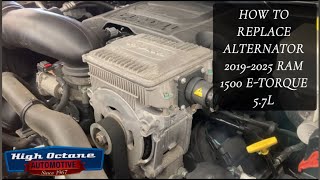
For the 5th generation Ram 1500 (DT platform, 2019+), the charging system is controlled by the PCM, which commands the alternator's output. This is a departure from older systems where the voltage regulator worked independently inside the alternator. A P0563 code can point to a faulty alternator not responding to PCM commands, 🎬 Watch: Understanding the P0563 system voltage high code. or more rarely, a PCM issue. It is critical to distinguish between models with and without the eTorque mild-hybrid system. On eTorque models, the Motor Generator Unit (MGU) replaces the traditional alternator. For some 2022 3.6L eTorque models, TSB 08-166-22 specifies that a Hybrid Control Processor (HCP) software update is the fix for P0563, indicating a software glitch rather than a hardware failure.
Diagnostic Flowchart
Tap your situation to follow the diagnostic path that matches what you're seeing on this vehicle.
Symptoms You May Notice
- Check Engine Light (Malfunction Indicator Lamp) is on.
- Battery or charging system warning light is illuminated on the dashboard.
- Headlights and interior lights may flicker or appear unusually bright.
- Voltage gauge on the instrument cluster reads high (above 15 volts) or fluctuates rapidly.
- Erratic behavior from electronic accessories like the radio, power windows, or infotainment system.
- Engine may stall or have difficulty starting.
- Intermittent loss of electric power steering.
- Park Sense system disabled message.
- Inability to shift into Park or truck failing to shut off, requiring battery disconnection.
- Replacing the battery without testing the alternator. A new battery will be quickly damaged by the same overcharging condition, and the problem will return.
- Replacing the alternator on an eTorque model when only a software update (TSB 08-166-22) was needed.
Most Likely Causes
- Faulty Alternator / Voltage Regulator 🔴 High Probability → Shop Voltage Regulator The voltage regulator is internal to the alternator. When it fails, it can no longer limit the alternator's output, causing an overcharging condition. This is the most common hardware failure for a P0563 code.
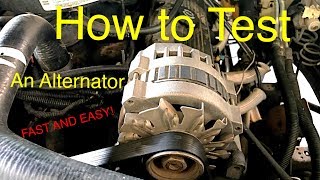
How to confirm: With the engine running, use a multimeter at the battery terminals to measure system voltage. If the voltage is consistently above 15.0-15.5 volts, the alternator is overcharging. A scan tool can also be used to compare the PCM's 'target charging voltage' to the actual 'alternator output voltage'; a significant discrepancy points to a faulty alternator.
Typical fix: Replace the entire alternator assembly. The voltage regulator is not serviced separately. On eTorque models, this involves replacing the more expensive Motor Generator Unit (MGU).
Est. part cost: $300-$800 (Standard), $1000-$1700 (eTorque MGU) - Hybrid Control Processor (HCP) Software Issue (eTorque only) 🟡 Medium Probability TSB 08-166-22 was issued for 2022 Ram 1500s with the 3.6L eTorque engine, specifically for code P0563-00. The bulletin indicates the cause is a software error within the HCP, not a hardware failure.
How to confirm: A FCA/Stellantis dealer must use a wiTECH scan tool to check the current software calibration of the HCP. If it matches the TSB's criteria for an outdated version, the bulletin applies.
Typical fix: Reprogram the Hybrid Control Processor (HCP) with the latest software. This must be done at a dealership.
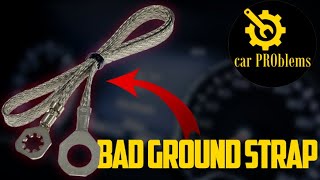
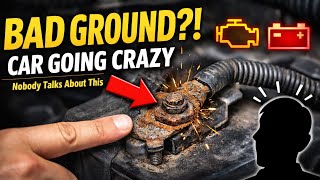
Est. part cost: $0 (if under warranty), $150-$300 (dealer labor for flash) - Poor Ground Connection 🟡 Medium Probability A loose or corroded ground strap for the engine block, chassis, or PCM can create high resistance. This can confuse the PCM's voltage sensing and cause it to command the alternator to overcharge. Technicians often emphasize checking grounds before replacing expensive components.
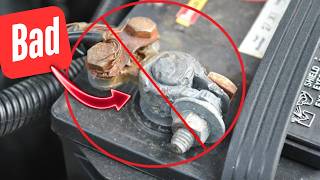
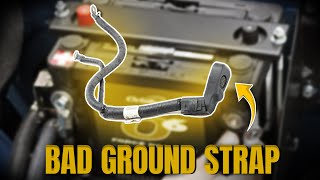
How to confirm: Visually inspect all major ground straps from the battery to the chassis and from the chassis to the engine block. Check for tightness and corrosion. Perform a voltage drop test on the ground side of the circuit to identify high resistance; a drop of more than 0.2 volts can indicate a problem.
Typical fix: Clean the connection points with a wire brush and re-secure the ground strap. If the strap is corroded or broken, it must be replaced.
Est. part cost: $20-$50 - Damaged or Failing Battery ⚪ Low Probability → Shop Vehicle Battery While less common for a high voltage code, an internally shorted or failing battery (especially AGM types used in these trucks) can struggle to buffer the alternator's output, contributing to voltage spikes. However, this is more often a symptom of being damaged by overcharging rather than the root cause.
How to confirm: Have the battery professionally load-tested at an auto parts store or repair shop. A simple voltage check is not sufficient.
Typical fix: Replace the battery if it fails the load test. This should be done *after* confirming the charging system is not overcharging, to avoid damaging the new battery.
Est. part cost: $200-$400
Rare But Worth Checking
- Faulty Powertrain Control Module (PCM): → Shop Engine Control Module (ECM) This is very rare. A failure within the PCM's voltage regulation circuit could cause it to command an overcharge condition. Experienced technicians report replacing very few PCMs for charging faults over many years. This should only be considered after the alternator, software, and all wiring have been proven to be good.
- Wiring Issue in the Charging Harness: A short-to-voltage in the alternator's sense wire can cause the PCM to misread the system voltage and command the alternator to overproduce. This requires careful inspection of the harness between the alternator/MGU and the PCM/HCP.
Diagnosis Steps
- Verify the code P0563 is present using an OBD-II scanner. Note any other codes.
- If the vehicle has an eTorque engine (especially the 3.6L), check if TSB 08-166-22 applies. This may require a dealer visit to check the software version of the Hybrid Control Processor (HCP). If it applies, the fix is a software update.
- With the engine off, check the battery voltage using a multimeter. It should be approximately 12.6 volts.
- Start the engine. Monitor the system voltage using the scanner's live data or a multimeter at the battery terminals.
- Observe the voltage at idle and at around 2,000 RPM. A reading consistently above 15.0 volts confirms an overcharging condition.
- If overcharging is confirmed, the alternator/MGU is the primary suspect. Before replacing it, perform a thorough visual inspection of all battery cables and engine/chassis ground straps for looseness, corrosion, or damage.
- Perform a voltage drop test on the main ground connections to rule out high resistance.
- Clean and tighten any suspect connections and re-test. If the problem persists, the alternator/MGU is almost certainly faulty.
- If the voltage reading is normal but the code persists, investigate the wiring between the alternator/MGU and the PCM/HCP for damage or shorts before suspecting a faulty control module.
Parts You'll Likely Need
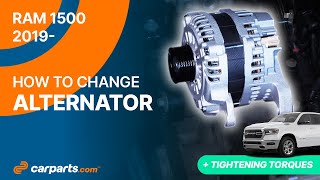
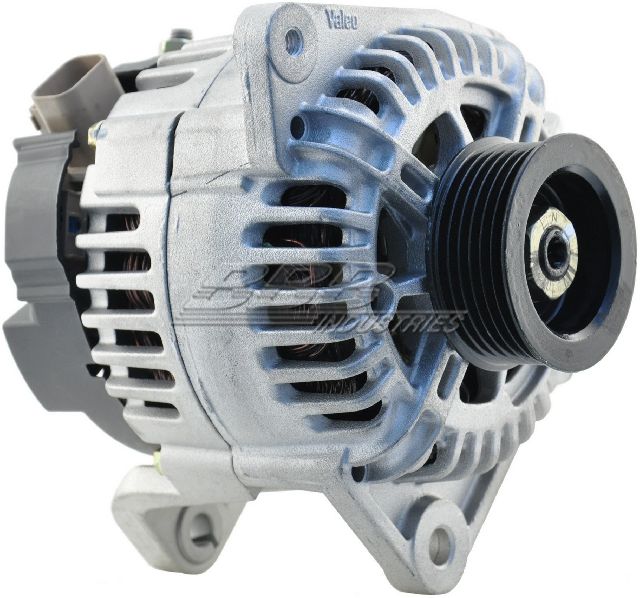
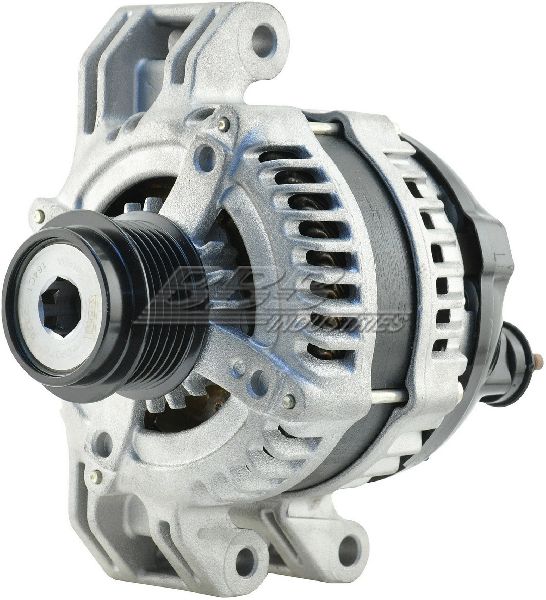
- Alternator (Generator)
(OEM #56029764AB (for 5.7L V8 without eTorque, may supersede to newer numbers))— This is the most common cause for non-eTorque models, as the internal voltage regulator fails and causes the system to overcharge. The regulator is not serviced separately.
Trusted brands: Mopar
OEM price range: $500-$800
Aftermarket price range: $300-$550 - Motor Generator Unit (MGU) (eTorque models)
(OEM #68623194AC (for 5.7L with eTorque, check with VIN))— On eTorque models, the MGU serves as the alternator. Failure of its internal components will cause charging system faults like P0563. It is a significantly more expensive part.
Trusted brands: Mopar
OEM price range: $1200-$1700
Aftermarket price range: Not widely available
Technical Service Bulletins (TSBs) & Recalls
- 08-166-22: Addresses the illumination of the MIL and/or Battery Charge Warning Light with DTC P0563-00 on 2022 Ram 1500s with the 3.6L eTorque engine. The fix is to reprogram the Hybrid Control Processor (HCP).
Platform-Specific Known Issues
- TSB for 3.6L eTorque Software Update: A Technical Service Bulletin (TSB #08-166-22) was issued for some 2022 Ram 1500s with the 3.6L eTorque engine. It addresses the MIL light with DTC P0563-00 by reprogramming the Hybrid Control Processor (HCP). This indicates a known software bug can cause this code, not just hardware failure.
- Extreme Electrical Behavior: Owners on forums report severe symptoms beyond just a warning light, including the intermittent loss of electric power steering, the transmission refusing to shift into Park, and the vehicle not shutting off with the push-button ignition, requiring a battery disconnect to kill the engine. These events are tied directly to the voltage spikes from the P0563 condition.
Mechanic-Grade Diagnostic Values
- PCM Code Set Condition — expected: Desired voltage is compared to actual battery voltage.. Failure: The code sets if battery voltage is 1 volt greater than desired voltage for more than 10 seconds, or if voltage exceeds 15.75 - 17 volts.
- Ground Circuit Voltage Drop — expected: Less than 0.2 Volts. Failure: A reading higher than 0.2V from the negative battery post to the alternator housing indicates high resistance in the ground path, which can cause overcharging.
- Alternator Field Duty Cycle (via Scan Tool) — expected: Near 0% with key on, engine off. Between 5-95% with engine running.. Failure: A value outside the expected range when running, or a fixed high value that doesn't change with electrical load, points to a control or alternator issue.
Hidden / Shadow Codes Worth Checking
- P0563-00: This is the most common variant of the code found on modern Ram trucks, specifically meaning 'System Voltage High'. The '-00' suffix is a status byte indicating a general or component failure, viewable on dealer-level scan tools like wiTECH. It is the specific code cited in TSB 08-166-22. (see via wiTECH or other advanced professional scan tools.)
- P1594: Charging System Voltage Too High. On older Mopar systems, this code would often set in the PCM alongside P0563 in the ECM, indicating a confirmed overcharging condition detected by both modules. While less common on the newest platforms, its presence would strongly point towards the alternator. (see via wiTECH or other advanced professional scan tools.)
Scan Tool Commands That Help
- wiTECH (or equivalent professional scanner): Target Charging Voltage vs. Battery Voltage Live Data — This is a primary diagnostic step. A technician can monitor the voltage the PCM is requesting ('Target') versus what is actually being produced ('Battery Voltage'). If the target is 14.2V but the actual voltage is 15.5V+, it strongly suggests the alternator's internal regulator has failed and is not responding to PCM commands.
- wiTECH (or equivalent professional scanner): Generator Field Driver Duty Cycle — This allows a technician to see the percentage of time the PCM is commanding the alternator's field circuit to be active. If the duty cycle is very low (e.g., 5%) but the system voltage is still excessively high, it confirms the alternator is overproducing despite the PCM's attempt to reduce its output.
Wiring & Ground Locations
- Main Chassis/Engine Grounds — Key ground points are located on the passenger side inner fender/wheel well area near the alternator and from the negative battery terminal to the body. Another critical ground is on the frame on the driver's side, just rearward of the stabilizer link mount.. The PCM uses ground references to measure system voltage. High resistance at these points can cause the PCM to 'see' a lower voltage than is actually present, leading it to command the alternator to overcharge to compensate.
- Alternator/MGU Power and Control Connectors — The main power cable is on a large stud on the back of the alternator/MGU. The control harness is a smaller multi-pin connector.. A loose or corroded main power cable can cause voltage spikes. A damaged control harness or pins can interrupt the command signal from the PCM, causing the alternator to default to a high-output state. TSB 08-014-21 for 2020-2021 eTorque models notes that an improperly seated MGU connector can cause charging system faults.
- Intelligent Battery Sensor (IBS) Connector — The IBS is a small module attached directly to the negative battery terminal clamp.. The IBS reports battery state of charge and health to the PCM, which uses this data to determine the target charging voltage. A faulty IBS or a poor connection at its LIN bus connector can send incorrect data, potentially contributing to an improper charging strategy. Resetting the IBS by unplugging its connector while the vehicle is running has been noted as a fix for some charging system warnings.
Real Owner Repair Stories
- RamForum.com user 'Selcher' (2022 Ram 1500 5.7L Hemi eTorque) — Check engine light, battery light, voltage gauge spiking high, erratic electronics, limp mode, and improper shifting.
❌ Tried (didn't work) The alternator was tested while the truck was cold and idling, and it passed the test. The symptoms were intermittent.
✅ What actually fixed it The user suspected the alternator (MGU) was still the culprit despite the initial test, as the symptoms were classic for an intermittent voltage regulator failure. The final resolution was not posted in the thread, but the strong consensus and evidence pointed to replacing the MGU as the next and most likely successful step.
When the Usual Fixes Don't Work
- In some cases, owners have replaced the alternator for P0563 only to have the code return. This often points to a missed underlying issue, most commonly a poor ground connection that was not identified during the initial diagnosis. Performing a voltage drop test on the ground side is critical; a bad ground can make a good alternator overcharge.
Helpful Videos
Used OEM Parts in Stock
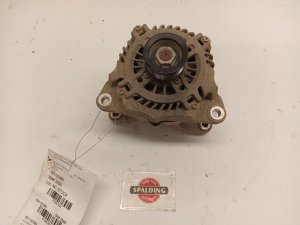
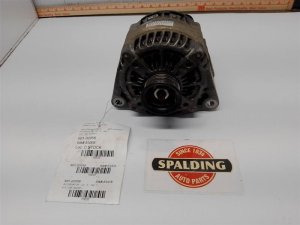
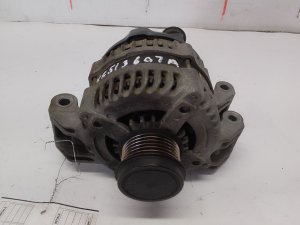
New Aftermarket Parts Available

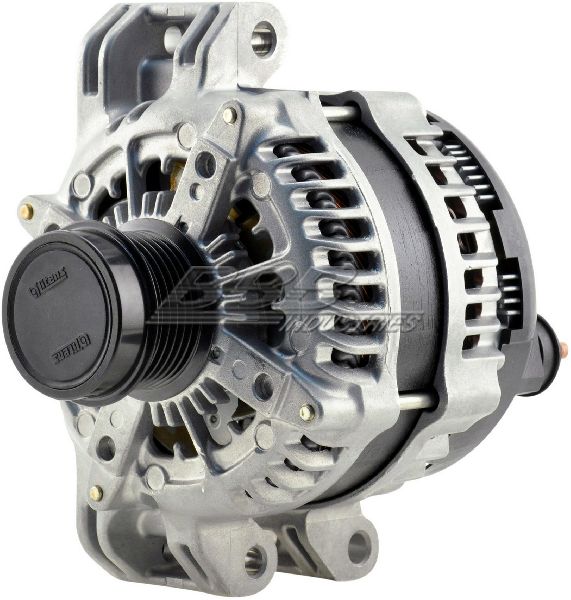

The information in this article is provided for general reference and educational purposes only. Vehicle specifications, procedures, and part compatibility can vary by production date, trim level, and region. Always consult your vehicle's factory service manual and verify part numbers before purchasing or performing repairs. Safety-critical components such as airbags, seat belts, and braking systems should be installed by a qualified professional.
- Ram 1500:
- 🧭 Diagnostic Flowchart
- 🎬 Helpful Videos
- 🛍️ Shop This Part
- What's Unique About the 2022-2022 Ram 1500
- Symptoms You May Notice
- Most Likely Causes
- Rare But Worth Checking
- Diagnosis Steps
- Parts You'll Likely Need
- Technical Service Bulletins (TSBs) & Recalls
- Platform-Specific Known Issues
- Mechanic-Grade Diagnostic Values
- Hidden / Shadow Codes Worth Checking
- Scan Tool Commands That Help
- Wiring & Ground Locations
- Real Owner Repair Stories
- When the Usual Fixes Don't Work
- 🎟️ Get 5% Off