

P0563 on 2010-2014 Subaru Outback: High Voltage Causes and Alternator Fixes
On a 2010-2014 Subaru Outback, code P0563 almost always means the alternator's internal voltage regulator has failed, causing an overcharging condition. The fix is to replace the entire alternator assembly. Expect to pay $150-$380 for an aftermarket part or around $480 for an OEM unit, with a DIY difficulty of 2/5.
- P0563 on a 2010-2014 Outback means the system voltage is too high, almost always due to a failed alternator.
- Confirm the problem by measuring voltage at the battery with the engine running. A reading over 15.0V points directly to a bad alternator.
- The fix is to replace the entire alternator assembly. This is a DIY-friendly job with a difficulty of 2 out of 5.
- While driving is possible, it's risky. High voltage can damage expensive electronics and the battery.
- Always verify the correct alternator part number for your specific engine (2.5L or 3.6L) before purchasing.
What's Unique About the 2010-2014 Subaru Outback
For this generation of Subaru Outback, the P0563 code is a very strong indicator of a specific failure: 🎬 Watch: Understanding the P0563 high system voltage code the internal voltage regulator within the alternator. Unlike some vehicles with complex, computer-controlled charging strategies, the issue here is typically a straightforward hardware failure. While later model Subarus are known for battery drain issues related to their telematics (DCM) units, that problem causes low voltage, not the high voltage condition seen with P0563 on the 2010-2014 models.
Symptoms You May Notice
- Check Engine Light and/or a red battery warning light on the dashboard.
- Headlights and dash lights that are unusually bright, dim, or flickering.
- Erratic operation of electrical accessories like the radio, power windows, or infotainment system.
- Engine stalling, hesitation, or having difficulty starting.
- A whining or grinding noise coming from the alternator area that changes pitch with engine RPM.
- A smell of burning rubber or hot electronics from the alternator overheating.
- The battery may feel hot to the touch after driving or show signs of swelling.
- Replacing the battery. While a high-voltage condition can damage a battery, a bad battery itself does not typically cause the P0563 code. The battery is the victim, not the cause. Always diagnose the charging system first.
- Replacing the battery and alternator, but the code returns. This can happen if a poor ground connection or a wiring issue was the true root cause, or if an incorrect or faulty remanufactured alternator was installed.
Most Likely Causes
- Failed Alternator / Internal Voltage Regulator 🔴 High Probability → Shop Voltage Regulator The voltage regulator is an internal, non-serviceable component of the alternator. When it fails in an over-voltage state, it commands the alternator to produce maximum output continuously. This is the most common failure mode for this code on these vehicles, confirmed by numerous owner experiences.
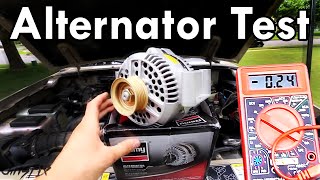
How to confirm: With the engine running, use a multimeter to measure the DC voltage across the battery terminals. 🎬 See how to properly test an alternator with a multimeter A reading that is consistently above 15.0 volts confirms an overcharging condition. The reading may climb higher as the engine is revved.
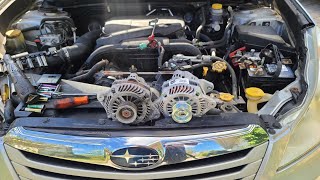
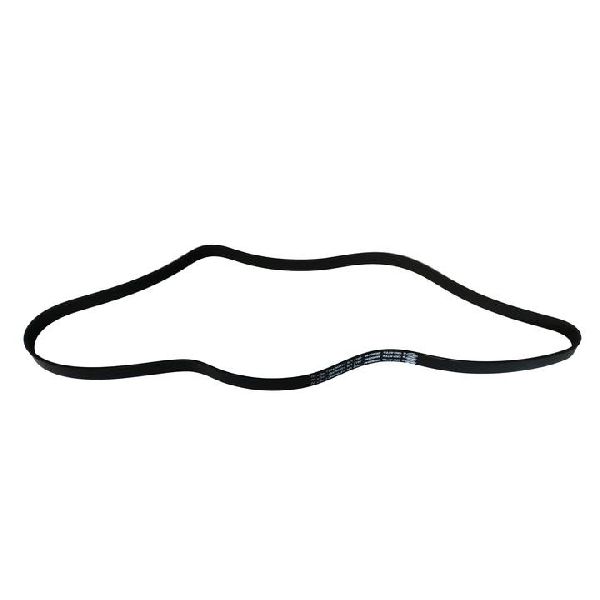
Typical fix: Replace the entire alternator assembly. 🎬 Watch: Step-by-step 2010-2014 Subaru Outback alternator replacement guide It is also wise to replace the serpentine belt at the same time if it is worn or cracked.
Est. part cost: $150-$705 - Corroded or Loose Battery Terminals/Grounds ⚪ Low Probability → Shop Vehicle Battery While corrosion is common, it more often causes low voltage or starting issues. However, a poor ground connection for the alternator or ECM could theoretically cause a faulty high voltage reading. This is much less likely than a failed alternator.
How to confirm: Visually inspect the battery terminals for corrosion (white or blue-green powder). Check that the main battery ground cable (negative terminal to chassis) and engine ground straps are clean, tight, and free of corrosion or damage.
Typical fix: Clean the battery terminals and cable ends with a wire brush and a baking soda/water solution. Ensure all connections are tight. Replace cables if they are excessively corroded or damaged.
Est. part cost: $5-$50
Rare But Worth Checking
- Wiring Harness Short: A short circuit in the wiring between the alternator and the ECM can, in some cases, cause it to default to maximum output. This is worth a visual inspection before replacing the alternator, checking for any chafed or melted wires near the alternator or exhaust manifolds.
- Faulty Powertrain Control Module (PCM): → Shop Engine Control Module (ECM) This is extremely rare. The PCM can theoretically misinterpret the voltage reading, but you should exhaust all other possibilities before considering PCM replacement. This is more likely if the voltage reading on a multimeter is normal, but the car still logs the P0563 code.
Diagnosis Steps
- Check for other stored Diagnostic Trouble Codes (DTCs) with an OBD-II scanner.
- With the engine off, use a multimeter to check the battery's static voltage. It should be around 12.4-12.7 volts.
- Start the engine. Measure the voltage across the battery terminals again. A healthy system will read between 13.2 and 14.8 volts.
- If the voltage is consistently above 15.0V, and especially if it climbs with RPM, the charging system is overcharging. This strongly points to a faulty alternator.
- If the voltage is normal, the code may be intermittent. Turn on all electrical accessories (headlights, fan on high, rear defroster) to load the system and see if the voltage spikes.
- Before replacing the alternator, perform a thorough visual inspection of the battery terminals, alternator connections, and all major ground straps for looseness, corrosion, or damage.
- If all wiring and connections are secure and the voltage is confirmed to be high, the alternator is faulty and needs to be replaced.
Parts You'll Likely Need
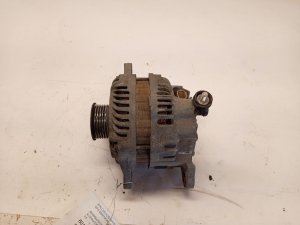
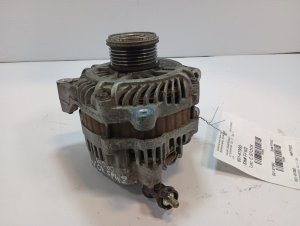
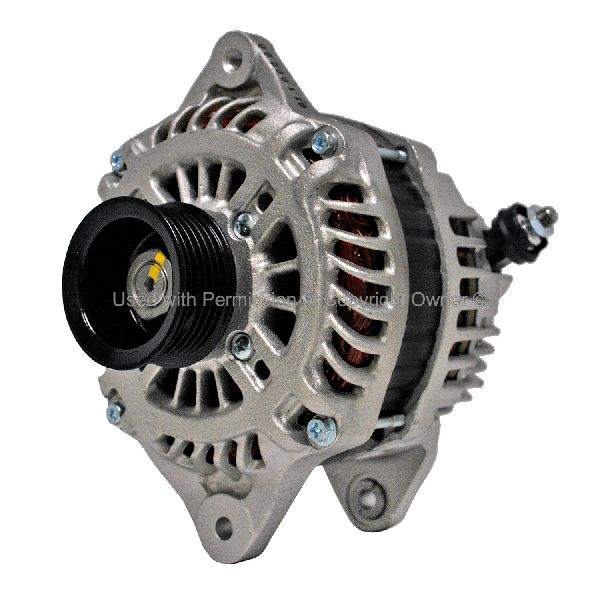
- Alternator
(OEM #23700AA831 (3.6L H6); 23700AA65A (2.5L H4 2010-2012); 23700AA78A (2.5L H4 2013-2014))— This is the primary cause of P0563. The internal voltage regulator fails, requiring the replacement of the complete assembly. Always verify the correct part number with your vehicle's VIN.
Trusted brands: Denso (OEM supplier), Mitsubishi (OEM supplier), Bosch, Carquest Premium
OEM price range: $480-$705
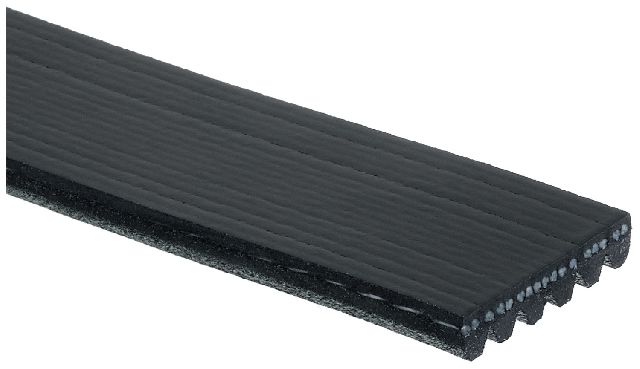
Aftermarket price range: $150-$380 - Serpentine Belt — It is best practice to replace the serpentine belt when replacing the alternator, as it must be removed for the job and may be worn, cracked, or stretched.
Trusted brands: Bando, ContiTech, Gates
OEM price range: $25-$40
Aftermarket price range: $15-$30
Technical Service Bulletins (TSBs) & Recalls
- TSB 16-107-17R: CVT Warranty Extension for 2010-2015 models.
- TSB 16-90-13R: Addresses a torque converter issue causing stalling in 2010-2012 models.
- TSB 05-48-10: Pertains to fixing steering wheel vibration on 2010-2011 models.
Platform-Specific Known Issues
- Real Repair Story: A 2012 Outback owner on subaruoutback.org described having the battery and check engine lights illuminate. Upon checking with a multimeter, the voltage at the battery was over 17V. The consensus from other forum members was a failed alternator. The owner replaced the alternator (a 2-hour DIY job) which completely resolved the P0563 code and the overcharging issue.
Mechanic-Grade Diagnostic Values
- Battery Voltage, Key On Engine Off (KOEO) — expected: 12.4V - 12.7V. Failure: A reading below 12.4V may indicate a discharged or failing battery, which should be addressed but is not the cause of P0563.
- Charging Voltage at Battery, Engine at Idle, No Load — expected: 13.2V - 14.8V. Failure: A consistent reading above 15.0V, and especially above 15.5V, confirms an overcharging condition and points to a failed voltage regulator.
- Charging Voltage at Battery, Engine at Idle, Full Load — expected: 13.2V - 14.8V. Failure: Voltage should remain stable within the target range even with all accessories on. If it spikes above 15.0V under load, it confirms a faulty regulator. If it drops significantly below 13.2V, the alternator may be weak, but this would not cause a P0563.
- Voltage Drop Test - Main Grounds — expected: < 0.1 Ω (resistance) or < 0.2V (voltage drop). Failure: Higher resistance or voltage drop on the main battery-to-chassis or engine-to-chassis ground straps can cause erratic electrical behavior, though it's a rare cause for P0563.
Scan Tool Commands That Help
- Subaru Select Monitor (SSM): Current Data Display / All Systems Diagnosis — While there isn't a specific bidirectional command for this fault, a technician would use the SSM to view live system voltage as seen by the ECM and other modules. This can help confirm if the high voltage reading is system-wide or isolated, and check for other module-specific DTCs that a generic scanner might miss.
Wiring & Ground Locations
- Main Battery Ground — The main negative battery cable splits. One part connects directly to the chassis/frame near the battery. The other, larger gauge wire runs to a grounding point on the engine block.. A poor chassis ground can cause the alternator to work harder and potentially create voltage regulation issues. This is a critical connection for overall electrical system health.
- Engine Block Grounds — There are several ground points on the engine itself. Key locations include grounds bolted to the top of the intake manifold (critical for ECU grounding) and a main ground strap from the engine block to the chassis.. The alternator case is grounded through its mounting brackets to the engine block. If the engine's main ground strap to the chassis is poor, the alternator may not have a stable ground reference, potentially affecting regulation.
- Alternator Connector (3-pin) — A small plastic connector on the back of the alternator.. This connector has three wires: 'S' (Sense), which monitors battery voltage; 'L' (Lamp), which controls the dashboard warning light; and 'C' (Computer), which allows the ECU to control charging rate on some models. A fault in the 'S' wire could theoretically cause a misreading and overcharging.
Real Owner Repair Stories
- subaruoutback.org forum user (2011 Subaru Outback 2.5i) — Battery light and Check Engine Light on, P0563 code stored. Multimeter showed voltage climbing to 17V+.
❌ Tried (didn't work) Initially suspected battery, but testing confirmed the battery was a victim of overcharging, not the cause.
✅ What actually fixed it The owner replaced the alternator with a new unit. The repair completely solved the P0563 code and returned charging voltage to a normal 14.2V. - Reddit r/mechanic (Unspecified year, but symptoms and fix are relevant.) — P0563 code returned immediately after replacing the original alternator and battery.
❌ Tried (didn't work) Replacing the alternator and battery with new parts.
✅ What actually fixed it The user was advised to check all ground connections. While the outcome isn't posted, this scenario highlights a common frustration where a faulty remanufactured part or a missed underlying wiring/ground issue causes the code to persist. The most likely cause in this case is a defective-out-of-the-box remanufactured alternator.
OEM Part Supersession History
23700AA65A→23700AA78A— Likely a supplier change or minor internal revision by Subaru for the mid-generation refresh.
Heads up: Part 23700AA65A is for 2010-2012 2.5L models. Part 23700AA78A is for 2013-2014 2.5L models. While they may appear physically similar, the mounting or internal regulation may differ. Using the wrong part can cause charging issues.
Model Year Variations Within This Range
- 2013-2014 (2.5L H4): These model years use a different alternator (PN 23700AA78A) than the 2010-2012 models. This change coincided with the introduction of the FB25 engine in some markets and a mid-cycle refresh, though the root cause and fix for P0563 remain identical.
Diagnostic Flowchart
Other Known Issues on This Vehicle
Issues unrelated to this code that are worth knowing about as an owner of this generation:
- CVT Failure / Hesitation (2.5L models) 🔴 High — Common enough that Subaru extended the CVT warranty to 10 years/100,000 miles. Issues include shuddering, hesitation, and stalling, particularly when coming to a stop. (Ref: TSB 16-107-17R (CVT Warranty Extension), TSB 16-90-13R (Torque Converter Lock-Up Issue).)
- Excessive Oil Consumption (2.5L FB25 engine, 2013-2014) 🔴 High — A well-documented issue with the early FB-series engines due to piston ring design. Led to a class-action lawsuit. Owners may need to add oil between changes. (Ref: Class-action lawsuit settlement (Yaeger v. Subaru).)
- Steering Wheel Vibration / "Shaky Steering" 🟠 Medium — Many owners of 2010-2012 models reported a persistent vibration or shake in the steering wheel at highway speeds. It can be caused by various issues from wheel balance to suspension or steering components. (Ref: TSB 05-48-10 addresses the concern with a complex procedure involving steering and suspension component modifications.)
- Leaking Head Gaskets (2.5L EJ253 engine) 🔴 High — While less common than in prior generations, the single-layer head gaskets on the EJ253 can still fail at higher mileage, leading to coolant and oil leaks.
- Takata Airbag Inflator Recall 🔴 High — Part of the massive global Takata recall. The front passenger airbag inflator could rupture, sending metal fragments into the cabin. This affects most vehicles from this generation. (Ref: Multiple NHTSA recalls (e.g., 19V008000).)
Used vs. New Parts: Buying Guide for This Vehicle
When a used part is the smart pick: A used OEM alternator from a low-mileage (<80,000 miles) donor vehicle can be a reliable and cost-effective option, often superior to a cheap, new aftermarket unit. However, it remains a gamble as the part's history is unknown.
Donor-vehicle mileage cap: roughly under 80000 miles for the part to have meaningful remaining life.
What to inspect on the donor part:
- Verify the part number on the used unit matches your vehicle's requirement.
- Spin the pulley by hand. It should spin smoothly with minimal noise or resistance.
- Inspect the electrical connector for any bent, corroded, or broken pins.
- Check the housing for cracks or signs of extreme heat (discoloration).
Aftermarket brands forum-validated for this vehicle:
- Denso (New or Remanufactured): Denso is an OEM supplier for Subaru, so their aftermarket parts are generally considered to be of high quality and a safe bet.
Brands owners have reported issues with on this vehicle:
- Generic/Store-Brand Remanufactured: While cheap, remanufactured alternators from general auto parts stores can have high failure rates. Many forum posts detail stories of these parts being dead-on-arrival or failing shortly after installation, leading to a repeat of the repair.
Real Owner Stories
Aggregated from forums and TSBs cited above. Mileages and costs reflect what owners reported in those sources.
2013 Outback 3.6R — 135000 miles
Symptoms: The battery indicator light on the dash has been coming on when I first start the car. It will stay on for anywhere between 2 and 10 minutes or so, then go out regardless of RPMs or driving. Once the light goes off, the voltage goes up to roughly 14 to 15 volts, which coincides with an increase in cabin fan/blower and windshield wiper speeds.
What fixed it: Replacement of the alternator and regulator assembly.
Source hint: r/Subaru_Outback
2012 Outback
Symptoms: Battery and check engine lights illuminated. Upon checking with a multimeter, the voltage at the battery was over 17V.
What fixed it: The owner replaced the alternator (a 2-hour DIY job) which completely resolved the P0563 code and the overcharging issue.
Source hint: subaruoutback.org - Real Repair Story
Related OBD-II Codes
Frequently Asked Questions
My 2012 Outback has the battery light on and the voltage is over 17V. Is this a common issue?
Does the CVT warranty extension (TSB 16-107-17R) cover my P0563 charging system issue?
I have a 2013 Outback 3.6R and the battery light stays on for 10 minutes before the voltage jumps to 15V. Is the regulator failing?
Can I just replace the voltage regulator on my EJ253 engine's alternator?
Is there a TSB for the steering wheel vibration I'm feeling along with these electrical issues?
Does the 2010-2014 Subaru Legacy share this same P0563 failure pattern?
Helpful Videos
Used OEM Parts in Stock
New Aftermarket Parts Available




The information in this article is provided for general reference and educational purposes only. Vehicle specifications, procedures, and part compatibility can vary by production date, trim level, and region. Always consult your vehicle's factory service manual and verify part numbers before purchasing or performing repairs. Safety-critical components such as airbags, seat belts, and braking systems should be installed by a qualified professional.
- Subaru Outback:
- 🧭 Diagnostic Flowchart
- 🎬 Helpful Videos
- 🛍️ Shop This Part
- What's Unique About the 2010-2014 Subaru Outback
- Symptoms You May Notice
- Most Likely Causes
- Rare But Worth Checking
- Diagnosis Steps
- Parts You'll Likely Need
- Technical Service Bulletins (TSBs) & Recalls
- Platform-Specific Known Issues
- Mechanic-Grade Diagnostic Values
- Scan Tool Commands That Help
- Wiring & Ground Locations
- Real Owner Repair Stories
- OEM Part Supersession History
- Model Year Variations Within This Range
- Other Known Issues on This Vehicle
- Used vs. New Parts: Buying Guide for This Vehicle
- Real Owner Stories
- 2013 Outback 3.6R — 135000 miles
- 2012 Outback
- Related OBD-II Codes
- Frequently Asked Questions
- 🎟️ Get 5% Off