

OBD-II Code P0570: Cruise Control 'Accelerate' Signal Malfunction
The Ultimate Guide to Diagnosing and Fixing P0570
- Code P0570 disables your cruise control because the 'accelerate' button signal is missing, but the vehicle remains 100% safe to drive.
- A sticky or worn steering wheel cruise control switch causes over 70% of P0570 codes and costs $110-$330 to replace at a shop.
- An illuminated airbag light or dead horn alongside P0570 guarantees a failed clock spring, requiring a $225-$700 professional repair.
- Scan for ABS or wheel speed sensor codes first; a single $100 faulty wheel speed sensor automatically disables cruise control and triggers P0570.
What Does P0570 Mean?
P0570 means the Powertrain Control Module (PCM) detects an abnormal, missing, or invalid signal from the cruise control 'accelerate' button. The computer disables the cruise control system as a safety precaution because it cannot verify your intended speed adjustments.
Technical definition: Cruise Control 'Accelerate' Signal Malfunction. The Powertrain Control Module (PCM) or Body Control Module (BCM) detects an out-of-range, intermittent, or missing voltage signal from the cruise control accelerate switch circuit.
Can I Drive With P0570?
Yes. You can safely drive your vehicle. The P0570 code only disables the cruise control convenience feature and does not impact engine performance or fundamental safety systems. However, if accompanied by an ABS or Airbag warning light, inspect the vehicle promptly to restore those critical safety systems.
Common Causes
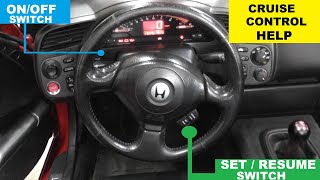
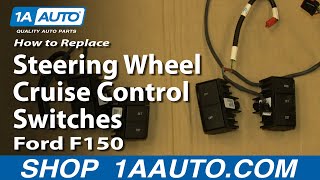
- Faulty or Contaminated Cruise Control Switch (Very Common) — Steering wheel buttons wear out, get sticky from spilled liquids, or suffer internal contact failure, creating an open or shorted circuit. 🎬 Watch: How to replace steering wheel cruise control switches.
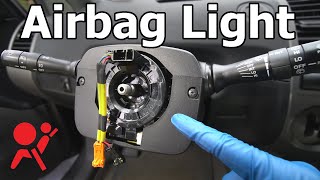
- Faulty Clock Spring (Common) — The clock spring is a coiled ribbon cable inside the steering column maintaining electrical contact for the wheel. When it breaks, it interrupts the cruise signal, often disabling the horn and airbag simultaneously. 🎬 See this walkthrough on replacing a faulty clock spring.
- Damaged Wiring or Corroded Connectors (Common) — Wires leading from the switch pinch, fray, or break within the steering column. Connectors also loosen or corrode from moisture. This includes rodent damage to harnesses under the dashboard.
- ABS System Fault (Common) — Modern vehicles disable cruise control if an ABS or Vehicle Stability Control (VSC) fault occurs. The cruise system requires accurate speed readings from the ABS wheel speed sensors to function.
- Blown Fuse (Less Common) — A blown fuse severs power to the cruise control circuit. This usually indicates a deeper electrical short circuit that caused the fuse to blow.
- Aftermarket Accessories Interference (Uncommon) — Non-OEM throttle controllers, custom wiring, or remote starters introduce voltage spikes or grounding errors that corrupt the accelerate signal.
- Software or Calibration Issue (Uncommon) — Following a battery replacement or software update, cruise control module calibration parameters mismatch, causing the PCM to reject the accelerate signal.
- Faulty Control Module (PCM or BCM) (Rare) — The PCM or BCM rarely fails. Mechanics only consider this after exhaustively eliminating wiring, switches, and clock spring faults.
Symptoms
- Cruise control does not engage — The system refuses to turn on when you press the main cruise button.
- Cruise control 'Accelerate' function fails — You can set a speed, but you cannot increase it using the 'Accel' button.
- Cruise control disengages intermittently — The cruise control shuts off by itself over bumps or when turning the steering wheel, indicating a loose connection or failing clock spring.
- Check Engine Light illuminates — The vehicle's computer logs the fault and turns on the Malfunction Indicator Lamp (MIL).
- Cruise control indicator light flashes or stays off — The dashboard light showing cruise control status flashes rapidly or refuses to illuminate.
Diagnostic Flowchart
Tap your situation to follow the diagnostic path that matches what you're seeing on this code.
Common Fixes & Costs
- Replace Cruise Control Switch — Parts: $20 - $180, Labor: $90 - $150, ~1.2 hr book time (Intermediate)
- Replace Clock Spring — Parts: $75 - $400, Labor: $150 - $300, ~1.5 hr book time (Professional)
- Replace Blown Fuse — Parts: $1 - $5, Labor: $0 - $20, ~0.1 hr book time (DIY)
- Repair Damaged Wiring — Parts: $10 - $80, Labor: $100 - $200, ~1.5 hr book time (Intermediate)
- Module Re-programming — Parts: $0, Labor: $120 - $200, ~1.0 hr book time (Professional)
- Replace Control Module (BCM or PCM) — Parts: $400 - $650, Labor: $150 - $300, ~1.5 hr book time (Professional)
DIY vs Professional
- Replace Blown Fuse 🟢 Beginner
Tools: Owner's manual, fuse puller. - Replace Cruise Control Switch 🟢 Beginner
Tools: Socket set, trim removal tools, vehicle-specific instructions. - Repair Damaged Wiring 🟢 Beginner
Tools: Multimeter, wire strippers, soldering iron, heat shrink tubing. - Replace Clock Spring 🟢 Beginner
Tools: Steering wheel puller, torque wrench, trim tools. - Module Programming 🟢 Beginner
Tools: Manufacturer-specific diagnostic scan tool, OEM software.
Used vs. New Parts: Buying Guide
When a used part is worth it: A used cruise control switch from a reputable auto recycler is a cost-effective choice for older vehicles where new OEM parts are discontinued or overpriced.
Donor-vehicle mileage cap: roughly under 100000 miles for the part to have meaningful remaining life.
Donor quality checklist:
- Match the part number exactly; switches look identical but differ electronically.
- Ensure the used part includes at least a 30-day warranty.
Decision logic:
- If The faulty part is the clock spring → Always buy new. The safety risk and high labor cost of a repeat failure make used parts a poor gamble.
- If The faulty part is the cruise control switch and a new OEM part costs over $100 → A used switch from a low-mileage donor is a budget-friendly alternative.
- If The vehicle is less than 10 years old and the part is under $75 new → Buy new for the longer warranty and guaranteed compatibility.
Warranty tradeoff: Used parts typically carry a 30-90 day warranty. New aftermarket parts offer 1-year to lifetime warranties.
Worst-case if a used part fails: 300. If a used clock spring fails, you pay repeat labor for replacement plus the price of another part.
What Happens If You Wait — Timeline
- 0-1 month: Code P0570 sets, and the Check Engine Light illuminates. The 'Accelerate' function stops working. The issue is purely a loss of convenience. (MPG impact: 0-5% (negative)% · Added cost: $0)
- 1-6 months (If caused by clock spring): If the root cause is a failing clock spring, other steering wheel controls like the horn or radio buttons begin to fail intermittently. (MPG impact: 0-5% (negative)% · Added cost: $0)
- 3-12 months (If caused by clock spring): The airbag/SRS warning light illuminates. This indicates a critical failure in the clock spring's circuit. The airbag will not deploy in an accident. (MPG impact: 0-5% (negative)% · Added cost: $225-700)
- Ongoing (If cause is a wiring short): If a wiring short is ignored (e.g., repeatedly replacing a blown fuse), the short damages the Body Control Module (BCM) or Powertrain Control Module (PCM). (MPG impact: 0-5% (negative)% · Added cost: $500-1500+)
Cost of Not Fixing It
- Short-Term (0-3 months): You lose the cruise control function. There is no risk of further damage to the vehicle's primary systems. (Added cost: 0)
- Medium-Term (3-12 months): If a failing clock spring causes the code, the problem spreads to the horn and airbag circuits, disabling critical safety features. (Added cost: 0 - 500)
- Long-Term (1+ year): Ignoring the code indefinitely leaves a persistent check engine light on the dashboard, which masks new, more serious engine issues. (Added cost: 0)
Diagnosis Steps
- Scan for All Trouble Codes
Use an OBD-II scanner to check all modules. Codes for the brake switch (P0571), clock spring (B-series Airbag codes), or ABS sensors (C-series) pinpoint the root cause immediately.
Tools: OBD-II Scanner (Beginner) - Visually Inspect the Cruise Control Buttons
Check the steering wheel cruise buttons for physical damage, looseness, or sticky residue from spilled liquids.
Tools: Flashlight (Beginner) - Check the Cruise Control Fuse
Locate the cruise control fuse in the interior fuse box. Pull it and inspect the internal metal strip. Replace a broken fuse with the exact same amperage.
Tools: Fuse puller or needle-nose pliers (Beginner) - Perform Live Data Scan
Access the live data stream on an advanced scanner. Monitor the cruise control switch PID. The status must change (e.g., 'Off' to 'On') when you press the 'Accelerate' button. No change confirms a switch or wiring fault.
Tools: Advanced OBD-II Scanner (Intermediate) - Test Switch with Multimeter
Disconnect the switch connector. Set a multimeter to Ohms. Probe the 'Accelerate' pins. Resistance must drop from infinite (O.L.) to near-zero when pressed. Switch to DC Volts and back-probe the connected wire; voltage must drop from 5V to near 0V when pressed.
Tools: Multimeter, vehicle-specific wiring diagram, back-probe kit (Intermediate) - Inspect Wiring and Connectors
Trace the wiring harness from the switch through the steering column. Look for chafed wires. Unplug connectors, check for bent pins, apply dielectric grease, and reseat firmly.
Tools: Trim removal tools, flashlight, dielectric grease (Intermediate) - Test the Clock Spring
If the horn fails or an airbag light is on, test the clock spring for electrical continuity while turning the steering wheel. Stop DIY and hire a professional if you lack airbag safety training.
Tools: Multimeter, vehicle service manual (Advanced) - Advanced Signal Tests
Professionals use an oscilloscope to verify the switch outputs a clean 0V to 5V square wave. They also perform CAN-bus tests to verify BCM-to-PCM communication.
Tools: Oscilloscope, professional diagnostic scanner (Advanced)
When This Code Triggers (Freeze-Frame Conditions)
- Vehicle Speed: 30-75 mph (The code sets when the driver attempts to engage or adjust cruise control at a steady highway speed.)
- Engine RPM: 1500-3000 RPM (Corresponds to a normal engine speed for highway cruising when the fault is detected.)
- Engine Load: 20-70% (Reflects a state of steady throttle demand, not heavy acceleration or deceleration.)
- Throttle Position: 15-40% (Indicates a partial, steady throttle opening consistent with maintaining speed.)
Related Codes
- P0571, P0572, P0573 — These codes point to the brake switch circuit. A fault in the brake switch disables cruise control as a safety measure. If you have both P0570 and a brake switch code, replace the brake switch first.
- SRS or Airbag Codes (B-series) — Seeing P0570 alongside an airbag warning light guarantees the clock spring is the culprit. A failure in its internal wiring disrupts both systems simultaneously.
- U-series Codes (e.g., U0100, U0140) — These indicate a communication breakdown between modules. A U-code suggests the cruise signal isn't reaching its destination due to a network problem, not a faulty switch.
- ABS/VSC/ESP Codes (e.g., C0035-C0050) — These relate to the Anti-Lock Braking System. Because cruise control relies on vehicle speed data from the ABS module, any ABS fault disables cruise control automatically.
Climate & Environmental Factors
- High Humidity: Prolonged exposure to humid air causes moisture to penetrate switch housings. This leads to internal corrosion on the switch contacts, increasing electrical resistance and causing failed signals.
- Liquid Spills: Spilling coffee or soda onto the cruise control switch makes the button sticky. The moisture and acids corrode the internal contacts, leading to a short or open circuit.
How to Talk to a Mechanic About This Code
Say this: "I have a P0570 code and my cruise control isn't working. I've already checked the fuse. I'd like to book a diagnostic appointment. Can you check the cruise switch status on a scan tool and inspect the wiring? If an airbag light is also on, please check the clock spring."
This directs the mechanic to the most likely causes (switch, wiring, clock spring) and prevents them from starting from zero, saving diagnostic time. Mentioning the specific scan tool test shows you understand the diagnostic process.
Avoid saying:
- 'My cruise control is broken, fix it.'
- 'My check engine light is on, can you just look at it?' (This invites a costly, open-ended diagnostic process).
- 'I think I need a new computer.' (Never suggest the most expensive fix first).
Questions to ask before authorizing the repair:
- What were the results of the live data test for the accelerate switch?
- Did you find any issues with the wiring or connectors in the steering column?
- If you recommend a clock spring replacement, is my airbag light also on, and have you ruled out the switch itself?
- What is the warranty on the recommended parts and labor?
Where to Take It: Dealer vs Independent vs Chain
- Dealer:
Recommended if an airbag light is on (clock spring replacement) or if the vehicle has known complex electronic issues. Otherwise, an independent shop is more cost-effective.
Best for: Vehicles under warranty., Complex electrical issues on German brands (BMW, VW)., When a known manufacturer-specific TSB or recall is the likely cause.
Downsides: Highest labor rates and part costs., More inclined to replace a whole assembly rather than repair a single wire. (Typical cost: +50% vs. baseline) - Independent Shop:
Best fit for most P0570 scenarios. The causes are straightforward electrical issues that any competent independent technician can diagnose and repair affordably.
Best for: Out-of-warranty vehicles where cost is a primary concern., Common electrical repairs like switch replacement or wiring fixes.
Downsides: Quality varies greatly; check reviews and ASE certifications., May lack the latest manufacturer-specific diagnostic tools for very new models. (Typical cost: +0% vs. baseline) - Chain Shop:
Acceptable for a fuse change, but AVOID for diagnosing P0570. The potential for misdiagnosis is high.
Best for: Simple, clear-cut jobs like replacing a fuse.
Downsides: Technician skill varies dramatically., Often unequipped for in-depth electrical diagnostics beyond reading a code., High pressure to upsell leads to unnecessary repairs. (Typical cost: -10% vs. baseline)
When to Walk Away From the Repair
If the estimated repair cost for this non-essential feature exceeds 15% of your car's private-party value, walk away, unless the fix also resolves a safety issue like a faulty clock spring affecting the airbag.
- Car worth $4000, fix is $600: Walk away if it's just the cruise switch. If the fix is a clock spring that restores the airbag, authorize the repair.
- Car worth $15000, fix is $450: Fix it. The cost is a small fraction of the vehicle's value and restores a useful feature.
- Car worth $2500, fix is $500: Walk away. The repair cost is 20% of the car's value for a convenience feature. Save this money for critical future repairs.
What Scan Tool You Need for This Code
Minimum: A scanner that reads live data for switch status.
A basic $20 code reader only shows the P0570 code. It cannot display live data from the cruise control buttons. Seeing the switch status change from 'Off' to 'On' on the scanner's screen confirms the switch and wiring are good without dismantling the steering column.
Budget: Ancel BD310 or similar Bluetooth scanner (~$60) — Connects to your smartphone to display live data streams (PIDs), including the status of the cruise control switches, confirming or ruling out a bad switch.
Mid-range: Foxwell NT650 Elite / NT710 (~$150) — Provides robust live data graphing and reads ABS and SRS (airbag) codes, essential for diagnosing if P0570 is caused by a bad wheel speed sensor or faulty clock spring.
Professional: Autel MaxiCOM MK808 / Foxwell NT909 (~$450-700) — Offers full bidirectional control. Allows a technician to command modules directly, view manufacturer-specific codes, and access detailed information to pinpoint wiring or module communication faults.
Rent vs buy: Auto parts stores scan codes for free, but free scans lack live data. Buying a budget-friendly scanner with live data capability is a mandatory investment for DIY diagnosis.
How to Clear the Code After You Fix It
- Use an OBD-II scan tool to erase the Diagnostic Trouble Codes (DTCs).
- Perform a complete drive cycle to allow the vehicle's onboard diagnostics to run their self-tests.
- Rescan the vehicle to confirm P0570 has not returned.
Drive cycle (~20 minutes): Start the engine cold and idle for 3 minutes. Drive in mixed city and highway conditions, maintaining a steady 55 mph for at least 5 minutes. Include several accelerations and decelerations to allow readiness monitors to complete.
Readiness monitors affected: Comprehensive Component Monitor (CCM)
Before emissions retest: drive at least 50 miles to fully set monitors.
Watch out for:
- Disconnecting the battery clears the code but resets all readiness monitors, causing an automatic emissions test failure.
- The code reappears immediately if the underlying electrical fault remains unfixed.
Will This Fail Emissions / State Inspection?
Yes — this code typically fails an OBD-II emissions inspection.
- California: A vehicle automatically fails the smog inspection if the Check Engine Light is illuminated. Resolve and clear P0570 before testing.
- New York: An active P0570 code and illuminated Check Engine Light results in an immediate emissions test failure.
- Texas: In emissions-testing counties, an illuminated Check Engine Light from a P0570 code causes the vehicle to fail the OBD-II inspection.
Most Commonly Affected Vehicles
- Ford F-150, Ranger, Explorer (1999-2008) — These models suffer failures in steering wheel-mounted switches and a separate cruise control deactivation switch on the brake master cylinder.
- Subaru Outback, Forester, Impreza (2005-2014) — Cruise control issues frequently trace back to a faulty brake light switch. A professional scan tool retrieves specific 'cancel codes' to pinpoint the cause.
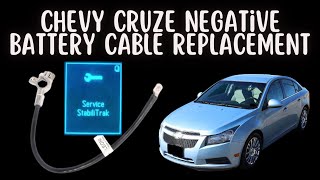
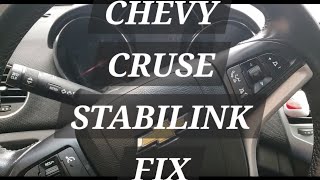
- Chevrolet Cruze (2011-2016) — Check for Special Coverage program 14311A/B, which addresses a faulty negative battery cable crimp causing numerous electrical issues, including P0570.
- Chrysler / Dodge / Jeep Grand Caravan, Town & Country, Wrangler (2008-2016) — A faulty clock spring is an extremely common failure point. It almost always triggers an airbag warning light alongside the P0570 code.
- Volkswagen Jetta, Golf (2005-2011) — Frequently cited for issues with the cruise control stalk (combination switch) or wiring within the steering column.
- Nissan Altima, Sentra, Frontier (2002-2015) — Code P0570 points to a failure of the switch itself or related wiring. Always check for model-specific Technical Service Bulletins (TSBs).
- Hyundai / Kia Sonata, Elantra, Optima (2006-2015) — Common causes include the cruise control switch, clock spring, or associated steering column wiring.
- BMW 3-Series, 5-Series (2006-2013) — P0570 triggers from a faulty switch, but diagnosis requires checking the steering column module (SZL) using manufacturer-specific software.
Manufacturer-Specific Notes
- Ford: Older Ford trucks have a redundant cruise control deactivation switch on the brake master cylinder prone to leaking brake fluid and failing, causing cruise control failure.
- General Motors: On the Chevy Cruze (2011-2015), a faulty negative battery cable causes bizarre electrical issues mimicking switch failure. Check Special Coverage #14311 before performing diagnostics.
- Subaru: A failing brake light switch is a primary culprit for cruise control problems. Always check this part first, as a faulty switch sends confusing signals triggering P0570.
- Chrysler/Dodge/Jeep: If you have a P0570 code accompanied by an airbag light, the clock spring is the cause. Chrysler issued an extended warranty (X56) on this part for many 2011-2016 models.
Real Owner Stories
2012 Dodge Grand Caravan at 115K miles
P0570 code appeared along with an airbag warning light. The horn and radio controls on the steering wheel also stopped working intermittently.
What they tried:
- Initially suspected a bad cruise control switch.
- Researched forums and found the clock spring was a common failure point for this model.
Outcome: Mechanic confirmed a faulty clock spring. Replaced the clock spring for a total cost of $450 ($200 parts, $250 labor). All steering wheel functions and cruise control were restored, and the airbag light cleared.
Lesson: If P0570 is accompanied by an airbag light or other steering wheel button failures, the clock spring is the culprit, not the cruise switch itself.
2014 Chevy Cruze at 85K miles
P0570 code appeared, along with random electrical issues like the radio display flickering and 'Service Stabilitrak' messages.
What they tried:
- Owner was about to diagnose the cruise control switch.
- A forum search revealed GM Special Coverage #14311 for a faulty negative battery cable causing widespread electrical problems.
Outcome: The owner replaced the negative battery cable assembly (part #22754271) themselves in 30 minutes. All electrical issues, including the P0570 code, resolved immediately.
Lesson: Always check for manufacturer TSBs or special coverage programs for known systemic issues before diagnosing individual components.
2008 Subaru Outback at 130K miles
Cruise control would not set, and the 'CRUISE' light on the dash flashed, triggering code P0570.
What they tried:
- Assumed the cruise control stalk switch was bad.
- A Subaru-specific forum suggested the brake light switch is a more common cause.
Outcome: Owner replaced the brake light switch, a $40 part located under the dash. The repair was simple and fixed the cruise control issue completely.
Lesson: Don't overlook related components. A faulty brake light switch disables cruise control as a safety measure and sometimes manifests as a P0570 code.
2005 Ford F-150 at 160K miles
Check engine light on with P0570, cruise control completely inoperative.
What they tried:
- Cleaned the steering wheel buttons with electrical contact cleaner, which did not solve the problem.
- Checked the fuse, which was intact.
Outcome: The mechanic diagnosed a failed cruise control switch inside the steering wheel. The switch was replaced for $160. The code cleared and did not return.
Lesson: While cleaning sticky buttons sometimes works, internal switch contacts simply wear out over time, requiring a full replacement.
How to Prevent This Code From Triggering
- Clean liquid spills on steering wheel controls immediately (As needed) — Prevents sugary or acidic liquids from seeping into the switch housing, which corrodes internal electrical contacts and causes short circuits.
- Use a sunshade when parked (Daily habit) — Reduces exposure to high heat and UV rays, which degrade plastic buttons and accelerate the aging of the clock spring's internal ribbon cable.
- Be gentle with steering wheel controls (Daily habit) — Avoids excessive force on buttons, reducing mechanical wear on switch contacts and the delicate ribbon cable inside the clock spring.
- Apply dielectric grease to accessible connectors (During other repairs) — Applying dielectric grease to electrical connectors seals out moisture and prevents corrosion, ensuring a reliable signal path.
Frequently Asked Questions
Can I fix P0570 myself?
Yes, replacing a blown fuse or cleaning a sticky switch is highly DIY-friendly. Replacing the switch assembly requires intermediate skills, as you must disconnect the battery to safely work around the steering wheel airbag.
Will my cruise control stop working if my ABS light is on?
Yes. The cruise control system depends on ABS wheel speed sensors for accurate speed data. If the ABS module detects a fault, it automatically disables cruise control as a safety precaution.
What are the most common misdiagnosis mistakes for P0570?
A common mistake is replacing expensive control modules before checking basic components. Technicians often overlook sticky buttons, blown fuses, or a faulty brake light switch. Ignoring accompanying ABS or Airbag codes also leads to misdiagnosis.
My horn and radio buttons also stopped working. Is that related?
Yes, almost certainly. When multiple steering wheel controls fail simultaneously, a broken clock spring is the culprit. The clock spring houses the coiled wiring connecting all steering wheel electronics to the vehicle.
Can a bad brake light switch cause a P0570 code?
Yes. A bad brake switch usually triggers P0571-P0573 codes, but erratic signals sometimes cause a P0570. On vehicles like Subaru, the brake switch is a primary suspect for any cruise control failure.
How do you test a cruise control switch?
Unplug the switch and probe the 'Accelerate' pins with a multimeter set to Ohms. The meter must read infinite resistance (O.L.) when unpressed and drop to near-zero when pressed. A reading that does not change confirms a dead switch.
Will clearing the code fix the problem?
No. Clearing the code only turns off the Check Engine Light temporarily. The computer will trigger the code again the next time you attempt to use the cruise control.
Is it expensive to diagnose the P0570 code?
Most repair shops charge a standard diagnostic fee ranging from $100 to $165. Shops typically credit this fee toward the final repair cost if you authorize them to perform the work.
Can aftermarket parts cause a P0570 code?
Yes. Installing aftermarket throttle controllers, remote starters, or custom wiring harnesses introduces electrical noise. This interference corrupts the cruise control signal and triggers the P0570 code.
Why did my cruise control stop working after I replaced my battery?
Disconnecting the battery causes temporary glitches in electronic modules. Perform a 20-minute drive cycle to allow the system to recalibrate. If the code persists, the battery change likely blew a fuse or exposed a poor ground connection.
Key Takeaways
- Code P0570 disables your cruise control because the 'accelerate' button signal is missing, but the vehicle remains 100% safe to drive.
- A sticky or worn steering wheel cruise control switch causes over 70% of P0570 codes and costs $110-$330 to replace at a shop.
- An illuminated airbag light or dead horn alongside P0570 guarantees a failed clock spring, requiring a $225-$700 professional repair.
- Scan for ABS or wheel speed sensor codes first; a single $100 faulty wheel speed sensor automatically disables cruise control and triggers P0570.
Helpful Videos
Shop the Parts Behind P0570
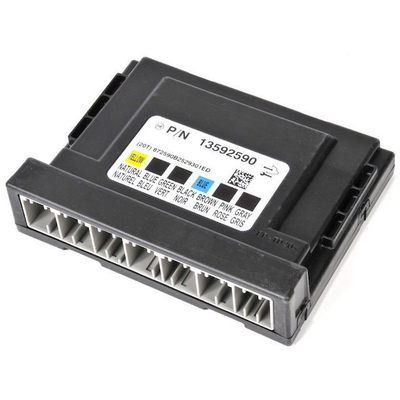
Below are the parts most often responsible for code P0570, ranked by how frequently each one is the actual culprit (per the diagnosis above). Tap any to see what we have for your vehicle.




The information in this article is provided for general reference and educational purposes only. Vehicle specifications, procedures, and part compatibility can vary by production date, trim level, and region. Always consult your vehicle's factory service manual and verify part numbers before purchasing or performing repairs. Safety-critical components such as airbags, seat belts, and braking systems should be installed by a qualified professional.
- 🧭 Diagnostic Flowchart
- 🎬 Helpful Videos
- 🛍️ Shop This Part
- What Does P0570 Mean?
- Can I Drive With P0570?
- Common Causes
- Symptoms
- Common Fixes & Costs
- DIY vs Professional
- Used vs. New Parts: Buying Guide
- What Happens If You Wait — Timeline
- Cost of Not Fixing It
- Diagnosis Steps
- When This Code Triggers (Freeze-Frame Conditions)
- Related Codes
- Climate & Environmental Factors
- How to Talk to a Mechanic About This Code
- Where to Take It: Dealer vs Independent vs Chain
- When to Walk Away From the Repair
- What Scan Tool You Need for This Code
- How to Clear the Code After You Fix It
- Will This Fail Emissions / State Inspection?
- Most Commonly Affected Vehicles
- Manufacturer-Specific Notes
- Real Owner Stories
- 2012 Dodge Grand Caravan at 115K miles
- 2014 Chevy Cruze at 85K miles
- 2008 Subaru Outback at 130K miles
- 2005 Ford F-150 at 160K miles
- How to Prevent This Code From Triggering
- Frequently Asked Questions
- Can I fix P0570 myself?
- Will my cruise control stop working if my ABS light is on?
- What are the most common misdiagnosis mistakes for P0570?
- My horn and radio buttons also stopped working. Is that related?
- Can a bad brake light switch cause a P0570 code?
- How do you test a cruise control switch?
- Will clearing the code fix the problem?
- Is it expensive to diagnose the P0570 code?
- Can aftermarket parts cause a P0570 code?
- Why did my cruise control stop working after I replaced my battery?
- Key Takeaways
- 🎟️ Get 5% Off