

OBD-II Code P0575: Cruise Control Input Circuit Malfunction
What P0575 means, why it triggers, and how to fix it
- A faulty cruise control switch causes over 50% of P0575 codes, typically failing from normal wear or spilled liquids.
- You can safely drive with a P0575 code, but the cruise control system remains disabled until the electrical fault is repaired.
- An accompanying airbag warning light points directly to a broken clock spring, a repair often covered by 15-year extended warranties on Hyundai and Jeep models.
- Inspect the vehicle for a blown $5 fuse or a shorted dual-filament brake light bulb before replacing expensive steering column components.
What Does P0575 Mean?
P0575 means the Powertrain Control Module (PCM) or Body Control Module (BCM) detected an electrical fault in the cruise control system. The computer receives an incorrect, nonsensical, or nonexistent signal from the cruise control buttons, disabling the system as a precaution.
Technical definition: The official SAE/OBD-II definition for P0575 is "Cruise Control Input Circuit Malfunction." The PCM or BCM detected an abnormal voltage or resistance reading from the cruise control switch circuit. If the self-test returns a value outside the manufacturer's specified range, the system sets code P0575.
Can I Drive With P0575?
Yes. Yes. This code typically only disables cruise control without affecting engine performance or safety. However, on certain Toyota or GM models, the underlying electrical fault triggers a 'limp mode' with reduced power or hard shifting. Do not drive extensively in limp mode to avoid transmission strain.
Common Causes
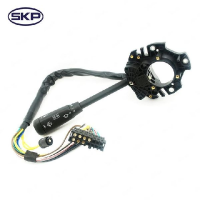
- Faulty Cruise Control Switch (Very Common) — The most frequent cause. Spilling drinks on the steering wheel buttons shorts the internal contacts. Switches also wear out from normal use, leading to unresponsive buttons.
- Defective Clock Spring (Common) — The clock spring is a coiled ribbon of wire inside the steering column maintaining electrical connections for the airbag, horn, and cruise control. If this ribbon breaks, the cruise control buttons fail, almost always accompanied by an illuminated airbag light.
- Faulty Brake Pedal Switch (Common) — The brake pedal switch turns off the cruise control during braking. A faulty or misadjusted switch sends a constant 'cancel' signal or no signal at all, preventing engagement and triggering P0575.
- Damaged Wiring or Connectors (Common) — Wires in the steering column or leading to the control module fray, pinch, or corrode. A poor connection at a wiring harness, especially at the transmission connector on some GM vehicles, interrupts the signal.
- Incorrect or Internally Shorted Brake Light Bulb (Less Common) — A dual-filament brake light bulb fails when the filaments touch, causing a short. This sends incorrect voltage signals back through shared circuits, which the computer misinterprets as a cruise control fault (common on Toyotas).
- Blown Fuse (Less Common) — A blown fuse disables the cruise control circuit. A fuse that blows repeatedly indicates a significant short circuit requiring repair.
- Aftermarket Accessories Interference (Rare) — Improperly installed aftermarket electronics, such as remote starters, tap into vehicle wiring and create electrical noise or voltage drops on shared circuits.
- Software or Calibration Issue (Rare) — Calibration data within the cruise control module corrupts after a software update or battery replacement. The module misinterprets a normal signal as a fault, requiring a reset or re-flash.
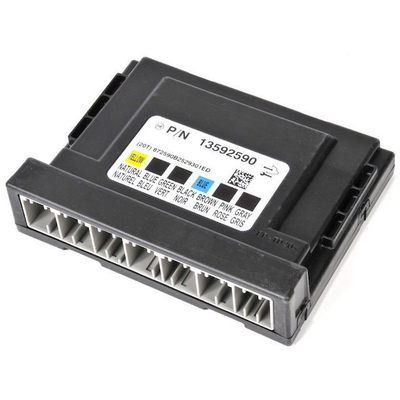
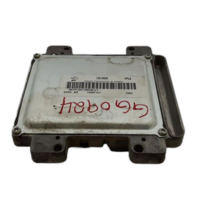
- Control Module Fault (PCM/BCM) (Rare) — The PCM or BCM fails due to internal circuit degradation from heat, moisture, or age. Suspect this only after ruling out all other possibilities.
Symptoms
- Check Engine Light is on — The computer illuminates the Check Engine Light after detecting the fault, sometimes requiring a few drive cycles.
- Cruise control will not turn on or set — Pressing the 'On' or 'Set' button does nothing.
- Cruise control works intermittently or disengages on its own — The system works briefly then cuts out when hitting a bump or turning the steering wheel, indicating a loose connection or failing clock spring.
- Cruise control indicator light flashes or does not light up — The dashboard cruise control light flashes, stays on constantly, or fails to illuminate.
- Other warning lights are on (ABS, Airbag, Traction Control) — A clock spring fault triggers the airbag light. A broader network problem triggers ABS or traction control lights.
Diagnostic Flowchart
Tap your situation to follow the diagnostic path that matches what you're seeing on this code.
Common Fixes & Costs
- Replace Cruise Control Switch
— Parts: $40-$150, Labor: $80-$150, ~1.2 hr book time
(Intermediate)
Ford F-150 (2011-2014): OEM BL3Z-9C888-BA (Alt: Dorman 901-399, Carquest CCC1629) - Replace Clock Spring
— Parts: $70-$350, Labor: $125-$250, ~2 hr book time
(Professional)
Ram 1500 (2013-2018): OEM Mopar 68528301AA (Alt: Dorman 525-130)
Hyundai Elantra (2011-2014): OEM 93490-3X040 (Alt: Standard Motor Products CBS-2213) - Replace Brake Pedal Switch — Parts: $15-$50, Labor: $50-$100, ~0.7 hr book time (DIY)
- Replace Blown Fuse or Brake Light Bulb — Parts: $2-$10, Labor: $0-$25, ~0.2 hr book time (DIY)
- Repair Wiring or Connectors — Parts: $5-$50, Labor: $100-$250, ~1.5 hr book time (Intermediate)
- Replace Control Module (BCM/PCM) — Parts: $400-$900, Labor: $150-$250, ~2 hr book time (Professional)
DIY vs Professional
- Replace Blown Fuse or Brake Light Bulb 🟢 Beginner
Tools: Fuse puller, owner's manual. - Replace Brake Pedal Switch 🟢 Beginner
Tools: Basic hand tools, flashlight. - Replace Cruise Control Switch 🟢 Beginner
Tools: Socket set, trim removal tools, Torx drivers. - Repair Wiring or Connectors 🟢 Beginner
Tools: Multimeter, wire strippers, soldering iron, heat shrink tubing, dielectric grease. - Replace Clock Spring 🟢 Beginner
Tools: Socket set, torque wrench, steering wheel puller, trim removal tools. - Replace Control Module (BCM/PCM) 🟢 Beginner
Tools: Advanced scan tools for programming.
Used vs. New Parts: Buying Guide
When a used part is worth it: For a simple cruise control switch, a used OEM part from a low-mileage vehicle is cost-effective. For a clock spring, buying new is mandatory due to safety risks.
Donor-vehicle mileage cap: roughly under 80000 miles for the part to have meaningful remaining life.
Donor quality checklist:
- Verify the part number matches exactly.
- Avoid donors with flood, fire, or major electrical damage.
- Inspect used switches for physical damage or sticky residue.
Decision logic:
- If The faulty part is the clock spring → Buy new from OEM or a reputable aftermarket brand. The safety risk of a used part failing is too high.
- If The faulty part is the cruise control switch and the vehicle is over 10 years old → A used OEM switch is an acceptable, budget-friendly choice.
- If The part is a control module (BCM/PCM) → Favor a new or professionally remanufactured unit with a warranty.
Warranty tradeoff: Used parts carry a 30-90 day warranty. New aftermarket parts offer 1-year to limited lifetime warranties. New OEM parts carry a 1-year manufacturer warranty.
Worst-case if a used part fails: $200-$400 if a used clock spring fails shortly after installation, requiring a second labor charge and a new part.
What Happens If You Wait — Timeline
- 0-1 month: Code P0575 sets. The Check Engine Light illuminates, and cruise control is inoperative. (MPG impact: 0%% · Added cost: $0. This is purely an inconvenience.)
- 1-6 months (if caused by brake switch): Brake lights become intermittent, fail completely, or stick on. A stuck-on light drains the battery overnight. (MPG impact: 0%% · Added cost: $150-$300 (potential new battery), plus high risk of an accident.)
- 1-6 months (if caused by clock spring): The airbag warning light illuminates, signifying the driver's side airbag is disabled and will not deploy in a crash. (MPG impact: 0%% · Added cost: $0, but the safety risk is severe.)
- 6+ months (if caused by network wiring): Intermittent shorting causes hard shifting, stalling, or a no-start condition, potentially leaving you stranded. (MPG impact: 0-5%% · Added cost: $600+ (potential for incorrect module replacement) plus towing costs.)
Cost of Not Fixing It
- 0-1 month: Loss of cruise control functionality. There is no immediate risk of further damage to the engine or transmission. (Added cost: Negligible)
- 1-6 months: If caused by a faulty clock spring, the driver's airbag fails to deploy in a collision. If caused by a bad brake switch, brake lights fail or stick on. (Added cost: $0 (but high safety risk))
- 6+ months: Continued neglect of a bad clock spring is a severe safety hazard. A persistently faulty brake switch leads to being rear-ended or a dead battery. (Added cost: Potential cost of an accident or battery replacement.)
Diagnosis Steps
- Scan for All Trouble Codes
Use an OBD-II scanner to confirm P0575. Check for codes related to the brake switch (P0504), network communication (U-codes), or BCM-specific codes (B-codes) to prevent misdiagnosis.
Tools: OBD-II Scanner (Beginner) - Monitor Live Data with a Scan Tool
Navigate to the BCM or PCM data stream and observe the cruise control switch status. As you press each button, the scanner must show the status change. No registered press points to a faulty switch, clock spring, or wiring.
Tools: Advanced OBD-II Scanner with Live Data (Intermediate) - Inspect Fuses and Brake Lights
Visually inspect the cruise control and BCM fuses. Have a helper confirm the brake lights work correctly when the pedal is pressed. A blown fuse or malfunctioning brake light is a simple, overlooked cause.
Tools: Owner's Manual, Fuse Puller, Helper (Beginner) - Visually Inspect Switches and Wiring
Check the cruise control buttons for sticky residue or damage. Inspect visible wiring harnesses around the steering column and under the dash for chafing, pinching, or corrosion.
Tools: Flashlight (Beginner) - Test the Cruise Control Switch with a Multimeter
Disconnect the switch connector and use a multimeter set to Ohms. Press each button; the resistance must change to a specific value per the repair manual. Infinite reading indicates an open circuit; near-zero indicates a short.
Tools: Multimeter, Basic Hand Tools, Repair Manual (Intermediate) - Test the Brake Pedal Switch
Using a multimeter and wiring diagram, verify the switch's normally open and normally closed circuits switch states when the pedal is depressed. Replace a stuck switch or one with high internal resistance.
Tools: Multimeter, Repair Manual (Intermediate) - Inspect Critical Connectors
Disconnect major harness connectors, inspect for corrosion or bent pins, and apply dielectric grease. Pay close attention to the main transmission harness connector (X1) on GM vehicles.
Tools: Flashlight, Trim Removal Tools, Dielectric Grease (Intermediate) - Advanced: Pinpoint Resistance Testing
Measure resistance at the switch connector pins. Any reading outside the manufacturer's specification (typically +/- 10%) confirms a switch fault.
Tools: Multimeter, Wiring Diagram (Advanced) - Advanced: Voltage Drop Testing
Perform a voltage drop test to find high resistance. A reading above 0.2 volts indicates excessive resistance in that harness section or connector.
Tools: Multimeter, Back-Probe Pins, Wiring Diagram (Advanced) - Use an Oscilloscope for Intermittent Issues
Connect an oscilloscope to the switch signal wire. Wiggle the harness and turn the steering wheel. Dropouts or glitches in the waveform indicate a wiring, clock spring, or switch problem.
Tools: Oscilloscope, Back-Probe Pins, Repair Manual (Professional)
When This Code Triggers (Freeze-Frame Conditions)
- Engine Coolant Temp: 180-200°F (82-93°C) (The fault logs when the engine is fully warmed up to normal operating temperature.)
- RPM: 1500-2500 RPM (The code sets during steady-state cruising when the driver attempts to engage the cruise control.)
- Engine Load: 25-60% (Reflects a light to moderate engine load consistent with maintaining speed on a flat road.)
- Vehicle Speed: 35-65 mph (56-105 kph) (The fault occurs at speeds where cruise control is operational, typically above 30 mph.)
Related Codes
- P0564 — Indicates 'Cruise Control Multi-Function Input A Circuit'. P0575 is a general circuit fault, while P0564 points to a specific button or function within the switch assembly.
- P0579 / P0580 / P0581 — Provide specific electrical details. P0579 means the signal is erratic. P0580 indicates a short to ground. P0581 indicates a short to power.
- P0504 — Indicates 'Brake Switch A/B Correlation'. Seeing this with P0575 strongly indicates the problem lies within the brake pedal switch or its circuit.
- U-Series Codes (e.g., U0100, U0140) — Communication codes alongside P0575 point to a broader CAN bus network issue, such as the GM transmission connector failure, rather than a simple switch.
Climate & Environmental Factors
- High Humidity and Road Salt: Moisture and salt corrode electrical components. They seep into connectors and switches, causing oxidation that increases resistance or creates short circuits, triggering P0575.
- Dusty Environments: Fine dust penetrates unsealed components, particularly the clock spring. Multiple Jeep recalls explicitly name dust intrusion as the cause of clock spring failure.
How to Talk to a Mechanic About This Code
Say this: "I have a P0575 code and my cruise control is not working. I'd like to schedule a diagnostic. Based on my vehicle, the most likely causes are the cruise control switch, the clock spring, or the brake pedal switch. I'd like you to start by checking the live data from the steering wheel buttons to see if they are sending a signal."
This directs the technician to the most efficient diagnostic starting point (live data) and prevents them from starting with a broad, expensive exploratory diagnosis.
Avoid saying:
- 'My cruise control is broken, fix it.'
- 'My check engine light is on, can you just look at it?'
- 'I think it's the computer, just replace it.'
Questions to ask before authorizing the repair:
- Did you confirm the switch is the problem by seeing no signal on the scan tool's live data stream?
- If you suspect the clock spring, is my airbag light also on? Have you checked for any recalls or warranty extensions?
- Can you show me the faulty part and explain why it failed?
- What is the warranty on the parts and labor for this specific repair?
Where to Take It: Dealer vs Independent vs Chain
- Dealer:
Recommended if an airbag light is on or if your vehicle has a known TSB. Their expertise with safety systems is a major advantage.
Best for: Vehicles under warranty, Known manufacturer-specific issues covered by a TSB, Clock spring replacements involving the airbag system and recalls.
Downsides: Higher labor rates, Quicker to replace an entire assembly rather than perform a simpler wiring repair. (Typical cost: +40% vs. baseline) - Independent Shop:
Best fit for most common P0575 scenarios, such as replacing a faulty switch or tracing a bad wire. Vet the shop's reviews for electrical work.
Best for: Out-of-warranty vehicles with common causes like a bad cruise control switch., Straightforward electrical diagnosis and wiring repairs.
Downsides: Diagnostic capabilities vary. Ensure they have modern scan tools., Less aware of specific TSBs or warranty extensions. (Typical cost: +0% vs. baseline) - Chain Shop:
Use with caution. Acceptable for a simple fuse check, but for deeper electrical diagnosis, an independent shop or dealer is safer.
Best for: Very simple, clear-cut fixes like a blown fuse.
Downsides: Lack advanced diagnostic tools to properly trace circuit faults., Technicians may not be comfortable working with airbag-related components., Higher potential for upselling unnecessary services. (Typical cost: -10% vs. baseline)
When to Walk Away From the Repair
If the estimated repair cost for the P0575 fault exceeds 40-50% of your car's private-party value, and the car has other pending issues, consider selling it as-is.
- Car worth $3000, fix is $1200: Walk away. The repair cost is a significant percentage of the car's value.
- Car worth $15000, fix is $500: Fix it. This is a relatively minor cost compared to the vehicle's value.
- Car worth $5000, fix is $800: Borderline, but likely worth fixing if the car is a reliable daily driver.
What Scan Tool You Need for This Code
Minimum: A scanner that reads live data from the Body Control Module (BCM) or Powertrain Control Module (PCM).
A basic $20 code reader only shows the P0575 code. It cannot show live input from the cruise control buttons, which is mandatory for diagnosis.
Budget: BlueDriver Pro Scan Tool (~$100) — Connects to your smartphone to display live data streams, allowing you to press each cruise control button and see if the computer registers the command.
Mid-range: Innova 5610 (~$330) — Provides detailed live data, accesses manufacturer-specific codes, and offers bidirectional controls to differentiate between a switch, wiring, or module problem.
Professional: Autel MaxiCOM MK808S (~$500) — Offers full bidirectional control to command modules and test circuits directly, diagnosing complex network issues or module failures.
Rent vs buy: Auto parts stores scan codes for free, but their scanners lack live data. Buying a tool like the BlueDriver is a worthwhile investment for accurate diagnosis.
How to Clear the Code After You Fix It
- Use an OBD-II scan tool to erase the diagnostic trouble codes.
- If the battery was disconnected, reconnect it.
- Perform a complete drive cycle to allow the vehicle's readiness monitors to run and confirm the fix.
Drive cycle (~30 minutes): A general drive cycle includes a cold start, 2-3 minutes of idling, 10-15 minutes of steady highway driving (around 55 mph), followed by 10-15 minutes of stop-and-go city driving.
Readiness monitors affected: Catalyst Monitor, O2 Sensor Monitor, EVAP System Monitor
Before emissions retest: drive at least 100 miles to fully set monitors.
Watch out for:
- Clearing the code with a scanner does not fix the underlying problem; the code returns if the fault is present.
- After clearing the code, readiness monitors reset to 'Not Ready'. You must complete a drive cycle before passing an emissions test.
Will This Fail Emissions / State Inspection?
Yes — this code typically fails an OBD-II emissions inspection.
- California: An active Check Engine Light from code P0575 results in an automatic smog check failure. All readiness monitors must be 'Ready'.
- New York: An illuminated Check Engine Light for any code, including P0575, causes the vehicle to fail the emissions portion of the NYS DMV inspection.
- Texas: In the 17 Texas counties requiring emissions testing, an active P0575 code automatically fails the inspection.
Most Commonly Affected Vehicles
- Cadillac SRX, STS (2007-2009) — GM Technical Service Bulletin (TSB) #PIC4740F points to unseated or corroded pins in the main transmission harness connector (X1) causing P0575 along with hard shifting and communication codes.
- Chevrolet Silverado, Express (2010-2015) — The Body Control Module (BCM) interprets switch signals and sends a data message to the Engine Control Module (ECM). A fault in the BCM or its data message triggers P0575.
- Ford F-150 (2009-2014) — Cruise control switches are a frequent failure point due to wear or liquid contamination. Access requires removing the airbag module.
- Hyundai Elantra, Sonata (2011-2016) — Clock spring failure frequently causes P0575, often setting airbag codes B1346 and B1481 simultaneously. Hyundai issued an extended warranty for this part to 15 years/unlimited miles.
- Nissan Qashqai, Altima (2010-2017) — The ECM reads voltage variations from the switch. P0575 indicates the voltage received is outside expected levels, pointing to a faulty switch or harness short.
- Ram 1500 (2013-2018) — Prone to clock spring failure. OEM replacement costs exceed $600, while aftermarket parts start around $150.
- Toyota Corolla, Camry, RAV4 (2009-2018) — P0575 triggers as a 'ghost code' caused by an internally shorted dual-filament brake light bulb. Inspect and replace brake light bulbs before complex diagnosis.
- Jeep Wrangler, Compass (2007-2017) — Clock spring failure leads to P0575, an airbag light, and loss of horn function. Numerous recalls (NHTSA 16V-288, 16V-290) address dust causing the failure.
Manufacturer-Specific Notes
- General Motors (Cadillac, Chevrolet, GMC): On 2007-2009 models, P0575 is frequently caused by a bad connection at the main transmission wiring harness connector (TSB #PIC4740F), causing multiple codes and hard shifting.
- Toyota: A P0575 code triggers as a 'ghost code' caused by an internally shorted brake light bulb. The shorted filament sends stray voltage through shared circuits, confusing the ECM.
- Chrysler/Dodge/Jeep/Ram: Clock spring failure is extremely common. Multiple safety recalls exist for Jeep Wranglers (NHTSA 16V-290, 16V-288) for clock springs failing due to dust intrusion.
- Hyundai: Clock spring failure is prevalent. Hyundai issued a warranty extension (Campaign TXXJ, TXXA) to 15 years and unlimited mileage for the clock spring on models like the Elantra and Sonata.
- Ford: On 1992-2003 trucks, a massive recall (NHTSA 09S09) addressed the Speed Control Deactivation Switch leaking brake fluid onto wiring harnesses, potentially leading to a P0575 code.
Real Owner Stories
2008 Cadillac SRX with multiple warning lights
Owner experienced P0575, ABS and traction control lights, hard shifting, and door locks cycling randomly.
Outcome: The owner inspected the main transmission wiring harness connector (X1) and found unseated pins. After cleaning the connector and securing the pins, all codes cleared. Total cost was $0.
Lesson: On GM vehicles, a cluster of electrical codes with P0575 points to a network communication issue, not a faulty switch. Always check TSBs.
2012 Hyundai Elantra at 190,000 km
The airbag warning light illuminated, cruise control stopped working, and code P0575 triggered.
Outcome: The dealership confirmed the vehicle was covered under an extended warranty (Campaign TXXA/TXXJ). The part was replaced for free.
Lesson: If P0575 appears with an airbag light on a Hyundai or Jeep, check for recalls or warranty extensions immediately.
2010 Toyota RAV4 with intermittent cruise control
Cruise control would not engage, and the check engine light for P0575 was on.
Outcome: A forum post suggested checking the brake lights. The owner discovered a burnt-out dual-filament bulb. Replacing the $5 bulb restored cruise control.
Lesson: On Toyotas, an internally shorted brake light bulb creates stray voltage misinterpreted as a cruise control fault. Check simple fixes first.
How to Prevent This Code From Triggering
- Keep drinks away from the steering wheel (Daily habit) — Spilled liquids short the delicate internal circuits of the cruise control switch, causing the fault.
- Apply dielectric grease to key connectors (During any related repair) — Applying non-conductive dielectric grease seals out moisture, preventing corrosion that leads to high resistance and circuit faults.
- Use heat-shrink connectors for wiring repairs (When repairing any wiring) — Using butt connectors with adhesive-lined heat shrink creates a waterproof seal, preventing moisture intrusion at the splice point.
- Address other warning lights promptly (As they appear) — P0575 is often a secondary code. Ignoring an initial ABS fault causes the cruise system to disable as a safety precaution.
Frequently Asked Questions
What is the most common fix for P0575?
Replacing the cruise control switch assembly on the steering wheel is the most common fix. These switches frequently fail due to normal wear or damage from spilled liquids.
Can a bad battery cause a P0575 code?
A low battery does not directly cause P0575. However, replacing a battery can cause a control module to lose its calibration, triggering the code. A system reset or re-learn procedure resolves this.
How much does it cost to diagnose a P0575 code?
Most repair shops charge a standard diagnostic fee ranging from $100 to $165. This covers the technician's time to scan the vehicle, analyze live data, and pinpoint the exact electrical fault.
My car suddenly lost power and the cruise control stopped working. Is this related to P0575?
Yes. On certain vehicles, like some Toyotas, the electrical fault causing P0575 also sends erroneous signals to the main computer. This forces the vehicle into a protective 'limp mode' with reduced engine power.
Will clearing the code fix the problem?
No. Clearing the code temporarily turns off the check engine light, but it returns as soon as the computer detects the electrical fault again. You must repair the underlying hardware or wiring issue.
Why did my airbag light come on with the P0575 code?
An illuminated airbag light alongside P0575 almost certainly indicates a failed clock spring. The clock spring contains the coiled wiring for the cruise control, horn, and driver's side airbag. When it breaks, all these systems fail simultaneously.
Can I fix P0575 myself?
Yes, replacing a blown fuse, brake light bulb, or brake pedal switch is an easy DIY repair. Replacing the cruise control switch requires intermediate skills. Leave clock spring replacement to professionals, as mishandling the airbag poses a severe safety risk.
Key Takeaways
- A faulty cruise control switch causes over 50% of P0575 codes, typically failing from normal wear or spilled liquids.
- You can safely drive with a P0575 code, but the cruise control system remains disabled until the electrical fault is repaired.
- An accompanying airbag warning light points directly to a broken clock spring, a repair often covered by 15-year extended warranties on Hyundai and Jeep models.
- Inspect the vehicle for a blown $5 fuse or a shorted dual-filament brake light bulb before replacing expensive steering column components.
Shop the Parts Behind P0575
Below are the parts most often responsible for code P0575, ranked by how frequently each one is the actual culprit (per the diagnosis above). Tap any to see what we have for your vehicle.






The information in this article is provided for general reference and educational purposes only. Vehicle specifications, procedures, and part compatibility can vary by production date, trim level, and region. Always consult your vehicle's factory service manual and verify part numbers before purchasing or performing repairs. Safety-critical components such as airbags, seat belts, and braking systems should be installed by a qualified professional.
- 🧭 Diagnostic Flowchart
- 🛍️ Shop This Part
- What Does P0575 Mean?
- Can I Drive With P0575?
- Common Causes
- Symptoms
- Common Fixes & Costs
- DIY vs Professional
- Used vs. New Parts: Buying Guide
- What Happens If You Wait — Timeline
- Cost of Not Fixing It
- Diagnosis Steps
- When This Code Triggers (Freeze-Frame Conditions)
- Related Codes
- Climate & Environmental Factors
- How to Talk to a Mechanic About This Code
- Where to Take It: Dealer vs Independent vs Chain
- When to Walk Away From the Repair
- What Scan Tool You Need for This Code
- How to Clear the Code After You Fix It
- Will This Fail Emissions / State Inspection?
- Most Commonly Affected Vehicles
- Manufacturer-Specific Notes
- Real Owner Stories
- 2008 Cadillac SRX with multiple warning lights
- 2012 Hyundai Elantra at 190,000 km
- 2010 Toyota RAV4 with intermittent cruise control
- How to Prevent This Code From Triggering
- Frequently Asked Questions
- What is the most common fix for P0575?
- Can a bad battery cause a P0575 code?
- How much does it cost to diagnose a P0575 code?
- My car suddenly lost power and the cruise control stopped working. Is this related to P0575?
- Will clearing the code fix the problem?
- Why did my airbag light come on with the P0575 code?
- Can I fix P0575 myself?
- Key Takeaways
- 🎟️ Get 5% Off