

OBD-II Code P0579: Cruise Control Multi-Function Input 'A' Circuit Range/Performance
The Ultimate 2026 Guide: What P0579 means, why it triggers, and how to fix it for good.
- P0579 indicates a disabled cruise control system due to an out-of-range electrical signal from the steering wheel buttons.
- A simultaneous airbag warning light guarantees a broken clockspring, creating a critical safety hazard that prevents airbag deployment.
- Cleaning sticky steering wheel buttons with 91% isopropyl alcohol resolves the code in many cases for under $10.
- Professional clockspring replacement costs between $250 and $750, but 2011-2016 Jeep Wranglers often qualify for a free repair under the X68 extended warranty.
What Does P0579 Mean?
P0579 means the Powertrain Control Module (PCM) detects an illogical or out-of-range electrical signal from the cruise control buttons. The system sends specific voltage or resistance values for each button press (Set, Resume, Cancel). When the PCM receives an unexpected value—or no signal at all—it flags the fault, illuminates the Check Engine Light, and disables cruise control.
Technical definition: The SAE/OBD-II definition is "Cruise Control Multi-Function Input 'A' Circuit Range/Performance". This indicates the voltage or resistance from the primary cruise control switch circuit falls outside the manufacturer's operational range (typically 0 to 5 volts).
Can I Drive With P0579?
Yes, but not recommended if airbag light is on Yes, but the cruise control is disabled. If the airbag warning light is also illuminated, the clockspring has failed, meaning the driver's side airbag will NOT deploy in an accident. Stop driving and seek immediate professional repair to restore this critical safety system.
Common Causes
- Switch Contamination (Dirt/Spills) (Very Common) — Sticky residue from spilled drinks prevents buttons from moving freely or creates a conductive path that alters circuit resistance, triggering an out-of-range signal.
- Faulty Cruise Control Switch (Very Common) — Internal button contacts wear out from repeated use or internal resistors fail, sending incorrect voltage signals to the PCM.
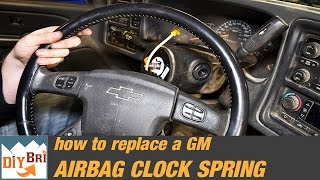
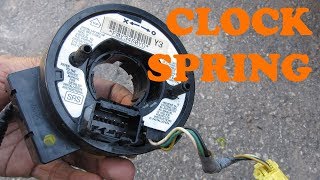
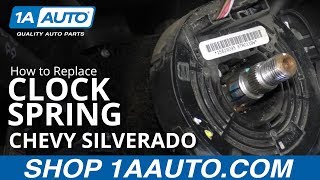
- Faulty Clockspring (Spiral Cable) (Very Common) — The coiled ribbon cable behind the steering wheel fatigues and breaks, severing the electrical connection. 🎬 Watch: A step-by-step guide to replacing a faulty clockspring. This notorious failure point on Jeep, Dodge, and Hyundai models also disables the horn and airbag.
- Wiring, Connector, or Ground Issues (Common) — Wires chafe within the steering column, or connectors corrode. A loose ground connection adds unwanted resistance, altering the signal voltage.
- Blown Fuse (Less Common) — A blown cruise control circuit fuse disables the system instantly. This usually indicates a short circuit requiring further diagnosis.
- Faulty Control Module or Software (PCM/BCM) (Rare) — The analog-to-digital converter within the control module fails or software corrupts, causing it to misinterpret valid signals. This requires a software update or module replacement.
Symptoms
- Cruise control does not work at all — The system cannot be turned on, will not set a speed, or is completely unresponsive.
- Check Engine Light is on — The PCM stores the P0579 fault code and illuminates the Malfunction Indicator Lamp (MIL).
- Airbag warning light is on — Indicates a failed clockspring. The airbag and cruise control share the same wiring harness through the steering column. This is a critical safety warning.
- Horn or steering wheel audio buttons fail — A broken clockspring severs the connection for all steering wheel functions simultaneously. 🎬 See how to safely remove the airbag and clockspring.
- Cruise control turns off unexpectedly — The system engages momentarily but disengages when turning the steering wheel, confirming a failing clockspring or chafed wire.
Diagnostic Flowchart
Tap your situation to follow the diagnostic path that matches what you're seeing on this code.
Common Fixes & Costs
- Clean Cruise Control Switch — Parts: $5-$15, Labor: $0, ~0.5 hr book time (DIY)
- Replace Cruise Control Switch — Parts: $30-$150, Labor: $100-$200, ~1.2 hr book time (Intermediate)
- Replace Clockspring — Parts: $100-$350, Labor: $150-$400, ~1.8 hr book time (Professional)
- Repair Damaged Wiring or Connectors — Parts: $5-$25, Labor: $150-$300, ~2.0 hr book time (Intermediate)
- Replace Blown Fuse — Parts: $1-$5, Labor: $0, ~0.1 hr book time (DIY)
DIY vs Professional
- Replace Blown Fuse 🟢 Beginner
Tools: Fuse puller, owner's manual. - Clean Cruise Control Switch 🟢 Beginner
Tools: Electronics cleaner, 91% isopropyl alcohol, cotton swabs. - Replace Cruise Control Switch 🟢 Beginner
Tools: Socket set, screwdrivers, trim removal tools. - Replace Clockspring 🟢 Beginner
Tools: Socket set, torque wrench, steering wheel puller, trim removal tools.
Used vs. New Parts: Buying Guide
When a used part is worth it: A used cruise control switch is cost-effective for older, high-mileage vehicles where budget is the primary concern.
Donor-vehicle mileage cap: roughly under 100000 miles for the part to have meaningful remaining life.
Donor quality checklist:
- Verify exact part number match.
- Inspect for physical damage, sticky buttons, or corrosion.
- NEVER buy a used clockspring. It is a wear item and critical safety component.
Decision logic:
- If The part is the clockspring → Always buy new from an OEM or reputable aftermarket source. The risk of airbag failure is too high.
- If The part is the cruise control switch on a newer vehicle → Buy a new OEM or high-quality aftermarket part for longevity and warranty.
- If The part is the cruise control switch on an older vehicle on a tight budget → A tested, used part is acceptable but carries no warranty.
Warranty tradeoff: Used parts have 30-90 day warranties. New aftermarket parts offer 1-year to lifetime warranties. OEM parts carry 12-month/12,000-mile warranties.
Worst-case if a used part fails: $250-$750 if a used clockspring fails, requiring repeat labor and a new part.
What Happens If You Wait — Timeline
- 0-2 months: Intermittent failure. Cruise control disengages randomly, especially when turning. Check Engine Light flickers. (MPG impact: 0%% · Added cost: $0 (Inconvenience))
- 1-4 months: Consistent failure. Cruise control is completely inoperative. Check Engine Light stays illuminated. (MPG impact: 0%% · Added cost: $0 (Loss of feature))
- Can occur at any time: Critical safety failure. Airbag warning light illuminates, indicating complete clockspring failure. Airbag WILL NOT deploy. (MPG impact: 0%% · Added cost: Life-threatening safety risk. Requires $250-$750 clockspring replacement.)
- Next state inspection: Failed state inspection. Illuminated Check Engine Light causes automatic failure, preventing registration renewal. (MPG impact: 0%% · Added cost: $50-$300 in failed test fees and fines.)
Cost of Not Fixing It
- Immediate: Inconvenience due to non-functional cruise control, leading to driver fatigue on long trips. (Added cost: $0)
- Ongoing: CRITICAL SAFETY RISK: If accompanied by an airbag light, the driver's airbag WILL NOT deploy in a crash. (Added cost: Potentially life-threatening)
- Long-term: An active Check Engine Light causes automatic failure of state emissions inspections, preventing registration renewal. (Added cost: $50-$300 in failed test fees and fines.)
Diagnosis Steps
- Scan Codes & Review Live Data
Use an advanced OBD-II scanner to confirm P0579 and check for related codes (e.g., P0581, P0571, airbag codes). Access the live data stream for the PCM/BCM. Monitor the cruise control switch PID as you press each button. If a button doesn't register or shows an erratic value, the fault is in the switch or immediate wiring.
Tools: Advanced OBD-II Scanner (Intermediate) - Inspect Fuses & Clean Switches
Check all fuses related to the cruise control and body control systems. Visually inspect the cruise control buttons for sticky residue. Clean them thoroughly with electronics-safe cleaner and compressed air.
Tools: Owner's Manual, Fuse Puller, Electronics Cleaner, Cotton Swabs (Beginner) - Check for Technical Service Bulletins (TSBs)
Search for TSBs related to P0579 for your specific vehicle. Manufacturers release bulletins for known issues, such as Jeep's extended warranty (X68) for clockspring failures on Wranglers.
Tools: Online TSB Database, Owner's Manual (Beginner) - Test Switch Resistance
Disconnect the switch connector at the steering column base. Using a multimeter set to Ohms (Ω), measure resistance across the signal and ground pins while pressing each button. Compare readings to the service manual chart. Infinite resistance (OL) or out-of-spec values confirm a failed switch.
Tools: Digital Multimeter, Vehicle Service Manual, Basic Hand Tools (Advanced) - Test Clockspring Continuity
Disconnect both ends of the clockspring. Use a multimeter set to Ohms (Ω) to check continuity through each wire while slowly turning the steering wheel lock-to-lock. A reading of OL (Open Loop) indicates a broken internal wire.
Tools: Digital Multimeter, Vehicle Service Manual, Socket Set, Trim Removal Tools (Professional) - Perform Voltage Drop Test on Ground Circuit
Set your multimeter to DC Volts. Connect the black lead to the battery negative. With the key on, probe the ground wire at the cruise control switch connector with the red lead. A reading above 100mV (0.1V) indicates excessive ground resistance requiring repair.
Tools: Digital Multimeter, Wiring Diagram (Advanced) - Check Module Power and Signal
Identify the power, ground, and signal input pins at the PCM or BCM connector. Verify the module receives battery voltage (~12.6V) and solid ground (<0.1V). Check the signal wire voltage at the module while pressing buttons. A clean signal here indicates a rare internal module fault.
Tools: Digital Multimeter, Wiring Diagram (Advanced) - Analyze Signal with Oscilloscope
Back-probe the signal wire at the control module. Press the cruise buttons to observe the voltage steps. A noisy, erratic signal or 'in-between' voltage levels confirms switch, clockspring, or wiring integrity issues.
Tools: Automotive Oscilloscope, Wiring Diagram (Professional)
When This Code Triggers (Freeze-Frame Conditions)
- Vehicle Speed: 30-70 mph (Logged when the driver attempts to engage cruise control at highway speeds.)
- Engine RPM: 1500-2500 RPM (Reflects steady-state cruising conditions.)
- Engine Load: 20-50% (Indicates the engine is maintaining speed, not under heavy acceleration.)
- Throttle Position: 15-40% (Shows partial throttle opening expected during steady cruising.)
Related Codes
- P0581 — Indicates 'Circuit High'. Points directly to a short to power or an open in the ground side of the circuit.
- P0571 — Indicates a 'Brake Switch Malfunction'. A faulty brake switch disables cruise control. Diagnose P0571 first if present.
- P0591 — Identical to P0579 but for the secondary 'B' circuit. Seeing both strongly suggests a shared component failure like the clockspring.
- U1109 — Indicates lost communication with steering wheel controls. Suggests a broken clockspring or BCM fault preventing signal transmission.
Climate & Environmental Factors
- High Dust/Dirt Environments: Dust penetrates the clockspring assembly on off-road vehicles, causing abrasion and failure of the internal ribbon cable.
- High Humidity and Road Salt: Moisture accelerates corrosion on wiring connectors and ground points, adding resistance that triggers performance codes.
How to Talk to a Mechanic About This Code
Say this: "I have a P0579 code and the cruise control is not working. I'd like to schedule a diagnostic appointment to determine if the fault is the switch, the clockspring, or a wiring issue. Please note if the airbag light is also on, as that strongly suggests a clockspring failure."
This language directs the technician toward a logical diagnostic path rather than open-ended exploration, and flags the critical safety issue if the airbag light is on, preventing unnecessary part replacements.
Avoid saying:
- 'Just fix whatever's wrong'
- 'My check engine light is on, can you look at it?'
- 'Whatever you recommend'
Questions to ask before authorizing the repair:
- Can you show me the live data from the scanner indicating the switch is failing?
- If recommending a clockspring, did you perform a continuity test to confirm a break?
- If the airbag light is on, will this repair resolve the airbag fault code?
- What is the warranty on the recommended part and labor?
Where to Take It: Dealer vs Independent vs Chain
- Dealer:
Recommended ONLY IF your vehicle is under warranty, has a specific extended warranty for this part, or if you prefer the dealer for safety-critical airbag repairs.
Best for: Vehicles under warranty, Known manufacturer-specific issues with extended warranties (e.g., Jeep Wrangler X68 clockspring warranty), Complex software or module programming issues
Downsides: Significantly higher labor and parts costs, often 1.5-2x more than independent shops., Defaults to replacing entire assemblies rather than repairing smaller components. (Typical cost: +50% vs. baseline) - Independent Shop:
Best fit for most P0579 situations. Reputable independent shops handle this efficiently and offer cost-effective repair options.
Best for: Out-of-warranty vehicles where cost is a factor., Common electrical diagnostics and repairs like P0579., Building a long-term relationship with a trusted mechanic.
Downsides: Shop quality and diagnostic capabilities vary widely; vetting via reviews and ASE certifications is crucial. (Typical cost: +0% vs. baseline) - Chain Shop:
Not Recommended. Diagnosing an intermittent P0579 or safely performing a clockspring replacement is often beyond their expertise.
Best for: Simple, high-volume jobs like oil changes, tires, and brakes.
Downsides: Technician skill varies dramatically., Lacks advanced diagnostic tools for complex electrical issues., Business model incentivizes upselling unnecessary services. (Typical cost: -10% vs. baseline)
When to Walk Away From the Repair
If the estimated repair cost exceeds 40-50% of the car's private-party value, consider alternatives to repair.
- Car worth $3000, fix is $750: Borderline. The repair is 25% of the car's value. If the rest of the car is in good shape, fix it. Otherwise, sell as-is.
- Car worth $15000, fix is $750: Fix it. The repair cost is a small fraction of the vehicle's value.
- Car worth $2500, fix is $1500: Walk away. The repair cost is 60% of the car's value. Exception: If the airbag is disabled, fixing it is necessary for safety, but the car has little economic value.
What Scan Tool You Need for This Code
Minimum: A scanner that reads and displays live data PIDs for cruise control switch states.
A basic $20 code reader only confirms P0579 is present. Without live data showing electrical signals from the buttons, you are blindly guessing the cause, leading to wasted money on parts.
Budget: BlueDriver Pro Scan Tool (~$100) — Connects to your smartphone to display live data streams from cruise control switches, allowing you to verify button signals without guessing.
Mid-range: Innova 5610 or XTOOL D7 (~$300-400) — Bidirectional scanners offering OE-level diagnostics. They access manufacturer-specific codes and perform system tests for faster, accurate diagnosis.
Professional: Autel MaxiCOM MK808 / Launch X431 series (~$500-1200) — Provides professional-level diagnostics, ECU coding, and detailed data graphing to pinpoint intermittent wiring faults.
How to Clear the Code After You Fix It
- Use an OBD-II scan tool to clear P0579 and related fault codes.
- Perform a complete drive cycle to ensure readiness monitors run and confirm the fix.
Drive cycle (~20 minutes): 1. Cold start (sit for 8+ hours). 2. Idle for 3 minutes. 3. Drive mixed city/highway for 20 minutes, including 5 minutes of steady cruising at 55 mph. 4. Test all cruise control functions.
Readiness monitors affected: Clearing the code resets ALL emissions monitors to 'Not Ready', requiring a full drive cycle before an emissions test.
Before emissions retest: drive at least 50 miles to fully set monitors.
Watch out for:
- Clearing the code without fixing the electrical fault causes it to return immediately.
- Failing to center a new clockspring correctly breaks it on the first full steering wheel turn.
- Forgetting to test horn and radio controls after repair to verify clockspring installation.
Will This Fail Emissions / State Inspection?
Yes — this code typically fails an OBD-II emissions inspection.
- California: An illuminated Check Engine Light is an automatic smog check failure. A full drive cycle must be completed after repairs to set readiness monitors.
- New York: An active P0579 code and illuminated Check Engine Light results in an automatic emissions test failure.
- Texas: In emissions-testing counties, an illuminated Check Engine Light is an automatic failure.
Most Commonly Affected Vehicles
- Jeep Wrangler, Grand Cherokee (2011-2018) — Extremely common clockspring failures. Extended warranty (X68) covers this for 15 years/unlimited miles on many 2011-2016 Wranglers. Check VIN with a dealer.
- Dodge / Ram Ram 1500/2500/3500, Grand Caravan, Journey (2010-2018) — Highly prone to both clockspring and cruise control switch failures. Verify exact clockspring part numbers by VIN.
- Ford F-150, Focus, Kuga, Mondeo (2008-2018) — Frequently affected by faulty cruise control switches and chafed wiring within the steering column.
- Chevrolet / GMC Silverado, Sierra, Equinox, Traverse (2007-2014) — Brake pedal position (BPP) sensor wiring issues cause various cruise control faults alongside P0579.
- Volkswagen / Audi Golf, Passat, Tiguan, A3, A4 (2010-2020) — Internal contacts in the cruise control stalk wear out, requiring replacement of the entire stalk assembly.
- Hyundai / Kia Elantra, Sonata, Optima, Sorento (2011-2019) — Prone to clockspring failures that disable cruise control, horn, and airbag systems simultaneously.
- Subaru Impreza, Forester, Outback (2012-2017) — Faulty brake light switches provide erratic inputs, indirectly triggering P0579.
- Honda Accord, CR-V, Civic (2008-2016) — Failures typically stem from worn-out cruise control switches or intermittently failing brake pedal position switches.
Manufacturer-Specific Notes
- Jeep/Dodge/Chrysler: P0579 accompanied by an airbag light guarantees a clockspring failure. Check for the X68 Extended Warranty (15 years/unlimited miles) on 2011-2016 Wranglers before paying for repairs.
- Ford: Cruise control switches on F-150s fail frequently and are sold as complete left-side assemblies. Intermittent codes while turning point to chafed column wiring.
- Volkswagen/Audi: The cruise control stalk is the primary culprit. Internal contacts wear out, requiring replacement of the entire stalk assembly.
- Subaru: A failing brake light switch causes erratic cruise behavior and triggers P0579. Inspect the brake light switch if cruise works intermittently and brake lights flicker.
Real Owner Stories
2012 Jeep Wrangler JKU with intermittent cruise control
Cruise control worked initially but shut off when turning the steering wheel. Eventually, the airbag light illuminated. Dealer scan found codes P0581 and B1B02.
Outcome: The dealer quoted $750 for replacement. The owner sourced an OEM part for $200 and performed a DIY replacement, resolving all codes and restoring functionality.
Lesson: If cruise control fails when turning the wheel and an airbag light is present, the clockspring is the cause. Check for extended warranty coverage (X68) before paying for repairs.
Dodge Journey with returning P0579 code after switch replacement
Cruise control was intermittently inoperative. The dealer found code P0579 and replaced the cruise control switch. The problem returned two days later.
Outcome: The actual fault was a malfunctioning Steering Column Control Module (SCCM) associated with the clockspring. Replacing the SCCM permanently fixed the issue.
Lesson: Do not assume the switch is the problem without testing. If a new switch fails to fix the issue, the problem lies in the clockspring or related control module.
Ford F-150 with sticky, non-responsive cruise control buttons
Cruise control buttons felt sticky and unresponsive, triggering P0579. The owner suspected a spilled drink.
Outcome: Cleaning dissolved the residue, allowing buttons to move freely. After clearing the code, P0579 did not return. Total cost was under $5.
Lesson: Always try the cheapest fix first. Thoroughly cleaning sticky buttons with electronics-safe cleaner often solves the problem without replacing parts.
How to Prevent This Code From Triggering
- Avoid Spills and Clean Buttons Promptly (As needed) — Spilled liquids cause switch failure. Clean spills immediately and use 91% isopropyl alcohol on a swab to dissolve sticky residue before it causes electrical faults.
- Apply Dielectric Grease to Connectors (During any related repair) — Applying dielectric grease to connector seals prevents moisture and road salt from causing corrosion on electrical pins.
- Maintain Battery and Charging System Health (Annually) — A weak battery causes voltage drops, leading the BCM/PCM to misinterpret switch signals and trigger P0579.
- Lock Steering Wheel During Repairs (During repairs) — Over-rotating the steering wheel while linkage is disconnected destroys the clockspring. Always lock the wheel centered during front-end service.
Frequently Asked Questions
Can I fix P0579 myself?
You can easily check fuses or clean sticky buttons with isopropyl alcohol. Replacing the cruise control switch is manageable for intermediate DIYers. However, replacing the clockspring requires removing the airbag, which is extremely dangerous and requires professional service.
How much does it cost to fix P0579?
Costs range from $5 for a fuse or cleaning supplies to $150-$350 for a new cruise control switch. Professional clockspring replacement typically costs between $250 and $750 depending on the vehicle.
Why did my airbag light come on with the P0579 code?
This combination guarantees a failed clockspring. The clockspring connects both the cruise control buttons and the driver's airbag to the vehicle's computer. When it breaks, both systems fail simultaneously, creating a major safety hazard.
Will clearing the code fix my cruise control?
No. P0579 is a hard fault indicating a persistent electrical problem. The code returns immediately after the module re-runs its diagnostic test, and cruise control remains disabled until you repair the physical fault.
What does the 'A' circuit in P0579 refer to?
The 'A' circuit is the primary electrical circuit for the cruise control switches. It carries the main functions like On/Off and Set/Coast. Redundant backup circuits are labeled 'B' and trigger code P0591 if they fail.
My cruise control buttons feel sticky. Can that cause this code?
Yes. Sticky residue from spilled drinks prevents buttons from returning to neutral or creates a conductive bridge between contacts. This alters the circuit resistance, causing an out-of-range signal that triggers P0579.
What are the most common misdiagnosis mistakes for P0579?
The biggest mistake is replacing the expensive clockspring without testing the switch or checking for blown fuses. Always use a scanner's live data to confirm the switch is failing before ordering parts. Replacing a switch when the true cause is a chafed wire also wastes money.
What other steering wheel functions fail along with P0579?
A failed clockspring also disables the horn, radio volume controls, and hands-free phone buttons. If these stop working alongside your cruise control, you must replace the clockspring.
Key Takeaways
- P0579 indicates a disabled cruise control system due to an out-of-range electrical signal from the steering wheel buttons.
- A simultaneous airbag warning light guarantees a broken clockspring, creating a critical safety hazard that prevents airbag deployment.
- Cleaning sticky steering wheel buttons with 91% isopropyl alcohol resolves the code in many cases for under $10.
- Professional clockspring replacement costs between $250 and $750, but 2011-2016 Jeep Wranglers often qualify for a free repair under the X68 extended warranty.
Helpful Videos
Shop the Parts Behind P0579
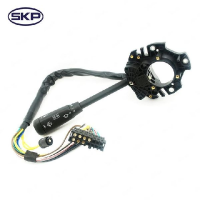
Below are the parts most often responsible for code P0579, ranked by how frequently each one is the actual culprit (per the diagnosis above). Tap any to see what we have for your vehicle.




The information in this article is provided for general reference and educational purposes only. Vehicle specifications, procedures, and part compatibility can vary by production date, trim level, and region. Always consult your vehicle's factory service manual and verify part numbers before purchasing or performing repairs. Safety-critical components such as airbags, seat belts, and braking systems should be installed by a qualified professional.
- 🧭 Diagnostic Flowchart
- 🎬 Helpful Videos
- 🛍️ Shop This Part
- What Does P0579 Mean?
- Can I Drive With P0579?
- Common Causes
- Symptoms
- Common Fixes & Costs
- DIY vs Professional
- Used vs. New Parts: Buying Guide
- What Happens If You Wait — Timeline
- Cost of Not Fixing It
- Diagnosis Steps
- When This Code Triggers (Freeze-Frame Conditions)
- Related Codes
- Climate & Environmental Factors
- How to Talk to a Mechanic About This Code
- Where to Take It: Dealer vs Independent vs Chain
- When to Walk Away From the Repair
- What Scan Tool You Need for This Code
- How to Clear the Code After You Fix It
- Will This Fail Emissions / State Inspection?
- Most Commonly Affected Vehicles
- Manufacturer-Specific Notes
- Real Owner Stories
- 2012 Jeep Wrangler JKU with intermittent cruise control
- Dodge Journey with returning P0579 code after switch replacement
- Ford F-150 with sticky, non-responsive cruise control buttons
- How to Prevent This Code From Triggering
- Frequently Asked Questions
- Can I fix P0579 myself?
- How much does it cost to fix P0579?
- Why did my airbag light come on with the P0579 code?
- Will clearing the code fix my cruise control?
- What does the 'A' circuit in P0579 refer to?
- My cruise control buttons feel sticky. Can that cause this code?
- What are the most common misdiagnosis mistakes for P0579?
- What other steering wheel functions fail along with P0579?
- Key Takeaways
- 🎟️ Get 5% Off