

OBD-II Code P0581: Cruise Control Multi-Function Input 'A' Circuit High
The Ultimate Guide to Understanding, Diagnosing, and Fixing P0581
- P0581 triggers when the Powertrain Control Module detects a constant voltage above 4.8V from the cruise control switch, immediately disabling the system.
- If your airbag warning light illuminates alongside P0581, your clockspring has failed, disabling the driver's airbag and requiring immediate replacement.
- Jeep, Chrysler, and Dodge owners from 2008-2018 must check for extended manufacturer warranties (like FCA Campaign X68) before paying $300+ for a clockspring repair.
- Before buying replacement parts, scrub sticky steering wheel buttons with 90% isopropyl alcohol, as spilled beverages frequently cause the switch to stick in the 'high' voltage position.
What Does P0581 Mean?
P0581 indicates the Powertrain Control Module (PCM) detects a continuous voltage signal above 4.8V from the cruise control switch circuit. The system operates on a 0-5V reference scale; a constant 5V reading means the switch is stuck 'on' or shorted to power, prompting the PCM to disable cruise control as a safety precaution.
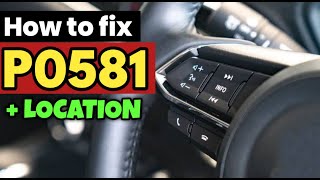
Technical definition: The SAE/OBD-II definition is "Cruise Control Multi-Function Input 'A' Circuit High". The PCM or Body Control Module (BCM) registers voltage on the primary cruise control input circuit exceeding the 4.8V maximum threshold. The 'A' circuit controls the primary on/off, set, or resume functions 🎬 Watch: A quick breakdown of the P0581 circuit high code. of the multi-function switch.
Can I Drive With P0581?
Yes, But With Caution. While the vehicle remains mechanically safe to drive, the cruise control system is disabled. The critical safety risk is a faulty clockspring, which disables the driver's side airbag, preventing deployment in a collision. If your airbag warning light is illuminated, stop DIY diagnosis and take the vehicle to a qualified shop immediately.
Common Causes
- Failed clockspring (Very Common) — The clockspring is a coiled ribbon of wires maintaining electrical connections for the steering wheel. A break or short within this ribbon is a frequent failure, especially on Jeep, Dodge, and Chrysler models, triggering P0581 and disabling the airbag.
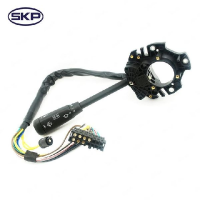
- Faulty or contaminated cruise control switch (Very Common) — Internal contacts wear out, break, or become stuck. Spilled beverages frequently leave sticky residue that bridges electrical contacts, causing the switch to send a constant high voltage signal instead of a momentary one.
- Damaged wiring or connectors (Common) — Wires in the steering column fray, pinch, or short to a power source from rubbing against internal components. Corroded connectors or loose pins create high resistance or direct shorts.
- Aftermarket accessory interference (Rare) — Improperly installed remote starters, alarms, or LED brake lights without load resistors alter circuit resistance, introducing incorrect voltage that triggers the code.
- Poor ground connection (Less Common) — A corroded or broken ground wire for the cruise control module causes the signal voltage to 'float' high, triggering the code even if the switch functions correctly.
- Blown fuse (Less Common) — A blown fuse indicates a larger electrical short that alters expected voltage readings across the circuit.
- Faulty Brake Pedal Position (BPP) switch (Rare) — An internally shorted BPP switch bleeds voltage into the cruise control circuit, causing a P0581 fault in specific vehicle architectures.
- Faulty Powertrain Control Module (PCM) or Body Control Module (BCM) (Very Rare) — Main computer modules rarely fail. Consider this only after exhaustively testing switches, the clockspring, and all wiring.
Symptoms
- Cruise control is completely inoperative — The system will not turn on, set, accelerate, or resume at any speed.
- Airbag warning light is ON — Indicates a failed clockspring, which shares wiring for both the cruise control and the driver's airbag.
- Horn and steering wheel buttons are dead — A clockspring failure severs the electrical connection for the horn, radio controls, and phone buttons.
- Check Engine Light is ON — The PCM illuminates the Malfunction Indicator Lamp (MIL) to alert the driver of the circuit fault.
- Cruise control indicator light flashes or stays illuminated — The dash light stays on when the system is off, or flashes to indicate a detected fault.
- High voltage on 'A' circuit in live data (scan-tool only — no driver-felt sign) — A scan tool shows the 'A' circuit voltage stuck at or near 5V, confirming the 'circuit high' condition.
Diagnostic Flowchart
Tap your situation to follow the diagnostic path that matches what you're seeing on this code.
Common Fixes & Costs
- Replace Clockspring — Parts: $150-$500, Labor: $150-$350, ~2 hr book time (Professional)
- Replace Cruise Control Switch — Parts: $50-$150, Labor: $100-$200, ~1.5 hr book time (Intermediate)
- Repair Wiring or Connectors — Parts: $10-$50, Labor: $150-$300, ~2 hr book time (Intermediate)
- Replace Blown Fuse — Parts: $1-$10, Labor: $0-$50, ~0.1 hr book time (DIY)
- Replace Body/Powertrain Control Module (BCM/PCM) — Parts: $600-$900, Labor: $200-$400, ~2.5 hr book time (Professional)
DIY vs Professional
- Replace Blown Fuse 🟢 Beginner
Tools: Owner's Manual, Fuse Puller - Repair Wiring or Connectors 🟢 Beginner
Tools: Multimeter, Wire Strippers, Crimpers, Heat Shrink Tubing, Wiring Diagrams - Replace Cruise Control Switch 🟢 Beginner
Tools: Socket Set, Torx Screwdrivers, Trim Removal Tools, Repair Manual - Replace Clockspring 🟢 Beginner
Tools: Socket Set, Torque Wrench, Steering Wheel Puller, Repair Manual
Used vs. New Parts: Buying Guide
When a used part is worth it: A used cruise control switch from a low-mileage vehicle is a cost-effective option. Never buy a used clockspring due to its critical safety function and status as a known wear item.
Donor-vehicle mileage cap: roughly under 60000 miles for the part to have meaningful remaining life.
Donor quality checklist:
- Verify the exact part number matches; superseded numbers may not be compatible.
- Ensure switches have no physical damage or sticky residue.
- Avoid clocksprings from vehicles with deployed airbags.
Decision logic:
- If The faulty part is the clockspring → Buy a new OEM or high-quality aftermarket part. The safety risk and high labor cost of a repeat failure outweigh the savings.
- If The faulty part is the cruise control switch and the vehicle is over 10 years old → A used switch from a reputable auto recycler with a warranty is an acceptable budget-friendly option.
- If The vehicle is under an extended warranty or recall for the clockspring → Always use the free OEM replacement from the dealer.
Warranty tradeoff: Used parts typically have a 30-90 day warranty. New aftermarket parts carry a 1-year to limited lifetime warranty. New OEM parts have at least a 1-year warranty.
Worst-case if a used part fails: A failed used clockspring requires paying for labor a second time ($150-$350) plus the cost of another part.
What Happens If You Wait — Timeline
- Immediate (First Occurrence): Check Engine Light illuminates and P0581 is stored. Cruise control is disabled. (MPG impact: 0%% · Added cost: $0)
- 1-4 Weeks: If the cause is a failing clockspring, the horn, radio controls, and airbag system fail intermittently. The airbag warning light turns on. (MPG impact: 0%% · Added cost: $100-$155 (Diagnostic fee to identify the clockspring failure).)
- 1-6 Months (Driving with a known fault): The vehicle automatically fails state OBD-II emissions or safety inspections. Driving with a disabled airbag becomes a severe safety risk. (MPG impact: 0%% · Added cost: $50,000 - $250,000+ (Potential medical bills from injuries an airbag prevents).)
- 6+ Months: No further direct mechanical damage occurs. The primary consequence is ongoing safety hazard and inability to pass inspections. (MPG impact: 0%% · Added cost: Continued exposure to liability and severe injury risk.)
Cost of Not Fixing It
- Immediate: Loss of cruise control functionality. If the clockspring is faulty, the driver's side airbag is disabled, creating a major safety risk. (Added cost: 0)
- 0-6 months: Driving without a functional airbag significantly increases the risk of serious injury in a frontal collision. The vehicle fails state safety or emissions inspections. (Added cost: Potential for thousands in medical bills and vehicle damage.)
- 6+ months: No additional mechanical damage occurs from ignoring P0581. The primary risk—a non-deploying airbag—remains constant and critical. (Added cost: N/A)
Diagnosis Steps
- Read Trouble Codes & Review Freeze Frame Data
Use an OBD-II scanner to confirm P0581. Crucially, check for related codes (P0579, P0591, U1109, or airbag codes). Multiple steering wheel codes strongly point to a clockspring failure.
Tools: OBD-II Scanner (Beginner) - Perform Functional Test of All Steering Wheel Controls
Systematically test the horn, radio controls, and phone buttons. Widespread failure across multiple buttons confirms a broken clockspring ribbon.
Tools: None (Beginner) - Visually Inspect and Clean Switches
Look for sticky residue from spills. Clean gummy buttons with 90% isopropyl alcohol on a cotton swab. Inspect the visible steering column wiring harness for chafing or bare wires.
Tools: Flashlight, 90% Isopropyl Alcohol, Cotton Swabs (Beginner) - Live Data PID Analysis
Access the live data stream for cruise control inputs. The status PID for the 'A' circuit will show 'On' or 'Pressed', and voltage will be stuck at or above 5V without touching the button.
Tools: Advanced Scan Tool (Intermediate) - Test the Cruise Control Switch Resistance
Disconnect the switch harness and measure resistance across its terminals while pressing each button. Compare readings to the vehicle-specific repair manual. Infinity (OL) or zero Ohms indicates a faulty switch.
Tools: Multimeter, Vehicle-Specific Repair Manual, Trim Removal Tools (Intermediate) - Test the Clockspring
Check for continuity on each wire through the clockspring while slowly rotating it. This requires removing the steering wheel and airbag module. Disconnect the battery for 20 minutes prior to avoid accidental airbag deployment.
Tools: Multimeter, Socket Set, Torque Wrench, Trim Removal Tools, Repair Manual (Professional) - Circuit Voltage Test at Connector
With ignition on (engine off), backprobe the signal wire at the switch connector. A constant reading above 4.8V confirms a short to power in the wiring or a failed switch.
Tools: Multimeter, Backprobe Kit, Wiring Diagram (Advanced) - Test for Short to Power
Disconnect the battery, switch connector, and PCM connector. Test for continuity between the signal wire and the 12V power wire. A reading below 10,000 Ohms confirms a short circuit.
Tools: Multimeter, Wiring Diagram (Advanced) - Inspect Fuses and Relays
Locate and visually inspect all fuses related to the cruise control system, PCM, and BCM. Replace any blown fuses and retest the system.
Tools: Owner's Manual, Fuse Puller (Beginner)
When This Code Triggers (Freeze-Frame Conditions)
- Engine Coolant Temp: 180-200°F (Engine at normal operating temperature.)
- RPM: 1500-3000 (Steady RPM during highway driving.)
- Engine Load: 20-50% (Light to moderate load, consistent with cruising.)
- Vehicle Speed: 40-70 mph (Typical highway cruising speed when the driver attempts to engage the system.)
Related Codes
- P0579 — 'Cruise Control Multi-Function Input 'A' Circuit Range/Performance.' Indicates an illogical or erratic signal, whereas P0581 is stuck HIGH. They share root causes like a contaminated switch.
- P0591 — 'Cruise Control Multi-Function Input 'B' Circuit Performance.' If P0581 and P0591 appear together, it strongly suggests a common-point failure like the clockspring or a ground wire.
- P0578 — 'Cruise Control Multi-Function Input 'A' Circuit Stuck.' P0578 is set by a voltage stuck in any state, whereas P0581 is specifically for a voltage stuck HIGH.
- U1109 — 'Lost Communication With Lin Steering Wheel Controls.' Seeing this alongside P0581 on an FCA vehicle guarantees a failed clockspring.
Climate & Environmental Factors
- High Humidity: Accelerates corrosion on connector pins and within the switch assembly, causing high resistance or short circuits.
- Extreme Temperature Cycles: Makes plastic wiring insulation and connectors brittle, increasing the likelihood of cracks in the flexible clockspring ribbon.
How to Talk to a Mechanic About This Code
Say this: "I have a P0581 code and my cruise control is out. I'd like a diagnostic, but please check if my airbag light is on and if other steering wheel buttons work to help determine if it's the switch or the clockspring. Also, please check for any TSBs or extended warranties."
Signals you understand common failure points (switch vs. clockspring), the associated safety issue, and the possibility of a warranty repair. It directs the technician to perform a comprehensive diagnosis.
Avoid saying:
- 'My check engine light is on, can you look at it?'
- 'Just fix the cruise control.'
- 'My friend said it's probably the clockspring, just change that.'
Questions to ask before authorizing the repair:
- How did you confirm the failure? Did you test the switch and wiring, or just scan the codes?
- If you recommend a clockspring replacement, did you confirm there are no active warranties or recalls for my VIN?
- What is the 'all-in' cost, including any potential programming or calibration?
- What is the warranty on this specific repair, covering both the part and your labor?
Where to Take It: Dealer vs Independent vs Chain
- Dealer:
Best first stop for FCA vehicle owners due to potential warranty coverage. Otherwise, only necessary for complex cases.
Best for: Jeep, Chrysler, or Dodge vehicles, to claim the extended clockspring warranty (Campaign X68)., Vehicles still under the original bumper-to-bumper warranty., Complex electrical issues requiring manufacturer-specific diagnostic tools.
Downsides: Highest labor rates, often 1.5-2x more than independent shops., More likely to replace an entire assembly rather than perform a simple wiring repair. (Typical cost: +50% vs. baseline) - Independent Shop:
Excellent fit for most P0581 repairs, offering the best balance of cost and expertise.
Best for: Most out-of-warranty vehicles., Straightforward part replacements like a cruise control switch or clockspring., Owners looking for a better price than the dealership.
Downsides: Shop quality varies. Ensure the shop is ASE certified and comfortable with SRS/airbag system repairs. (Typical cost: +0% vs. baseline) - Chain Shop:
AVOID for this code. The diagnostic complexity and critical safety nature of the airbag system make chain shops a high-risk choice.
Best for: Simple, unrelated maintenance like oil changes or tire rotations.
Downsides: Technician skill varies dramatically; lacks experience for nuanced electrical diagnosis., High risk of misdiagnosis (e.g., replacing a switch when the clockspring is bad)., Improper handling of the airbag is a significant safety risk. (Typical cost: -10% vs. baseline)
When to Walk Away From the Repair
If the estimated repair cost exceeds 40-50% of the car's private-party value, seriously consider selling or trading in the vehicle.
- Car worth $5000, fix is $750: Fix it. The repair cost is well below the threshold and resolves a critical safety issue.
- Car worth $3000, fix is $1200: Borderline. The cost is approaching the 40% threshold. Get a second opinion before authorizing the repair.
- Car worth $2000, fix is $900: Walk away. The repair cost is too high relative to the vehicle's value. Put the money toward a replacement vehicle.
What Scan Tool You Need for This Code
Minimum: An OBD-II reader that displays Live Data and reads codes from the SRS (Airbag) and ABS systems.
A basic $20 code reader only shows the P0581 code. It cannot see live voltage from the switch or airbag codes that indicate a clockspring failure.
Budget: BlueDriver Pro (~$100) — Connects to your phone via Bluetooth. Reads engine and SRS/airbag codes, and displays live data to see if switch voltage is stuck high.
Mid-range: Foxwell NT510 Elite / NT630 Plus (~$150) — A handheld scanner providing deep diagnostics for ABS, SRS, and the Body Control Module. Reads live data and offers bidirectional tests.
Professional: Autel MaxiCOM MK808 / MK808BT (~$450-550) — A professional tablet scanner offering comprehensive diagnostics, live data graphing, and bidirectional controls to test components directly.
Rent vs buy: Auto parts stores scan codes for free, but may not read SRS/airbag codes. Buying a budget pick like the BlueDriver Pro is a worthwhile investment for DIYers.
How to Clear the Code After You Fix It
- Reconnect the battery if it was disconnected for the repair.
- Use an OBD-II scan tool to formally clear the P0581 code and any other related codes.
- Perform a complete drive cycle to allow the vehicle's readiness monitors to reset.
Drive cycle (~30 minutes): Start the vehicle from a cold start. Allow it to idle for 2-3 minutes. Drive in mixed city/highway conditions, including steady speeds between 40-60 mph for at least 15 minutes. Perform several acceleration and deceleration cycles. Allow the vehicle to cool completely.
Readiness monitors affected: Comprehensive Component Monitor
Before emissions retest: drive at least 100 miles to fully set monitors.
Watch out for:
- Disconnecting the battery clears the code but resets all readiness monitors to 'Not Ready', guaranteeing an emissions test failure.
- The code returns immediately if the underlying electrical short is not repaired.
- Failing to drive a varied cycle prevents readiness monitors from setting, which takes 50 to 200 miles.
Will This Fail Emissions / State Inspection?
Yes — this code typically fails an OBD-II emissions inspection.
- California: An illuminated Check Engine Light is an automatic failure. After repairs, the vehicle must be driven to set readiness monitors before re-testing.
- New York: A vehicle fails inspection if the Check Engine Light is on. For model years 2001 and newer, only one readiness monitor is allowed to be 'Not Ready'.
- Texas: In counties requiring emissions testing, an illuminated Check Engine Light causes an automatic failure.
Most Commonly Affected Vehicles
- Jeep Wrangler (JK) (2011-2018) — Almost always caused by a failed clockspring. FCA issued a 15-year/unlimited mileage extended warranty (Campaign X68) for this part.
- Dodge Ram 1500 (2012-2014) — A recall was issued for steering wheel wiring that rubs against internal components and shorts out, causing this exact code.
- Chrysler Town & Country / Dodge Grand Caravan (2008-2016) — Frequently experiences P0581 due to clockspring failures, similar to other FCA vehicles.
- Nissan Navara (D40) / Pathfinder (R51) (2005-2014) — On 2.5L YD25 diesel models, P0581 is uniquely caused by a faulty common rail fuel pressure sensor (Part # 45PP3-1), not the cruise control.
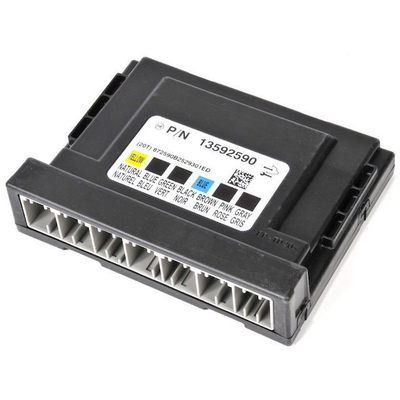
- Chevrolet Silverado / GMC Sierra (2007-2013) — Points to issues with the cruise control switch, related wiring, or a fault within the Body Control Module (BCM).
- Ford F-150 (2004-2008) — Installing aftermarket LED brake lights without a proper load resistor alters circuit resistance and triggers this fault.
- Ford Mustang (2005-2014) — Triggers P0581 due to worn control switch circuits and associated wiring in the steering column.
- Honda Accord (2008-2012) — Typically relates to a faulty cruise control switch or a problem in the brake pedal position switch circuit.
Manufacturer-Specific Notes
- Jeep/Chrysler/Dodge (FCA): P0581 is practically synonymous with a failed clockspring. FCA issued extended warranties (Campaign X68) due to the high failure rate. The clockspring is the primary suspect.
- Nissan: On YD25 diesel engines, the P0581 definition is misleading. The ECU incorrectly logs a cruise control fault due to a failing common rail fuel pressure sensor.
- Ford: The cruise control system is highly sensitive to brake light circuit resistance. Installing aftermarket LED brake light bulbs without load resistors triggers a P0581 code.
- General Motors (Chevrolet/GMC): Cruise control inputs route through the Body Control Module (BCM). P0581 is sometimes caused by a failing BCM or a communication issue between the BCM and PCM.
Real Owner Stories
2014 Jeep Wrangler JKU - The Classic Clockspring Failure
Check engine light came on, cruise control stopped working. Shortly after, the airbag light illuminated and the horn became intermittent.
What they tried:
- Owner initially replaced the cruise control switch, but the problem persisted.
- A scan revealed codes P0581 and U1109 ('Lost Communication With Lin Steering Wheel Controls').
Outcome: The codes pointed directly to a failed clockspring. The owner discovered their vehicle was covered under FCA's 15-year extended warranty (Campaign X68) and had it replaced at a dealership for $0.
Lesson: On a Jeep/Chrysler/Dodge, if P0581 is accompanied by an airbag light or dead horn, the clockspring is the prime suspect. Always check for extended warranties before paying for repairs.
2013 Dodge Ram 1500 - A Wiring Harness Issue
P0581 code appeared, and cruise control was inoperative. A scan tool showed the cruise control input circuit voltage stuck high at 5V.
What they tried:
- The owner disassembled the steering column to inspect the components.
- Recalling a TSB for 2012-2014 Ram trucks, they inspected the harness and found a wire rubbing against an internal component, shorting to a 5V reference line.
Outcome: The owner repaired the damaged wire with electrical tape and secured the harness. After clearing the codes, the cruise control functioned normally.
Lesson: A visual inspection of the wiring harness is critical, especially on vehicles with known wiring recalls. A simple repair saves hundreds of dollars on a new switch.
2007 Nissan Navara D40 (Diesel) - The Misleading Code
Vehicle threw a P0581 code, but the truck didn't have factory cruise control. The engine entered limp mode.
What they tried:
- Initial diagnosis was confusing due to the irrelevant code.
- Forum research revealed that on YD25 diesel engines, P0581 is falsely triggered by a failing common rail fuel pressure sensor.
Outcome: The owner replaced the fuel pressure sensor (Nissan part # 45PP3-1). The P0581 code disappeared and normal engine performance was restored.
Lesson: Always consider vehicle-specific quirks. On certain Nissan diesels, P0581 points to a known issue with the fuel pressure sensor, not the cruise control.
2011 Jaguar XJ - The Simple Sticky Button Fix
Cruise control buttons felt sticky, and the P0581 code was intermittent, suggesting a button was physically stuck in the 'pressed' position.
What they tried:
- The owner tried cleaning the buttons with a damp cloth, which had no effect.
- They gently scrubbed the affected buttons using 91% isopropyl alcohol on a cotton swab.
Outcome: The alcohol dissolved the sticky residue. The button moved freely, and the P0581 code cleared and did not return.
Lesson: If buttons feel sticky, try cleaning them before replacing parts. Use an electronics-safe cleaner like isopropyl alcohol applied to a swab, never sprayed directly.
How to Prevent This Code From Triggering
- Keep Steering Wheel Controls Clean (As needed / during interior detailing) — Prevents sticky buildup from spilled liquids that cause a switch to physically stick. Use isopropyl alcohol on a cloth, never spray directly.
- Protect Wiring During Repairs (During any repair involving the steering column or dash) — Prevents pinching or chafing of the clockspring and switch wiring harnesses. Ensure wires are routed in original retainers.
- Use Dielectric Grease on Connectors (When connectors are disconnected for any service) — Seals electrical connectors from moisture, preventing pin corrosion that leads to high resistance or short circuits.
- Avoid Turning the Wheel When the Car is Off (Daily habit) — Minimizes unnecessary wear on the clockspring's internal ribbon cable, contributing to its longevity.
- Use Split-Loom Tubing on Exposed Wires (When installing accessories or repairing harnesses) — Provides an abrasion-resistant layer over wiring harnesses, preventing shorts to power or ground.
Frequently Asked Questions
What are the most common misdiagnoses for P0581?
The most frequent error is replacing the cruise control switch when the actual fault is a bad clockspring. Always check if the horn and airbag light are functioning normally before buying a switch. Verify extended warranties before paying for repairs.
What are the signs of a bad clockspring besides the P0581 code?
Telltale signs include an illuminated airbag warning light, a dead horn, and inoperative steering wheel audio controls. You might also hear a grinding or clicking noise from the steering column when turning.
Can a bad brake light switch cause a P0581 code?
A faulty brake light switch typically sets its own codes, like P0571. However, an internal short in the brake switch feeds voltage into the cruise control circuit, triggering P0581.
Is it safe to drive with a P0581 code?
The vehicle drives normally, but the cruise control is disabled. If a faulty clockspring is the root cause, your driver's airbag will not deploy in an accident. This is a severe safety hazard requiring immediate repair.
How much does it cost to diagnose a P0581 code?
Most repair shops charge a standard diagnostic fee between $100 and $155. This fee covers the labor to pinpoint the electrical short or failed component. Shops usually apply this fee toward the final repair cost if you authorize the work.
Can I fix a P0581 code myself?
Cleaning a sticky switch or replacing a fuse are easy DIY tasks. Replacing the cruise control switch is an intermediate job requiring trim removal. Leave clockspring replacement to professionals due to the severe safety risks of handling explosive airbag modules.
Will a P0581 code cause my car to fail an emissions test?
Yes, an active Check Engine Light results in an automatic failure for OBD-II emissions and state safety inspections. You must repair the fault and complete a drive cycle to reset the readiness monitors before retesting.
Can a bad battery or alternator cause a P0581 code?
A failing alternator produces excessive voltage spikes over 14.5V, while a weak battery causes unstable system voltage. The PCM misinterprets these electrical anomalies as a 'circuit high' fault, triggering P0581. Always verify your charging system health during electrical diagnostics.
Why did the P0581 code appear after I installed LED brake lights?
The cruise control system monitors the brake light circuit's resistance to know when to disengage. LED bulbs have significantly lower resistance than standard incandescent bulbs, tricking the computer into seeing a circuit fault. Install a 6-ohm, 50W load resistor in parallel with each LED bulb to fix this.
Key Takeaways
- P0581 triggers when the Powertrain Control Module detects a constant voltage above 4.8V from the cruise control switch, immediately disabling the system.
- If your airbag warning light illuminates alongside P0581, your clockspring has failed, disabling the driver's airbag and requiring immediate replacement.
- Jeep, Chrysler, and Dodge owners from 2008-2018 must check for extended manufacturer warranties (like FCA Campaign X68) before paying $300+ for a clockspring repair.
- Before buying replacement parts, scrub sticky steering wheel buttons with 90% isopropyl alcohol, as spilled beverages frequently cause the switch to stick in the 'high' voltage position.
Helpful Videos
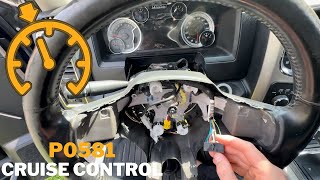
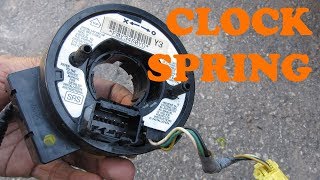
![What is P0581 Engine Code [Quick Guide]](https://img.youtube.com/vi/n6aykPQpqVU/mqdefault.jpg)
Shop the Parts Behind P0581
Below are the parts most often responsible for code P0581, ranked by how frequently each one is the actual culprit (per the diagnosis above). Tap any to see what we have for your vehicle.




The information in this article is provided for general reference and educational purposes only. Vehicle specifications, procedures, and part compatibility can vary by production date, trim level, and region. Always consult your vehicle's factory service manual and verify part numbers before purchasing or performing repairs. Safety-critical components such as airbags, seat belts, and braking systems should be installed by a qualified professional.
- 🧭 Diagnostic Flowchart
- 🎬 Helpful Videos
- 🛍️ Shop This Part
- What Does P0581 Mean?
- Can I Drive With P0581?
- Common Causes
- Symptoms
- Common Fixes & Costs
- DIY vs Professional
- Used vs. New Parts: Buying Guide
- What Happens If You Wait — Timeline
- Cost of Not Fixing It
- Diagnosis Steps
- When This Code Triggers (Freeze-Frame Conditions)
- Related Codes
- Climate & Environmental Factors
- How to Talk to a Mechanic About This Code
- Where to Take It: Dealer vs Independent vs Chain
- When to Walk Away From the Repair
- What Scan Tool You Need for This Code
- How to Clear the Code After You Fix It
- Will This Fail Emissions / State Inspection?
- Most Commonly Affected Vehicles
- Manufacturer-Specific Notes
- Real Owner Stories
- 2014 Jeep Wrangler JKU - The Classic Clockspring Failure
- 2013 Dodge Ram 1500 - A Wiring Harness Issue
- 2007 Nissan Navara D40 (Diesel) - The Misleading Code
- 2011 Jaguar XJ - The Simple Sticky Button Fix
- How to Prevent This Code From Triggering
- Frequently Asked Questions
- What are the most common misdiagnoses for P0581?
- What are the signs of a bad clockspring besides the P0581 code?
- Can a bad brake light switch cause a P0581 code?
- Is it safe to drive with a P0581 code?
- How much does it cost to diagnose a P0581 code?
- Can I fix a P0581 code myself?
- Will a P0581 code cause my car to fail an emissions test?
- Can a bad battery or alternator cause a P0581 code?
- Why did the P0581 code appear after I installed LED brake lights?
- Key Takeaways
- 🎟️ Get 5% Off