

OBD-II Code P0585: Cruise Control Multi-Function Input 'A'/'B' Correlation
The Ultimate Guide to Diagnosing and Fixing P0585
- Code P0585 triggers when the engine computer receives conflicting signals (like 'accelerate' and 'coast' simultaneously) from the cruise control buttons, instantly disabling the system.
- A faulty steering wheel cruise control switch causes over 50% of P0585 codes, followed closely by a broken clock spring or incompatible aftermarket LED brake lights.
- If your airbag warning light illuminates alongside P0585, your clock spring has failed and your driver's side airbag will not deploy in a crash.
- Never replace the cruise control switch without first using a $15 digital multimeter to verify its internal resistance values match manufacturer specifications.
- Expect to pay $100 to $300 for a professional cruise control switch replacement, or up to $750 if the clock spring requires replacement.
What Does P0585 Mean?
Code P0585 means your car's main computer (the Powertrain Control Module or PCM) is getting logically impossible signals from the cruise control buttons. It detects inputs from two different button circuits at the same time—for example, seeing a signal for 'accelerate' and 'coast' simultaneously. Because the computer cannot determine your actual intent, it disables the cruise control system as a safety precaution and illuminates the Check Engine Light.
Technical definition: The official SAE/OBD-II definition is "Cruise Control Multi-Function Input 'A'/'B' Correlation". This indicates the Powertrain Control Module (PCM) has detected that the input signals from the cruise control multi-function switch circuits 'A' and 'B' are not coherent. The code is set when the PCM receives an impermissible combination of signals, such as both being active at once, suggesting a short or a switch malfunction.
🎬 Watch: How to diagnose and fix the P0585 codeCan I Drive With P0585?
Yes, But With Caution. Yes, you can drive the vehicle. The P0585 code itself only disables the cruise control, which is a convenience feature. However, a common cause is a failing clock spring, which also disables the driver's side airbag. If your airbag warning light is on, you are driving with a compromised safety system and must seek repair immediately.
Common Causes
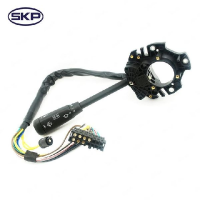
- Faulty Cruise Control Switch (Very Common) — The internal contacts of the steering wheel buttons wear out, get sticky from spills, or develop electrical faults, sending conflicting signals to the computer.
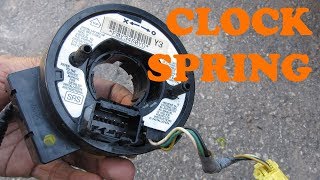
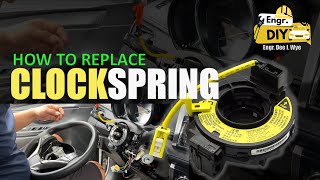
- Damaged Clock Spring (Common) — This coiled ribbon cable behind the steering wheel maintains electrical connections while turning. It fatigues and breaks from normal use, shorting the cruise control signals.
- Aftermarket Electrical Accessories (Common) — LED brake light bulbs have lower electrical resistance than factory incandescent bulbs. The computer misinterprets this as a constantly applied brake pedal, creating a logical conflict with cruise control commands.
- Wiring or Connector Issues (Common) — Wires in the steering column or leading to the PCM fray, short together, or corrode. Loose or dirty pins in the connectors between the switch, clock spring, and PCM disrupt the signal.
- Blown Fuse (Less Common) — A blown fuse for the cruise control circuit causes a loss of power or erratic signal readings. Fuses must be checked visually and with a multimeter, as they sometimes appear intact but fail under load.
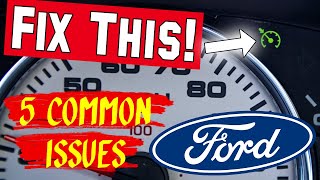
- Faulty Cruise Control Servo Motor (Less Common) — In older vehicles with a vacuum or motor-actuated throttle cable, the servo itself fails. An internal electronic fault within the servo sends conflicting data back to the PCM. 🎬 See this guide on fixing common Ford cruise control issues
- Body Control Module (BCM) Communication Failure (Rare) — The cruise control system routes its signals through the BCM. A communication failure on the CAN bus network prevents the PCM from verifying the switch's status, setting P0585 as a precaution.
- Poor Power Supply or Ground Connection (Rare) — A weak battery, failing alternator, or a corroded ground strap causes unstable voltage. This leads the cruise control module to misinterpret the voltage from the switch inputs.
- Faulty Powertrain Control Module (PCM) (Very Rare) — The PCM itself has an internal fault. This is only considered after every other possibility, including wiring, switches, and other modules, is exhaustively ruled out.
Symptoms
- Cruise control will not turn on or work at all — Pressing the cruise control buttons results in no response, and you cannot set or maintain a speed.
- Check Engine Light is on — The PCM activates the Malfunction Indicator Lamp (MIL) on your dashboard to alert you to a powertrain control system fault.
- Cruise control disengages intermittently — You set the cruise control, but it randomly deactivates while driving due to an intermittent short or open in the switch or wiring.
- Cruise control indicator light is flashing or stays off — The dashboard light that indicates cruise control is active flashes, or does not illuminate at all when you attempt to engage the system.
- Erratic speedometer or odometer behavior — Because the cruise control system is tied to vehicle speed data, a fault in the system occasionally causes the speedometer or odometer to behave erratically.
Diagnostic Flowchart
Tap your situation to follow the diagnostic path that matches what you're seeing on this code.
Common Fixes & Costs
- Replace Cruise Control Switch — Parts: $20-$150, Labor: $80-$150, ~1.2 hr book time (DIY)
- Replace Clock Spring — Parts: $60-$450, Labor: $150-$300, ~1.8 hr book time (Professional)
- Repair Wiring or Connectors — Parts: $5-$50, Labor: $100-$300, ~2 hr book time (Intermediate)
- Replace Blown Fuse — Parts: $1-$5, Labor: $0-$20, ~0.1 hr book time (DIY)
- Reprogram or Replace PCM — Parts: $600-$1200, Labor: $150-$300, ~1.5 hr book time (Professional)
DIY vs Professional
- Replace Blown Fuse — Beginner: Yes
Tools: Fuse puller (often included in fuse box), owner's manual. - Replace Cruise Control Switch — Beginner: No
Tools: Socket set, Torx driver set, Phillips screwdriver, trim removal tools. - Repair Wiring or Connectors — Beginner: It depends.
Tools: Multimeter, wire strippers, crimpers, heat shrink tubing, electronics contact cleaner. - Replace Clock Spring — Beginner: No. Professional recommended.
Tools: Socket set, torque wrench, steering wheel puller, Torx driver set, trim removal tools.
Used vs. New Parts: Buying Guide
When a used part is worth it: For a simple cruise control switch on an older, high-mileage vehicle, a used part from a reputable salvage yard is a cost-effective option. However, for a clock spring, buying new is strongly recommended.
Donor-vehicle mileage cap: roughly under 100000 miles for the part to have meaningful remaining life.
Donor quality checklist:
- For switches, ensure the donor vehicle was not a flood or fire victim.
- For clock springs, avoid used parts entirely. They are a wear item and are critical for airbag function. The risk is not worth the savings.
- Match the part number exactly. Minor variations lead to incompatibility.
Decision logic:
- If The failed part is the clock spring → Always buy new from an OEM or reputable aftermarket source. A used part has unknown wear and fails prematurely, compromising the airbag system.
- If The failed part is the cruise control switch and a new part is < $75 → Buy new. The small cost saving of a used part isn't worth the time to source it and the lack of warranty.
- If The vehicle is > 150K miles and the new switch is expensive → A used switch is an acceptable budget repair, but understand it has no warranty and limited remaining life.
Warranty tradeoff: Used parts typically have a 30-90 day warranty at best, which only covers the part itself, not the labor to install it. New aftermarket parts usually carry a 1-year to limited lifetime warranty.
Worst-case if a used part fails: For a clock spring, the worst-case cost is non-monetary: airbag non-deployment in a crash. For a switch, the worst-case cost is repeating the labor, which costs $100-$200.
What Happens If You Wait — Timeline
- 0-1 month: Code P0585 is set, Check Engine Light is on, and cruise control is disabled. No other symptoms are present. (MPG impact: 0%% · Added cost: $0)
- 1-6 months: If the cause is a failing clock spring, other steering wheel controls begin to fail intermittently. The horn stops working, or steering wheel audio/menu buttons become unresponsive. (MPG impact: 0%% · Added cost: $0)
- 2-8 months: The clock spring's internal ribbon cable fractures completely, causing a permanent open circuit for the driver's airbag. The airbag warning light illuminates permanently. The horn and all other steering wheel controls die. (MPG impact: 0%% · Added cost: $0, but a major safety system is now disabled.)
- 6+ months: Driving with a known, disabled airbag. In a frontal collision, the driver's airbag will not deploy, dramatically increasing the risk of serious or fatal injury. (MPG impact: 0%% · Added cost: Non-monetary: The potential cost of severe injury resulting from airbag non-deployment.)
Cost of Not Fixing It
- Immediate: Loss of cruise control functionality. This is primarily an inconvenience on long trips. (Added cost: 0)
- 1-6 months: If the cause is a failing clock spring, other steering wheel functions like the horn or radio controls also fail. (Added cost: 0)
- 6+ months: A completely failed clock spring disables the driver's side airbag, creating a significant safety hazard. The airbag warning light illuminates. (Added cost: Potential for severe injury in an accident that would have otherwise been survivable.)
Diagnosis Steps
- Scan for All DTCs and Review Freeze Frame Data
Use an OBD-II scanner to confirm P0585 is present. Check for codes related to the BCM, brake switch (P0571, P0572), or airbag system (e.g., B1B02, B1B06), as they point to a related root cause like a bad clock spring. Document the freeze frame data.
Tools: OBD-II Scanner (Beginner) - Perform a Thorough Visual Inspection
Inspect the cruise control fuses in the vehicle's fuse box. Carefully examine the wiring harness connected to the cruise control switch, steering column, and PCM for visible signs of damage, such as chafing, melting, or corrosion.
Tools: Flashlight, Fuse puller (Beginner) - Test the Cruise Control Switch (Basic)
Using a digital multimeter set to Ohms (Ω), test the switch's function. Identify the correct pins on the switch connector using a repair manual. Test for continuity and resistance as you press each button. Any reading out of spec indicates a faulty switch.
Tools: Digital Multimeter, Vehicle repair manual (Intermediate) - Test Brake and Clutch Switch Functionality
Ensure the brake pedal position (BPP) switch works correctly. Use the live data function on a scan tool to verify the PCM sees the brake pedal being applied and released. A faulty brake switch overrides cruise control commands.
Tools: OBD-II Scanner (Intermediate) - Perform Switch Resistance Test (Advanced)
Measure the exact resistance values. For example, on a 2009 Ram 1500, the resistance between the sense 1 and return circuits should be: On/Off (0.47 kΩ), Set/Decel (4.34 kΩ), Cancel (1.24 kΩ), and Resume/Accel (8.80 kΩ). Any deviation greater than 10% from manufacturer specs indicates a faulty switch.
Tools: High-quality Digital Multimeter, Manufacturer-specific repair manual (Advanced) - Perform Live Data Voltage Correlation Test (Advanced)
Monitor the live data PIDs for the cruise control switch inputs using an advanced scan tool. Press each button and observe the voltage change. The PCM expects specific voltage signals for each function. Unexpected voltage, or voltage on both circuits simultaneously, confirms a fault.
Tools: Advanced OBD-II Scan Tool with live data streaming (Advanced) - Test the Clock Spring
If the switch tests good, the clock spring is the next suspect. Disconnect the battery and safely remove the airbag and steering wheel. Use a multimeter to check for continuity on the cruise control wires passing through the clock spring. Wiggle the connectors to check for intermittent opens. Professional help is strongly recommended.
Tools: Digital Multimeter, Socket set, Trim removal tools, Vehicle repair manual (Advanced) - Check for Power and Ground at the PCM
Verify the signal reaches the PCM correctly. Back-probe the PCM connector to check for the correct voltage signals from the switch. If the signals are correct here, the PCM itself is faulty. This requires an accurate wiring diagram and experienced technicians.
Tools: Digital Multimeter, Vehicle wiring diagram, Back-probe kit (Professional)
When This Code Triggers (Freeze-Frame Conditions)
- Engine Coolant Temp: 180-210°F (The engine is fully warmed up to normal operating temperature.)
- RPM: 1500-3000 (The engine is running at a steady speed, typical for highway cruising.)
- Engine Load: 25-70% (The engine is under a moderate, steady load, not accelerating hard or decelerating.)
- Vehicle Speed: 30-70 mph (The vehicle is moving at a speed where cruise control is typically engaged.)
Related Codes
- P0571 — This code for 'Brake Switch A Circuit Malfunction' is a direct companion. A faulty brake switch causes the PCM to think the brakes are applied, which conflicts with any command to set the cruise control, leading to P0585.
- P0581 — This code for 'Cruise Control Multi-Function Input 'A' Circuit High' points to a direct electrical fault (high voltage) in one specific switch circuit, whereas P0585 indicates a logical conflict between two separate circuits.
- P0579 — This code for 'Cruise Control Multi-Function Input 'A' Circuit Range/Performance' indicates the voltage from one button is out of its expected range, while P0585 means the combination of signals from two buttons is illogical.
- U0121 — This code indicates 'Lost Communication With Anti-Lock Brake System (ABS) Control Module'. Since the cruise control system relies on wheel speed data from the ABS module, a communication failure disables the cruise control and is logged alongside P0585.
Climate & Environmental Factors
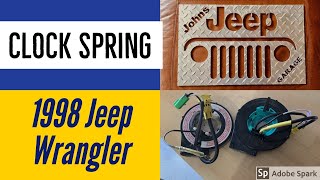
- Dusty / Off-Road Conditions: This is a primary cause of clock spring failure, particularly in Jeep Wranglers. Dust and dirt enter the clock spring assembly, abrading the delicate internal ribbon cable and causing circuits to break.
- High Humidity: Humid environments accelerate the corrosion of electrical contacts inside the cruise control switch and in connectors. Moisture acts as a conductor, leading to short circuits or increased resistance.
- Extreme Cold: Extreme cold makes plastic components like switch housings and wire insulation more brittle and prone to cracking, leading to shorts or open circuits.
How to Talk to a Mechanic About This Code
Say this: "I have a P0585 code and my cruise control isn't working. If my airbag light is also on, I suspect it's the clock spring. If not, it's likely the switch or wiring. I'd like a diagnosis to confirm which part has failed before replacing anything."
This shows you understand the common causes (switch vs. clock spring) and directs the technician to perform a specific diagnosis rather than just replacing parts. Mentioning the airbag light links to the most serious and common related failure.
Avoid saying:
- 'Just fix the cruise control'
- 'My check engine light is on, can you look at it?' (too vague)
- 'I think I need a new cruise control switch' (pre-diagnosing without evidence)
Questions to ask before authorizing the repair:
- Did you test the cruise control switch with a multimeter for correct resistance on each button?
- If the switch tested good, did you confirm continuity through the clock spring for the cruise control circuits?
- If it's a Jeep, did you check if my VIN is covered under the X68 extended warranty for the clock spring?
- What is the warranty on the parts and labor for this repair?
Where to Take It: Dealer vs Independent vs Chain
- Dealer:
Go here FIRST if you own an affected Jeep/Chrysler/Dodge to check for warranty coverage on the clock spring. Otherwise, it's a costly option for a common repair.
Best for: Jeep/Chrysler/Dodge vehicles where a clock spring failure is suspected, to check for recall or extended warranty coverage (like Jeep's X68)., Vehicles still under the original bumper-to-bumper or an extended warranty.
Downsides: Highest labor rates., Less willing to perform a simple wiring repair and more likely to replace a whole component. (Typical cost: +50% vs. baseline) - Independent Shop:
Best all-around fit for most P0585 repairs, especially for non-warranty switch replacements or standard clock spring jobs. Ensure they are comfortable working with airbag systems.
Best for: Most out-of-warranty vehicles., Diagnosing and repairing common electrical faults like a bad switch, wiring, or clock spring.
Downsides: Quality varies greatly by shop; check reviews and ASE certifications., Unaware of manufacturer-specific extended warranties. (Typical cost: +0% vs. baseline) - Chain Shop:
AVOID for this repair. While they can read the code, the diagnosis and repair of anything beyond a fuse requires a level of electrical expertise and safety protocol that is not their specialty.
Best for: Reading the code for free or a small fee.
Downsides: Technician skill for electrical diagnosis is highly variable., High pressure to upsell leads to replacing parts unnecessarily., Not equipped or trained for repairs involving airbag removal (like a clock spring). (Typical cost: -10% vs. baseline)
When to Walk Away From the Repair
If the estimated repair cost exceeds 50% of your car's private-party value, sell or trade it in.
- Car worth $4000, fix is $700: Fix it. The repair cost is well below the 50% threshold and restores a key safety system if the clock spring is the cause.
- Car worth $3000, fix is $1500: Borderline. This repair is 50% of the car's value. If the car has other known issues, it's likely time to walk away.
- Car worth $2000, fix is $1200: Walk away. The repair cost is too high relative to the vehicle's value. Do not continue to drive it if the airbag light is on.
What Scan Tool You Need for This Code
Minimum: An OBD-II scanner that can read and display live data PIDs (Parameter IDs) for the cruise control switches.
A basic $20 code reader only shows you the P0585 code. It cannot show you the live electrical signals from the steering wheel buttons, which is necessary to determine if the switch, clock spring, or wiring is the problem.
Budget: BlueDriver Pro (~$90) — Connects to your phone and displays live data streams for the cruise control switch status, allowing you to press each button and see if the signal is registered by the computer.
Mid-range: Foxwell NT510 Elite (~$180) — Offers manufacturer-specific live data and some bidirectional controls. This allows for detailed testing of the switch and related components directly from the scanner.
Professional: Autel MaxiCOM MK808 / MK808BT (~$450-550) — Provides full bidirectional control, allowing a technician to command modules and actuators to test their function. It offers OE-level diagnostics to quickly pinpoint whether the fault lies in the switch, clock spring, wiring, or the control module itself.
Rent vs buy: For a one-time diagnosis, AutoZone's Loan-A-Tool program offers OBD-II scanners for free with a refundable deposit. Buy your own scanner if you plan to do your own diagnostics more than once a year.
How to Clear the Code After You Fix It
- Reconnect any disconnected components (e.g., battery).
- Use an OBD-II scan tool to erase the P0585 fault code from the PCM's memory.
- Perform a drive cycle to confirm the fix and allow readiness monitors to reset.
Drive cycle (~20 minutes): Start the engine and let it idle for 2-3 minutes. Drive in mixed conditions (city and highway) for 15-20 minutes, making sure to reach speeds where cruise control can be engaged. Attempt to engage the cruise control and use its functions (set, accelerate, coast). After the drive, turn the vehicle off and then restart to see if the Check Engine Light returns.
Readiness monitors affected: This specific code does not directly affect core emissions readiness monitors like the Catalyst or O2 sensor monitors, but clearing codes resets all of them.
Before emissions retest: drive at least 50 miles to fully set monitors.
Watch out for:
- Simply disconnecting the battery does not clear the code from permanent memory on all vehicles and resets all readiness monitors.
- The code returns immediately if the root electrical fault has not been properly repaired.
- Not performing a long enough drive cycle leaves readiness monitors as 'Not Ready', causing an emissions test failure.
Will This Fail Emissions / State Inspection?
Yes — this code typically fails an OBD-II emissions inspection.
- California: An illuminated Check Engine Light from code P0585 is an automatic failure of the smog inspection. All readiness monitors must also be 'Ready', so you must complete a drive cycle after repair before re-testing.
- New York: The NYS inspection includes an OBD-II check. P0585 causes an automatic failure.
- Texas: In counties requiring emissions testing, an active Check Engine Light is an automatic failure. After clearing the code, you must drive the vehicle 50-100 miles to set the readiness monitors before a re-test.
Most Commonly Affected Vehicles
- Dodge / Ram Ram 1500/2500/3500 (2008-2018) — Extremely common. Often caused by a faulty cruise control switch or clock spring. The PCM logs this as a 'one-trip fault' if the driver accidentally presses two buttons at once.
- Jeep Wrangler (JK) (2007-2018) — The clock spring is a notorious failure point on these models, often causing P0585. The failure also disables the horn and airbag. This part is subject to multiple recalls and an extended warranty.
- Ford F-150 / F-250 (2010-2018) — Frequently related to a faulty switch. This code is also triggered by using non-standard LED brake light bulbs, which interfere with the brake-off signal the cruise system needs.
- Chevrolet / GMC Silverado / Sierra (2007-2016) — This code commonly appears due to a failing multi-function switch or wiring problems within the steering column.
- Dodge Grand Caravan (2011-2020) — The steering wheel-mounted cruise control switch is a known high-failure item that directly causes this code.
- Chrysler Town & Country (2011-2016) — Mechanically identical to the Dodge Grand Caravan, it shares the same common failure of the cruise control switch.
- Jeep Grand Cherokee / Commander (2008-2010) — These models share the same failure-prone clock spring design as the Wrangler JK, making it a primary suspect for P0585.
- Subaru Outback / Forester / Impreza (2010-2018) — On many Subarus, P0585 is linked to an intermittently failing brake light switch. The PCM sees a conflict between the cruise 'set' command and a flickering brake signal.
Manufacturer-Specific Notes
- Dodge/Ram/Chrysler: Service manuals explicitly state that P0585 is a 'one trip fault' set by the driver accidentally pressing two cruise control buttons at the exact same time. Clearing the code is often a permanent fix.
- Jeep: The clock spring on 2007-2016 Wranglers is a known weak point. FCA issued multiple recalls and an Extended Warranty (code X68) for the clock spring on 2011-2016 models, extending coverage to 15 years with unlimited mileage.
- Ford: On F-Series trucks, this code is frequently caused by installing aftermarket LED brake lights without a proper load resistor. The PCM's diagnostic logic interprets the lower resistance of LEDs as a brake system fault.
- General: Always check for Technical Service Bulletins (TSBs). Manufacturers release PCM software updates to widen the accepted voltage range from the cruise switches or to correct logic errors that falsely trigger a P0585 code.
Real Owner Stories
2013 Jeep Wrangler JK with intermittent airbag light
Owner experienced an airbag light that chimed and turned on and off randomly. Later, the cruise control stopped working, triggering code P0585. The horn and other steering wheel buttons functioned intermittently.
What they tried:
- Initially suspected a loose connection or sensor.
- Posted on a forum and learned about the common clock spring failure.
- Took the vehicle to a dealership for diagnosis.
Outcome: The dealership confirmed a bad clock spring. The repair was covered for free under an extended warranty (X68) that Jeep issued for this specific problem, though the owner paid a diagnostic fee.
Lesson: On Jeep, Chrysler, and Dodge vehicles, the combination of an airbag light and P0585 is almost always a failed clock spring. Always check for extended warranties or recalls (like Jeep's X68 warranty) before paying for the repair.
2003 Dodge Ram 1500 with P0585 code
The P0585 code appeared, but the cruise control worked fine a few days prior. The owner was unsure if there was a real problem.
What they tried:
- Posted on a Dodge forum for advice.
- Learned that pressing two cruise control buttons simultaneously for a fraction of a second sets this code as a 'driver error' fault.
Outcome: The owner realized they accidentally hit buttons too quickly. They erased the code at an auto parts store and used the cruise buttons more deliberately. The code did not return.
Lesson: On older Dodge/Chrysler models, P0585 is often a 'ghost' code caused by accidental button presses. Clear the code once and see if it returns with careful use before starting repairs.
2016 Ford F-150 with cruise control failure
Cruise control suddenly stopped working and threw code P0585 shortly after the owner installed new aftermarket LED tail light bulbs.
What they tried:
- Checked fuses and wiring, finding no issues.
- Replaced the cruise control switch on the steering wheel, but the problem persisted.
- Searched online forums for F-150s with P0585 and discovered the link to LED lights.
Outcome: The owner reinstalled the original incandescent brake light bulbs, cleared the code, and the cruise control immediately started working again. The PCM misinterpreted the low resistance of the LEDs as a brake circuit fault.
Lesson: If P0585 appears after an electrical modification, suspect the new part first. Modern truck cruise control systems are highly sensitive to brake light bulb resistance. Using non-spec LED bulbs without load resistors causes this code.
How to Prevent This Code From Triggering
- Clean Steering Wheel Switches Periodically (Every 1-2 years) — Dust, skin oils, and residue from spills build up on switch contacts, causing high resistance or intermittent connections. Electronics contact cleaner dissolves this buildup and prevents faults.
- Avoid Stressing the Steering Column (Daily habit) — Hanging heavy items from the steering wheel or using it to pull yourself into the vehicle puts physical stress on the clock spring and its delicate internal ribbon cable, accelerating wear.
- Keep Hands Clean (Daily habit) — Excessive hand lotions, sanitizers, and natural skin oils degrade the plastic and rubber on steering wheel buttons over time, making them sticky or brittle. Wiping the controls with a clean, damp microfiber cloth preserves them.
- Be Careful During Other Repairs (During any steering/dash repair) — If the steering wheel is removed, the clock spring must not be rotated. Spinning it while disconnected snaps the internal ribbon cable, instantly destroying the part and causing P0585 and an airbag fault.
Frequently Asked Questions
Can I fix P0585 myself?
Yes, replacing a blown fuse or an accessible cruise control switch is a straightforward DIY repair. However, replacing a bad clock spring requires removing the airbag and steering wheel. Stop DIY and go to a professional shop if you suspect a clock spring failure due to the explosive risk of the airbag.
My horn and airbag light also stopped working. Is that related to P0585?
Yes, this is a classic sign of a failed clock spring. The clock spring contains the wiring for all steering wheel-mounted electronics. When it breaks, the cruise control, horn, and airbag circuits fail simultaneously.
Can a bad clock spring ONLY affect the cruise control?
Yes. The clock spring is a ribbon of several wires. It is possible for only the specific wires related to the cruise control function to break first, triggering P0585 while the horn and airbag still function correctly for a time.
What is the most common mistake when diagnosing P0585?
The most common mistake is immediately replacing the cruise control switch without testing it. A thorough diagnosis involves checking fuses, wiring, and using a multimeter to confirm the switch has actually failed.
Why did my cruise control stop working after I installed LED tail lights?
The vehicle's computer expects to see a specific electrical resistance from stock incandescent brake light bulbs. Low-resistance LED bulbs make the computer think the brake pedal is pressed, disabling the cruise control. Installing a load resistor in the brake light circuit solves this.
What does 'correlation' mean in the P0585 code definition?
Correlation refers to the logical relationship between two or more signals. The P0585 code means the signals from the 'A' and 'B' cruise control circuits are telling the computer two contradictory things at once (e.g., 'on' and 'off' simultaneously).
How much does it cost to diagnose P0585?
Most repair shops charge a standard diagnostic fee ranging from $100 to $180. This fee covers the technician's time to scan for codes, analyze live data, and perform initial circuit tests.
Will clearing the code make it go away?
You can clear the code with an OBD-II scanner, but it returns immediately if the underlying electrical fault is not repaired. The only exception is on some Chrysler/Dodge vehicles where accidentally pressing two buttons at once sets a one-time fault.
Key Takeaways
- Code P0585 triggers when the engine computer receives conflicting signals (like 'accelerate' and 'coast' simultaneously) from the cruise control buttons, instantly disabling the system.
- A faulty steering wheel cruise control switch causes over 50% of P0585 codes, followed closely by a broken clock spring or incompatible aftermarket LED brake lights.
- If your airbag warning light illuminates alongside P0585, your clock spring has failed and your driver's side airbag will not deploy in a crash.
- Never replace the cruise control switch without first using a $15 digital multimeter to verify its internal resistance values match manufacturer specifications.
- Expect to pay $100 to $300 for a professional cruise control switch replacement, or up to $750 if the clock spring requires replacement.
Helpful Videos

Shop the Parts Behind P0585
Below are the parts most often responsible for code P0585, ranked by how frequently each one is the actual culprit (per the diagnosis above). Tap any to see what we have for your vehicle.




The information in this article is provided for general reference and educational purposes only. Vehicle specifications, procedures, and part compatibility can vary by production date, trim level, and region. Always consult your vehicle's factory service manual and verify part numbers before purchasing or performing repairs. Safety-critical components such as airbags, seat belts, and braking systems should be installed by a qualified professional.
- 🧭 Diagnostic Flowchart
- 🎬 Helpful Videos
- 🛍️ Shop This Part
- What Does P0585 Mean?
- Can I Drive With P0585?
- Common Causes
- Symptoms
- Common Fixes & Costs
- DIY vs Professional
- Used vs. New Parts: Buying Guide
- What Happens If You Wait — Timeline
- Cost of Not Fixing It
- Diagnosis Steps
- When This Code Triggers (Freeze-Frame Conditions)
- Related Codes
- Climate & Environmental Factors
- How to Talk to a Mechanic About This Code
- Where to Take It: Dealer vs Independent vs Chain
- When to Walk Away From the Repair
- What Scan Tool You Need for This Code
- How to Clear the Code After You Fix It
- Will This Fail Emissions / State Inspection?
- Most Commonly Affected Vehicles
- Manufacturer-Specific Notes
- Real Owner Stories
- 2013 Jeep Wrangler JK with intermittent airbag light
- 2003 Dodge Ram 1500 with P0585 code
- 2016 Ford F-150 with cruise control failure
- How to Prevent This Code From Triggering
- Frequently Asked Questions
- Can I fix P0585 myself?
- My horn and airbag light also stopped working. Is that related to P0585?
- Can a bad clock spring ONLY affect the cruise control?
- What is the most common mistake when diagnosing P0585?
- Why did my cruise control stop working after I installed LED tail lights?
- What does 'correlation' mean in the P0585 code definition?
- How much does it cost to diagnose P0585?
- Will clearing the code make it go away?
- Key Takeaways
- 🎟️ Get 5% Off