

OBD-II Code P0591: Cruise Control Multi-Function Input 'B' Circuit Range/Performance
The Ultimate Guide to What P0591 Means, Why It Triggers, and How to Fix It
- P0591 indicates a disabled cruise control system caused by an illogical electrical signal from the steering wheel switch or clock spring.
- A failed clock spring is the most dangerous cause of P0591 because it simultaneously disables the driver's side airbag, requiring immediate replacement.
- Before buying parts, search your VIN for Technical Service Bulletins (TSBs); 2011-2016 Jeep Wranglers have a 15-year extended warranty (X68) that replaces the clock spring for free.
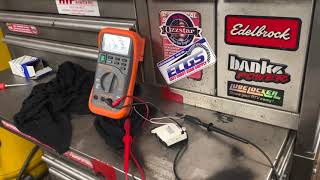
- Diagnose the exact failure point by using a multimeter to test the cruise control switch resistance (typically 400-2200 Ohms depending on the button) before spending $250+ on a new clock spring.
What Does P0591 Mean?
P0591 means the Powertrain Control Module (PCM) detects an illogical or out-of-range electrical signal from the cruise control buttons. When you press a button ('Set', 'Resume', 'Cancel'), the PCM expects a specific voltage or resistance. If it receives an unmatched value or simultaneous signals, it flags a 'performance' issue, disables cruise control, and stores code P0591.
Technical definition: Cruise Control Multi-Function Input 'B' Circuit Range/Performance. The 'B' circuit refers to a specific wire or group of wires dedicated to a subset of cruise control functions, helping technicians narrow down the electrical fault.
Can I Drive With P0591?
Yes, But With Caution. Yes, but it requires immediate attention. While the vehicle is mechanically drivable, a faulty clock spring (the most common cause of this code) disables the driver's side airbag. It will not deploy in a collision, creating a critical safety risk.
Common Causes
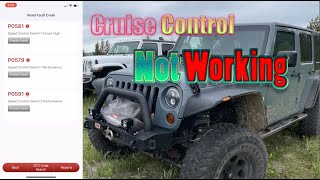
- Defective Clock Spring (Spiral Cable) (Very Common) — The clock spring is a coiled ribbon of wires behind the steering wheel maintaining electrical connections for the airbag, horn, and steering wheel controls. After millions of rotations, internal wires fatigue and break, causing an open or short circuit that triggers P0591. This is a notorious failure point on Jeep, Dodge, and Hyundai models. 🎬 Watch: How to solve P0591 on a Jeep Wrangler.
- Faulty Cruise Control Switch (Very Common) — The buttons on your steering wheel are subjected to constant use. Spilled liquids like coffee or soda cause sticky buttons, internal short circuits, or corrosion. Over time, the internal contacts simply wear out.
- Wiring or Connector Issues (Common) — Wires in the steering column fray, pinch, or break from tilting or telescoping the steering wheel. Connectors between the switch, clock spring, and main harness loosen or corrode, interrupting the signal. A corroded ground strap also creates voltage deviations that trigger P0591.
- Faulty Powertrain Control Module (PCM) or Software (Less Common) — On Chrysler, Dodge, and Jeep vehicles, the problem is often a software glitch in the PCM. A software update (reflash) from the dealer recalibrates the expected voltage tolerances and fixes the issue without replacing parts. 🎬 Watch: How a Chrysler PCM is reflashed at the dealer.
- Blown Fuse (Less Common) — A blown fuse in the cruise control circuit cuts power and triggers this code. Always check fuses first. A fuse blowing repeatedly indicates a deeper short circuit.
- Faulty Brake Pedal Switch (Rare) — The cruise control system relies on the brake pedal switch to disengage. A faulty switch sends an erratic signal to the PCM, making the computer think the brakes are applied when they aren't, triggering a performance code.
- Aftermarket Modifications (Rare) — Installing non-OEM accessories, such as an aftermarket throttle controller that taps into the cruise control wiring, changes the circuit's resistance. This altered signal falls outside the expected range and triggers P0591.
Symptoms
- Cruise Control Will Not Turn On or Set — The primary symptom. The cruise control system is completely unresponsive to any button presses.
- Other Steering Wheel Controls Fail (Horn, Airbag Light) — If the horn or radio controls stop working, and especially if the airbag warning light illuminates, a failed clock spring is the definitive cause.
- Cruise Control Disengages Randomly — The cruise control engages momentarily but shuts off unexpectedly, especially when turning the steering wheel. The indicator light may also flash erratically.
- Vehicle Enters 'Limp Mode' — On some models, a cruise control fault causes the PCM to enter a 'limp-home' mode, resulting in reduced engine power and limited transmission shifting.
- Check Engine Light is On (also visible on scanner) — The PCM illuminates the Malfunction Indicator Lamp (MIL) to alert the driver that a fault is stored.
Diagnostic Flowchart
Tap your situation to follow the diagnostic path that matches what you're seeing on this code.
Common Fixes & Costs
- Replace Clock Spring — Parts: $100-$300, Labor: $150-$300, ~1.5 hr book time (Professional)
- Replace Cruise Control Switch — Parts: $50-$200, Labor: $80-$150, ~1 hr book time (Intermediate)
- PCM Software Reflash — Parts: $0, Labor: $100-$200, ~1 hr book time (Professional)
- Repair Damaged Wiring/Connector — Parts: $5-$25, Labor: $100-$200, ~1.5 hr book time (Intermediate)
- Replace Blown Fuse — Parts: $1-$5, Labor: $0, ~0.1 hr book time (DIY)
DIY vs Professional
- Replace Blown Fuse 🟢 Beginner
Tools: Owner's Manual, Fuse Puller or Pliers. - Clean or Replace Cruise Control Switch 🟢 Beginner
Tools: Trim removal tools, screwdriver set, socket set. - Repair Damaged Wiring 🟢 Beginner
Tools: Multimeter, wire strippers, soldering iron, heat shrink tubing. - Replace Clock Spring 🟢 Beginner
Tools: Socket set, torque wrench, steering wheel puller, trim removal tools.
Used vs. New Parts: Buying Guide
When a used part is worth it: Buy a used cruise control switch from a low-mileage vehicle to save money. Never buy a used clock spring; it is a primary wear item and critical airbag safety component.
Donor-vehicle mileage cap: roughly under 60000 miles for the part to have meaningful remaining life.
Donor quality checklist:
- Verify the part number matches exactly; superseded numbers are often incompatible.
- For switches, ensure there is no visible damage or stickiness from spills.
- Avoid used clock springs entirely. You cannot verify their remaining lifespan.
Decision logic:
- If The faulty part is the clock spring → Always buy new. OEM is highly recommended for fitment and reliability.
- If The faulty part is the cruise control switch and budget is a concern → A used OEM switch from a reputable recycler or a new aftermarket switch are acceptable options.
- If Vehicle is under 100K miles and you plan to keep it long-term → Favor new OEM parts for both the switch and clock spring to ensure maximum longevity.
Warranty tradeoff: Used parts offer a 30-90 day warranty. Aftermarket new parts include a 1-year to limited lifetime warranty. New OEM parts carry a 12-month manufacturer's warranty.
Worst-case if a used part fails: $250-600 if a used or cheap aftermarket part fails prematurely, requiring repeat labor costs for diagnosis and replacement.
What Happens If You Wait — Timeline
- 0-4 weeks: Intermittent failure. Cruise control disengages when turning the wheel or fails to turn on occasionally. No other symptoms are present yet. (MPG impact: 0%% · Added cost: $0. The internal wires of the clock spring are beginning to break.)
- 1-3 months: Complete cruise control failure. The P0591 code is permanently stored, and the Check Engine Light is on. Other steering wheel controls start to fail intermittently. (MPG impact: 0%% · Added cost: $0. More wires in the clock spring ribbon have broken.)
- 2-6 months: Horn and other controls fail. The horn works intermittently or not at all. The airbag warning light flickers on and off. (MPG impact: 0%% · Added cost: $0, but safety is moderately compromised due to the unreliable horn.)
- 6+ months: Airbag light is permanently on. The clock spring has failed completely. The driver's airbag is disabled and will not deploy. The vehicle fails safety inspections. (MPG impact: 0%% · Added cost: The full cost of the repair ($250-$600) is unavoidable, and the vehicle operates with a critical safety system disabled.)
Cost of Not Fixing It
- Immediate: Cruise control fails. If the clock spring is faulty, the driver's airbag and horn are disabled, creating a critical safety hazard. (Added cost: Negligible in dollars, but the potential cost in a collision is immeasurable.)
- 1-6 Months: Continued failure of safety systems. Broken internal wires of a failing clock spring short against other components, causing erratic electrical behavior. (Added cost: $0)
- 6+ Months: The vehicle fails state-mandated OBD-II emissions or safety inspections, preventing legal registration renewal. (Added cost: Fines for expired registration and the eventual cost of the required repair.)
Diagnosis Steps
- Scan for All Codes & Review Freeze Frame Data
Use an OBD-II scanner to read codes from all modules (PCM, BCM, SRS). Look for related codes like P0589, U1109, or airbag codes (B- or C-prefix) to pinpoint the fault. Review freeze-frame data to see vehicle conditions when the code set.
Tools: OBD-II Scanner with Live Data (Beginner) - Check for Technical Service Bulletins (TSBs)
Search online for TSBs related to P0591 for your specific vehicle. Manufacturers (especially Chrysler/Dodge/Jeep) issue software updates that resolve this code without hardware replacement. For Jeep Wranglers, TSB 08-005-17 REV. A details a clock spring warranty extension.
Tools: Internet Access, Vehicle VIN (Beginner) - Monitor Live Data PIDs
Access the live data stream and monitor the Parameter IDs (PIDs) for the cruise control switches. As you press each button, the scanner must show the status changing. If a button press doesn't register, the fault is in the switch, clock spring, or wiring.
Tools: OBD-II Scanner with Live Data (Intermediate) - Inspect Fuses & Visually Check Wiring
Locate the cruise control fuse in the owner's manual and verify it is not blown. Next, inspect the steering wheel buttons for stickiness or spill damage. Wiggle the wiring harness under the steering column while watching live data; if the signal flickers, you have found a wiring short.
Tools: Flashlight, Owner's Manual, Fuse Puller (Beginner) - Test the Cruise Control Switch Resistance
Disconnect the switch connector. Using a multimeter set to Ohms (Ω), measure resistance across the switch's pins as you press each button. Compare values to the service manual (e.g., a 2011 Jeep Wrangler yields ~464 Ω for 'On/Off'). If any reading is OL (open) or out of spec, replace the switch.
Tools: Digital Multimeter, Vehicle Service Manual, Basic Hand Tools (Advanced) - Test the Clock Spring Continuity
If the switch tests good, test the clock spring. Disconnect connectors on both sides of the clock spring and check for resistance below 1.0 Ohm on each wire while slowly rotating the steering wheel. A reading jumping to OL (Open Loop) indicates a broken internal wire. This requires removing the airbag; disconnect the battery for 15 minutes first.
Tools: Multimeter, Vehicle Service Manual, Socket Set, Trim Removal Tools (Advanced)
When This Code Triggers (Freeze-Frame Conditions)
- Engine Coolant Temp: 180-210°F (82-99°C) (Sets when the engine is fully warmed up and operating normally.)
- RPM: 1500-2500 RPM (Registers at a steady engine speed consistent with highway cruising.)
- Engine Load: 25-60% (Occurs under light to moderate engine load.)
- Vehicle Speed: 35-70 mph (56-112 kph) (Logs when the vehicle is moving at a speed where cruise control is typically engaged.)
Related Codes
- P0589 — Refers to 'Cruise Control Multi-Function Input A Circuit'. Seeing P0589 and P0591 together strongly suggests a shared fault, such as the clock spring or a shared ground in the switch assembly.
- P0590 — Indicates 'Circuit is Stuck'. While P0591 means the signal is illogical, P0590 means the PCM sees a valid signal stuck on continuously, pointing directly to a physically stuck button or internal switch short.
- P0592 / P0593 — Specific electrical fault codes. P0592 points to a short to ground, while P0593 points to a short to power or an open circuit. Having these indicates a hard electrical failure, not just an out-of-spec signal.
- U1109 — Stands for 'Lost Communication With Lin Steering Wheel Controls'. Seeing U1109 with P0591 confirms the clock spring has failed, meaning the entire steering wheel control module is failing to communicate.
Climate & Environmental Factors
- Dusty Environments: On vehicles like the 2011-2016 Jeep Wrangler, the clock spring assembly is susceptible to dust ingestion. Dust contaminates internal electrical contacts, leading to circuit faults and triggering P0591.
- High Humidity: Prolonged exposure to high humidity accelerates corrosion on electrical connectors and within switch assemblies. Corrosion increases circuit resistance, causing the signal to fall outside its expected range.
- Extreme Cold: In very cold temperatures, plastic components and wire insulation become brittle. The physical stress of turning the steering wheel causes brittle material to crack, breaking wires.
How to Talk to a Mechanic About This Code
Say this: "I have an OBD-II code P0591 for the cruise control. My airbag light is also on, so I suspect a clock spring failure. I'd like to schedule a diagnosis to confirm if the issue is the clock spring, the switch, or wiring. Can you tell me your diagnostic fee and process for testing the clock spring's continuity?"
This signals you understand the common causes and the associated safety risk (airbag). It focuses the technician on a specific diagnostic path rather than open-ended exploration, and it preemptively asks about costs.
Avoid saying:
- 'My cruise control is broken.'
- 'My check engine light is on, can you just fix it?'
- 'I think I need a new clock spring.' (Don't diagnose for them, ask them to confirm your suspicion.)
Questions to ask before authorizing the repair:
- Did you test the resistance of the cruise control switch and did it pass or fail?
- Did you perform a continuity test on the clock spring while rotating the steering wheel?
- If the clock spring needs replacement, is the quoted part an OEM or aftermarket part, and what is the warranty?
- Does the estimate include a steering angle sensor reset/calibration, which is often required after a clock spring replacement?
- Are there any Technical Service Bulletins (TSBs) or software updates for my vehicle related to code P0591?
Where to Take It: Dealer vs Independent vs Chain
- Dealer:
Best for: Vehicles under a recall or extended warranty (e.g., Jeep's X68 clock spring warranty, Hyundai recalls)., Vehicles known for software-related fixes (many Chrysler, Dodge, Jeep models)., Complex electrical issues where factory diagnostic tools are superior.
Downsides: Highest labor rates., Less willing to install customer-supplied or aftermarket parts. (Typical cost: +50% vs. baseline) - Independent Shop:
Best overall fit for most out-of-warranty P0591 repairs, especially for straightforward clock spring or switch replacement. If you own a vehicle with a known warranty/recall or a software-related TSB, start at the dealer first.
Best for: Out-of-warranty vehicles where the cause is a common hardware failure (switch or clock spring)., Getting a second opinion on a dealer's diagnosis., Better value for labor costs.
Downsides: Quality varies greatly; ensure the shop is well-reviewed and ASE-certified., May lack the latest software for PCM reflashing. (Typical cost: +0% vs. baseline) - Chain Shop:
AVOID for diagnosing P0591. The risk of misdiagnosis (e.g., replacing a switch when the clock spring is bad) is high. Only use if the diagnosis is already confirmed and the repair is a simple switch replacement.
Best for: Simple, unrelated maintenance like oil changes or tires.
Downsides: Technician skill varies dramatically., High pressure to upsell services., Lack the advanced diagnostic tools and experience for electrical issues beyond basic part swaps, leading to misdiagnosis. (Typical cost: -10% vs. baseline)
When to Walk Away From the Repair
If the estimated repair cost exceeds 40-50% of the car's private-party value, pause and reconsider the investment.
- Car worth $8000, fix is $600: Fix it. This is a critical safety repair (airbag function) and the cost is well below the threshold.
- Car worth $4000, fix is $600: Fix it. Selling a car with a known disabled airbag is a major liability and significantly reduces its value. The repair cost is less than the value lost by selling it 'as-is'.
- Car worth $1500, fix is $600: Walk away. The repair cost is a significant percentage of the car's value. It is more economical to sell the car for a low price (disclosing the fault) or scrap it.
What Scan Tool You Need for This Code
Minimum: A scanner that reads and displays **Live Data** PIDs (Parameter IDs) for the steering wheel switches.
A basic $20 code reader only tells you the P0591 code exists. It cannot show you the live electrical signals from the cruise control buttons. Without live data, you cannot perform the crucial diagnostic step of pressing each button to see if the computer receives the signal.
Budget: BlueDriver Pro (~$90) — Connects to your smartphone and displays live data for the cruise control switches. This confirms if the switch signals are reaching the computer, distinguishing between a bad switch and other issues.
Mid-range: Foxwell NT510 Elite (~$200) — Reads manufacturer-specific codes (like SRS/airbag codes) and includes bi-directional control. Crucially, it performs a **Steering Angle Sensor (SAS) reset/calibration**, which is often required after replacing a clock spring.
Professional: Autel MaxiCOM MK808S (~$500) — A professional-level tool with full bidirectional controls, comprehensive system access (Engine, ABS, Airbag), and robust special functions, including guaranteed Steering Angle Sensor calibration for most makes and models.
How to Clear the Code After You Fix It
- Use an OBD-II scan tool to formally clear the trouble code.
- Perform a complete drive cycle to allow the vehicle's readiness monitors to run.
- Re-scan the vehicle to ensure the P0591 code does not return.
Drive cycle (~30 minutes): A comprehensive drive cycle includes a cold start, 5 minutes of idling, 15 minutes of mixed city driving (stop-and-go), and 10 minutes of steady highway-speed driving. Shut the vehicle off and allow it to cool.
Readiness monitors affected: Comprehensive Component Monitor, Catalyst Monitor, O2 Sensor Monitor
Before emissions retest: drive at least 100 miles to fully set monitors.
Watch out for:
- Disconnecting the battery clears the Check Engine Light but resets all readiness monitors to 'Not Ready', guaranteeing an immediate emissions test failure.
- The code returns immediately if the underlying electrical fault (e.g., bad switch, broken clock spring wire) is not repaired.
- Taking the vehicle for an emissions test before driving 50-100 miles results in a failure due to 'Not Ready' monitors.
Will This Fail Emissions / State Inspection?
Yes — this code typically fails an OBD-II emissions inspection.
- California: An illuminated Check Engine Light results in an automatic smog test failure. All OBD readiness monitors must be set to 'Ready' (except EVAP) to pass.
- New York: Fails the mandatory OBD-II inspection if the Check Engine Light is on. For 2001+ vehicles, the test fails if more than one readiness monitor is 'Not Ready'.
- Texas: In the 17 counties requiring emissions testing, an illuminated Check Engine Light is an automatic failure. You are allowed one 'Not Ready' monitor to pass.
Most Commonly Affected Vehicles
- Jeep Wrangler (JK) (2007-2018) — Extremely prone to clock spring failure. An airbag light and codes like U1109 alongside P0591 guarantees a bad clock spring. Check for extended warranty X68, covering this part for 15 years/unlimited miles on 2011-2016 models.
- Dodge Grand Caravan, Journey, Ram (2008-2020) — Known for requiring a PCM software reflash to fix the code. Always check for TSBs before replacing parts.
- Chrysler Town & Country, 200 (2008-2017) — Subject to the same TSBs as Dodge models, often requiring a PCM software update. Clock spring failures are also common.
- Ford F-150, Explorer (2004-2014) — Failures of the steering wheel-mounted cruise control switch are very common due to wear. The switch itself is the most likely point of failure, rather than the clock spring.
- Chevrolet / GMC Silverado, Sierra 1500 (2007-2013) — Wiring issues within the steering column and clock spring failures are known causes. Intermittent operation when turning is a key symptom.
- Hyundai Elantra, Sonata (2011-2017) — Widespread clock spring failures led to a large-scale recall and warranty extension (Campaign 149). Failure affects the cruise control, horn, and airbag light simultaneously.
- Nissan Altima, Maxima, Titan (2009-2015) — Issues with both the cruise control switch and the brake pedal switch are frequently reported, leading to P0591.
- Subaru Outback, Forester (2010-2016) — Intermittent cruise control function is often traced back to a failing clock spring (called a 'roll connector' by Subaru).
Manufacturer-Specific Notes
- Chrysler / Dodge / Jeep: These brands have multiple TSBs where the official fix is a PCM software reflash. Always check for TSBs before replacing parts, as a software update solves the problem for a fraction of the cost.
- Jeep: On JK Wranglers (2007-2018), P0591 is synonymous with clock spring failure. FCA issued an extended warranty (X68) for 2011-2016 models, providing a free replacement for 15 years/unlimited miles.
- Ford: On F-Series trucks and Explorers (2004-2014), the cruise control switch itself is the most common point of failure. The internal contacts wear out, and replacing the switch pod is highly effective.
- Hyundai / Kia: A massive recall (Campaign 149) and warranty extension were issued for clock spring failures on 2011-2017 models. Check for recalls first, as the repair is likely covered free of charge.
Real Owner Stories
2011 Jeep Wrangler JKU with multiple steering wheel control issues
Owner noticed intermittent horn function, steering wheel button lights not working, and eventually the airbag light came on. Cruise control still worked, but other controls were failing. Scan tool showed code U1109.
Outcome: Took the vehicle to a Jeep dealership. The dealer confirmed the issue was the clock spring and covered the replacement for free under the 15-year/unlimited-mile X68 warranty.
Lesson: On a 2011-2016 Jeep Wrangler, always check for the X68 extended warranty before paying for a diagnosis or repair. A $180+ diagnostic fee is typically waived if the repair is covered by warranty.
2013 Ford F-150 with cruise control not working
Cruise control completely stopped working. No other symptoms were present. The check engine light was on with code P0591.
Outcome: Owner replaced the cruise control switch pod on the steering wheel. The repair was successful, the code cleared, and function was restored. The part cost $60 for an OEM Motorcraft switch.
Lesson: For Ford trucks of this era, the switch assembly is a more likely failure point than the clock spring. If P0591 is the only code, start by inspecting and testing the switch.
2012 Dodge Grand Caravan with P0591 and misdiagnosis
Check engine light came on and cruise control was inoperative.
Outcome: Before approving the clock spring, the owner researched TSBs and found Chrysler vehicles often store P0591 due to a PCM software glitch. A dealership performed a PCM reflash for $150, permanently fixing the issue.
Lesson: On Chrysler, Dodge, and Jeep vehicles, always check for TSBs related to P0591 before replacing hardware. A software update resolves the code for less than the cost of a single part.
2013 Jeep Wrangler with P0591 and other lights after off-roading
After hitting a bump off-roading, the cruise control stopped working and the ABS and traction control lights came on. Code P0591 was present.
Outcome: The owner discovered their steering wheel was no longer centered. By adjusting the drag link sleeve to re-center the steering wheel, the steering angle sensor began reading correctly again, clearing all warning lights.
Lesson: An off-center steering wheel causes the Steering Angle Sensor to send conflicting data, disabling systems like ESP and cruise control. Check steering wheel centering first after an impact.
How to Prevent This Code From Triggering
- Avoid spills on the steering wheel (Daily habit) — Liquids like coffee and soda seep into the switch housing, causing corrosion and sticky buttons that lead to short circuits.
- Be gentle with the tilt/telescoping steering column (When adjusting wheel) — Aggressively pulling or pushing on the steering wheel stresses the wiring harnesses, potentially pinching or chafing wires over time.
- Keep the cabin clean, especially in open-top vehicles (Regularly) — Excessive dust and debris enter the steering column and contaminate the sensitive contacts inside the clock spring, leading to premature failure.
- Do not turn the steering wheel when linkage is disconnected (During front-end service) — Over-rotating the wheel during front-end work snaps the delicate ribbon cable inside the clock spring, causing immediate failure.
Frequently Asked Questions
Is it expensive to fix code P0591?
The cost ranges from a $5 fuse to a $600 clock spring replacement. A cruise control switch typically costs $130-$350 for parts and labor. A PCM reflash at a dealership usually costs $100-$200.
What is a clock spring and why does it fail?
A clock spring is a coiled ribbon of wires behind your steering wheel maintaining electrical connections to the airbag, horn, and cruise control. It fails from metal fatigue after millions of steering wheel rotations snap the delicate internal wires. In some vehicles, heavy dust exposure accelerates this failure.
I replaced the cruise control switch, but the P0591 code came back. What now?
This is a classic misdiagnosis indicating the clock spring is the actual failure point. The clock spring carries the signal from the switch to the car's computer, so a broken clock spring mimics a broken switch. You must test the clock spring's continuity to confirm.
Can I fix P0591 myself?
Simple fixes like checking fuses or replacing the switch are intermediate DIY jobs. Replacing the clock spring requires removing the steering wheel and airbag, which carries a risk of accidental deployment. Stop DIY and hire a professional if you lack specific airbag safety training.
Why did my horn and airbag light come on at the same time as my cruise control failed?
This combination is the definitive symptom of a failed clock spring. The clock spring provides the electrical connection for all steering wheel-mounted controls, so its failure affects them simultaneously. An active airbag light means the driver's airbag is disabled and will not deploy in a collision.
Can a bad battery cause a P0591 code?
While not a direct cause, a weak battery causes widespread electronic chaos in modern vehicles. Low system voltage leads to erratic behavior and communication errors between modules, triggering secondary codes like P0591. Always test your battery first if you experience multiple unrelated electrical glitches.
What does the 'B' in 'Input B Circuit' mean?
Modern cruise control switches group functions into different circuits labeled 'A', 'B', and so on to simplify diagnostics. 'Input B' refers to a specific wire and set of button functions monitored by the PCM. Your vehicle's service manual specifies exactly which buttons correspond to the 'B' circuit.
Can a bad brake switch cause P0591?
Yes, a faulty brake switch triggers P0591. The PCM uses the brake switch signal to cancel the cruise control. If the brake switch sends an erratic signal claiming the brake is applied when it is not, this conflicts with the cruise control buttons and sets a performance code.
Key Takeaways
- P0591 indicates a disabled cruise control system caused by an illogical electrical signal from the steering wheel switch or clock spring.
- A failed clock spring is the most dangerous cause of P0591 because it simultaneously disables the driver's side airbag, requiring immediate replacement.
- Before buying parts, search your VIN for Technical Service Bulletins (TSBs); 2011-2016 Jeep Wranglers have a 15-year extended warranty (X68) that replaces the clock spring for free.
- Diagnose the exact failure point by using a multimeter to test the cruise control switch resistance (typically 400-2200 Ohms depending on the button) before spending $250+ on a new clock spring.
Helpful Videos
Shop the Parts Behind P0591
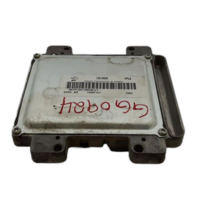
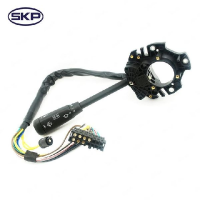
Below are the parts most often responsible for code P0591, ranked by how frequently each one is the actual culprit (per the diagnosis above). Tap any to see what we have for your vehicle.





The information in this article is provided for general reference and educational purposes only. Vehicle specifications, procedures, and part compatibility can vary by production date, trim level, and region. Always consult your vehicle's factory service manual and verify part numbers before purchasing or performing repairs. Safety-critical components such as airbags, seat belts, and braking systems should be installed by a qualified professional.
- 🧭 Diagnostic Flowchart
- 🎬 Helpful Videos
- 🛍️ Shop This Part
- What Does P0591 Mean?
- Can I Drive With P0591?
- Common Causes
- Symptoms
- Common Fixes & Costs
- DIY vs Professional
- Used vs. New Parts: Buying Guide
- What Happens If You Wait — Timeline
- Cost of Not Fixing It
- Diagnosis Steps
- When This Code Triggers (Freeze-Frame Conditions)
- Related Codes
- Climate & Environmental Factors
- How to Talk to a Mechanic About This Code
- Where to Take It: Dealer vs Independent vs Chain
- When to Walk Away From the Repair
- What Scan Tool You Need for This Code
- How to Clear the Code After You Fix It
- Will This Fail Emissions / State Inspection?
- Most Commonly Affected Vehicles
- Manufacturer-Specific Notes
- Real Owner Stories
- 2011 Jeep Wrangler JKU with multiple steering wheel control issues
- 2013 Ford F-150 with cruise control not working
- 2012 Dodge Grand Caravan with P0591 and misdiagnosis
- 2013 Jeep Wrangler with P0591 and other lights after off-roading
- How to Prevent This Code From Triggering
- Frequently Asked Questions
- Is it expensive to fix code P0591?
- What is a clock spring and why does it fail?
- I replaced the cruise control switch, but the P0591 code came back. What now?
- Can I fix P0591 myself?
- Why did my horn and airbag light come on at the same time as my cruise control failed?
- Can a bad battery cause a P0591 code?
- What does the 'B' in 'Input B Circuit' mean?
- Can a bad brake switch cause P0591?
- Key Takeaways
- 🎟️ Get 5% Off