

OBD-II Code P0599: Electronically-Controlled Thermostat Failure
The Ultimate Guide to P0599: What It Means, Why It Triggers, and How to Fix It for Good
What Does P0599 Mean?
P0599 means the Powertrain Control Module (PCM) detected a high voltage in the electronically-controlled thermostat's heater circuit. Modern cars use a thermostat with a built-in electric heater to warm the engine faster and control temperature precisely. This code indicates a short circuit or electrical fault in that specific heater circuit.
Technical definition: Thermostat Heater Control Circuit High. The PCM registered a voltage from the thermostat heater control circuit above the expected range. The PCM uses a Pulse Width Modulated (PWM) signal to control the heater; this code triggers when the monitored voltage remains high instead of pulsing low.
Can I Drive With P0599?
Yes, But With Caution. You can drive the vehicle, but repair it immediately to avoid severe engine damage. Ignoring this code leads to overheating, causing a blown head gasket ($1,500-$3,000+ repair) or catastrophic engine failure requiring a replacement ($5,000+). At a minimum, you will experience poor fuel economy and failed emissions tests.
Common Causes
- Failed Thermostat Assembly (Very Common) — The electronic heater element inside the thermostat housing develops an internal short circuit, causing the high voltage reading. The entire thermostat and housing assembly must be replaced as a single unit.
- Damaged Wiring or Electrical Connector (Common) — The wiring harness leading to the thermostat frays, melts, or corrodes, causing a short to voltage. The electrical connector pins frequently corrode from coolant leaks, creating a direct short.
- Low Engine Coolant Level (Common) — A low coolant level exposes the thermostat heater element to air instead of fluid. This causes the element to overheat and burn out, triggering the electrical fault.
- Poor Ground Connection (Less Common) — A corroded or broken ground strap creates unwanted resistance. This causes the voltage on the control side of the circuit to float high, triggering the code.
- Corroded PCM Connector (Less Common) — Moisture intrusion causes corrosion on the pins of the main Powertrain Control Module (PCM) connector. This bridges circuits, causing a short to voltage that triggers P0599.
- Aftermarket/Incorrect Thermostat Installation (Rare) — Low-quality aftermarket thermostats have incorrect internal resistance that the PCM flags as a fault. Always use OEM components for electronic thermostats.
- Faulty Powertrain Control Module (PCM) (Very Rare) — The internal driver circuit that controls the thermostat heater fails and gets stuck high, sending a constant incorrect voltage signal. This is extremely rare.
Symptoms
- Check Engine Light On — This is the first and most prominent symptom.
- Cooling Fans Run Constantly — The PCM commands the radiator cooling fans to run at full speed as a fail-safe measure to prevent overheating.
- Poor Heater Performance — The engine fails to reach proper operating temperature, causing the cabin heater to blow lukewarm air in cold weather.
- Erratic Temperature Gauge or Overheating — The dashboard temperature gauge reads unusually high, low, or fluctuates wildly. The engine overheats if the thermostat fails closed.
- Reduced Fuel Economy (also visible on scanner) — The engine stays in a richer 'open-loop' fuel mode longer than necessary, wasting fuel.
Common Fixes & Costs
- Replace Thermostat and Housing Assembly — Parts: $50-$300, Labor: $150-$500, ~1.5 hr book time (Intermediate)
- Repair Damaged Wiring or Replace Connector Pigtail — Parts: $15-$60, Labor: $100-$250, ~1.5 hr book time (Intermediate)
- Repair Coolant Leak and Refill System — Parts: $20-$100, Labor: $100-$200, ~1 hr book time (DIY)
- Replace Powertrain Control Module (PCM) — Parts: $500-$1,200, Labor: $150-$300, ~1.5 hr book time (Professional)
- Professional Diagnosis — Parts: $0, Labor: $100-$200, ~1 hr book time (Professional)
DIY vs Professional
- Replace Thermostat and Housing Assembly — Beginner: No
Tools: Socket set (may include E-Torx), torque wrench, drain pan, funnel, pliers, coolant. - Repair Damaged Wiring or Replace Connector Pigtail — Beginner: No
Tools: Multimeter, wire strippers, crimpers, heat shrink tubing, soldering iron. - Repair Coolant Leak and Refill System — Beginner: Yes
Tools: Coolant, funnel, basic hand tools.
Used vs. New Parts: Buying Guide
When a used part is worth it: Buying a used electronic thermostat is not recommended due to the high failure rate of the internal electronics and plastic housings. It is only a last resort for budget-critical repairs on a high-mileage vehicle.
Donor-vehicle mileage cap: roughly under 50000 miles for the part to have meaningful remaining life.
Donor quality checklist:
- Verify the donor vehicle was not scrapped due to engine or cooling system failure.
- Match the OEM part number exactly; do not rely on visual similarity.
- Avoid parts from rust-belt donors as connectors and wiring are compromised.
Decision logic:
- If Part is for a German vehicle (BMW, VW, Audi) known for high failure rates → Strongly prefer a new OEM or OEM-supplier part. The risk of premature failure with used or cheap aftermarket parts is very high.
- If Vehicle is over 150,000 miles and budget is the primary concern → A used part from a donor under 50k miles is a high-risk option but provides a temporary solution.
- If The cost of labor is high relative to the part cost (e.g., VW/Audi water pump/thermostat module) → Always buy a new, high-quality part to avoid paying for the complex labor a second time.
Warranty tradeoff: Used parts typically offer a 30-90 day warranty. Aftermarket new parts offer a 1-year to limited lifetime warranty. New OEM parts carry a 1-2 year warranty. Given the labor costs, a longer warranty is highly desirable.
Worst-case if a used part fails: 400-800 if a used or cheap aftermarket part fails prematurely, requiring repeat labor costs plus the price of another replacement part.
Cost of Not Fixing It
- 0-1 month: Reduced fuel economy by 5-10% due to the engine running too cool and staying in 'open-loop' mode. Poor cabin heater performance. (Added cost: 20-50 per month in extra fuel costs.)
- 1-6 months: An engine running rich for an extended period deposits unburnt fuel into the exhaust, damaging the catalytic converter by causing it to overheat. (Added cost: 1200-2800 for catalytic converter replacement.)
- 6+ months: The thermostat fails in the closed position, leading to rapid engine overheating. This causes a warped cylinder head or a blown head gasket. (Added cost: 1500-4000+ for head gasket repair or engine replacement.)
Diagnosis Steps
- Scan for Codes and Review Freeze Frame Data
Use an OBD-II scanner to confirm P0599 is present and check for any other stored codes. Codes like P0597, P0598, or P0128 provide valuable clues. Review the freeze-frame data to see the engine conditions when the code was set.
Tools: OBD-II Scanner (Beginner) - Check Coolant Level and Condition
With the engine completely cool, check the coolant level in the reservoir and radiator. A low level indicates a leak that must be found and repaired. Note the condition of the coolant; contaminated coolant causes electrical issues.
Tools: Flashlight (Beginner) - Visual Inspection of Wiring and Connectors
Locate the thermostat housing. Meticulously inspect the electrical connector and wiring harness attached to it. Look for green/white corrosion, melted plastic, pushed-back pins, or frayed wires. Trace the harness back toward the PCM, looking for chafing or heat damage.
Tools: Flashlight, Inspection Mirror (Beginner) - Test Thermostat Heater Resistance
Disconnect the thermostat's electrical connector. Set a multimeter to Ohms (Ω). Touch the multimeter probes to the two pins on the thermostat itself. A healthy GM thermostat reads 13-15 Ω, while German makes read 30-50 Ω. A reading under 5 Ω indicates a short circuit.
Tools: Multimeter (Intermediate) - Test for Voltage at the Harness Connector
With the thermostat disconnected, turn the ignition to the 'On' position (engine off). Set your multimeter to DC Volts. Connect the black lead to a chassis ground. Probe both pins on the wiring harness side. One pin has a constant power supply (12V), and the other is the control wire. If the control wire shows a constant high voltage (5V or 12V), it points to a short-to-voltage in the wiring or a faulty PCM driver.
Tools: Multimeter (Intermediate) - Verify Ground Integrity
Turn the ignition off. On the harness connector, identify the ground wire. Set your multimeter to Ohms (Ω). Place one probe on the ground pin and the other on the negative battery terminal. The reading must be less than 0.5 Ω. A high reading indicates a corroded ground connection.
Tools: Multimeter, Wiring Diagram (Intermediate) - Perform a Commanded State Test
While monitoring the voltage on the control wire with a multimeter, use a bidirectional scan tool to command the thermostat heater on and off (0% to 99%). You will see the voltage change in response. If the voltage is stuck high and the wiring is good, the PCM is faulty.
Tools: Advanced Scan Tool, Multimeter (Advanced) - Analyze Live Data PIDs
Using an advanced scan tool, monitor the 'Engine Coolant Temperature (ECT)' PID and the 'Thermostat Heater Duty Cycle' PID. If the duty cycle is commanded low (0%) but a multimeter test on the control wire shows high voltage, it confirms a short to voltage in the wiring or a failed PCM.
Tools: Advanced Scan Tool (Advanced) - Analyze the Control Signal with an Oscilloscope
Connect an oscilloscope to the thermostat heater control wire. With the engine running, you will see a Pulse Width Modulated (PWM) square wave signal. If you see a flat line at a high voltage (12V), it confirms the circuit is shorted high or the PCM driver failed.
Tools: Oscilloscope (Advanced)
When This Code Triggers (Freeze-Frame Conditions)
- Engine Coolant Temp: 150-180°F (65-82°C) (During engine warm-up phase, before reaching full operating temperature.)
- RPM: 1500-2500 (Steady-state cruise control or light, constant throttle application.)
- Engine Load: 30-60% (Light to moderate load, consistent with highway cruising.)
- Vehicle Speed: 45-65 mph (72-105 kph) (Sustained highway driving where the PCM actively manages engine temperature for efficiency.)
Related Codes
- P0597 — Thermostat Heater Control Circuit Open. Indicates a break in the circuit, like a broken wire. An open circuit shows infinite resistance (OL) on a multimeter, whereas P0599 shows very low resistance.
- P0598 — Thermostat Heater Control Circuit Low. Indicates a short to ground. The control circuit voltage is lower than expected, whereas P0599 means the voltage is higher than expected.
- P0128 — Coolant Temperature Below Thermostat Regulating Temperature. Appears if the thermostat is stuck open. P0128 is a direct consequence of the failure that caused P0599, so they frequently appear together.
- P0118 — Engine Coolant Temperature (ECT) Sensor Circuit High. Points to a high voltage signal from the primary ECT sensor itself, not the thermostat heater. They share similar symptoms like fans running constantly.
Climate & Environmental Factors
- Cold Climate: An engine failing to reach operating temperature results in significantly reduced cabin heater performance, which is immediately apparent in cold weather.
- Hot Climate / High Altitude: If the thermostat fails in a closed position, overheating occurs much more rapidly in hot weather or at high altitude where the air is less dense.
- Humidity / Moisture: High humidity or exposure to road salt accelerates corrosion on the thermostat's electrical connector pins, creating a short circuit that triggers the P0599 code.
How to Clear the Code After You Fix It
- Use an OBD-II scan tool to clear the P0599 code after the repair is complete.
- Reconnect the battery if it was disconnected for the repair.
- Perform a complete OBD-II drive cycle to allow readiness monitors to run.
Drive cycle (~20 minutes): Start the engine from cold and let it idle for 2-3 minutes. Drive in mixed city/highway conditions for 15-20 minutes, including a period of steady-speed driving (e.g., 55 mph for 5 minutes). Allow the vehicle to cool down completely to achieve one full warm-up cycle.
Readiness monitors affected: Catalyst Monitor, Evaporative System Monitor, Oxygen (O2) Sensor Monitor
Before emissions retest: drive at least 50 miles to fully set monitors.
Watch out for:
- Clearing the code without fixing the underlying electrical fault causes the code to return quickly.
- Disconnecting the battery clears the code but resets all readiness monitors, causing an immediate emissions test failure.
Will This Fail Emissions / State Inspection?
Yes — this code typically fails an OBD-II emissions inspection.
- California: An active Check Engine Light for code P0599 results in an automatic smog check failure. Readiness monitors for the catalyst and O2 systems are not 'Ready', which also causes a failure.
- New York: The NYS DMV vehicle inspection includes an OBD-II scan. An illuminated Malfunction Indicator Lamp (MIL) due to P0599 is an automatic failure.
- Texas: In the 17 counties requiring emissions testing, a vehicle with an active P0599 code fails the OBD portion of the state inspection.
Most Commonly Affected Vehicles
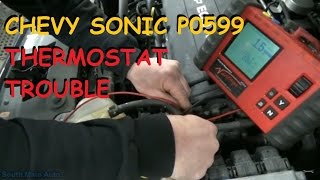
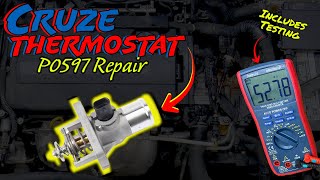
- Chevrolet Cruze, Sonic, Aveo (2011-2016) — Extremely common failure on models with 1.4L and 1.8L engines. 🎬 Watch this guide on testing and repairing Chevy Cruze thermostats. The plastic OEM housing is prone to failure. Many owners upgrade to a more durable metal housing.
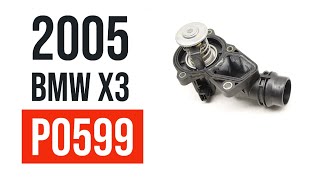
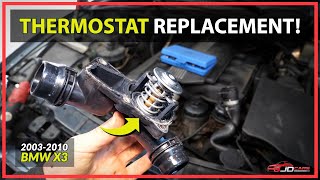
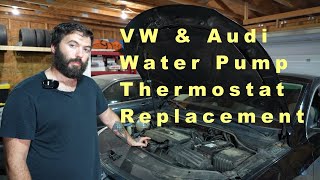
- BMW 3-Series, 5-Series, X3, X5 (2006-2017) — P0599 is a very frequent code. The fix is almost always a replacement of the entire thermostat assembly due to internal electronics failing. 🎬 See how to fix P0599 on BMW, Mini, and Audi models.
- Mini Cooper (2007-2015) — Shares powertrain technology with BMW, making it equally susceptible to this code due to failure of the plastic thermostat housing and internal electronics.
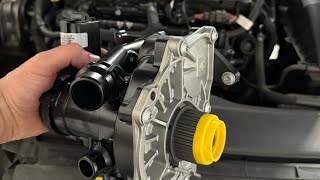
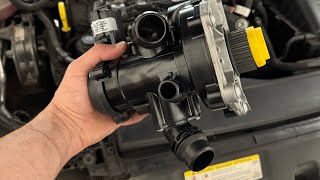
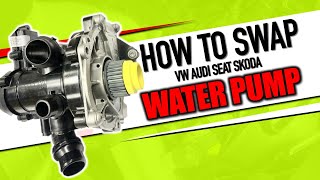
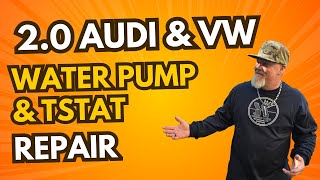
- Audi / Volkswagen A4, Jetta, Golf, Passat (2009-2016) — On EA888 engines, the thermostat is integrated with the water pump as a single module. Replacement is complex and costly due to the need to remove the intake manifold. 🎬 Watch a walkthrough of this complex VW/Audi water pump replacement.
- Ford Explorer, Ranger (2002-2010) — The 4.0L SOHC engine is known for its two-piece plastic thermostat housing cracking and leaking coolant. This leak corrodes the wiring connector, triggering P0599.
- Mercedes-Benz Various Models (2005-2015) — Mercedes-Benz widely uses electronically controlled thermostats to improve efficiency, making them a common source for this fault code.
- Jeep / Dodge / Ram Various Models (2011-2019) — Electronically controlled thermostats are used across these brands, frequently leading to a thermostat replacement when P0599 appears.
- Hyundai Various Models (2011-2018) — This code appears on Hyundai vehicles equipped with electronically controlled thermostats, though less frequently than German makes.
Manufacturer-Specific Notes
- General Motors (Chevrolet): On Cruze and Sonic models, a failed thermostat heater causes the A/C to be disabled and displays an 'AC Off Due to High Engine Temp' message, even if the engine is cold. Check for Special Coverage N242484760, which extends the warranty on the thermostat to 15 years/150,000 miles.
- BMW / Mini: These brands use map-controlled thermostats to run the engine hotter during cruise and cooler under load. For certain models with the N63R engine, BMW has an extended warranty for the thermostat (15 years/150,000 miles) under service bulletin SI B01 01 21.
- Volkswagen / Audi: On EA888 engines, the thermostat and water pump are sold as a single, integrated assembly. If you have a P0599 code, you must replace the entire module. VW/Audi released updated part numbers (latest is 06L121111P) to address premature cracking.
- Ford: On the 4.0L SOHC engine, the plastic thermostat housing is a known failure point that leaks coolant. When replacing the housing, you MUST use a new O-ring for the coolant temperature sensor to prevent a new leak.
Helpful Videos
Shop the Parts Behind P0599
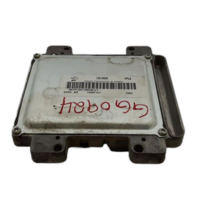
Below are the parts most often responsible for code P0599, ranked by how frequently each one is the actual culprit (per the diagnosis above). Tap any to see what we have for your vehicle.



The information in this article is provided for general reference and educational purposes only. Vehicle specifications, procedures, and part compatibility can vary by production date, trim level, and region. Always consult your vehicle's factory service manual and verify part numbers before purchasing or performing repairs. Safety-critical components such as airbags, seat belts, and braking systems should be installed by a qualified professional.
- 🎬 Helpful Videos
- 🛍️ Shop This Part
- What Does P0599 Mean?
- Can I Drive With P0599?
- Common Causes
- Symptoms
- Common Fixes & Costs
- DIY vs Professional
- Used vs. New Parts: Buying Guide
- Cost of Not Fixing It
- Diagnosis Steps
- When This Code Triggers (Freeze-Frame Conditions)
- Related Codes
- Climate & Environmental Factors
- How to Clear the Code After You Fix It
- Will This Fail Emissions / State Inspection?
- Most Commonly Affected Vehicles
- Manufacturer-Specific Notes
- 🎟️ Get 5% Off