

P0601 on 2004-2011 Audi A6 2.0L TFSI: Internal Memory Error Causes and Fixes
P0601 on an Audi A6 almost always means the Engine Control Module (ECM) has failed its internal self-test. The most common fix is replacing the ECM, which requires professional programming. Before replacement, a crucial first step is checking for an available software update per Audi TSB 24-08-82, which can sometimes resolve the fault. Expect costs to range from $800 to over $2,200.
- P0601 is a critical fault indicating an internal failure of the Engine Control Module (ECM).
- Do not drive the vehicle, as it can stall unexpectedly at any time.
- Before replacing the ECM, have a dealer or specialist check if a software update according to TSB 2017905 is applicable and can fix the issue.
- If the ECM must be replaced, it is not a simple DIY job. The new module must be professionally programmed or cloned to the car's systems.
What's Unique About the 2004-2011 Audi A6
For the Audi A6 (C6 generation) with the 2.0L TFSI EA113 engine, a P0601 code is a serious issue often pointing directly to ECM failure. While low voltage can trigger this code on many cars, on this platform it is frequently a sign of terminal hardware failure within the Bosch Motronic MED9.1 module itself. Audi issued a Technical Service Bulletin (TSB 24-08-82 / 2017905) for some 2.0L TFSI engines of this era related to ECM software, which could potentially cause this code, making a software update check a crucial first step before condemning the expensive hardware.
Symptoms You May Notice
- Check Engine Light is on
- EPC (Electronic Power Control) light may also be illuminated
- Engine may crank but will not start
- Intermittent stalling while driving
- Vehicle enters 'limp mode' with severely reduced power and a low RPM limit (e.g., under 1700 RPM)
- Rough or unstable idle
- No noticeable symptoms other than the Check Engine Light (in rare, early-stage cases)
- Replacing sensors or other engine components. P0601 is specific to the control module's internal integrity; it is not caused by a faulty oxygen sensor, MAF sensor, or other external parts. Always investigate P0601 first, as it can cause other false codes.
Most Likely Causes
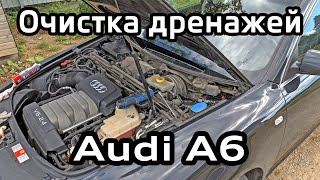
- Engine Control Module (ECM) Internal Failure 🔴 High Probability → Shop Engine Control Module (ECM) Heat cycles, vibration, and age can lead to internal hardware failure or memory corruption within the Bosch Motronic MED9.1 ECMs used in these vehicles. Water ingress into the plenum chamber where the ECM is located is also a common cause of failure on the C6 platform. 🎬 See how to clean drains to prevent water damage to electronics.
How to confirm: After ruling out all other possibilities (power/ground issues, software), the diagnosis points to the ECM itself. This is a process-of-elimination diagnosis. If a reflash fails or is not applicable, the module is condemned.
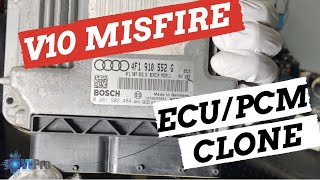
Typical fix: The ECM must be replaced and programmed by a dealer or a qualified independent shop with the correct tools. Alternatively, cloning services exist where the data from the old ECM is transferred to a compatible used or new donor unit, which can be a more affordable plug-and-play option. 🎬 Watch: How a specialist clones an Audi MED9.1 control module.
Est. part cost: $800-$1871 - ECM Software Glitch / Needs Update 🟡 Medium Probability Audi released a TSB (2017905 / 24-08-82) for certain 2.0L TFSI engines (including BPJ, BPY, BWA, etc.) that addresses software issues which can trigger this fault. This is a well-documented fix in owner forums for platform mates like the MK5 GTI.
How to confirm: A dealer or specialist with an ODIS (Audi diagnostic) interface can check the current software version against the TSB to see if an update is available and required.
Typical fix: Flashing the ECM with the updated software version. This must be done professionally and typically costs a few hundred dollars. Note that this will overwrite any aftermarket engine tunes.
Est. part cost: $0 - Low Battery Voltage or Poor Power/Ground Connection ⚪ Low Probability → Shop Vehicle Battery While less common as the root cause for a persistent P0601, voltage drops during cranking or operation can corrupt the ECM's memory self-check process. Audis of this era have complex electrical systems that are sensitive to battery health.
How to confirm: Test the battery to ensure it holds a charge above 12.5 volts and has good cranking amps. Perform a voltage drop test on the ECM's main power and ground wires. Voltage drop should be less than 0.1V on grounds and 0.2V on power wires under load. Check for corrosion on battery terminals and main chassis ground points.
Typical fix: Replace a weak battery, clean corroded terminals, or repair the faulty power/ground wiring to the ECM.
Est. part cost: $150-$300
Rare But Worth Checking
- Aftermarket Engine Tuning ('Chip'): If the vehicle has been tuned with aftermarket software, a poorly written file or an interrupted flash process can corrupt the ECM's memory, causing a P0601 code. Sometimes this error appears long after the tune was installed.
- Voltage Spikes from a Failing Alternator: → Shop Alternator A faulty alternator can produce voltage spikes or excessive AC ripple that can damage sensitive electronics, including the ECM. It's critical to test the charging system output for stability, not just voltage.
Diagnosis Steps
- Scan the vehicle for any other fault codes. If other codes are present, address them first, but P0601 often indicates the primary failure.
- Check for relevant Technical Service Bulletins (TSBs). Specifically, check for TSB 2017905 / 24-08-82 for the 2.0L TFSI engine to see if a software update is required. This is a critical first step.
- Thoroughly test the battery and charging system. Ensure the battery voltage is stable and above 12.5V with the engine off. Check that the alternator is charging correctly (typically 13.5-14.5V) and is not producing excessive AC ripple or voltage spikes.
- Inspect all power and ground connections to the ECM. Look for corrosion, looseness, or damage. Perform a voltage drop test on these critical circuits while the system is under load.
- If the vehicle has an aftermarket engine tune, contact the tuning company for support or attempt to flash the ECM back to the stock factory file. A dealer software update will erase the tune.
- If a software update is applicable, have it performed by a qualified shop.
- If all external factors (software, power, grounds) are confirmed to be good, the ECM is faulty. The next step is replacement or sending it to a specialist for cloning/repair.
Parts You'll Likely Need
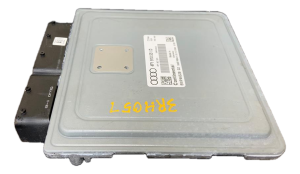
- Engine Control Module (ECM)
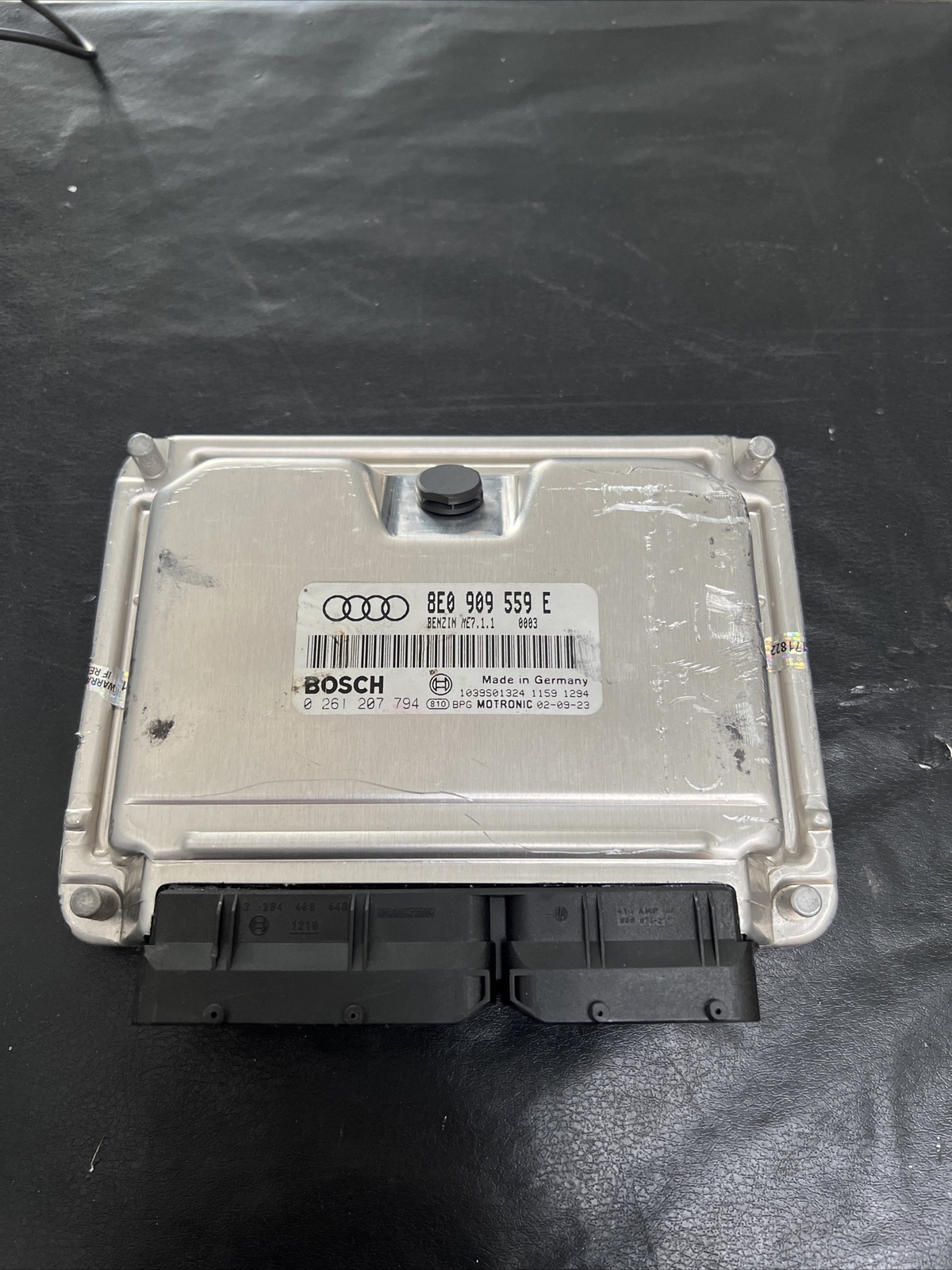
(OEM #Varies by year/model, e.g., 4F0910115B (Note: Always match the full Bosch part number from your original unit, e.g., 0261S02464))— This code indicates an internal, non-serviceable failure of the ECM in the vast majority of cases after software and power issues are ruled out.
Trusted brands: Bosch (OEM)
OEM price range: $1200-$1871
Aftermarket price range: $700-$1100 (Remanufactured or cloned)
Related Codes That Often Appear With This One
- U-series codes (e.g., U0100) indicating a loss of communication with the ECM. 🎬 Watch: How to diagnose an ECU with no communication.
- P0606 (ECM/PCM Processor Fault), another internal module failure code.
Technical Service Bulletins (TSBs) & Recalls
- Audi TSB 2017905 / 24-08-82: Addresses an ECM software update for some 2.0L TFSI engines (BPJ, BPY, BWA, etc.) that can present with a P0601 fault. Also applies to A3 (8P) and A4 (8E/8H) models.
Platform-Specific Known Issues
- A known software issue covered by Audi TSB 2017905 / 24-08-82 can cause P0601 on some 2.0L TFSI engines in the A6 (4F chassis). An ECM software update may resolve the issue without requiring replacement.
- Some owners have successfully used ECM cloning services as a cost-effective alternative to dealer replacement. This involves sending the original and a donor ECM to a specialist who transfers the programming, creating a plug-and-play unit.
Mechanic-Grade Diagnostic Values
- ECM Power/Ground Voltage Drop — expected: Less than 0.2V on power wires, less than 0.1V on ground wires.. Failure: A reading higher than the expected value indicates high resistance in the circuit, which can cause the ECM to malfunction and set a P0601. This test must be done while the circuit is under load (e.g., key on, engine cranking).
- Minimum Cranking Voltage at ECM — expected: At least 9.6V.. Failure: Voltage dropping below 9.6V during cranking can corrupt the ECM's self-test process. This indicates a weak battery or excessive starter draw.
- CAN Bus Resistance — expected: Approximately 60 Ohms between CAN High and CAN Low pins at the OBD-II port (with battery disconnected).. Failure: A reading of 120 Ohms suggests one of the two terminating resistors is offline. A reading of 0 Ohms or continuity to ground indicates a short circuit on the CAN bus, which can disrupt ECM communication.
- CAN Bus Voltage (Key On) — expected: CAN High: ~2.7V - 3.3V. CAN Low: ~1.7V - 2.3V.. Failure: Voltages outside these ranges suggest a problem with a module on the bus or a wiring fault.
Scan Tool Commands That Help
- ODIS (Offboard Diagnostic Information System): Guided Functions > Component Protection Removal — This function is mandatory after installing a new or used ECM. It requires an online connection (GEKO account) to synchronize the module with the vehicle's factory data and remove the anti-theft lock, which would otherwise prevent the car from starting or running correctly.
- ODIS (Offboard Diagnostic Information System): SVM (Software Version Management) — Used to check if the ECM's current software is up to date and to perform a software flash if a TSB like 24-08-82 applies. This function also connects to Audi's servers to ensure the correct software version is installed for the vehicle's specific hardware.
Wiring & Ground Locations
- Engine Control Module (ECM/J623) — Located in the engine compartment, on the passenger side, inside a black plastic box within the plenum chamber (under the windshield rain tray).. This location is prone to water ingress if the plenum drains become clogged with leaves and debris. Water intrusion is a primary cause of corrosion and internal short circuits within the MED9.1 ECM, leading directly to P0601.
- ECM Main Power Pins (T94 connector) — On the larger 94-pin connector at the ECM. Specific pins for +12V (Terminal 30) are typically Pin 3 and Pin 4. These should be tested for stable voltage.. A voltage drop test must be performed on these main power supply pins to rule out a high-resistance power feed from the relay or fuse box before condemning the ECM.
- ECM Main Ground Pins (T94 connector) — On the larger 94-pin connector at the ECM. Main ground pins are typically Pin 1 and Pin 2.. A poor ground connection is a common cause of intermittent electronic issues. A voltage drop test between these pins and the battery negative terminal is essential to confirm the ECM has a solid ground path.
- ECM Connector Shear Bolts — Securing the wiring harness connectors to the ECM housing.. These are one-time-use security bolts with heads that break off upon installation. Removal requires special techniques, such as using Vise-Grips on the remaining head or cutting a slot with a Dremel tool for a flathead screwdriver. Technicians need to be prepared for this extra step.
Real Owner Repair Stories
- MHH AUTO Forum (Audi A4 B7 2.0L TFSI (same MED9.1 ECU family)) — Original ECU was burnt and would not communicate.
❌ Tried (didn't work) The owner acquired a used replacement ECU with a different software version number (but same hardware family).
✅ What actually fixed it The resolution path discussed by experts was that a simple swap and ODIS adaptation would likely fail due to the software mismatch. The correct fix would require a full read of the original ECU's memory via BDM (Bench Definition Mode) if possible, or flashing the donor ECU on the bench with the correct software file for the car's specific engine and features before installation. This highlights that even with compatible hardware, advanced programming beyond dealer-level tools may be necessary for used modules.
"I Checked Everything" — The Actual Cause
- A common scenario for P0601 is that all external electrical tests (battery, alternator, voltage drop on wires) check out perfectly, leading a technician to believe the ECM must be bad. The 'actual cause' that is often missed during the initial check is intermittent failure due to water damage. The ECM is located in the plenum chamber, and if the drains are clogged, water can pool and seep into the 'waterproof' ECM box. An owner on an Audi forum detailed a long-term issue where water was consistently getting into the ECU area, which would eventually lead to corrosion and failure, even if the car was dry when tested.
OEM Part Supersession History
e.g., 8E1 910 115 B (Software)→e.g., 8E1 910 115 G (Software)— Software updates and revisions.
Heads up: The Bosch MED9.1 family has many hardware and software variations. It is critical to match the full Bosch part number (e.g., 0261S02464) and the Audi software part number. Using an ECU with a different software number, even if the main Audi part number (e.g., 8E0 907 115 D) is the same, will likely require advanced bench flashing (BDM) to make it compatible. A simple online adaptation with ODIS may not work.
Model Year Variations Within This Range
- 2005-2011: The 2.0L TFSI engine in the C6 A6 came with several engine codes, most commonly BPJ and BYK. The TSB for the P0601 software update specifically calls out the BPJ engine code, among others. It is important to identify the engine code (found on the engine block or vehicle data sticker) to confirm TSB applicability.
Diagnostic Flowchart
Other Known Issues on This Vehicle
Issues unrelated to this code that are worth knowing about as an owner of this generation:
- High-Pressure Fuel Pump (HPFP) Cam Follower Wear 🔴 High — Very common. Recommended as a preventative maintenance item to be inspected every 20,000-30,000 miles and replaced as needed. Failure can destroy the camshaft. (Ref: A warranty extension (10-year/120k miles) was offered in some cases for failed components, but preventative replacement is key.)
- Excessive Oil Consumption 🔴 High — Widespread issue, often appearing between 25,000 and 80,000 miles. Consumption can exceed 1 quart per 1,000 miles. Caused primarily by faulty piston ring design. (Ref: Audi addressed this with updated piston rings and software in later engines, and dealers performed consumption tests to approve piston/ring replacement under warranty or goodwill for affected vehicles.)
- PCV (Positive Crankcase Ventilation) Valve Failure 🟠 Medium — Common failure item with age. Can cause boost leaks, high oil consumption, rough idle, and blue smoke from the exhaust.
- Intake Valve Carbon Buildup 🟠 Medium — Inevitable on all direct-injection engines like the TFSI. Typically requires cleaning (e.g., walnut blasting) every 50,000-80,000 miles to restore performance and prevent misfires. (Ref: An Audi TSB exists acknowledging issues from poor fuel quality, which contributes to deposits.)
- Diverter Valve (DV) Diaphragm Failure 🟡 Low — The original diaphragm-style DV is prone to tearing, causing a loss of boost pressure (underperformance). It's a common and relatively easy upgrade/repair.
Used vs. New Parts: Buying Guide for This Vehicle
When a used part is the smart pick: A used ECM is a smart, cost-effective choice for this repair, but ONLY if you use a cloning service or have access to advanced bench programming tools. A used ECM cannot be simply installed and coded with standard dealer tools; the immobilizer and component protection data must be transferred from the original unit.
Donor-vehicle mileage cap: roughly under 120000 miles for the part to have meaningful remaining life.
What to inspect on the donor part:
- Match the Bosch hardware part number (e.g., 0261 S02 464) and the Audi software part number (e.g., 8E1 910 115 B) EXACTLY. Mismatched numbers will cause compatibility issues.
- Inspect the donor ECM's connectors for any signs of corrosion, bent pins, or water damage.
- Obtain the donor vehicle's VIN if possible to cross-reference its original equipment and engine code.
- Buy from a reputable dismantler with a warranty and return policy.
OEM-only on this vehicle (don't cheap out):
- Engine Control Module (ECM) - While a used OEM part is viable, aftermarket 'rebuilt' ECMs have a mixed reputation. The safest options are a new OEM unit from a dealer or a used OEM unit that is professionally cloned.
Brands owners have reported issues with on this vehicle:
- Be cautious of generic 'remanufactured' ECMs from unknown online sellers without a solid warranty and clear programming/cloning instructions.
Real Owner Stories
Aggregated from forums and TSBs cited above. Mileages and costs reflect what owners reported in those sources.
2006 Audi A6 Avant
Symptoms: ECM failure requiring replacement.
What fixed it: Used an ECM cloning service (Speedometer Solutions) to program a new OEM module, which avoided expensive dealer coding.
Cost: $0-$160
Source hint: AudiWorld Forums thread titled 'PSA: Low-Cost Option for Replacing ECM'
2006 VW GTI 2.0T FSI (Platform Mate)
Symptoms: Diagnostics showed error code P0601.
What fixed it: A dealer software update (flashing the ECM).
Cost: $80-$100
Source hint: mk5golfgti.co.uk thread titled 'Error code P0601 on Diagnostics UPDATE!!!!!!!!'
Audi A4 2.0 TFSI Quattro (Platform Mate)
Symptoms: Troubleshooting P0601; attempted to use a cloned used ECU which unfortunately introduced new fault codes.
What fixed it: The owner highlighted the complexity of the replacement process after the cloned unit failed to resolve the issue cleanly.
Source hint: Audi-Sport.net thread titled 'help with my ecu code p0601'
VW GTI 2.0T FSI (Platform Mate)
Symptoms: Vehicle entered limp mode with a P0601 Internal Check Sum Fault.
What fixed it: The owner noted the fault occurred on a tuned vehicle, suggesting the aftermarket tune was a potential factor.
Source hint: Reddit r/VWMK7 thread titled 'P0601 Internal Check Sum Fault'
Related OBD-II Codes
Frequently Asked Questions
Does Audi TSB 2017905 / 24-08-82 apply to my A6 2.0L TFSI?
Can I fix the P0601 code on my A6 without replacing the entire ECM?
Is the ECM in the 2004-2011 Audi A6 (C6) tied to the immobilizer system?
Why is my Audi A6 entering 'limp mode' with a 1700 RPM limit?
Could a weak battery cause a P0601 code on my Audi?
Will a dealer software update affect my aftermarket engine tune?
Helpful Videos

We Have This Part in Stock

The information in this article is provided for general reference and educational purposes only. Vehicle specifications, procedures, and part compatibility can vary by production date, trim level, and region. Always consult your vehicle's factory service manual and verify part numbers before purchasing or performing repairs. Safety-critical components such as airbags, seat belts, and braking systems should be installed by a qualified professional.
- Audi A6:
- 🧭 Diagnostic Flowchart
- 🎬 Helpful Videos
- 🛍️ Shop This Part
- What's Unique About the 2004-2011 Audi A6
- Symptoms You May Notice
- Most Likely Causes
- Rare But Worth Checking
- Diagnosis Steps
- Parts You'll Likely Need
- Related Codes That Often Appear With This One
- Technical Service Bulletins (TSBs) & Recalls
- Platform-Specific Known Issues
- Mechanic-Grade Diagnostic Values
- Scan Tool Commands That Help
- Wiring & Ground Locations
- Real Owner Repair Stories
- "I Checked Everything" — The Actual Cause
- OEM Part Supersession History
- Model Year Variations Within This Range
- Other Known Issues on This Vehicle
- Used vs. New Parts: Buying Guide for This Vehicle
- Real Owner Stories
- 2006 Audi A6 Avant
- 2006 VW GTI 2.0T FSI (Platform Mate)
- Audi A4 2.0 TFSI Quattro (Platform Mate)
- VW GTI 2.0T FSI (Platform Mate)
- Related OBD-II Codes
- Frequently Asked Questions
- 🎟️ Get 5% Off