

P0601 on 2008-2015 Buick Enclave: Internal Memory Error Causes & Fixes
P0601 on a Buick Enclave indicates a critical internal failure in a control module, most commonly the Engine Control Module (ECM) or Transmission Control Module (TCM). The fix almost always requires replacing the faulty module and professional programming, with costs typically ranging from $800 to over $1,200. It is crucial to identify which module set the code before replacing parts.
- P0601 is a critical fault indicating an internal failure of a control module's memory.
- On a 2008-2015 Buick Enclave, the fault can be in the Engine Control Module (ECM) OR the Transmission Control Module (TCM).
- Diagnosis MUST begin by identifying which module stored the code.
- This is not a DIY repair. The fix requires replacing the faulty module and using specialized equipment to program the new one.
- Before condemning the module, always verify the battery and charging system are healthy and that the module's power/ground connections are clean and secure.
What's Unique About the 2008-2015 Buick ENCLAVE
What's unique to the Buick Enclave and its GM Lambda platform mates (like the Acadia and Traverse) is that P0601 is not exclusively an engine computer (ECM) problem. Manufacturer service bulletin PIP4653E specifically warns technicians that DTCs P0601, P0603, P0604, etc., can be stored in the Transmission Control Module (TCM). The bulletin stresses: "Make sure that you know which module (for example ECM, FPCM or TCM) has set the DTC before attempting to diagnose and repair this condition." This is a crucial distinction, as symptoms like poor shifting could be misdiagnosed as a mechanical transmission failure when the root cause is actually a faulty TCM reporting a P0601.
Diagnostic Flowchart
Tap your situation to follow the diagnostic path that matches what you're seeing on this vehicle.
Symptoms You May Notice
- Check Engine Light is on
- Vehicle may not start or is hard to start
- Engine may stall intermittently, sometimes less than a minute after starting
- Erratic or harsh transmission shifting
- Reduced engine power or 'limp mode' activation
- ABS and Traction Control lights may illuminate
- In some cases related to TCM wiring faults, door locks may cycle erratically when hitting bumps
- Replacing transmission components like solenoids when the TCM is the actual cause.
- Assuming the fault is in the ECM when it is actually in the TCM, as warned in TSB PIP4653E.
- Replacing a module without first verifying the integrity of its power, ground, and data bus wiring.
Most Likely Causes
- Failed Engine Control Module (ECM/PCM) 🔴 High Probability → Shop Engine Control Module (ECM) Internal hardware failure from age, heat cycles, or voltage spikes is the most direct cause of a memory checksum error. This is a terminal fault for the module.
How to confirm: After verifying power and ground connections to the ECM are stable, a professional scan tool is used to confirm the code is originating from the ECM. An attempt to re-flash the software may be made; if it fails or the code returns, the ECM is condemned. A Reddit user with a 2008 Enclave experienced this exact scenario.
Typical fix: Replace the Engine Control Module and program the new unit to the vehicle's VIN and security system.
Est. part cost: $350-$700 - Failed Transmission Control Module (TCM) 🟡 Medium Probability → Shop Transmission Assembly As cited in GM TSB #PIP4653E, the TCM on this platform is a known source for P0601, often leading to shifting problems alongside the Check Engine Light. The TCM is located inside the transmission, integrated with the valve body (a TEHCM unit), making replacement more labor-intensive.
How to confirm: Use a scan tool capable of reading codes from all modules (e.g., Tech 2 or GDS2) to verify that P0601 is stored in the TCM, not the ECM.
Typical fix: Replace the Transmission Control Module. This requires removing the transmission oil pan and valve body. The new TCM must be programmed.
Est. part cost: $400-$800 - Poor Power or Ground Connections to a Module ⚪ Low Probability
How to confirm: Visually inspect the wiring harness and connectors at the suspect module (ECM or TCM) for corrosion or damage. Perform a voltage drop test on the main power and ground wires. A known issue on Lambda platform vehicles is the chafing of the TCM wiring harness where it passes near the frame or other components, leading to shorts or opens.
Typical fix: Clean or repair the corroded or damaged wiring, connectors, or ground points. In cases of chafing, the damaged section of the harness must be repaired and rerouted or protected to prevent recurrence.
Est. part cost: $10-$250 - Low Battery Voltage or Charging System Fault ⚪ Low Probability → Shop Vehicle Battery Unstable voltage from a weak battery or failing alternator can disrupt a module during its power-up self-test, occasionally triggering a false checksum error. Technicians often recommend checking the battery and its connections first to avoid a misdiagnosis.
How to confirm: Test the battery voltage with a multimeter (should be >12.4V with engine off). Test the alternator output with the engine running (should be 13.7-14.7V). Check for corroded or loose battery terminals.
Typical fix: Replace the battery or alternator if they fail testing.
Est. part cost: $150-$500
Rare But Worth Checking
- Failed Aftermarket Programming: If the vehicle has had an aftermarket performance tune installed, a bad flash or incompatible software can corrupt the module's memory and cause a P0601 code.
Diagnosis Steps
- Use a professional-grade scan tool to confirm which module (ECM, TCM, etc.) has stored the P0601 code. This is the most critical first step, as stressed by GM TSB PIP4653E.
- Check for any other accompanying trouble codes. Multiple unrelated codes can point to a failing module.
- Thoroughly test the vehicle's battery and charging system. Ensure voltage is stable and within the correct range (13.7-14.7V when running).
- Inspect the power and ground connections at the specific module that set the code. Look for any signs of corrosion, looseness, or damage.
- Specifically inspect the TCM wiring harness for signs of chafing against the vehicle frame or engine components, a known issue on this platform.
- If wiring and voltage are confirmed to be good, the fault is internal to the module.
- As a final diagnostic step, a technician may attempt to re-flash the module with the latest factory software. If the process fails or the code returns immediately, the module's hardware has failed.
- Replace the faulty control module.
- Program the new module to the vehicle using specialized equipment like a Tech 2 or GDS2.
Parts You'll Likely Need
- Engine Control Module (ECM/PCM)
(OEM #12636355, 12630594, 12617230)— This is the most common cause of P0601 when symptoms are engine-related. The internal memory has failed.
Trusted brands: ACDelco (OEM), GM Genuine
OEM price range: $400-$700
Aftermarket price range: $250-$500 - Transmission Control Module (TCM)
(OEM #24261875, 24275870, 24264346, 24249193, 24256861)— A known issue on this platform, as documented by GM TSBs, causing P0601 and transmission-related symptoms. It is located inside the transmission.
Trusted brands: ACDelco (OEM), GM Genuine
OEM price range: $500-$800
Aftermarket price range: $300-$600
Related Codes That Often Appear With This One
- P0603 — Internal Control Module Keep Alive Memory (KAM) Error, another type of module memory fault often listed in the same TSBs.
- P0604 — Internal Control Module Random Access Memory (RAM) Error, related to module memory integrity.
- P0606 — ECM/PCM Processor Fault, a general processor failure that can accompany a specific memory error.
- P1621 — Control Module Long Term Memory Performance, often cited alongside P0601 in GM TSBs for the TCM.
Technical Service Bulletins (TSBs) & Recalls
- PIP4653E: Diagnostic information for DTCs P0601, P0603, P0604, P062F, or P1621 stored in the Transmission Control Module (TCM).
- 05-06-04-060A: Informational bulletin regarding various control module DTCs (including P0601) that can be set in multiple modules.
Platform-Specific Known Issues
- TSB #PIP4653E explicitly notes that on the 2008-2014 Enclave, DTC P0601 can be stored in the Transmission Control Module (TCM), causing a Malfunction Indicator Lamp. It stresses the importance of verifying which module set the code before starting repairs.
- TSB #05-06-04-060A is an informational bulletin that groups P0601 with other control module DTCs, indicating that these faults can be shared across multiple different modules in the vehicle.
- Wiring Harness Chafing: Owners of Lambda platform vehicles (Enclave, Acadia, Traverse) have reported issues where the TCM wiring harness rubs against the chassis or other components, causing shorts, opens, and loss of communication with the TCM, which can manifest as various codes and symptoms.
Mechanic-Grade Diagnostic Values
- Battery Voltage (Engine Off) — expected: >12.4 Volts. Failure: Voltage below 12.4V indicates a weak or discharged battery that can cause false module codes.
- Charging System Voltage (Engine Running) — expected: 13.7 - 14.7 Volts. Failure: Voltage outside this range indicates a faulty alternator or charging system issue, which can lead to module instability.
- TCM Power Pin Voltage — expected: Approx. 12 Volts (matches battery voltage). Failure: Low or no voltage points to wiring issues, such as blown fuses or breaks in the power supply wire.
- TCM Ground Pin to Chassis Ground — expected: Continuity (near 0 ohms resistance). Failure: High resistance or no continuity indicates a bad ground connection, which is a common cause of module communication errors.
Scan Tool Commands That Help
- GDS2 / Techline Connect (SPS2): Replace and Program Module — This function is required when a new ECM or TCM is installed. It flashes the module with the correct vehicle-specific software and VIN.
- GDS2 / Techline Connect (SPS2): Reprogram Module — Used to update an existing module with the latest software from GM. This is sometimes attempted as a fix before replacement, but often fails if P0601 is due to a hardware fault.
- Professional Scan Tool (GDS2 capable): Crankshaft Position Variation Learn — This procedure is often necessary after replacing the ECM. If not performed, the Check Engine Light may illuminate with codes like P0315, even if the car runs.
- GDS2 / Techline Connect: Clear All DTCs — This should be performed after a successful programming event to ensure no old fault codes remain in the system.
Wiring & Ground Locations
- TCM Harness Chafing Point 1 — Against the black metal ECM/TCM mounting bracket in the driver's side wheel well area.. Vibration can cause the harness to rub through on the bracket's edge, shorting wires for the TCM and causing communication loss or faults like P0601.
- TCM Harness Chafing Point 2 — Near the driver's side upper control arm.. As the suspension moves, the harness can make contact with the control arm, leading to chafing and wire damage over time.
- G103 — On the left side of the engine compartment, on the inner fender panel or cowl, sometimes near the brake booster.. This is a primary ground point for the BCM and other modules. A poor connection here can cause widespread electrical issues, including module communication problems that could mimic an internal fault.
- G110 / G113 — G110 is on the right front of the engine cylinder head. G113 is on the left side of the engine, often at an engine-to-transmission stud.. These are critical engine and transmission grounds. A loose or corroded connection at G113 can directly impact the TCM and ECM grounding integrity.
- TCM Main Connector — On the side of the transmission, accessible from underneath the vehicle.. The wires entering the back of this connector are a known failure point. They can break or corrode from stress and exposure, causing intermittent or total loss of communication with the TCM.
Real Owner Repair Stories
- Reddit user on r/MechanicAdvice (2008 GMC Acadia) — Check Engine Light on, vehicle had limited power but would still drive.
❌ Tried (didn't work) The mechanic replaced the TCM.
✅ What actually fixed it The new TCM was not programmed. After installation, the vehicle would no longer go into gear at all. The story highlights the absolute necessity of programming a new module, as simply swapping the part created a worse problem. - YouTube channel Codeman's Auto (GMC Acadia (Lambda Platform mate)) — Loss of communication with TCM, traction control light on, door locks cycling erratically, and harsh downshifting when hitting bumps.
❌ Tried (didn't work) Checking all fuses and relays, which were found to be good.
✅ What actually fixed it A visual inspection of the TCM wiring harness near the main connector revealed several broken and corroded wires where the harness had been rubbing. Repairing the damaged wires restored communication and fixed all symptoms. - Reddit user on r/MechanicAdvice (2008 Buick Enclave CXL) — P0601 code, vehicle would start, run for less than a minute, then stall. Traction control and airbag lights were also on.
❌ Tried (didn't work) Replacing the Cam and Crank sensors after the new PCM was installed.
✅ What actually fixed it The initial problem was a faulty PCM (ECM). However, after a dealership programmed and installed a new PCM, the car would only crank and not start, now showing new codes (P0016, P0315). The story illustrates that even with correct programming, secondary issues or the need for additional procedures like a crankshaft variation relearn can complicate the repair.
OEM Part Supersession History
24256861 (TCM)→Interchangeable with 24257038, among others.— Part revisions and updates by the manufacturer.
Heads up: Crucially, these modules are not plug-and-play. Regardless of the part number, a new or used TCM must be programmed to the specific vehicle's VIN using GM's SPS software. Failure to program will result in a no-start or no-move condition.
Model Year Variations Within This Range
- 2009+: The 2009 model year introduced the direct-injected 3.6L LLT engine, replacing the port-injected LY7 from 2008. This change involves a different Engine Control Module (ECM) and engine management software. While the P0601 fault is the same, the specific ECM part numbers and software files will differ between 2008 and 2009-2015 models.
Helpful Videos
Used OEM Parts in Stock
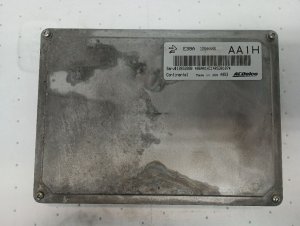
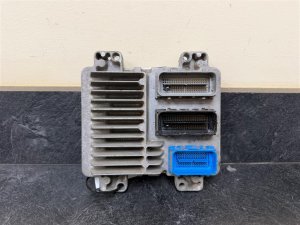
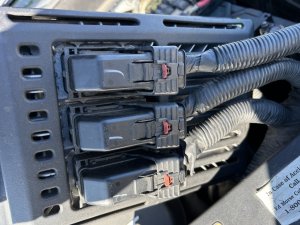
New Aftermarket Parts Available

The information in this article is provided for general reference and educational purposes only. Vehicle specifications, procedures, and part compatibility can vary by production date, trim level, and region. Always consult your vehicle's factory service manual and verify part numbers before purchasing or performing repairs. Safety-critical components such as airbags, seat belts, and braking systems should be installed by a qualified professional.
- Buick ENCLAVE:
- 🧭 Diagnostic Flowchart
- 🎬 Helpful Videos
- 🛍️ Shop This Part
- What's Unique About the 2008-2015 Buick ENCLAVE
- Symptoms You May Notice
- Most Likely Causes
- Rare But Worth Checking
- Diagnosis Steps
- Parts You'll Likely Need
- Related Codes That Often Appear With This One
- Technical Service Bulletins (TSBs) & Recalls
- Platform-Specific Known Issues
- Mechanic-Grade Diagnostic Values
- Scan Tool Commands That Help
- Wiring & Ground Locations
- Real Owner Repair Stories
- OEM Part Supersession History
- Model Year Variations Within This Range
- 🎟️ Get 5% Off