

P0601 on 2007-2014 Buick LaCrosse: Internal Module Memory Error Causes and Fixes
P0601 on a Buick LaCrosse indicates a fatal internal memory error in a control module, usually the Powertrain Control Module (PCM) or Transmission Control Module (TCM). The most common fix is replacing the faulty module, which requires professional programming. Expect costs to range from $800 to over $1,200. This is a hard failure and cannot be ignored, as it can lead to a no-start or stalling condition.
- P0601 is a critical code indicating an internal failure of a major control module, most often the PCM or TCM.
- Do not continue to drive the vehicle, as it may stall or fail to start at any time.
- Before condemning the expensive module, always test the battery and charging system thoroughly, as low voltage is a common trigger.
- The fix almost always requires replacing the faulty module, which must be professionally programmed to your car's VIN.
- Check for GM Technical Service Bulletins (TSBs), as they acknowledge this code can appear in different modules, including the TCM. [Bulletin #PIP4653E]
What's Unique About the 2007-2014 Buick LACROSSE
For the 2007-2014 Buick LaCrosse, which spans two different vehicle generations, GM has issued technical service bulletins acknowledging that code P0601 is a known issue that can affect multiple control modules. Specifically, TSB #PIP4653E points to the Transmission Control Module (TCM) as a potential source for this code, particularly in the second-generation (2010-2014) models equipped with 6-speed automatic transmissions like the 6T70. This means a P0601 can manifest as severe shifting problems or a complete failure to communicate with the transmission, in addition to the typical engine performance issues. The TCM in these models (often the T43 model) is located inside the transmission and is subject to heat and vibration, which can contribute to its failure.
Diagnostic Flowchart
Tap your situation to follow the diagnostic path that matches what you're seeing on this vehicle.
Generation note: This range covers the end of the first-generation LaCrosse (2007-2009, W-Body platform) and the beginning of the second generation (2010-2014, Epsilon II platform). While the P0601 code's meaning is the same, the specific location and part numbers for the PCM and TCM will differ. First-gen models often use a PCM like the ACDelco E67, while second-gen models use PCMs like the ACDelco E39 and are known for TCM failures (ACDelco T43). The TSB regarding TCM failures specifically applies to the second-gen models with 6-speed automatic transmissions.
Symptoms You May Notice
- Check Engine Light is on
- Vehicle will not start or is very hard to start 🎬 Watch: Troubleshooting a Buick LaCrosse no start or no crank condition
- Engine stalls intermittently while driving, sometimes without warning
- Reduced engine power or vehicle entering 'limp mode'
- Harsh or erratic transmission shifting, or getting stuck in one gear (if TCM is the cause)
- ABS and Traction Control lights may illuminate
- "Service Stabilitrak" or "Service Traction Control" message on the driver information center
- Complete loss of communication with the scan tool to the affected module
- Replacing sensors (like oxygen sensors or crank sensors) hoping to fix performance issues without addressing the P0601 code first. The P0601 indicates the 'brain' itself is faulty, not necessarily the sensors providing it with information.
- Assuming the PCM is always the cause when TSB PIP4653E clearly indicates the TCM is also a common culprit on this platform, especially if shifting issues are present.
Most Likely Causes
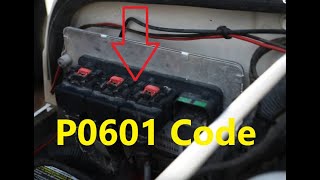
- Internal Failure of the Powertrain or Transmission Control Module (PCM/TCM) 🔴 High Probability → Shop Transmission Assembly As noted in GM's TSBs, module failures are a recognized issue. The internal flash memory becomes corrupted, failing the checksum self-test. 🎬 See this breakdown of P0601 causes and how to fix them This is a hard fault within the microprocessor or memory chips that cannot be repaired externally.
How to confirm: After confirming stable power and ground connections, if the code returns immediately after being cleared, it indicates a hard internal fault. A professional will use a scan tool to attempt a reflash; if the reflash fails or the code returns instantly, the module is condemned.
Typical fix: Replacement of the faulty control module (PCM or TCM) followed by programming it to the vehicle using a GM MDI or equivalent J2534 pass-thru tool with GM's SPS software.
Est. part cost: $700-$900 - Low Battery Voltage or Charging System Fault 🟡 Medium Probability → Shop Vehicle Battery All modern vehicles are sensitive to voltage. A weak battery or failing alternator can cause voltage drops or spikes during startup or operation, which can corrupt the module's memory check process and trigger a false P0601 code.
How to confirm: Test the battery with a digital multimeter or a load tester. It should read at least 12.4V with the engine off and 13.5V-14.5V with the engine running. Check battery terminals and main ground connections (engine block to chassis, battery to chassis) for corrosion and tightness.
Typical fix: Charge or replace the battery. Replace the alternator if it's not charging correctly. Clean or repair ground connections.
Est. part cost: $150-$500 - Corrupted Software or Failed Reprogramming ⚪ Low Probability If an aftermarket tune was installed or a factory software update was interrupted, the module's memory can become corrupted, leading to a checksum error. This is especially true if a non-professional tool was used.
How to confirm: This is determined by checking the module's software history with a dealership-level scan tool. If the code appeared immediately after a programming attempt, this is the likely cause.
Typical fix: Attempt to reflash the module with the correct, factory-authorized software. If the module is 'bricked' and won't accept a reflash, it will require replacement.
Est. part cost: $100-$250 for a reflash service, or the cost of a new module if it fails.
Rare But Worth Checking
- Wiring Harness Damage or Water Intrusion: While less common than outright module failure, a short in the wiring harness or water getting into the module's housing can cause electrical shorts that corrupt the internal memory. Always inspect the module and its connectors for signs of green or white corrosion, or physical damage to the wiring loom, especially near the module connectors.
Diagnosis Steps
- Read all stored trouble codes with a quality OBD-II scanner. Note any other codes present, especially other P06xx or U-series codes.
- Crucial First Step: Check the battery and charging system. Ensure battery voltage is above 12.4V (engine off) and the alternator is charging between 13.5-14.5V (engine on). A weak or failing battery is a common cause of false module codes.
- Inspect all battery cables and major ground straps for tightness and corrosion. A poor ground, especially under the battery tray, can mimic module failure.
- Locate the PCM and/or TCM. Inspect the modules and their electrical connectors for any signs of physical damage, corrosion, or water intrusion.
- Clear the trouble codes and cycle the ignition. If P0601 returns immediately without starting the engine, it strongly suggests a permanent internal module failure (hard fault).
- If the code only returns when driving, a software glitch or intermittent wiring issue is possible. A professional shop can check for available software updates (reflashing) for the module.
- Using a professional scan tool (like a GM Tech 2 or GDS2), verify which module is setting the code. TSB PIP4653E warns that the code could be in the TCM, not the PCM.
- If all power, grounds, and wiring are confirmed good and a reflash doesn't work or isn't possible, the control module is faulty and must be replaced and programmed.
Parts You'll Likely Need
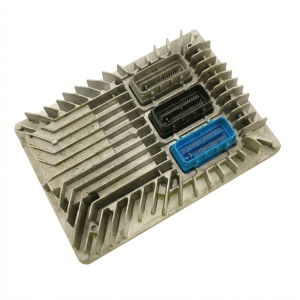
- Powertrain Control Module (PCM/ECM)
(OEM #ACDelco 12600930 (for 2008-2009 3.8L V6) or ACDelco 12651994 (for 2011 3.6L V6). Part numbers are highly specific to year and engine.)— This is the most common cause of a P0601 code. The module's internal memory has failed, and it cannot be repaired.
Trusted brands: ACDelco (OEM), Cardone (Remanufactured), Standard Motor Products, Flagship One (Pre-programmed)
OEM price range: $700-$900
Aftermarket price range: $400-$600 - Transmission Control Module (TCM)
(OEM #ACDelco 24279973 or 26545CZQH (for 2010-2013 models with 6T70 transmission). Verify by VIN.)— As per TSB #PIP4653E, the TCM can also set this code on a Buick LaCrosse, leading to transmission-related symptoms. This module is located inside the transmission case.
Trusted brands: ACDelco (OEM), Dorman
OEM price range: $500-$700
Aftermarket price range: $300-$500
Related Codes That Often Appear With This One
- P0602, P0603, P0604, P0606 — These are all related internal control module fault codes. Their presence alongside P0601 further confirms a problem with the module itself, such as programming errors (P0602), Keep Alive Memory (KAM) errors (P0603), RAM errors (P0604), or processor faults (P0606).
- U-series codes (e.g., U0100, U0101) — Communication codes often appear when a major control module like the PCM or TCM is failing, as it can no longer communicate effectively with other modules on the vehicle's CAN bus network. A forum user with a no-start 2011 LaCrosse reported a U0100 code alongside other issues.
Technical Service Bulletins (TSBs) & Recalls
- PIP4653E: Addresses DTCs including P0601 set in the Transmission Control Module (TCM). Crucial for diagnosing 2010-2014 models.
- 05-06-04-060A: Informs technicians that P0601 and similar codes can be shared across multiple modules.
Platform-Specific Known Issues
- GM Technical Service Bulletin #PIP4653E specifically notes that DTCs P0601, P0603, P0604, P062F, or P1621 can be stored in the Transmission Control Module (TCM) for 2010-2014 LaCrosse models, among many other GM vehicles. It stresses the importance of verifying which module is the source of the code before replacing any parts.
Mechanic-Grade Diagnostic Values
- Control Module Operating Voltage — expected: 10.5V - 14.5V. Failure: Voltage consistently below 10.5V can cause memory errors and false codes.
- Charging System Voltage (Engine Running) — expected: 13.5V - 14.5V. Failure: Voltage below 13.5V or spiking above 14.5V indicates an alternator or regulator fault that can damage modules.
- Battery Voltage (Engine Off) — expected: 12.4V or higher. Failure: A reading below 12.4V indicates a weak battery that can cause unpredictable electrical issues, including false module codes.
Hidden / Shadow Codes Worth Checking
- P0601 with Symptom Byte: While not a separate code, GM's GDS2 dealer scan tool may display a 'symptom byte' with the P0601 code. This provides more specific detail about the nature of the internal fault (e.g., ROM error, RAM error), helping confirm it's a true module failure. (see via GM GDS2 (Global Diagnostic System 2) or equivalent high-end scan tool.)
Scan Tool Commands That Help
- GM SPS (Service Programming System): Replace and Reprogram — This function is mandatory when installing a new PCM or TCM. It downloads the correct software and VIN from GM's servers and writes it to the new module.
- GM SPS (Service Programming System): Vehicle Theft Deterrent Learn — This procedure must be performed after PCM replacement to synchronize the new module with the vehicle's immobilizer system and keys. Failure to do so will result in a no-start condition.
- GDS2 / Tech2: Module Information / DTC Display — Used to verify which specific module (e.g., ECM or TCM) has stored the P0601 code, as directed by TSB PIP4653E, which is critical for correct diagnosis.
Wiring & Ground Locations
- G101 / G106 — G101 is on the engine block; G106 is a jumper to the frame cross rail under the crank pulley. These are primary engine and module grounds.. These are the main ground points for the Engine Control Module and Transmission Control Module. A poor connection here can cause low voltage or electrical noise, triggering a false P0601 code.
- Battery to Chassis Ground — On the chassis, directly under or near the battery tray.. This ground is notorious for collecting battery acid and corroding, leading to a host of electrical problems, including no-start conditions that can be misdiagnosed as a failed PCM.
- TCM (Gen 2, 6-Speed Auto) — Inside the transmission, integrated with the control valve body and solenoids. It is not an externally accessible module.. If the TCM is the source of the P0601, replacement requires removing the transmission side cover and is a significant labor-intensive job, unlike a simple bolt-on PCM replacement.
Real Owner Repair Stories
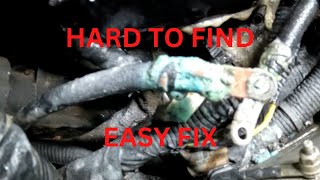
- YouTube video by 'Just a little bit of knowledge' (2011 Buick LaCrosse) — No crank, no start. Vehicle died while driving and would not restart.
❌ Tried (didn't work) Swapping the starter relay with the cooling fan relay.
✅ What actually fixed it The battery had leaked acid, completely corroding a ground wire connection located under the battery tray. Cleaning the corrosion with baking soda/water and repairing the ground wire resolved the no-start condition. This highlights how a bad ground can mimic catastrophic module failure. - ScannerDanner Forum user 'Rickyrick' (2011 Buick LaCrosse CXS 3.6L) — No crank, no start with codes U0100 and P023F. A loud, fast clicking/machine-gun noise from under the hood when opening a door or reconnecting the battery. ECM fuse #10 continuously blows.
❌ Tried (didn't work) The user was still diagnosing, but had confirmed the starter motor itself was functional by jumping it.
✅ What actually fixed it The thread ended without a final resolution, but the symptoms strongly point to a dead short in a circuit powered by the ECM relay, or a catastrophic internal failure of the ECM itself causing the short. The combination of a blown ECM fuse and communication loss (U0100) is a classic sign of a failed PCM or a short in its power supply wiring.
When the Usual Fixes Don't Work
- While P0601 almost always points to a failed module, it should not be replaced without first performing a thorough inspection of the vehicle's power supply. A real-world repair on a 2011 LaCrosse demonstrated that a no-crank/no-start condition, which could easily be condemned as a failed PCM, was actually caused by a heavily corroded ground wire under the battery. Technicians should always load test the battery, verify alternator output, and physically inspect and clean the main battery and engine ground connections before condemning an expensive control module.
OEM Part Supersession History
Varies→ACDelco 26545CZQH (example for 2010-2013 TCM)— Part updates and consolidation.
Heads up: When ordering a replacement TCM for Gen 2 models, it's sold as an assembly with solenoids and a filter plate. However, it often does NOT include the pass-thru connector seal, which must be ordered separately to prevent leaks.
Model Year Variations Within This Range
- 2007-2009 (Gen 1, W-Body): The PCM is often located inside the air filter housing, making it susceptible to damage during air filter changes if care is not taken. The TCM is a separate, externally-mounted module, unlike the later generation.
- 2010-2014 (Gen 2, Epsilon II): The TCM is located inside the 6-speed automatic transmission case as part of the valve body assembly. This makes TCM replacement a transmission-service job requiring fluid drain and pan removal, significantly increasing labor compared to Gen 1. This is the primary platform affected by TSB #PIP4653E for TCM-related P0601 codes.
Helpful Videos
Used OEM Parts in Stock
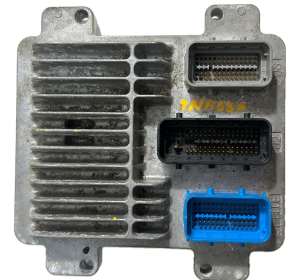
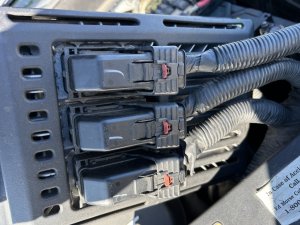
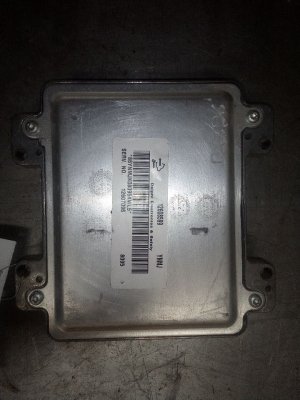
New Aftermarket Parts Available


The information in this article is provided for general reference and educational purposes only. Vehicle specifications, procedures, and part compatibility can vary by production date, trim level, and region. Always consult your vehicle's factory service manual and verify part numbers before purchasing or performing repairs. Safety-critical components such as airbags, seat belts, and braking systems should be installed by a qualified professional.
- Buick LACROSSE:
- 🧭 Diagnostic Flowchart
- 🎬 Helpful Videos
- 🛍️ Shop This Part
- What's Unique About the 2007-2014 Buick LACROSSE
- Symptoms You May Notice
- Most Likely Causes
- Rare But Worth Checking
- Diagnosis Steps
- Parts You'll Likely Need
- Related Codes That Often Appear With This One
- Technical Service Bulletins (TSBs) & Recalls
- Platform-Specific Known Issues
- Mechanic-Grade Diagnostic Values
- Hidden / Shadow Codes Worth Checking
- Scan Tool Commands That Help
- Wiring & Ground Locations
- Real Owner Repair Stories
- When the Usual Fixes Don't Work
- OEM Part Supersession History
- Model Year Variations Within This Range
- 🎟️ Get 5% Off