

P0601 on 2011-2015 Buick Regal: Internal Control Module Failure Causes and Fixes
P0601 on a 2011-2015 Buick Regal indicates a fatal internal memory error in a control module, most commonly the Engine Control Module (ECM) or Transmission Control Module (TCM). This is a serious fault that almost always requires replacing the faulty module, a repair that can cost between $723 and $1,205. Diagnosis must confirm which module is at fault before replacement.
- P0601 is a critical code indicating an internal failure in a control module, usually the ECM or TCM.
- Do not drive the vehicle, as it may stall or behave unpredictably, posing a safety risk.
- Diagnosis MUST confirm which module is at fault (ECM or TCM) using a professional scan tool before replacement, as per GM TSB #PIP4653E.
- While module failure is the most likely cause, always verify battery health, charging system output, and all main power/ground connections first to rule out simpler issues.
- Replacement of either the ECM or TCM requires expensive, vehicle-specific programming.
What's Unique About the 2011-2015 Buick REGAL
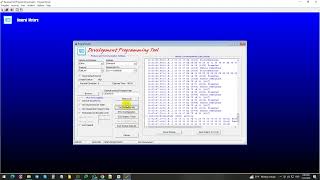
On this generation of Buick Regal and its platform mates (like the Chevy Malibu and Buick LaCrosse), the P0601 code is not exclusively for the main engine computer. General Motors issued a Technical Service Bulletin (TSB #PIP4653E) specifically noting that P0601 can be stored in the Transmission Control Module (TCM) in vehicles equipped with 6T30, 6T40, 6T45, 6T50, 6T70 or 6T75 automatic transmissions. 🎬 See how to diagnose and fix TCM errors on GM transmissions. This can lead to shifting problems in addition to the check engine light. This means a diagnosis must determine which specific module has failed before any parts are replaced.
Diagnostic Flowchart
Tap your situation to follow the diagnostic path that matches what you're seeing on this vehicle.
Symptoms You May Notice
- Check Engine Light is on
- Vehicle may not start or is hard to start
- Engine may stall intermittently or hesitate
- Erratic or harsh transmission shifting
- Reduced engine power or acceleration (Limp Mode)
- ABS and Traction Control lights may illuminate
- OBD-II readiness monitors will not set, causing emissions test failure.
- Replacing sensors (like oxygen sensors or camshaft sensors) without first confirming the nature of the P0601 code. This code points to the computer itself, not the sensors it reads.
Most Likely Causes
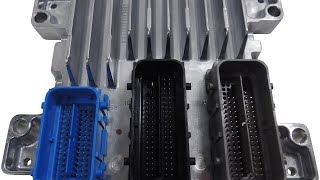
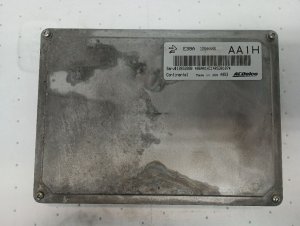
- Internal Failure of the Engine Control Module (ECM/PCM) 🔴 High Probability → Shop Engine Control Module (ECM) The ECM (often an ACDelco E39/E39A type) can fail over time due to heat cycles, vibration, and internal component degradation. Voltage spikes from a failing alternator can also damage the module.
How to confirm: After verifying all power and ground connections are good, a professional technician will attempt to reflash the module. If the code returns immediately or the reflash fails, the ECM is condemned. Sometimes a burnt smell can be detected near the module.
Typical fix: Replace the Engine Control Module and program it to the vehicle.
Est. part cost: $638-$1046 - Internal Failure of the Transmission Control Module (TCM) 🟡 Medium Probability → Shop Transmission Assembly As documented in GM TSB #PIP4653E, the TCM (often an ACDelco T43) is a known point of failure for this code on the Buick Regal and other similar GM platforms using the 6Txx series transmissions.
How to confirm: A technician will use a scan tool (like a Tech 2 or GDS2) to confirm that the P0601 code is specifically stored in the TCM, not the ECM.
Typical fix: Replace the Transmission Control Module and program it to the vehicle.
Est. part cost: $400-$700 - Low Battery Voltage or Charging System Fault ⚪ Low Probability → Shop Vehicle Battery All modern control modules are sensitive to voltage. A weak battery or a failing alternator producing unstable voltage can corrupt memory during startup or shutdown cycles, leading to a P0601 code.
How to confirm: Test the battery's state of health and charge. With the engine running, check the alternator output to ensure it is within the specified range (typically 13.5-14.5 volts).
Typical fix: Replace the weak battery or faulty alternator.
Est. part cost: $150-$450 - Poor Power/Ground Connections to the Module ⚪ Low Probability Corrosion on main ground points can create intermittent voltage drops, mimicking an internal module fault. Forum users emphasize checking all grounds before condemning an expensive module.
How to confirm: Visually inspect the wiring harness and connectors at the ECM and TCM for corrosion, damage, or loose pins. Perform a voltage drop test on the main power and ground circuits. Key ground points like G101 (lower engine block) and G102 (rear of the engine) should be inspected and cleaned.
Typical fix: Clean or repair the module connectors and wiring. This may involve removing the ground bolt, cleaning the contact surfaces to bare metal, and re-securing.
Est. part cost: $0-$100
Rare But Worth Checking
- Failed Aftermarket Programming: If the vehicle has had an aftermarket performance tune installed, a failed or improper flash can corrupt the module's memory and set this code.
Diagnosis Steps
- Verify the code with a quality OBD-II scanner. Note whether the code is active or in history and, most importantly, use a GM-specific tool (GDS2) to check which module (ECM or TCM) has stored the code.
- Check and record any other DTCs present. Codes like P0603 or P0604 further point to an internal module failure.
- Inspect the vehicle's battery. Ensure it is fully charged (>=12.6V at rest) and healthy. Test the charging system to confirm proper voltage output from the alternator (typically 13.5-14.5V).
- Carefully inspect the wiring and connectors for the identified control module (ECM or TCM). Look for any signs of corrosion, damage, or loose connections. Check for any burnt smell around the module itself.
- Inspect and clean critical ground connections. On GM vehicles, common ground points for the ECM/TCM include G101 and G102 at the engine block. Ensure connections are clean and tight.
- If all wiring, power, and grounds are confirmed to be good, the next step is to attempt a software update or reflash of the module. This requires professional-level tools and a subscription to GM's programming service (SPS).
- If the reflash is unsuccessful or the P0601 code returns immediately, the control module has failed internally and must be replaced.
- Install the new module and program it to the vehicle's VIN and specific configuration using a GDS2 or equivalent J2534 tool.
Parts You'll Likely Need
- Engine Control Module (ECM)
(OEM #Varies by engine and year. Examples: 12653998 (2.0T), 12651993 (2.0/2.4L), 12642612 (2011 2.4L). Always verify with VIN.)— This is the most common cause of P0601. The internal memory checksum test fails, indicating a fatal hardware or software error within the module. 🎬 Watch: Understanding the P0601 memory checksum error and its causes.
Trusted brands: ACDelco, GM Genuine Parts
OEM price range: $700-$1100
Aftermarket price range: $450-$800 - Transmission Control Module (TCM)
(OEM #Varies by specific transmission. Always verify with VIN.)— A known issue on this platform, as cited by GM TSB #PIP4653E, where the TCM can fail its internal self-test and set a P0601 code.
Trusted brands: ACDelco, GM Genuine Parts
OEM price range: $500-$800
Aftermarket price range: $300-$600
Related Codes That Often Appear With This One
- P0603 — Relates to Keep Alive Memory (KAM) errors, often seen with other internal module faults.
- P0604 — Indicates a Random Access Memory (RAM) error, another type of internal module fault.
- P0606 — A general ECM/PCM Processor Fault, which is closely related to the checksum error.
Technical Service Bulletins (TSBs) & Recalls
- PIP4653E: Diagnostic information for DTCs P0601, P0603, P0604, P062F, or P1621 being stored in the Transmission Control Module (TCM). This TSB covers a wide range of GM vehicles including the 2011-2014 Regal.
- 05-06-04-060A: An informational bulletin regarding various control module internal fault codes, including P0601. [NHTSA]
Platform-Specific Known Issues
- TSB #PIP4653E: P0601 Stored in TCM: This crucial bulletin from GM notes that DTCs P0601, P0603, P0604, P062F, or P1621 can be stored in the Transmission Control Module (TCM). It advises technicians to use a GDS2 scan tool to verify which module set the code before attempting to reprogram or replace the TCM, as the code could also originate from the ECM or FPCM (Fuel Pump Control Module).
- TSB #05-06-04-060A: General Module Faults: An informational bulletin that groups P0601 with other internal control module diagnostic codes (P0602, P0603, P0604, etc.), indicating it's a recognized fault category across multiple GM modules and not a sporadic error. [NHTSA]
- Real-World Repair Story: Importance of Grounds: A user on the 'Turbo Buick Forum' stressed the importance of checking all ground connections before replacing expensive modules. Another user confirmed a key ground strap location on the transmission bell housing. This highlights that electrical integrity is a common cause of issues that can be misdiagnosed as a failed module.
Mechanic-Grade Diagnostic Values
- Module Ground Circuit Resistance — expected: < 0.1 Ω. Failure: A reading higher than 0.1 Ω indicates excessive resistance in the ground circuit, which can cause intermittent module operation.
- Battery Voltage at Rest — expected: ≥12.6 V. Failure: A voltage below 12.6V indicates a discharged or failing battery, a primary cause of voltage-related module errors.
- Alternator Charging Voltage (Engine Running) — expected: 13.5 V - 14.5 V. Failure: Voltage below 13.5V or above 14.5V indicates a charging system fault that can damage control modules.
- ECM Battery Positive Voltage (Pin 20, X1 Connector) — expected: System Voltage (12.6V+). Failure: Voltage significantly lower than battery voltage points to a wiring issue between the fuse block and the ECM.
- ECM Ignition 1 Voltage (Pin 19, X1 Connector) — expected: System Voltage (with key on). Failure: No voltage when the key is on indicates a problem with the ignition switch or related wiring.
Scan Tool Commands That Help
- GM GDS2: Module Diagnostics > Vehicle DTC Information — This is the first step to determine which specific module (ECM, TCM, FPCM) has stored the P0601 code, as directed by TSB PIP4653E.
- GM GDS2 / Techline Connect: Service Programming System (SPS) — Required for programming a new ECM or TCM to the vehicle. It downloads the correct software and VIN information to the new module.
- GM GDS2: Clear DTCs — Used after a repair (like cleaning grounds or replacing a battery) to clear the code and verify if the fix was successful. If P0601 returns immediately, it confirms an internal module fault.
Wiring & Ground Locations
- G101 / G106 — On the engine block, sometimes jumpered to a ground on the front center of the frame cross rail under the crank pulley.. This is a primary ground point for the ECM and TCM. Corrosion or a loose connection here can cause intermittent voltage drops, mimicking an internal module failure and triggering P0601.
- G102 — Located at the left rear of the engine.. Provides the ground for the ignition coils. While not a direct ECM ground, electrical noise from a poor coil ground could potentially interfere with module operation.
- ECM Connector X1 — The main 73-pin connector at the Engine Control Module, typically located in the engine bay.. Key power and ground pins (e.g., Pin 20 for Battery Positive, Pin 19 for Ignition) must be tested here to confirm the ECM is receiving correct voltage before condemning the module.
- TCM Connector (T43) — The 16-pin main connector for the Transmission Control Module, located on the transmission itself.. As per TSB PIP4653E, the TCM is a common source for P0601. Checking for clean, tight connections at this plug for power (Pin 12) and CAN bus lines (Pins 10, 11, 13) is a critical diagnostic step.
Real Owner Repair Stories
- 2CarPros Forum User (2006 Chevrolet Colorado (similar GM electrical architecture)) — Intermittent stall and no-start, 'reduced power' message on the cluster, with only a P0601 code present. The vehicle would run for about five minutes, then stall and not restart.
❌ Tried (didn't work) The owner had already cleaned all ground points and battery connections.
✅ What actually fixed it The final diagnosis pointed to a failing Powertrain Control Module (PCM). The temperature dependency (worse when cold) suggested an internal mechanical issue like a bad solder joint, which is not repairable by reflashing.
OEM Part Supersession History
12633555→12653998— GM regularly updates service part designs to integrate new materials and technologies.
Heads up: While 12653998 replaces 12633555, it's crucial to ensure the replacement module is programmed with the correct software for the specific vehicle's VIN and options. Failure to program correctly will result in a no-start or other system failures.
Model Year Variations Within This Range
- 2011-2013 vs 2014-2015: While the P0601 fault remains consistent, the diagnostic software may differ. Earlier models in this range may be diagnosed with a Tech 2 scan tool, whereas 2014 and newer models definitively require the GDS2 software platform. TSB PIP4653E notes that technicians will need to use either a Tech 2 or GDS2 depending on the model year.
Helpful Videos

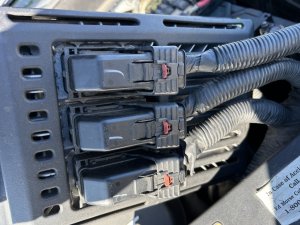
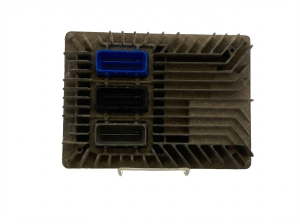
Used OEM Parts in Stock
New Aftermarket Parts Available

The information in this article is provided for general reference and educational purposes only. Vehicle specifications, procedures, and part compatibility can vary by production date, trim level, and region. Always consult your vehicle's factory service manual and verify part numbers before purchasing or performing repairs. Safety-critical components such as airbags, seat belts, and braking systems should be installed by a qualified professional.
- Buick REGAL:
- 🧭 Diagnostic Flowchart
- 🎬 Helpful Videos
- 🛍️ Shop This Part
- What's Unique About the 2011-2015 Buick REGAL
- Symptoms You May Notice
- Most Likely Causes
- Rare But Worth Checking
- Diagnosis Steps
- Parts You'll Likely Need
- Related Codes That Often Appear With This One
- Technical Service Bulletins (TSBs) & Recalls
- Platform-Specific Known Issues
- Mechanic-Grade Diagnostic Values
- Scan Tool Commands That Help
- Wiring & Ground Locations
- Real Owner Repair Stories
- OEM Part Supersession History
- Model Year Variations Within This Range
- 🎟️ Get 5% Off