

P0601 on 2013-2015 Cadillac ATS: Internal Control Module Failure Explained
P0601 indicates a fatal internal error in a critical computer, most often the Engine Control Module (ECM) or Transmission Control Module (TCM). The only reliable fix is to replace the faulty module and have it professionally programmed. This is a serious, non-DIY repair with costs typically ranging from $950 to $1,300. It is critical to identify which module is at fault before replacement.
- P0601 is a critical code indicating a fatal internal error in a control module, usually the ECM or TCM.
- It is essential to diagnose WHICH module is faulty before replacement; GM has confirmed the TCM can be the cause on this vehicle.
- This is not a DIY repair. The replacement module must be professionally programmed to your car's VIN.
- Before condemning a module, always verify the battery, charging system, and all main power/ground connections are in perfect condition.
- Do not drive the vehicle. A P0601 code means the car is unreliable and could stall at any moment.
What's Unique About the 2013-2015 Cadillac ATS
For the Cadillac ATS and other GM vehicles of this era, P0601 is not exclusively an engine computer problem. General Motors issued specific Technical Service Bulletins (TSBs) to inform technicians that this code could be set by the Transmission Control Module (TCM), leading to a check engine light. This makes it crucial to use a proper scan tool, like a GM Tech 2 or GDS2, to identify exactly which module has failed before replacing any expensive parts.
Diagnostic Flowchart
Tap your situation to follow the diagnostic path that matches what you're seeing on this vehicle.
Symptoms You May Notice
- Check Engine Light is on
- Vehicle may not start or may be hard to start
- Engine may stall intermittently or hesitate, sometimes with a 'Service Throttle' message.
- Transmission may exhibit harsh shifting or get stuck in one gear (limp mode)
- ABS and Traction Control lights may illuminate
- Reduced engine power or 'limp mode'
- Failure to pass an emissions test.
- Replacing the ECM when the TCM is the actual cause. This is a costly mistake that highlights the need for proper diagnosis to see which module set the code.
- Replacing a module before thoroughly testing the battery, charging system, and all main ground connections.
Most Likely Causes
- Failed Engine Control Module (ECM) 🔴 High Probability → Shop Engine Control Module (ECM) Control modules can fail due to age, heat cycles, and internal component degradation. This is the most common cause when the code originates from the engine controller.
How to confirm: A professional scan tool must be used to confirm the P0601 code is being set by the ECM. All power and ground circuits to the module should be verified first. In some cases, a burnt smell may be noticeable around the failed module. If the code persists after checks, the ECM is faulty.
Typical fix: Replace the ECM and program the new unit 🎬 Watch: How to install a new ECM in your ATS to the vehicle's VIN. Some companies may offer pre-programmed modules.
Est. part cost: $750-$950 - Failed Transmission Control Module (TCM) 🟡 Medium Probability → Shop Transmission Assembly GM TSB #PIP4653E specifically identifies the TCM as a potential source for P0601 on the 2013-2014 ATS. The TCM manages transmission functions and can fail internally like any other module. This TSB covers a wide range of GM vehicles with various 6-speed automatic transmissions.
How to confirm: Use a professional scan tool (like a GM Tech 2 or GDS2) to verify that the P0601 code is stored in the TCM, not the ECM. The TSB makes it clear to confirm which module set the code before proceeding.
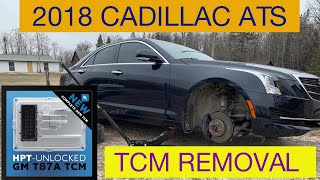
Typical fix: The TSB suggests attempting to reprogram the TCM first. If the code returns, the TCM must be replaced and programmed. The TCM is often located in the driver's side front wheel well, behind the fender liner.
Est. part cost: $400-$700 - Low Battery Voltage or Poor Connections ⚪ Low Probability → Shop Vehicle Battery Modern vehicles are extremely sensitive to voltage. A weak battery, failing alternator, or corroded ground connections can cause voltage spikes or electrical static that may corrupt a module's memory check during startup, triggering a false code. An engineer noted that electrical static from poor connections is a known cause of P0601 failures.
How to confirm: Test the battery to ensure it holds a charge above 12.6 volts (engine off). Check the alternator output (13.5-14.5 volts engine running). Inspect battery terminals and major chassis/engine ground straps for corrosion and tightness.
Typical fix: Charge or replace the battery, clean or tighten connections, or replace the alternator if faulty.
Est. part cost: $20-$400
Rare But Worth Checking
- Aftermarket Tuning: Improperly flashing the ECM with performance tunes can corrupt the module's memory and trigger a checksum error. It's recommended to revert to the stock tune before diagnosing a P0601.
- Wiring Harness Issues: While uncommon, a short or open in the wiring providing power or ground to the control module can mimic an internal failure.
- Wiring Harness Chafing: TSB #PIC4740F notes that for the ATS and CTS, the transmission harness can chafe on a securing bracket near the bell housing, causing communication issues and multiple DTCs that could be related to a P0601 event.
Diagnosis Steps
- Verify the code with a professional OBD-II scanner. Crucially, determine WHICH module (ECM, TCM, etc.) has stored the P0601 code.
- Check for other DTCs. A flurry of codes can point to a general power or ground issue.
- Test the battery and charging system. Ensure voltage is stable and within the correct range (12.6V+ engine off, 13.5-14.5V engine on). A weak power supply is a known cause of module errors.
- Inspect all power and ground connections to the identified module. Look for loose, corroded, or damaged wires and terminals. Check for blown fuses related to the ECM/TCM.
- Visually inspect the module and its connectors. Check for a burnt electronic smell around the module, which can indicate internal component failure.
- If battery and connections are good, the next step for a professional is to attempt to re-flash the module's software. Sometimes a software glitch can be corrected, as suggested for the TCM in TSB PIP4653E.
- If the code returns immediately after clearing or the re-flash fails, the module has a confirmed internal hardware failure and must be replaced and programmed by a professional.
Parts You'll Likely Need
- Engine Control Module (ECM/PCM)
(OEM #12656453 (example for 2.0L, verify by VIN))— This is the most common cause of a P0601 code. The module's internal memory has failed its self-check, which is an unrepairable hardware fault.
Trusted brands: ACDelco (GM Genuine), Cardone (Remanufactured)
OEM price range: $600-$850
Aftermarket price range: $350-$550 - Transmission Control Module (TCM)
(OEM #24275873 (example, often sold with valve body, verify by VIN))— A known issue for this platform, as documented by GM TSB #PIP4653E, where the TCM can set a P0601 code.
Trusted brands: ACDelco (GM Genuine)
OEM price range: $400-$700
Aftermarket price range: $250-$450
Related Codes That Often Appear With This One
- P0603 — Internal Control Module Keep Alive Memory (KAM) Error
- P0604 — Internal Control Module Random Access Memory (RAM) Error
- P0606 — ECM/PCM Processor Fault
- P062F — Internal Control Module EEPROM Error - Also mentioned in TSB PIP4653E.
- P1621 — Control Module Long Term Memory Performance - Also mentioned in TSB PIP4653E.
- U-codes (e.g. U0100, U0101) — Communication codes may appear if the failing module is intermittently dropping off the vehicle's data network.
Technical Service Bulletins (TSBs) & Recalls
- 05-06-04-060A: Communicates information on multiple control module DTCs including P0601.
- PIP4653E: Details finding P0601 and similar codes stored in the Transmission Control Module (TCM) across a wide range of GM vehicles, including the 2013-2014 ATS.
- PIC4740F: Describes a potential wiring harness chafing issue near the transmission on the ATS and CTS that can cause communication loss and other DTCs.
Platform-Specific Known Issues
- GM Technical Service Bulletin #05-06-04-060A notes that P0601 is part of a group of DTCs related to internal control module faults that can appear in multiple modules.
- GM Technical Service Bulletin #PIP4653E specifically addresses that on the 2013-2014 Cadillac ATS (and many other GM models), DTCs like P0601 may be found stored in the Transmission Control Module (TCM), causing the check engine light to illuminate.
- GM Preliminary Information Bulletin #PIC4740F highlights a potential issue on the ATS/CTS where the transmission harness can chafe against a bracket, leading to various electrical faults and communication DTCs.
Mechanic-Grade Diagnostic Values
- Battery Voltage (Engine Off) — expected: >12.6 Volts. Failure: Voltage below 12.4V indicates a weak or discharged battery that can cause false module codes.
- Alternator Output (Engine Running) — expected: 13.5 - 14.5 Volts. Failure: Voltage outside this range indicates a charging system problem that can lead to module instability.
Scan Tool Commands That Help
- GDS2 (GM Global Diagnostic System 2): Vehicle DTC Information — This is the first step to scan all modules on the vehicle. It is critical to use this function to determine *which* module (ECM, TCM, etc.) has stored the P0601 DTC before proceeding with any diagnosis or parts replacement.
- GDS2 / SPS2 (Service Programming System): Reprogram Control Module — Per TSB #PIP4653E, if P0601 is stored in the TCM, the first diagnostic step is to attempt to reprogram the module with the latest software. If the code returns, the module is faulty.
- GDS2 / SPS2 (Service Programming System): Replace and Reprogram Control Module — This function is required after physically installing a new ECM or TCM. It programs the vehicle's VIN and specific software into the new module to allow it to communicate with other systems on the car.
- GDS2: Security Relearn / Immobilizer Learn — After replacing and programming a new ECM, a security relearn procedure is often necessary to sync the new module with the vehicle's anti-theft system. Failure to do this will result in a no-start condition.
Wiring & Ground Locations
- ECM (Engine Control Module) — Located in the right front of the engine compartment.. This is the primary module that can set P0601. Its connectors and grounds must be inspected for integrity and contamination.
- TCM (Transmission Control Module) — Located in the driver's side front wheel well, accessible after removing the fender liner.. This is the other key module that can set P0601, per TSB #PIP4653E. Its location makes it susceptible to moisture and physical damage if the fender liner is compromised.
- G104 (Engine Ground) — For 2013 4-cyl automatic models built before mid-December 2012, it's at the front of the engine. For models built after that date (and 2014-2015 models), it's at the rear of the cylinder head.. This is a critical engine ground. A poor connection here can cause unstable voltage to the ECM, potentially triggering a false P0601. The mid-year location change is a key detail for technicians.
- G103 (Engine Ground) — Located on the front of the right cylinder head.. Another important engine ground point that ensures stable operation for various engine components and modules.
- G301 / G302 — G301 is in the left (driver's) kick panel area. G302 is in the right (passenger's) kick panel area.. These are major interior ground points for modules like the Body Control Module (BCM). While less likely to cause a P0601, poor grounds here can cause a wide range of electrical issues that could be misdiagnosed.
OEM Part Supersession History
12656453 (Example for 2.0L)→N/A— This part number is widely used across many GM vehicles from the same era, including the Chevy Camaro, Traverse, and GMC Terrain.
Heads up: When sourcing a replacement, it is critical to match not only the part number but also the hardware code (e.g., 12653998 for this part number) to ensure compatibility with the vehicle's systems.
Model Year Variations Within This Range
- 2013: The location of the main engine ground G104 on 4-cylinder models with automatic transmissions was changed mid-year. On vehicles built before mid-December 2012, the ground is at the front of the engine. On vehicles built after that date, it was moved to the rear of the engine.
Helpful Videos

Used OEM Parts in Stock
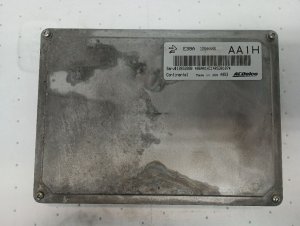
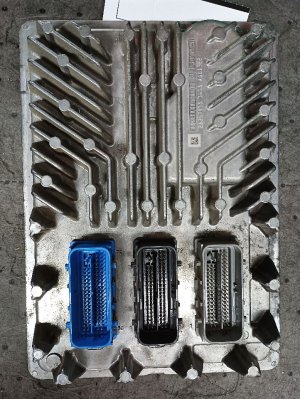
New Aftermarket Parts Available

The information in this article is provided for general reference and educational purposes only. Vehicle specifications, procedures, and part compatibility can vary by production date, trim level, and region. Always consult your vehicle's factory service manual and verify part numbers before purchasing or performing repairs. Safety-critical components such as airbags, seat belts, and braking systems should be installed by a qualified professional.
- Cadillac ATS:
- 🧭 Diagnostic Flowchart
- 🎬 Helpful Videos
- 🛍️ Shop This Part
- What's Unique About the 2013-2015 Cadillac ATS
- Symptoms You May Notice
- Most Likely Causes
- Rare But Worth Checking
- Diagnosis Steps
- Parts You'll Likely Need
- Related Codes That Often Appear With This One
- Technical Service Bulletins (TSBs) & Recalls
- Platform-Specific Known Issues
- Mechanic-Grade Diagnostic Values
- Scan Tool Commands That Help
- Wiring & Ground Locations
- OEM Part Supersession History
- Model Year Variations Within This Range
- 🎟️ Get 5% Off