

P0601 on 2007-2014 Cadillac CTS: Internal Module Memory Error Causes and Fixes
P0601 on a 2007-2014 Cadillac CTS almost always indicates a fatal internal error in a control module, most commonly the Engine Control Module (ECM) or Transmission Control Module (TCM). The fix is to replace the faulty module, which requires professional programming. Before condemning the module, check battery voltage and all power/ground connections. Expect costs to range from $700 to over $1,500.
- P0601 is a critical code indicating a fatal internal error in a control module, usually the ECM or TCM.
- On the 2007-2014 CTS, this code is known to appear in the Transmission Control Module (TCM), as confirmed by a GM TSB.
- The most common fix is to replace the faulty module, a job that requires professional programming and can be costly.
- Do not continue to drive the vehicle. The risk of stalling or being unable to restart the engine is very high.
- Before replacing any modules, always confirm the battery and charging system are in perfect working order to rule out voltage-related issues.
What's Unique About the 2007-2014 Cadillac CTS
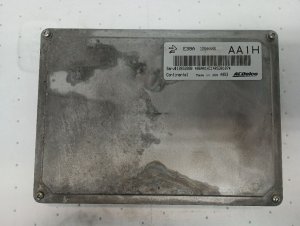
For the 2007-2014 Cadillac CTS, what's notable about P0601 is its documented appearance in the Transmission Control Module (TCM), not just the main Engine Control Module (ECM). GM issued a Technical Service Bulletin (TSB #PIP4653E) specifically mentioning that P0601 could be stored in the TCM on these vehicles, leading to transmission-related symptoms. This is a key distinction, as on many other cars, P0601 is almost exclusively an ECM-related fault. The ECM used in many of these vehicles is the ACDelco E38, which is known to develop internal issues like cold solder joints over time due to heat cycles in the engine bay.
Diagnostic Flowchart
Tap your situation to follow the diagnostic path that matches what you're seeing on this vehicle.
Generation note: This range covers the end of the first generation (2007) and the full second generation (2008-2014) of the Cadillac CTS. While the P0601 code's meaning is the same, the specific ECM/TCM part numbers and replacement costs can vary significantly between these generations. The second generation (2008+) is more explicitly covered under TSBs related to TCM failures. For example, a 2008 CTS with the 3.6L (VIN 'V') engine uses ECM part number 12605672, which was superseded by several other numbers including 12623325 and 19300016. The first generation 2007 CTS uses a different ECM.
Symptoms You May Notice
- Check Engine Light is on
- Vehicle enters 'Limp Mode' with reduced power and speed
- Engine may crank but will not start, sometimes intermittently
- Intermittent stalling while driving or at a stop
- Harsh or erratic transmission shifting, or getting stuck in one gear
- ABS or Traction Control lights may also illuminate
- Failure to pass an emissions test
- Cooling fans run constantly, even with the engine off, draining the battery
- A sudden, unexplained drop in fuel economy 🎬 Watch: 7 common symptoms of a failing engine control module
- Replacing sensors: Technicians might be tempted to replace other components if other codes are present, but P0601 is specific to the control module itself. The other codes are usually a symptom of the module's failure, not the cause.
- Replacing the module without checking the battery: A weak battery, faulty alternator, or poor ground connections can cause voltage issues that trigger this code. Always verify the electrical system's health before condemning an expensive control module. 🎬 See this breakdown of P0601 causes and potential fixes A technician on YouTube emphasizes checking battery connections first, as static electricity from bad connections can damage PCMs.
Most Likely Causes
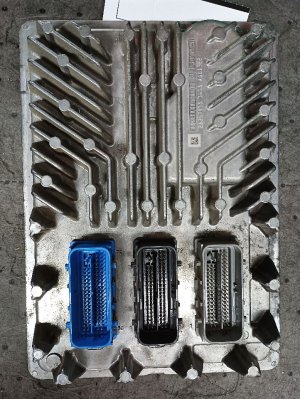
- Failed Engine Control Module (ECM) or Powertrain Control Module (PCM) 🔴 High Probability → Shop Engine Control Module (ECM) The ACDelco E38 ECM used in this platform is known to fail from thermal stress and heat cycles, leading to internal component failure (like cold solder joints on the processor) that causes memory checksum errors.
How to confirm: After ruling out power/ground issues, a professional scan tool is used to confirm communication with the module. If the P0601 code returns immediately after being cleared, the internal fault is confirmed. An owner on a Corvette forum with a similar E38 ECM confirmed replacement was the only fix after extensive diagnostics.
Typical fix: The ECM/PCM must be replaced and programmed by a dealer or qualified independent shop with the correct tools. Some online vendors sell pre-programmed or 'cloned' modules.
Est. part cost: $800-$1100 - Failed Transmission Control Module (TCM) 🟡 Medium Probability → Shop Transmission Assembly As noted in GM TSB #PIP4653E, the T43 TCM used with the 6-speed automatic transmissions in the CTS is a known point of failure for this code. The bulletin explicitly lists the 2008-2014 CTS as an affected model.
How to confirm: A diagnostic scan with a tool like a Tech 2 or GDS2 will show the P0601 code stored specifically in the TCM, often accompanied by shifting problems or other transmission-related codes like U0100 (Lost Communication with ECM).
Typical fix: Replace the Transmission Control Module and perform the necessary programming and learn procedures as outlined by GM. The TSB suggests reprogramming as a first step, but if the code returns, replacement is necessary.
Est. part cost: $500-$800 - Low Battery Voltage or Charging System Fault ⚪ Low Probability → Shop Vehicle Battery While less common to be the root cause, voltage drops during cranking or voltage spikes from a faulty alternator can corrupt module memory or mimic module failure, triggering a P0601 code. It's a critical first check before replacing expensive parts. The battery on second-generation CTS models is located in the trunk on the passenger side.
How to confirm: Test the battery's state of health and charge (should be >12.5V engine off). With the engine running, check the alternator output to ensure it is stable and within the 13.5-14.5 volt range. Check battery terminals and main ground points for corrosion or looseness.
Typical fix: Replace the weak battery or faulty alternator. Clean all battery and ground connections thoroughly. Clear codes and see if P0601 returns. If it does, the module was likely already damaged or failed independently.
Est. part cost: $150-$500
Rare But Worth Checking
- Failed Aftermarket Tune/Programming: If the vehicle has been modified with an aftermarket engine or transmission tune, a bad flash or corrupted file can cause a P0601 code. Reverting to the stock program may be a diagnostic step, but the module could be permanently damaged. This was noted as a potential issue on performance forums.
- Wiring Harness Issues: While the code points to an internal module fault, a short or open in the power or ground circuits to the module can, in rare cases, cause this error. TSB PIC4740E points to unseated pins in the main transmission connector as a cause for a host of communication codes and drivability issues on the CTS, which could potentially lead to a P0601. A thorough inspection of the harness and connectors to the affected module is warranted before replacement. On some GM vehicles, a poor connection at the pink ignition power wire (Pin 12) on the T43 TCM connector can cause voltage loss and trigger codes.
Diagnosis Steps
- Verify the battery is fully charged (>12.5V) and the charging system is operating correctly (13.5-14.5 volts when running).
- Inspect all battery terminals, main power cables, and chassis ground straps for corrosion, damage, or looseness. Clean and tighten as necessary.
- Use a professional-grade scan tool (e.g., GM Tech 2 or GDS2) to confirm which module (ECM, TCM, etc.) has stored the P0601 code. This is a critical step.
- Check for any other stored trouble codes. Note them, but understand they are likely symptoms of the P0601 fault (e.g., communication codes like U0100).
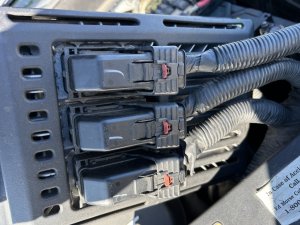
- Inspect the electrical connectors and wiring harness at the affected module for any signs of damage, corrosion, or looseness. Per TSB PIC4740E, tug gently on each wire at the transmission connector to ensure pins are fully seated.
- Check the power and ground circuits to the module using a multimeter to ensure it's receiving proper voltage and has a solid ground connection. For the T43 TCM, this includes checking for 12V at the battery power (Pin 1, 4), ignition power (Pin 12), and accessory power (Pin 9) pins, and continuity to ground at Pins 2 and 5.
- Attempt to clear the code. If it returns immediately, it is a hard fault, and the module is internally defective. 🎬 Watch: A helpful guide on repairing memory checksum error codes
- If the code does not return immediately, check for any available software updates for the module. A reflash can sometimes fix software glitches, though this is rare for a P0601. TSB #PIP4653E suggests this as a diagnostic step for the TCM.
- If all external factors are ruled out and the code persists, the control module is faulty and must be replaced and programmed.
Parts You'll Likely Need
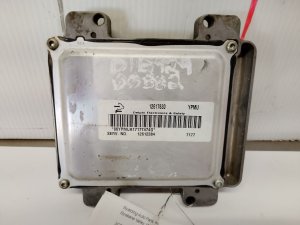
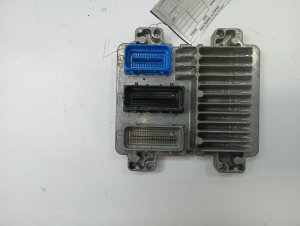
- Engine Control Module (ECM/PCM)
(OEM #12596679 (example for 2006 model, varies by year/engine))— This is the most common cause of P0601. The internal memory checksum process fails, indicating the module itself is defective due to heat, age, or voltage stress.
Related Codes That Often Appear With This One
- P0603 — Internal Control Module Keep Alive Memory (KAM) Error. This code is often seen with P0601 as it also relates to an internal memory fault within the module. TSB #PIP4653E lists it as a related TCM code.
- P0604 — Internal Control Module Random Access Memory (RAM) Error. Like P0601 and P0603, this points to a critical internal failure of the control module's memory processing. TSB #PIP4653E lists it as a related TCM code.
- P1621 — Control Module Long Term Memory Performance. This is another GM-specific code that, per TSB #PIP4653E, can be stored in the TCM alongside P0601, indicating a memory-related failure.
- U0100 / U0101 — Lost Communication With ECM/TCM. These codes often appear when one module fails, causing it to stop communicating on the CAN bus network with other modules in the vehicle.
Technical Service Bulletins (TSBs) & Recalls
- PIP4653E: Mentions that DTCs P0601, P0603, P0604, P062F or P1621 can be stored in the Transmission Control Module (TCM) on a wide range of GM vehicles including the 2008-2014 CTS.
- 05-06-04-060A: Informs technicians that control module DTCs like P0601 can be shared in multiple modules.
- PIC4740E: Details how unseated pins in the transmission connector on 2008-2015 CTS models can cause no-crank, hard shifts, and communication loss, urging a harness check before module replacement.
Platform-Specific Known Issues
- TSB #PIP4653E specifically calls out the 2008-2014 Cadillac CTS as potentially storing DTC P0601 in the Transmission Control Module (TCM), not just the ECM. The bulletin advises checking which module set the code before reprogramming or replacing.
- TSB #05-06-04-060A notes that P0601 is one of several DTCs that can be shared across multiple modules, highlighting the networked nature of the vehicle's electronics.
- TSB #PIC4740E warns that for the 2008-2015 CTS, unseated pins in the transmission wiring harness connector can cause a wide array of symptoms including hard shifts and no-start conditions, mimicking a module failure.
Mechanic-Grade Diagnostic Values
- Battery Voltage, Engine Off — expected: >12.5 Volts. Failure: A reading below 12.4V indicates a discharged or weak battery that can cause module communication errors.
- Alternator Output Voltage, Engine Running — expected: 13.5 - 14.5 Volts. Failure: Voltage below 13.2V or above 15.0V can indicate a faulty alternator, which can damage control modules.
- T43 TCM Connector - Pin 1 & 4 (RED/WHT) Voltage — expected: Battery Positive Voltage (12V+). Failure: No voltage indicates a break in the power supply circuit to the TCM.
- T43 TCM Connector - Pin 12 (PNK) Voltage — expected: Ignition Voltage (12V+ with key in ON position). Failure: No voltage indicates a problem with the ignition switch signal circuit, which can cause a variety of codes.
- T43 TCM Connector - Pin 2 & 5 (BLK/WHT) Resistance to Chassis Ground — expected: < 1.0 Ohm. Failure: High resistance indicates a poor ground connection, which is a common cause of module issues.
Scan Tool Commands That Help
- GDS2 / Tech2: Module-Specific DTC Check — As per TSB #PIP4653E, this is the first step to verify if the P0601 code is stored in the ECM or the TCM, which dictates the entire diagnostic path.
- GM SPS (Service Programming System): Reprogram / Program Control Module — This is required when replacing the ECM or TCM. The new module must be programmed with the vehicle's VIN and correct software calibration. It is also used as a diagnostic step to reflash the existing TCM to see if the code returns.
- GDS2 / Tech2 / High-End Scan Tool: Security System Relearn / Theft Deterrent Relearn — After replacing and programming a new ECM, a security relearn procedure (often a 30-minute process of cycling the key) is necessary to allow the vehicle to start.
Wiring & Ground Locations
- G101 — For 2008 models, near the left front strut tower. For 2014 models, on the left radiator support. Some documents show it on the lower front of the engine block.. This is a primary engine ground point that provides a ground path for both the Engine Control Module (ECM) and the Transmission Control Module (TCM). A poor connection here can cause voltage irregularities for both modules.
- G102 — Located on the right front of the engine compartment for both 2008 and 2014 models.. This is another critical engine compartment ground. While not always directly tied to the ECM, ensuring all major grounds are clean and tight is a key step in diagnosing any module communication or power-related code like P0601.
- G131 / G136 — Located on the rear of the left cylinder bank/engine block.. This ground is directly on the engine block and is crucial for providing a clean ground reference for various sensors and the ignition coils. A bad ground here can create electrical noise that may interfere with ECM operation.
- ECM Case Ground — The metal case of the ECM itself, bolted to the vehicle's chassis or engine.. On some GM platforms (like the E38), ensuring the module's case has a clean, direct ground path is critical for proper operation and to prevent internal faults. Some technicians add a supplemental ground wire from the ECM case to the chassis as a preventative measure.
- Battery Location (2nd Gen) — In the trunk, behind a panel on the passenger side.. Technicians accustomed to finding the battery under the hood may miss checking it. Given that low voltage is a potential cause, knowing its location is a fundamental first step.
Real Owner Repair Stories
- YouTube user comment on 'SOLVED: Code P0601 | 2006 TBSS' (2013 Camaro SS 1LE (Uses a similar GM electrical architecture)) — Engine stall with P0601 code.
❌ Tried (didn't work) Replaced alternator, Replaced battery, Performed ECM manual reset, Cleaned most connections
✅ What actually fixed it The user's comment implies that after all other steps failed, the next logical step was ECM replacement, which is the common final fix for a persistent P0601.
OEM Part Supersession History
12605672→12623325, 12628387, 12630594, 19300016— Revisions and updates by the manufacturer to improve reliability or address known issues.
Heads up: These parts are for the 3.6L V6 (LLT, VIN 'V') engine in the second-generation CTS. They are not compatible with the first-generation (2007) CTS or other engine options.
Model Year Variations Within This Range
- 2007 (First Generation): The 2007 model is the last year of the first generation. It uses a different ECM and has different ground point locations (e.g., G101 is on the lower engine block) compared to the 2008+ models. Part numbers for the 2008+ models will not fit.
- 2008-2014 (Second Generation): This generation uses different ECMs depending on the engine (e.g., 3.6L LLT vs. 3.0L LF1 vs. 3.6L LFX). The TSB #PIP4653E specifically calls out the 2008-2014 models for potential TCM-related P0601 faults. Ground locations also differ slightly across these years. For example, G101 is near the strut tower in 2008 but on the radiator support by 2014.
- 2010-2015: According to GM TSB #PIP4653E, vehicles from 2010 onwards may require the GDS2 scan tool for diagnostics instead of the older Tech 2, which is important for technicians to know.
Helpful Videos
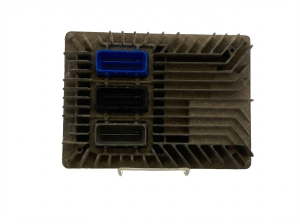
We Have This Part in Stock

The information in this article is provided for general reference and educational purposes only. Vehicle specifications, procedures, and part compatibility can vary by production date, trim level, and region. Always consult your vehicle's factory service manual and verify part numbers before purchasing or performing repairs. Safety-critical components such as airbags, seat belts, and braking systems should be installed by a qualified professional.
- Cadillac CTS:
- 🧭 Diagnostic Flowchart
- 🎬 Helpful Videos
- 🛍️ Shop This Part
- What's Unique About the 2007-2014 Cadillac CTS
- Symptoms You May Notice
- Most Likely Causes
- Rare But Worth Checking
- Diagnosis Steps
- Parts You'll Likely Need
- Related Codes That Often Appear With This One
- Technical Service Bulletins (TSBs) & Recalls
- Platform-Specific Known Issues
- Mechanic-Grade Diagnostic Values
- Scan Tool Commands That Help
- Wiring & Ground Locations
- Real Owner Repair Stories
- OEM Part Supersession History
- Model Year Variations Within This Range
- 🎟️ Get 5% Off