

P0601 on 2015-2018 Cadillac Escalade: Internal Control Module Failure Explained
P0601 on a 2015-2018 Escalade almost always means the Engine Control Module (ECM) has an internal memory failure and must be replaced. This is a critical fault that requires professional diagnosis and programming, with total repair costs often ranging from $800 to over $1,500. Before replacement, all power/ground connections must be verified per GM service bulletins.
- P0601 is a critical code indicating an internal failure of a control module, most often the ECM.
- Do not drive the vehicle, as it can stall at any time, creating a serious safety hazard.
- Before replacing any expensive module, you MUST follow GM's TSBs: check the battery, charging system, and all power/ground connections to the module first.
- Use a professional scan tool to confirm if the code is in the ECM or the TCM; replacing the wrong one is a costly mistake.
What's Unique About the 2015-2018 Cadillac ESCALADE
On this generation of Cadillac Escalade and its K2XX platform mates (Tahoe, Yukon, Silverado), GM has issued multiple Technical Service Bulletins (TSBs) related to P0601. Bulletins like #PIP5609 and #PIP4653E are critical because they acknowledge this code can appear due to seemingly unrelated issues. They advise technicians to thoroughly inspect all electrical connections and grounds to the control module before condemning it, as these trucks are sensitive to voltage fluctuations. Furthermore, TSB #PIP4653E explicitly states that the code can be stored in the Transmission Control Module (TCM), not just the ECM, making a professional diagnosis with a GM-specific scan tool (like a GDS2) essential to pinpoint the correct module.
Diagnostic Flowchart
Tap your situation to follow the diagnostic path that matches what you're seeing on this vehicle.
Symptoms You May Notice
- Check Engine Light is on
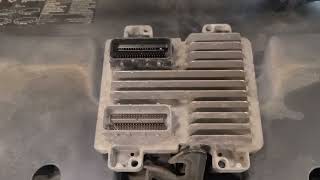
- Engine may stall unexpectedly, sometimes when hot or at low speeds 🎬 Watch: Real-world example of a GM truck stalling with P0601.
- Vehicle may not start (cranks but won't fire)
- Reduced engine power or 'limp mode'
- Erratic or harsh transmission behavior
- Service StabiliTrak message may appear on the driver information center
- Replacing the ECM without first checking battery health, charging system output, and all related power and ground connections as mandated by TSB PIP5609.
- Replacing the ECM when the fault is actually in the Transmission Control Module (TCM), a mistake explicitly warned against in TSB PIP4653E.
Most Likely Causes
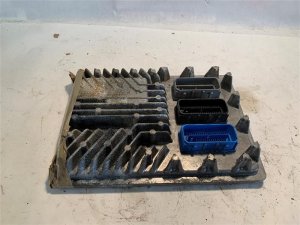
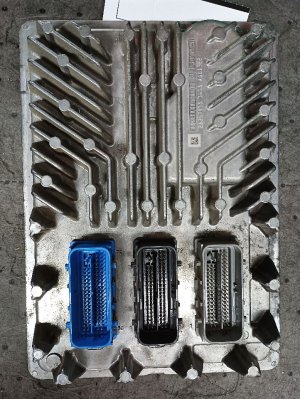
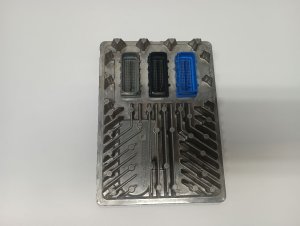
- Failed Engine Control Module (ECM) 🔴 High Probability → Shop Engine Control Module (ECM) The ECM (an ACDelco E92, service number 12656993) can fail internally due to age, heat cycles, or internal component breakdown, leading to a permanent checksum error. This is the most common root cause once external factors are ruled out.
How to confirm: After verifying all power and ground circuits are good per TSB PIP5609, if the P0601 code returns immediately after being cleared (often without even starting the engine), the ECM has failed internally.
Typical fix: Replace the Engine Control Module and program the new unit to the vehicle's VIN and security system.
Est. part cost: $400-$900 - Poor Electrical Connections or Grounds 🟡 Medium Probability GM TSB #PIP5609 specifically directs technicians to investigate the ECM's electrical connections, terminal tension, and power/ground supply as a primary step before module replacement. These large SUVs have complex harnesses and grounds that can corrode or loosen over time.
How to confirm: Visually inspect the ECM connectors for corrosion or damage. Perform a voltage drop test on the ground circuit; resistance should be less than 0.1 Ohms between the ECM ground pin and a clean chassis ground. Check for stable voltage at the ECM power pins.
Typical fix: Clean, repair, or tighten the ECM connectors and main engine/chassis grounding points. This is a required diagnostic step before replacing the module.
Est. part cost: $0-$50 - Low Battery Voltage or Charging System Fault ⚪ Low Probability → Shop Vehicle Battery These vehicles have a high electrical demand with many modules. A weak AGM battery or failing alternator can cause voltage fluctuations during startup that may corrupt module memory or trigger a false P0601 code.
How to confirm: Test the battery with a digital load tester (not just a voltmeter) and check the alternator's output voltage with the engine running (should be stable, typically 13.5-14.5 volts).
Typical fix: Replace the weak battery or faulty alternator.
Est. part cost: $200-$700
Rare But Worth Checking
- Transmission Control Module (TCM) Failure: → Shop Transmission Assembly Per TSB #PIP4653E, the P0601 code can also be stored in the TCM (ACDelco T43 type for the 6L80/90 transmission). A professional scan tool is required to determine which module is the source of the fault. Misdiagnosing this can lead to replacing the wrong, expensive component.
- Aftermarket Tuning/Programming Issues: Using unauthorized performance tunes or having a reflash procedure fail can corrupt the module's memory and trigger a P0601 code. A user on a DiabloSport forum reported a recurring P0601 after applying a tune, which temporarily resolved when returning to the stock program, indicating a link between the tune and the error, though the PCM ultimately required replacement.
Diagnosis Steps
- Scan for all DTCs with a professional scan tool (like a GM GDS2) capable of communicating with all vehicle modules.
- Crucially, identify WHICH module stored the P0601 code (e.g., ECM, TCM). This is the most important first step, as highlighted by TSB PIP4653E.
- Check for any other accompanying codes, which can point to a systemic electrical issue.
- Perform a complete battery and charging system test. The AGM battery must be load-tested. Ensure voltage is stable and above 12.4V at rest and between 13.5-14.5V with the engine running.
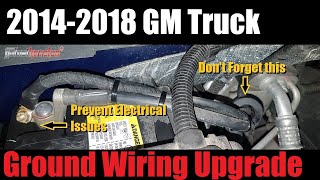
- Inspect the battery terminals and main engine/chassis ground straps for corrosion or looseness. These are known weak points on GM trucks. 🎬 See how to upgrade your K2XX grounds to prevent electrical issues.
- Following TSB #PIP5609, carefully inspect the electrical connectors at the suspect control module for damage, corrosion, or backed-out pins. Check for proper terminal tension.
- Using a wiring diagram and digital multimeter, verify the module is receiving proper power and has a solid ground connection. A voltage drop test on the ground side should show less than 0.1V.
- If all external wiring, power, and grounds are confirmed to be good, and the code persists or returns immediately, the control module itself is faulty and requires replacement.
Parts You'll Likely Need
- Engine Control Module (ECM)
(OEM #12663373 (or other numbers like 12657306, based on VIN; common service number is 12656993))— This is the most common cause of a P0601 code, indicating a non-repairable internal memory failure.
Trusted brands: ACDelco, GM Genuine
OEM price range: $450-$900
Aftermarket price range: $350-$600 - Transmission Control Module (TCM)
(OEM #24256939 (Example for ACDelco T43 used with 6L80/6L90))— A possible cause if diagnosis via a scan tool confirms the P0601 code originated in the TCM, as noted in TSB PIP4653E.
Trusted brands: ACDelco, GM Genuine
OEM price range: $350-$700
Aftermarket price range: $250-$500
Related Codes That Often Appear With This One
- P0602 — Control Module Programming Error. Often appears with other P06xx codes when there is a general module failure or a failed programming attempt.
- P0603 — Internal Control Module Keep Alive Memory (KAM) Error. This also points to an internal memory issue within the module and is mentioned in related TSBs.
- P0604 — Internal Control Module Random Access Memory (RAM) Error. Another code indicating an internal processing fault, also cited in TSBs alongside P0601.
- P0606 — ECM/PCM Processor Fault. This is a more general processor failure code that can accompany P0601 and is often caused by the same underlying voltage or ground issues.
Technical Service Bulletins (TSBs) & Recalls
- PIP5609: Service engine soon light with various P06xx codes, advises checking ECM connections.
- 05-06-04-060A: Informational bulletin about control module DTCs (including P0601) being shared in multiple modules.
- PIP4653E: Diagnostic information for P0601 and other codes when stored in the Transmission Control Module (TCM).
Platform-Specific Known Issues
- TSB #PIP5609: Advises technicians to inspect the ECM's electrical connections and power supply before replacement for a P0601 code. This bulletin explicitly states that low voltage or a momentary loss of power/ground can cause this DTC.
- TSB #05-06-04-060A: Notes that P0601 and related codes can be shared across multiple modules, highlighting the need for precise diagnosis to determine the originating module.
- TSB #PIP4653E: Specifically points out that P0601 can be stored in the Transmission Control Module (TCM), not just the ECM, and recommends checking which module set the code before proceeding with repairs.
Mechanic-Grade Diagnostic Values
- ECM/TCM Ground Circuit Resistance — expected: Less than 0.1 Ω. Failure: A reading higher than 0.1 Ω indicates excessive resistance in the ground circuit, which can starve the module of a clean ground and cause internal faults.
- Battery Voltage (Engine Off) — expected: 12.4V to 12.6V or higher. Failure: Voltage below 12.4V indicates a discharged or weak battery that can cause voltage-related faults in modules during startup.
- Charging System Voltage (Engine Running) — expected: 13.5V to 14.5V, stable. Failure: Voltage that is unstable, below 13.5V, or above 14.8V can indicate a failing alternator or regulator, which can damage control modules.
- Voltage Drop (Power or Ground Side) — expected: Less than 0.5V. Failure: A voltage drop exceeding 0.5V on either the power feed or ground circuit under load indicates high resistance that needs to be located and repaired.
Scan Tool Commands That Help
- GDS2 (or equivalent professional scanner): Module Status / Communication Request — Used as a basic check to see if the suspect module (ECM/TCM) is responding on the data bus. A failure to respond or receipt of corrupted data can point towards an internal module fault.
- GM SPS (Service Programming System): Module Programming and Setup — This is a mandatory step after replacing the ECM or TCM. The new module must be programmed with the correct VIN-specific software and configuration. Failure to do so will result in a no-start condition.
- GDS2: Crankshaft Position Variation Learn — Often required after replacing and reprogramming the ECM to ensure the new module is calibrated to the specific crankshaft position sensor for accurate misfire detection and timing.
- GDS2: Immobilizer Learn / Key Programming — Required after ECM replacement to pair the new module with the vehicle's existing keys and anti-theft system.
Wiring & Ground Locations
- G101 / G106 — Typically located on the lower front of the engine block, sometimes jumpered to the frame cross rail under the crank pulley.. This is a primary ground for the Engine Control Module and Transmission Control Module. High resistance or a loose connection here can directly cause P0601.
- G103 — Located at the left rear of the engine compartment on the cowl, often above the brake booster.. This serves as a major ground point for multiple modules communicating with the ECM, including the BCM and instrument panel cluster. A poor connection can cause widespread communication errors.
- Dash Insulator Mat Interference — A ground stud on the front of the dash, accessible from the engine bay.. TSB PIT5405C specifically notes that on 2015-2017 models, the dash insulator mat can get trapped between the ground eyelet and the body, causing a poor connection that leads to various electrical issues, including stalling and no-start conditions similar to P0601 symptoms.
- G218 — Under the driver's side of the dashboard, behind the kick panel near the A-pillar.. This is a critical ground for the Body Control Module (BCM). While not a direct ECM ground, a faulty G218 is known to cause bizarre, widespread electrical faults on this platform that could be misdiagnosed as a primary module failure.
OEM Part Supersession History
24272004→24276411— Updated part for the Transmission Control Module (TCM).
Heads up: The new part number requires programming to the vehicle.
Model Year Variations Within This Range
- 2015 (early production): These models were equipped with the 6L80 6-speed automatic transmission. A P0601 originating from the transmission would be in the 6L80's specific TEHCM (Transmission Electro-Hydraulic Control Module).
- 2015 (late production) - 2017: These models use the 8L90 8-speed automatic transmission. The TCM is a different unit than the one used with the 6L80.
- 2018: The 2018 model year introduced the 10L80 10-speed automatic transmission, which again uses a different TCM and control strategy. Diagnosing a TCM-based P0601 on a 2018 model requires specific knowledge of the 10-speed's electronics.
Helpful Videos
Used OEM Parts in Stock
New Aftermarket Parts Available




The information in this article is provided for general reference and educational purposes only. Vehicle specifications, procedures, and part compatibility can vary by production date, trim level, and region. Always consult your vehicle's factory service manual and verify part numbers before purchasing or performing repairs. Safety-critical components such as airbags, seat belts, and braking systems should be installed by a qualified professional.
- Cadillac ESCALADE:
- 🧭 Diagnostic Flowchart
- 🎬 Helpful Videos
- 🛍️ Shop This Part
- What's Unique About the 2015-2018 Cadillac ESCALADE
- Symptoms You May Notice
- Most Likely Causes
- Rare But Worth Checking
- Diagnosis Steps
- Parts You'll Likely Need
- Related Codes That Often Appear With This One
- Technical Service Bulletins (TSBs) & Recalls
- Platform-Specific Known Issues
- Mechanic-Grade Diagnostic Values
- Scan Tool Commands That Help
- Wiring & Ground Locations
- OEM Part Supersession History
- Model Year Variations Within This Range
- 🎟️ Get 5% Off