

P0601 on 2007-2014 Cadillac Escalade ESV: Internal Module Failure Causes & Fixes
P0601 on a 2007-2014 Escalade ESV indicates a fatal internal memory error in a control module, most commonly the Engine Control Module (ECM) or Transmission Control Module (TCM). The fix is almost always module replacement and programming, costing between $600 and $1,500. Before replacing the ECM, it is critical to rule out low battery voltage, bad grounds, and confirm which module set the code, as the TCM is a known cause on this platform.
- P0601 is a critical code indicating a fatal internal error in a control module, usually the ECM or TCM.
- Do not drive the vehicle. A failing module can cause unpredictable stalling or shifting, which is a safety hazard.
- Before replacing the expensive ECM, you MUST confirm the code isn't being set by the Transmission Control Module (TCM), a known issue on these Escalades.
- This is not a DIY repair. The replacement module must be professionally installed and programmed to your vehicle's VIN.
- Always check the battery and charging system first, as low or unstable voltage can sometimes trigger this code erroneously.
What's Unique About the 2007-2014 Cadillac ESCALADE ESV
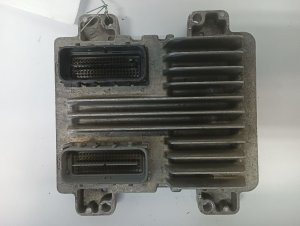
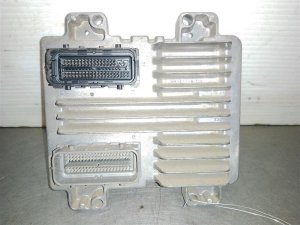
On this generation of Cadillac Escalade (and its GMT900 platform mates like the Chevrolet Tahoe and GMC Yukon), while P0601 often points to the main Engine Control Module (ECM), GM has issued Technical Service Bulletin #PIP4653E specifically stating this code can be stored in the Transmission Control Module (TCM). This is a critical distinction, as misdiagnosis leads to replacing the wrong expensive component. A professional scan tool is required to identify the faulting module. The ECM is typically an ACDelco E38, and the TCM is a T43, both of which are known to set this code across the GM truck and SUV lineup.
Diagnostic Flowchart
Tap your situation to follow the diagnostic path that matches what you're seeing on this vehicle.
Symptoms You May Notice
- Check Engine Light is on
- Vehicle may not start or is hard to start
- Engine may stall or run poorly
- Erratic or harsh transmission shifting
- Vehicle may enter a reduced power 'limp mode'
- Failure to pass emissions tests
- In some cases, no noticeable symptoms other than the Check Engine Light
- Replacing sensors. This code points to an internal module problem, not an external sensor. Replacing oxygen sensors, throttle position sensors, etc., will not fix a P0601.
- Replacing the wrong module. As per TSB #PIP4653E, this code can be in the TCM. If a technician assumes it's the ECM without verification, they will replace a very expensive part for no reason.
- Immediately replacing the ECM without checking power/grounds. Many forum users report that P0601 can be falsely triggered by a weak battery or corroded ground cables, which should always be the first check.
Most Likely Causes
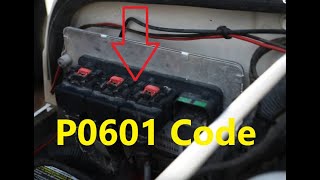
- Failed Control Module (ECM or TCM) 🔴 High Probability Control modules like the ACDelco E38 (ECM) and T43 (TCM) can fail over time due to heat cycles, vibration, and internal component aging. The P0601 code is a self-reported internal hardware or memory corruption failure. 🎬 Watch: A deep dive into P0601 causes and potential fixes.
How to confirm: After verifying all power and ground connections are perfect and the battery/charging system is healthy, if the code returns immediately after being cleared, the module is faulty. A professional scan tool is needed to confirm which module is setting the code (ECM vs. TCM) per TSB #PIP4653E.
Typical fix: Replace the faulty control module (ECM or TCM) and program the new unit to the vehicle's VIN using dealership or equivalent tools.
Est. part cost: $400-$800 - Low Battery Voltage or Charging System Issue 🟡 Medium Probability → Shop Vehicle Battery These trucks are sensitive to voltage fluctuations. Insufficient or unstable voltage during startup or shutdown can corrupt a module's memory, triggering a false P0601 code. This is the most important check before condemning a module.
How to confirm: Test the battery's health and the alternator's output. A healthy battery should have over 12.6 volts with the engine off, and the charging system should produce 13.5-14.5 volts with the engine running. Check for corroded terminals or loose connections, as this is a common trigger.
Typical fix: Replace the weak battery, thoroughly clean battery terminals and cable ends, or replace the faulty alternator. Then, clear the codes and see if P0601 returns.
Est. part cost: $150-$500 - Poor Power or Ground Connections to the Module ⚪ Low Probability Corrosion or loose connections at the module's harness or main chassis grounds can cause voltage drops that mimic a module failure. Owners on forums for these trucks frequently point to bad grounds as the root of many electrical gremlins.
How to confirm: Visually inspect and physically check the wiring harness and connectors for the ECM and TCM. Perform a voltage drop test on the power and ground circuits. Key ground locations are on the engine block near the firewall and on the frame rail. 🎬 See how to find and fix bad grounds on GM trucks.
Typical fix: Disassemble, clean, and securely re-fasten the corroded or loose wiring and ground connections. Applying dielectric grease can help prevent future corrosion.
Est. part cost: $0-$50
Rare But Worth Checking
- Failed Aftermarket Tune or Programming: If the vehicle's software was recently modified with a performance tuner, a failed or improper flash can corrupt the module's memory and set this code. Reverting to the stock program or having the module professionally reflashed may be a solution, but often the damage is permanent.
- Voltage Spike from Jump-Start: Improperly jump-starting the vehicle can create a voltage spike that damages sensitive electronics, including the ECM or TCM, leading to a P0601 code.
Diagnosis Steps
- Verify the P0601 code is present using a professional OBD-II scanner that can identify which module set the code (ECM, TCM, etc.). This is the most critical first step.
- Check for any other DTCs that may provide more context, such as communication (U-codes) or other module faults.
- Thoroughly inspect the battery. Test its voltage (should be >12.6V off) and load capacity. Ensure terminals and cable ends are free of corrosion and tight.
- With the engine running, check the alternator output voltage to rule out charging system problems (should be 13.5-14.5V).
- Inspect the main power and ground connections for the identified control module. On GMT900 trucks, check grounds on the frame, firewall, and engine block. Physically remove, clean, and re-secure them.
- Inspect the module connectors for any signs of corrosion, moisture intrusion, or pushed-out pins.
- If all power, ground, and battery systems are confirmed to be good, attempt to clear the code.
- If the code returns immediately, the control module has a hard internal fault.
- A professional may attempt to reflash the module with the latest GM software as a last resort, per TSB #PIP4653E, though this is rarely successful for a P0601 as it usually indicates a hardware failure.
- If the code persists, the control module must be replaced and programmed to the vehicle's VIN.
Parts You'll Likely Need
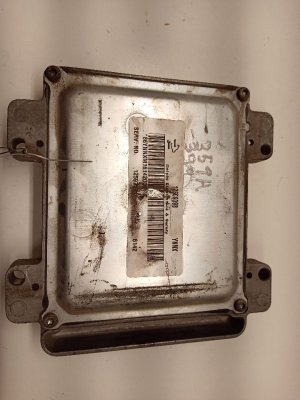
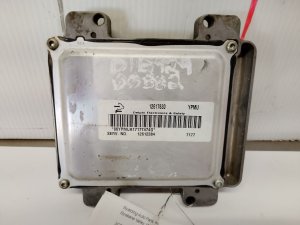
- Engine Control Module (ECM/PCM)
(OEM #12612384 (Example for 2008, verify with VIN))— This is the most common cause of P0601. The module's internal memory has failed its self-test, requiring replacement. The specific module for this platform is often the ACDelco E38.
Trusted brands: ACDelco (OEM), Cardone (Remanufactured), FS1 (Remanufactured)
OEM price range: $450-$800
Aftermarket price range: $300-$600 - Transmission Control Module (TCM) — As noted in GM TSB #PIP4653E, the TCM (often an ACDelco T43) can also set a P0601. If diagnostics confirm the TCM is the source, it must be replaced. This is a common point of misdiagnosis.
Trusted brands: ACDelco (OEM)
OEM price range: $200-$800
Aftermarket price range: $170-$500
Related Codes That Often Appear With This One
- P0603 — This code indicates a Keep Alive Memory (KAM) error, which can be related to power interruptions that also might trigger a P0601.
- P0604 — This code indicates a Random Access Memory (RAM) error, another type of internal module memory fault often seen with P0601.
- P0606 — This code indicates a general 'Control Module Processor Performance' error, which points to a severe internal failure, often alongside P0601.
Technical Service Bulletins (TSBs) & Recalls
- PIP4653E: Notes that DTCs P0601, P0603, P0604, P062F or P1621 can be stored in the Transmission Control Module (TCM) and advises technicians to verify which module set the code before proceeding with diagnostics.
- 05-06-04-060A: An informational bulletin that explains that control module DTCs like P0601 can be shared across multiple modules, reinforcing the need for precise diagnosis.
Platform-Specific Known Issues
- GM Technical Service Bulletin #PIP4653E specifically notes that DTC P0601 can be stored in the Transmission Control Module (TCM) on these vehicles, not just the ECM. It's critical to identify which module is at fault before ordering parts.
- The GMT900 platform is known for being sensitive to grounding issues. Owners on forums like TahoeYukonForum.com frequently advise checking and cleaning all major ground points (engine block to firewall, battery to frame) before replacing an expensive module for codes like P0601.
Mechanic-Grade Diagnostic Values
- Module Ground Strap/Circuit Resistance — expected: < 0.1 Ω. Failure: A reading higher than 0.1 Ω indicates excessive resistance, which can cause voltage drops and trigger the P0601 code.
- ECM/PCM Operating Voltage — expected: 10.5V - 14.5V. Failure: Voltage dropping below 10.5V, especially during cranking, can corrupt module memory and falsely set a P0601.
- ECM X1 Connector Pin 20 (Battery Positive Voltage) — expected: Battery Voltage (Approx. 12.6V KOEO). Failure: Voltage significantly lower than battery voltage indicates a problem in the power supply circuit to the ECM.
- ECM X1 Connector Pin 19 (Ignition 1 Voltage) — expected: Battery Voltage with Key in ON/RUN position. Failure: No voltage or low voltage indicates a problem with the ignition switch signal to the ECM.
Scan Tool Commands That Help
- GDS2 (Global Diagnostic System 2): Module Replacement and Setup — This function is required after installing a new or used ECM or TCM. It programs the module with the correct VIN and vehicle software, a mandatory step for the module to operate.
- GDS2 / Tech2Win: Clear All DTCs — Used after a repair (like cleaning a ground or replacing a battery) to see if the P0601 code returns. If it returns immediately, it points to a hard internal module fault.
- Techline Connect (SPS2): Reprogram ECU — This is the service programming system used with GDS2 to flash the latest GM-validated software onto a control module. It's a last-ditch effort for a P0601 but is essential for programming a replacement module.
Wiring & Ground Locations
- G103 — On the front of the passenger side (right) cylinder head.. This is a critical engine harness ground. A poor connection here is a known cause of various electrical issues, including intermittent module problems that can trigger a P0601.
- G104 — On the rear of the driver's side (left) cylinder head, often securing a braided strap to the firewall.. This ground is essential for the engine harness and its associated modules. Technicians report that corrosion or looseness at this point can cause stalling and set false P0601 codes.
- G102 — Lower left front of the engine, near the motor mount.. This ground point can become corroded or the wires leading to it can fray. Wiggling wires near this ground has been shown to cause the P0601 code to appear, indicating a poor connection.
- ECM Connector X1 — The main 73-pin or 56-pin connector on the Engine Control Module, located in the engine bay.. This is the primary interface for the ECM. Checking for battery voltage at Pin 20 and ignition voltage at Pin 19 is a key diagnostic step to confirm the module is receiving proper power.
Real Owner Repair Stories
- YouTube channel 'Phillip Bailey' (2011 GM Truck (Silverado 1500 4x4)) — Vehicle would cut out while driving, setting P0601, ABS, and Service Stabilitrac messages.
❌ Tried (didn't work) Initial diagnosis pointed towards a faulty ECM.
✅ What actually fixed it The technician found that wiggling wires near the G102 ground (left side of engine, by motor mount) would cause the P0601 code to reset. The ground wires were corroded and stressed. The fix was to cut the wires, add 8 inches of new wire, and relocate the ground connection to a clean spot on a nearby bracket.
OEM Part Supersession History
12612384→12617568, 12619077— Standard part evolution for hardware/software updates by GM.
Heads up: While later part numbers often supersede earlier ones, it is critical to use a part number specified for the vehicle's exact model year and VIN. Using an incompatible E38 ECM can lead to programming failures or non-functional features.
Model Year Variations Within This Range
- 2010-2014: Starting around 2010 and fully implemented by 2014, GM shifted from the Tech2/TIS2000 diagnostic platform to the Global Diagnostic System 2 (GDS2) and Techline Connect (SPS2) for module diagnostics and programming. While a Tech2 may still read codes on a 2010-2014 model, all official programming and advanced diagnostics require GDS2.
- 2009: A hybrid model was introduced in 2009. While the base engine is similar, the hybrid system (HP2) uses a different ECM with a unique pinout for its X1 connector compared to the standard gas engine.
Helpful Videos


Used OEM Parts in Stock
New Aftermarket Parts Available



The information in this article is provided for general reference and educational purposes only. Vehicle specifications, procedures, and part compatibility can vary by production date, trim level, and region. Always consult your vehicle's factory service manual and verify part numbers before purchasing or performing repairs. Safety-critical components such as airbags, seat belts, and braking systems should be installed by a qualified professional.
- Cadillac ESCALADE ESV:
- 🧭 Diagnostic Flowchart
- 🎬 Helpful Videos
- 🛍️ Shop This Part
- What's Unique About the 2007-2014 Cadillac ESCALADE ESV
- Symptoms You May Notice
- Most Likely Causes
- Rare But Worth Checking
- Diagnosis Steps
- Parts You'll Likely Need
- Related Codes That Often Appear With This One
- Technical Service Bulletins (TSBs) & Recalls
- Platform-Specific Known Issues
- Mechanic-Grade Diagnostic Values
- Scan Tool Commands That Help
- Wiring & Ground Locations
- Real Owner Repair Stories
- OEM Part Supersession History
- Model Year Variations Within This Range
- 🎟️ Get 5% Off