

P0601 on 2010-2015 Cadillac SRX: Internal Control Module Failure Causes and Fixes
Code P0601 on a 2010-2015 Cadillac SRX almost always indicates a fatal internal error in a control module, most commonly the Engine Control Module (ECM). The only reliable fix is to replace and reprogram the faulty module, a job that typically costs between $1,000 and $1,300 at a dealership or qualified repair shop. Before replacing, it is crucial to verify battery health and all main ground connections, as poor voltage stability can sometimes trigger false codes.
- P0601 is a critical code indicating a failed control module, most often the ECM.
- Driving is unsafe, as the vehicle can stall without warning.
- Diagnosis MUST confirm which module is at fault (ECM or TCM) before parts are ordered.
- The fix is not DIY-friendly; it requires replacing the faulty module and professional programming.
- Always check the battery and ground connections first, but expect to replace the module.
What's Unique About the 2010-2015 Cadillac SRX
On the 2010-2015 Cadillac SRX, a P0601 code is not exclusively for the Engine Control Module (ECM). As highlighted in GM Technical Service Bulletin #PIP4653E, this fault can also be stored in the Transmission Control Module (TCM). This makes it crucial for a technician to use a professional scan tool to determine exactly which module has failed before ordering expensive parts. Assuming it's the ECM without proper diagnosis can lead to a costly misdiagnosis, as both modules are known failure points on this platform.
Diagnostic Flowchart
Tap your situation to follow the diagnostic path that matches what you're seeing on this vehicle.
Symptoms You May Notice
- Check Engine Light is on
- Vehicle may not start, or only cranks without firing
- Engine may stall intermittently while driving, sometimes accompanied by a "Reduced Engine Power" message
- Reduced engine power or entering "limp mode"
- Erratic or harsh transmission shifting (if the TCM is at fault)
- In some cases, no symptoms other than the Check Engine Light are present
- Complete loss of throttle response, where the gas pedal does nothing for several seconds
- Replacing the battery without properly testing it and the charging system. While low voltage can cause issues, P0601 is a specific internal memory error that usually points to the module itself.
- Condemning the ECM without checking for poor engine block or chassis ground connections. A bad ground can cause low voltage at the module, mimicking an internal fault. 🎬 See why you must check these basics before replacing the PCM.
Most Likely Causes
- Failed Engine Control Module (ECM/PCM) 🔴 High Probability → Shop Engine Control Module (ECM) This is the most common failure point for a P0601 code, representing an internal hardware or software corruption that is not repairable. The module's internal processor or memory fails its self-check.
How to confirm: After ruling out power/ground issues, a professional scan tool will confirm the ECM is the source of the code. Attempting to re-flash the module may be a final diagnostic step; if it fails or the code returns immediately, the ECM is condemned.
Typical fix: Replace the Engine Control Module and program the new unit to the vehicle's VIN.
Est. part cost: $800-$900 - Failed Transmission Control Module (TCM) 🟡 Medium Probability → Shop Transmission Assembly As noted in GM TSB PIP4653E, the TCM on this platform is also known to set a P0601 code, indicating an internal failure specific to the transmission's computer. The TCM is located inside the transmission on many modern vehicles, making replacement labor-intensive.
How to confirm: A professional scan tool is used to identify that the P0601 code is stored in the TCM, not the ECM.
Typical fix: Replace the Transmission Control Module and program it to the vehicle.
Est. part cost: $500-$800 - Low Battery Voltage or Poor Connections ⚪ Low Probability → Shop Vehicle Battery While less common for this specific code, unstable voltage from a weak battery, failing alternator, or poor grounds can sometimes corrupt a module's self-test process or trigger false codes. GM vehicles of this era are known to be sensitive to ground strap issues. A bad ground on the engine block can cause a no-start and mimic a failed ECM.
How to confirm: Test the battery's health and voltage (should be >12.4V at rest). Check the alternator output (should be 13.5-14.5V when running). Inspect and clean all battery terminals and primary ground straps to the chassis and engine block. A voltage drop test across the ground cables is the most effective diagnostic method.
Typical fix: Charge or replace the battery; clean or tighten terminals and grounds.
Est. part cost: $0-$250
Rare But Worth Checking
- Aftermarket Engine Tuning: Improperly applied aftermarket performance tunes or re-flashing can corrupt the ECM's memory, triggering a P0601 code.
- Voltage Spike: A significant voltage spike, often from an improper jump-start or a failing alternator, can damage the sensitive microprocessors within a control module.
Diagnosis Steps
- Verify the presence of code P0601 with a professional OBD-II scanner.
- Use the scanner to determine which module (ECM, TCM, etc.) has stored the fault code. This is a critical step.
- Check and record any other DTCs present. Multiple communication codes (U-codes) alongside P0601 may point towards a power/ground issue.
- Perform a full electrical system check. Test the battery's state of charge and health. With the engine running, verify the alternator is charging correctly (typically 13.5-14.5 volts).
- Inspect the battery terminals for corrosion and ensure they are tight. Trace and inspect the main power and ground connections to the identified faulty module, ensuring they are clean, tight, and free of corrosion. Pay special attention to the main engine-to-chassis ground strap.
- If all power and ground circuits are good, the fault is internal to the module. A professional may attempt to re-flash the module with the latest factory software as a last resort. If the re-flash fails or the code returns, the module is defective.
- Install the new module and program it to the vehicle's VIN and specific configuration using specialized equipment.
Parts You'll Likely Need
- Engine Control Module (ECM/PCM)
(OEM #ACDelco 12653998 (E39A, supersedes 12633555, VIN specific, check catalog))— This is the most common cause of a P0601 code, indicating an irreparable internal failure. The SRX often uses an ACDelco E39 or E39A series ECM.
Trusted brands: ACDelco (OEM)
OEM price range: $850-$900
Aftermarket price range: $200-$400 (Remanufactured) - Transmission Control Module (TCM)
(OEM #Varies by VIN and specific transmission (e.g., 6T70))— A known, but less common, cause for P0601 on the SRX platform, as documented in TSBs. Failure requires replacement and reprogramming.
Trusted brands: ACDelco (OEM)
OEM price range: $500-$800
Aftermarket price range: $200-$350 (Remanufactured)
Related Codes That Often Appear With This One
- P0603 — Internal Control Module Keep Alive Memory (KAM) Error
- P0604 — Internal Control Module Random Access Memory (RAM) Error
- P062F — Internal Control Module EEPROM Error
- P1621 — Control Module Long Term Memory Performance
Technical Service Bulletins (TSBs) & Recalls
- PIP4653E: Mentions that DTC P0601 can be stored in the Transmission Control Module (TCM) and advises technicians to confirm which module set the code.
- 05-06-04-060A: An informational bulletin noting that P0601 and similar codes can appear in multiple different control modules.
Platform-Specific Known Issues
- TSB #PIP4653E notes that on the 2010-2014 SRX, DTCs P0601, P0603, P0604, P062F, or P1621 can be stored in the Transmission Control Module (TCM). The bulletin stresses the importance of identifying which module set the code before beginning diagnosis.
- TSB #05-06-04-060A is an informational bulletin that communicates to technicians that P0601 and other related codes can be shared across multiple modules, reinforcing that the fault is not always in the main engine computer.
- Owners have reported that intermittent power loss and a host of communication codes can be caused by something as simple as minor corrosion on the negative battery terminal or a failing engine ground strap, making a thorough electrical check essential before condemning a module.
Scan Tool Commands That Help
- GM GDS2/Tech2 with SPS (Service Programming System): Replace and Program ECU — This function is mandatory when installing a new or used ECM. It downloads the correct VIN and calibration files from GM's servers into the replacement module. Simply swapping modules will result in a no-start condition.
- GM GDS2/Tech2 or High-End Scan Tool: Immobilizer Relearn / Vehicle Theft Deterrent (VTD) Relearn — This procedure is required immediately after programming a new ECM to synchronize the anti-theft system with the new module. Failure to perform this will result in a crank-no-start condition. The manual method involves a 30-minute procedure of cycling the ignition on for 10 minutes, three consecutive times.
- GM GDS2/Tech2 or High-End Scan Tool: Crankshaft Position Variation Relearn — This should be performed after the ECM is successfully programmed and the engine is running. It calibrates the new ECM to the specific tolerances of the crankshaft position sensor, ensuring accurate misfire detection and timing.
Wiring & Ground Locations
- ECM Location (3.6L LFX) — Mounted on the right side of the engine (passenger side in North America).. Physical inspection of the module and its connectors for damage or corrosion is a preliminary step. Knowing the location is necessary for checking power and ground circuits directly at the ECM connectors.
- G107 / G108 — Typically located on the front or rear of the left cylinder head (Bank 2, closer to the firewall). These are primary engine-to-chassis ground points.. The ECM and its sensors rely on a solid ground connection. A loose or corroded ground at this location can cause voltage fluctuations and data errors that may mimic an internal module failure. These are critical points to inspect before condemning the ECM.
- Main Engine Block Ground — A braided strap or heavy gauge wire connecting the engine block directly to the chassis/frame.. This is the primary ground path for the entire engine electrical system, including the alternator and ECM. High resistance here can cause system-wide low voltage, leading to unpredictable module behavior and potentially triggering false P0601 codes.
Real Owner Repair Stories
- YouTube channel 'Fix it Angel' (2004 Cadillac SRX 3.6L (First generation, but demonstrates a common GM procedure)) — Crank-no-start condition with a security light illuminated after replacing a faulty ECM that was causing a fuel injector circuit code.
❌ Tried (didn't work) Simply installing the new ECM without further procedures.
✅ What actually fixed it Performing the 30-minute Vehicle Theft Deterrent (VTD) relearn procedure. This involved turning the ignition on for 10 minutes, off for 10 seconds, and repeating the cycle three times. This allowed the new ECM to synchronize with the vehicle's anti-theft system, which then permitted the engine to start and run smoothly.
OEM Part Supersession History
12643248→12653998— Part update/revision by the manufacturer.
Heads up: The E39 (used on 3.0L) and E39A (used on 3.6L) ECMs are not interchangeable. Using the wrong hardware family will result in a programming failure. Always verify the correct part number by VIN.
Model Year Variations Within This Range
- 2010-2011: Models equipped with the 3.0L V6 (LF1) engine use the ACDelco E39 Engine Control Module.
- 2012-2015: Models equipped with the 3.6L V6 (LFX) engine use the newer ACDelco E39A Engine Control Module. The physical location is on the right side of the engine.
Helpful Videos

Used OEM Parts in Stock
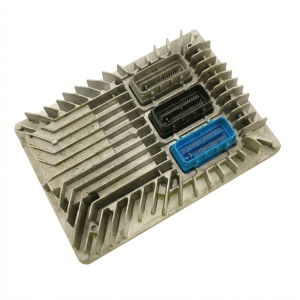
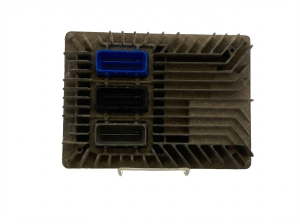
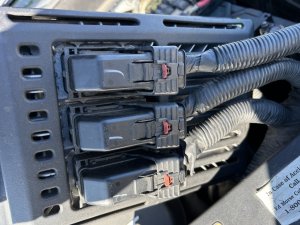
New Aftermarket Parts Available
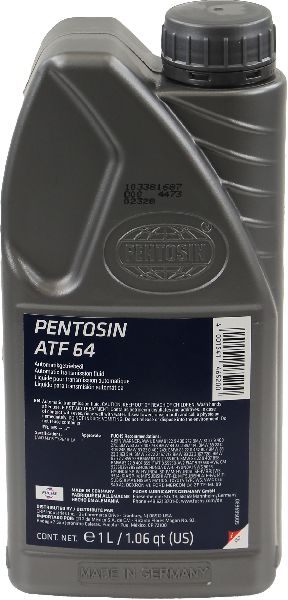



The information in this article is provided for general reference and educational purposes only. Vehicle specifications, procedures, and part compatibility can vary by production date, trim level, and region. Always consult your vehicle's factory service manual and verify part numbers before purchasing or performing repairs. Safety-critical components such as airbags, seat belts, and braking systems should be installed by a qualified professional.
- Cadillac SRX:
- 🧭 Diagnostic Flowchart
- 🎬 Helpful Videos
- 🛍️ Shop This Part
- What's Unique About the 2010-2015 Cadillac SRX
- Symptoms You May Notice
- Most Likely Causes
- Rare But Worth Checking
- Diagnosis Steps
- Parts You'll Likely Need
- Related Codes That Often Appear With This One
- Technical Service Bulletins (TSBs) & Recalls
- Platform-Specific Known Issues
- Scan Tool Commands That Help
- Wiring & Ground Locations
- Real Owner Repair Stories
- OEM Part Supersession History
- Model Year Variations Within This Range
- 🎟️ Get 5% Off